

Something has shifted. Not just the seasons, not just the weather – the underlying pace of global warming itself appears to have changed gear. A cluster of alarming findings published between 2024 and early 2026 is pointing scientists toward a deeply uncomfortable conclusion: climate change is not simply continuing as expected. It may be accelerating. Global warming has picked up speed in the past decade, according to a new analysis from the Potsdam Institute for Climate Impact Research. “The last three years are indicative of an acceleration in the warming. They’re not consistent with the linear trend that we’ve been observing for the 50 years before that,” said Robert Rohde, chief scientist at the Berkeley Earth monitoring group. That distinction matters enormously, and understanding it is the starting point for understanding what scientists are now sounding the alarm about.
A Statistically Confirmed Acceleration in Global Warming
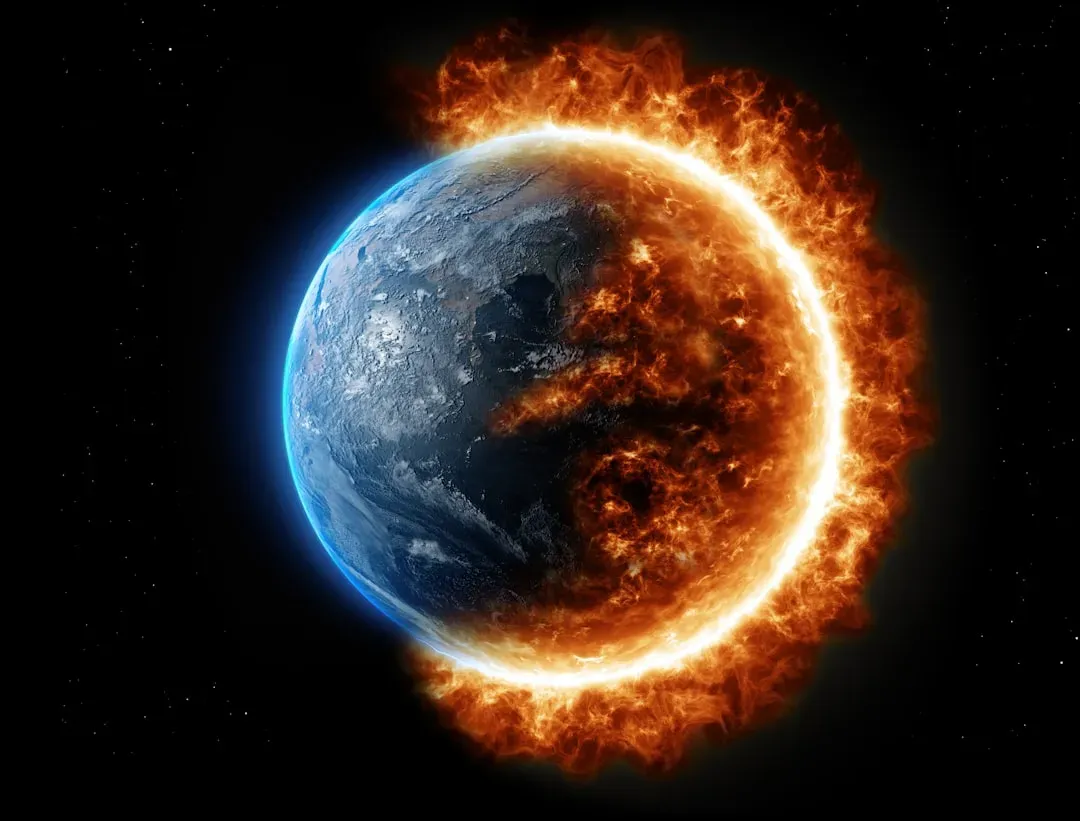
Global warming has picked up speed in the past decade, according to the Potsdam Institute for Climate Impact Research. By removing short-term natural influences such as El Niño, volcanic eruptions, and solar cycles from temperature records, researchers uncovered a clear acceleration in the planet’s long-term warming trend beginning around 2015. This is not a matter of a bad year or two – the finding is backed by multiple independent datasets. “The adjusted data show an acceleration of global warming since 2015 with a statistical certainty of over 98 percent, consistent across all data sets examined and independent of the analysis method chosen,” explains Stefan Rahmstorf, PIK researcher and lead author of the study.
Current projections suggest the internationally agreed-upon global warming limit of 1.5 degrees Celsius will be breached at some point in the 2030s. But if this accelerated warming rate continues, the world will likely reach 1.5 degrees before 2030. Record-breaking climate trends continued in 2024 and 2025. Globally averaged temperature in 2024 was at the warmest level in 175 years of record-keeping. Likewise, atmospheric carbon dioxide reached a new high of 152 percent of 1750 levels. The numbers are staggering, and they are not slowing down.
The Oceans Are Absorbing Unprecedented Heat – Nine Years Running

The ocean soaked up more heat last year than in any year since modern measurements began around 1960, according to a new analysis published in Advances in Atmospheric Science. In total, the ocean absorbed an additional 23 zettajoules of heat energy in 2025, breaking the ocean heat content record for the ninth consecutive year and marking the longest sequence of consecutive ocean heat content records ever recorded. To understand what that means in practical terms: the 2025 heat increase was equivalent to roughly 37 years of global primary energy consumption at the 2023 level.
Ocean heat content reached a new record high in 2025 and its rate of warming more than doubled from 1960–2005 to 2005–2025. Rising ocean heat drives global sea-level rise via thermal expansion, strengthens and prolongs heatwaves, and intensifies extreme weather by increasing heat and moisture in the atmosphere. Despite La Niña conditions, around 90% of the ocean surface experienced at least one marine heatwave in 2025. The oceans, once a reliable buffer against climate breakdown, are now showing clear signs of strain.
Carbon Sinks Are Weakening at the Worst Possible Time
![Carbon Sinks Are Weakening at the Worst Possible Time ([1]
doi:10.3390/su10030869, CC BY-SA 4.0)](https://nvmwebsites-budwg5g9avh3epea.z03.azurefd.net/climatecompass247/8abccd0b0875db7ac65104baf3a019f9.webp)
doi:10.3390/su10030869, CC BY-SA 4.0)
The world’s oceans act as an important sink for carbon dioxide. To date, they have absorbed around a quarter of human-induced CO₂ emissions from the atmosphere, thereby stabilizing the global climate system. Without this sink, the CO₂ concentration in the atmosphere would be much higher and global warming would have already significantly exceeded the 1.5-degree warming limit. Now, that buffer is faltering. In 2023, the global ocean absorbed about 10% less CO₂ than expected, mainly due to record-high sea surface temperatures that reduced CO₂ solubility, especially in the North Atlantic.
A significant decline in land-based carbon uptake in 2023 raises concerns that more carbon may remain in the atmosphere, shrinking the remaining carbon budget. Northern hemisphere ecosystems – once considered relatively resilient – are increasingly affected by wildfires and permafrost thaw. There is also concern that terrestrial and ocean carbon dioxide sinks that absorb approximately half the fossil and land-use carbon dioxide are becoming less effective. If these sinks continue to weaken, every ton of CO₂ emitted will have a greater warming effect than at any point in the modern industrial era.
Compound Drought-Heatwave Events Have Surged Nearly Eightfold

One of the most striking findings to emerge from research published in early 2026 involves what scientists call compound drought-heatwave events – situations where a region is hit by both a severe heat event and drought conditions at the same time. Compound drought-heatwave events have substantially increased since the early 2000s, posing elevated risks to socio-ecosystems. The increase is primarily driven by heatwave-leading events, with the slope of increase in affected land area having risen nearly eightfold, from 1.6 to 13.1% per degree Celsius since the early 2000s. This is a nonlinear jump – meaning the relationship between rising temperature and these compound disasters is not gradual.
Compound drought-heatwave events, the co-occurrence of droughts and heatwaves, have increased considerably since the beginning of the 21st century. These events have been exacerbating socioeconomic damage in sectors such as agriculture, ecosystems, and public health. 2025 showed that drought is even more devastating when compounded with other climate hazards, such as wildfire and flood. The change suggests that the rapid increase in heatwave-led compound events occurred after the global average temperature “surpassed a certain temperature threshold.” In other words, the planet may have crossed into a new regime of extreme weather behavior.
Sea Level Rise, Ice Loss, and Earth’s Energy Imbalance Hit New Records

The World Meteorological Organization’s State of the Global Climate 2025 introduced a new indicator of the Earth’s energy balance and concluded that Earth’s energy budget is more out of balance than at any previous time in the observational record. Only a small amount of excess heat goes into warming the atmosphere. More than 91% of the surplus heat is getting stored in the oceans, where heat content reached a record high last year. The consequences extend well beyond the waterline. Global mean sea level in 2025 was around 11 cm higher than at the start of the satellite altimetry record in 1993.
Cumulative ice loss from the world’s glaciers and from the Greenland ice sheet reached a new record high in 2025, contributing to sea level rise. The ice sheets on Antarctica and Greenland have both lost significant mass and the annual average Arctic sea-ice extent for 2025 was the lowest or second lowest on record in the satellite era. Ocean warming and sea level rise will continue for centuries, according to projections by the Intergovernmental Panel on Climate Change. This is not a reversible trend on any timescale meaningful to living generations.
The Human Cost Is Already Here – And Growing
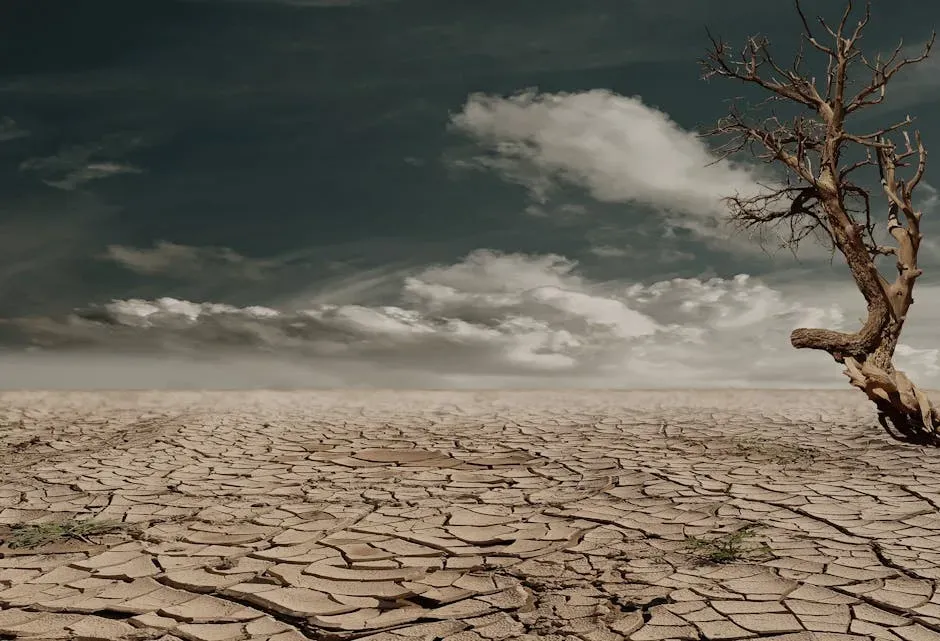
Berkeley Earth calculated that 770 million people – one out of every 12 people on the planet – experienced record annual heat in 2025, with 450 million of them in China. Other record hot spots included much of Australia, northern Africa, the Arabian peninsula and Antarctica. The U.S. experienced 23 billion-dollar weather and climate disasters in 2025 – including its most costly wildfire and a record number of billion-dollar severe storms. These are not abstract projections. They are losses already counted in lives, homes, and livelihoods.
From 1995 to 2024, more than 832,000 lives were lost and direct economic losses of nearly USD 4.5 trillion were recorded, driven by more than 9,700 extreme weather events. The 2025 WMO report links climate to growing health challenges, with 1.2 billion workers exposed to heat stress annually and about half the world’s population at risk of dengue fever. A study published in Nature forecast that climate change could lead to 123 million additional malaria cases and 532,000 additional deaths in Africa between 2024 and 2050 under current malaria control levels. Extreme weather events are thought to cause 79% of additional cases and 93% of additional deaths. The trend is moving in only one direction, and the pace is not relenting.

- A New Climate Trend Scientists Are Concerned About – And Why It Matters - March 29, 2026
- 10 Warning Signs Seismologists Say Could Signal an Active Fault Line Nearby - March 28, 2026
- 9 Unexplained Geological Events That Still Alarm Scientists Today - March 28, 2026
