


- I Studied Climate Migration Trends – Here Are 10 Reasons People Are Relocating - March 31, 2026
- 7 Climate Myths That Scientists Say Need to Be Retired - March 31, 2026
- Florida Facing One of Its Driest Periods in Decades as Drought Intensifies - March 30, 2026
Some ideas just refuse to die. No matter how much data accumulates, no matter how many record-breaking summers scorch the headlines, certain climate myths keep circulating in comment sections, political speeches, and even dinner table conversations. Honestly, it’s fascinating and a little unsettling at the same time. These are not just harmless misunderstandings. They actively slow down our response to one of the most urgent challenges humanity has ever faced.
So what are the claims that scientists most want to put to rest? Let’s dive in.
Myth 1: “Climate Has Always Changed, So There’s Nothing New Here”

This is probably the most polite-sounding myth on the list, because on the surface it sounds almost reasonable. Sure, the Earth’s climate has shifted before. Ice ages, warm periods, glacial retreats. But the problem is what’s happening now versus what happened then.
It is true that the planet’s temperature has long fluctuated, with periods of warming and cooling. Since the last ice age 10,000 years ago, however, the climate has been relatively stable, which scientists say has been crucial to the development of human civilization. That stability is now faltering.
What makes recent changes stand out is the unprecedented pace of change. Because the present human-caused carbon release rate is unprecedented during the past 66 million years, as scientists concluded in a 2016 study in Nature Geoscience, the rate of temperature rise is 10 times faster than that of the last mass extinction about 56 million years ago.
The World Meteorological Organization reported that 2024 was the hottest year in recorded history, breaking temperature records on every continent. Speed matters enormously in this story. The planet can adapt to slow changes. Life cannot keep pace with what’s happening now.
Myth 2: “It’s Just a Natural Cycle – Humans Aren’t the Cause”

Here’s the thing: natural forces like volcanoes and solar cycles do influence Earth’s temperature. No serious scientist would deny that. The question is whether they explain what we’re seeing right now. They don’t. Not even close.
Natural changes in the sun’s activity or large volcanic eruptions have caused ancient shifts in the Earth’s temperatures and weather patterns, but over the last 200 years, these natural causes have not significantly affected global temperatures. Today, it’s human activities that are causing climate change, primarily due to the burning of fossil fuels like coal, oil, and gas.
Ice core records and deep-sea sediments analyzed by NOAA scientists reveal that natural cycles, such as those caused by volcanic eruptions and solar changes, cannot account for the rapid temperature spikes seen since 1950. The World Climate Research Programme reported in January 2025 that industrial emissions are now the dominant force altering Earth’s climate.
By measuring everything from ice cores to tree rings, scientists have been able to track concentrations of greenhouse gases. Carbon dioxide levels are at their highest in 2 million years, while two other greenhouse gases, methane and nitrous oxide, are at their highest in 800,000 years. Let that sink in. Two million years. Nature alone cannot explain this.
Myth 3: “A Couple of Degrees of Warming Is No Big Deal”

I know it sounds crazy, but a lot of people genuinely hear “1.2 degrees warmer” and think it sounds like a slightly nicer afternoon. They are picturing a slightly milder winter, maybe. What they aren’t picturing is cascading ecosystem collapse, intensifying storms, and shrinking coastlines.
Small temperature rises can throw the world’s delicate ecosystems into disarray, with dire implications for humans and other living things. The Paris Agreement on climate change aims to limit average global temperature rise to well below 2 degrees Celsius, and preferably to 1.5 degrees Celsius, since pre-industrial times. Even that half-a-degree swing could make a massive difference.
The number of climate-related hazards has increased fivefold in the past 50 years. In 2024, 45.8 million people were displaced due to weather-related disasters.
Average annual costs from climate disasters rose from between 70 and 80 billion dollars annually from 1970 to 2000 to between 180 and 200 billion dollars from 2001 to 2020, reflecting the growing intensity and impact of climate-driven extreme events. Think of it like compound interest. The damage isn’t linear. It accelerates.
Myth 4: “Cold Winters Prove Global Warming Isn’t Real”

Every time a snowstorm hits, someone somewhere shouts “So much for global warming!” It’s a remarkably persistent reflex. Climate scientists have been debunking this one for decades. Yet here we are, still having this conversation in 2026.
Climate scientists say that statements pointing to cold winters as proof against warming conflate short-term weather trends with long-term climate changes. The unusually cold air spilling into regions is an example of weather, while climate is an average of temperatures across the world over time that shows warm areas outweighing cold ones.
The Arctic is warming, on average, four times faster than the rest of the planet, an effect called Arctic amplification. Scientists think this uneven rate of warming is weakening the polar jet stream, the band of air circling the Arctic that typically keeps Arctic air in northern regions, allowing frigid air to more easily dip into the south.
The National Oceanic and Atmospheric Administration recently ranked 2025 as the third-warmest year since 1850. Notably, the 10 warmest years in the 176-year record have all occurred since 2015. Cold snaps are weather. Warming is the long game, and the long game is winning.
Myth 5: “Scientists Don’t Agree on Climate Change”
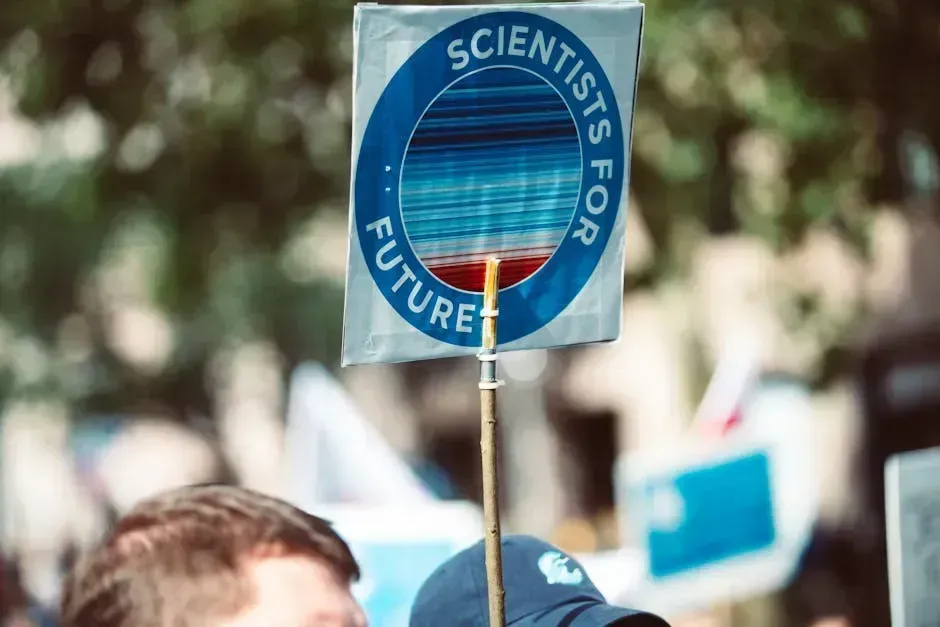
This one might be the most strategically deployed myth of all. The idea of a “debate among scientists” has been used masterfully to make the public feel uncertain, to suggest that more research is needed before any action is taken. Let’s be real: this framing has been enormously useful for those who want to delay climate policy.
A 2024 survey in the journal Environmental Research Letters revealed that 97 percent of climate scientists worldwide agree that climate change is primarily driven by human activities. This consensus extends across major organizations such as NASA, the American Geophysical Union, and the World Meteorological Organization. A meta-analysis of 11,602 peer-reviewed studies published between 2012 and 2023 showed that fewer than 1 percent disputed human-driven climate change.
Most climate change myths have been perpetuated by fossil fuel companies, their political allies, and others with vested interests in the status quo. For decades, they have spent millions of dollars on advertising, think tank studies, and lobbying to confuse the public, policymakers, and the press and thereby forestall climate action.
Despite this scientific consensus, only 1 in 5 Americans understand that almost all climate scientists agree that climate change is real and caused by humans. That gap is called the “Consensus Gap.” That gap is one of the most expensive knowledge gaps in human history.
Myth 6: “Renewable Energy Can’t Power the Modern World”
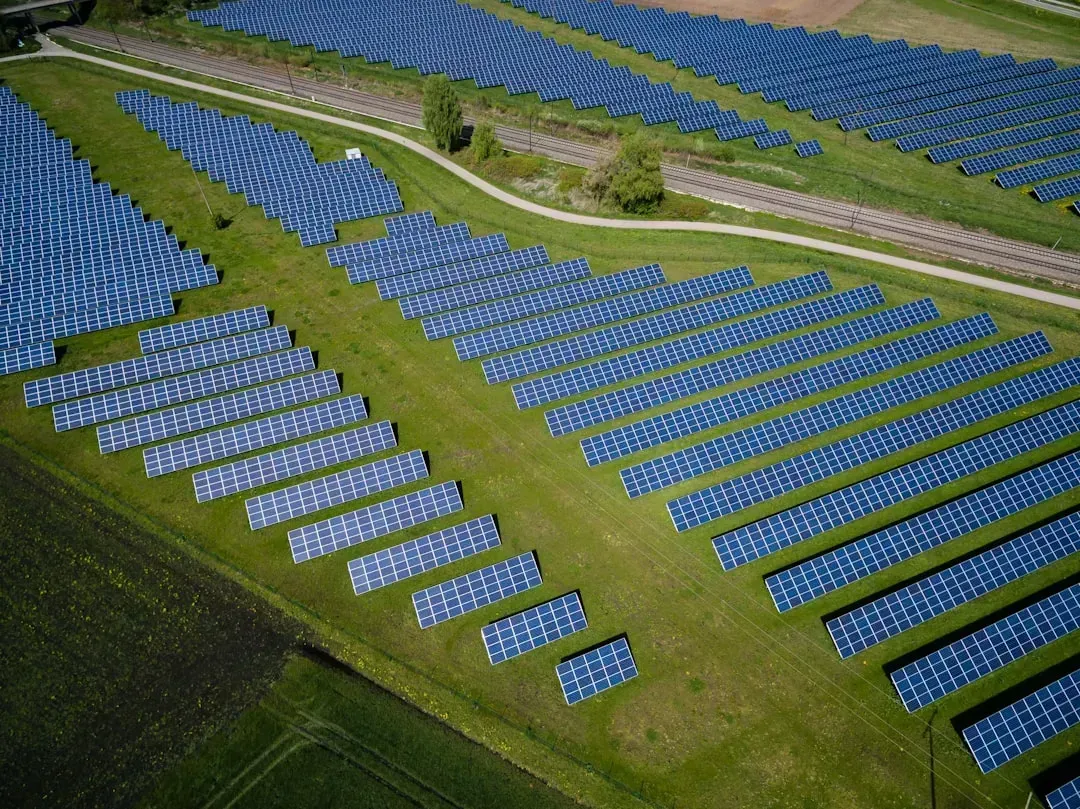
This myth has aged particularly badly. The argument used to be that solar and wind were expensive, unreliable pipe dreams. The data from 2024 and 2025 has essentially made that argument obsolete. And yet the myth persists, often in policy discussions and energy debates.
The world has witnessed a seismic shift in the competitiveness of renewable power options since 2010: by 2024, solar PV had become 41 percent cheaper than fossil fuels, while onshore wind was 53 percent cheaper.
According to Ember, renewables accounted for 34.3 percent of global electricity in the first half of 2025, for the first time generating more power than coal, which came in at 33.1 percent. That is a genuinely historic milestone, and it happened quietly, without much fanfare.
Denmark and Germany now generate more than half of their electricity from renewables, and China installed 230 gigawatts of new solar capacity in 2024 alone. Battery storage technology has also improved, with grid-scale batteries now providing reliable backup for intermittent sources. Real-world case studies, such as California’s 2024 achievement of running on 100 percent renewables for multiple days, demonstrate that meeting society’s needs with clean energy is not just possible but already happening.
Myth 7: “Climate Models Are Unreliable and Often Wrong”
Skeptics have long argued that climate models are too uncertain to be trusted. There’s a surface-level logic to this. Models are simplifications of an incredibly complex system. Of course they have limitations. But “limited” and “unreliable” are very different things, and that distinction matters enormously.
Climate models are built on well-established physics and real-world data which continue to improve in accuracy. Such models have effectively predicted global temperature rise, sea level increase, and Arctic ice loss over decades.
A 2020 study by the University of California showed that global warming models were largely accurate. The study looked at 17 models that were generated between 1970 and 2007 and found 14 of them closely matched observations. That’s an accuracy rate any forecasting tool in any field would be proud of.
The attribution science connecting recent record temperatures to human-caused climate change is robust. Climate attribution studies published in Nature and Science in early 2026 found that the probability of 2025’s temperature anomaly occurring without human-caused warming is approximately 1 in 10,000. El Niño conditions in 2024 to 2025 contributed only a fraction of that anomaly, with the bulk attributable to accumulated greenhouse gas forcing. These models aren’t guessing. They’re tracking.
The Bottom Line

Seven myths, seven mountains of contradicting evidence. What’s striking is that none of these misconceptions are new. Scientists have been debunking them for years, in some cases for decades. Yet they cycle back with each news cycle, each cold snap, each politically convenient moment.
The evidence from the latest research in 2024, 2025, and 2026 is not softening the picture. It’s sharpening it. Climate change is already affecting every region on Earth. Changes in rainfall patterns, rising sea levels, melting glaciers, a warming ocean, and more frequent and intense extreme weather events are just some of the changes already impacting millions of people.
Understanding which claims are myths and which are facts is not just an intellectual exercise. It’s the foundation for every sensible decision we make as individuals, communities, and countries going forward. What would it take for you to finally retire one of these myths from your own thinking?
