
Few headlines about climate change feel new anymore, yet the data released over the past year deserves a close read. The World Meteorological Organization, the UN Environment Programme and the Global Carbon Project have each published major assessments in 2026. Taken together, they describe a climate system that keeps shifting while emissions cuts lag behind.
The picture isn’t uniformly bleak, and it shouldn’t be told that way. Some indicators are at record extremes, and some emissions trends are improving. The core concern from scientists is the gap between the two.
A Decade of Record Heat
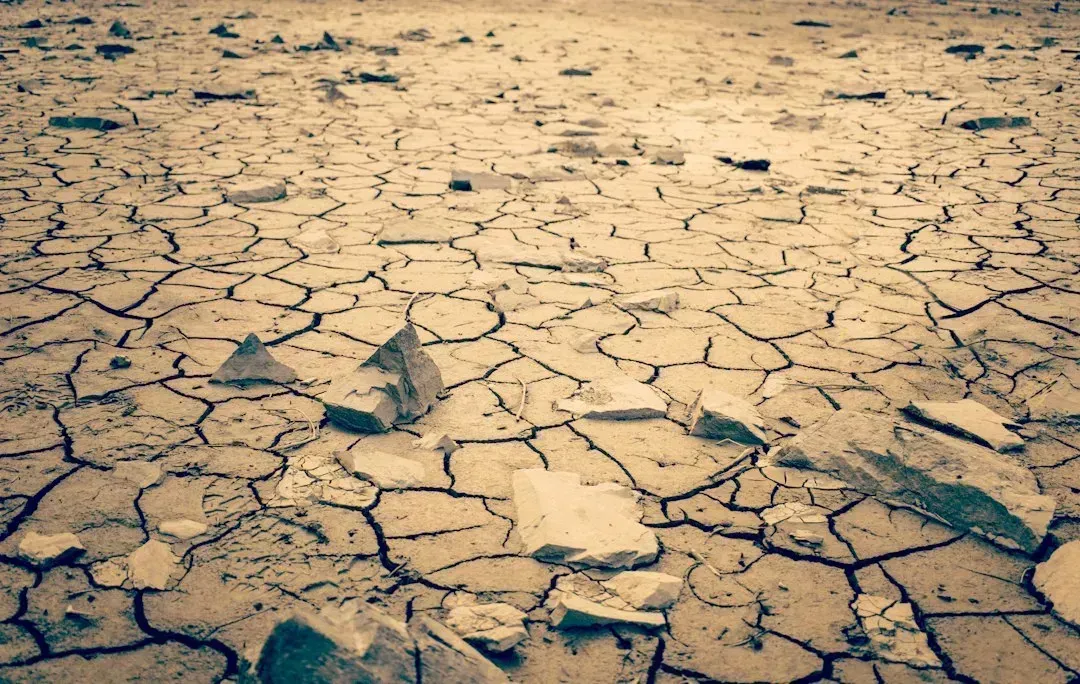
The WMO’s State of the Global Climate 2025 report, published on 23 March 2026, confirms that 2015 to 2025 were the 11 hottest years on record, with 2025 reaching around 1.43°C above pre-industrial levels. That makes it a decade of sustained heat rather than a single freak year. Each recent year has landed in territory that would have looked extreme a generation ago.
Interestingly, 2025 wasn’t the hottest year. It ranked as the second or third hottest, depending on the dataset. A cooling La Niña helped, yet temperatures remained historically high even so. That’s the telling detail, because a weak cooling influence now barely dents the long-term trend.
The Planet’s Energy Imbalance Hits a Record
For the first time, the WMO report identifies Earth’s energy imbalance as a key indicator, showing a record high in 2025. In plain terms, the planet is absorbing more energy from the sun than it sends back to space. Greenhouse gases are the reason, since they trap heat that would otherwise escape.
This matters because it points to warming that is still in the pipeline. The WMO’s overview describes the climate as increasingly out of balance, driven by rising greenhouse gas concentrations that are warming the atmosphere and oceans and accelerating ice melt. Surface temperature is only one measure, and the imbalance suggests more adjustment is coming even before new emissions are counted.
Oceans Are Absorbing the Shock

Most of that excess energy ends up in the sea. More than 90 per cent of excess heat is stored in the ocean, where warming has accelerated sharply in recent decades. The WMO also notes the ocean has been taking up the equivalent of about eighteen times the annual human energy use each year for the past two decades.
The record isn’t only about heat. A WMO update prepared for COP30 found that ocean heat content in 2024 was the highest on record, exceeding the 2023 value by 16 zetajoules, with an uncertainty of 8. The ocean also absorbs carbon dioxide, and the report notes that global average ocean surface pH has declined over the past 41 years. That acidification is a separate pressure on marine life.
Ice Loss and Rising Seas
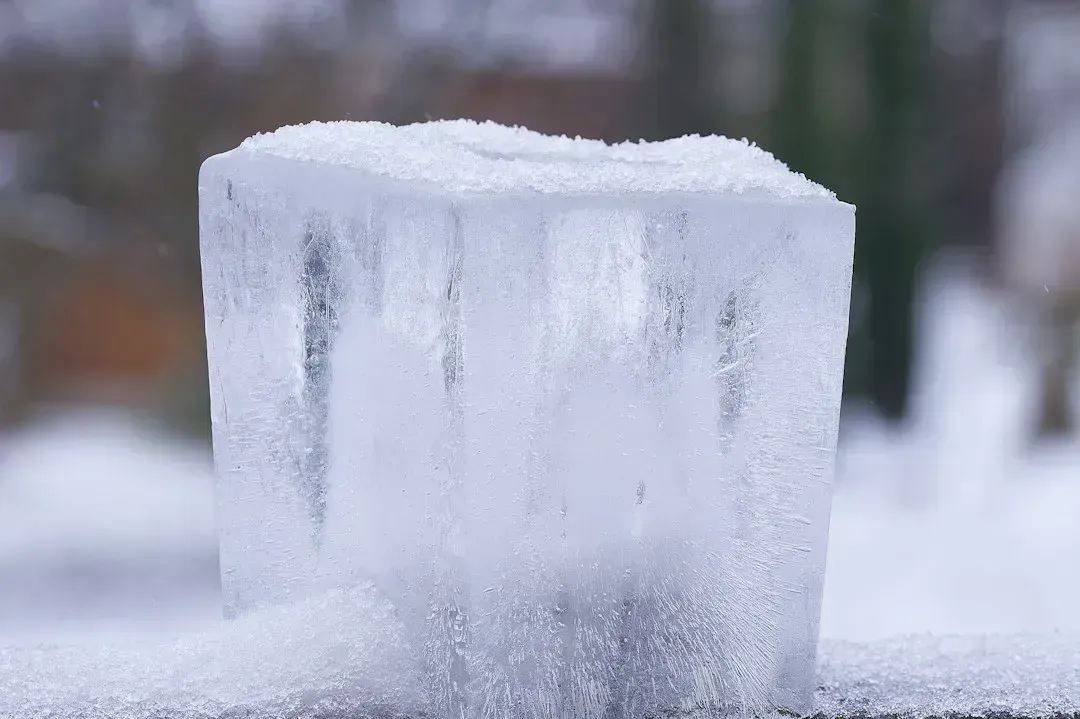
The polar regions show the same direction of travel. Annual Arctic sea ice extent was at or near a record low, Antarctic sea ice extent was the third lowest on record, and glacier melt continued unabated. Those losses matter beyond the poles, because ice reflects sunlight and its disappearance feeds further warming.
Sea level is the slow, stubborn consequence. Sea levels continue to rise, now about 11 cm higher than in 1993. That may sound modest. Still, coastal flooding, storm surge and saltwater intrusion all become harder to manage as the baseline creeps upward, and the WMO’s wider assessment describes this as part of a longer commitment: the repercussions will last for hundreds if not thousands of years.
What Heat Means for Human Health
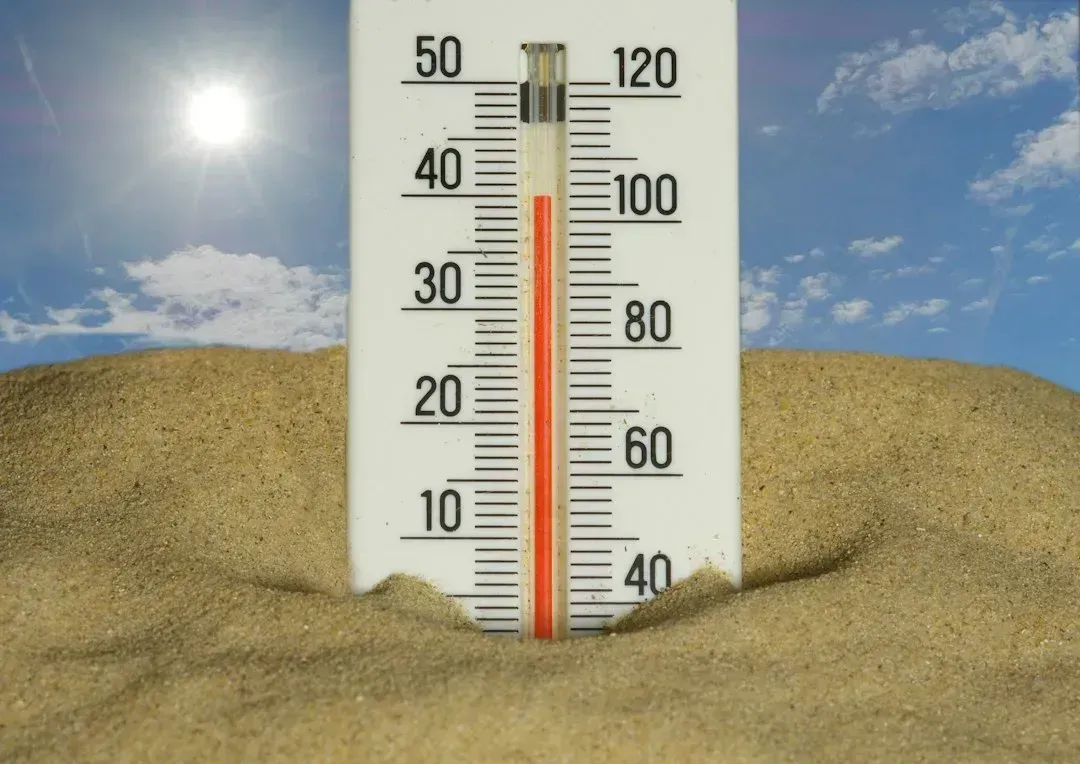
The WMO report ties the physical data to people. It links climate to growing health challenges, with 1.2 billion workers exposed to heat stress annually, and about half the world’s population at risk of dengue fever. Those figures show how a global average temperature turns into local risk.
The report also connects extremes to everyday disruption. Climate extremes are directly linked to rising food prices, health risks, power outages and displacement. On the response side, there is some progress. The COP30 update noted that early warning systems have improved, though 40% of countries still lack multi-hazard early warning systems.
Emissions Are Slowing, But Not Peaking
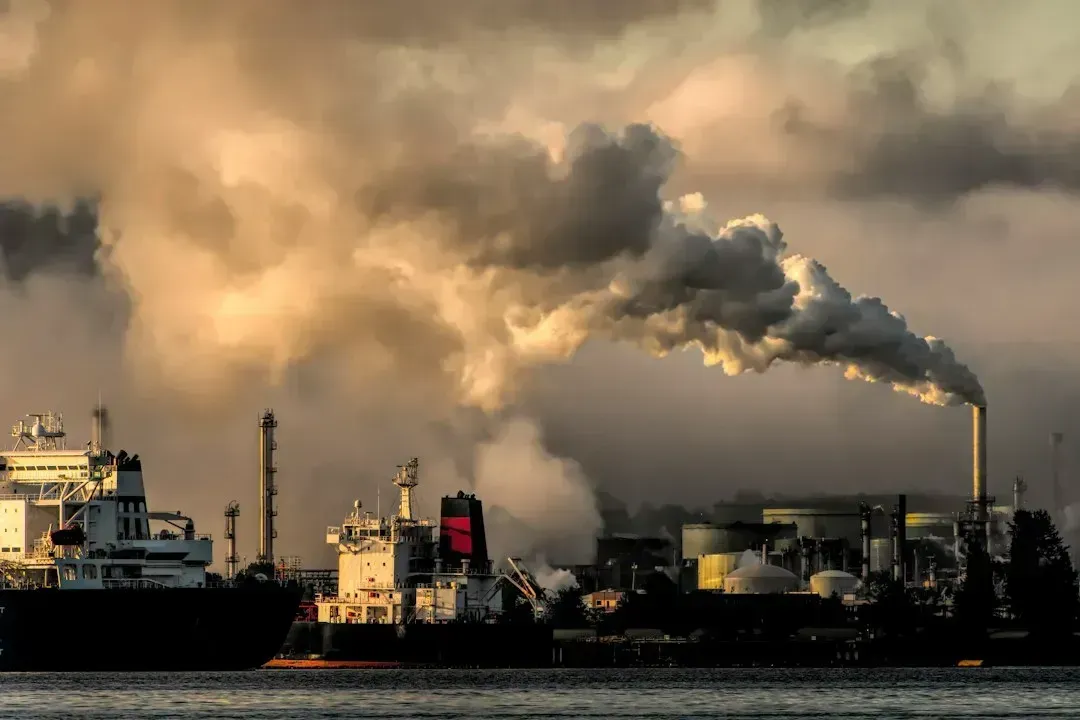
Here the story gets more mixed. The 2026 Global Carbon Budget, published on 10 November, projects fossil fuel emissions will fall 0.4% in 2026, driven by expansion of solar and wind power and the Iran conflict. Oil emissions are expected to drop, likely a short-term response to the energy shock triggered by the Iran conflict, while coal is projected to rise 0.6%.
The researchers are careful not to oversell it. Lead author Pierre Friedlingstein said a reduction driven partly by geopolitical shocks is not a sustainable climate solution. The report’s authors also say a rebound is likely, and that clean energy growth isn’t yet fast enough to lock in a lasting decline.
A Carbon Budget Nearly Spent
The same report offers a stark measure of time. The remaining carbon budget for 1.5°C is now 150 billion metric tons, equivalent to less than four years of emissions at the current rate. Total CO2 emissions, including land use, are projected to be 43.3 billion metric tons in 2026, up from 42.8 billion last year.
Atmospheric concentrations keep climbing as a result. The study says CO2 is set to reach 427.7 ppm in 2026, 54% above pre-industrial levels. There is one encouraging long-run note: total CO2 emissions have grown more slowly in the past decade, at 0.3% per year, than in the previous decade, at 1.7% per year. Slower growth is real progress, but it isn’t the same as decline.
Overshooting 1.5°C Is Now the Working Assumption
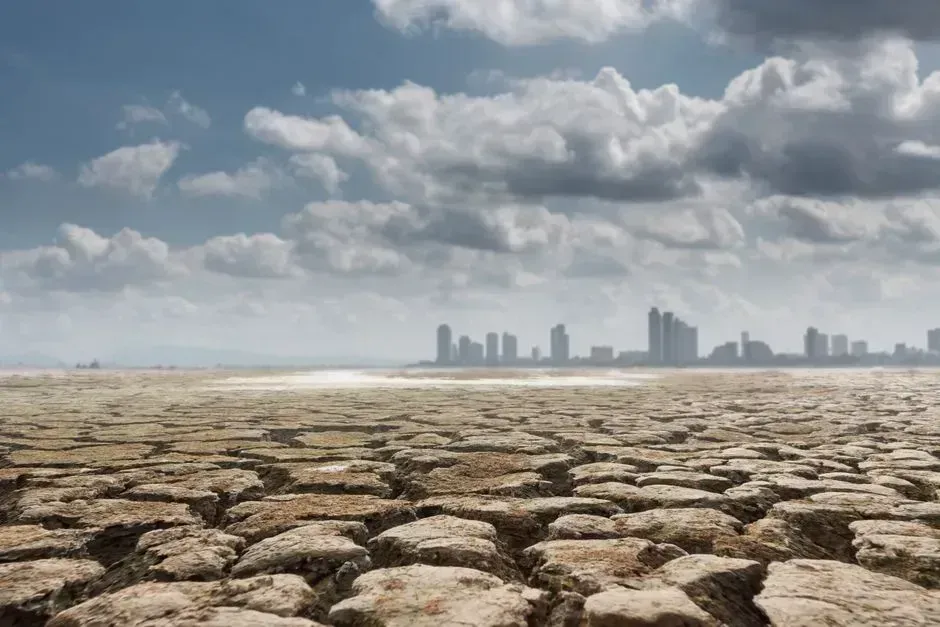
UNEP’s Emissions Gap Report 2026, titled The Point of Return, makes the most direct statement. The chance of holding warming to 1.5°C with no or limited overshoot is now gone. It adds that new national climate pledges submitted since the last report have hardly made a difference. The report also says outcomes are worse than last year’s projections, citing the United States withdrawing from the climate deal and revised estimates of historical emissions.
Yet the report doesn’t call for surrender. It describes a “lowest possible” scenario in which peak warming around mid-century is limited to 1.7 to 1.8°C and temperatures return to or below 1.5°C by 2100, with about a 50 per cent chance. Getting there would require emissions cuts of 18% by 2030 and 45% by 2035, alongside increasing CO2 removal throughout the century. UNEP also says it is possible to close the gap, pointing to climate policies that have already delivered real emissions cuts.
Conclusion: Acceleration Is Real, but the Outcome Isn’t Fixed
So is climate change ? The evidence supports a careful yes on some fronts. Energy imbalance, ocean heat and ice loss are at or near records, and emissions haven’t fallen anywhere near fast enough to match the pace the science now demands. Meanwhile, the pledges on the table fall short of UNEP’s required cuts.
The evidence also shows response isn’t absent. Emissions growth has slowed, clean technology is spreading, and policies have measurably cut emissions in many places. The question for the next few years is whether that momentum can be pushed from a slowdown into a steep decline, because every year of delay makes the overshoot larger and the way back longer.

- Scientists Warn Climate Change Is Accelerating Faster Than We Can Respond - November 17, 2026
- Ocean-Sized Rivers in the Sky – Why This Season’s Rain Corridors Are Drenching Coasts Twice as Hard - November 17, 2026
- Dry Asphalt to Pure Black Ice in 12 Minutes – The Fast-Moving Flash Freeze Drivers Never See Coming - November 17, 2026
