

There is something quietly fascinating about the wisdom your grandmother rattled off while looking at the sky. No weather app, no satellite imagery. Just a lifetime of watching clouds, dew, and caterpillars. These sayings have traveled through centuries, sometimes across entire continents, passed from farmers to sailors to the rest of us.
Long before meteorologists reported the weather, people made forecasts based on their observations of the sky, animals, and nature. Some of that wisdom turns out to be surprisingly well-grounded in science. Other parts? Not so much. Let’s dive in and see which old sayings hold up, and which ones belong purely in the realm of charming folklore.
1. “Red Sky at Night, Sailor’s Delight. Red Sky at Morning, Sailor’s Warning.”
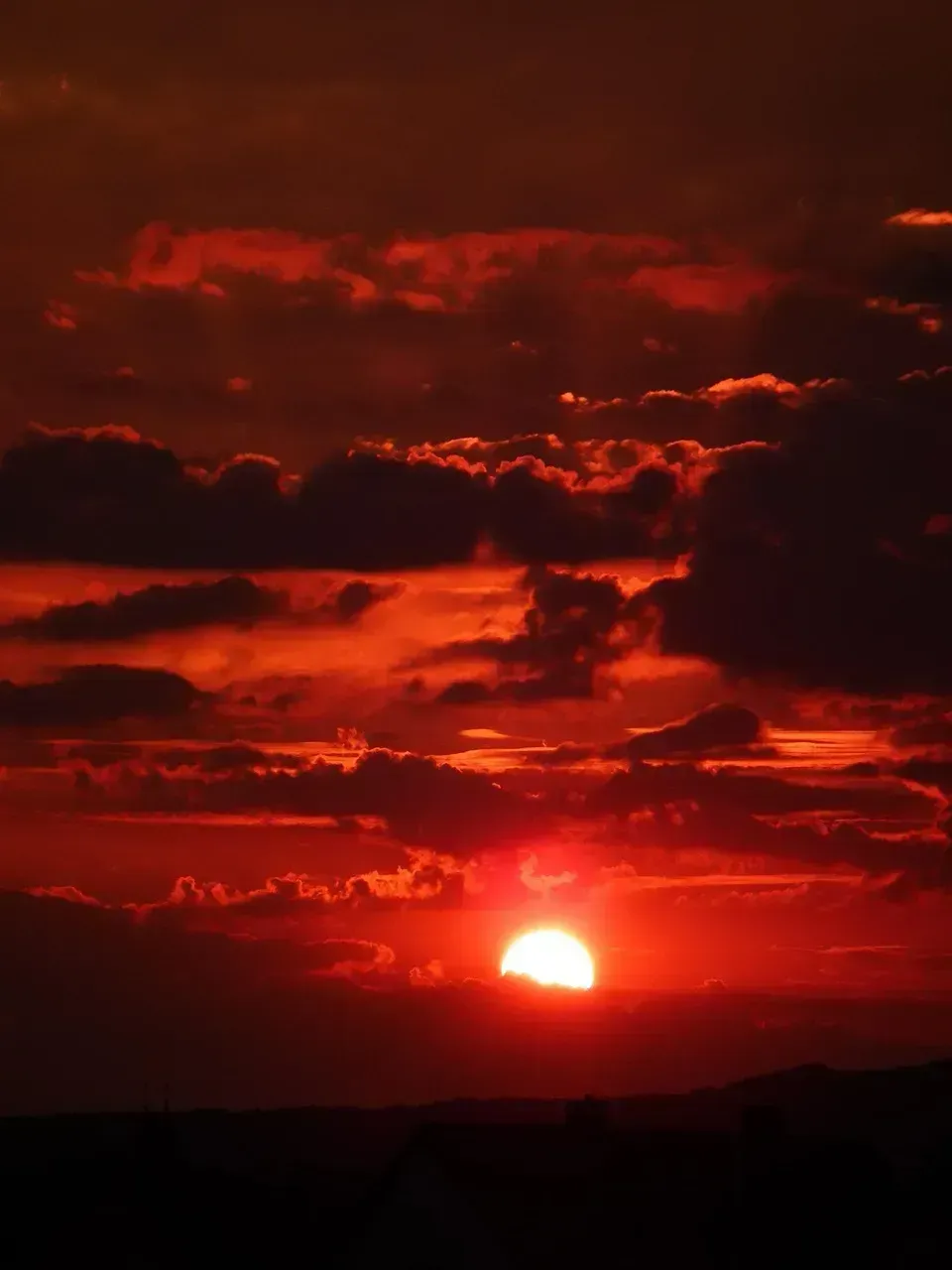
Here’s a wild thought: one of the most accurate weather forecasting tools in history is a rhyme you probably first heard from a grandparent. The concept is over two thousand years old and is cited in the New Testament by Jesus in Matthew 16:2-3. The rhyme has been used as a rule of thumb for weather forecasting during the past two millennia.
Two factors contribute to the accuracy of this saying. The first is that weather systems generally travel from west to east in the mid-latitudes. Because the sun rises in the east and sets in the west, a rising sun in advance of an approaching weather system would illuminate the approaching clouds to create a red sky in the morning.
A reddish sunrise means that dry air from the west has already passed over, clearing the way for a storm to move in. The high-pressure air has likely already moved from west to east, and an area of low pressure may follow. Low pressure usually brings clouds, rain, or storms – a warning for sailors that bad weather is moving in.
However, this folklore doesn’t work at all in overcast conditions or at tropical latitudes, where weather often moves from east to west. So your grandpa was right, but only if he wasn’t living near the tropics.
2. “A Halo Around the Moon Means Rain or Snow Is Coming Soon.”
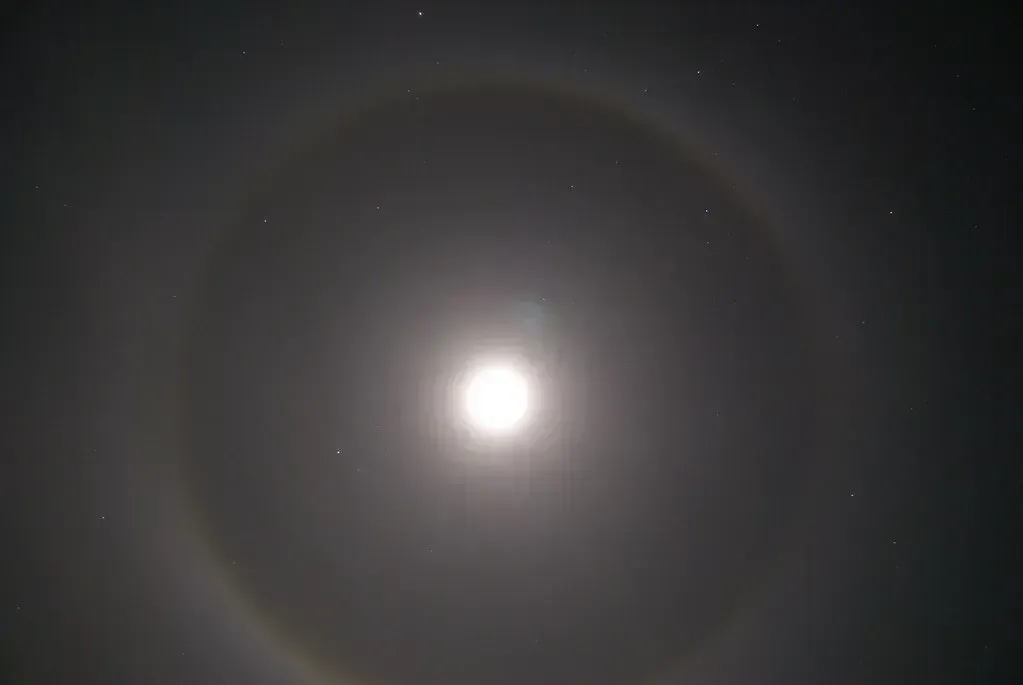
Look up on a clear winter night and you might spot a pale ring glowing around the moon. Older generations take that as a serious weather sign. Honestly, I think they’re onto something here.
This phrase can often be a decent indicator as to whether or not precipitation is on its way. Halos are an optical phenomenon caused when light refracts off ice crystals in high cirrus clouds in the upper atmosphere. Water vapor in the atmosphere increases ahead of storms, so the formation of halos can sometimes be an indication that wet weather is approaching.
Many of these proverbs are based on a certain truth. A ring around the moon usually indicates an advancing warm front, which means precipitation. Under those conditions, high, thin clouds get lower and thicker as they pass over the moon, and ice crystals are reflected by the moon’s light, causing a halo to appear.
While a halo around the moon can indicate that a weather system is approaching, it doesn’t guarantee rain or snow. Think of it less like a weather alarm and more like a gentle nudge to keep an umbrella handy.
3. “When Dew Is on the Grass, Rain Will Never Come to Pass.”
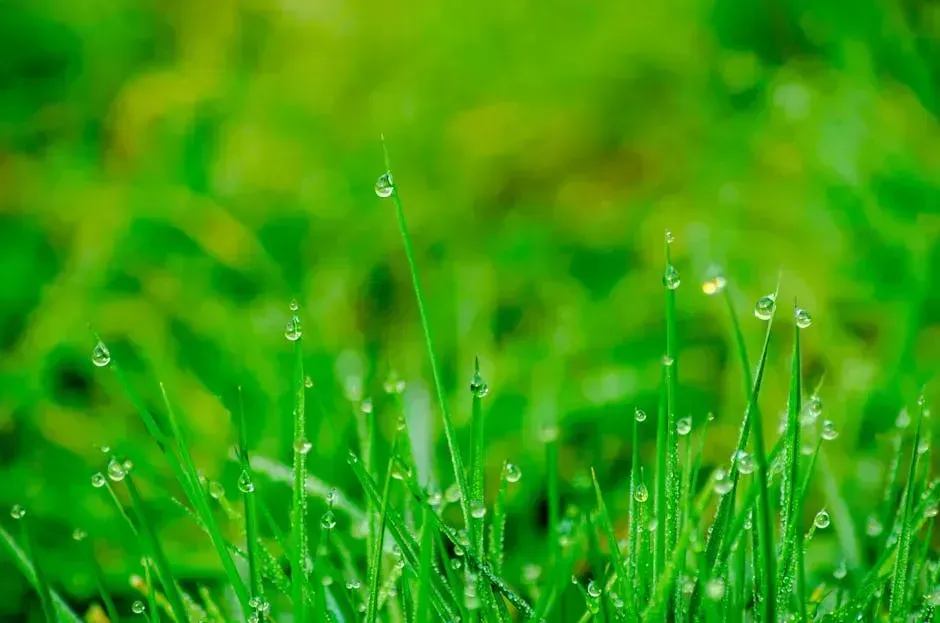
This one has a satisfying logic to it. Dew on the grass at dawn feels like the earth exhaling after a calm, clear night. Generations of farmers read it as a signal that fair weather was holding.
The saying goes: when dew is on the grass, rain will never come to pass. Dew often forms in the morning after a cool and clear night. These water droplets form on surfaces when the temperature dips below the dew point temperature.
The science actually supports the core logic here. Clear, calm nights allow the ground to radiate heat away rapidly. This cooling produces dew – and it also means no storm system is rolling in. Weather lore concerning the appearance of the sky, the conditions of the atmosphere, and the type or movement of clouds may have a scientific basis and can likely predict the weather.
Where experts push back is on the absoluteness of the claim. Dew can also form in humid conditions that precede afternoon thunderstorms, especially in summer. So the saying works reasonably well in temperate, stable weather patterns, but it is far less reliable during muggy, unstable seasons.
4. “March Comes In Like a Lion and Goes Out Like a Lamb.”
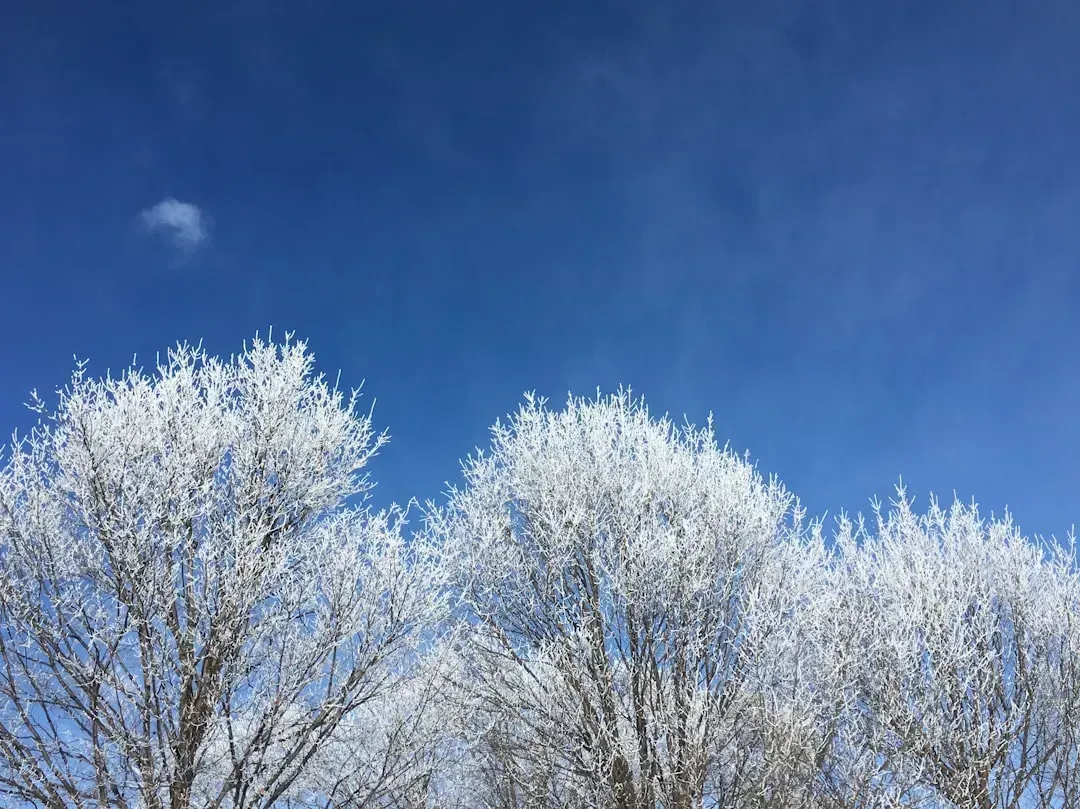
Every older relative seems to trot this one out in late February. It captures something real about seasonal transitions. The saying essentially describes March as a month of dramatic weather mood swings.
March is a month of transition as winter gives way to spring, so the weather can be quite variable. The first half of the month often features cold, stormy conditions, while the latter half tends to be milder as spring approaches.
This saying holds true in many places, but March weather can be fickle, so it’s not a guarantee. Meteorologists note that this is one of those sayings where the general pattern is real, but the precise framing is too tidy for reality.
Here’s the thing – weather in 2026 is even more unpredictable than it was when this saying first spread. Climate variability means March can equally deliver a heat wave in the first week and a blizzard in the last. Location plays a large role in the accuracy of a weather saying. A weather saying that is true in one area may not be true in another.
5. “The Woolly Bear Caterpillar Predicts Winter Severity.”

This one is pure autumn nostalgia. The idea is irresistible: a fuzzy little caterpillar with black and brown bands, waddling across a leaf-strewn path, somehow knows what January has in store.
Woolly bear caterpillars have long been said to predict winter weather. The wider the rusty brown band on their body, the milder the winter. More black? A harsher season may be ahead.
The reality, unfortunately, punctures the magic. The truth is that this caterpillar can’t predict what winter has in store. The woolly bear caterpillar’s coloring is based on how long the caterpillar has been feeding, its age, and species. The better the growing season, the bigger it will grow.
Biologist Frank Fowler said, “There have been a lot of studies, a lot of folklore, about the Woolly Bear, and no studies have ever concluded they actually predict future weather events.” In other words, their color tells you about the summer that just passed – not the winter that’s coming.
Even though the weather-predicting powers of this caterpillar seem to be overblown, the folklore has caused people to fall in love with these creatures all the same. There are even several places that hold festivals in the woolly bear’s honor.
6. “Mackerel Sky, Mackerel Sky – Never Long Wet, Never Long Dry.”
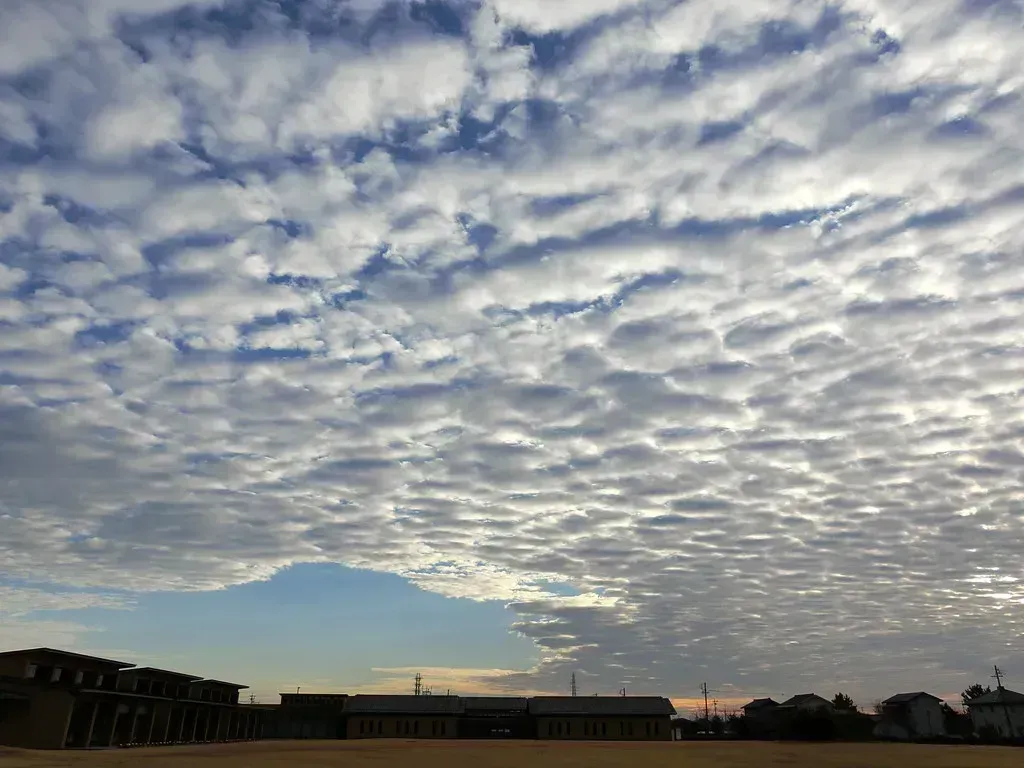
If you’ve ever gazed up at a sky covered in small, rippled cloud patches that look almost like fish scales, you’ve seen what sailors called a “mackerel sky.” The old saying suggests it signals changeable, unsettled weather on the way. Turns out, this one has real teeth.
If you have ever seen very high, rippled clouds that look like fish scales, sailors call it a “mackerel sky” and indicate that a storm may follow. A mackerel sky refers to high cirrocumulus clouds. These clouds often precede an advancing warm front that will bring winds and precipitation.
This lesson about weather sayings explores accuracy and origins, including sayings like “Mare’s tails and mackerel scales make tall ships take in their sails.” Sailors used this knowledge practically, adjusting sails and altering routes in response to those unusual cloud formations.
Where experts add nuance is in the timing. The phrase “never long wet, never long dry” suggests rapid change, and while cirrocumulus clouds do often precede weather fronts, the actual onset of rain can be many hours away. Recent research suggests that traditional weather wisdom has a surprising overall accuracy rate. That’s not just a lucky guess – it’s a testament to generations of keen observation and practical knowledge passed down through time.
7. “Pine Cones Open, Dry Weather; Pine Cones Closed, Wet Weather.”

This last one might be the most quietly brilliant of the bunch. It sounds impossibly simple – glance at a pine cone on the forest floor and know whether rain is coming. Yet there is real, demonstrable science at work here.
This is one of the sayings that is grounded in scientific fact. The opening and closing of pine cones is dictated by humidity. In dry weather, pine cones open out as the drying scales shrivel and stand out stiffly. In damp conditions, the increased moisture allows more flexibility and the cone returns to its normal closed shape.
Unlike many other weather sayings, this one works through a direct physical mechanism. Pine cones are essentially natural hygrometers – instruments that measure atmospheric moisture. The scales respond to changes in relative humidity almost in real time.
The main reservation experts raise is that pine cone behavior reflects current humidity, not necessarily what is coming. High humidity often precedes rain, but it is not always followed by it. Still, as a low-tech signal of dampness in the air, it is one of the few weather sayings that has been passed down throughout centuries with actual scientific reasoning behind it.
The Bigger Picture: Old Wisdom in a Modern World

It’s hard not to feel a strange respect for these sayings after digging into the science. Some of them have real meteorological grounding. Others are lovely stories built on misread signals. Most fall somewhere in between.
For centuries, farmers and sailors – people whose livelihoods depended on the weather – relied on lore to forecast the weather. They quickly connected changes in nature with rhythms or patterns of the weather. That earned knowledge deserves some credit, even when the conclusions don’t fully hold up.
Dating back thousands of years, weather forecasting had to rely less on scientific data and more on human experience. The sayings became particularly important in sailing and agriculture, as people looked for reliable forecasts. From this developed the old weather sayings and phrases we see and hear today.
The truth is that weather folklore was the original data science. People were pattern-matching across thousands of observations over lifetimes, then compressing that data into memorable rhymes. Some patterns were real. Some were coincidences that stuck. Next time an older relative looks at the sky and calls the weather, it might be worth listening – at least a little. What do you think: which of these sayings did you grow up hearing, and did they ever prove right? Tell us in the comments.
