

3I/ATLAS: the interstellar visitor first spotted from Chile
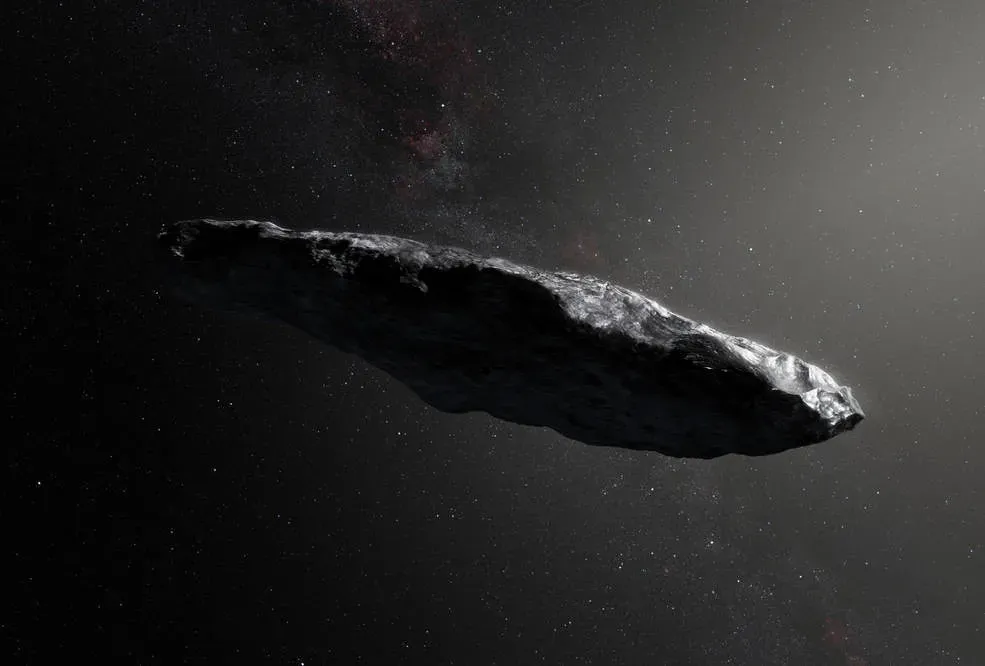
The story of 3I/ATLAS starts with a single detection at a modest survey station in the Chilean countryside. The comet was discovered by the Asteroid Terrestrial-impact Last Alert System survey in Rio Hurtado, Chile, on 1 July 2025, when it was 670 million kilometers from the Sun. That distance already told astronomers something unusual was going on, since it meant the object was bright enough to spot from remarkably far out.
Comet 3I/ATLAS is a rare interstellar visitor, not gravitationally bound to any star, and only the third such object ever identified. Its closest approach to Earth, at 270 million kilometers or 1.8 astronomical units, came on 19 December 2025. Researchers at institutions including Lowell Observatory have kept tracking it well into 2026, noting that its “cometary activity seems a bit delayed” compared with typical comets warming near the Sun. That lag has made it one of the more scientifically puzzling objects Chilean survey stations have ever flagged.
Comet C/2026 A1 (MAPS): a sungrazer tracked from the Atacama
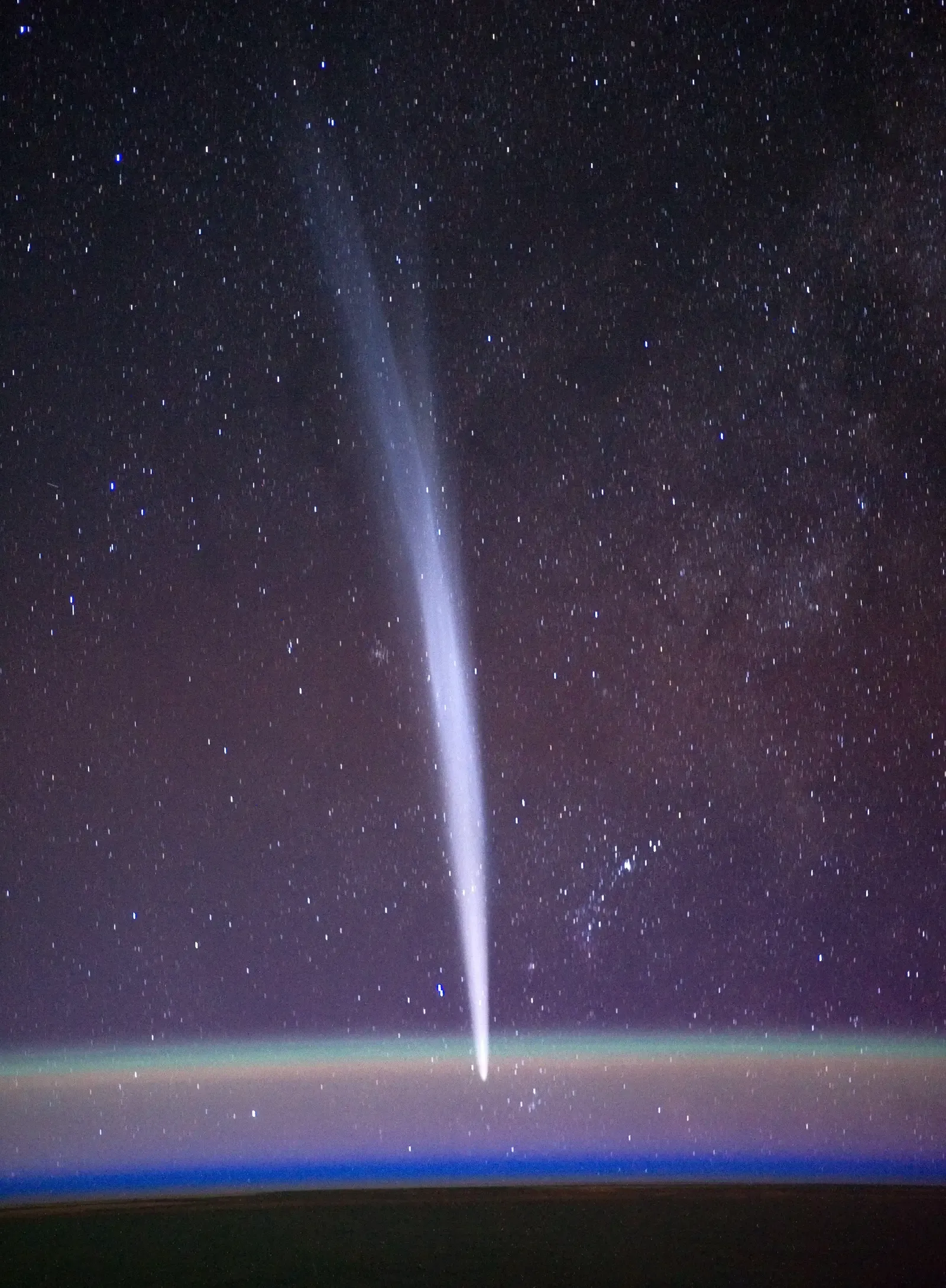
Not every notable find comes from a professional survey camera. Comet C/2026 A1, nicknamed MAPS, was picked up by a small team of observers working from a station in Chile in January of this year. It was discovered at the AMACS1 site in Chile on 13 January 2026, with precovery images tracing it back to mid December 2025.
What makes MAPS worth watching is its orbit. Classified as a Kreutz sungrazer, it has an aphelion of roughly 307 astronomical units and a perihelion of just 0.005729 astronomical units, meaning it swings almost directly past the Sun’s surface. Its orbital period runs somewhere between roughly 1,700 and 1,900 years, and it reached its most recent perihelion on 4 April 2026, with an Earth minimum orbit intersection distance of 0.556 astronomical units. That MOID figure keeps it on the watch list even though it poses no immediate danger, since orbit refinements on long-period comets can shift meaningfully as more data comes in.
The 33 near-Earth asteroids hidden in Rubin’s first big data haul

The Vera C. Rubin Observatory, perched on Cerro Pachón in central Chile, has quickly become the country’s most productive asteroid-hunting machine. In one especially large batch of results released this year, the observatory’s early survey data turned up an enormous number of previously uncatalogued objects. Using preliminary data from the Simonyi Survey Telescope, scientists discovered over 11,000 new asteroids, confirmed by the International Astronomical Union’s Minor Planet Center, including hundreds of distant worlds beyond Neptune as well as 33 previously unknown near-Earth objects.
Those 33 near-Earth asteroids did not arrive all at once from a single night of observing. The discoveries came in three bursts, with 73 objects found during early test observations using Rubin’s Commissioning Camera in late 2024, 1,514 found during First Look observations in April and May 2025, and the recent 11,000 found in Rubin’s early optimization surveys during the summer of 2025. Researchers involved in the project have been blunt about what this means going forward, describing the current haul as just the opening chapter. As one summary from the discovery team put it, these asteroids are just the start.
2025 MN45: Rubin’s record-breaking fast spinner

Among the objects Rubin’s cameras picked up during commissioning, one asteroid stood out enough to earn its own peer-reviewed paper. The record-breaking space rock, called 2025 MN45, is larger than most skyscrapers on Earth at about 710 meters wide, and completes a rotation in about 113 seconds, making it the fastest-spinning known asteroid over 500 meters in diameter. That is an astonishingly quick spin for something so large, and it immediately raised questions about how loosely or tightly the object’s material is bound together.
The find was not a one-off. Within the same flurry of data, a team of astronomers discovered 19 super and ultra-fast-rotating asteroids, with 2025 MN45 turning out to be the fastest-spinning asteroid larger than 500 meters ever found. The observations behind this discovery used data collected over about ten hours across seven nights in April and May of 2025, during Rubin’s early commissioning phase. It is a reminder that even short observing windows from Cerro Pachón can produce results that reshape what astronomers thought they knew about asteroid dynamics.
ATLAS Chile: the frontline sentinel at El Sauce
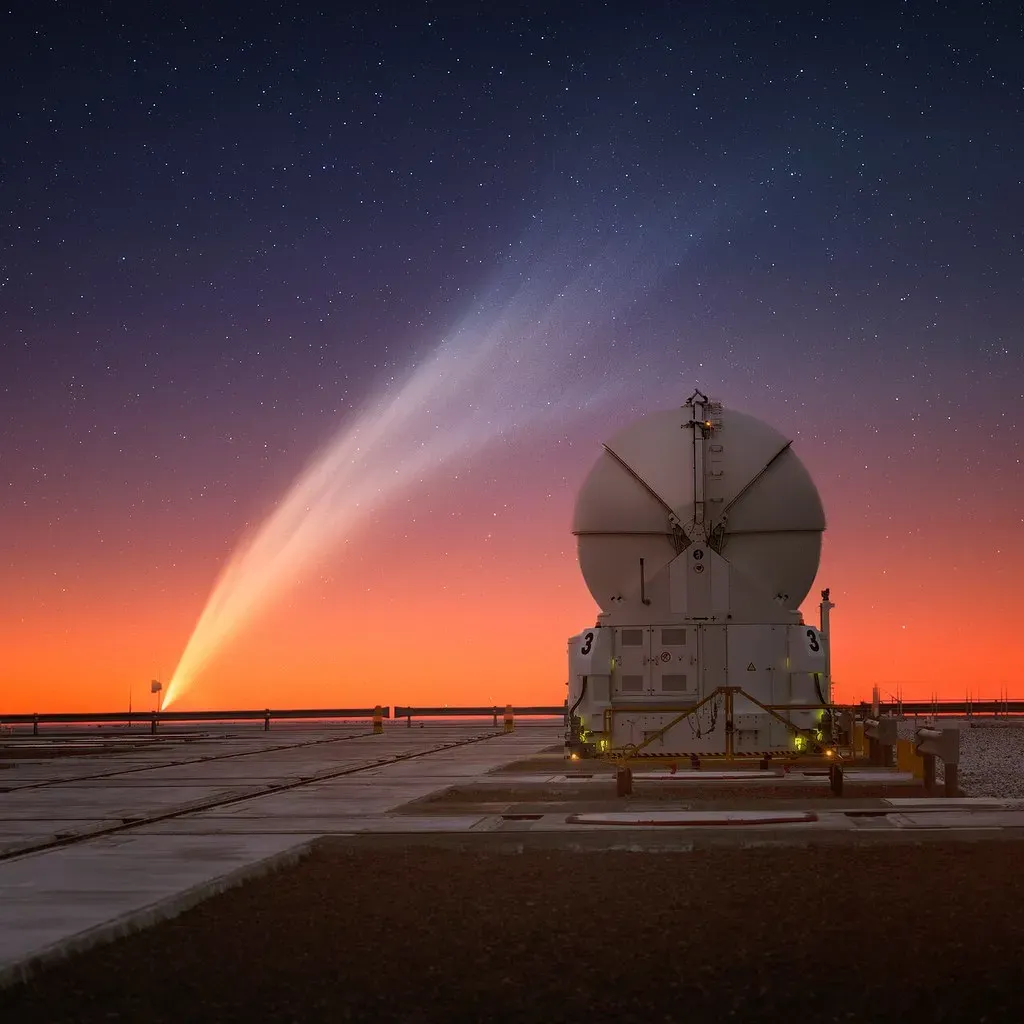
Long before Rubin came online, a smaller and less glamorous network was already doing the daily grind of near-Earth object detection from Chilean soil. The Asteroid Terrestrial-impact Last Alert System, known as ATLAS, runs a station at El Sauce Observatory that fills a critical gap in global sky coverage. The completion of that station, along with a sister station in South Africa, allows ATLAS to observe the night sky when it is daytime in Hawaii.
The numbers behind ATLAS’s overall track record are notable on their own. To date, the ATLAS system has discovered more than 700 near-Earth asteroids and 66 comets, along with detecting 2019 MO and 2018 LA, two very small asteroids that actually impacted Earth. The system is specially designed to detect objects that approach very close to Earth, closer than the distance to the Moon, about 384,000 kilometers away. That narrow but crucial niche, catching the smallest and closest objects other surveys might miss, is exactly why the Chilean station matters so much to the network as a whole.
Why Chile’s dark skies matter for planetary defense

None of this happens by accident. Chile’s combination of high altitude, extremely low humidity, and minimal light pollution has drawn major astronomical infrastructure to its northern deserts for decades, from La Silla to Cerro Tololo to Paranal. That existing scientific ecosystem gave newer near-Earth object programs a ready-made foundation of expertise, power, connectivity, and dark, stable air to build on.
What sets this year apart is the scale of overlap between projects. Rubin’s Simonyi Survey Telescope, ATLAS’s El Sauce station, and independent observers running smaller setups like AMACS1 are now producing detections that feed into the same global tracking pipeline managed by the Minor Planet Center. The result is a layered detection system, small automated telescopes catching fast, close objects, and Rubin’s enormous camera sweeping up fainter, more distant ones, working together rather than in isolation. For anyone watching the near-Earth object field, Chile in 2026 looks less like one country’s contribution and more like the backbone of the whole search effort.

- Flood and Cyclone Warnings: What Makes an Early Warning System Effective - October 14, 2026
- Saharan Dust Over Europe: What It Means for Air Quality and Sunsets - October 14, 2026
- Climate Normals: The 30-Year Averages Behind Every “Above Average” Forecast - October 14, 2026
