

Most people picture smoking factory chimneys when they think of climate change. Giant corporations, oil pipelines, cargo ships the size of city blocks. It feels far away, almost abstract. The uncomfortable truth, though, is that some of the most damaging contributors to our warming planet are hiding in our living rooms, our wardrobes, and on our dinner plates.
Researchers have been zeroing in on individual consumer habits with growing urgency. The latest indicators show that human activities are continuing to increase the Earth’s energy imbalance and are driving faster sea-level rise than previously assessed. The gap between what we think we’re doing and what we’re actually doing to the climate is enormous. Let’s dive in.
1. Eating Beef Several Times a Week

Honestly, this one tops the list for a reason. The numbers are staggering, and yet the habit persists. Livestock production accounts for between 14 and 18 percent of global greenhouse gas emissions, including nearly a third of methane emissions worldwide. Methane is a much more potent short-term warming agent than carbon dioxide, which makes this particularly alarming.
Beef production accounts for a significant portion of carbon emissions, registering 8 to 10 times more than chicken and up to 50 times more than beans. Methane produced by cattle digestion is particularly harmful, as it traps more heat than carbon dioxide, actively accelerating climate change.
More than 11 million tons of meat is consumed in U.S. cities annually, equating to about 329 million tons of carbon emissions, according to a study published in the scientific journal Nature Climate Change. To put that in perspective, emissions from meat consumption in the U.S. exceed total annual carbon emissions from both the UK and Italy combined.
A 2023 study found that small substitutions within the same food group, like swapping high-carbon meats for lower-carbon ones, could reduce the average American’s dietary carbon footprint by up to 38 percent, while also improving overall diet quality. You don’t need to go fully vegan overnight. Small, frequent swaps actually add up to something real.
2. Throwing Away Food Without a Second Thought
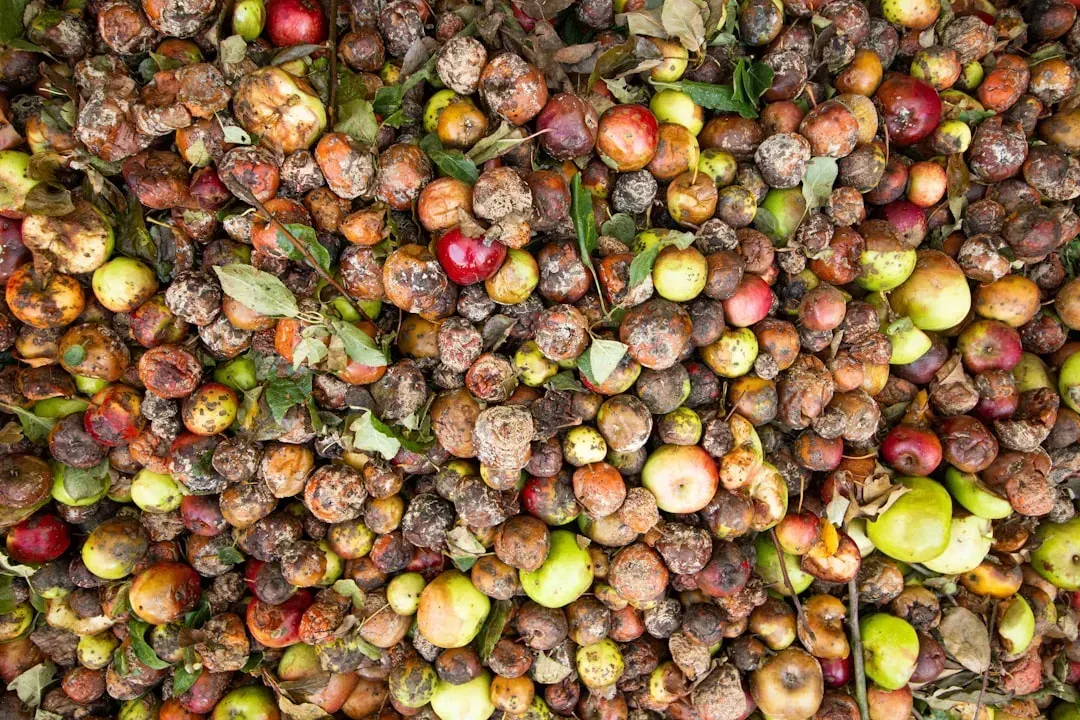
Here’s the thing about food waste: it feels minor in the moment. A forgotten bag of salad. Half a loaf of bread. Leftovers that never get eaten. But scaled up globally, the picture is shocking. Over a billion tons of food, representing about 17 percent of all food available to consumers worldwide, goes into trash bins every year. Producing, transporting, and letting that food rot contributes more than 8 to 10 percent of global greenhouse gas emissions, nearly five times the total emissions from the aviation sector.
If food waste were a country, it would be the third-largest emitting country in the world. Think about that the next time you scrape half a plate into the bin. When you throw away food, you’re also wasting the energy, land, water, and fertilizer that was used to produce, package, and transport it.
Research published in Scientific Reports in 2025, which analyzed 118 life-cycle assessment studies, found something equally troubling: only 22 percent of studies include waste in their calculations, revealing up to 39 percent higher emissions in some food categories compared to those that exclude waste. That means the real emissions from food waste are likely far higher than most of us realize.
3. Binge-Watching Streaming Content on Large Screens

Streaming seems completely harmless. You’re just sitting on your couch, right? It’s more complicated than that. In 2024, Netflix users watched 94 billion hours of content, and over 122 million Disney+ subscribers streamed about 28 billion hours. Since video streaming now makes up 60 to 70 percent of global internet traffic, its environmental impact is now too big to overlook.
According to a Greenly analysis, Netflix’s total streaming emissions reached approximately 5.17 million metric tons of CO₂e in 2024, comparable to driving 18.6 billion miles in a gasoline-powered car. Add in Disney+, Amazon Prime Video, YouTube, and other platforms, and global video streaming produces emissions rivaling those of small countries.
The device you choose matters enormously. The carbon footprint of watching on a 50-inch TV is about 4.5 times higher than on a laptop, and 90 times higher than on a smartphone. Slowing efficiency gains, rebound effects, and new demands from emerging technologies including artificial intelligence and blockchain are raising increasing concerns about the overall environmental impacts of the sector over the coming decades.
A 2024 study from Lawrence Berkeley National Laboratory estimated that U.S. data centers used 17 billion gallons of water for cooling in 2023, and projections suggest this could double or even quadruple by 2028. That’s a water crisis quietly unfolding in the background of every Netflix session.
4. Buying Fast Fashion and Discarding It Quickly

That rush of buying a cheap new outfit you’ll wear twice before it falls apart? It’s one of the planet’s worst kept secrets. The fashion industry is now responsible for 10 percent of the global annual carbon footprint, which is more than the emissions from all international flights and maritime shipping combined. That’s a figure that still makes me do a double-take every time I see it.
Research published in 2024 found that the carbon footprint of fast fashion consumption is 11 times higher than that of traditional fashion consumption, with jeans production and cross-border transportation contributing 91 percent of the carbon footprint of fast fashion consumption.
Even washing clothes releases 500,000 tons of microfibers into the ocean each year, the equivalent of 50 billion plastic bottles. According to a European Environment Agency report, textile purchases in the EU in 2022 generated about 355 kg of CO2 emissions per person, the equivalent of 1,800 km of travel by a standard petrol car.
Less than half of used garments are collected for reuse or recycling, and only 1 percent of used clothes are recycled into new clothes. It’s hard to say for sure whether most consumers grasp just how permanent the damage from a single discarded garment really is. Research shows that the second-hand trading model has the highest mitigation potential, reducing carbon emissions by up to 90 percent.
5. Idling Your Car Engine While Waiting
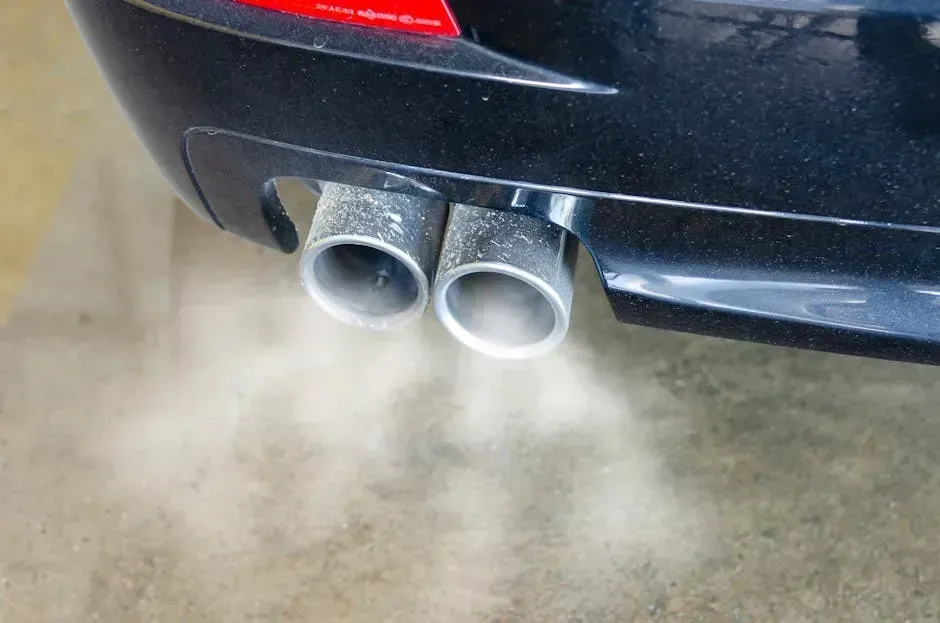
Most drivers don’t think twice about leaving the engine running while parked outside a shop or sitting at a long traffic light. It feels trivial. But the cumulative impact across millions of drivers is anything but. The U.S. Department of Energy has stated that U.S. passenger cars, light-duty trucks, medium-duty trucks, and heavy-duty vehicles consume more than 6 billion gallons of diesel fuel and gasoline every year without moving. Roughly half of that fuel is wasted by passenger vehicles.
Unproductive vehicle idling could contribute as much as 15 percent of the carbon dioxide emissions from U.S. land transportation, according to a 2025 study from MIT. That is comparable to half of the entire U.S. airline sector’s emissions. A sobering comparison for something most people consider totally harmless.
Idling for more than 10 seconds uses more fuel and creates more CO₂ than turning off and restarting your engine. Research suggests that if every driver of a light-duty vehicle in Canada avoided idling for just five minutes daily, we could prevent more than 6,000 tonnes of CO₂ from entering the atmosphere every year. Scale that worldwide and the numbers become astonishing.
6. Taking Short Car Trips Instead of Walking or Cycling

Let’s be real: we’ve all driven to a destination that’s a ten-minute walk away. Maybe it was raining, maybe we were running late. But this habit, repeated daily by hundreds of millions of people, carries a significant hidden climate cost. Road transportation contributes to about 17 percent of worldwide energy-related CO₂ emissions. Cold engines, which is what you’re using on short trips, are far less fuel-efficient than warmed-up ones, producing disproportionately higher emissions per kilometre.
Driving with a cold engine uses significantly more fuel, which is why combining errands into a single trip rather than making multiple short trips is one of the most practical ways to cut emissions. Aggressive acceleration alone can raise fuel consumption by as much as 37 percent. The habits pile up.
Road transportation is expected to remain a dominant emissions source for decades to come. Low-emission driving behavior, or eco-driving, can help reduce emissions from road transport vehicles at a low cost while also providing additional benefits for road safety. The simplest version of eco-driving is just walking, or cycling, for the trips that don’t actually need a car at all.
7. Leaving Devices on Standby and Overcooling or Overheating Homes

There’s a quiet energy drain happening in virtually every home on earth right now. Televisions glowing with standby lights. Phone chargers plugged into empty sockets. Smart speakers listening forever. Heating systems pushing a house to tropical temperatures in winter. Greener transportation methods, plant-based diets, shorter showers, turning off devices when not in use, and more energy-efficient devices are habits that researchers consistently highlight as meaningful contributors to reducing personal climate impact.
2026 is expected to continue to be exceptionally warm, seeing as 2025 broke multiple temperature records worldwide. This makes excessive home energy use all the more problematic at a time when the grid is already under climate-driven pressure. The irony of turning up the air conditioning because it’s hotter outside, when that very air conditioning contributes to it being hotter outside, is a loop we can’t afford to ignore.
Human activities are measurably increasing the Earth’s energy imbalance, as confirmed by the latest global climate indicators published in 2025. Standby power alone accounts for a surprisingly large chunk of household electricity consumption in most developed nations. Researchers from multiple institutions point to behavioral change at home as one of the fastest, cheapest ways to reduce personal carbon output. Switching devices fully off, adjusting thermostats by just a couple of degrees, and being mindful of phantom loads all make a measurable collective difference.
The Bigger Picture

What makes all seven of these habits so insidious is exactly how ordinary they are. Nobody feels like a climate villain when they order a steak or leave Netflix running. That’s precisely the problem. Many climate-relevant behaviours are habitual, meaning they are memory-based propensities to respond automatically to specific cues, acquired simply by repetition. Breaking them requires awareness before it requires willpower.
The science is consistent and growing louder. As long as we continue to emit extreme amounts of greenhouse gas and carbon dioxide emissions into the atmosphere, climate change will continue to worsen. Individual habits, multiplied across billions of people, aren’t a footnote to the climate crisis. They are a significant chapter of it.
The good news is that the very ordinariness of these habits means changing them is within reach for most people. Eating a little less beef, streaming on a smaller screen, walking for short trips, skipping the drive-through idle – none of these require sacrifice on a heroic scale. They require something harder, in a way: consistency. What would you change first?

