

Europa is a small, bright, cracked ball of ice orbiting Jupiter. It is smaller than Earth’s Moon, and from a distance it looks like a frozen, lifeless place. Nothing about its surface suggests abundance.
Yet NASA scientists think something very different is going on underneath. The claim is a big one, and it rests on measurements rather than direct sightings. It’s worth looking at how scientists got there and what they still don’t know.
A Moon Smaller Than Our Own
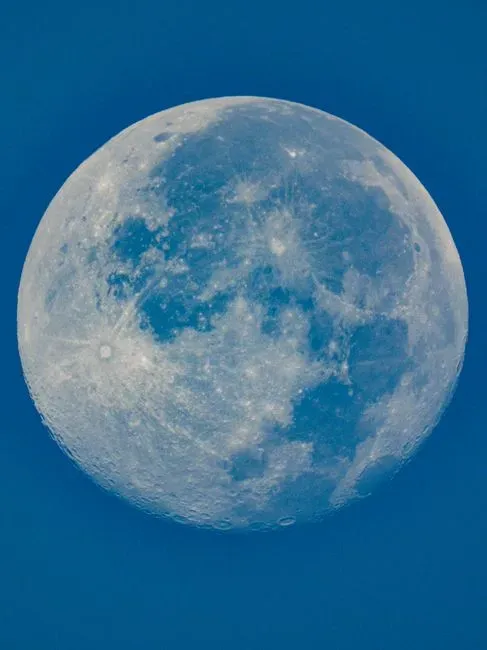
Europa is one of Jupiter’s four large Galilean moons. Its diameter is about 3,120 kilometers, compared with Earth’s 12,742 kilometers. That makes it a modest world by planetary standards.
Size, though, isn’t the whole story. It is slightly smaller than Earth’s Moon, but its outer layers appear to be rich in water. The surprise is how much of that water may be liquid.
Where the Twice As Much Figure Comes From
NASA’s numbers put the comparison in concrete terms. Earth’s oceans total roughly 1.4 billion cubic kilometers, while Europa’s ocean is estimated at about 3 billion cubic kilometers. That’s where the idea of roughly double comes from.
NASA words it carefully on its Europa page. Scientists believe a saltwater ocean lies beneath its icy shell, holding twice as much water as Earth’s global ocean. Notice the word believe. This is an estimate, not a measured total.
Why the Ocean Is So Deep

The math works because of depth. Earth’s oceans average about 4 kilometers deep, while Europa’s ocean is estimated at around 100 kilometers. A deep layer wrapped around the whole moon can add up fast.
Earth’s water also sits in basins on a surface that’s mostly rock, with seawater covering roughly seven tenths of it. Europa’s ocean, by contrast, is thought to be global. It would encircle the entire moon, with a rocky sea floor below.
The Ice Shell Overhead

Nobody can see this ocean, because it’s sealed under ice. NASA describes an estimated ice shell 15 to 25 kilometers thick, with an ocean potentially another 60 to 150 kilometers deep beneath it. Those are wide ranges for good reason.
Earlier estimates have been broader still, with some figures starting as low as 3 kilometers. These are estimates that Clipper will help test. Shell thickness matters because it affects how easily material could move between the surface and the water below.
How Scientists Know Something Is Down There

The strongest early clue came from the Galileo spacecraft. It showed how Jupiter’s magnetic field was disrupted in the space around Europa. That pattern pointed to a magnetic field being induced inside the moon.
This strongly implied a deep layer of some electrically conductive fluid beneath the surface. Given Europa’s icy composition, the most likely material is a global ocean of salty water. It’s strong inference, though not a direct look.
Jupiter’s Gravity Keeps It From Freezing

Far from the Sun, an ocean should freeze solid. Europa likely avoids that through tides. It may have a buried ocean maintained partly by tides, as Jupiter’s gravity flexes the moon.
That flexing is thought to generate internal heat. Sunlight, which warms Earth’s seas, plays almost no part here. The energy source is gravitational instead.
The Ingredients for Life

Water alone doesn’t make a habitable place. NASA lists four things Europa may offer. These are water, organics, chemical energy from the surface and sea floor, and stability, with conditions staying similar for about 4 billion years.
That is why researchers talk about habitability rather than life. No spacecraft has drilled through Europa’s ice, so whether those ingredients actually combine remains an open question. The ocean may be habitable without being inhabited.
Europa Clipper’s Journey
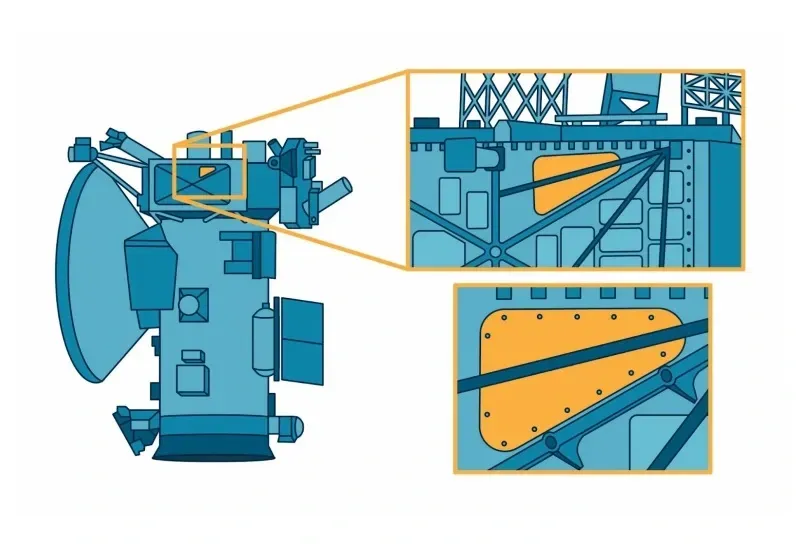
NASA launched Europa Clipper on October 14, 2024, to determine whether there are places below Europa’s surface that could support life. The launch followed a delay caused by Hurricane Milton. The spacecraft rode a SpaceX Falcon Heavy from Kennedy Space Center.
It flew past Mars on March 1, 2025, and swings past Earth on December 3, 2026. That Earth flyby gives it another gravity boost toward Jupiter. The journey is long by design.
What Comes Next at Jupiter
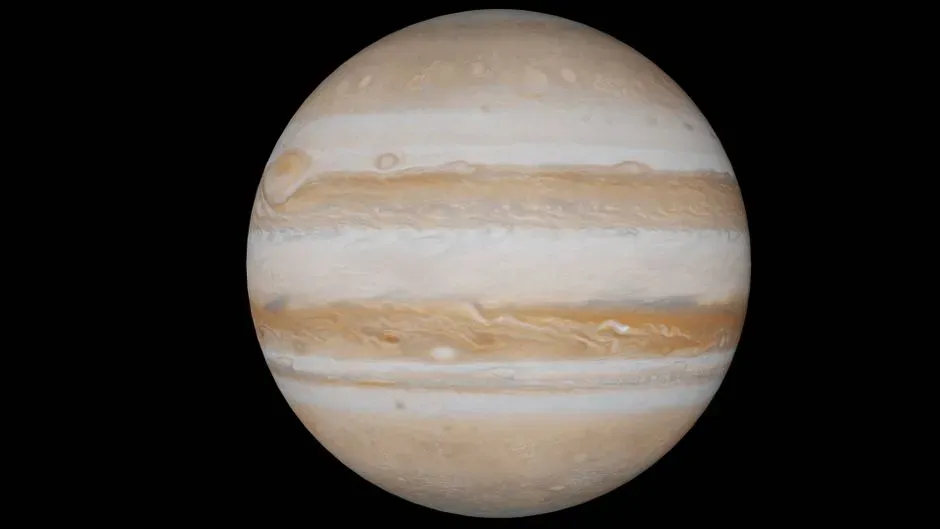
The spacecraft is scheduled to reach Jupiter in April 2030. It will then make 49 close flybys of Europa, some as low as 25 kilometers. Instead of orbiting the moon, it will loop around Jupiter and swing past Europa repeatedly.
Its instruments include radar, a magnetometer, imaging systems and a mass spectrometer. Scientists also hope to learn whether geysers spout from the surface, much like those on Saturn’s moon Enceladus. The answers on ocean depth and shell thickness will arrive in the 2030s.

- 9 Wildfire-Season Routines Many California Residents Follow - November 10, 2026
- Most US states face earthquake risk as major fault lines span the country - November 10, 2026
- The Joplin Tornado of 2011 Killed 158 People and Led to New Warning Language - November 10, 2026
