

Apollo 13 turned a near disaster into a defining moment
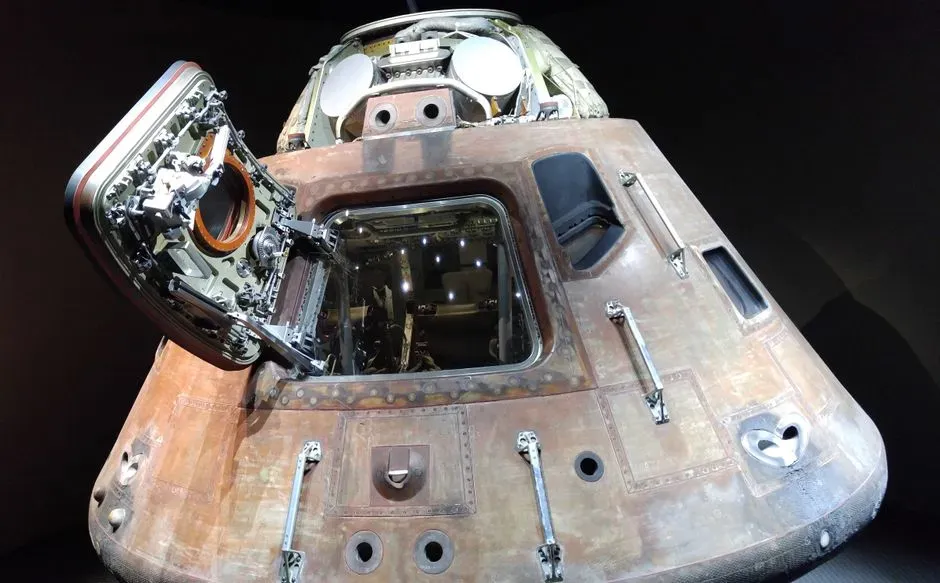
Apollo 13 launched on April 11, 1970, carrying commander Jim Lovell, lunar module pilot Fred Haise, and command module pilot Jack Swigert toward what was supposed to be the third crewed lunar landing. That bomb exploded on April 13, 1970, 200,000 miles from Earth, after an oxygen tank ruptured and knocked out the spacecraft’s main power and life support systems. The crew’s message to mission control, famously rendered in pop culture as “Houston, we’ve had a problem,” became one of the most quoted lines of the space age.
What happened next turned a failed mission into something even more memorable. The crew shut down the Command Module and used the Lunar Module as a “lifeboat” during the return trip to Earth. They splashed down safely in the Pacific on April 17, and the so-called “successful failure” of Apollo 13 engaged worldwide interest, demonstrated the capability of the crew and mission support teams, and came to represent a defining moment in NASA history. For kids watching in 1970, it was proof that space travel carried real stakes, not just triumph.
Apollo 17 closed the door on an era nobody expected to end so soon
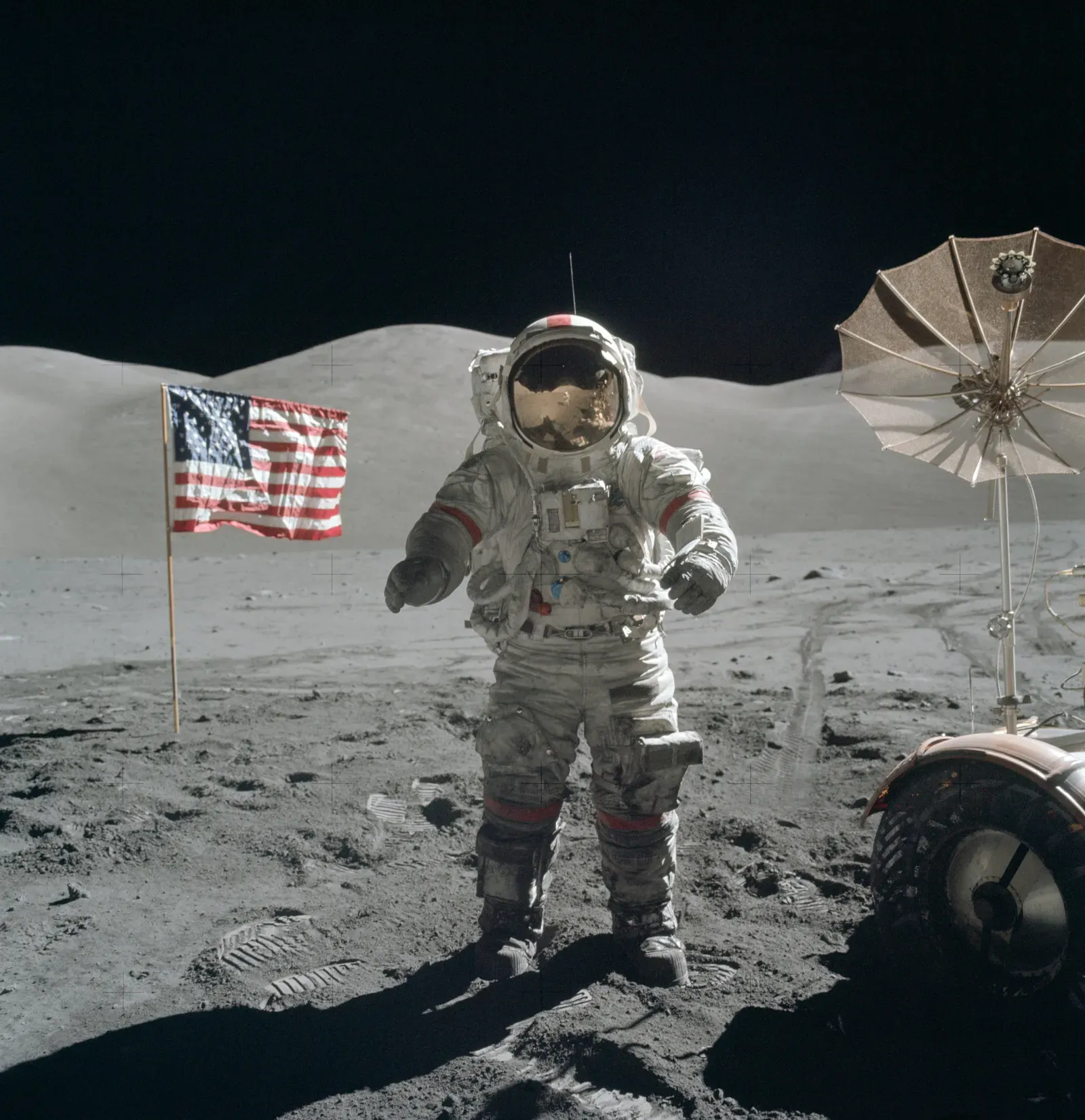
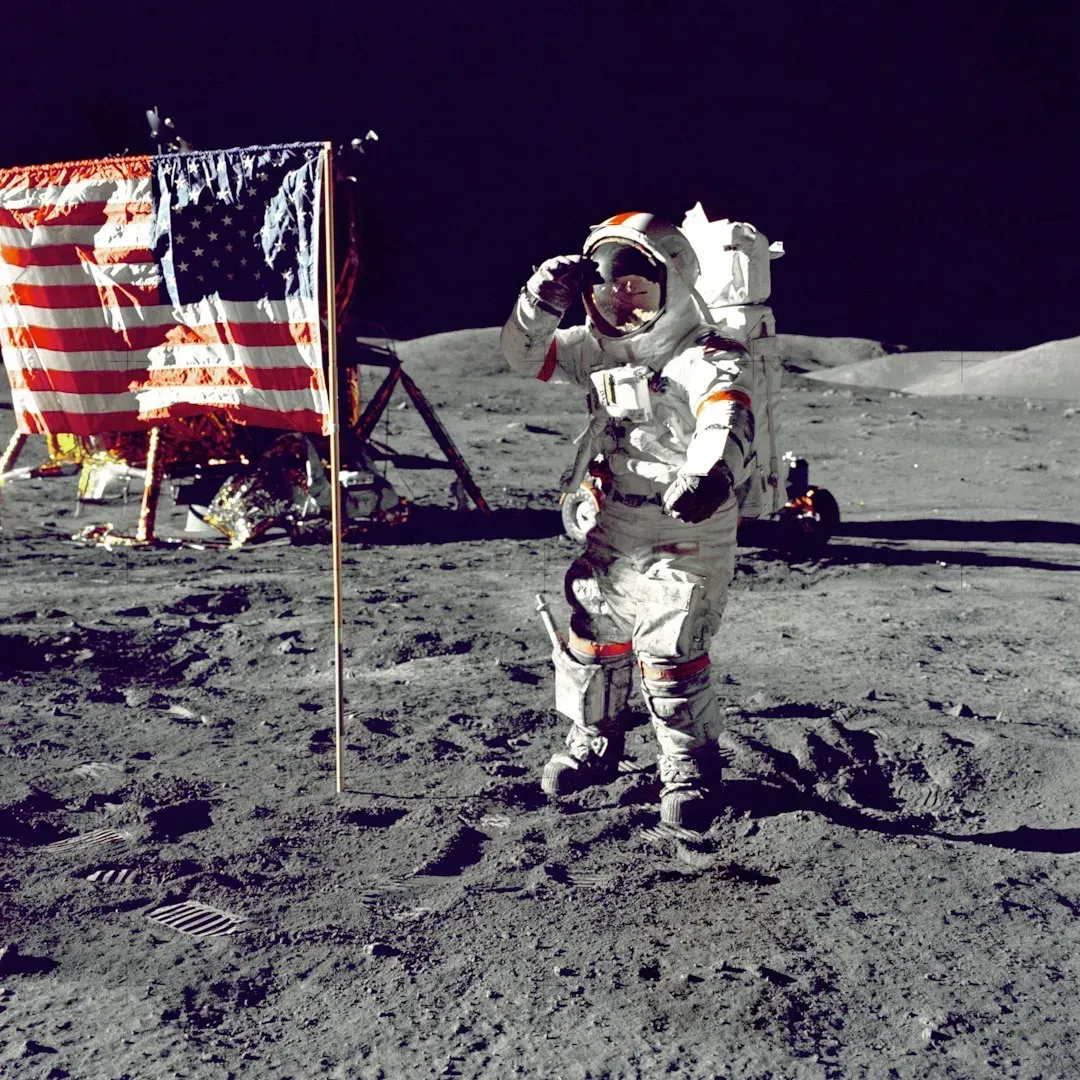
By December 1972, the moon landings had become almost routine in the public imagination, which made the ending feel more abrupt than anyone anticipated. Apollo 17 marked the sixth and final crewed lunar landing of the Apollo program, closing out a run of missions that had begun with such fanfare just three and a half years earlier. Eugene Cernan and Harrison Schmitt spent three days on the lunar surface, the longest stay of any Apollo crew, before lifting off and leaving humanity’s most recent bootprints on another world.
For children growing up through the rest of the decade, this created a strange gap. The moon had gone from an active destination to a place nobody was visiting anymore, and no one born after 1972 has walked on it since. That absence became part of the ’70s space story just as much as any launch, a quiet reminder that momentum in space exploration doesn’t always continue in a straight line.
Skylab’s shaky start turned into America’s first real space station triumph
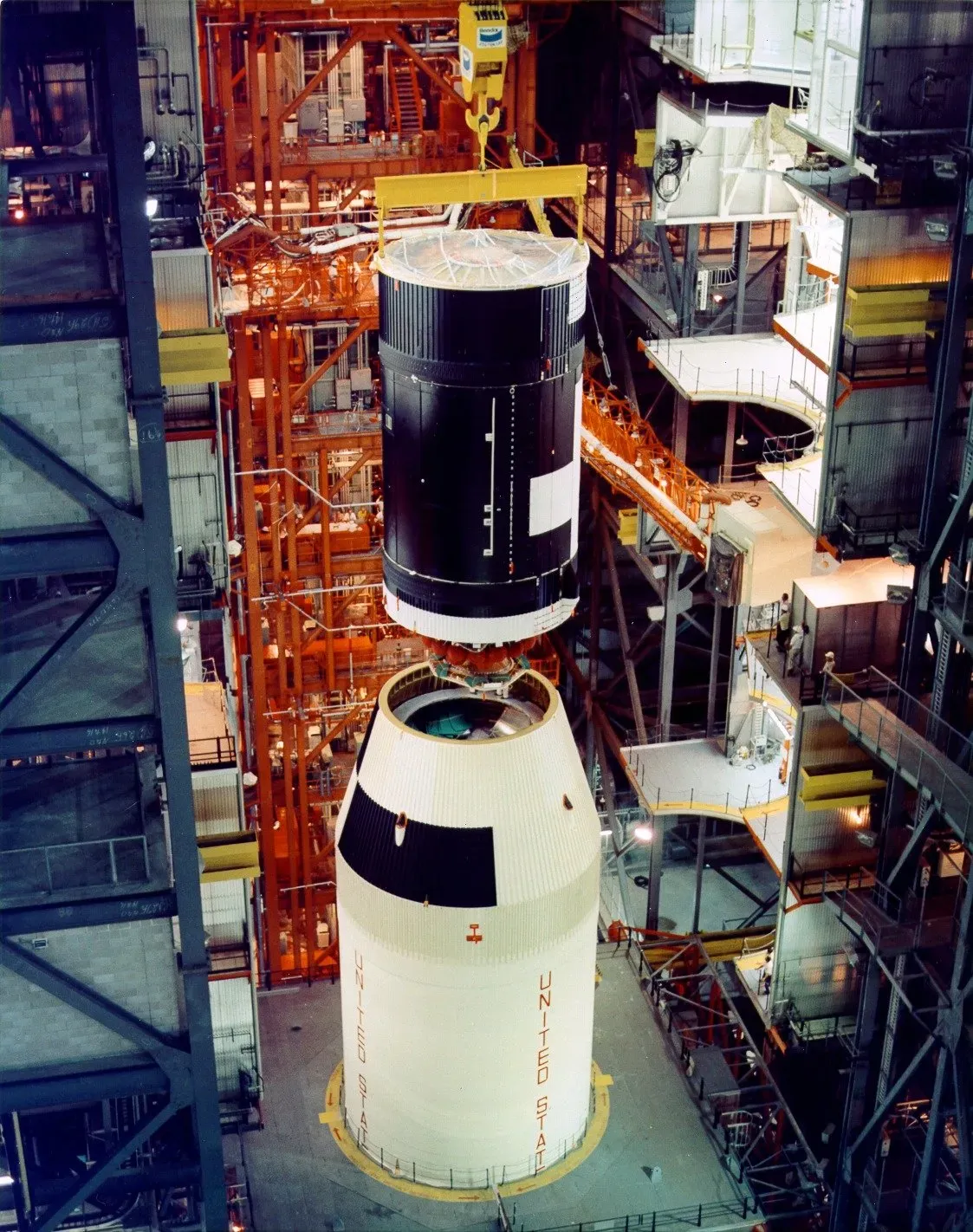
Skylab launched on May 14, 1973, built from leftover Apollo era hardware, and it nearly failed before its first crew even arrived. Barely a minute after launch, atmospheric drag tore off the station’s meteoroid and sun shield, which severed one of two solar array wings, and left the second solar array jammed. Ground teams scrambled for eleven days to figure out how to save a station that was overheating and underpowered before anyone had even set foot inside it.
The fix came from the first crew, led by Charles Conrad, who deployed makeshift sunshades and freed the jammed solar panel by hand during a dramatic spacewalk. Launched on 25 May 1973, astronauts Charles Conrad, Paul Weitz and Joseph Kerwin spent 28 days in space, while the second crew, launched 28 July 1973, spent 59 days aboard. A third crew would later stay 84 days, and together the missions proved that Americans could live and work in orbit for extended stretches, a rehearsal for everything that came after.
The Apollo-Soyuz handshake made peace look like a photo opportunity
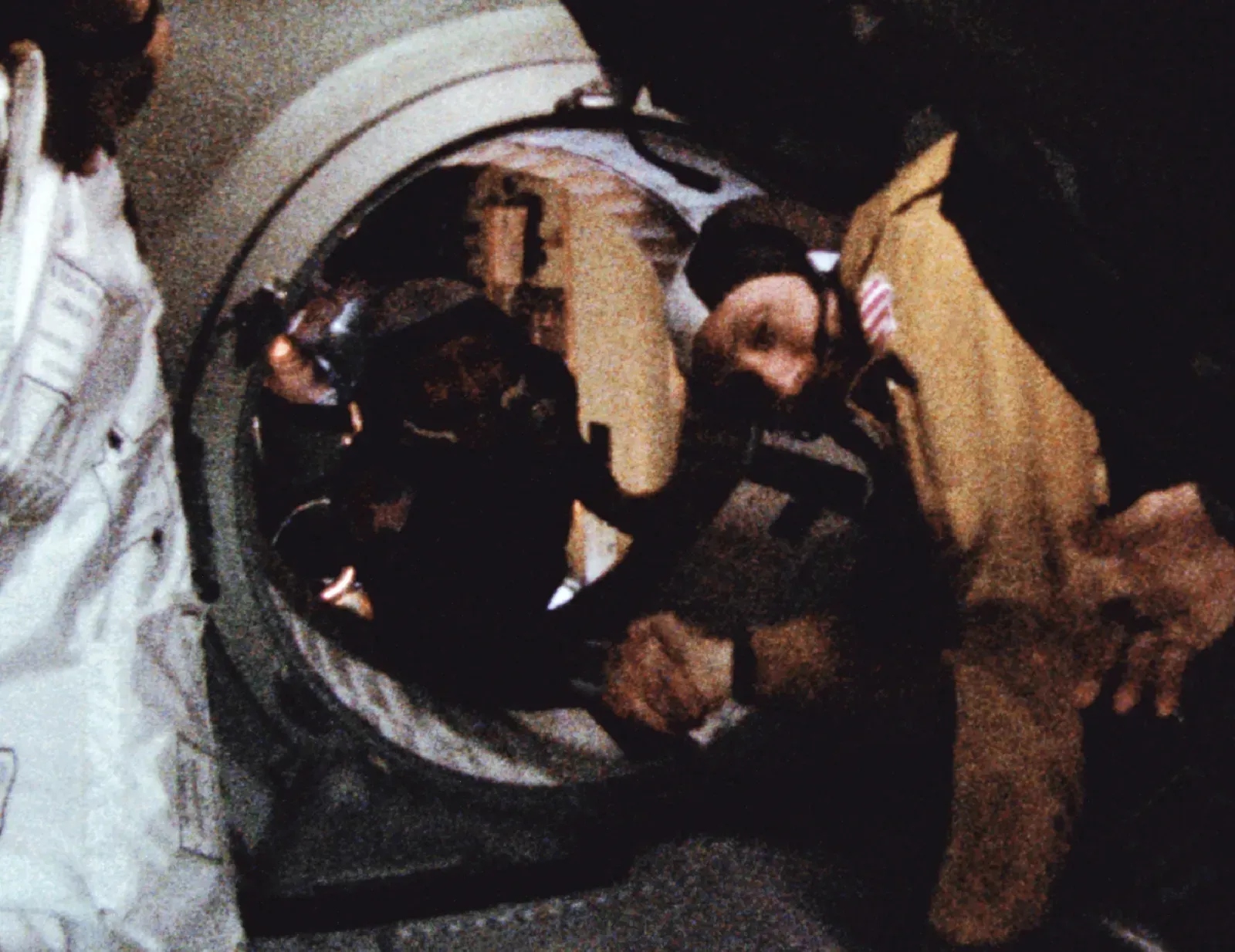
On July 17, 1975, something happened that would have seemed unthinkable just a decade earlier. The first international handshake in space took place, as the American Apollo spacecraft docked with the Soviet Soyuz in orbit, bringing together astronauts and cosmonauts who had spent years as rivals rather than partners. Commanders Thomas Stafford and Alexei Leonov clasped hands through an open hatch while television cameras beamed the moment to audiences on both sides of the Cold War divide.
The symbolism ran deeper than the handshake itself. During two days of docked operations, crewmembers from the two former competitors opened the hatches between the two spacecraft, shook hands, shared meals, held press conferences, and conducted joint science experiments. For a generation raised on duck-and-cover drills and news about missile treaties, watching former adversaries share a meal in orbit felt like tangible evidence that détente could be more than a diplomatic buzzword.
Viking 1 sent back the first close-up look at another planet’s surface
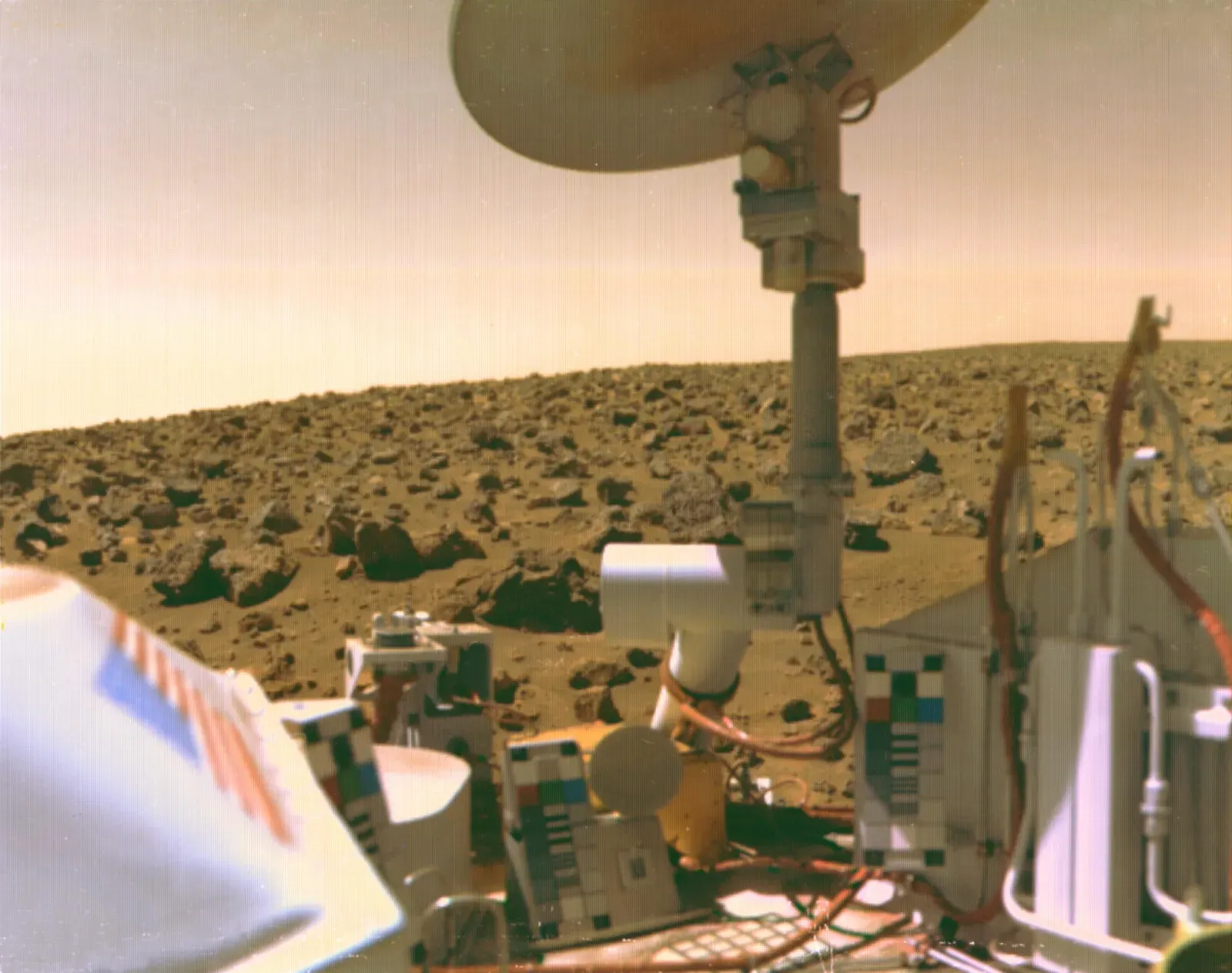
Mars had always been a subject of speculation, canals, little green men, endless science fiction plots, but nobody had actually seen its surface up close until Viking 1 changed that. No one knew what the surface of Mars looked like up close until July 20, 1976, when Viking 1 snapped a picture of its landing pad sitting on a vast plain of soil and rocks. The image itself was modest, mostly rocks and dust, but the moment carried enormous weight because it was the first time a spacecraft had successfully transmitted data from the ground on another planet.
The mission’s ambitions extended well beyond photography. Viking 1’s landing site sat in the Chryse Planitia region, and during the dual Viking missions, the two orbiters imaged the entire surface of Mars at a resolution of 150 to 300 meters, and the two landers sent back more than 1,400 images of the planet’s surface. Kids who grew up flipping through magazine spreads of that rust colored landscape were witnessing the first real data points in what has become a decades long search for life beyond Earth.
The Voyager launches promised a grand tour of the outer planets
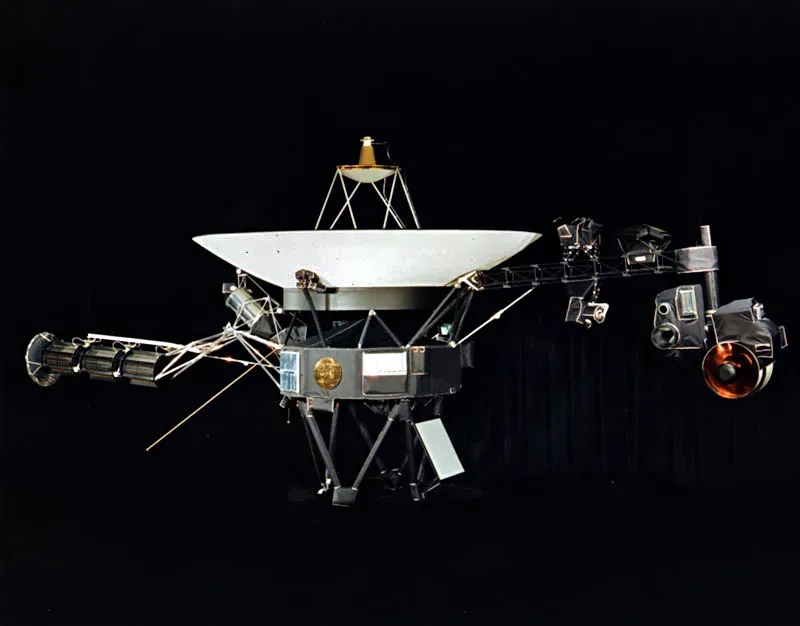
In the late summer of 1977, NASA launched two spacecraft, Voyager 1 and Voyager 2, on a trajectory designed to take advantage of a rare planetary alignment that wouldn’t recur for over a century. The mission’s ambition was staggering for its time: fly past Jupiter, Saturn, and for Voyager 2, eventually Uranus and Neptune as well, gathering images and data that no human eye had ever seen up close. Each spacecraft also carried a golden record, a time capsule of sounds and images meant to represent humanity to any intelligence that might one day find it drifting through interstellar space.
What made the Voyager launches feel different from earlier missions was the sheer scale of the undertaking. This wasn’t a quick flyby or a single planetary visit, it was a multi-year odyssey through the solar system, broadcast in dispatches that stretched on for years after the initial launch coverage faded from the news. Both spacecraft are still operating today, technically, making them the longest running space missions in history and giving that 1977 send-off a strange kind of permanence.
Skylab’s fiery return to Earth became an unexpected global spectacle
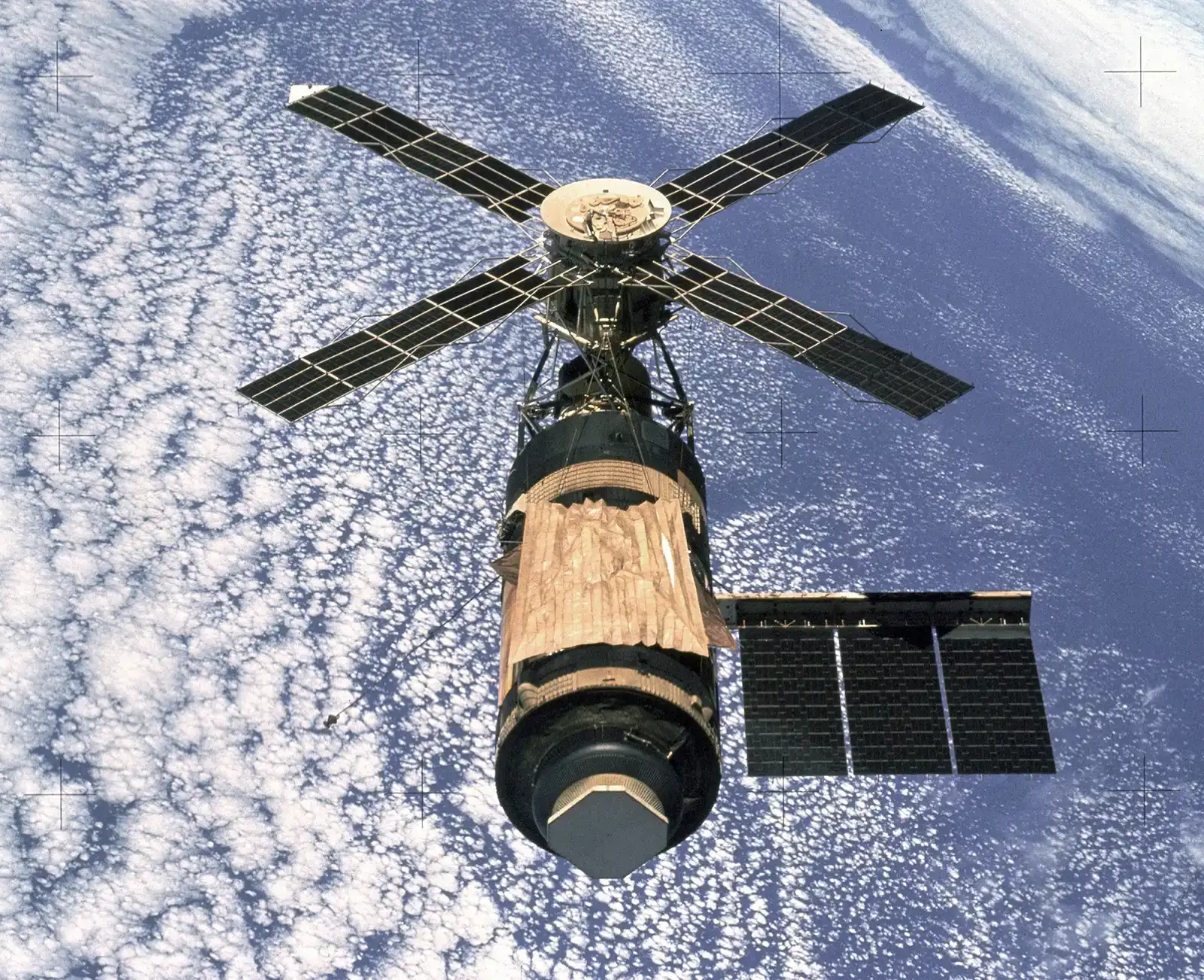
After its crews departed in February 1974, Skylab drifted in orbit for years, slowly losing altitude as atmospheric drag pulled it downward faster than engineers had originally predicted. Five years after the last Skylab mission, the space station’s orbit began to deteriorate faster than expected, owing to unexpectedly high sunspot activity. By 1979, the question wasn’t whether Skylab would fall, it was where, and that uncertainty turned into a genuine, if lighthearted, source of public anxiety.
News outlets ran maps and betting pools speculating on the debris field, and souvenir shops even sold Skylab hard hats as a joke. On July 11, 1979, the parts of the space station that did not burn up in the atmosphere came crashing down on Australia and into the Indian Ocean, and no one was injured. For a generation that had watched Skylab’s launch and its astronauts’ triumphs, its fall felt like the closing chapter of an unusually eventful decade in orbit, one that started with an emergency and ended with a controlled kind of chaos.
Looking back at a decade that never lost its grip

- South Asia’s Monsoon Explained: The Seasonal Winds Behind Months of Rain - October 15, 2026
- How Changing Weather Patterns Affect Crop Yields and Harvest Timing - October 15, 2026
- About 2,700 Liters of Water for One Cotton T-Shirt: Tracing Fast Fashion’s Water Footprint - October 15, 2026
