

What the Kessler Syndrome Actually Predicts
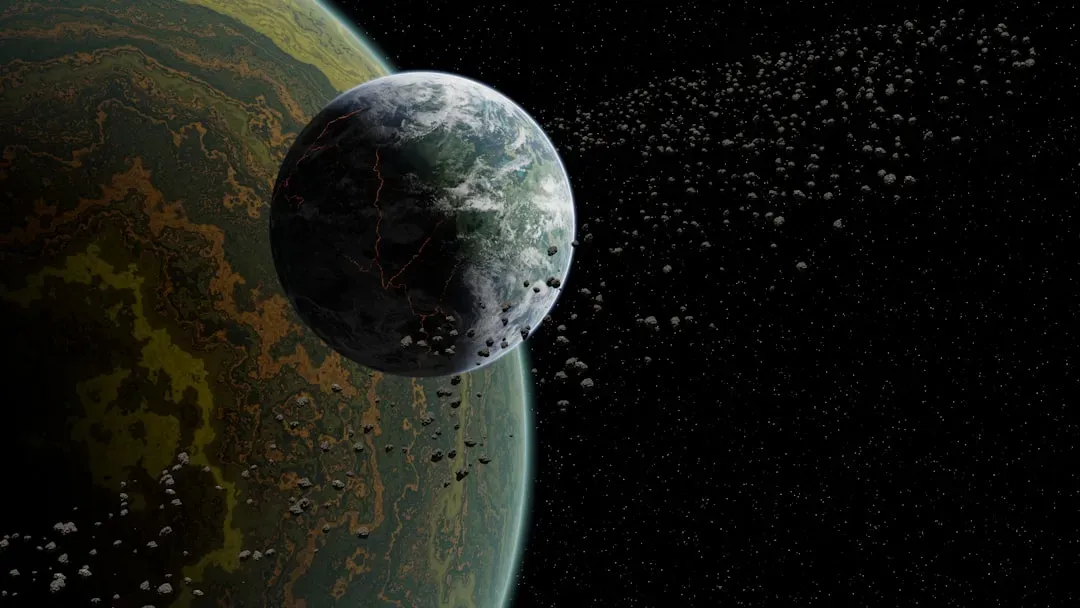
The concept comes from a 1978 paper by NASA scientists Donald J. Kessler and Burton Cour-Palais. It’s a scenario where the density of objects in low Earth orbit becomes so high due to space pollution that collisions between these objects cascade, exponentially increasing the amount of space debris over time. In plain terms, one crash creates fragments, those fragments cause more crashes, and the whole thing snowballs.
What makes the idea unsettling is how it undermines the usual assumption that space is basically empty and safe. This proliferation of debris poses significant risks to satellites, space missions, and the International Space Station, potentially rendering certain orbital regions unusable. Scientists still debate the exact timeline, but nobody in the field treats it as an abstract worry anymore.
Why Orbital Speed Turns Debris Into a Weapon
The reason a stray bolt or paint fleck can be dangerous in orbit comes down to velocity. Objects in low Earth orbit travel at roughly 28,000 kilometers per hour, and at that speed, even a small fragment carries enormous kinetic energy. A collision at those speeds isn’t a gentle bump, it’s closer to an explosion.
That’s also why cascades are so hard to stop once they start. When two objects collide, they don’t just break in half. They shatter into hundreds or thousands of pieces, each one moving on its own unpredictable path. Every fragment becomes its own hazard, multiplying the odds of the next impact rather than reducing them.
The 2007 and 2009 Events That Proved the Theory Right
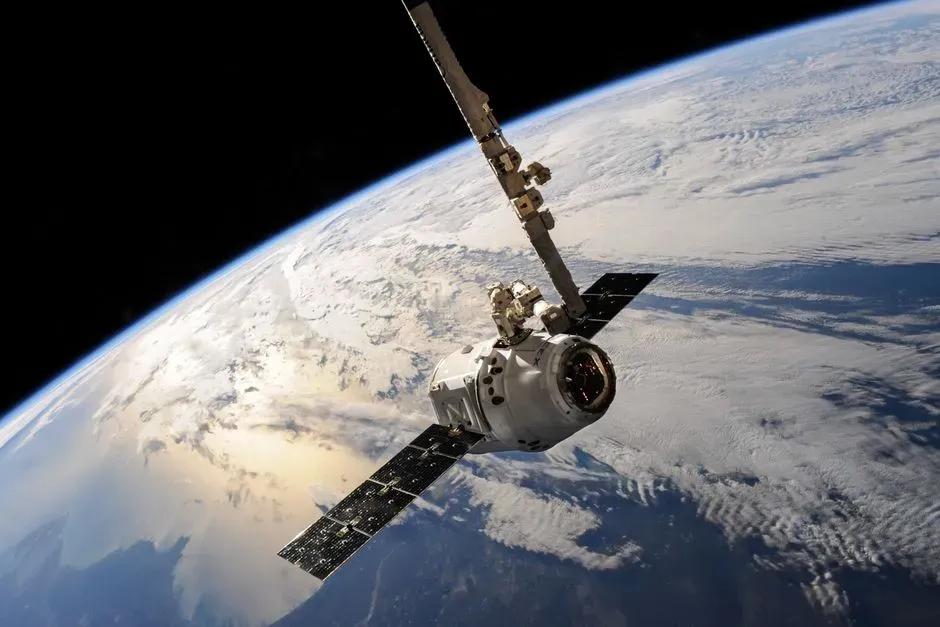
On January 11, 2007, China tested a direct-ascent anti-satellite weapon by destroying one of its own defunct weather satellites, Fengyun-1C, at an altitude of 865 kilometers. That single test scattered 2,347 trackable fragments of 10 centimeters or larger, making it the worst fragmentation event in history. Nearly two decades later, the aftermath is still circling the planet. Nineteen years later, in 2026, over 3,000 fragments from Fengyun-1C are still in orbit.
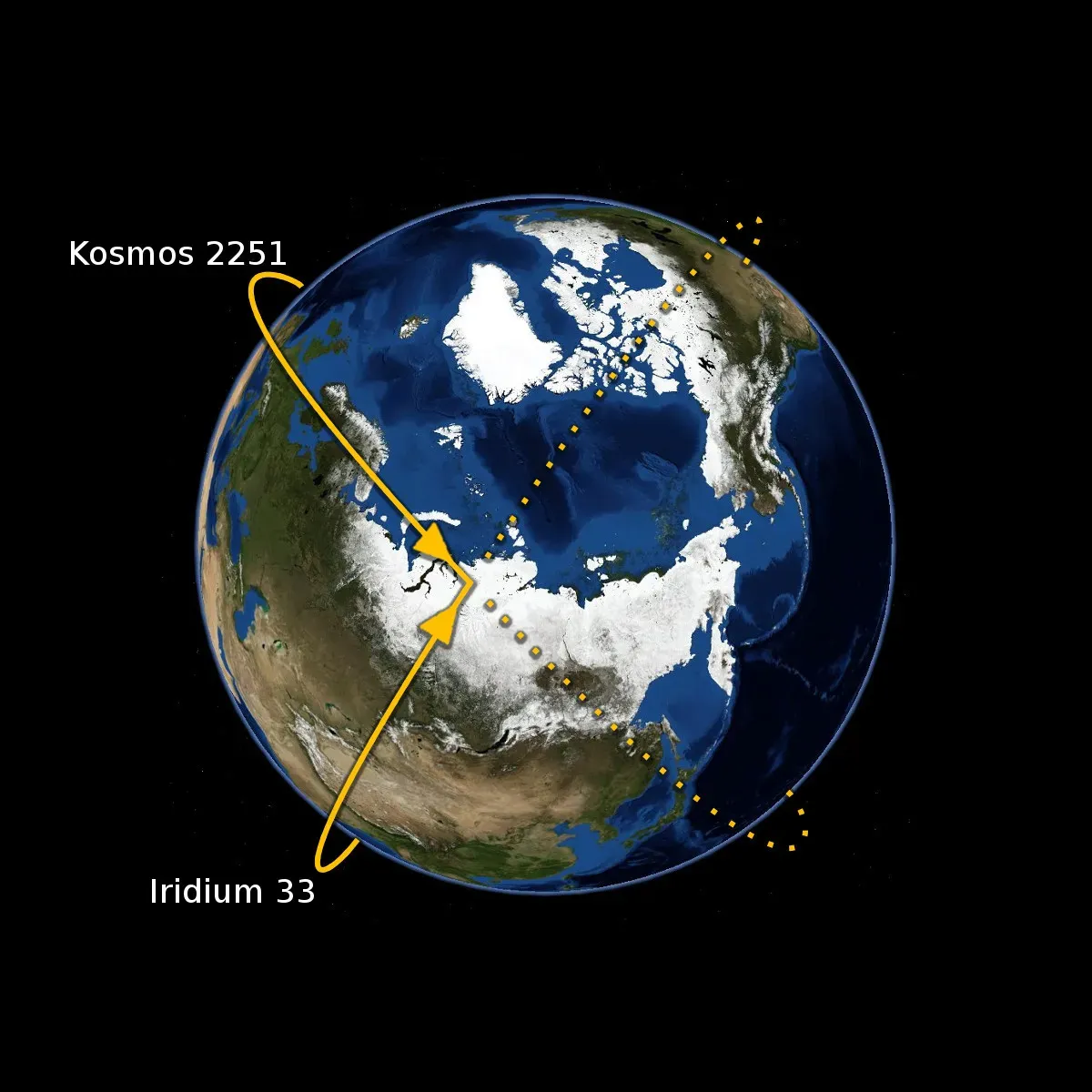
Two years after that test, an accident showed the same physics could happen without anyone pulling a trigger. The 2009 accidental collision between Iridium 33 and Cosmos 2251 produced more than 1,800 objects 10 centimeters or larger. Together, these two incidents remain the textbook examples cited whenever someone explains what a Kessler-style event actually looks like in practice.
A Crowded Sky: How Many Objects Are Up There Now
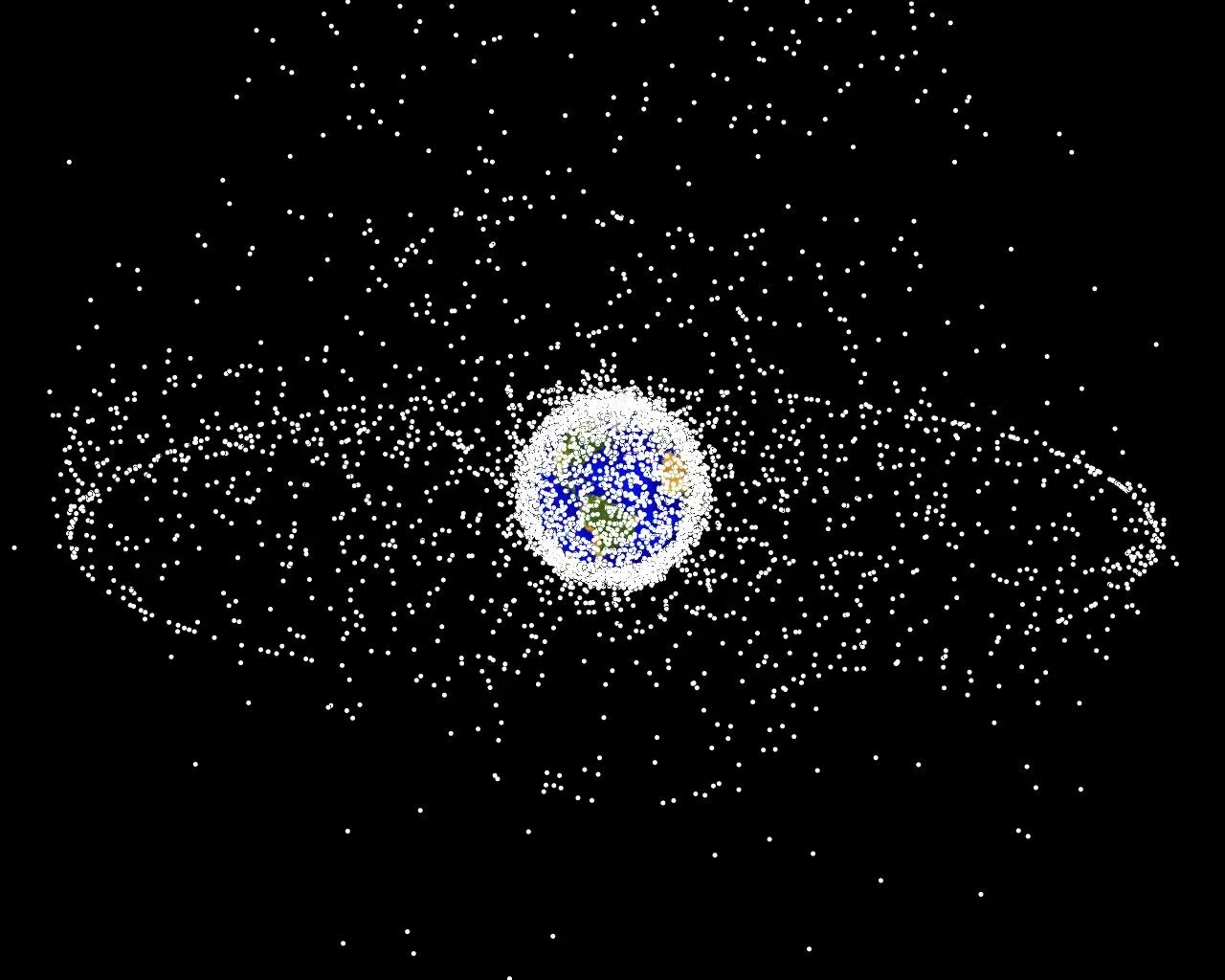
The scale of the problem has grown well beyond those two headline events. Space debris experts say nearly 130 million pieces of orbital junk are zipping around our planet, high-speed leftovers from rocket stage explosions, abandoned satellites, and bits of hardware from deployments. Most of that is too small to track individually, but size doesn’t make it harmless at orbital speeds.
The larger, catalogued pieces tell their own story. The actual number of space debris objects larger than 1 centimeter in size, large enough to be capable of causing catastrophic damage, is estimated to be over 1.2 million, with over 50,000 objects of those larger than 10 centimeters. In some of the busiest altitude bands, the situation has quietly shifted. ESA’s debris modelling tool MASTER shows that in the low-Earth orbit range of around 550 kilometers altitude there is now the same order of magnitude of debris objects posing a threat as there are active satellites.
2025’s Warning Shots: A Struck Spacecraft and a Starlink Explosion
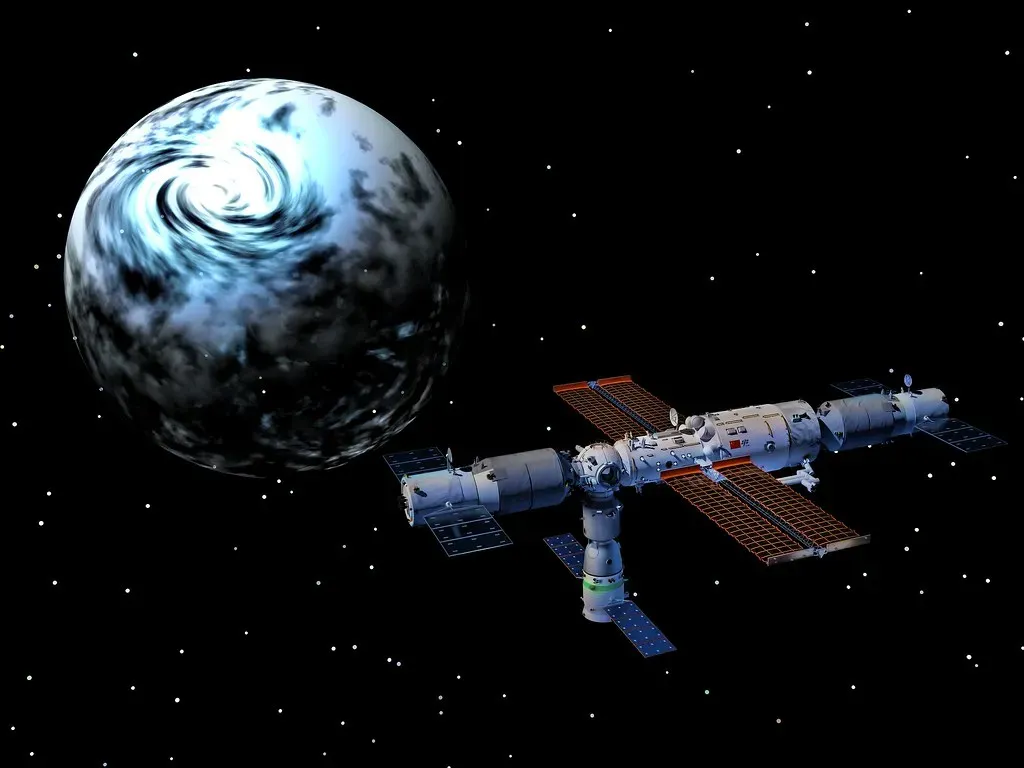
Late in 2025, the abstract risk became a concrete emergency for China’s space program. China’s Shenzhou-20 spacecraft took a hit from a piece of space debris floating through orbit, causing officials to delay the spacecraft’s return from its Tiangong space station in early November 2025. The damage forced an unusual response. The incident called for the first emergency launch mission in China’s human spaceflight program, with an uncrewed, cargo-loaded Shenzhou-22 spacecraft sent up as backup. The crew eventually made it home safely aboard a different vehicle, but the episode exposed how thin the safety margin has become.
That same season, SpaceX had its own scare. In December 2025, a Starlink satellite experienced an anomaly, releasing propellant and hundreds of large objects, and following this event, SpaceX reported performing over 144,000 maneuvers over a six-month period to avoid debris and other spacecraft. The satellite itself was expected to burn up within weeks, but the incident underlined just how quickly a single malfunction can add fresh clutter to an already busy orbit.
The CRASH Clock: Counting Down the Margin for Error
Researchers have started quantifying just how little slack is left if something goes seriously wrong. A team from Princeton introduced the CRASH clock, a model based indicator that estimates the time available to restore control after a major system disruption, such as a solar storm that disables collision avoidance systems, before a catastrophic impact becomes likely. The trend line is not reassuring.
While the CRASH clock stood at 121 days in 2018, the deployment of satellite mega-constellations has reduced it to just 2.8 days as of 2025. Put another way, satellite operators used to have months to recover from a disruption. Now they might have less than a week. Simulations suggest that if satellite operators lose control of satellites for 24 hours, there is a 30 percent probability of a collision occurring within that period that would start a decades-long Kessler cascade.
Megaconstellations and the Maneuver Math
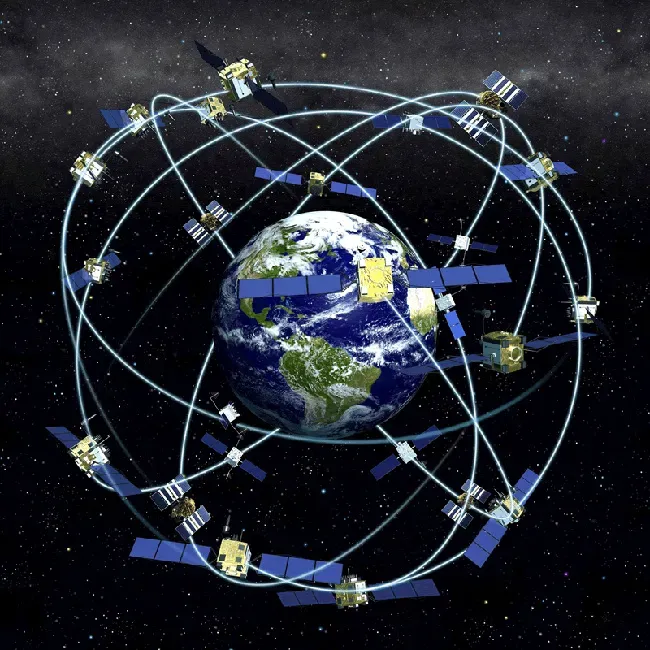
Part of what’s squeezing that margin is simple traffic volume. SpaceX’s Starlink constellation performed approximately 300,000 collision avoidance maneuvers across 2025, a 50 percent increase from 2024, which works out to roughly 40 maneuvers per satellite per year across roughly 10,000 operational units. That’s not a one-off spike, either.
Projections from researchers tracking the sector suggest that number could reach 1 million maneuvers annually by 2027 as constellation deployments continue. And the fleets keep expanding regardless. SpaceX has announced plans to add up to 40,000 Starlink satellites in orbit, while China plans to add tens of thousands more through its Guowang and Qianfan megaconstellations. More satellites mean more automated dodging, and more automated dodging means more opportunities for something to go wrong.
The Price Tag: What a Fragile Orbit Costs the Global Economy

This isn’t just a technical curiosity for engineers, it has a dollar figure attached. The World Economic Forum’s 2026 report, developed with space market research firm Novaspace, quantifies the economic cost of the current trajectory at $25.8 to $42.3 billion over the decade from 2025 to 2035, and that projection assumes no major cascading collision events. That’s the cost of business as usual, not a worst case scenario.
Breaking that figure down makes the pressure clearer. Service disruptions and degraded performance account for $14.7 to $26.3 billion of the estimate, driven by satellite anomalies and failures attributable to the debris environment, while physical asset losses, the satellites themselves, account for another $10.5 to $15.5 billion. All of this sits against a backdrop where orbital pollution doubles roughly every decade without intervention, raising concerns for the $1.8 trillion global space economy.
Even Without New Launches, the Problem Wouldn’t Go Away
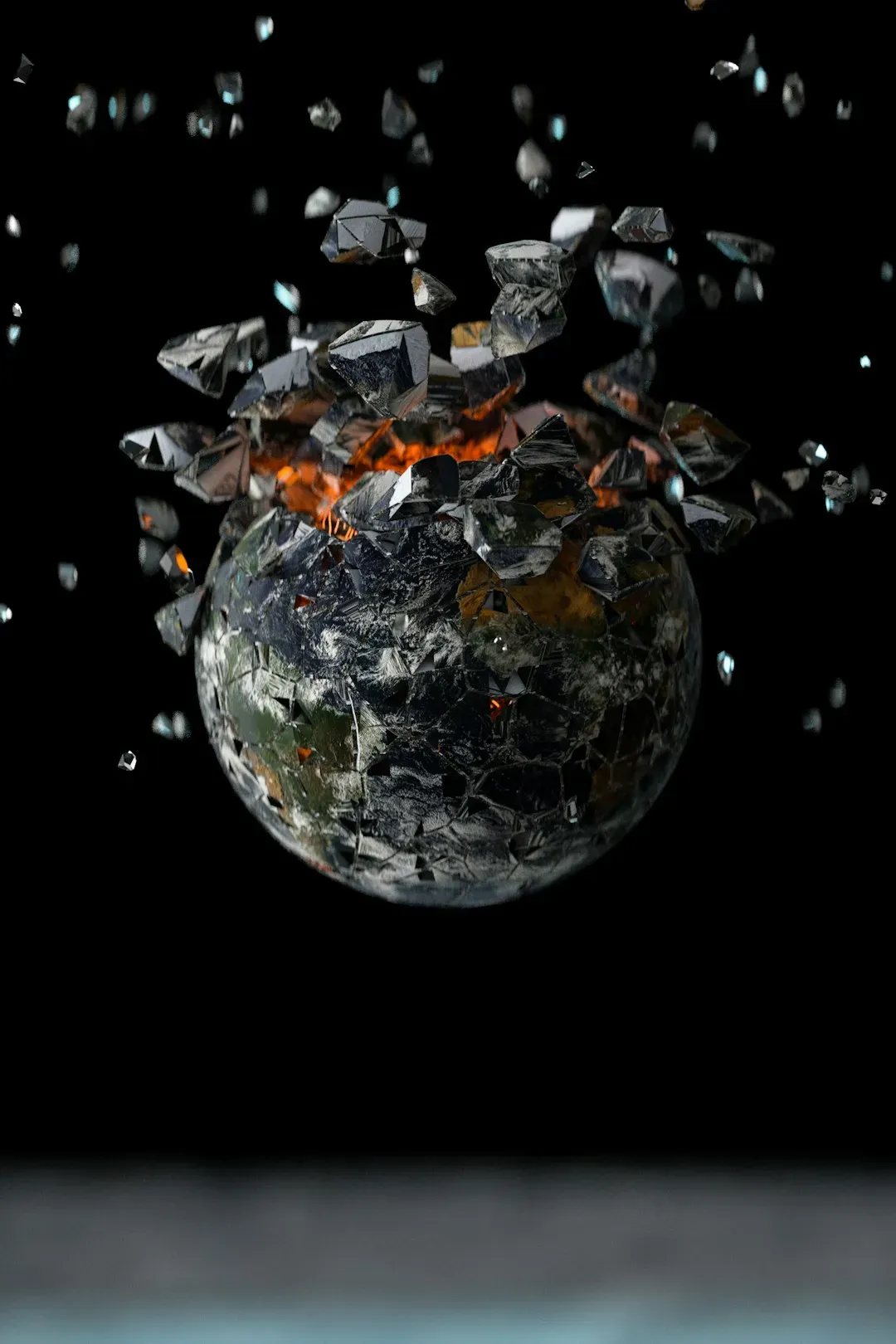
One of the more sobering findings to come out of recent research is that the debris problem has a kind of momentum of its own. The ESA Space Environment Report 2025 found that even if all new launches were stopped, the number of objects in orbit would continue to grow for over 200 years, because new debris fragments are created faster than atmospheric decay can remove them. That’s the definition of a self-sustaining cascade, and it’s why some scientists believe parts of the sky may already be past the tipping point.
Scientific models suggest that some regions of low Earth orbit may already be approaching a self-sustaining debris growth regime, sometimes described as the early stages of Kessler Syndrome. A separate 2025 study reached a similarly stark conclusion for the busiest bands of orbit. That study found the current intact object population exceeds the runaway threshold at nearly all altitudes between 520 and 1,000 kilometers.
Cleaning Up: Active Debris Removal and New Rules
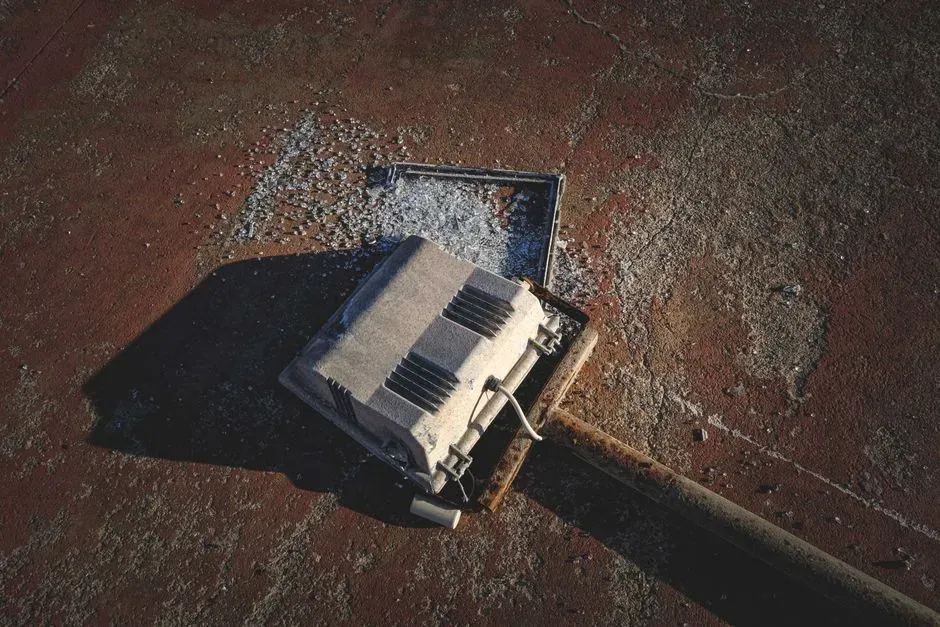
Governments and companies aren’t standing still, even if progress feels slow next to the scale of the problem. The European Space Agency and ClearSpace of Switzerland are targeting 2026 for a debris removal mission, in which a long-discarded payload adapter will be grappled by a ClearSpace-made spacecraft equipped with an ESA-developed robotic arm. ESA has also committed to broader change. The Space Debris Mitigation Standard describes an approach for ESA to become debris-neutral by 2030, while implementing UN guidelines, and the agency also requires a calculation of successful disposal probability prior to launch, aiming for a probability higher than 90 percent.
Regulation is catching up too, if unevenly. In 2025, the EU introduced its Space Law, which requires commercial satellite operators to follow rules across the satellite life cycle, from launch to collision avoidance, information sharing, and deorbiting. Whether these efforts move fast enough to outpace the growth in launches is still an open question, and most experts in the field treat active debris removal as necessary rather than optional at this point.
What a Full Cascade Would Actually Mean
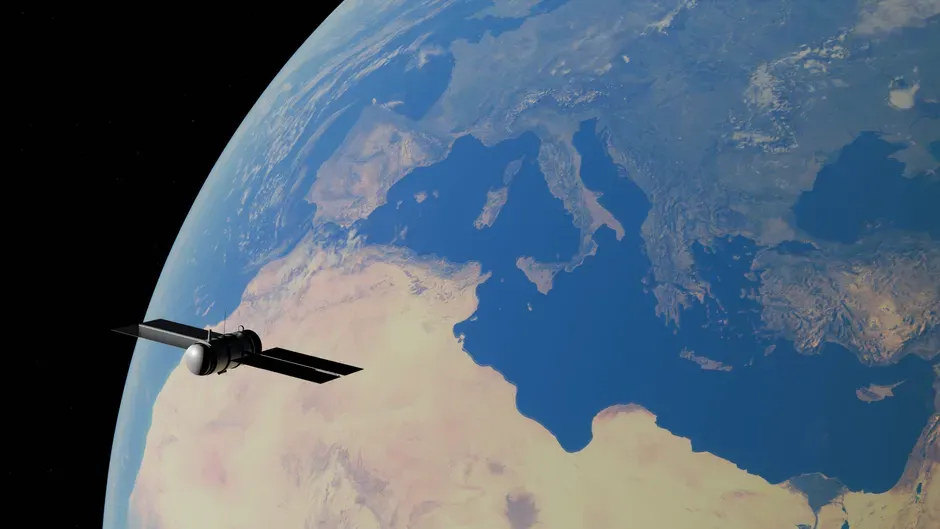
It’s worth being clear about the timescale here, since Hollywood has given people a distorted picture. A Kessler Syndrome cascade is something that would play out over the course of decades if not centuries, rather than fitting into the runtime of a Hollywood drama. There would be no single dramatic moment where the sky goes dark. Instead, certain orbital bands would simply become too dangerous to use, one failed satellite and one skipped deorbit at a time.
The practical fallout would touch daily life more than most people expect, since satellites quietly support GPS navigation, weather forecasting, banking timestamps, and global communications. Communication lines and data traffic may drop from time to time, sowing chaos on the ground and menacing flights across the globe, and as the slow catastrophe builds, fuel reserves for satellite constellations would bleed down into the red from so many extensive orbital maneuvers. Losing reliable access to certain low Earth orbits wouldn’t strand astronauts overnight, but it would make replacing failed satellites, launching new missions, and eventually returning to deep space exploration far harder and far more expensive than it is today.

- Should You Rinse Recyclables Before Binning Them? What Recycling Programs Advise - October 16, 2026
- The Largest Camera Ever Built for Astronomy: How Rubin Observatory Will Map the Sky - October 16, 2026
- How Much Energy a Hurricane Releases Compared With Global Electricity Use - October 16, 2026
