

There’s something quietly remarkable about the fact that your great-grandmother’s sky-reading tips might be just as useful today as a weather app on your phone. Before satellites, before Doppler radar, before even the thermometer was a common household object, people watched the world around them with incredible attention. They noticed patterns. They passed them down.
Long before weather apps and satellites, farmers, sailors, and nature lovers relied on weather proverbs and folklore to predict rain, clouds, and storms. And here’s what’s genuinely surprising: most of this handed-down “folk wisdom” is really quite accurate, and has a lot of science behind it. Let’s dive into the seven most enduring weather sayings and find out what modern meteorology actually says about each one.
1. “Red Sky at Night, Sailor’s Delight. Red Sky at Morning, Sailor’s Take Warning.”
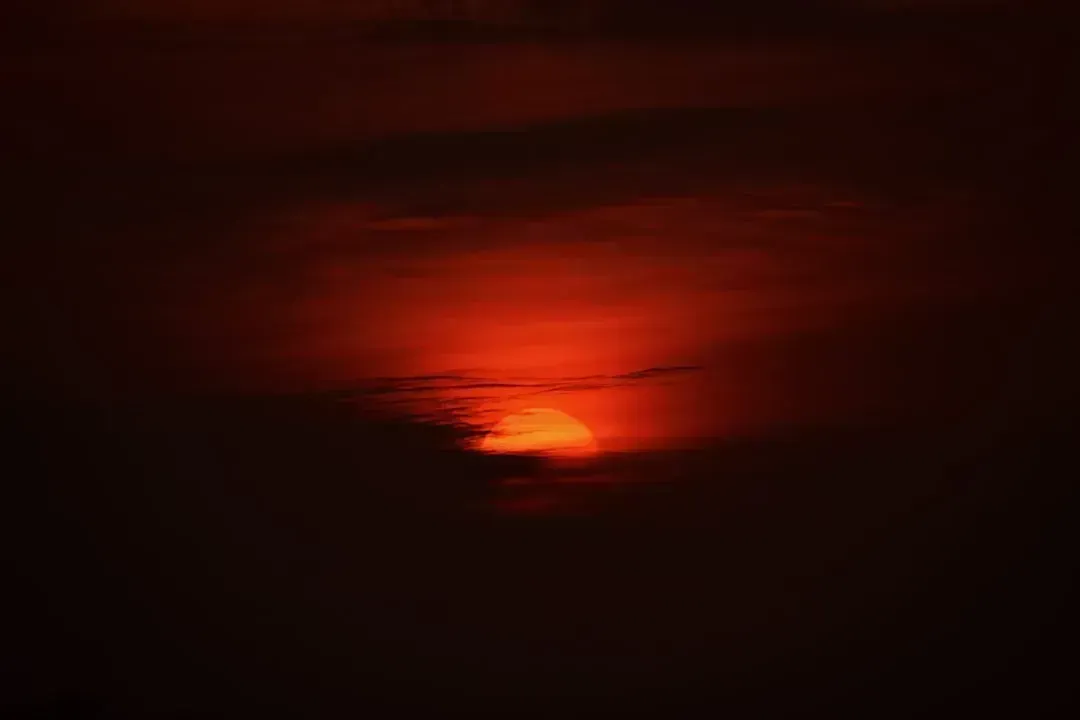
If there’s one weather saying that has truly stood the test of time, this is it. The concept is over two thousand years old and is cited in the New Testament as established wisdom. The rhyme has been used as a rule of thumb for weather forecasting during the past two millennia. That’s a long track record for any piece of advice.
There is real scientific validity to this adage. Weather usually moves from west to east. In the mid-latitudes, the prevailing winds are westerlies, meaning storm systems generally move in from the west. So the direction of sunlight hitting clouds tells the whole story.
When you see a red sky at sunset, it means the setting sun in the west is shining through relatively clear western skies, an indicator of a stable high-pressure system in that direction. If it’s a red sky in the morning, that means the high-pressure system has passed, and a low-pressure system is moving in. Rain and bad weather are on their way. Honestly, that’s pretty elegant for something invented before the printing press.
The saying is most reliable when weather systems predominantly come from the west. There are a few exceptions, especially during summer months as the trade winds shift. For example, if there is a tropical storm coming in from the east-southeast, you may notice red skies at sunset. At first, you might think that means delightful weather is on the way, but an incoming tropical system tells a very different story.
2. “Ring Around the Moon, Rain or Snow Coming Soon.”
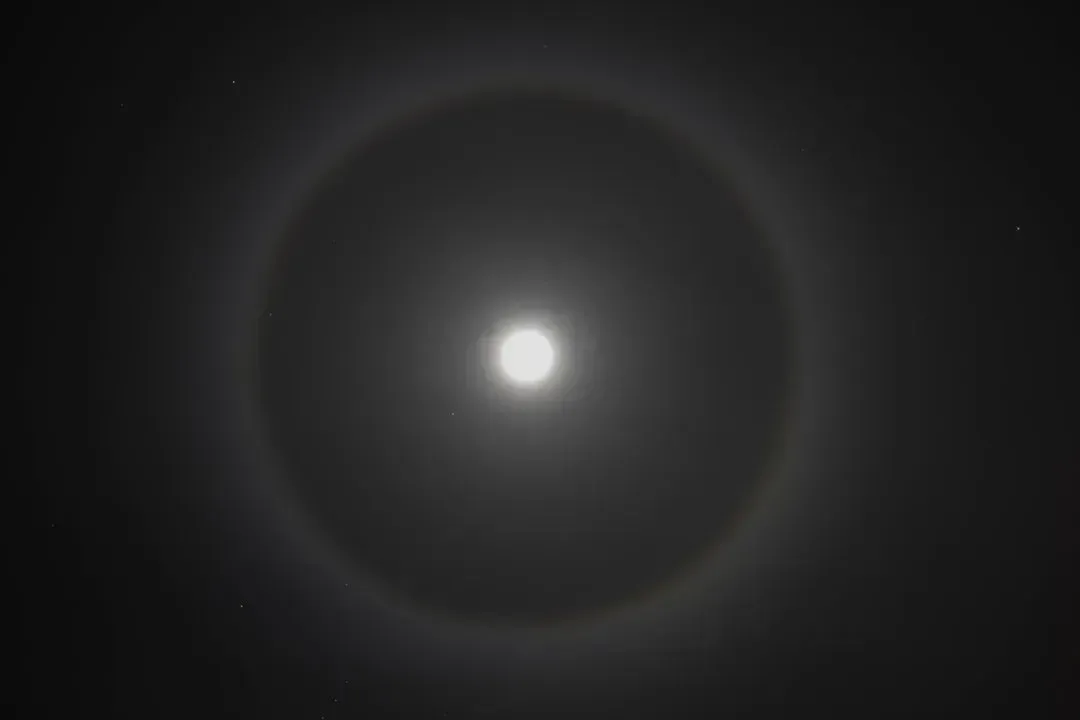
You’ve probably looked up at a full moon one night and noticed a ghostly halo encircling it. Eerie? A little. But there’s nothing supernatural about it. What you’re actually seeing is moonlight refracting through ice crystals. These ice crystals make up cirrus clouds, the wispy, ribbon-like ones found really high up in the sky.
These cirrus clouds don’t cause rain or storms themselves, but here’s the thing: they do precede some low-pressure systems by a day or two, and low-pressure systems do bring precipitation. In other words, seeing those icy clouds refracting light around the moon means cirrus clouds are present, which might indicate a coming storm.
In folklore, moon rings are said to warn of approaching storms. Like other ice halos, 22-degree halos appear when the sky is covered by thin cirrus or cirrostratus clouds that often come a few days before a large storm front. So the old wives were, in this case, genuinely onto something.
It turns out these rings of light may be a reliable, but not foolproof, predictor of rain. Atmospheric optical phenomena like halos were part of weather lore as an empirical means of forecasting before meteorology was developed. They often do indicate that rain will fall within the next 24 hours, since the cirrostratus clouds that cause them can signify an approaching frontal system.
3. “A Mackerel Sky, Not 24 Hours Dry.”
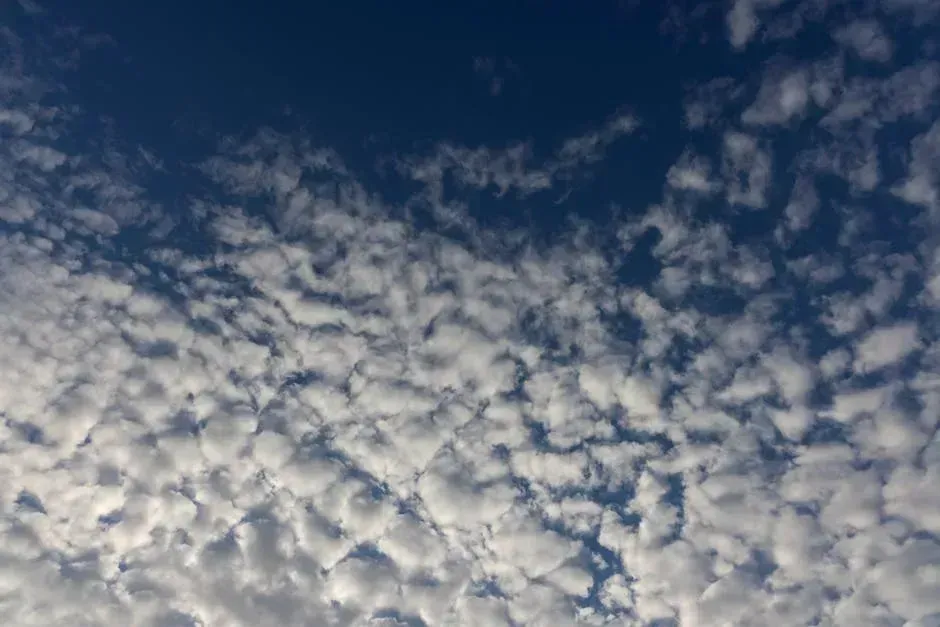
A “mackerel sky” refers to those rippled, fish-scale patterns of cloud you sometimes see spread across the horizon. The name is a little poetic, and the warning behind it is surprisingly reliable. Popcorn cumulus clouds by themselves won’t hurt anyone. But when clouds become vertically swollen, towering thunderheads called “cumulonimbus,” that’s when it’s time to move the party indoors. The taller the thunderstorm, the greater the potential for large hail and violent winds.
Keep an eye on the smaller puffy cumulus clouds, especially in the morning or early afternoon. If the rounded tops of these clouds, which have flat bases, grow higher than their widths, there’s a chance of a thunderstorm forming. This is basically what the mackerel sky proverb has been warning people about for generations.
Think of cloud shapes as nature’s mood board for the atmosphere. A high, rippled layer of altocumulus clouds signals that moisture and instability are already moving in at mid-levels. Weather sayings that are based on scientific principles are reliable, and sayings related to atmospheric conditions and clouds can be accurate in weather forecasting for specific locations.
This proverb scores high for reliability, and it’s grounded in science. It’s also an incredibly useful one to know if you’re planning a picnic or a long hike without your phone nearby. I’d trust a mackerel sky over a spotty data connection any day.
4. “If It Rains Before Seven, It Will Clear Before Eleven.”
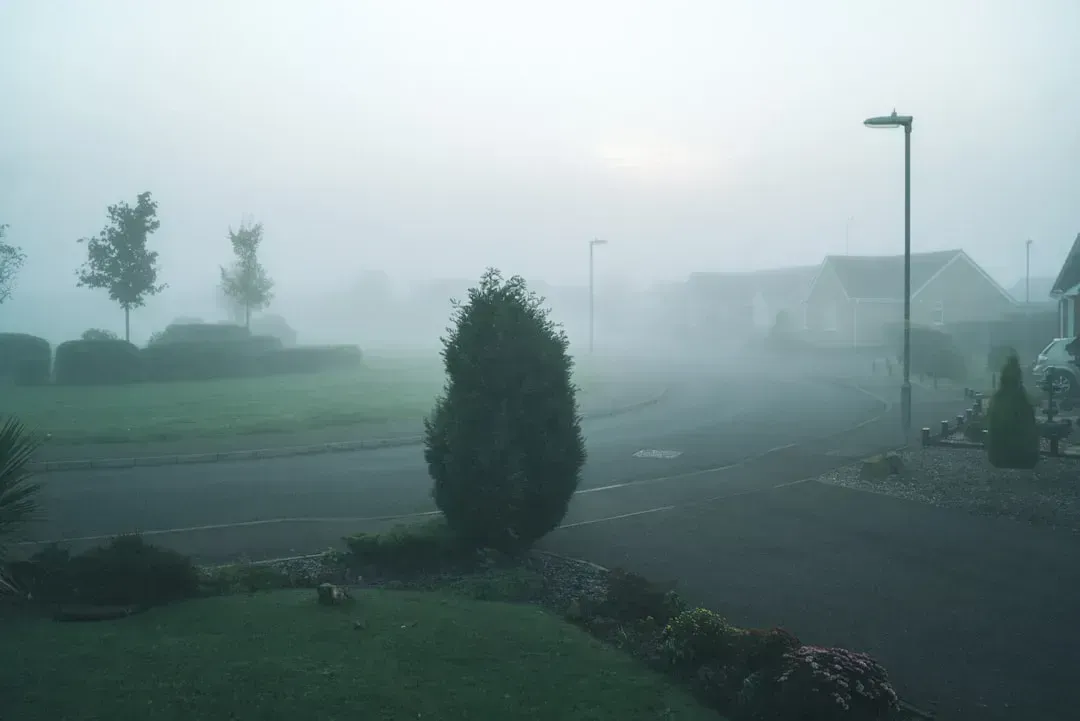
This one has a more specific and surprisingly logical explanation behind it. The most common type of fog is called radiation fog, which occurs on clear, atmospherically stable nights. On those calm, clear nights, the ground cools rapidly, and moisture in the lowest levels of the air condenses into fog or light drizzle by early morning.
In some cases, if the air has some turbulence, the fog can thicken and even produce rain. This isn’t rain from a low-pressure system, meaning the vapor will soon be spent and the rain will not last long. Hence, if there is rain early in the morning before seven, it’s likely to clear off by lunchtime.
When the night sky is clear, Earth’s surface cools rapidly as the heat from the day radiates back into the atmosphere. There is no cloud cover to keep the heat in. That’s precisely the setup for an early-morning drizzle that burns off as the sun climbs higher. Simple physics, really.
Note that this is only accurate for this type of fog-related shower. It’s not a universal promise of sunshine. If you wake up to a dark, low, angry-looking sky at 6 a.m., that’s a different story entirely, and no proverb is going to save your outdoor plans.
5. “When Leaves Show Their Undersides, Be Very Sure Rain Betides.”

Let’s be real: this one sounds almost too poetic to be true. But it actually has a decent natural basis. Before a storm, humidity rises and winds begin to shift. Many deciduous trees, like silver maples and poplars, have leaves with lighter, silvery undersides that curl upward when exposed to increased moisture and changing wind direction. The result is a visible flipping or shimmering of the leaf canopy.
Farmers, sailors, and amateur meteorologists of all kinds came up with handy, often rhyming proverbs that could guide their observations. They realized that animal behavior, wind direction, and air pressure were pretty accurate indicators of how the weather would behave. Leaves responding to humidity and wind are a natural part of that same story.
Weather lore concerning the appearance of the sky, the conditions of the atmosphere, the type or movement of clouds, and the direction of winds may have a scientific basis and likely can predict the weather. The leaf-turning saying sits squarely in that tradition: it’s reading atmospheric humidity and wind shift, just in a very organic way.
Location plays a large role in the accuracy of a weather saying. A weather saying that is true in one area may not be true in another. In forests and farmland where specific tree species are common, this saying holds up particularly well. In a concrete city, not so much, but that’s hardly the proverb’s fault.
6. “Pine Cones Open in Dry Weather, Close in Wet.”

This is one of those sayings that crosses over from weather lore directly into hard botanical fact. This saying is grounded in scientific fact. The opening and closing of pine cones is dictated by humidity. In dry weather, pine cones open out as the drying scales shrivel and stand out stiffly. In damp conditions, the increased moisture allows more flexibility and the cone returns to its normal closed shape.
It’s almost like having a hygrometer made of wood hanging from your nearest tree. Think of it like a natural sponge: the scales of a pine cone absorb or release moisture depending on what’s in the air around them. No batteries required, no signal needed.
Proverbs essentially encapsulate empirical observations about the relationships between weather patterns and natural phenomena, forming a condensed body of practical knowledge. Formed through long-term observation of weather and phenological changes combined with real-world practice, these proverbs embody the empirical wisdom essential for agricultural production and management. The pine cone saying is a perfect example of that kind of careful, generational watching.
What makes this one particularly satisfying is that it’s not just a rough approximation. It’s mechanically accurate. The pine cone scales are hygroscopic, meaning they physically respond to water vapor in the air. These challenges have prompted the scientific community to re-evaluate the predictive and practical value of traditional weather proverbs. Research methodologies have gradually shifted from early descriptive analysis toward more scientific and empirical approaches.
7. “March Comes In Like a Lion and Goes Out Like a Lamb.”

This is perhaps the most celebrated of all seasonal weather sayings in the Northern Hemisphere. An English proverb describes typical March weather: “March comes in like a lion and goes out like a lamb.” In the 19th century it was used as a prediction: if March comes in like a lion, it will go out like a lamb. The idea is that a stormy start to March typically gives way to milder conditions as the month ends.
There is a real meteorological logic here. March sits directly in the transition zone between winter and spring in temperate climates. Early March often still carries the aggressive remnants of winter storm tracks, while late March sees the jet stream beginning to shift northward, allowing warmer air to press up from lower latitudes. The contrast between week one and week four can be dramatic.
Frequent extreme climate events, such as record-breaking heatwaves and compound weather events, pose severe threats globally. These challenges have prompted the scientific community to re-evaluate the predictive and practical value of traditional weather proverbs. Interestingly, as climate patterns shift, the reliability of seasonally-based sayings is increasingly being tested by researchers.
Studies globally can be broadly categorized into two main themes: examining the correlation between proverbs and climatic factors, and assessing the accuracy of proverbs under climate change. Whether March continues to behave like a lion in the coming decades is an open question, but for now, the saying still captures the spirit of the season with remarkable accuracy for most of the mid-latitudes.
The Timeless Art of Reading the Sky
What ties all of these sayings together is something genuinely impressive: centuries of careful human observation, distilled into a handful of memorable phrases. Dating back thousands of years, weather forecasting had to rely less on scientific data and more on human experience. The sayings became particularly important in sailing and agriculture. From this, developed the old weather sayings and phrases we see and hear today.
None of these proverbs are perfect. They come with caveats, regional limitations, and the occasional exception. The scientific community has been prompted to re-evaluate the predictive and practical value of traditional weather proverbs. Research has gradually shifted from early descriptive analysis toward more scientific and empirical approaches, with studies globally examining the correlation between proverbs and climatic factors.
The next time you look up and notice a ring around the moon, or see the undersides of the oak leaves in your garden flashing silver in a gusting wind, pause for a second. You’re doing exactly what generations of farmers, fishermen, and sailors did before you. You’re reading the world. And the world, it turns out, has been leaving clues all along.
What do you think: would you trust a classic weather saying over your weather app? Tell us in the comments.
