
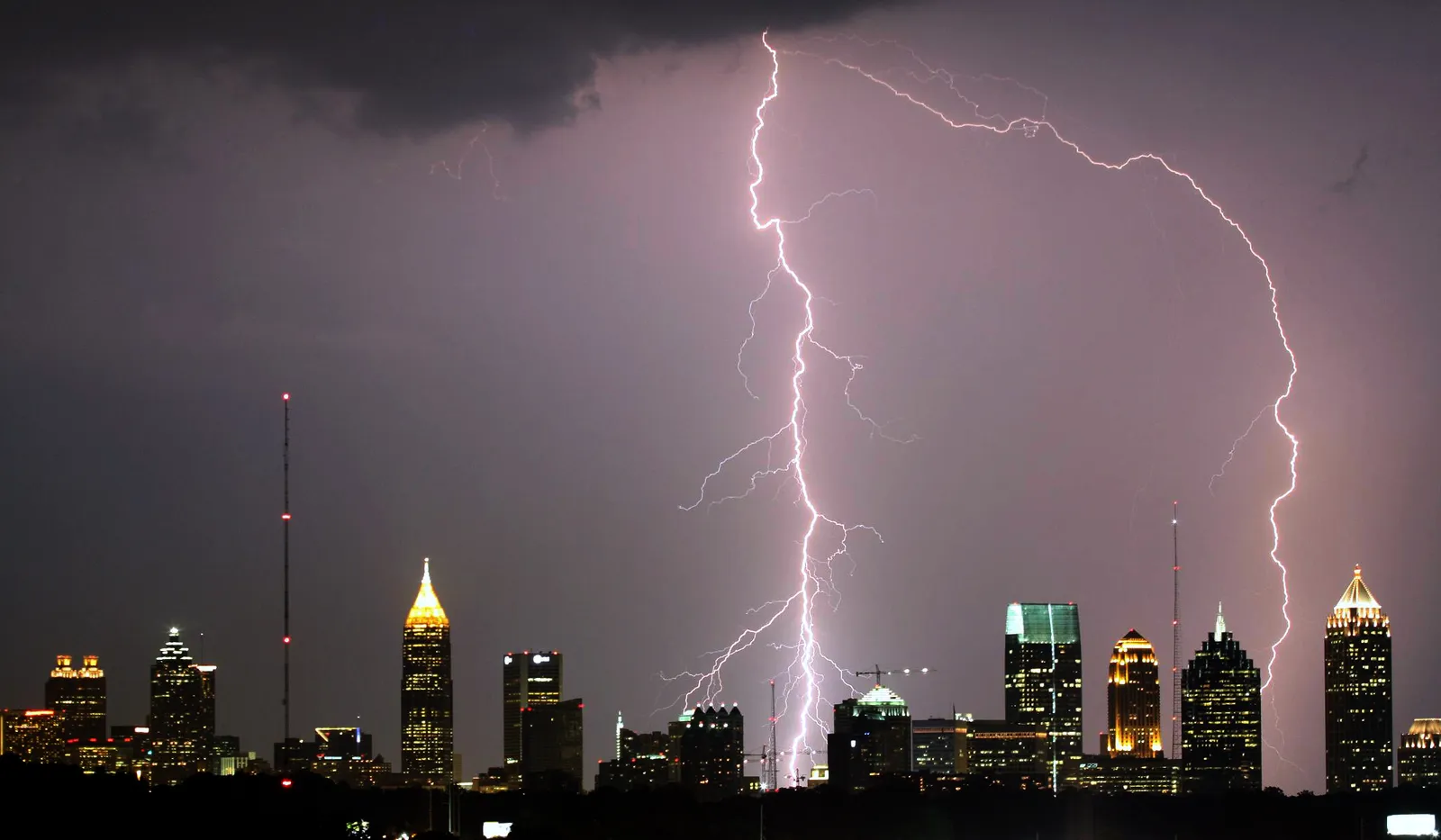
1. Lightning never strikes the same place twice
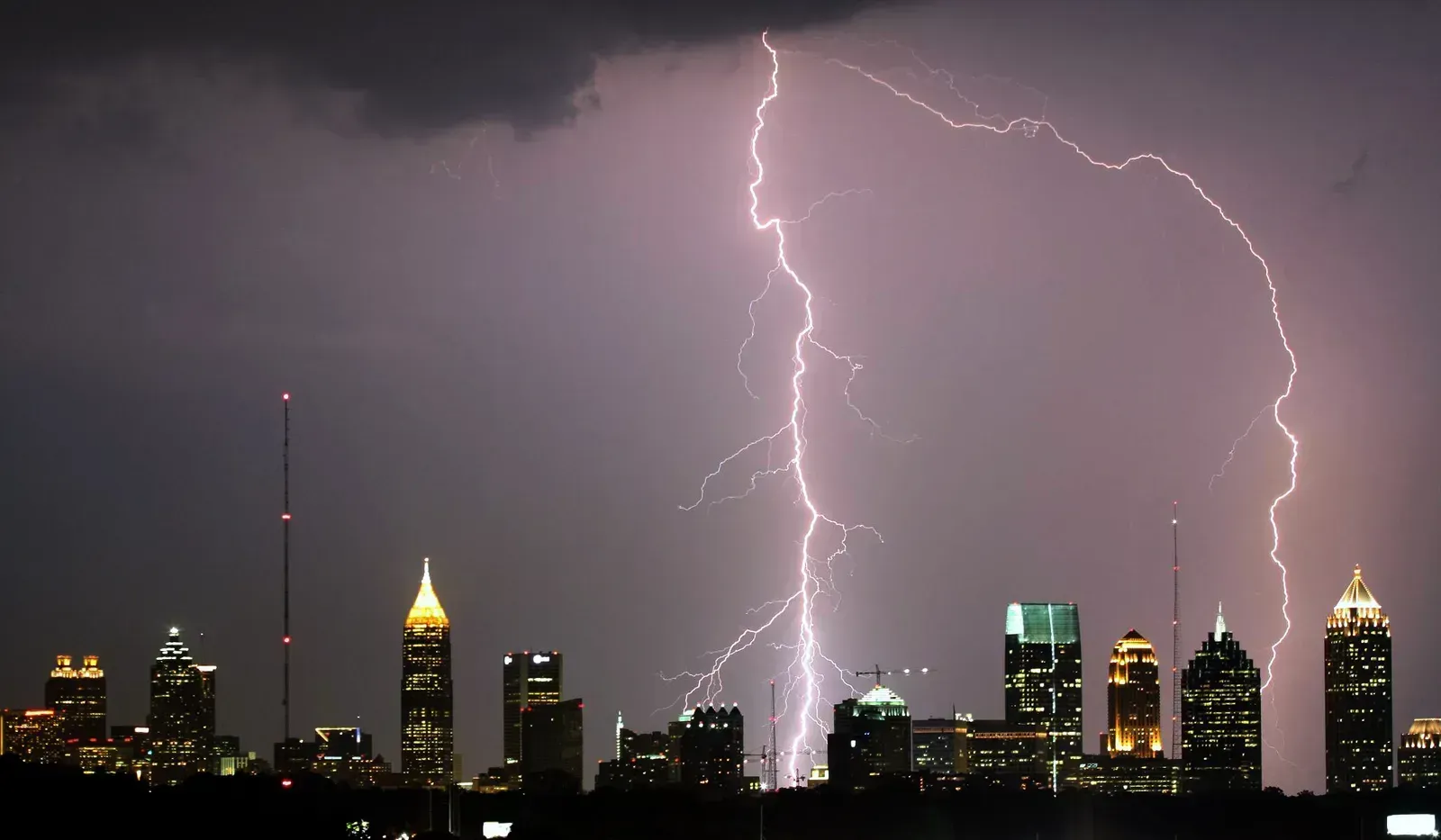
This one might be the oldest weather saying still in circulation, and it is almost the opposite of true. Tall, isolated structures get hit repeatedly because lightning follows the path of least resistance to the ground, and height plus conductivity matter far more than location “luck.” The Empire State Building, for instance, has been struck dozens of times over the decades, sometimes multiple times in a single storm.
Meteorologists explain that lightning behaves according to physics, not chance encounters with a single spot. Any tall object, whether a skyscraper, a lone tree in a field, or a radio tower, becomes a preferred target precisely because it has been struck before, which proves it is a good conductor path. The safety takeaway stays the same regardless of the myth: avoid open fields and isolated tall objects during a storm rather than assuming a previous strike makes a place safer.
2. A groundhog can predict how much winter is left

Groundhog Day draws plenty of media attention every February, but the tradition has no real forecasting value. Groundhogs are rodents responding to instinct and local temperature around their burrows, not creatures with any special sensitivity to atmospheric patterns months in advance. Long-range seasonal outlooks require analyzing ocean temperatures, jet stream behavior, and climate patterns like El Niño or La Niña, none of which a groundhog can sense.
Climatologists have tracked the accuracy of famous groundhog predictions over many years, and the results land close to what a coin flip would produce. That said, the tradition persists because it is fun and harmless, not because anyone in the National Weather Service is quietly checking a rodent’s shadow. Modern seasonal forecasting instead relies on supercomputer models fed by satellite and ocean buoy data.
3. Cold weather by itself causes colds and flu

This myth blends a real seasonal pattern with the wrong cause. Cold and flu viruses do spread more in winter, but temperature alone does not make people sick; it is more about indoor crowding, lower humidity drying out nasal passages, and reduced ventilation as people close windows and huddle indoors. Some research also suggests certain viruses simply survive slightly longer in cooler, drier air, which gives them more opportunity to spread between people.
Health researchers and meteorologists who study climate and public health together point out that being outside in cold weather, even without a coat, does not directly trigger illness. What matters more is prolonged close contact with infected people in enclosed spaces, something that happens naturally more often once temperatures drop. So bundling up matters for comfort and frostbite prevention, but it is not really the deciding factor in whether someone catches a virus.
4. Tornadoes never cross rivers or hit big cities
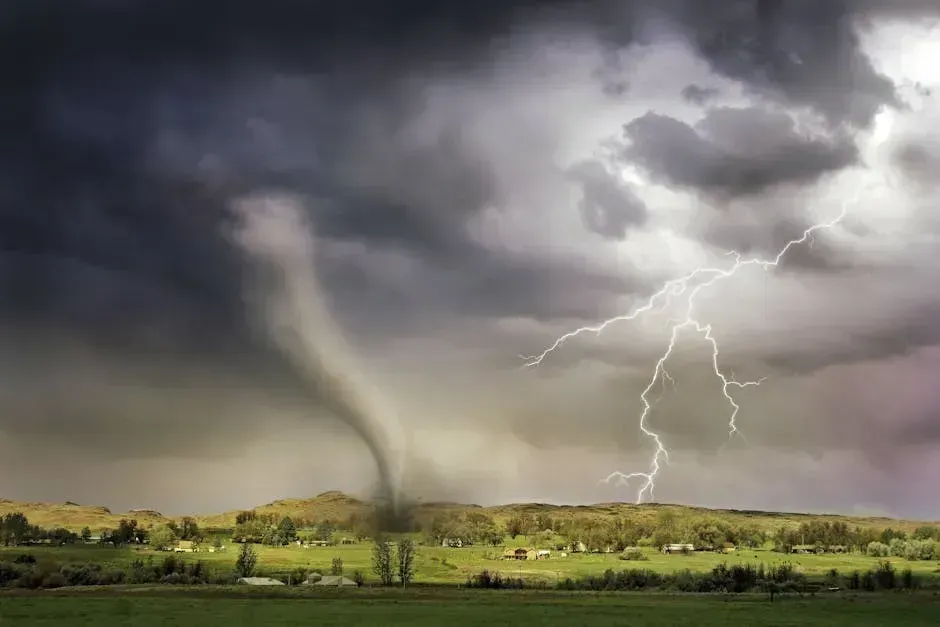
This belief probably persists because it feels reassuring, but tornadoes do not respect geography in the way the myth suggests. Rivers, lakes, and hills can sometimes influence a tornado’s path slightly, but there is no physical barrier effect strong enough to reliably stop or redirect a tornado. Major cities including St. Louis, Nashville, and even parts of Oklahoma City have all been struck by significant tornadoes in recent decades.
Meteorologists at the National Weather Service have repeatedly clarified that no terrain feature offers guaranteed protection, and urban heat or tall buildings do not deflect storms either. What actually reduces tornado risk in a given spot is simple probability, since tornadoes are relatively narrow and any single location has a low statistical chance of a direct hit. That is a matter of odds, not immunity.
5. If it is sunny, the forecast is automatically wrong when rain shows up later
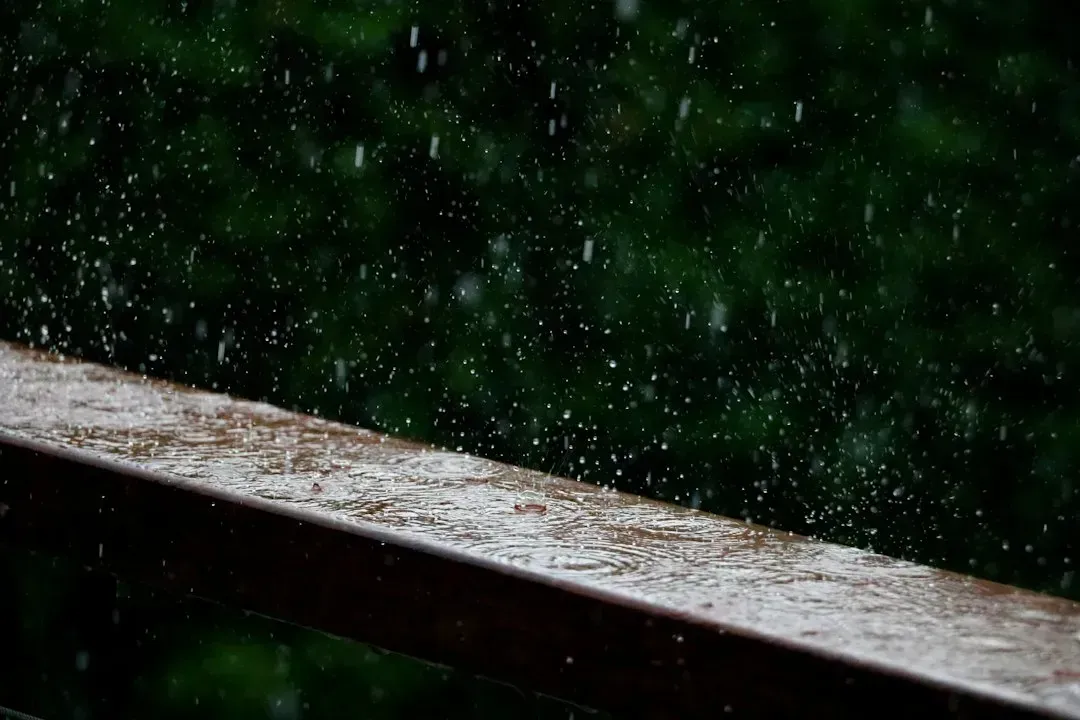
People often assume a forecast has failed if the morning looks clear but rain arrives by afternoon, but a well-written forecast usually already accounted for that shift. Modern forecasts describe changing conditions throughout the day using percentages and timing windows precisely because weather evolves hour by hour, not as one static snapshot. A forecast calling for a 40 percent chance of afternoon showers is not broken just because morning skies were blue.
Meteorologists explain that probability of precipitation reflects both the likelihood that rain occurs somewhere in the forecast area and the expected coverage, not a promise about a specific backyard at a specific hour. Improvements in short-term forecasting, particularly with high-resolution models used by agencies like NOAA, have made these hour-by-hour predictions considerably more reliable over the past several years. Reading the full forecast, not just the daily icon, gives a much more accurate picture.
6. Heat lightning is a different, harmless type of lightning
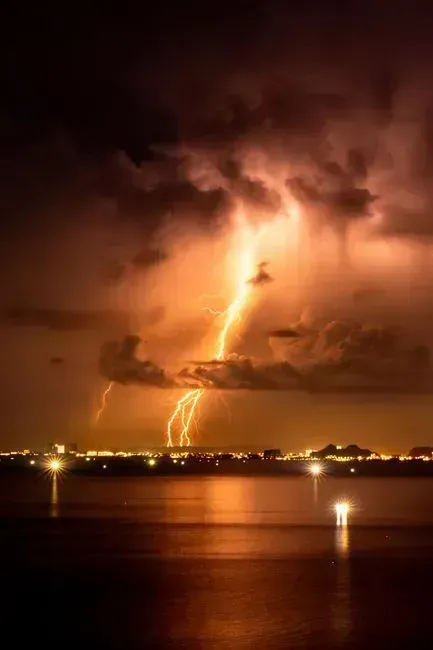
“Heat lightning” is a term many people use for flashes seen on a hot summer night with no accompanying thunder, and it usually gets treated as some separate, weaker phenomenon. In reality, meteorologists confirm it is ordinary lightning from a thunderstorm that is simply too far away for the thunder to be heard, since sound dissipates over distance much faster than light does. There is no special category of lightning tied to heat alone.
This distinction matters because people sometimes let their guard down outdoors on warm nights, assuming the distant flashes pose no threat. Storms can move quickly, and what looks like a silent light show in the distance may be approaching faster than expected. Forecasters recommend treating any visible lightning as a signal to start paying attention, regardless of whether thunder is audible yet.
7. Weather forecasters are wrong most of the time
This complaint shows up constantly on social media, yet it does not match the data. Short-range forecasts, particularly one to three days out, have become remarkably accurate thanks to improvements in satellite coverage, computing power, and modeling techniques developed over the last couple of decades. A next-day high temperature forecast is typically accurate within a couple of degrees, and precipitation timing has grown far more precise than it was even fifteen years ago.
Meteorologists acknowledge that longer-range forecasts, especially beyond seven days, carry more uncertainty simply because atmospheric systems become harder to predict with precision that far out. The perception of frequent errors often comes from people remembering the rare misses more vividly than the routine, unremarkable accuracy of most forecasts. Verification studies conducted by agencies such as NOAA consistently show that short-term forecast skill has improved steadily rather than declined.
Weather folklore sticks around because it is memorable and often rooted in a kernel of real observation, even when the explanation drifted off course over time. Understanding what meteorologists actually study, from atmospheric pressure to satellite radar, offers a clearer and often more interesting picture than the old sayings ever did.
- Flood and Cyclone Warnings: What Makes an Early Warning System Effective - October 14, 2026
- Saharan Dust Over Europe: What It Means for Air Quality and Sunsets - October 14, 2026
- Climate Normals: The 30-Year Averages Behind Every “Above Average” Forecast - October 14, 2026
