


The sky has always held a certain authority over human imagination. It’s where weather lives, where stars burn, and where, from time to time, something genuinely inexplicable unfolds. Scientists have instruments, satellites, atmospheric models, and centuries of accumulated knowledge – and still, the sky occasionally does something that leaves even the most methodical researchers reaching for their notebooks with no ready answers.
Some of these moments eventually yield explanations, often years later. Others remain stubbornly unresolved, occupying that uncomfortable space between intriguing anomaly and genuine mystery. Here are eight times the sky delivered something nobody could immediately account for.
1. The ANITA Experiment’s Upward-Flying Particles Over Antarctica

Between 2016 and 2018, NASA’s balloon-borne ANITA experiment over Antarctica detected radio pulses that looked like they were coming up from below the horizon, as if ultra-high-energy particles had plowed through thousands of kilometers of rock and ice and then burst out into the sky. That directional detail was the sticking point. Particles don’t simply pass through the entire bulk of the Earth and emerge cleanly on the other side – at least not according to standard particle physics.
Standard particle physics says it shouldn’t happen often enough to explain what was seen. Were scientists misreading reflections and ice geometry? Missing a mundane instrumental effect? Or glimpsing new physics? Exotic particles, unexpected neutrino behavior, or something stranger? Fresh discussions in 2025 revisited the signals with improved analyses and independent instruments, but there’s no consensus yet. The data came in clean and precise, which made it harder, not easier, to dismiss.
2. STEVE – The Purple Ribbon That Wasn’t an Aurora

A Facebook group called the Alberta Aurora Chasers had occasionally noticed bright, thin streams of white and purple light running east to west in the Canadian night sky when they photographed the aurora. Scientists initially assumed this was a known auroral variant. It wasn’t. Thin ribbons of purple and white light that sometimes appear in the night sky were dubbed a new type of aurora when brought to scientists’ attention in 2016, but new research suggests these mysterious streams of light are not an aurora at all but an entirely new celestial phenomenon.
STEVE is an atmospheric optical phenomenon that appears as a purple and green light ribbon in the night sky, named in late 2016 by aurora watchers from Alberta, Canada. The backronym later adopted for the phenomenon is the Strong Thermal Emission Velocity Enhancement. According to analysis of satellite data from the European Space Agency’s Swarm mission, the phenomenon is caused by a 25 km wide ribbon of hot plasma at an altitude of 450 km, with a temperature of 3,000°C and flowing at a speed of 6 km/s. Even with that partial understanding, STEVE and the picket fence are arguably the biggest mystery in space physics right now.
3. The Kerala Red Rain

The Kerala red rain phenomenon was a blood rain event that occurred from 25 July to 23 September 2001, when heavy downpours of red-coloured rain fell sporadically in Kerala, staining clothes pink. Sometimes the rain came down yellow, green, or even black, but the red was most dominant. Some folks reported hearing a loud boom or seeing a flash in the sky just before the rain started.
The striking red colouration of the rainwater was found to be due to the suspension of microscopic red particles having the appearance of biological cells. These particles have no similarity with usual desert dust. An estimated minimum quantity of 50,000 kg of red particles fell from the sky through the red rain. The official explanation endorsed by India’s government and most institutions remains terrestrial: a massive bloom of locally occurring algae or lichen spores lifted into the atmosphere by unusual weather conditions. Still, some early lab results showed cells with no detectable DNA – an anomaly that fed years of controversy before later tests resolved the question in favor of a terrestrial origin.
4. Fast Radio Bursts – Milliseconds of Cosmic Energy
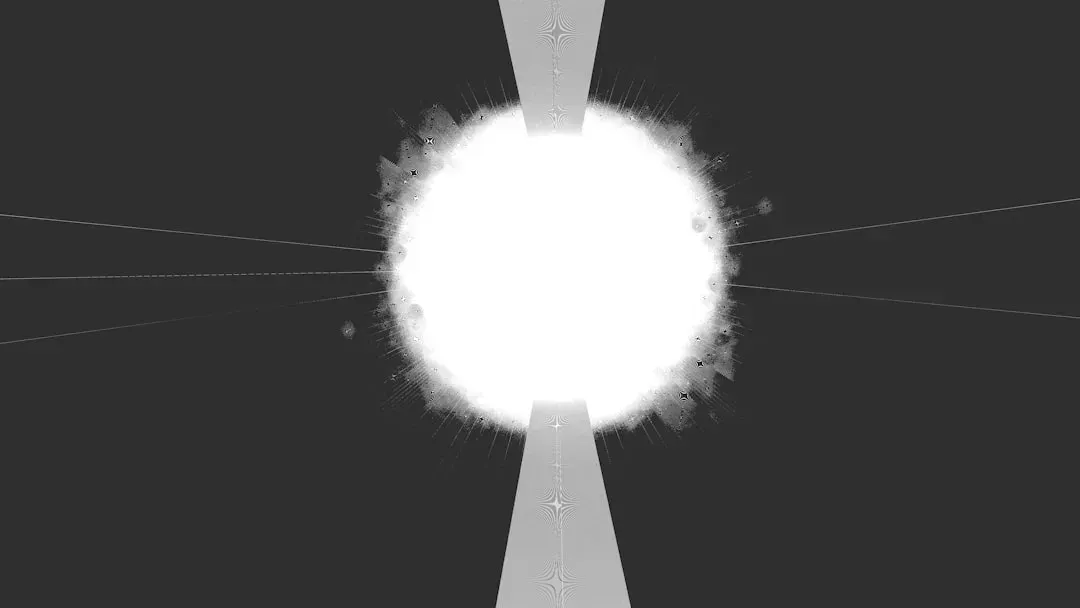
Fast Radio Bursts represent one of the most energetic and mysterious phenomena in the known universe. These millisecond-duration pulses of radio waves release more energy in a few thousandths of a second than our Sun produces in an entire day. First discovered in 2007, FRBs appear to originate from distant galaxies billions of light-years away, making their incredible energy output even more remarkable.
What makes FRBs particularly puzzling is their diversity. Most occur only once and never repeat, suggesting cataclysmic one-time events. The signals arrive with no warning and leave almost nothing to study. China’s Einstein Probe, an x-ray satellite telescope that began collecting data in mid-2024, should find 50 to 100 fast x-ray bursts per year – data that researchers hope will eventually untangle the mechanisms behind these remarkable pulses. For now, the universe sends its messages and doesn’t wait around for a reply.
5. Mysterious White Patches Inside Auroras

Researchers determined that strange grey or white patches found within active auroras range in size from tens to hundreds of kilometers, appear within active auroras, and are likely to be caused by something in the display releasing heat that in turn triggers chemical reactions capable of emitting a continuum of electromagnetic wavelengths. That sounds plausible enough – until you realize that nobody can say exactly what is doing the releasing.
Exactly what is breaking down and recombining to glow is only hypothetical at this stage, but the entire process could represent a novel chain of events tangentially linked to auroras. Modeling the layers of the atmosphere in laboratory experiments and collecting more examples of the mysterious white patches of light could add vital details and new complexities to the greatest show in the sky. The aurora itself was already one of the most studied phenomena in atmospheric science. The fact that it apparently contains its own hidden sub-mystery says something about how much remains unseen.
6. Skyquakes – Loud Booms With No Explanation

For centuries, mysterious sounds echoing from the sky have puzzled people worldwide. These unexplained phenomena, known as skyquakes, continue to baffle scientists and researchers alike. Despite technological advancements and numerous hypotheses, the true nature of these enigmatic booms remains elusive. These mysterious noises have been reported in various parts of the world, including the United States, Belgium, and Japan. The widespread occurrence of skyquakes adds to their intrigue, as they appear to transcend geographical boundaries.
Interestingly, skyquakes are not always associated with seismic activity. For instance, the “Seneca Guns” – a local term for unexplained booms heard near Lake Seneca in New York – occur regularly without any detectable earthquake activity. This disconnect between skyquakes and known natural phenomena further deepens the mystery surrounding their origin. Researchers have proposed various theories to explain skyquakes, but none have been universally accepted. The booms keep coming, and the file stays open.
7. Transient Luminous Events – Red Sprites and Their Relatives
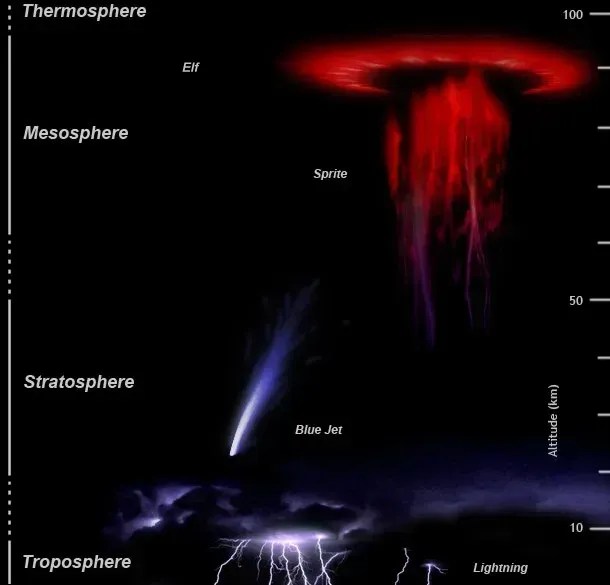
Fantastical terms refer to light displays called transient luminous events or TLEs that occur in Earth’s upper atmosphere during thunderstorms. The very first photographic observations of these events in 1989 captured red flashes streaking across the sky in the blink of an eye. The displays were dubbed red sprites, inspired by characters in Shakespeare’s A Midsummer Night’s Dream, and a medley of other fairytale names followed as researchers discovered new types of TLEs.
Red sprites appear as a bright orange-red flash, often in clusters at altitudes of 50 to 90 km above the troposphere. The appearance of sprites in the sky has been reported as early as the 19th century. However, they were considered a myth by the scientific community. It took humans more than a century to even capture the first red sprite phenomenon on video, which was captured by scientists at the University of Minnesota in 1989. Today, scientists are still working to understand these curious phenomena – what causes them, how often they happen, and what they can tell us about Earth’s atmosphere. For something visible above active thunderstorms on a regular basis, sprites have proven remarkably stubborn about revealing themselves on demand.
8. Tabby’s Star – The Star That Keeps Defying Explanation
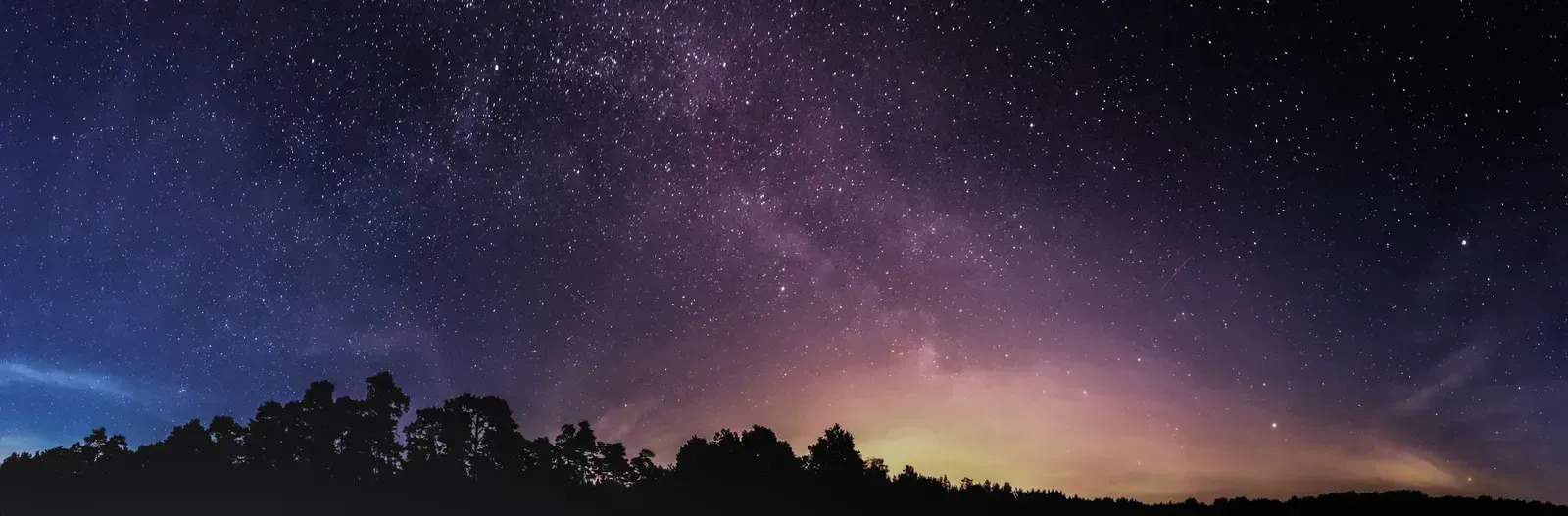
Located in the constellation Cygnus, approximately 1,470 light-years from Earth, KIC 8462852 earned the nickname “Tabby’s Star” after astronomer Tabetha Boyajian, who led the team that discovered its bizarre behavior. What makes this star extraordinary isn’t what it does, but what appears to be happening around it. The Kepler Space Telescope detected dramatic and irregular dimming events around Tabby’s Star, with some dips in brightness reaching an unprecedented 22%. To put this in perspective, a planet the size of Jupiter would only block about 1% of a star’s light during transit.
Recent observations added another layer to the mystery: the star appears to have been gradually dimming over the past century, suggesting an ongoing process rather than temporary events. Despite years of intensive study and increasingly sophisticated observations, Tabby’s Star continues to defy explanation. Proposed causes have ranged from swarms of comets to dust clouds to genuinely exotic structures. None has held up cleanly under scrutiny. The sky there just dims, and brightens, and dims again – on its own schedule, for its own reasons.
The pattern across these eight cases is less about ignorance and more about the pace of discovery. Science rarely delivers answers the same week the question appears. Some of these mysteries took decades to partially resolve. Others are still wide open. The sky, it turns out, operates on a longer timeline than human curiosity.
