


Most of us carry a handful of science “facts” picked up in school, from parents, or simply through endless repetition. They feel settled. Obvious. The kind of thing you’d confidently offer in a pub quiz without a second thought. The problem is, a surprising number of them are flat-out wrong.
Science has a habit of correcting itself, and sometimes those corrections overturn beliefs that have been embedded in popular culture for generations. These myths often survive because they’re simple, memorable, and repeated frequently in popular culture and everyday conversations. Sometimes they arise from outdated scientific ideas that were once believed to be true, and sometimes from misunderstandings of complex concepts. Here are twelve of the most stubbornly persistent offenders.
1. You Only Use 10% of Your Brain
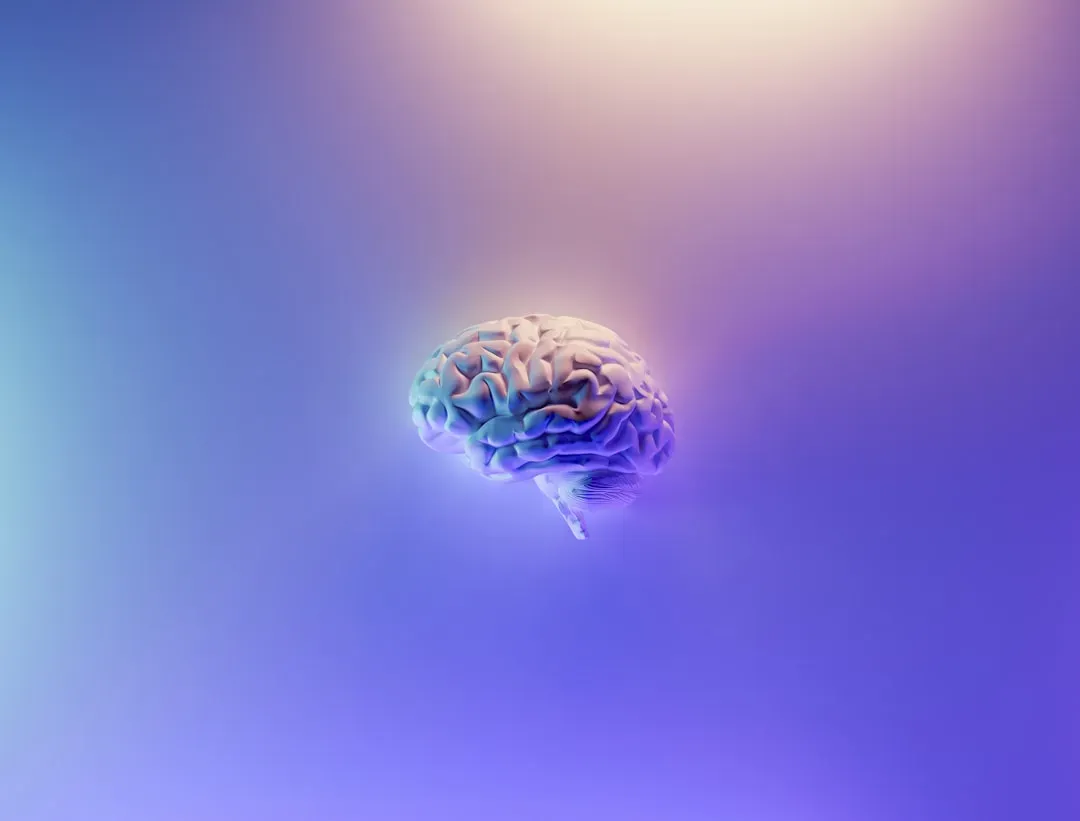
Psychologists in the past suggested that people only use a small fraction of their brains, leaving massive potential untapped. The myth has been linked to American psychologist William James, as well as to Albert Einstein. It sounds empowering, and it’s been the premise of blockbuster movies. That doesn’t make it remotely true.
Neuroscientific research shows that humans use virtually every part of their brain, and most of the brain is active throughout the day, even during rest. The myth likely gained traction because it’s an appealing simplification that suggests untapped potential. However, neurologist Barry Gordon explains that the idea is “ludicrously false” and doesn’t reflect our understanding of brain function.
2. Blood in Your Veins Is Blue
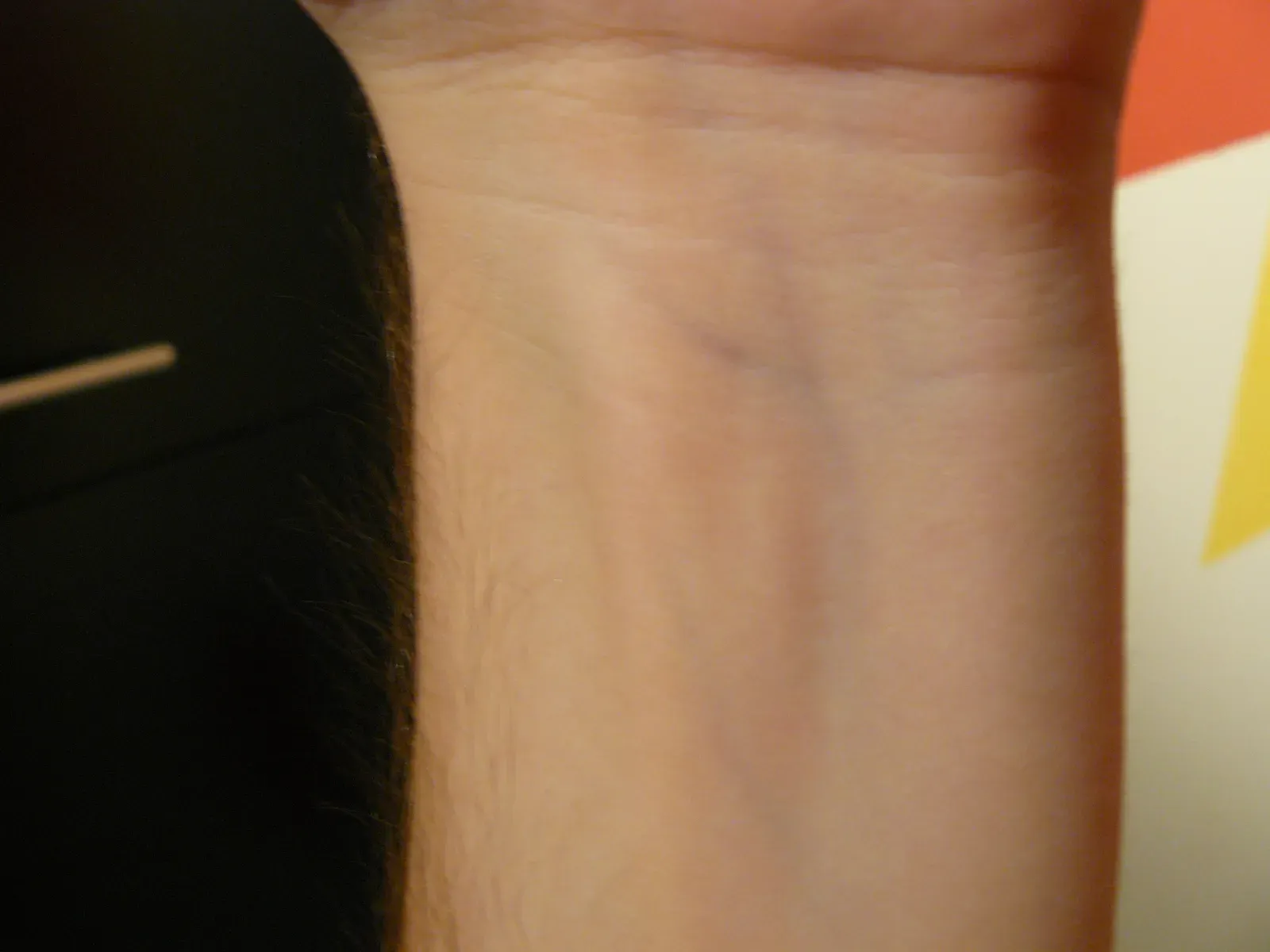
Biology classes often use diagrams that color oxygen-rich blood red and oxygen-poor blood blue, leading to a widespread belief that deoxygenated blood inside our veins is actually blue. It seems to make visual sense, especially when you look at the bluish lines on your wrist. The reality is more interesting.
Human blood is never blue. The bluish color of veins is only an optical illusion. Blue light does not penetrate as far into tissue as red light. If the blood vessel is sufficiently deep, your eyes see more blue than red reflected light due to the blood’s partial absorption of red wavelengths. Labeling veins on anatomical diagrams as blue is a convenient diagrammatic convention to distinguish veins from arteries. That color coding has fueled widespread confusion among students and lay readers.
3. Lightning Never Strikes the Same Place Twice

The idea that lightning doesn’t strike the same place twice is a popular misconception, but that’s all it is: a misconception. Lightning strikes are too frequent to not strike the same place on Earth multiple times. Studies show that around 500 to 1,000 lightning strikes happen globally every second.
The Empire State Building was once used as a lightning laboratory because the building is struck with lightning around 100 times a year. The way lightning works actually supports the idea of multiple strikes. With negative charge collecting in the clouds and positive charge collecting on the ground, streamers descend from the cloud to find the path of least resistance, and when the first one hits the ground, electricity shoots up following the streamer’s path. Tall structures are essentially magnets for repeat strikes.
4. The Seasons Are Caused by Earth’s Distance from the Sun
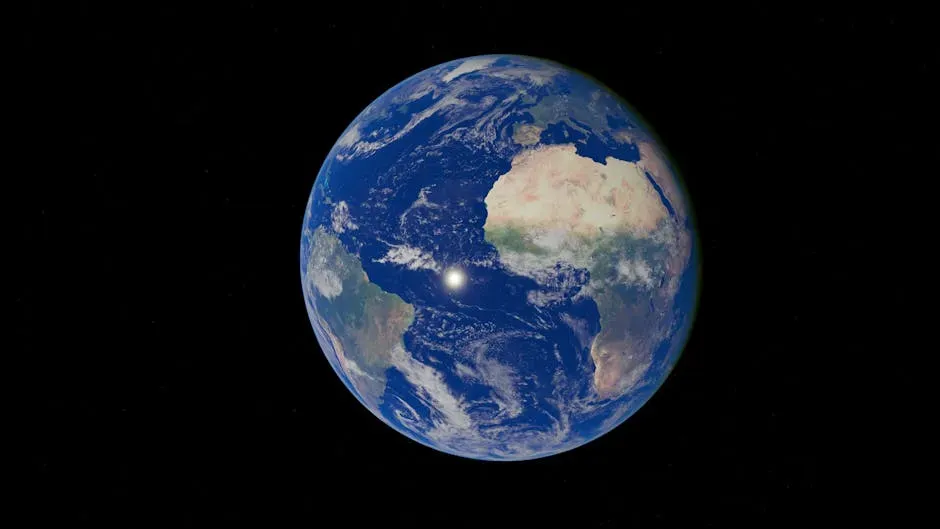
Many people intuitively assume that summer occurs when Earth is closest to the sun and winter happens when it is farthest away. While Earth’s orbit is indeed elliptical, the variation in distance is relatively small and is not the primary driver of seasonal changes. The true cause is the axial tilt of our planet, which sits at an angle of approximately 23.5 degrees relative to its orbital plane.
It’s true that the entire Earth is closer to the sun during some parts of the year than others, as it circulates in an ellipse, not a perfect circle. However, summer actually occurs in the Northern Hemisphere when the Earth is farthest from the sun, simply because it’s tilted toward the sun at that time. That single fact tends to stop people mid-sentence when they first hear it.
5. Humans Evolved from Monkeys

One of the most misunderstood ideas in biology is the statement that humans evolved from monkeys. This oversimplifies and distorts the theory of evolution. Modern evolutionary biology explains that humans and modern monkeys share a common ancestor that lived millions of years ago. Over time, different populations of that ancestor evolved along separate evolutionary paths. One lineage eventually led to modern humans, while others led to today’s monkeys and apes.
For one thing, humans are apes. Humans are members of the family Hominidae, which also includes orangutans, gorillas, chimpanzees, and bonobos. The confusion arises because evolutionary diagrams are often simplified, giving the impression of a straight progression from primitive to advanced forms. Evolution is a branching tree, not a ladder.
6. The Great Wall of China Is Visible from Space

The claim that the Great Wall of China is visible from space is a widely held belief, but it is a misconception not supported by expert observation or photographic evidence under typical conditions. Despite popular lore and repeated references in travel guides, professional analyses indicate that the wall’s visibility from low Earth orbit with the unaided eye is extremely unlikely.
The Great Wall is not the only human-made object visible from space or from the Moon. None of the Apollo astronauts reported seeing any specific human-made object from the Moon, and even Earth-orbiting astronauts can see it only with magnification. Ironically, many modern cities are far more visible from space than the Great Wall because they produce strong contrasts in light and color.
7. Cracking Your Knuckles Causes Arthritis

While cracking your knuckles may be annoying for those around you, it has no correlation to arthritis in those joints. Several studies that aimed to find a link between the two found no substantial evidence of any correlation. The fear is understandable but not grounded in evidence.
Knuckle cracking is a bubble being formed and popped by the liquid that surrounds your knuckle joints. It causes no trauma to these areas that would accelerate the onset of inflammation, which is what arthritis is. Those who excessively cracked their knuckles did show slightly weaker grip strength later in life, but that’s a far cry from arthritis.
8. Bats Are Blind

You’ve no doubt heard the idiom “blind as a bat,” but this is another often repeated science myth. The phrase has been attributed in part to bats’ often flying in random or erratic flight patterns, very close to objects, giving off the poor-vision vibes. However, bats can actually see quite well, and these flying mammals may even have sharper eyesight than humans.
While about 70% of bat species, mainly in the microbat family, use echolocation to navigate, all bat species have eyes and are capable of sight. In addition, almost all bats in the megabat or fruit bat family cannot echolocate and have excellent night vision. Echolocation is a bonus, not a replacement for vision.
9. Sugar Makes Children Hyperactive
Controlled scientific studies have repeatedly failed to find evidence that sugar causes hyperactivity. In many experiments, parents were told that their children had consumed sugar even when they had not. The results are telling.
The parents still perceived their children as more hyperactive. This suggests that expectations may influence perception. Children naturally become excited during celebrations or social events where sugary foods are common. The environment, including games, friends, and excitement, plays a much larger role than the sugar itself. Correlation, in this case, was mistaken for causation.
10. The Big Bang Was an Explosion
The Big Bang doesn’t actually describe an explosion at all. Rather, it tries to explain the expansion of the universe. It doesn’t say how the universe came to be but what the universe did to become gigantic. The name itself is a little misleading.
The Big Bang model does not fully explain the origin of the universe. It does not describe how energy, time, and space were caused, but rather it describes the emergence of the present universe from an ultra-dense and high-temperature initial state. There was no fireball, no shock wave, no moment of detonation in the conventional sense. Space itself stretched outward, which is a stranger and more wondrous idea than any explosion.
11. Stretching Before Exercise Prevents Injury

Several studies done in the last few years have actually found that stretching before exercise hinders athletic performance. Contrary to popular belief, stretching doesn’t make muscles less prone to injury. At the very least, it’s net-neutral. In some cases, it might actually make things worse.
Scientists have compared rates of soreness between individuals who stretch before a workout and those who don’t, and found little difference. Certain findings indicate stretching cold and tight muscles might even increase the risk of injury during exercise. Exercise physiologists think warm-ups could paradoxically stretch muscles to dangerous points too fast and too soon. A proper warm-up with light movement is a better approach than static stretching on cold muscles.
12. A “Scientific Theory” Is Just a Guess

Scientific terminology and everyday uses of words don’t always line up. In common use, theories are viewed as unproven, synonymous with “a hunch.” In science, that’s simply not true. A scientific theory is an explanation that encompasses facts we know about the world. The distinction matters enormously.
The label “theory” merely means that you didn’t actually see the event play out, even if all the evidence tells you what happened. The theory of evolution is a fact. The Big Bang theory is a fact. Some ideas in science are so well established and so well supported by accumulated evidence that they are unlikely to be thrown out, but even these ideas may be modified by new evidence. Scientific knowledge is durable, but not absolute or fixed, and a critical feature of science is that it is self-correcting.
What makes these myths so persistent isn’t stupidity. It’s that many of them feel intuitively right, or were taught with authority at an age when we weren’t in any position to question them. The real takeaway isn’t embarrassment about being wrong. It’s that the capacity to revise a belief when evidence demands it is one of the more underrated skills anyone can develop.
