

Climate science has a way of producing findings that feel almost too strange to accept. Not because the science is uncertain, but because the scale of what’s happening on Earth is genuinely difficult for the human mind to process. We’re used to thinking about change in terms of years or human lifetimes. The planet operates on a different clock entirely.
What follows are thirteen facts that have been verified by researchers, published in peer-reviewed journals, or confirmed by major scientific institutions. None of them are speculation. Some are almost poetic in how strange they are. All of them are real.
1. Climate Change Is Making Your Days Slightly Longer
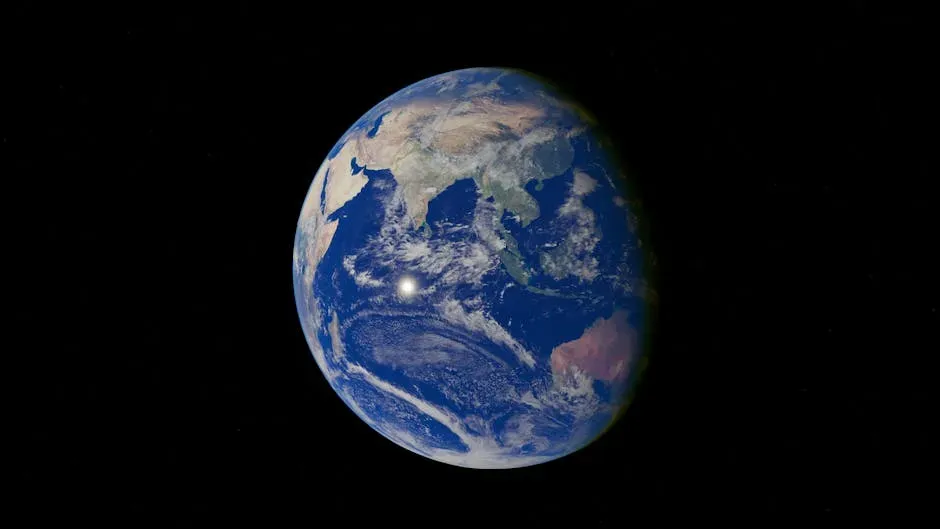
So much ice is melting at the Earth’s poles that it’s affecting the rotation of the planet, and its spin is slowing down slightly, causing days to get longer. The mechanism is surprisingly intuitive once you hear it. In recent decades, the faster melting of ice sheets has shifted mass from the poles toward the equatorial ocean, and this flattening causes Earth to decelerate and the day to lengthen, similar to when an ice skater lowers and spreads their arms to slow a spin.
Researchers found that melting ice has slowed the planet’s rotation by 1.33 milliseconds per century since 2000, and if emissions remain high, that will increase to 2.62 milliseconds by the end of the century. That may sound trivial, but while that amount of time doesn’t mean much to everyday life, it can pose problems for highly connected computer networks that society relies on, since GPS and space navigation, as well as financial institutions and cellphone networks, all rely on being synchronized by time.
2. The Oceans Absorbed the Equivalent of 12 Hiroshima Bombs of Heat Every Single Second in 2025

Twenty-three zettajoules in one year is equivalent to the energy of 12 Hiroshima bombs exploding in the ocean every second, as the ocean absorbed an extra 23 zettajoules of heat energy in 2025, breaking the ocean heat content record for the ninth consecutive year. This is not a rhetorical flourish. It is a thermodynamic measurement. The figure on ocean warming comes from a new analysis published in the journal Advances in Atmospheric Sciences, conducted by more than 50 scientists from 31 global research institutions.
Unlike air temperatures, which fluctuate seasonally, ocean heat is durable. Once driven below the surface, it remains locked within the system, slowly migrating through layers of water that circulate on timescales far longer than those of politics, markets, or human lifespans. In other words, much of the heat being banked in the ocean today will still be influencing climate conditions centuries from now.
3. CO2 Levels Are Higher Now Than at Any Point in at Least 4 Million Years
The last time carbon dioxide levels on our planet were as high as today was more than 4 million years ago. To put that in context, modern humans didn’t exist four million years ago. In 2024, the average concentration of carbon dioxide in the atmosphere was 421.73 parts per million, the highest in human history and more than fifty percent higher than pre-industrial levels.
Carbon dioxide levels are at their highest in 2 million years, while two other greenhouse gases, methane and nitrous oxide, are at their highest in 800,000 years. These aren’t measurements from models or projections. By measuring everything from ice cores to tree rings, scientists have been able to track concentrations of greenhouse gases going back hundreds of thousands of years, providing a clear baseline against which to measure today’s extraordinary spike.
4. The Last Decade Was Likely the Hottest in 125,000 Years
According to the IPCC’s sixth assessment report on the state of our climate, the past decade is likely to have been the hottest period in the last 125,000 years. That number often gets glossed over, but it deserves a pause. Long before the Egyptian pyramids, before agriculture, before recorded human history, the Earth has not been this warm. Even with occasional cold days, the planet’s average temperature keeps rising faster than at any time in at least 10,000 years, and the last decade from 2015 to 2024 has been the warmest on record.
The World Meteorological Organization confirmed that 2024 was the warmest year on record, with an average global temperature of 1.55°C above pre-industrial levels, surpassing the record-breaking temperatures of 2023, and consecutive record-breaking monthly temperatures continued well into 2024. It wasn’t a statistical anomaly. It was part of a sustained, documented trend.
5. Glaciers in Switzerland Lost in Two Years What Took Three Decades Previously

In 2022 and 2023, glaciers in Switzerland lost ten percent of their total volume, as much as they lost in the three decades between 1960 and 1990. The compression of geological timescales into a human lifetime is one of the most unsettling aspects of modern climate science. What once took a generation now takes two years. In 2024 alone, glaciers lost 450 billion tonnes of water, and 9,000 billion tonnes of water have melted away since 1975.
If temperatures increase between 1.5°C and 4°C, mountain glaciers worldwide are projected to lose between roughly a quarter and nearly half of their total mass by 2100, compared to 2015. For communities that depend on glacial meltwater for drinking and agriculture, this is not a distant abstraction. It is an active and accelerating emergency.
6. The Remaining Carbon Budget for 1.5°C Could Be Used Up in About Three Years

The central estimate of the remaining carbon budget from the start of 2025 is 130 billion tonnes of CO2, which has fallen by almost three-quarters since the start of 2020, and would be exhausted in a little more than three years of global emissions at current levels. The carbon budget refers to the total amount of CO2 that can still be emitted while keeping warming below 1.5°C. It is running out fast. Emissions have shown no sign of the peak required by 2025 and rapid decline to net-zero needed to limit global warming to 1.5°C.
Global carbon emissions hit a record high in 2024, with 41.2 billion tons of carbon dioxide entering Earth’s atmosphere, a 0.8% increase from 2023, and scientists say there’s no sign that emissions have peaked yet. The numbers keep moving in the wrong direction, and the budget keeps shrinking.
7. Deforestation Causes More Emissions Than All the World’s Cars Combined

As much as twenty percent of all global greenhouse gas emissions caused by humans are due to deforestation, exceeding the emissions from all of the passenger vehicles on the planet. Most climate conversations focus on transportation and energy. The destruction of forests rarely gets the same attention, despite being one of the largest single sources of human-caused emissions. Tropical forests are incredibly effective at storing carbon, providing at least a third of the mitigation action needed to prevent the worst climate change scenarios.
Yet nature-based solutions receive only three percent of all climate funding. That gap between the importance of forests as a climate tool and the resources actually being directed toward protecting them is one of the more striking imbalances in global climate policy. The math doesn’t add up – and scientists have been saying so for years.
8. A Single Square Mile of Mangroves Stores as Much Carbon as 90,000 Cars Emit in a Year

In a single square mile, mangroves hold as much carbon as the annual emissions of 90,000 cars, and if they are destroyed, all that carbon is released into the atmosphere, contributing to climate change. Mangrove forests, which grow in coastal saltwater zones across tropical regions, are among the most carbon-dense ecosystems on Earth. They are also highly vulnerable to coastal development and sea-level rise. Mangrove trees provide flood protection benefits exceeding 65 billion US dollars per year.
The dual role of mangroves as both a carbon sink and a coastal shield makes their loss doubly damaging. They protect communities from storm surges while simultaneously removing carbon from the atmosphere. Losing them means losing both forms of protection at the same time, which is a trade-off that rarely registers in economic calculations.
9. Climate Change Is Literally Moving the Earth’s Axis
Researchers used more than 120 years of data to decipher how melting ice, dwindling groundwater, and rising seas are nudging the planet’s spin axis, and days on Earth are growing slightly longer, with that change accelerating, a shift connected to mechanisms that have also caused the planet’s axis to meander by about 30 feet in the past 120 years. This is not a small or abstract shift. The planet’s geographic axis has physically moved. Water accumulating near the equator is also moving Earth’s axis of rotation and causing the magnetic poles to wobble farther from the axis every year.
A recent study found that about ninety percent of the periodic oscillations in polar motion could be explained by melting ice sheets and glaciers, diminishing groundwater, and sea level rise. The Earth’s orientation in space is, quite literally, being reshaped by human activity. That is a sentence that takes a moment to fully absorb.
10. Warmer Climates Can Produce Heavier Snowfall

Cold extremes can coexist with warming. A warmer atmosphere holds more moisture, which can fuel heavy snowfalls. Shifts in high-altitude wind currents can also push Arctic air southward, creating intense local cold while the globe as a whole keeps heating. This is one of the most counterintuitive findings in climate science, and one of the most frequently misunderstood. Extreme winter weather does not disprove warming. It can actually be caused by it. One much-publicized study found the rapid warming of the Arctic may have disrupted the swirling mass of cold air above the North Pole in 2021, unleashing sub-zero temperatures as far south as Texas in the United States, causing billions of dollars in damages.
The kind of changes that would normally happen over hundreds of thousands of years are happening in decades. When the jet stream destabilizes, it can spill Arctic air far outside its normal boundaries. The result is a paradox that trips up public understanding: a warming world that periodically delivers record-breaking cold snaps to unexpected places.
11. The Number of Climate-Related Disasters Has Increased Fivefold in Fifty Years
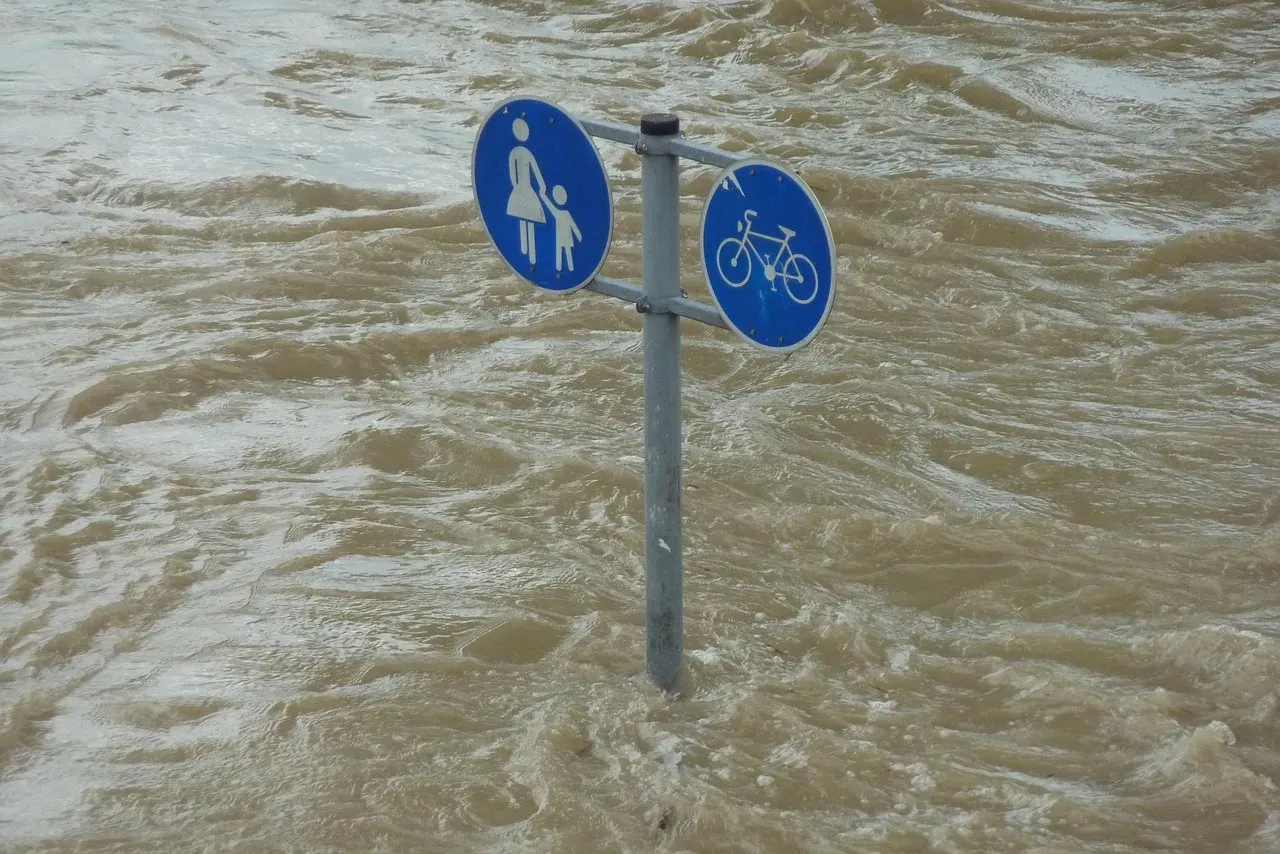
The number of climate-related hazards has increased fivefold in the past fifty years, and in 2024, 45.8 million people were displaced due to weather-related disasters. Nearly the combined populations of California and New York were forced from their homes in a single year by floods, storms, and extreme heat. The economic toll of disasters is accelerating, with average annual costs rising from between 70 and 80 billion US dollars between 1970 and 2000, to between 180 and 200 billion dollars between 2001 and 2020.
The extraordinary level of warming has fueled a cascade of extreme weather events worldwide, including intensified heatwaves, wildfires, droughts, heavy rainfall, and floods. The frequency isn’t just bad luck. It reflects a fundamental shift in baseline conditions, one that makes previously rare events routine and previously moderate events severe.
12. Heat-Related Deaths Among Older People Have Nearly Doubled Since the 1990s

Between 2000 and 2019, extreme heat caused around 489,000 deaths every year, and annual heat-related deaths among older persons have risen by an estimated eighty-five percent since the 1990s. Heat is already among the deadliest weather phenomena on Earth, surpassing many more visible disasters in its human toll. Studies have shown that globally, deaths associated with cold temperatures historically outnumber those from heat; however, due to climate change, the number of deaths caused by heat is growing, and extreme heat is becoming one of the deadliest hazards.
New research reveals how rising temperatures are lowering groundwater levels vital in many regions for agriculture, and climate change is also fueling the spread of mosquito-borne diseases such as dengue fever, as higher temperatures expand the insect’s habitat. The health consequences of warming aren’t confined to heatstroke. They move through ecosystems, water supplies, and disease vectors in ways that ripple far beyond what the temperature record alone can capture.
13. Even If All Emissions Stopped Tomorrow, Sea Levels Would Continue Rising for Centuries
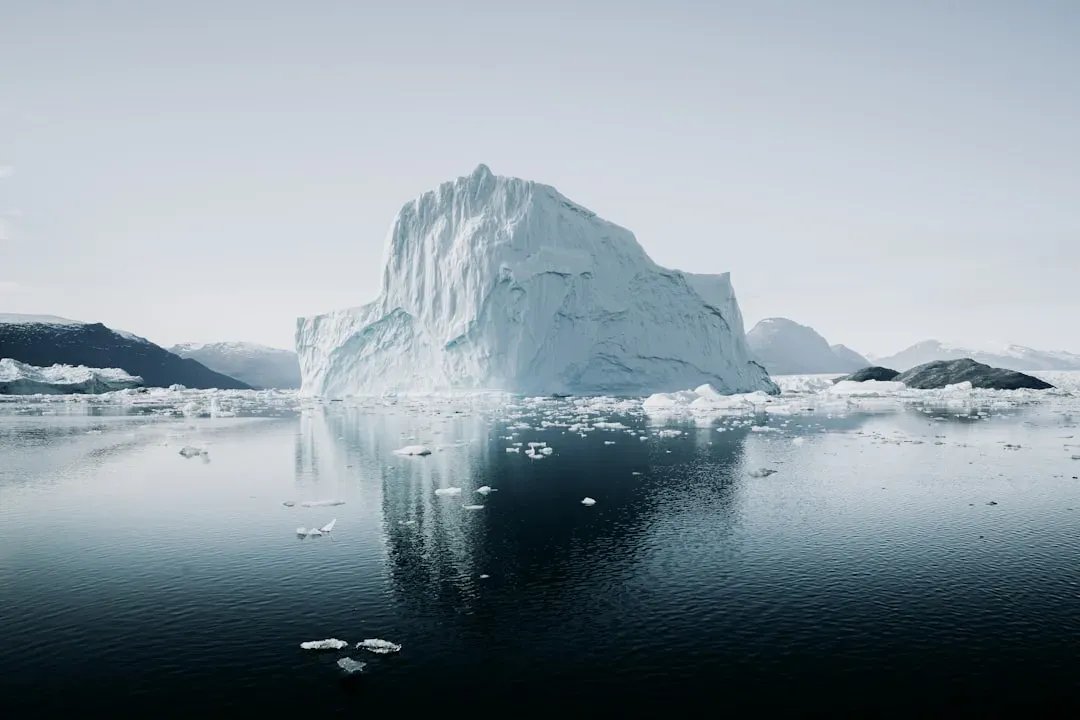
If global net emissions were entirely ceased, the warming we’ve caused would gradually reverse, but other climate-induced changes would continue for decades if not centuries. Sea level rise would probably take millennia to reverse its course. The ocean has already absorbed enormous amounts of heat, and that heat will continue driving expansion and ice melt long after the cause is removed. Global sea level rose about 8 inches in the last century, but the rate in the last two decades is nearly double that of the last century and is accelerating slightly every year.
The heat added in the 20th century will still be influencing the climate when today’s nations, borders, and financial systems are long gone. This isn’t a reason for fatalism. Reducing emissions still matters enormously, because every fraction of a degree less warming means less damage and a shorter recovery timeline. The scale of what’s already locked in, though, is a fact that scientists say the public rarely fully reckons with.
Taken together, these thirteen facts form a picture that is less about distant futures and more about changes already underway – in the ice, in the oceans, in the length of our days, and in the bodies of the most vulnerable people on Earth. The science isn’t waiting for confirmation. It’s already written in the data.

