

- The 11 Best Countries for Scientific Research, Ranked From Worst to Best - September 18, 2026
- 3 Countries With the Lowest Emissions Per Capita – and 5 With the Highest - September 18, 2026
- 10 Countries Where Off-Grid Living Is Common - September 18, 2026
11. India

India has quietly become one of the fastest-moving research economies on the planet, driven largely by sheer scale rather than per-capita spending. The latest rankings show that India has overtaken Australia and Switzerland to sit in 9th place overall in the Nature Index, a jump that reflects growing investment in biotechnology, space science, and computing research.
What India lacks in funding intensity, it makes up for in volume and ambition, with government-backed institutions expanding rapidly across engineering and life sciences. The country still spends a small fraction of its GDP on research compared to wealthier nations, but its sheer population of trained scientists and engineers gives it a growth trajectory few countries can match.
10. South Korea
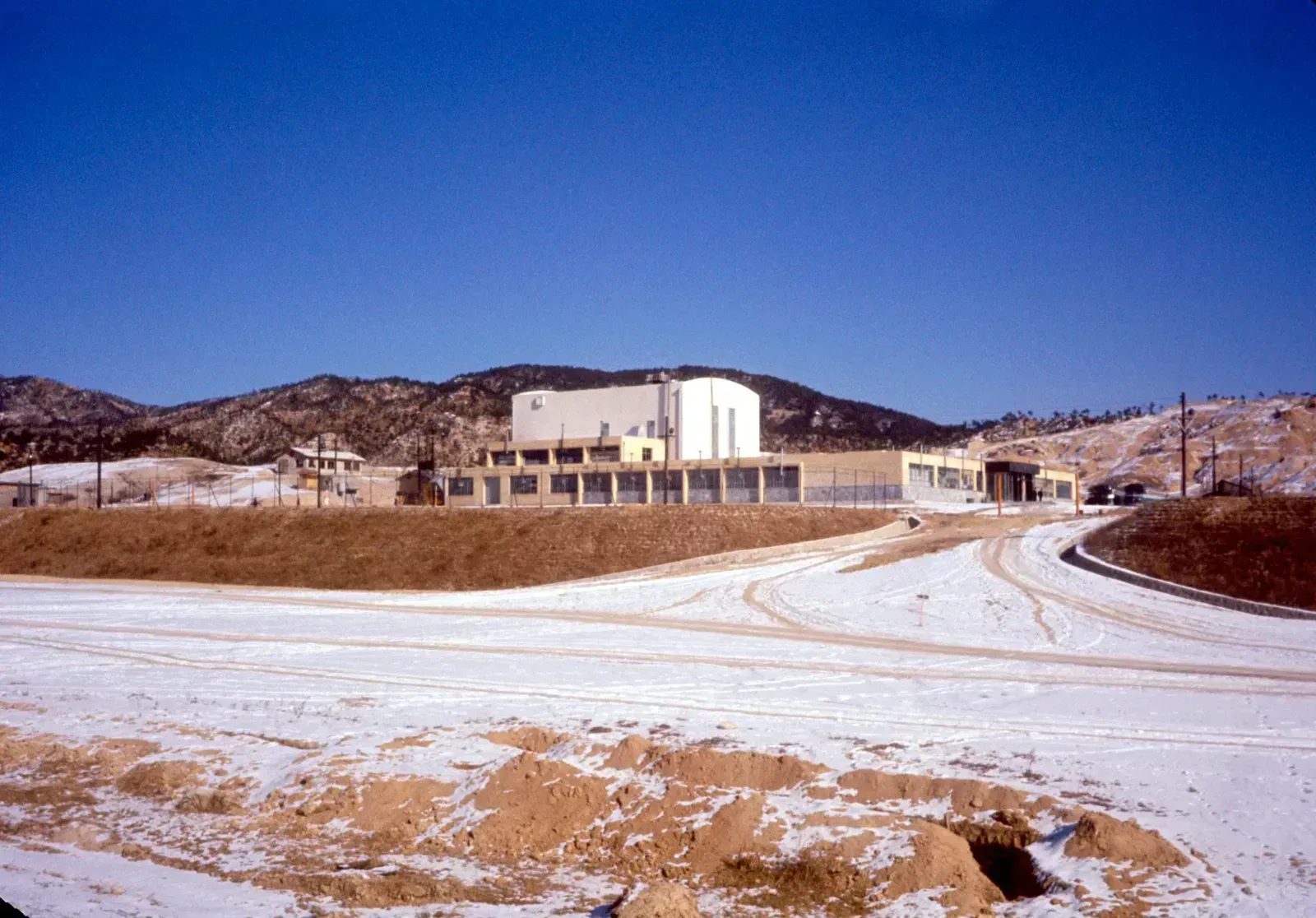
South Korea treats research spending almost like a national identity marker. Within the G20, South Korea has the largest expenditure on R&D as a percentage of GDP with 4.93%, followed by the United States with 3.46%, Japan with 3.30%, Germany with 3.14%, and the United Kingdom with 2.91%. That level of intensity has fueled dominance in semiconductors, battery technology, and increasingly in biotech.
The government has continued to pour money into emerging fields rather than resting on past success. The Republic of Korea has a budget of KRW 24.8 trillion for R&D in 2025, a significant increase from 2024’s budget of KRW 21.9 trillion, with much of that new funding aimed squarely at artificial intelligence, quantum computing, and advanced biotechnology.
9. France

French research has had a strong run recently, particularly in the life sciences. France has jumped to fifth place for the first time since 2019 in a key subject ranking tracked by the Nature Index, a sign that its universities and national research bodies like CNRS are gaining ground again after years of steady but unspectacular output.
France benefits from a centralized research funding model that allows large-scale, long-term projects to move forward without the funding uncertainty that plagues smaller institutions elsewhere. Its strength in physics, mathematics, and health sciences has kept it consistently inside the global top ten, even as competition from Asia intensifies.
8. Israel

Israel is small in population but massive in research intensity, and that gap between size and output is exactly what earns it a spot on this list. Israel tops the list with an impressive 5.56% of its GDP dedicated to R&D, reflecting its thriving tech ecosystem and innovation-driven economy, a figure that puts it ahead of every other country in the world by this particular measure.
This spending intensity translates into an outsized presence in computer science, cybersecurity, and biomedical research relative to the country’s size. Israeli universities and research hospitals maintain close ties to a booming tech sector, creating a feedback loop where commercial funding and academic research reinforce each other.
7. Japan

Japan remains one of the most consistent scientific powers of the past half-century, even as its relative share of global output has slipped somewhat. Japan ranks a distant third in R&D investment, spending $186.0 billion in 2024, though its share of global R&D has fallen by 7.2 percentage points since 2000, the second-largest such decline among major research nations.
Despite that relative decline, Japan’s depth in materials science, robotics, and precision engineering keeps it firmly among the world’s elite research economies. Its universities and corporate labs, including long-established names in electronics and automotive engineering, continue producing high-impact work even as newer competitors emerge across Asia.
6. United Kingdom

The UK punches well above its economic weight in scientific output, largely thanks to a handful of world-class universities that have anchored British research for generations. Oxford, Cambridge, Imperial College London, and University College London consistently rank among the top research institutions globally, particularly in medicine, physics, and life sciences.
That said, competition from Germany has intensified. In the Current Index, Germany has reclaimed third place for the first time since 2017 in biological sciences, a shift that came partly at the UK’s expense. A strong performance is needed from the United Kingdom and Japan if they want to reclaim third and fifth position in that particular field, suggesting the UK’s grip on the upper tier of global research is not guaranteed to hold.
5. Switzerland

Switzerland doesn’t produce the sheer volume of papers that larger nations do, but per capita, it is arguably unmatched. Its research output per researcher, and the citation impact of that output, consistently ranks among the highest in the world, a reflection of institutions like ETH Zurich and the University of Geneva punching well beyond what the country’s small population would suggest.
Smaller nations like Switzerland, Denmark, and the Netherlands often score exceptionally high in citation-weighted impact metrics, reflecting deep research quality despite modest publication volumes. This is precisely why Switzerland belongs in the upper half of any credible ranking, even though it will never compete with the United States or China on raw output numbers.
4. Germany
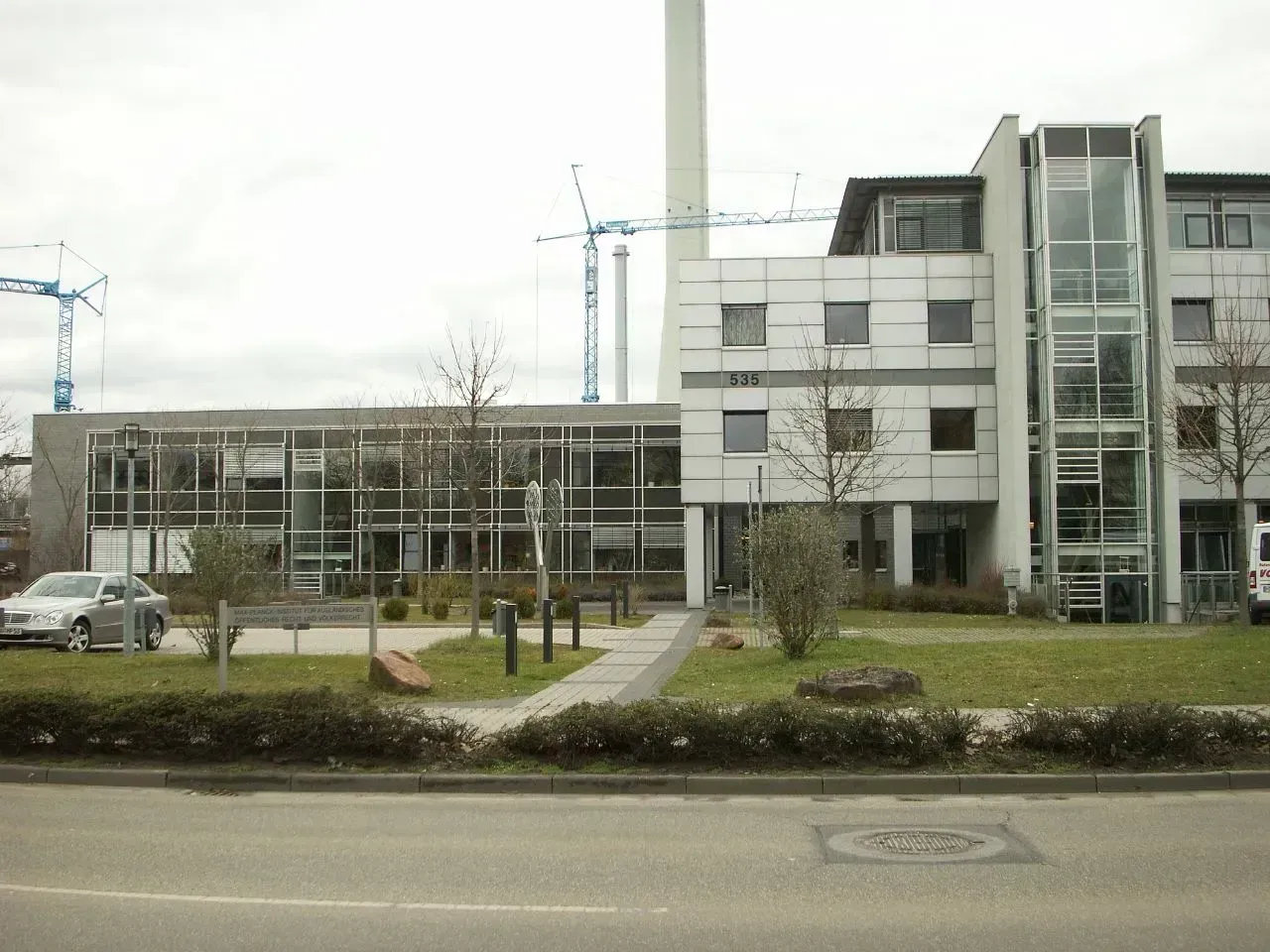
Germany has reasserted itself as one of Europe’s most formidable research powers in the past few years. Germany has regained the third spot in biological sciences for the first time since 2017, having overtaken the United Kingdom, a milestone that reflects broader momentum across German science, not just one field.
Much of that strength traces back to specific institutions rather than sheer national funding volume. Key to Germany’s success in the biological sciences is the strength of the Max Planck Society, a network of more than 80 science institutes, and the third-ranked organization globally for biological research in the Nature Index. That kind of institutional depth, paired with steady government funding around three percent of GDP, keeps Germany firmly among the world’s top research nations.
3. China

China’s rise in global science over the past two decades is one of the most dramatic shifts in the history of research funding. China spent $785.9 billion in research and development in 2024, surpassing the U.S. for the first time ever, a milestone that would have seemed unthinkable twenty years ago.
The growth has been staggering in both scale and speed. China’s share of global R&D has surged from 4.0% in 2000 to 27.4% in 2024, driven by prolific domestic and international collaborations and rapid infrastructure expansion, as well as government incentives, such as the Made in China 2025 strategic plan. China now leads or nearly leads the world in fields ranging from materials science to certain areas of biology, though questions remain about how citation impact compares to the raw volume of output.
2. South Korea’s neighbor in spirit, but the true runner-up: The United States

For decades, the United States was the undisputed leader of global science, and in many respects it still is. The U.S. spent 3.4% of GDP on R&D, amounting to $823.4 billion, historically the highest level in the world, a figure built on a combination of federal funding, private sector investment, and a university system that continues to attract top talent from around the globe.
The recent shift in spending totals toward China does not erase America’s advantages in citation impact, biomedical research, and technology commercialization. The United States is holding its position as the leader of biological sciences, but China is hot on its heels, a dynamic that captures the broader tension defining global science right now: America’s institutional depth and quality versus China’s sheer scale and speed of growth.
1. The global leader by depth, breadth, and consistency: The United States

Despite China’s spending surge, the United States remains the most complete scientific research ecosystem in the world when quality, breadth, and institutional strength are weighed together rather than raw dollar totals alone. The 2025 Nature Index consistently places the United States, China, Germany, United Kingdom, and Japan in the top five globally, and within that group, American institutions still dominate the list of top individual research producers by a wide margin.
What keeps the U.S. at the top isn’t just money, though there’s plenty of that too. It’s the density of world-leading universities, national laboratories, and biomedical research centers operating simultaneously across nearly every scientific discipline, combined with a research culture that has attracted international talent for generations. That combination of scale, quality, and institutional maturity is difficult for any single competitor to replicate quickly, even one investing as aggressively as China currently is.
Rankings like this shift year to year, and the gap between the top few countries continues to narrow as China’s investment compounds and smaller nations like Israel and Switzerland demonstrate that size isn’t everything. What seems clear heading into the later part of this decade is that scientific leadership is no longer a one-country story. It’s a competition being fought on multiple fronts, funding, talent, institutional depth, and speed of adaptation, and the countries on this list are the ones currently winning that fight by the numbers available today.