
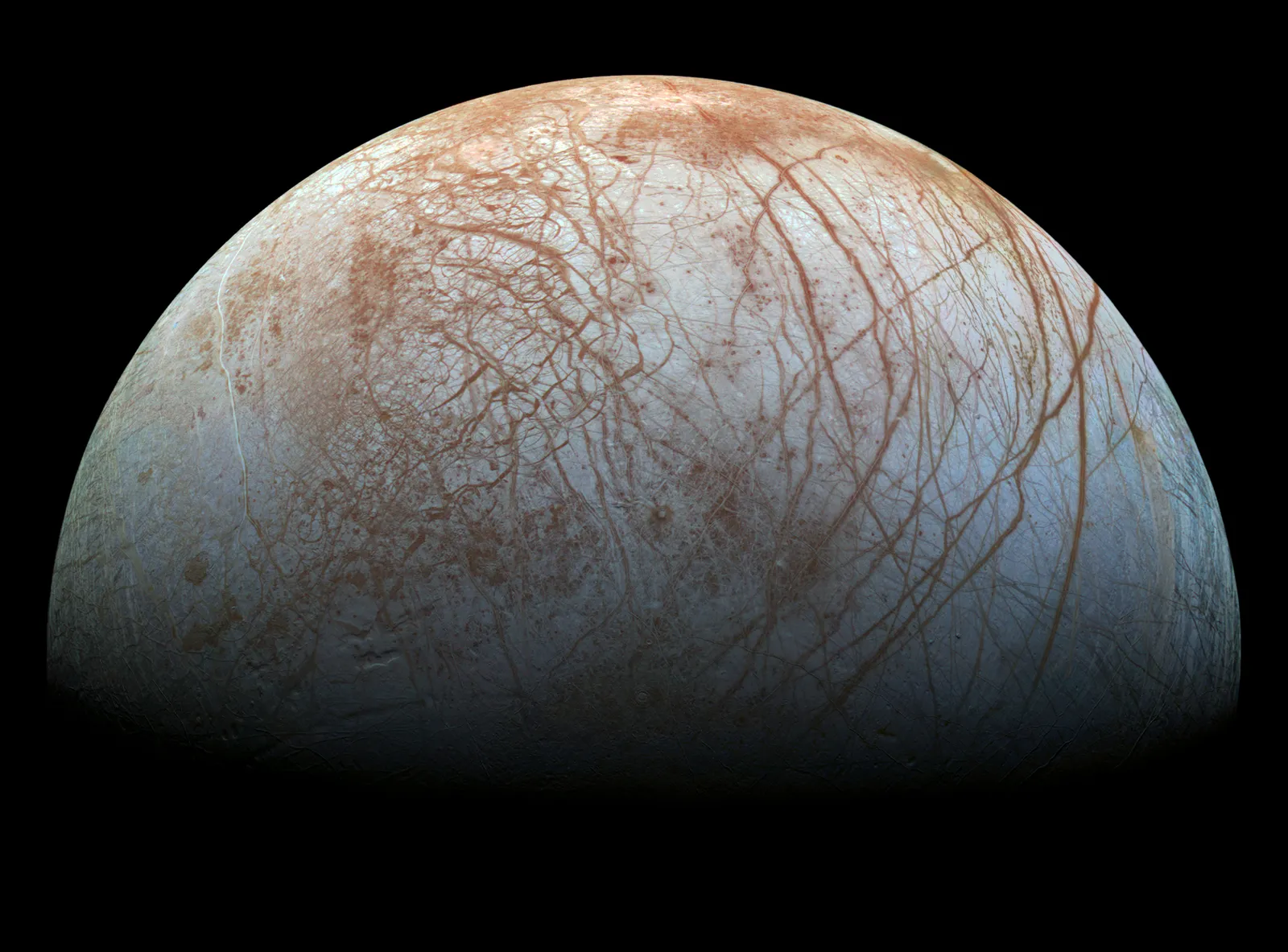

Europa: The Front-Runner Everyone Expects
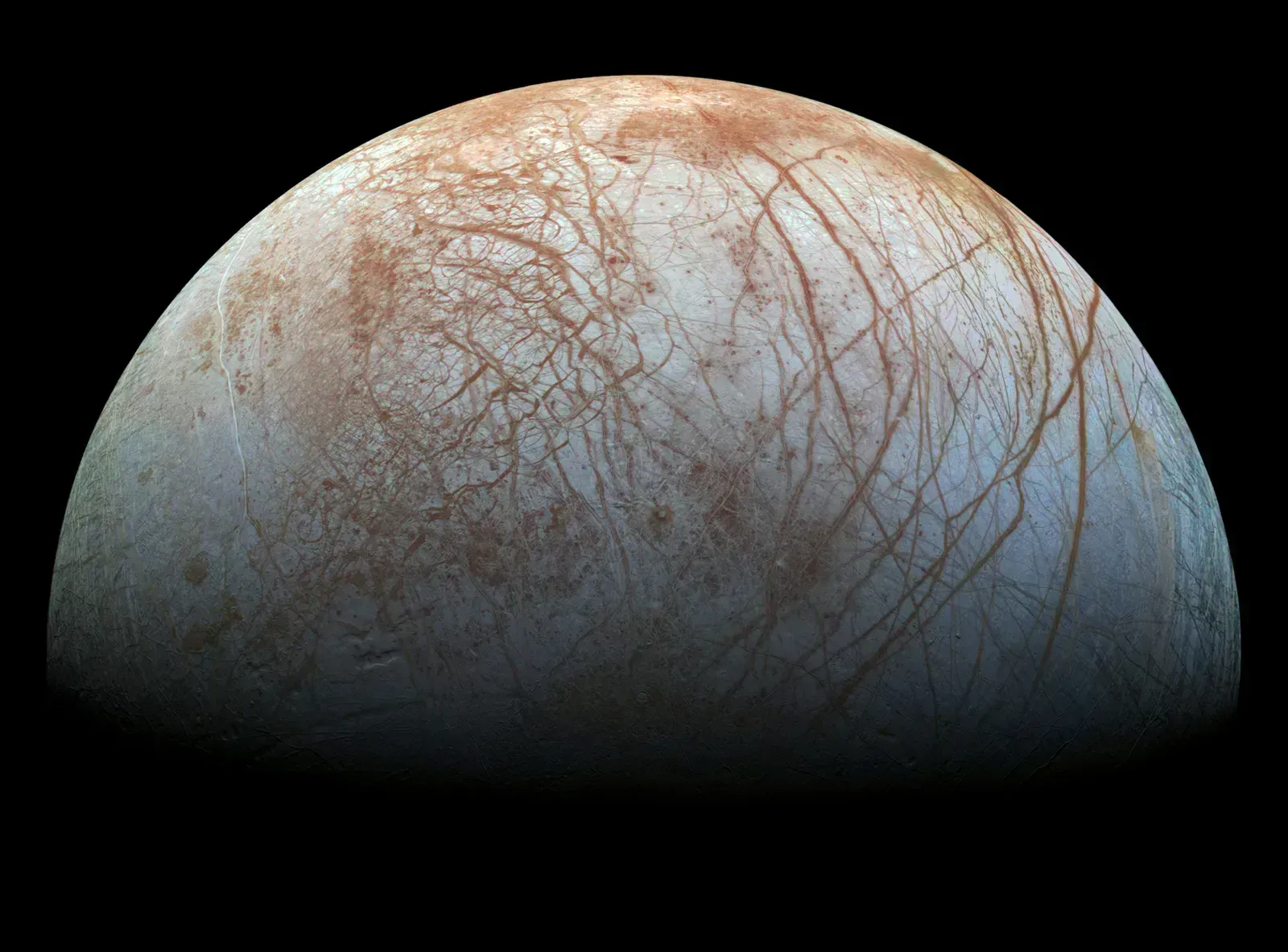
Europa tends to top these lists for good reason. Europa shows strong evidence for an ocean of liquid water beneath its icy crust, and beyond Earth, it is considered one of the most promising places where we might find currently habitable environments in our solar system. That reputation is backed by an actual spacecraft now on its way there. Launched by a Falcon Heavy on October 14, 2024, the probe is planned to enter Jupiter orbit in April 2030 and conduct a series of flybys of Europa from March 2031.
The mission itself is not designed to detect life directly, which surprises some people. While not meant to find life itself, the mission will help determine what ingredients for life are present and answer questions about how they interact with one another to create a habitable world. Even the ocean’s scale is striking, since Europa likely harbors a salty ocean with twice as much water as Earth beneath its icy crust. That combination of confirmed water and an active mission already in flight is exactly why the AI kept Europa near the top of its list.
Enceladus: Small Moon, Big Plumes
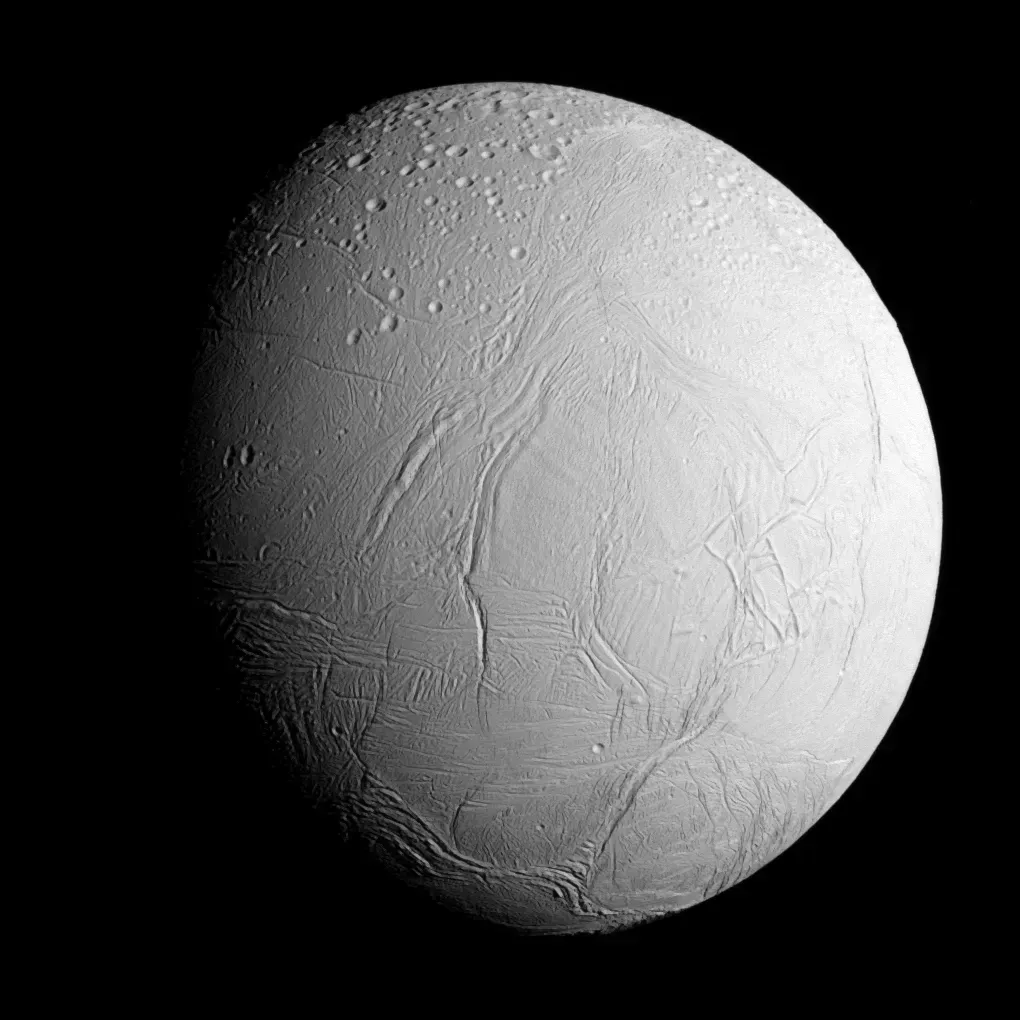
Enceladus is tiny compared to Europa, but it has one enormous advantage: it’s already showing us what’s inside. Observations made by the Cassini spacecraft show that this small moon of Saturn has an ice-covered water ocean that erupts into space, forming a plume that contains almost all of the basic requirements of terrestrial life. For years the missing piece was phosphorus, an element every known form of life depends on.
That gap has started closing. Models suggest that Enceladus’s ocean should be relatively rich in dissolved phosphorus, meaning there can now be greater confidence that the ocean of Enceladus is habitable. Researchers are still working through what that phosphorus chemistry would actually need to do to support prebiotic reactions, and a 2025 study noted that phosphates detected in Enceladus’s plume material could expand the range of potential prebiotic reactions possibly occurring within its subsurface ocean, though the environment must be favorable for producing organophosphates and condensed phosphorus species. It’s not confirmation of life, but it’s the kind of incremental evidence that keeps Enceladus firmly in the conversation.
Titan: A Completely Different Kind of Ocean World
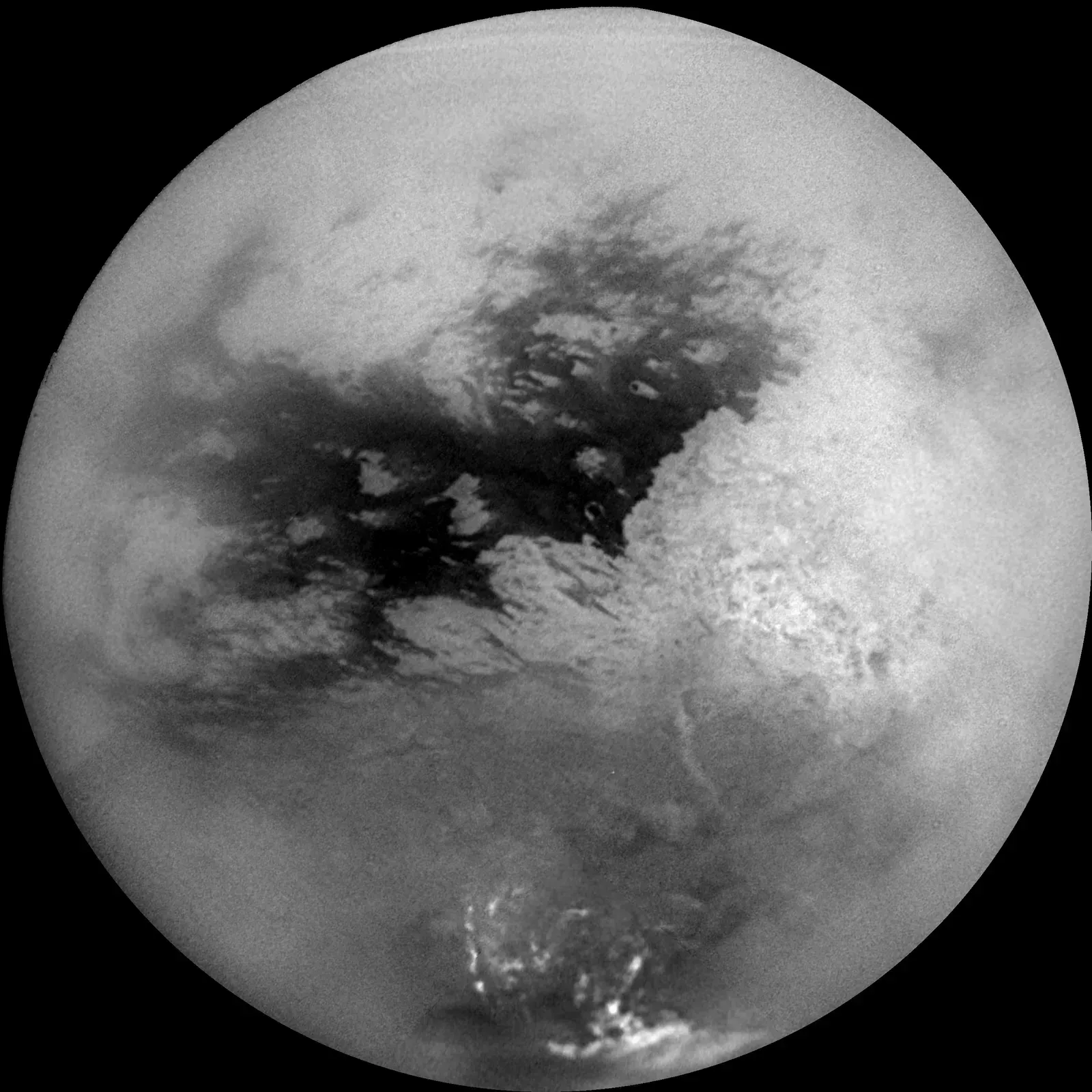
Titan breaks the mold entirely. It’s not just an ice shell over water, it’s a world with its own weather. Saturn’s moon Titan is an unusual, double-ocean world, with a liquid water ocean beneath its surface and a dense atmosphere that supports a methane cycle similar to Earth’s water cycle, with clouds, rain, and rivers that flow into lakes, seas, and potentially underground reservoirs. That’s the part that makes Titan such a strange candidate, since any life there might not be water based at all.
NASA is sending something to check, though not for a while yet. Dragonfly is scheduled to launch in July 2028 on a SpaceX Falcon Heavy launch vehicle, and following a six year journey to Titan, the rotorcraft will spend over three years investigating multiple landing sites to understand Titan habitability and the building blocks of life. The mission has faced real budget and schedule turbulence over the years, but as of early 2026 it remains on track for that 2028 launch window. Titan’s appeal, according to the AI’s reasoning, is less about probability and more about novelty, since it represents a completely different recipe for potential biochemistry.
Ganymede: The Biggest Moon Hides the Biggest Ocean
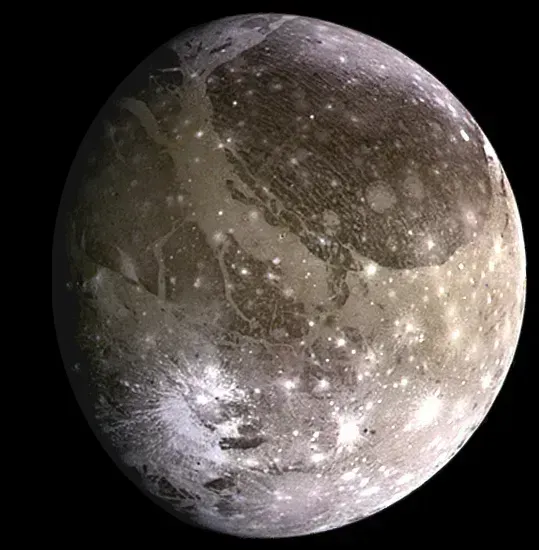
Ganymede rarely gets the spotlight that Europa does, despite being the largest moon in the solar system and, by some estimates, holding more water than any other body orbiting a planet. Magnetic field data gathered by NASA’s Galileo mission decades ago hinted at a salty subsurface ocean sandwiched between layers of ice, a structure unlike anything on Europa or Enceladus. That layered ice and ocean setup is actually part of why Europa Clipper is stopping by on its way in.
Europa Clipper will enter an elliptical orbit around Jupiter via a gravity assist from Jupiter’s largest moon Ganymede, and make 49 close flybys of the moon Europa. Ganymede’s ocean is thought to sit much deeper than Europa’s, buried under ice that could be tens of kilometers thick, which makes any future life detection there far harder to pull off. The AI ranked it lower than Europa mainly for that reason: an ocean that’s harder to reach isn’t necessarily an ocean that’s less alive, but it is one that’s much harder to study.
Callisto: The Quiet Long-Shot
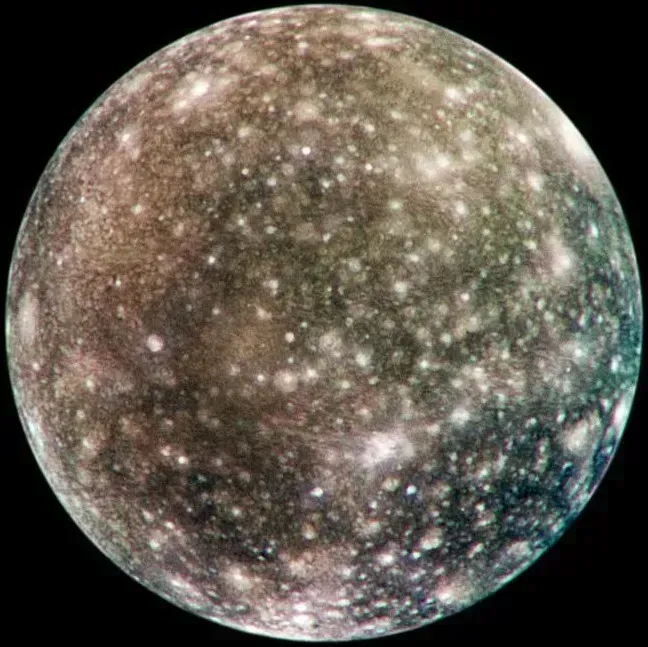
Callisto is the outlier among Jupiter’s four big moons, mostly because it sits far enough from Jupiter to avoid the brutal tidal heating and radiation that shape its neighbors. That’s a mixed blessing. Less tidal flexing likely means a colder, more stagnant interior, and possibly a subsurface ocean with far less geological activity to stir up chemistry.
Scientists have long suspected a liquid layer beneath Callisto’s ancient, heavily cratered surface, based on magnetic field readings similar to those that pointed toward Ganymede’s ocean. Nobody has sent a dedicated mission to confirm it, and none are currently planned, so Callisto remains one of the more theoretical entries on any habitability list. The AI placed it near the bottom of the pack, not because the evidence argues against life, but because there’s so little fresh evidence to argue for it either way.
Triton: Neptune’s Icy Wildcard
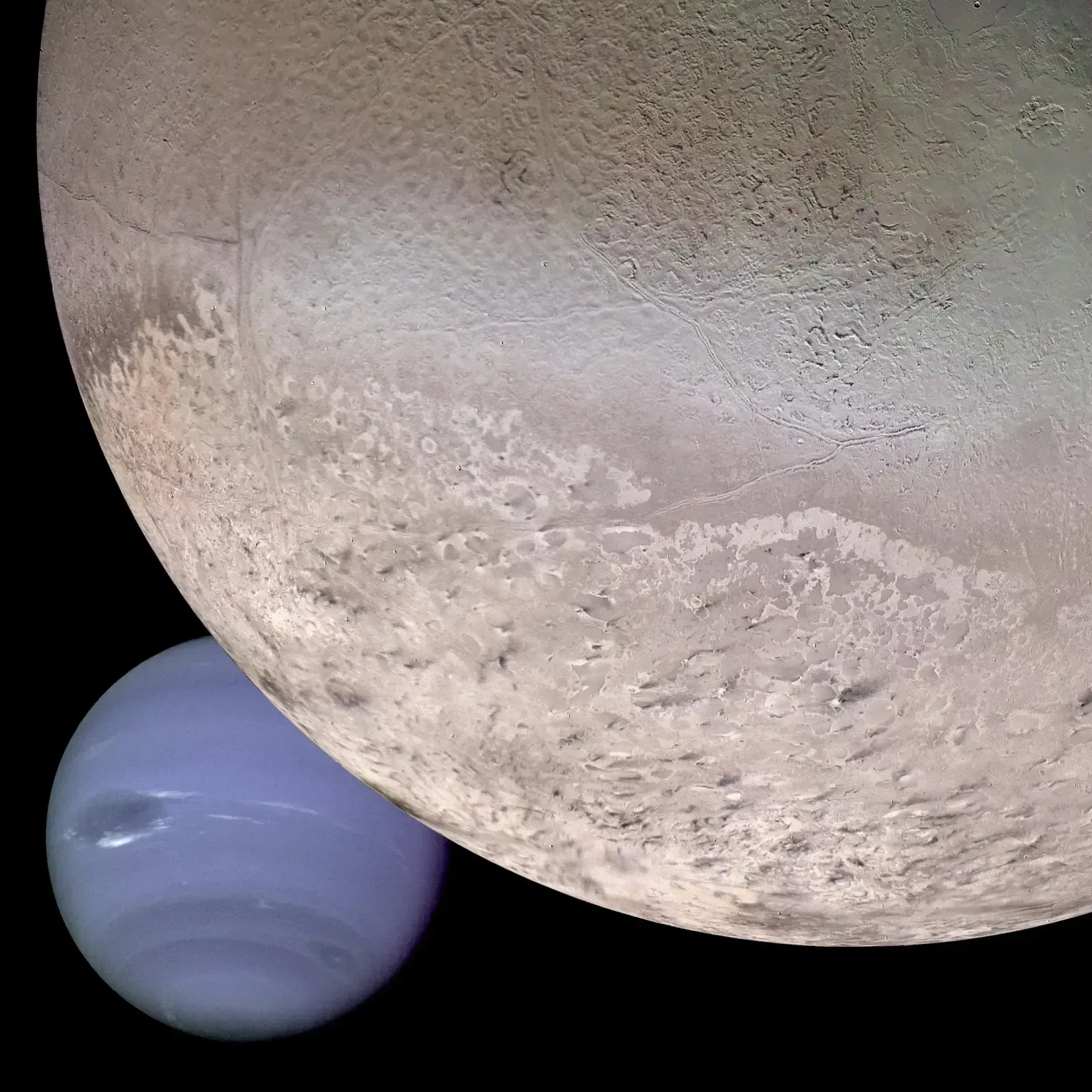
Triton is the moon most people forget exists, orbiting Neptune backward relative to the planet’s rotation, a strong sign it was captured rather than formed in place. It’s geologically active in strange ways, with nitrogen geysers erupting from its frozen surface, something Voyager 2 spotted back in 1989 and nobody has confirmed since with a dedicated visit. That activity suggests internal heat, and internal heat is one of the basic ingredients habitability discussions depend on.
The trouble is distance and darkness. Triton sits so far from the Sun that surface temperatures hover near absolute zero, and any liquid water ocean would have to be kept warm entirely by internal processes, tidal or radiogenic, that scientists can’t yet measure directly. No mission to the Neptune system is currently funded, which leaves Triton’s habitability more speculative than Europa’s or Enceladus’s. The AI kept it on the list mostly as a reminder that the outer solar system still holds real unknowns.
Mimas: The Moon Nobody Saw Coming
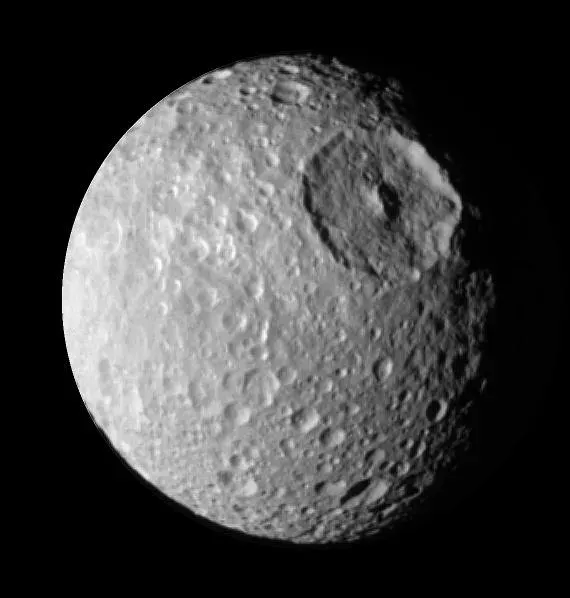
This is the one that actually surprised me. Mimas looks like a dead, cratered rock, famous mostly for resembling the Death Star. Nobody expected it to be hiding anything interesting, which made a 2024 finding land with real weight in planetary science circles.
Cassini data revealed something nobody had predicted: NASA’s Cassini mission has revealed surprising heat flow at Enceladus’s north pole, and separately, Mimas harbors a young ocean beneath its icy shell, a discovery that came as a genuine surprise given how inactive Mimas appears on the surface. A young, still forming ocean means active internal heat, and active internal heat is exactly the kind of energy source astrobiologists look for. That’s the twist behind the headline of this whole piece: the moon that surprised me wasn’t the one with plumes or a spacecraft en route, it was the quiet, cratered one that turned out to be hiding an ocean nobody had bothered to check for.
Dione and the Rest of Saturn’s Icy Family
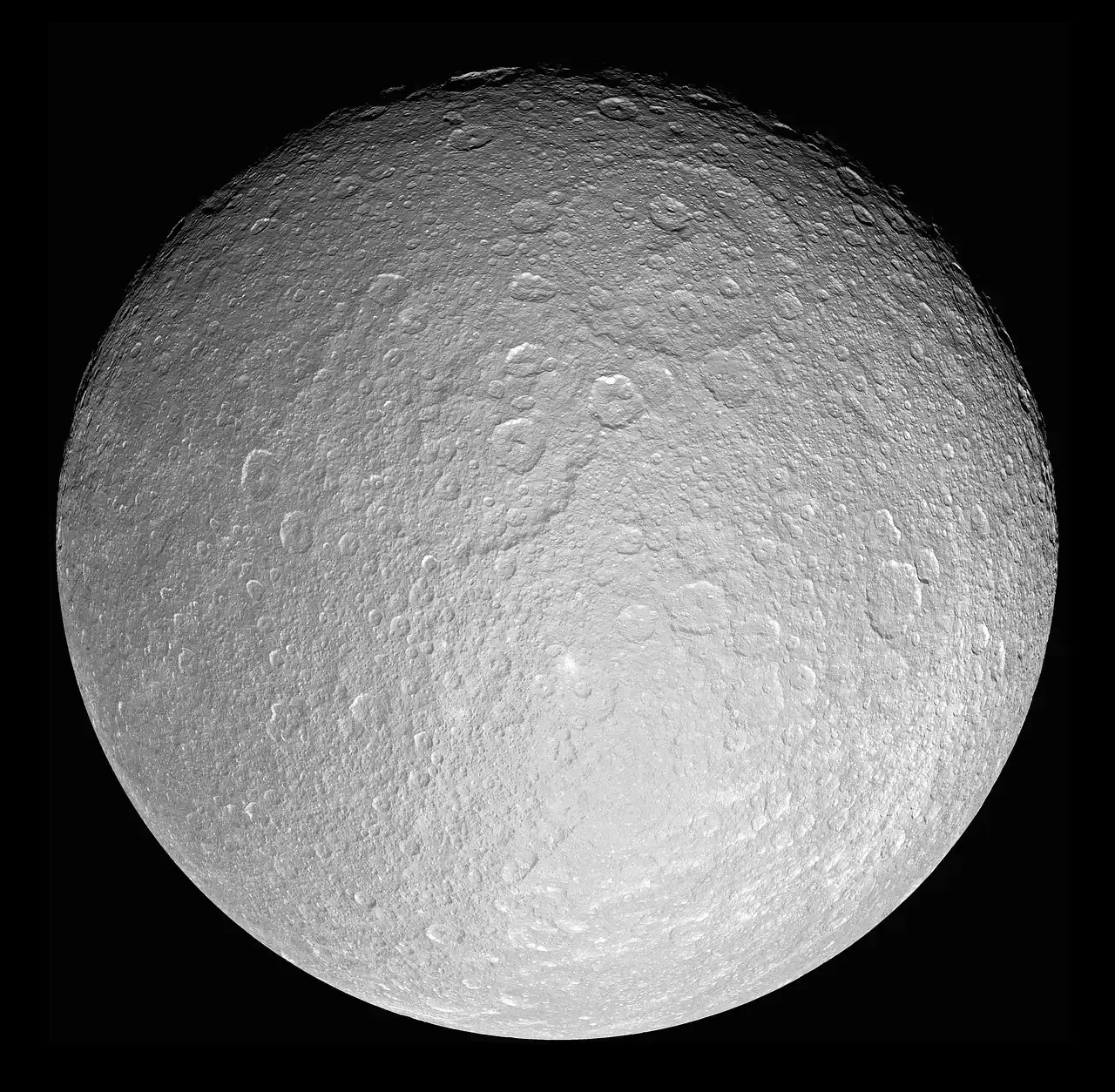
Saturn’s moon system is crowded with smaller ice worlds that rarely make headlines but keep showing up in gravity and shape measurements suggesting hidden liquid layers. Dione is a good example, a moon dense enough and geologically fractured enough that researchers have proposed a subsurface ocean similar in concept to Enceladus’s, just quieter and less active. It doesn’t erupt geysers into space the way Enceladus does, so there’s far less direct chemical evidence to work with.
What Dione does offer is context. Its presence alongside Enceladus and Mimas suggests that hidden oceans might be far more common among Saturn’s icy moons than anyone assumed a decade ago. The AI treated Dione less as an individual candidate and more as supporting evidence for a broader pattern, that small, icy moons around gas giants may default toward having liquid water far more often than their frozen surfaces let on.
So Which Moon Actually Surprised Me?
Putting the full list side by side, the AI’s reasoning landed close to where planetary scientists already sit: Europa and Enceladus at the top, backed by real spacecraft data and, in Europa’s case, an active mission already in flight. That part wasn’t surprising. What caught me off guard was how much weight the model gave to Mimas, a moon I’d mentally filed under boring rock years ago.
The lesson wasn’t really about rankings at all. It was a reminder that habitability keeps showing up in the last place anyone thought to look, tucked inside worlds that look finished and dead on the outside. One of the most profound discoveries in planetary science over the past 25 years is that worlds with oceans beneath a surface layer of ice are common in our solar system, including the icy satellites of the giant planets such as Europa, Titan and Enceladus, as well as more distant bodies like Pluto. If that pattern holds, the next surprise probably isn’t going to come from the moon we’ve been staring at the longest.
