


- 7 States Where Water Conservation Is Becoming Part of Daily Life - August 20, 2026
- Economists Ranked Every State by Climate-Driven Cost of Living – This One Came in Dead Last - August 20, 2026
- I Asked ChatGPT Which Regions Will See the Worst Wildfire Smoke This Year – Here’s What It Predicted - August 20, 2026
1. Asteroid 2024 YR4
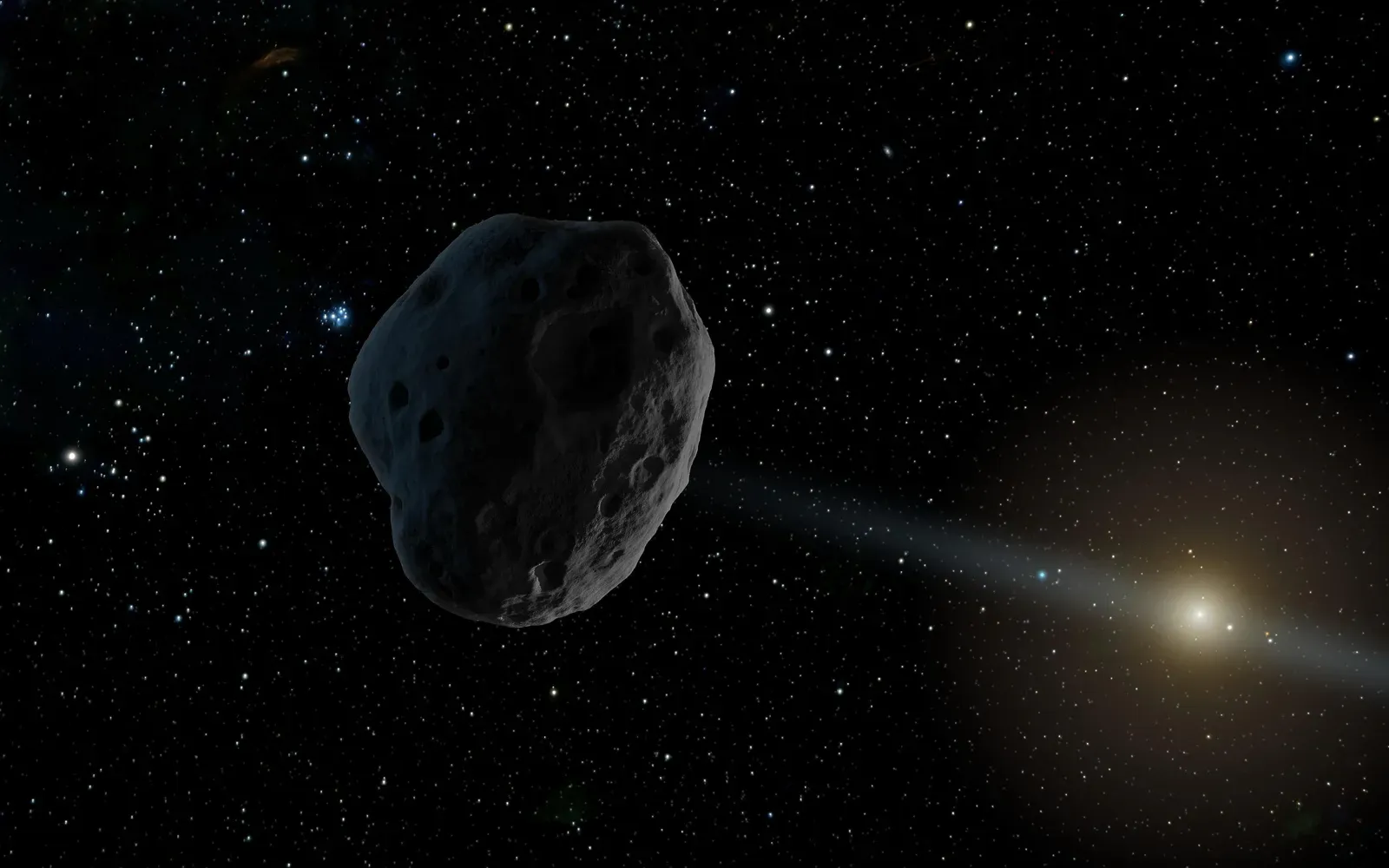
Few objects have gone from obscure to headline material as quickly as this one. Discovered on December 27, 2024 by the ATLAS survey station in Chile, asteroid 2024 YR4 was first reported on Dec. 27, 2024, to the Minor Planet Center by the NASA-funded Asteroid Terrestrial-impact Last Alert System station in Chile. Within weeks it briefly held one of the highest impact odds ever recorded for an object its size.
The scare didn’t last. After months of additional tracking, including sharp new measurements from the James Webb Space Telescope, NASA concluded the object poses no significant impact risk to Earth in 2032 and beyond. Webb also refined how big the rock actually is, with 2024 YR4 now estimated to be 174-220 feet (53-67 meters), about the size of a 15-story building. It’s a textbook case of how a scary early estimate can settle down once enough data comes in.
2. 99942 Apophis
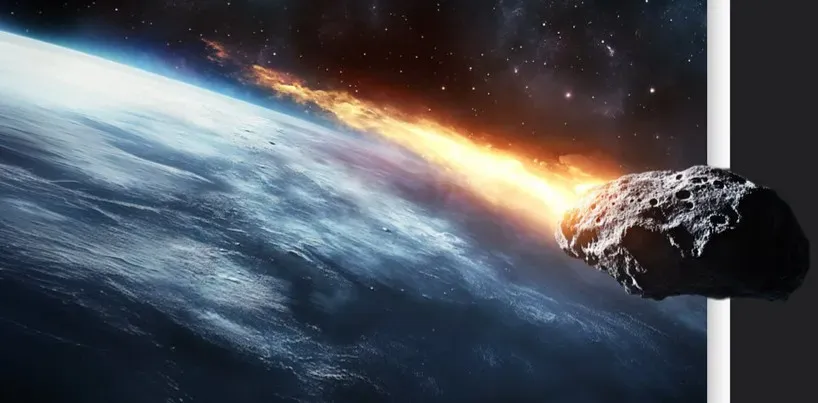
Apophis has been a fixture of asteroid conversations since 2004, when it briefly looked like a genuine threat for 2029, 2036, or even 2068. Every one of those scenarios has since been ruled out. What hasn’t changed is the spectacle coming in 2029, when Apophis is a potentially hazardous asteroid that will safely pass close to Earth on April 13, 2029, coming about 20,000 miles from our planet’s surface, closer than the distance of many satellites in geosynchronous orbit.
That flyby is close enough to reshape how scientists think about the object entirely. NASA notes that a space rock this large passes this close to Earth only every few thousand years on average, and this is likely the first time it’s happened when humans had the technology to observe it. NASA is not just watching from a distance either; the agency has redirected a spacecraft to rendezvous with Apophis shortly after the asteroid’s 2029 Earth close approach.
3. 101955 Bennu
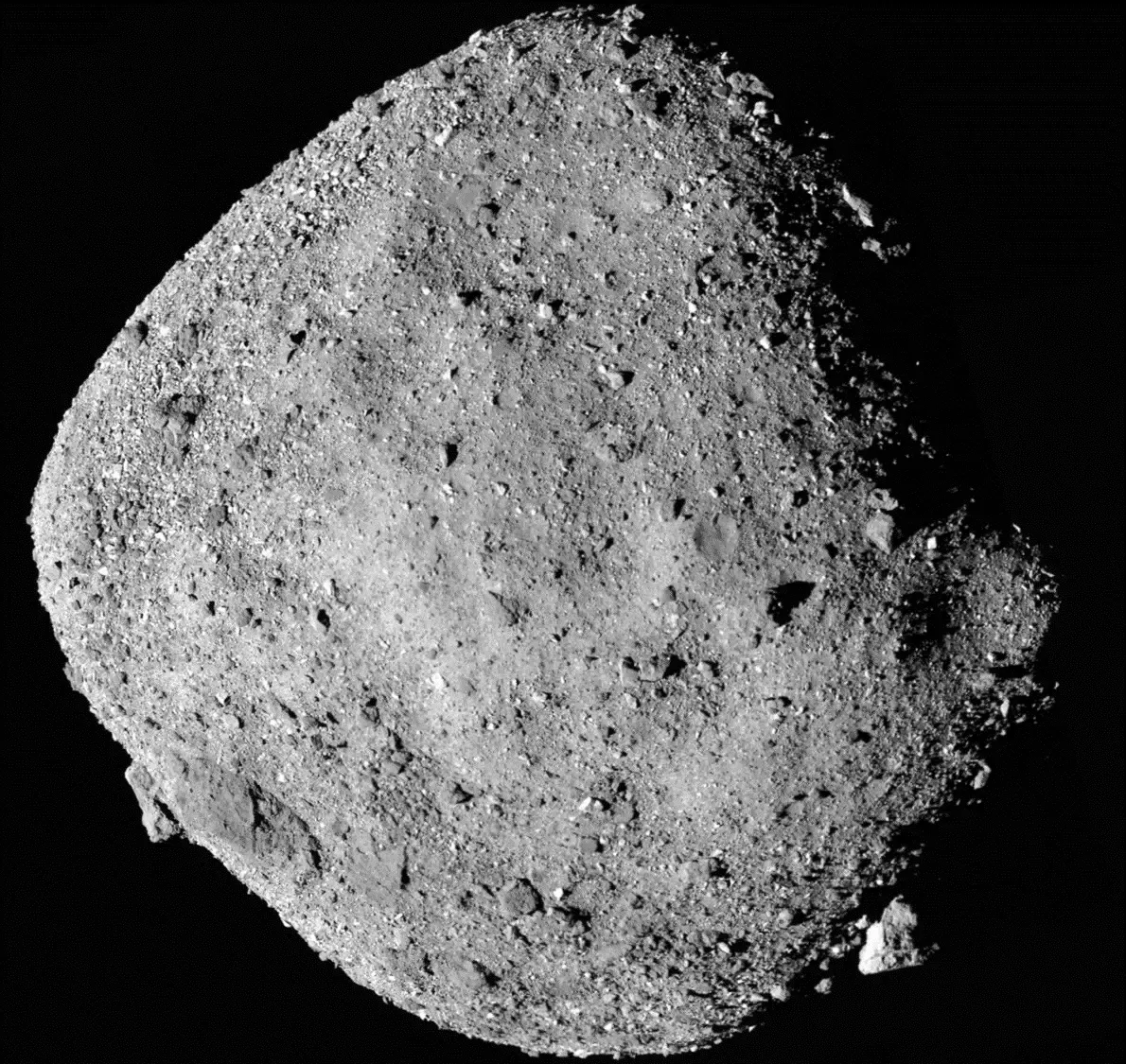
Bennu earned its fame less for danger and more for what it revealed once scientists got their hands on it. NASA’s OSIRIS-REx mission collected a sample from the asteroid’s surface, and on September 24, 2023, the spacecraft successfully returned a sample of Bennu to Earth, which has been analyzed by researchers worldwide. Those grains turned out to be scientifically rich, since results indicate that Bennu contains the building blocks of life, including the simple amino acid glycine and water-bearing minerals.
None of that changes the fact that Bennu still carries a small mathematical shadow over a very distant date. NASA scientists now estimate a 0.037% (1 in 2,700) chance that Bennu will strike Earth on September 24, 2182, and Bennu is currently one of the two objects on the top of NASA’s Sentry Risk List, though its impact probability remains very low. It’s the kind of number that sounds alarming until you remember it applies to a date more than a century and a half away.
4. 29075 (1950 DA)

This one has an unusual backstory. Asteroid 29075 (1950 DA) was first spotted on February 23, 1950, but then lost for decades before being rediscovered in 2000, at which point astronomers realized just how far out its potential risk actually sits. Early runs of the numbers suggested a potential impact on March 16, 2880, with a higher-than-average probability compared to other known asteroids.
Refined tracking has since eased most of that concern, though the object hasn’t fully dropped off the radar. Along with Bennu, 1950 DA tops NASA’s Sentry Risk List, with an estimated impact probability of 1 in 51,020 (roughly 0.00196%) in the year 2880. If it ever did strike, the physics are sobering, since the energy released would be equivalent to 75 billion tons of TNT, enough to trigger a global catastrophe. Scientists continue refining its orbit simply because there’s nearly nine centuries of margin for new data to change the picture.
5. 2023 DW
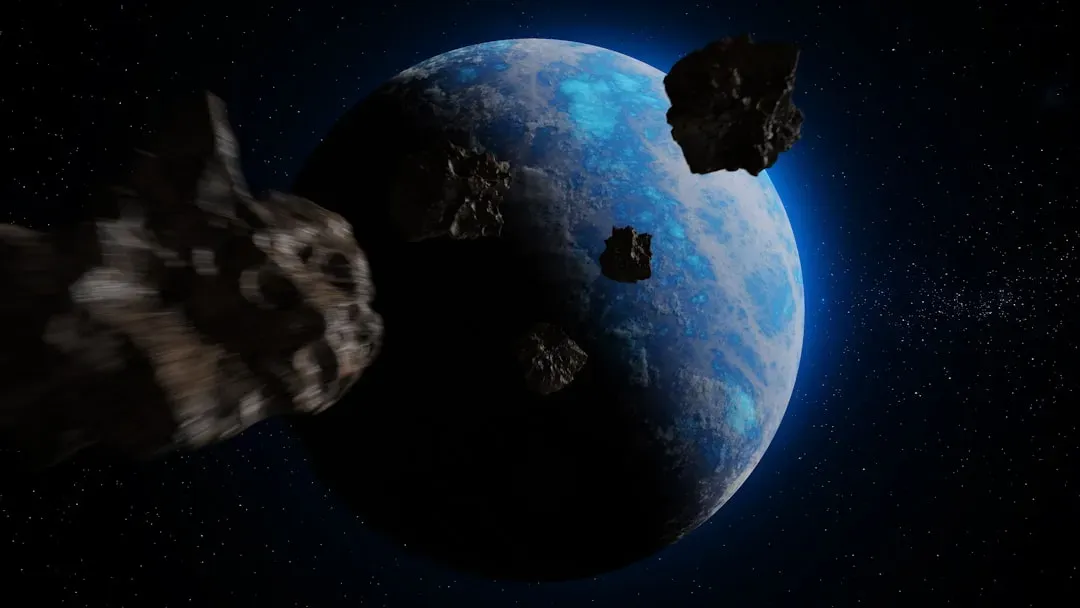
Newly found asteroids sometimes shoot straight to the top of risk tables before anyone has had time to get comfortable calling them familiar names. That’s exactly what happened with this one. Less than two weeks after it was discovered, asteroid 2023 DW sat at the top of the risk list maintained by the European Space Agency, with a projected close pass in 2046.
Its size kept things in perspective even during the height of the attention, since the asteroid’s diameter is listed at nearly 50 meters, roughly the size of an Olympic swimming pool. At its peak concern, NASA put the odds at 1 in 560, or a 0.18% chance of hitting Earth, meaning a 99.82% chance it streaks harmlessly past. It’s a useful reminder that fresh discoveries almost always look scarier before enough follow-up observations calm the numbers down.
6. 2023 TL4
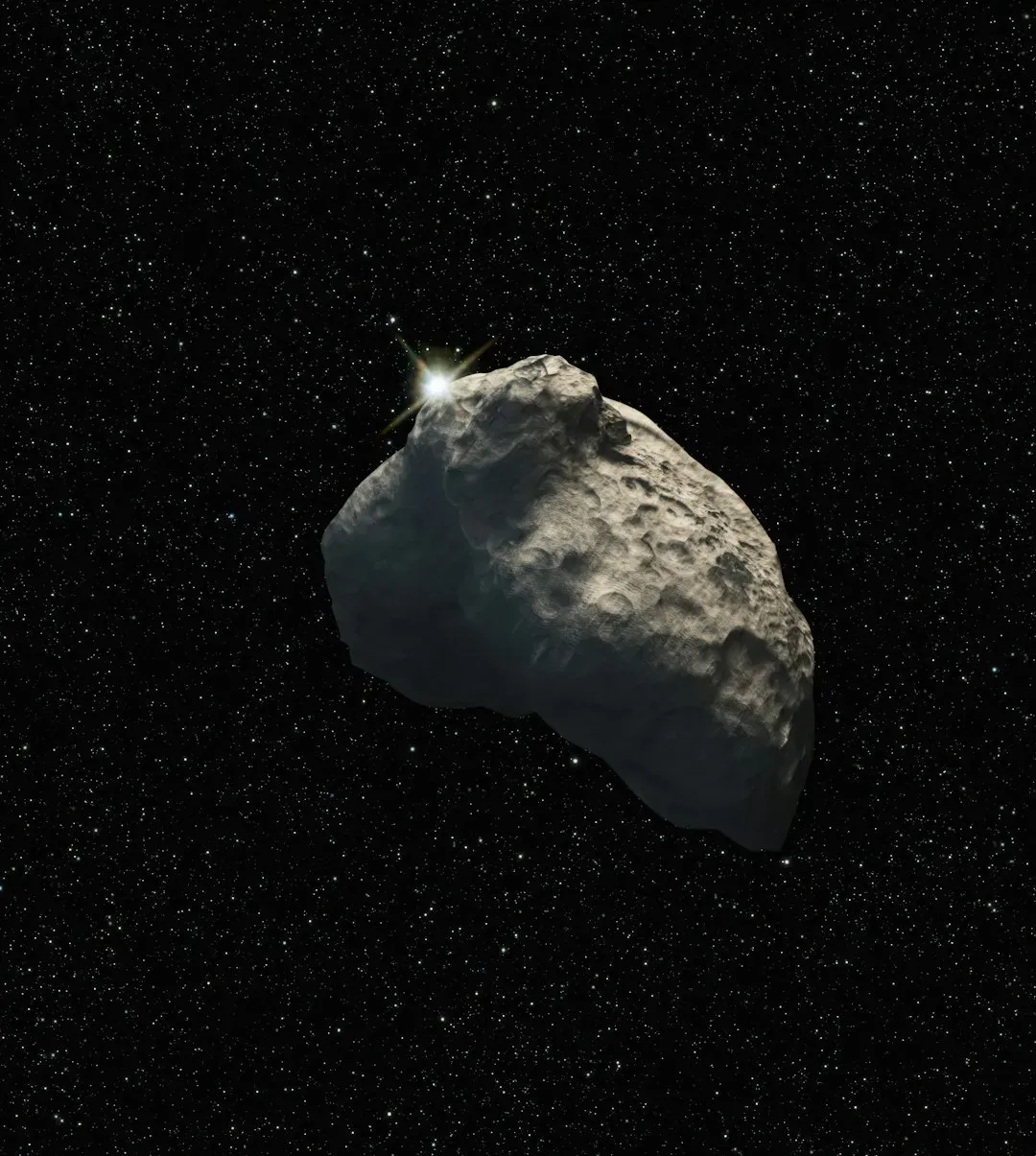
Some objects prove that reputation can be earned fast. Discovered in 2023, 2023 TL4 shows that a newfound space object can immediately become one of the most potentially hazardous asteroids tracked by planetary defense teams. Observations gathered over just a couple of weeks were enough to place it on the watch lists.
Based on that early data, astronomers calculated that 2023 TL4 has a 0.00055%, or 1 in 181,000, chance of striking Earth on Oct. 10, 2119. Should the improbable happen, 2023 TL4 would release the energy equivalent of the detonation of 7.5 billion tons of TNT. Nearly a century of observation time remains before that date, which gives scientists plenty of room to sharpen or dismiss the risk entirely.
7. 2022 AP7
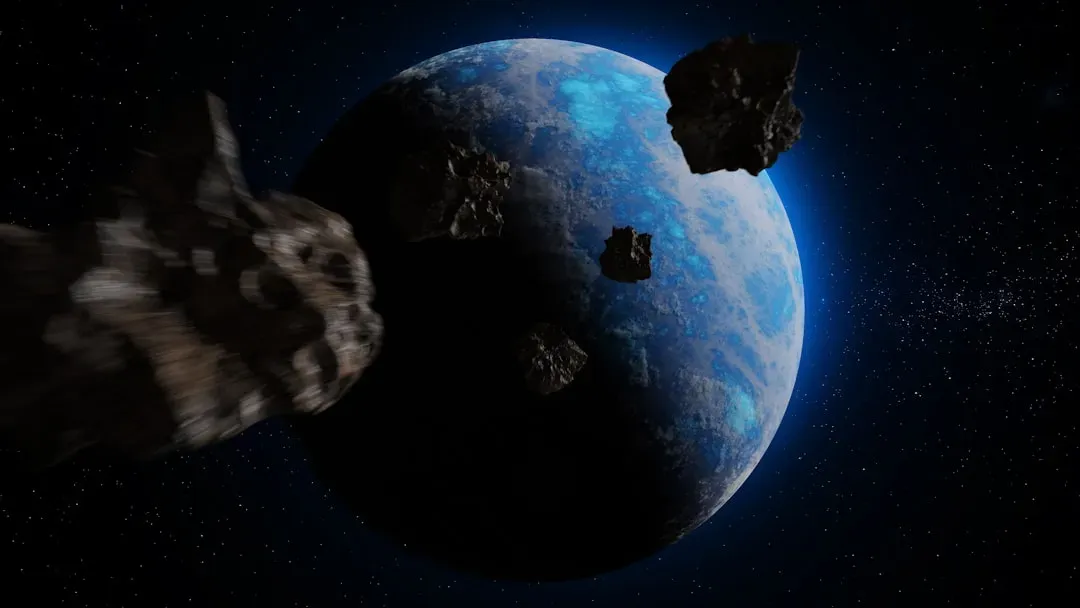
Not every notable near-Earth object is small. This one stood out immediately for its sheer size, since with a diameter between 1.1km and 2.3km, asteroid 2022 AP7 is the largest potentially hazardous asteroid found since 2014. It had been hiding in a tricky patch of sky near the Sun’s glare, which is part of why it went unnoticed for so long.
Its size alone puts it in a serious category, since an asteroid with a diameter of more than 1km is enough to trigger a mass extinction event on Earth. Fortunately, its orbital rhythm currently works in our favor. 2022 AP7 is in a 5:1 resonance with Earth, meaning it takes five years to orbit the Sun in a pattern that keeps the two bodies from ever being in the same spot at once. Astronomers still track it closely simply because that pattern could shift over the very long term.
8. Didymos and Dimorphos
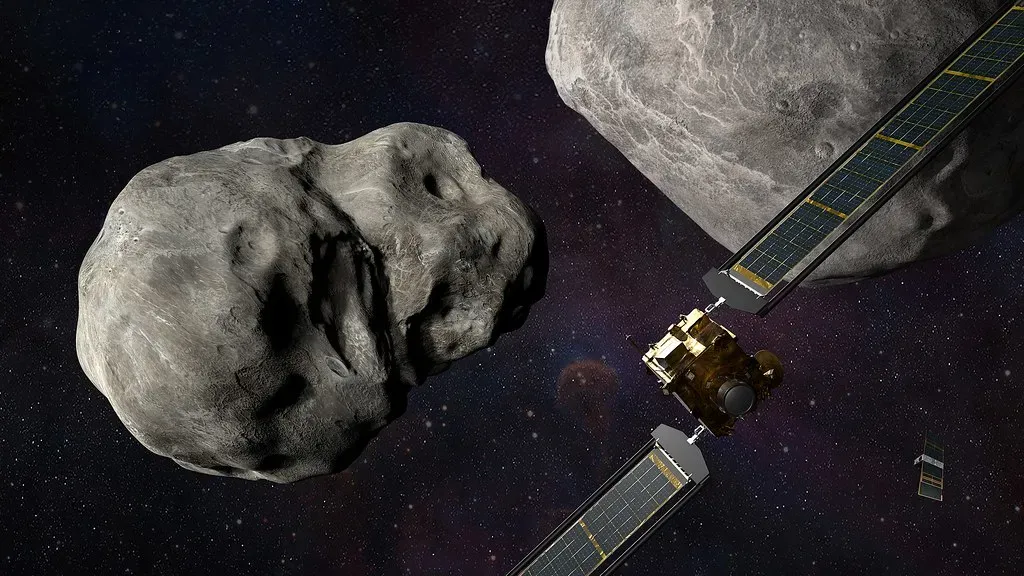
This binary asteroid system earned its place on tracking lists for a very different reason than most: NASA deliberately hit it. Debris ejected from the asteroid Dimorphos a few minutes after the intentional collision of NASA’s Double Asteroid Redirection Test mission on Sept. 26, 2022, and the spacecraft succeeded in shifting its orbit. It marked the first real-world test of whether humanity could actually nudge a space rock off its path.
Didymos and Dimorphos themselves never posed a threat to Earth, but the experiment turned them into one of the most closely studied pairs in the solar system. Every follow-up observation of how much Dimorphos’s orbit shifted helps refine the models scientists would use if a genuinely hazardous object ever needed deflecting. That data now feeds directly into planning for future missions, including the European Hera spacecraft sent to study the aftermath in detail.
9. 2000 SG344
Small objects rarely stay in the spotlight long, but 2000 SG344 has held a quiet spot on international risk lists for years. It sits among the handful of asteroids that the European Space Agency ranks with a notably elevated cumulative Palermo scale value, with 1950 DA, 2025 QF85, 2023 VD3, 1979 XB, 2008 JL3, and 2000 SG344 all falling between -2 and -3 on that scale. That places it in a category worth continued attention even though its size is modest compared to giants like 2022 AP7.
Part of what keeps 2000 SG344 interesting to researchers is its close orbital resemblance to Earth’s own path around the Sun, an unusual trait that has occasionally raised questions about whether it could be a leftover piece of old space hardware rather than a natural asteroid. Either way, its orbit keeps bringing it back into range for observation, and each pass gives scientists another chance to narrow down exactly where it will be decades from now.
10. 1979 XB
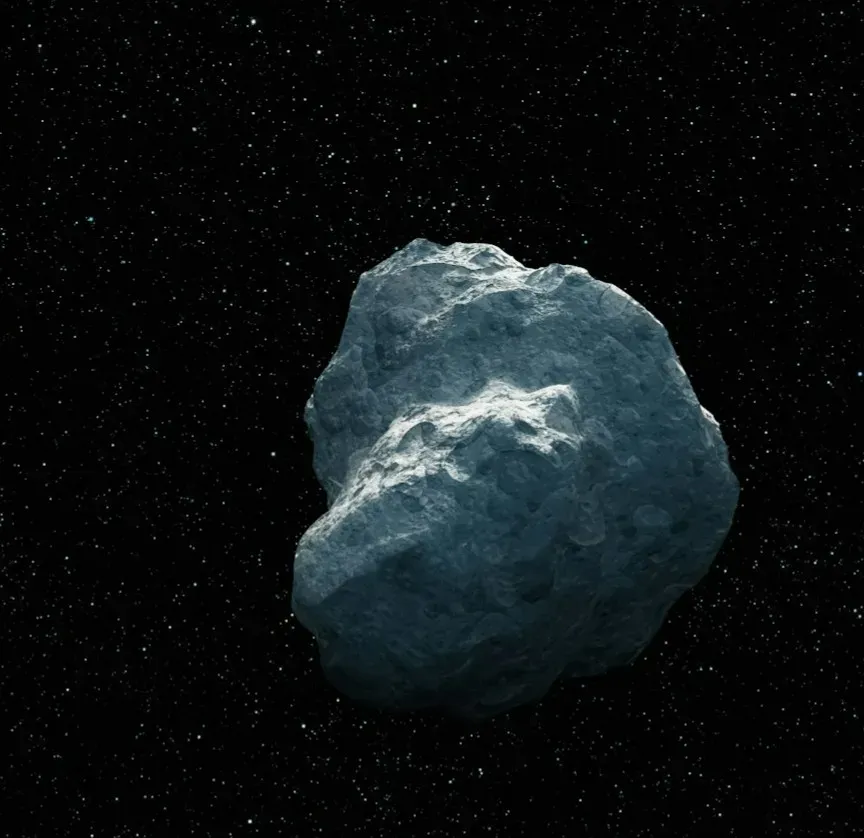
Among the lesser known names on the watch lists, 1979 XB stands out mainly because it disappeared from view for a long stretch after its initial discovery. It now sits alongside other borderline-risk objects on the European Space Agency’s risk table, ranked with a cumulative Palermo scale value between negative two and negative three, a range shared with 1950 DA, 2025 QF85, 2023 VD3, 2008 JL3, and 2000 SG344. That places it firmly in the category of objects deserving steady, patient observation rather than urgent concern.
Astronomers treat objects like 1979 XB as a reminder that even asteroids discovered decades ago can still carry orbital uncertainty. Long observation gaps make the math harder, since fewer data points mean wider margins of error about where the object will actually be in the future. Continued tracking, even at a low priority level, slowly closes those gaps and keeps the long-term risk assessment as accurate as current technology allows.
Across all ten of these objects, the pattern is the same. None currently threatens Earth in any meaningful way, yet each one sits on a list precisely because uncertainty, however small, is worth watching. Groups like the Catalina Sky Survey, Pan-STARRS, and ATLAS keep feeding fresh data into the Center for Near-Earth Object Studies, and that steady stream of observations is what turns a scary headline into a settled, low-risk footnote soon enough.
