

Walk into almost any diner from Ohio to Oregon and you’ll find a menu full of things Americans consider their own. Same goes for a handful of everyday objects that feel as red-white-and-blue as apple pie itself. Yet peel back the history on a surprising number of these staples, and the trail leads somewhere else entirely, often to a small European workshop or a busy port city with no connection to the United States at all.
None of this is about taking anything away from American culture, which has a genuine talent for popularizing things. It’s more about how credit gets rewritten over time, until the origin story people repeat isn’t the one that actually happened.
1. French Fries

Despite the name suggesting otherwise, the crispy potato strips most people associate with American fast food likely trace back to Belgium, not France. Historians point to the Meuse Valley region, where villagers were reportedly frying sliced potatoes as early as the late 1600s, well before the dish had any connection to American cuisine. The “French” label is thought to have stuck after American soldiers encountered the dish in Belgium during World War I, where French was the dominant spoken language in the area they were stationed.
Belgians still take the dish seriously today, often frying it twice for that distinctive crunch, a method many American chains have since adopted without necessarily crediting the source. It’s a small irony that the country most associated with the fry in pop culture didn’t actually create it, while the country that did rarely gets mentioned outside food history circles.
2. Hamburger
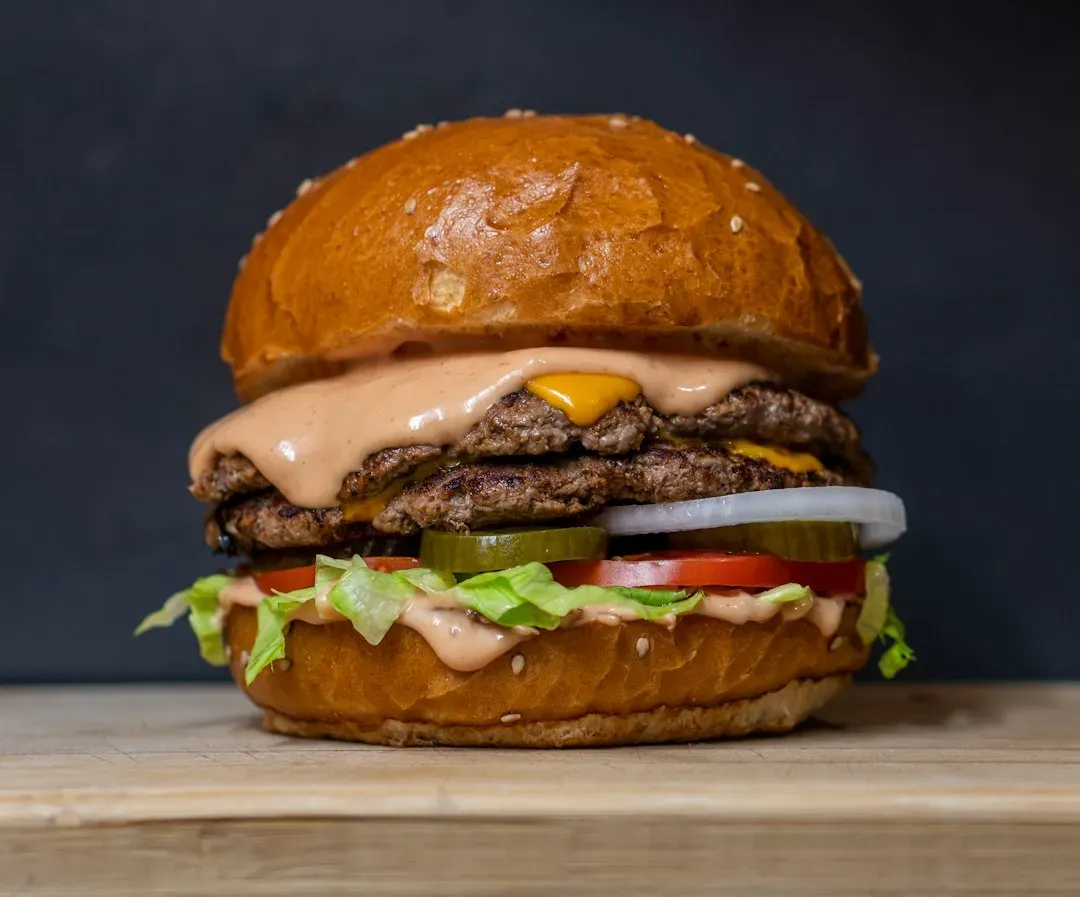
The hamburger’s name is actually a fairly direct clue to its roots. The dish is widely believed to have originated in Hamburg, Germany, where minced beef patties, sometimes called Hamburg steak, were a common meal long before anyone in the United States started grilling them at backyard cookouts.
German immigrants brought the concept with them to American port cities in the 1800s, and it evolved from there into the bunned sandwich now recognized worldwide. What changed in America wasn’t so much the patty itself but the format, adding a bun, condiments, and eventually turning it into a fast food centerpiece. The core idea of seasoned ground beef formed into a patty, though, didn’t start on American soil.
3. Hot Dog
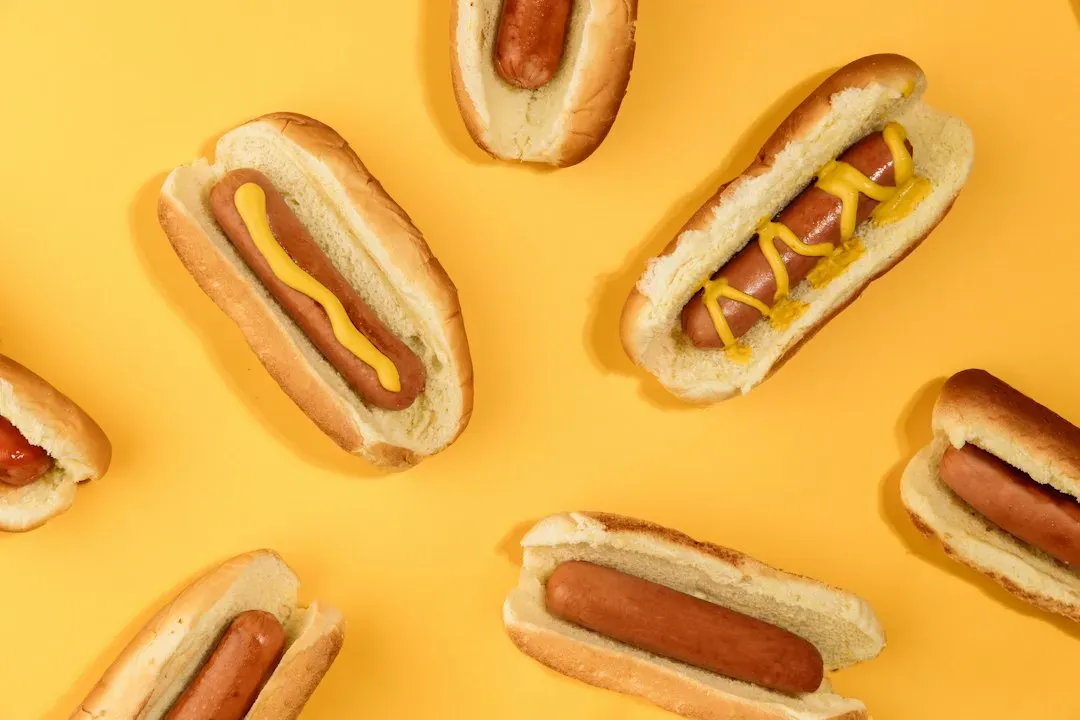
Hot dogs share a similar backstory to hamburgers, with strong ties to German sausage traditions. Frankfurters get their name from Frankfurt, while Vienna sausages reference Vienna, both pointing to Central European origins rather than an American one. German and Austrian immigrants brought sausage-making traditions to the U.S. in the 19th century, and it was in America that the sausage eventually got paired with a soft bun to create the modern hot dog.
The transformation into a baseball-stadium staple is genuinely an American development, tied closely to street vendors in cities like New York and Coney Island. Still, the sausage recipe and preparation methods that made the hot dog possible were imported, not invented locally. It’s a case where the packaging became American even though the product itself wasn’t.
4. The Incandescent Light Bulb

Thomas Edison is often credited as the inventor of the light bulb, and while he did make crucial improvements to its practicality and commercial viability, he wasn’t the first person to create one. British physicist and chemist Joseph Swan demonstrated a working incandescent lamp in England in 1878, roughly a year before Edison patented his own version in the United States.
Swan and Edison eventually merged their patents into a joint company after legal disputes over who held the rights to the underlying technology. Edison’s real contribution was refining the filament and manufacturing process to make bulbs longer-lasting and commercially viable at scale, which is no small achievement. But the foundational invention of a working incandescent bulb happened in Britain first, a detail that tends to get lost in the retelling.
5. The Telephone
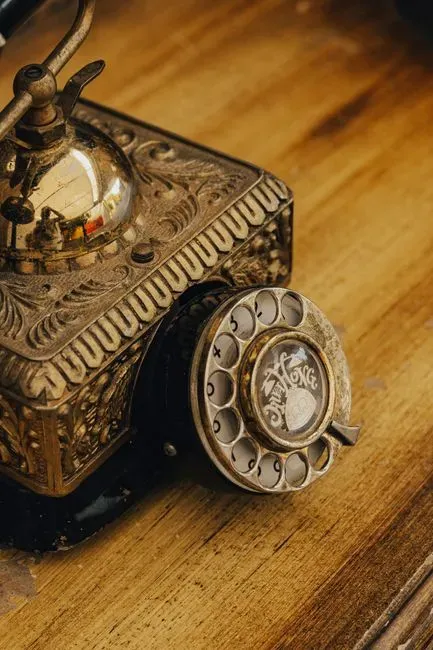
Alexander Graham Bell is the name most people associate with the telephone, and he did secure the first U.S. patent for the device in 1876. However, Italian inventor Antonio Meucci had reportedly built a working voice-transmission device years earlier, and German inventor Philipp Reis demonstrated an early version of a telephone-like device in 1861, more than a decade before Bell’s patent filing.
Meucci’s case gained enough historical weight that the U.S. House of Representatives passed a resolution in 2002 acknowledging his early contributions to the invention, though the resolution stopped short of overturning Bell’s patent. The dispute remains one of the more debated origin stories in invention history, with legitimate claims on multiple sides. What’s clear is that Bell wasn’t working in a vacuum, and similar ideas were already circulating in Europe before his patent made history in the U.S.
6. Blue Jeans
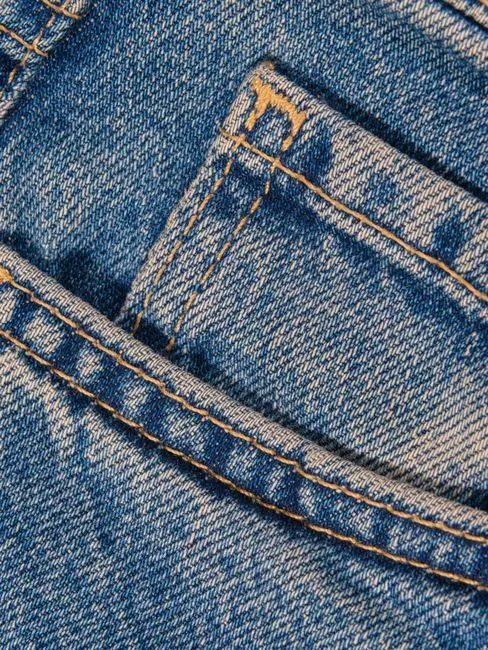
Blue jeans are practically shorthand for American fashion, closely tied to cowboys, workwear, and later rock and roll culture. The denim fabric itself, though, has roots that stretch back to France, specifically the city of Nîmes, where a sturdy cotton twill known as “serge de Nîmes” was produced, which is where the word denim likely comes from.
Genoa, Italy, also played a role, since sailors from that city wore a similar cotton fabric, and the word “jeans” is thought to derive from the French word for Genoa, “Gênes.” Levi Strauss, a German immigrant, and Jacob Davis later combined this imported fabric with riveted seams in the United States during the 1870s, creating the durable pants that became a global icon. The material’s European fabric history rarely makes it into the pop culture version of the story.
7. Santa Claus

The modern image of Santa Claus, the round, red-suited, white-bearded figure delivering gifts, feels distinctly tied to American holiday marketing, partly thanks to Coca-Cola’s mid-20th-century advertising campaigns. But the character himself has much older roots in European tradition, tracing back to Saint Nicholas, a Greek Christian bishop who lived in what is now Turkey during the fourth century, known for his generosity toward children and the poor.
Dutch settlers brought their own version of the figure, Sinterklaas, to New York (originally New Amsterdam) in the 1600s, which laid the groundwork for the American Santa Claus that developed over the following centuries. Washington Irving and later Clement Clarke Moore helped shape the character’s American personality in the 1800s, but the bones of the story, a gift-giving saint tied to winter celebrations, came from Europe long before any of that. The suit and sleigh may feel American, but the character’s origin story starts thousands of miles away.
These stories share a common thread. Somewhere between the original invention and its eventual popularity, the credit shifted toward whoever marketed it best or scaled it fastest, and that was often, though not always, the United States. It doesn’t diminish what came later, but it’s worth remembering that plenty of “American” staples had a full life somewhere else first.

- 8 Space Missions Many Think Were American – But Weren’t - September 20, 2026
- 7 Inventions Commonly Believed to Be American – Despite Being Discovered Elsewhere - September 20, 2026
- 12 Countries Where Rising Sea Levels Are Already Displacing Residents - September 19, 2026
