


- Sudden Wind Pushes on Sunny Days – Why Thermal Air Columns Collapse - November 16, 2026
- 6 Hidden Challenges of Living in Space That Rarely Make the Headlines - November 16, 2026
- Puddle Ripples Vanishing When Cold Hits – How Water Viscosity Shifts Near Freezing - November 16, 2026
On a mild autumn afternoon, a raindrop landing in a puddle sends out a neat set of rings that travel for a good while. On a near freezing morning, the same kind of drop seems to leave a smudge that fades almost at once. Most people never notice the difference, yet it comes from a measurable change in the water.
The main cause is viscosity, the internal friction of a fluid. Water’s viscosity changes more with temperature than most people expect. The sections below cover how much it changes, why that matters for small waves, and what else happens in a cold puddle.
What Viscosity Actually Measures
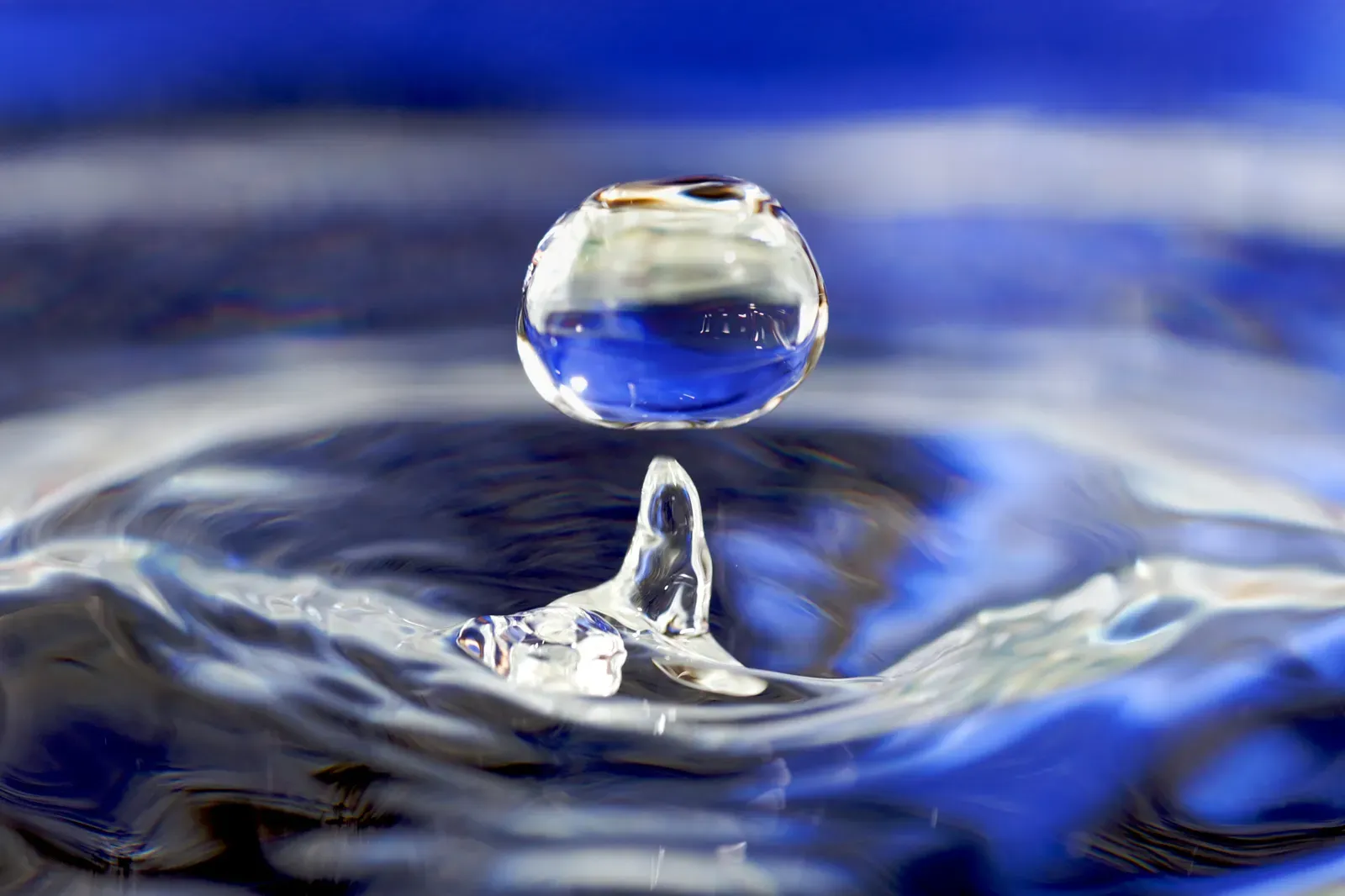
Viscosity describes how strongly layers of fluid resist sliding past each other. Thick syrup has high viscosity, while water has low viscosity. Engineers use two versions: dynamic viscosity, which is the raw resistance, and kinematic viscosity, which divides that resistance by density.
Kinematic viscosity is the one that matters for ripples, because it controls how quickly motion spreads and fades within the fluid. Standard reference tables, such as those used in engineering handbooks, list it for liquid water across a wide temperature range. The values are well established and have not changed in recent years.
How Much Thicker Water Gets Near Freezing
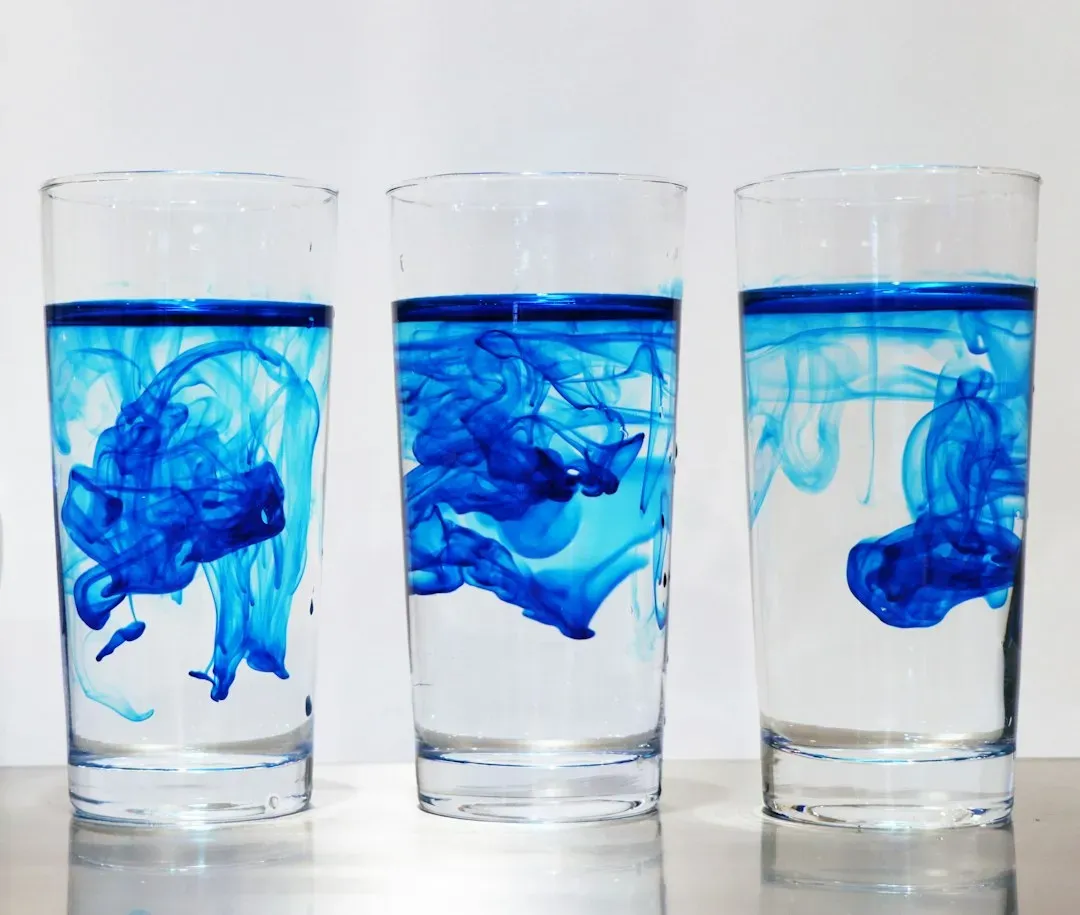
Water at twenty degrees Celsius has a dynamic viscosity of about one millipascal second. Cool it to zero degrees and that figure climbs to roughly 1.8, so the water is close to twice as resistant to flow. Warm it to forty degrees and it falls to about two thirds of the room temperature value.
This is a steep curve compared with many everyday liquids. The change from a cold morning to a warm afternoon is about as large as the gap between room temperature and a very hot bath. A puddle never looks thicker, but the physics treats it quite differently.
Why Water Gets Stickier When It Cools
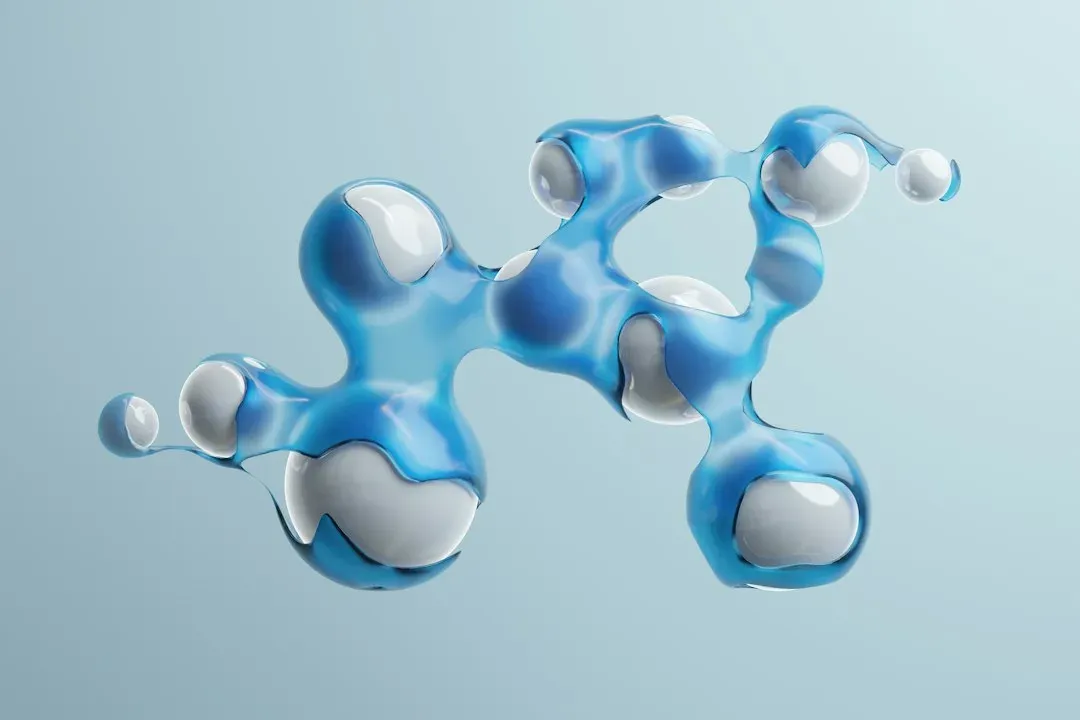
In liquid water, molecules are linked by hydrogen bonds that constantly break and re-form. Warmth gives the molecules more energy, so those links snap and reconnect faster, and neighboring molecules slide past each other more easily. As the temperature falls, the bonds last longer and the network becomes more organized.
That longer lived structure makes it harder for one layer of water to move relative to the next. Water also behaves unusually in other ways near freezing, such as reaching its greatest density at about four degrees Celsius. The viscosity trend is part of the same family of odd behavior, though it is the simplest to measure.
The Kind of Ripple a Raindrop Makes
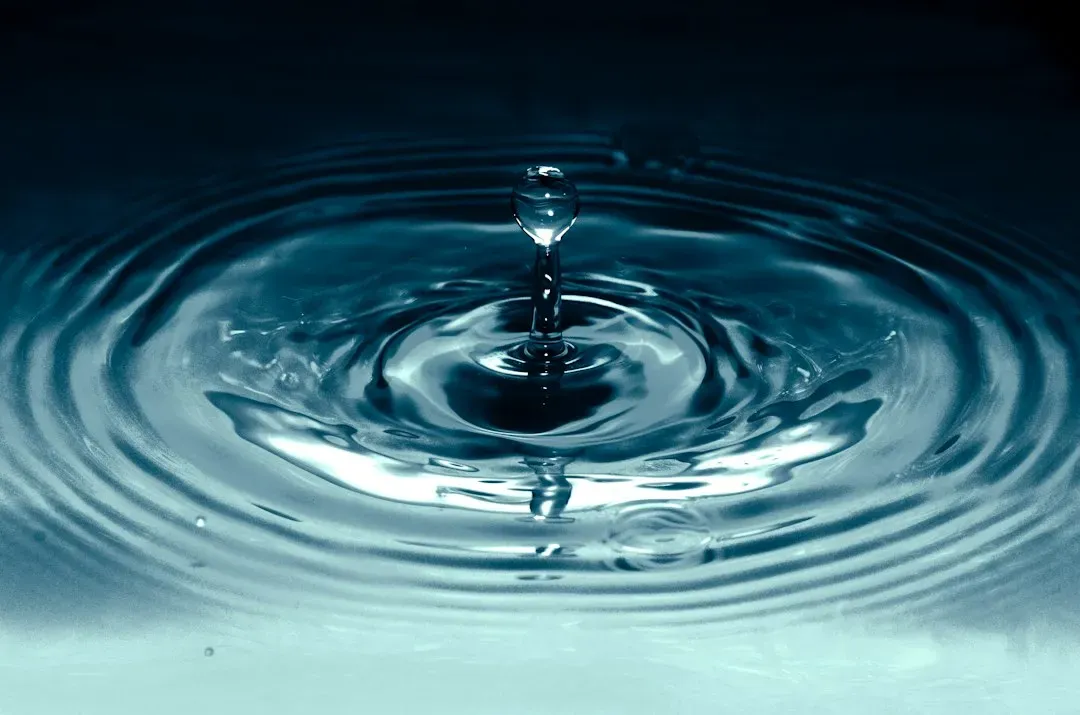
The small rings from a falling drop are mostly capillary waves, which are driven by surface tension rather than gravity. Their wavelengths are short, often a few millimeters to a couple of centimeters. Waves that short have sharp curvature, and that makes them especially sensitive to friction in the fluid.
Larger waves, such as swells on a lake, carry much more energy and lose it slowly. Tiny ripples lose it quickly even in warm water. When viscosity rises, the tiny ones are the first to go.
Why Higher Viscosity Damps Ripples Faster
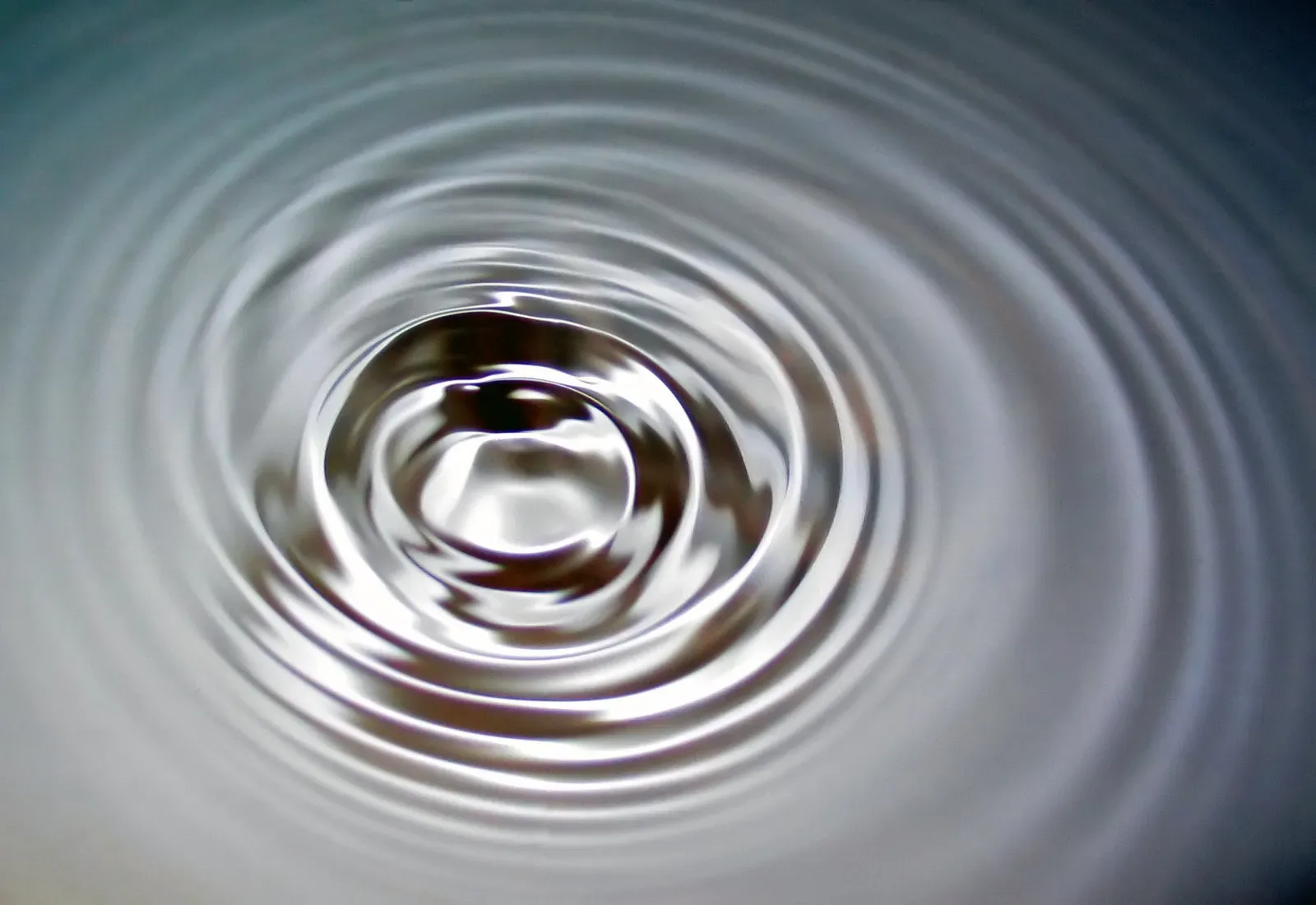
In classical fluid mechanics, the decay rate of a small surface wave in clean water scales with kinematic viscosity and with the square of the wave number. In plain terms, that means shorter waves fade much faster, and thicker water makes them fade faster still. Kinematic viscosity at zero degrees is a little under twice its value at twenty degrees.
So a ripple that would last a certain number of seconds in mild weather lasts roughly half as long near freezing, all else equal. That alone is enough to turn several visible rings into one or two. The effect is noticeable without any instruments, though the exact count depends on the size of the drop.
Surface Tension Also Shifts With the Cold
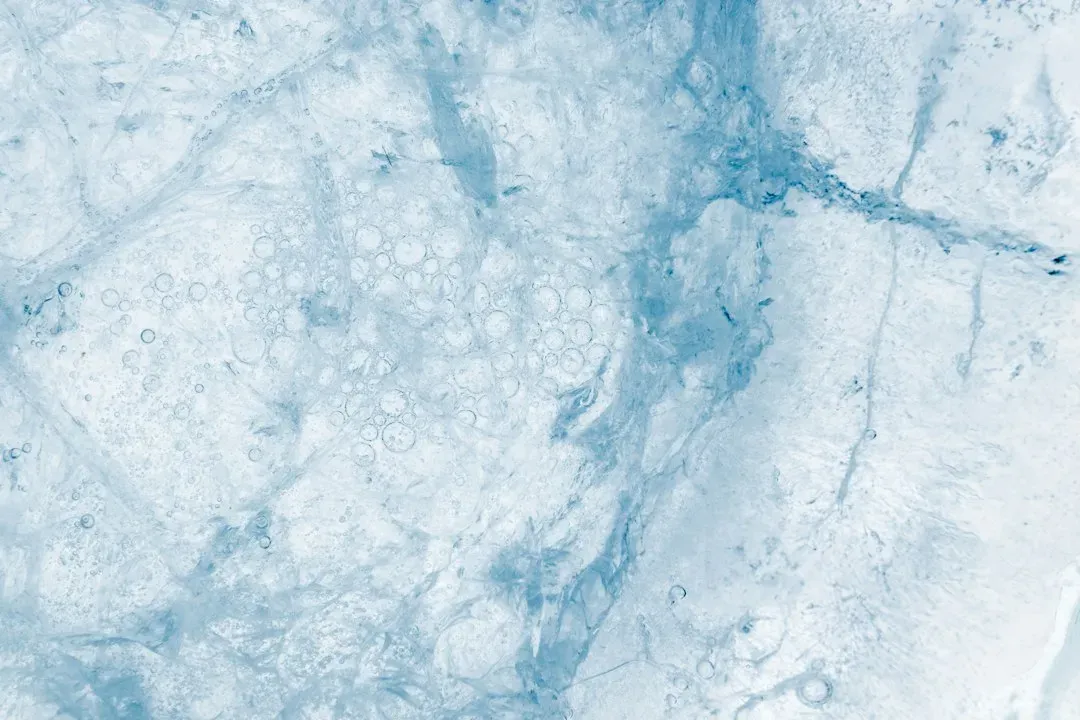
Viscosity is not the only property that moves. Surface tension rises slightly as water cools, from about seventy three millinewtons per meter at room temperature to nearly seventy six at zero degrees. That is a small change, a few percent.
Higher surface tension speeds up capillary waves a little, so they spread outward slightly faster. It does not rescue them from damping, though, because the viscous loss grows much more than the tension does. The net result is rings that expand briskly and then disappear.
Films, Dirt and Slush Add to the Damping
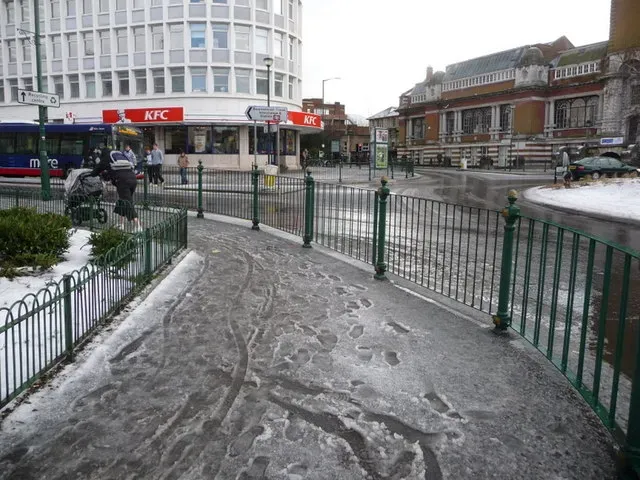
Real puddles are rarely clean. Road puddles carry oils, dust, and dissolved material, and thin films on the surface are known to damp short waves strongly. Cold weather often adds fine ice crystals, which form as the first sign of freezing at the surface and soak up wave energy.
These effects stack on top of the viscosity change. In a very thin puddle, friction against the pavement below also matters, since shallow water drains energy from waves through the bottom boundary. A skim of forming ice can stop ripples entirely well before the whole puddle freezes.
Salt, Depth and Why Not Every Cold Puddle Behaves the Same
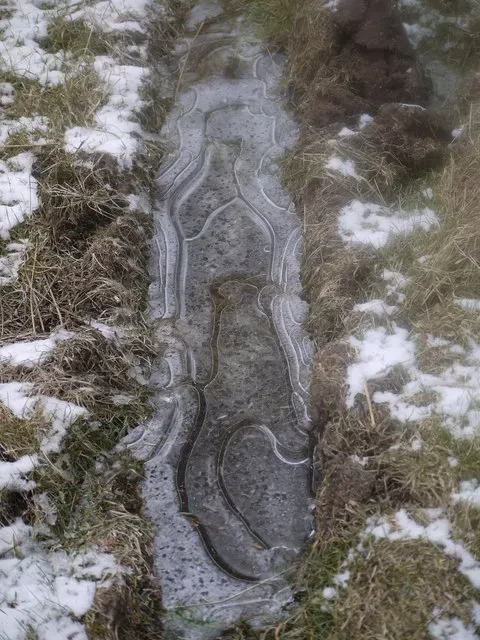
Road salt lowers the freezing point of water, so a salty puddle can stay liquid below zero degrees Celsius. In that case the water keeps getting more viscous as it supercools toward its limit, and ripples die even faster. Dissolved salt also changes viscosity slightly, so the comparison with fresh water is not exact.
Depth matters too. A deep puddle allows waves to travel without bottom friction, while a film a few millimeters thick suppresses them quickly regardless of temperature. When ripples vanish, the cause is usually a mix of cold, thin water, and surface contamination, with viscosity contributing a large and predictable share.
What the Numbers Say About a Cold Puddle
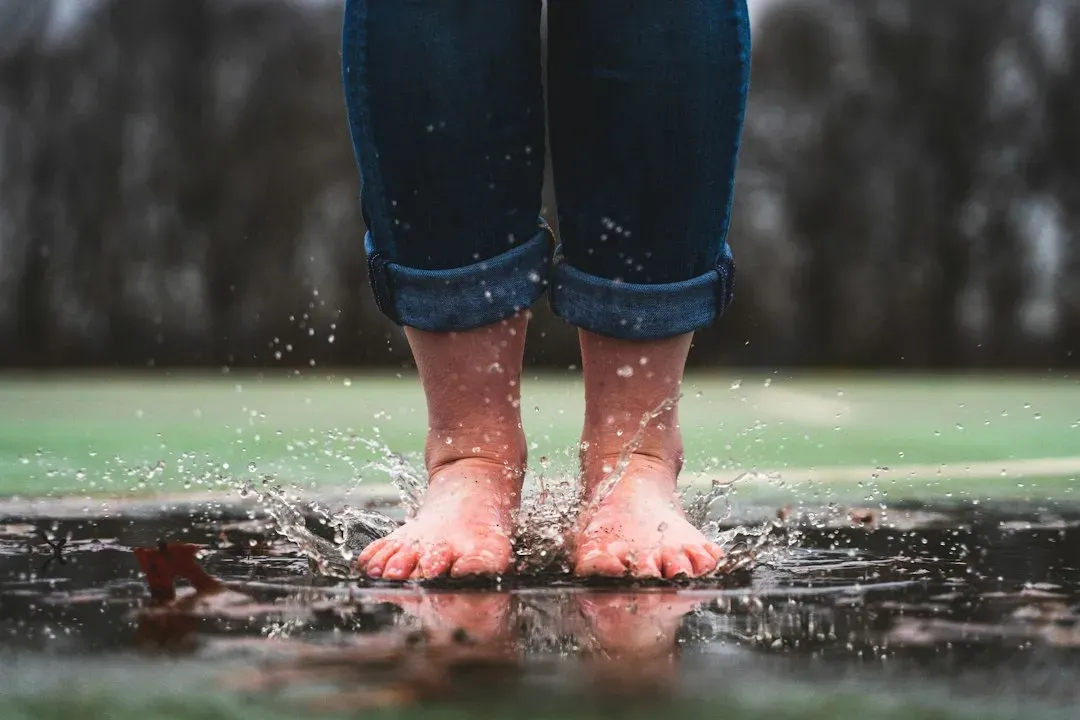
Near freezing, water’s dynamic viscosity is about eighty percent higher than at twenty degrees Celsius. Because ripple damping scales with kinematic viscosity, small waves lose their energy in roughly half the time they would in mild weather. Slightly higher surface tension, surface films, and early ice crystals add to the effect.
The result is a puddle that looks calm after a raindrop lands, because its shortest and most delicate waves have already faded into the thicker, colder water.
