

- Phantom Energy Sucking Power 24/7 – 7 Home Electronics Quietly Inflating Utility Bills - November 14, 2026
- A Million-Mile Storm Raging for Centuries – 6 Violent Weather Wonders in Our System - November 14, 2026
- Animals Flee Hours Before the Tremor – 7 Natural Warnings Before Disasters Strike - November 14, 2026
1. MoM-z14, the Earliest Galaxy Ever Confirmed
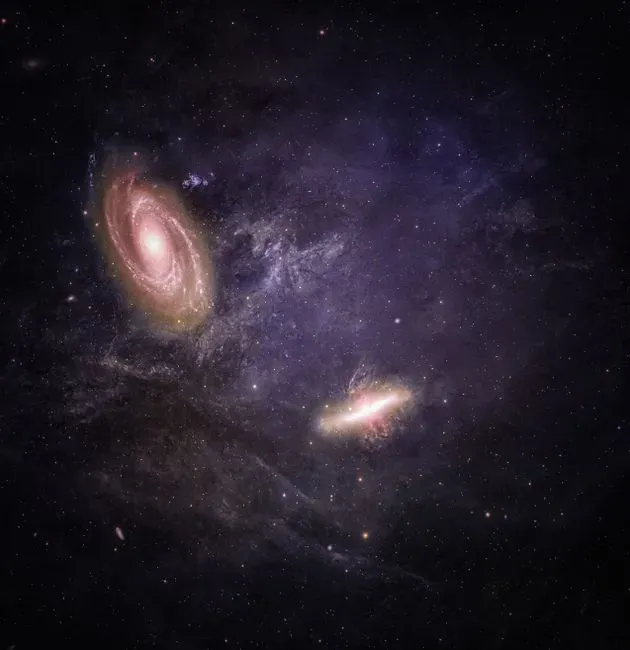
In early 2025, a team led by researchers including Rohan Naidu at MIT confirmed a galaxy so far away that its light left home just 280 million years after the Big Bang. Astronomers described it as the “mother of all early galaxies,” a record-breaking distant object that existed just 280 million years after the Big Bang. That pushed the redshift record further than anyone on the team had expected going in.
Study co-author Pieter van Dokkum admitted he didn’t think any of them expected to break the redshift record. What makes MoM-z14 stranger still is its chemistry. According to NASA, the galaxy is “brighter, more compact, and more chemically enriched” than astronomers anticipated for such an early era, with elevated nitrogen levels suggesting massive stars formed and evolved faster than current models predict. The galaxy had also apparently cleared away the neutral hydrogen fog that should have surrounded it at that age, a detail researchers are still trying to explain.
2. JWST’s Quintet, a Galaxy Collision Nobody Expected
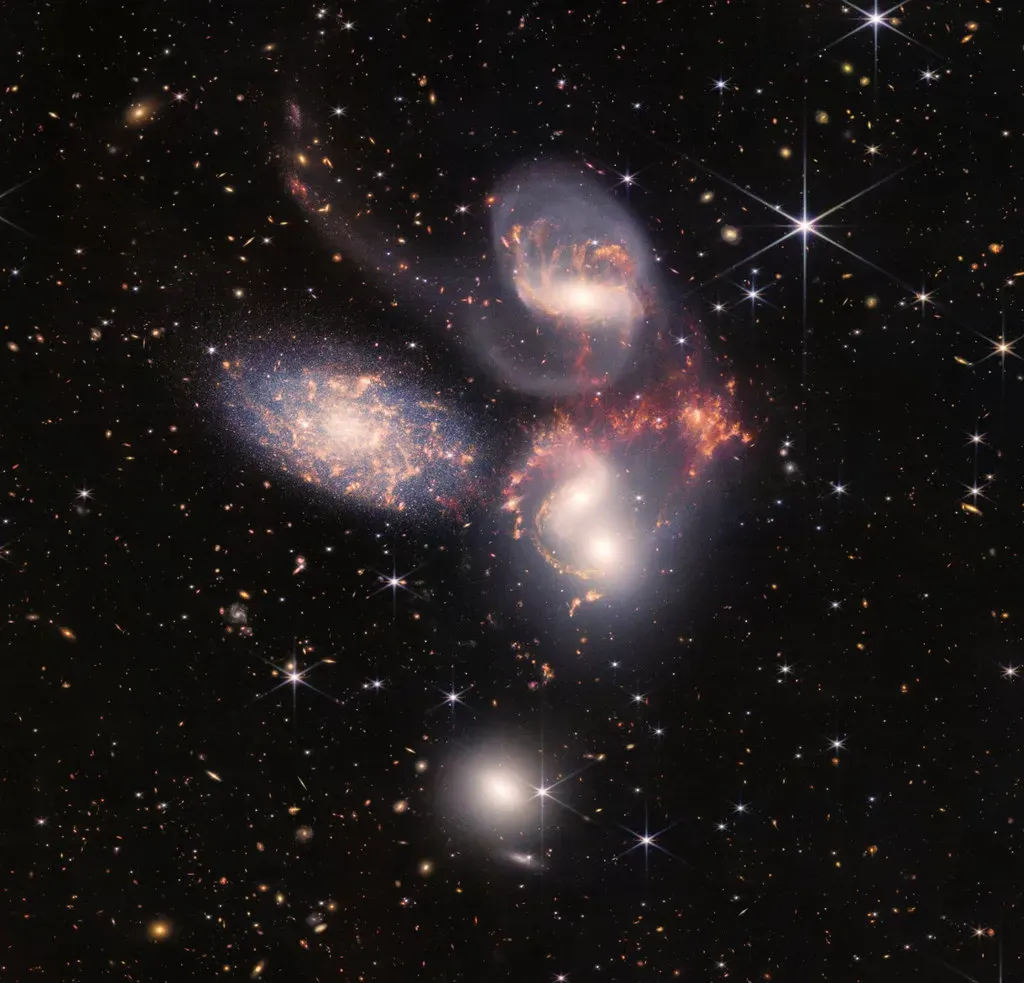
Texas A&M researchers announced in early 2026 that they had spotted at least five galaxies merging together just 800 million years after the Big Bang, a system nicknamed JWST’s Quintet. Astronomers discovered a rare, tightly packed collision of galaxies in the early universe, identifying an ongoing merger event of at least five galaxies about 800 million years after the Big Bang, along with evidence that the collision was redistributing heavy elements beyond the galaxies themselves. The find came from the JWST Advanced Deep Extragalactic Survey, one of the telescope’s deepest imaging campaigns.
What surprised the team most was the glowing halo of gas linking the galaxies together, made of oxygen produced only inside stars. The surprising result is that this gas lies outside the galaxies, since elements such as oxygen are only produced inside stars and later removed from the galaxies during the collision. Before JWST, astronomers had expected complex galaxy mergers and widespread oxygen enrichment to become common well over a billion years after the Big Bang, but this discovery shows those processes were already underway far earlier than models predicted.
3. A Possible Biosignature Gas on K2-18b
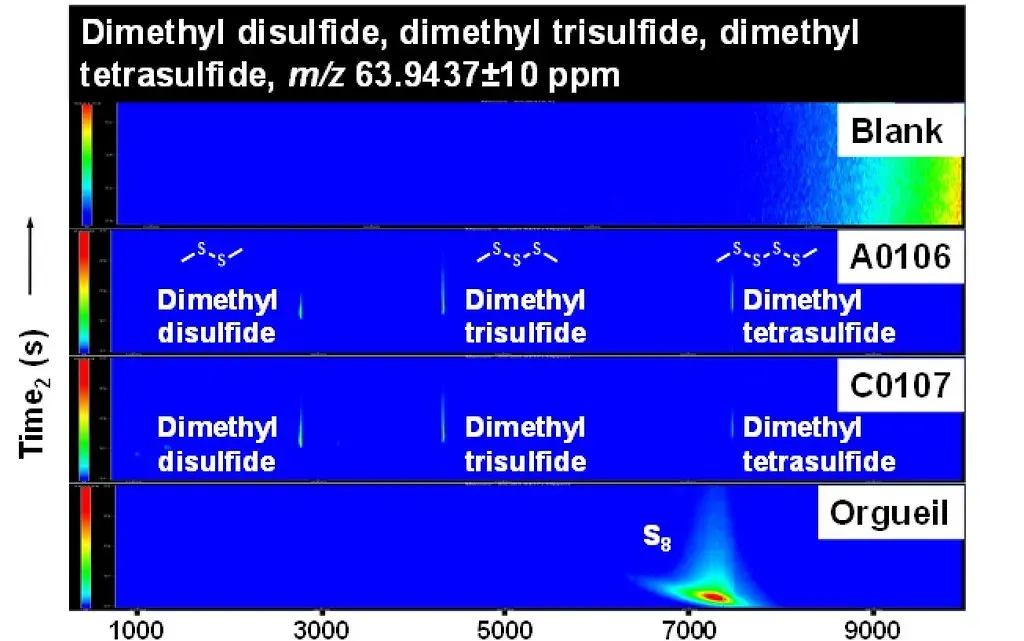
Few exoplanet findings have generated as much debate as the detection of dimethyl sulfide, a compound linked on Earth to marine microbial life, in the atmosphere of K2-18b. The signal has been confirmed at roughly 3-sigma confidence, which is notable but still short of the 5-sigma threshold astronomers require before calling something a confirmed discovery. The planet sits in the habitable zone of a red dwarf star and is thought to be a sub-Neptune with a possible ocean beneath a hydrogen-rich atmosphere.
Scientists have been careful to stress that dimethyl sulfide can, in principle, form through non-biological chemistry, so the result remains provisional rather than proof of life. Even so, it is the closest JWST has come to detecting a molecule associated with biology outside our solar system. Follow-up observations are already planned to either strengthen or weaken the signal, and the outcome could shape how future telescopes are designed to search for life.
4. A Directly Imaged Planet Around a Nearby Young Star
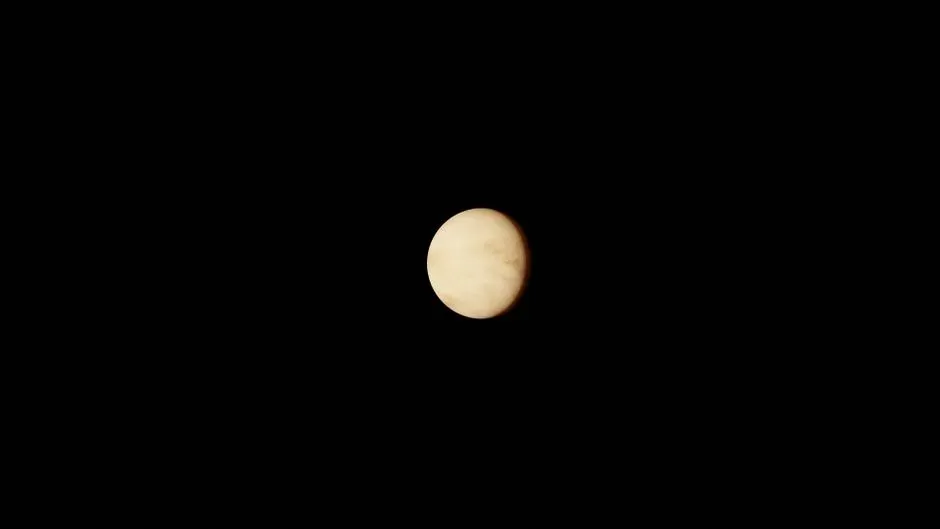
In 2025, astronomers using JWST captured what may be the telescope’s first direct image of a planet, a Saturn-mass world orbiting the young nearby star TWA 7. Astronomers captured compelling evidence of a planet with a mass similar to Saturn orbiting the young nearby star TWA 7, which if confirmed would represent Webb’s first direct image discovery of a planet, and the lightest planet ever seen with this technique. Direct imaging of exoplanets is notoriously difficult because the glare of the host star typically drowns out the much fainter light reflected or emitted by any orbiting planet.
The achievement matters because most known exoplanets have been found indirectly, through the tiny dimming of starlight as a planet passes in front of its star. Seeing an actual point of light from the planet itself opens the door to studying its atmosphere and composition in far greater detail. If the TWA 7 detection holds up under further scrutiny, it will stand as one of the lightest planets ever directly photographed around another star.
5. A Fog-Piercing Galaxy That Shouldn’t Exist Yet
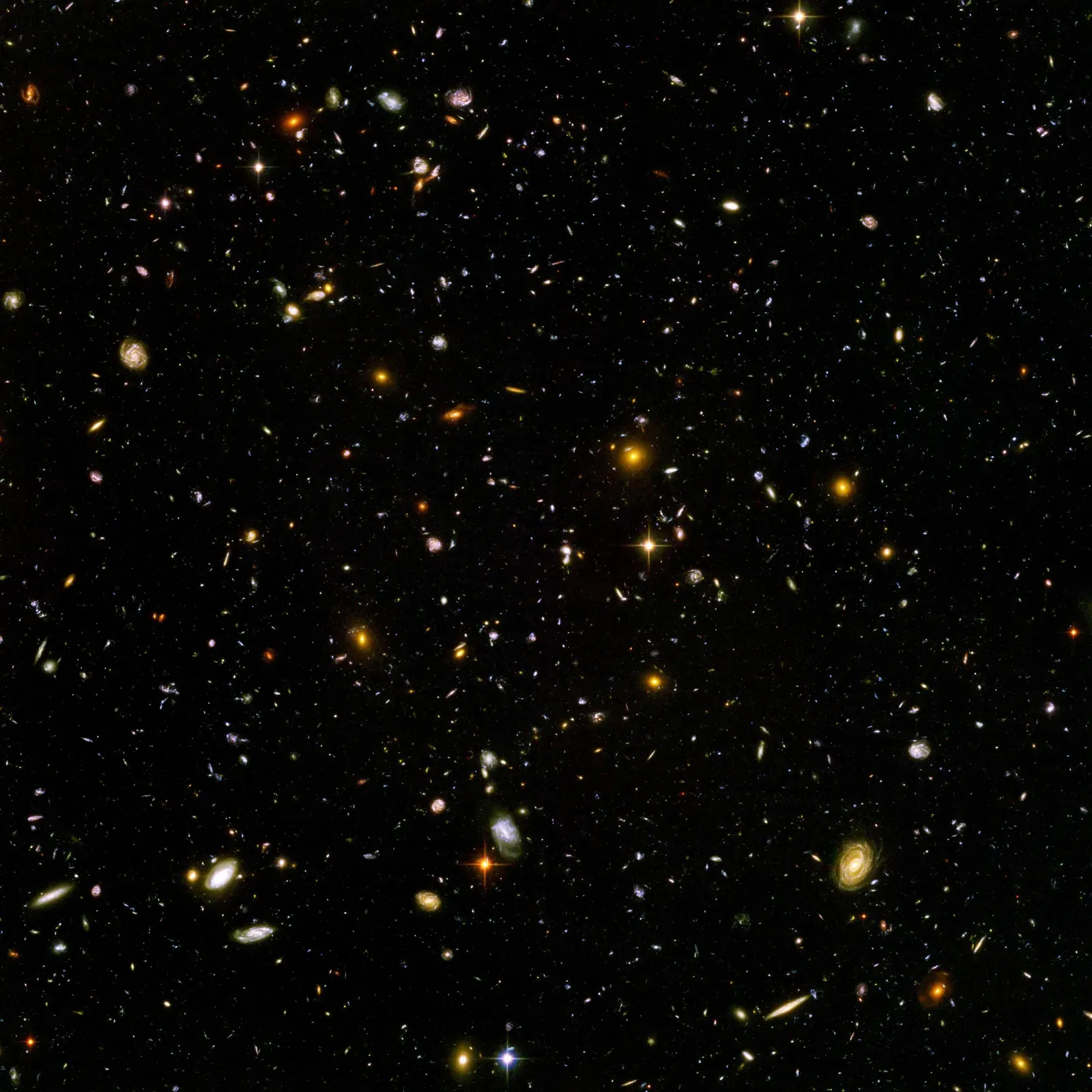
A galaxy called GS-z13-1, seen as it was just 330 million years after the Big Bang, produced a spectral signature that has left cosmologists puzzled. GS-z13-1 shows a surprisingly clear, telltale signature of Lyman-alpha emission that can only be seen once the surrounding fog has fully lifted, a result totally unexpected by theories of early galaxy formation. Researcher Roberto Maiolino of the University of Cambridge described the early universe as having been submerged in a thick haze of neutral hydrogen that should have blocked exactly this kind of light.
The surprise finding is challenging researchers to explain how this light could have pierced the thick fog of neutral hydrogen that filled space at that time. Reionization, the process that cleared this fog, was thought to have finished roughly a billion years after the Big Bang, not a third of the way through that timeline. The team behind the discovery, published in Nature, has already scheduled follow-up observations to figure out what mechanism let the light through so early.
6. Organic Molecules Hidden in a Dust-Shrouded Galaxy
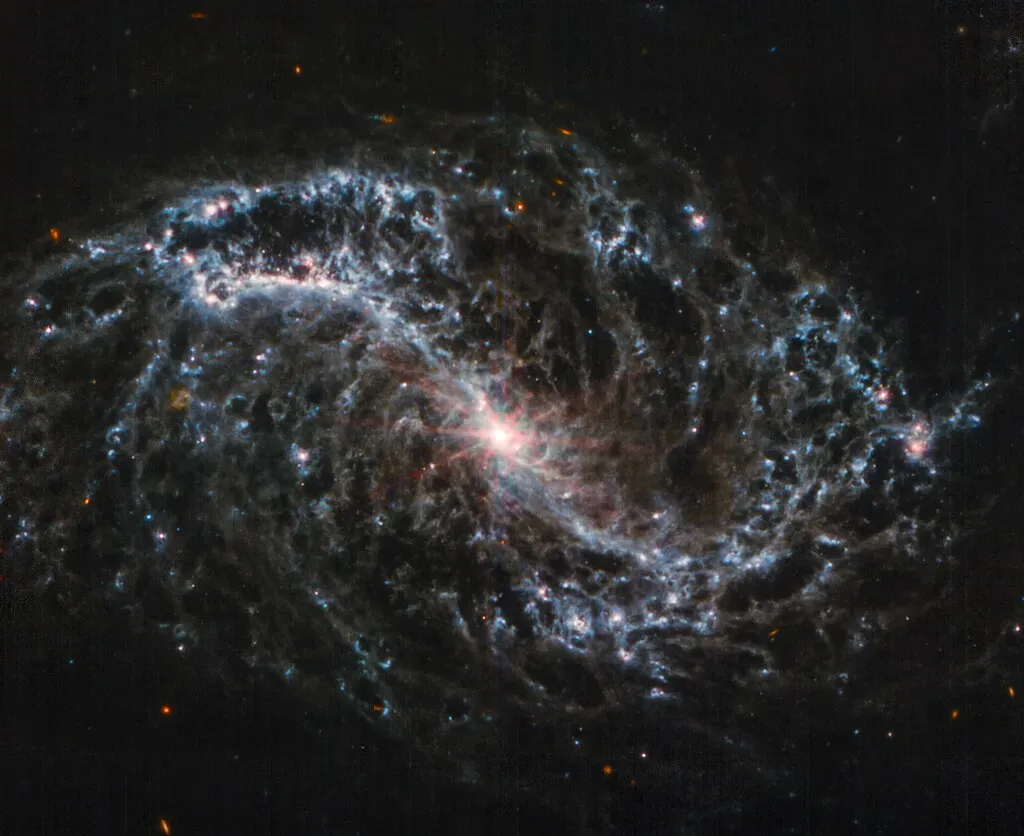
Peering into the core of a distant, heavily obscured galaxy known as IRAS 07251-0248, JWST detected an unexpectedly rich cocktail of carbon-based molecules. Using data from MIRI and NIRSpec, the team characterized the abundance and temperature of chemicals in gas, dust, and ices, discovering a staggeringly rich inventory of small organic molecules, including benzene, methane, acetylene, diacetylene, triacetylene, and the highly reactive methyl radical, which had never been detected beyond the Milky Way before. The galaxy’s dusty core normally blocks visible light entirely, which is why nobody had seen this chemistry before infrared instruments came along.
These molecules could serve as the building blocks of more complex organic compounds, which are vital in the development and sustaining of life. Researchers from the Center for Astrobiology in Spain, working with modeling tools from the University of Oxford, led the analysis. The finding suggests that the prebiotic chemistry once thought unique to quieter environments like our own solar nebula can also thrive amid the extreme radiation and turbulence of a galaxy undergoing intense star formation.
7. A Black Hole That May Predate Its Own Galaxy
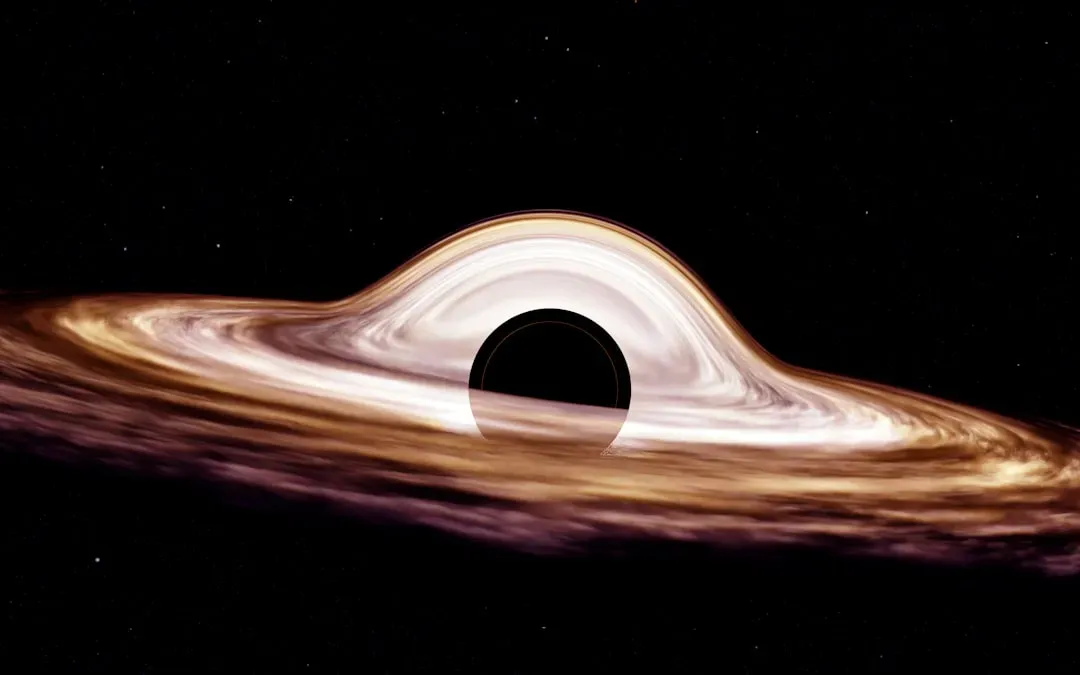
Using JWST’s imaging and spectroscopy together, astronomers mapped gas swirling around a black hole inside a tiny, extremely distant galaxy called Abell2744-QSO1, located more than 13 billion light-years away. The results suggest that the 50-million-solar-mass black hole predates its host galaxy, possibly forming within the first second of the Big Bang, and must have been immense from the start. That timeline runs directly against the standard assumption that black holes grow gradually alongside the galaxies that host them.
If black holes really can form before the galaxies around them take shape, it would mean the seeds of these objects are far more exotic than the collapsed remnants of dying stars that theorists usually invoke. This single system, small as it is, has become a key test case for competing ideas about how the earliest supermassive black holes got their head start. Researchers are now hunting for similar objects to see whether Abell2744-QSO1 is an oddity or the first sign of a whole hidden population.
Taken together, these seven findings show a telescope that keeps outrunning the theories built to anticipate it. Galaxies are bigger and brighter than expected, black holes are older than expected, and even the chemistry of deep space keeps turning up ingredients scientists once thought were rare. None of this means the old models were wrong in some catastrophic sense, but it does mean researchers are back at the drawing board on several fronts at once, and Webb’s data keeps arriving faster than the theory can catch up.