

Snow falls every winter across huge parts of the world, yet most people never look closely at what actually lands on their sleeve. Snowflakes are small, fast-melting, and easy to dismiss as just frozen water. But the science behind them is stranger and more layered than it looks, touching on physics, chemistry, and even a bit of local geography.
Here are six things about snowflakes that tend to surprise people once they hear them, backed by what researchers and meteorologists have actually documented over the years.
1. No two snowflakes are truly identical, but not for the reason you think
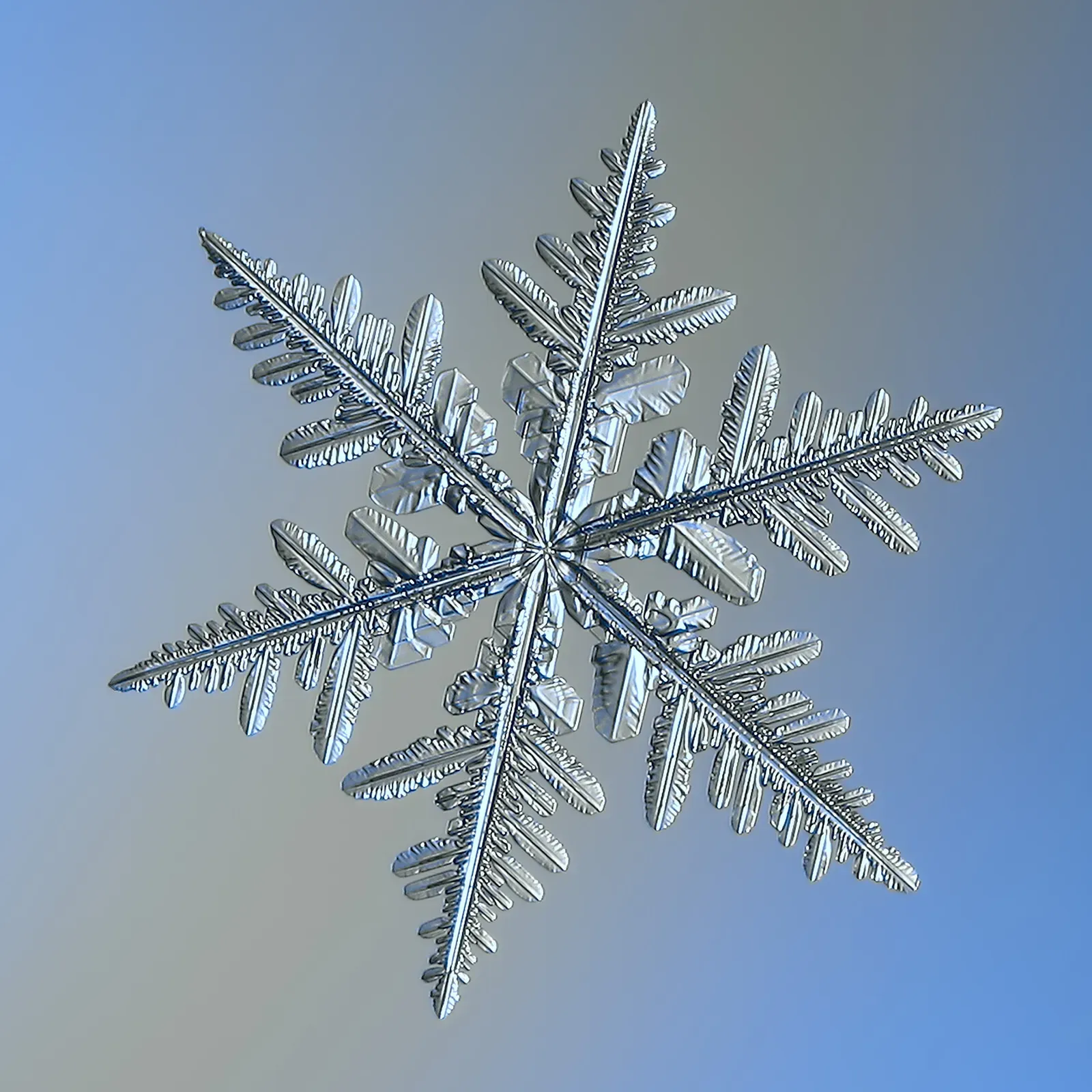
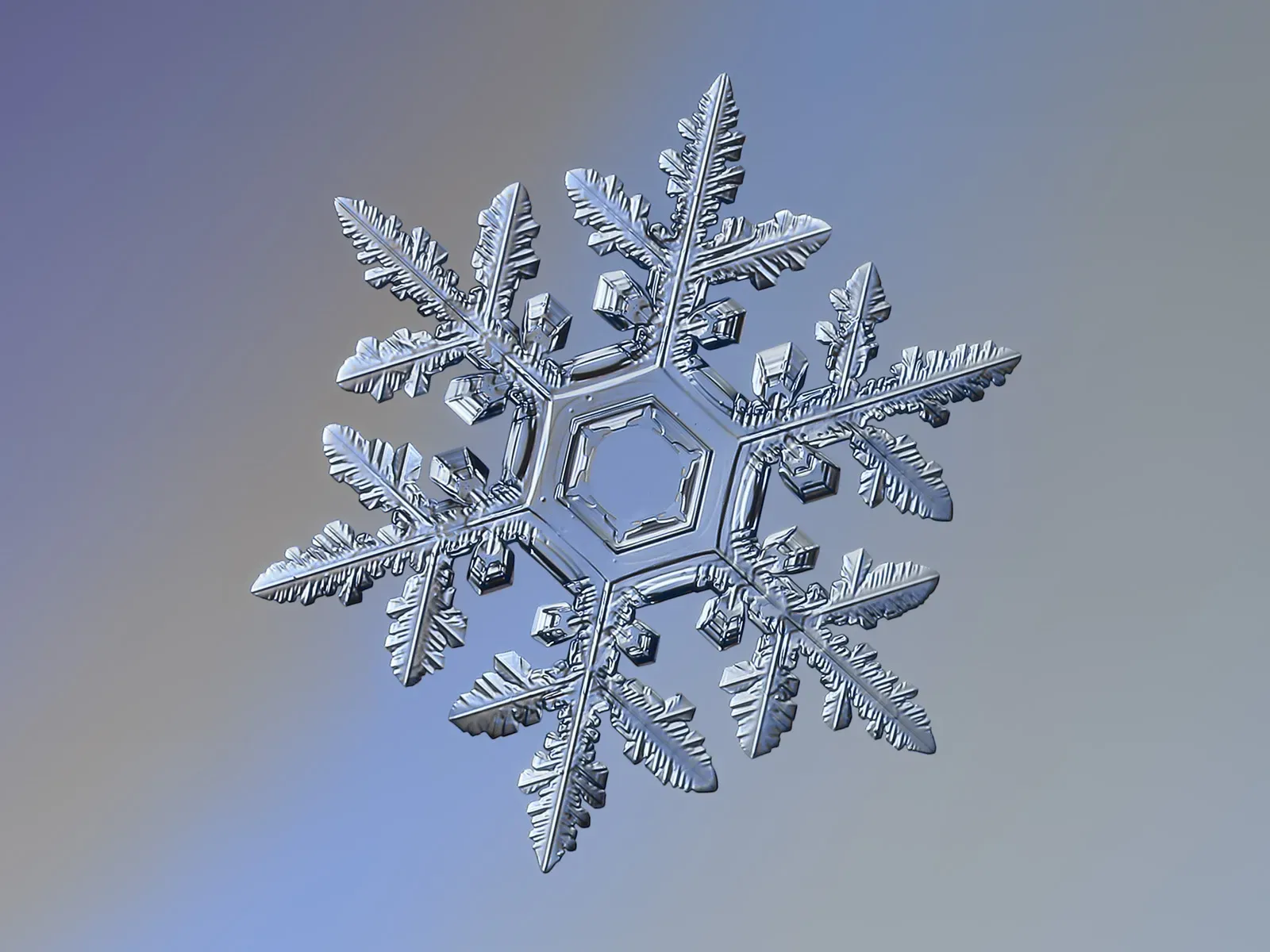
The claim that no two snowflakes are alike gets repeated so often it sounds like a cliché, yet the reasoning behind it is genuinely interesting. Each snowflake forms through a unique combination of temperature, humidity, and air movement as it falls, and even tiny shifts in those conditions change how the ice crystal grows. Because a single snowflake can pass through thousands of slightly different atmospheric micro-conditions on its way down, the odds of two forming in exactly the same way are astronomically small.
That said, simple hexagonal prisms with only a few points of variation can look extremely similar under casual observation. Scientists who study snow crystals closely, including researchers who have photographed tens of thousands of them, generally agree that identical complex flakes have never been documented. The uniqueness lies less in the six-sided shape and more in the microscopic branching patterns that only show up under magnification.
2. Snowflakes almost always have six sides because of water’s molecular structure
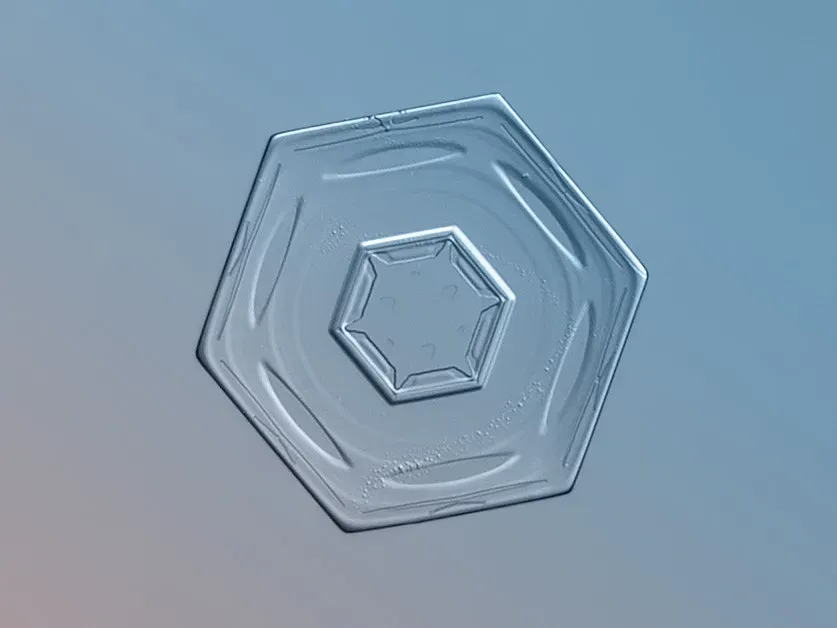
The six-sided shape isn’t random decoration, it comes directly from the way water molecules bond together when they freeze. Hydrogen bonds naturally arrange water molecules into a hexagonal lattice, and as a snow crystal grows, it follows that same six-fold symmetry outward. This is why nearly every snowflake, whether it ends up looking like a simple plate or an elaborate star, sticks to a six-armed structure.
There are rare exceptions, including triangular crystals that occasionally form under specific wind and temperature conditions. Twelve-sided snowflakes also show up occasionally, usually when two six-sided crystals fuse together slightly out of alignment during formation. Still, the overwhelming majority of snowflakes obey the same basic geometric rule set by water’s molecular chemistry.
3. Snowflake shape depends heavily on the exact temperature they form in
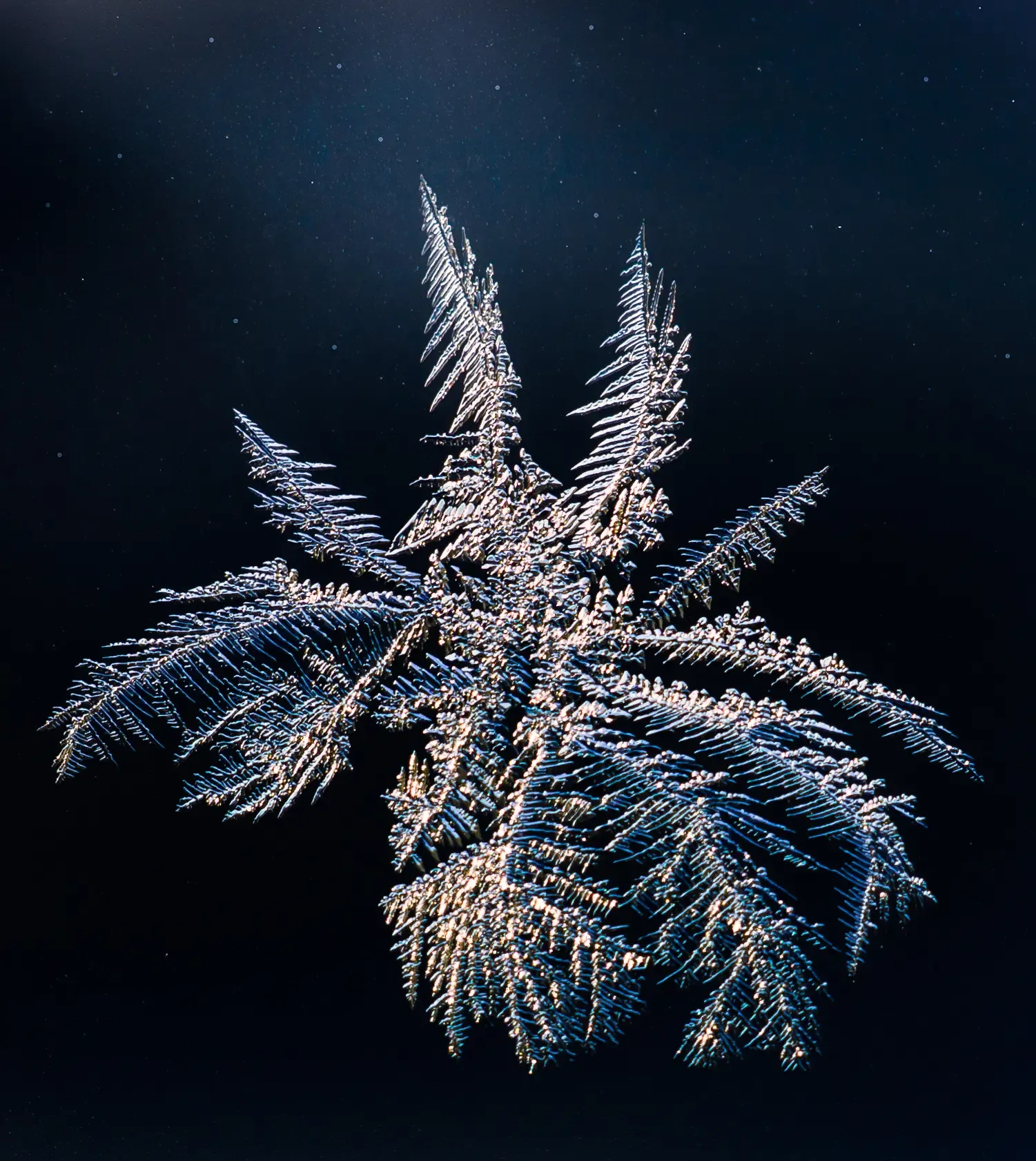
The classic branching star shape people associate with snowflakes only forms within a fairly narrow temperature range, roughly between about 3 and 10 degrees Fahrenheit below freezing. Slightly warmer or colder conditions produce very different results, including flat plates, hollow columns, needles, or simple prisms. This relationship between temperature and shape is well documented in what’s known as the Nakaya diagram, first mapped out by Japanese physicist Ukichiro Nakaya in the 1930s through laboratory experiments.
Humidity plays a role too, working alongside temperature to determine how elaborate or plain a crystal becomes. Higher humidity tends to encourage more intricate branching, while drier air produces simpler, more compact shapes. Because a falling snowflake often passes through multiple temperature and humidity layers on its way to the ground, many real-world flakes end up as hybrids rather than textbook examples.
4. Snow isn’t actually white, it just reflects light in a way that looks white
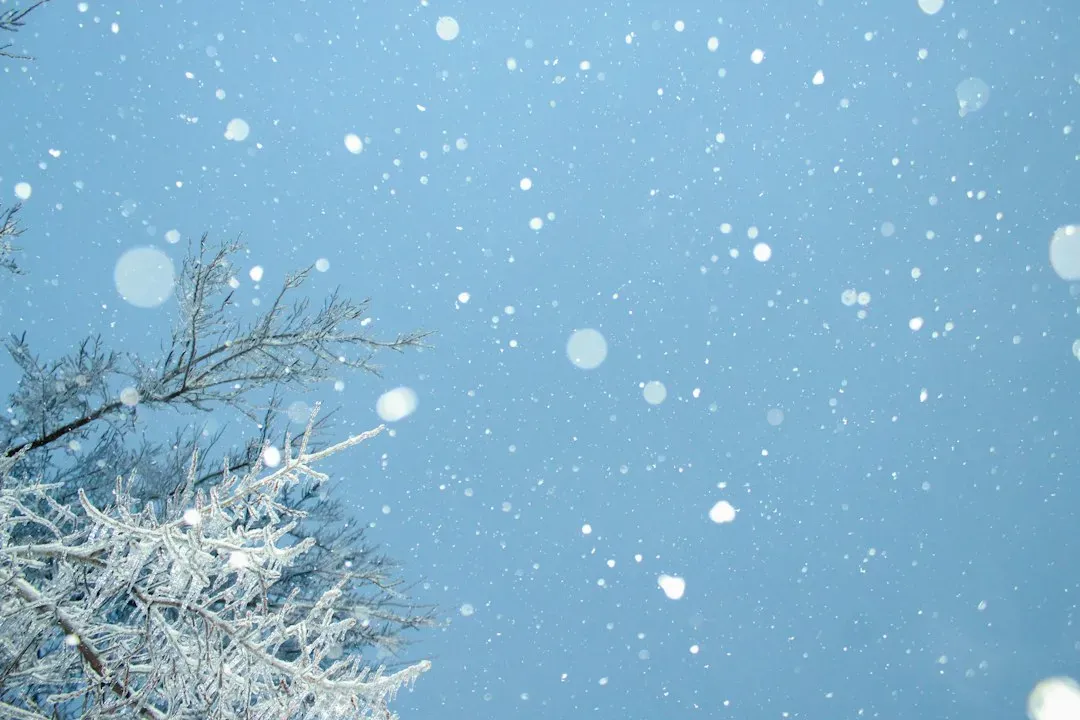
Ice itself is essentially clear, similar to glass, which surprises people who assume snow has some inherent whiteness built into it. The white appearance comes from how light interacts with the countless tiny ice crystal surfaces packed into a snowflake or snowbank. Light bounces around between all those facets and edges, and rather than absorbing specific wavelengths the way colored objects do, snow scatters all visible wavelengths fairly evenly back to the eye.
This is the same basic optical principle that makes crushed glass or foam appear white even though the base material is transparent. It also explains why very deep, compacted snow or glacial ice can start to look blue, since light traveling through a thicker mass of ice does begin absorbing red wavelengths slightly more than blue ones. So the color of snow is really a story about light scattering, not pigment.
5. Individual snowflakes fall much slower than people assume
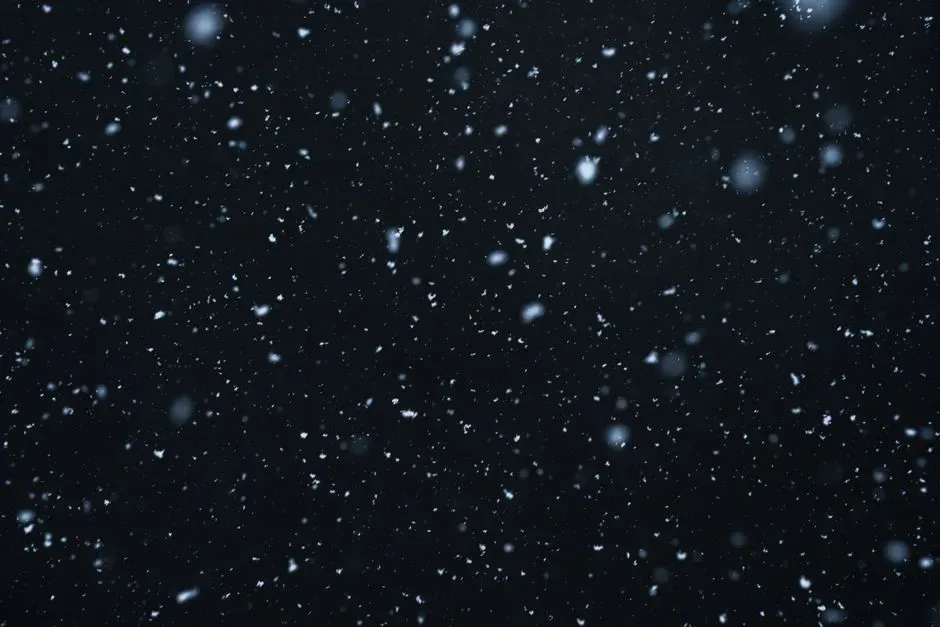
Because snowflakes look delicate and drift lazily through the air, it’s easy to assume they’re barely affected by gravity. In reality, most snowflakes fall at speeds between roughly 1 and 4 miles per hour, though the exact rate depends heavily on the flake’s size, shape, and density. Larger, flatter crystals tend to fall slower because they have more surface area catching air resistance, similar to how a sheet of paper flutters down slower than a crumpled ball.
Wind conditions can dramatically change how snowflakes appear to move, even though their actual fall speed through still air stays fairly consistent. This is part of why snow during a calm evening looks so different from snow caught in gusty wind, even if the flakes themselves are physically similar. Meteorologists studying snowfall rates use these speed estimates to help predict accumulation patterns during storms.
6. Snowflakes can carry bacteria and dust particles at their core
Snowflakes don’t form out of pure water vapor freezing in isolation, they almost always need a tiny particle to kickstart the process, known as an ice nucleus. These nuclei can include dust, pollen, soot, or in a notable number of cases, bacteria that have specific proteins capable of triggering ice formation at relatively warm temperatures. Research into these ice-nucleating bacteria, particularly a well-studied species linked to plant surfaces, has shown they’re remarkably effective at encouraging water to freeze around them.
This means a falling snowflake is technically never one hundred percent water, it’s built around a microscopic hitchhiker at its center. Scientists studying atmospheric ice nucleation have used this fact to better understand cloud formation and precipitation patterns more broadly. It’s a small detail, but it reframes snow as something slightly more biological than most people ever consider when they’re brushing it off a windshield.

- The Shoreline Sucked Dry in Seconds – 5 Tsunami Signals Beachgoers Mistake for Low Tide - November 14, 2026
- 9 Dark-Sky Destinations Around the World Where the Stars Look Unreal - November 14, 2026
- The Fault Line That Never Slips – 7 Locked Seismic Zones Overdue for a Massive Release - November 14, 2026
