


- Astronomers Track 5 Near-Earth Objects Passing This Year - September 14, 2026
- NOAA Data Reveals North America’s 6 Coldest Year-Round Inhabited Areas - September 14, 2026
- Why 9 Amazon Species Have Quietly Vanished From Their Native Habitats - September 14, 2026
2026 JH2: The Asteroid Found Days Before Its Closest Pass
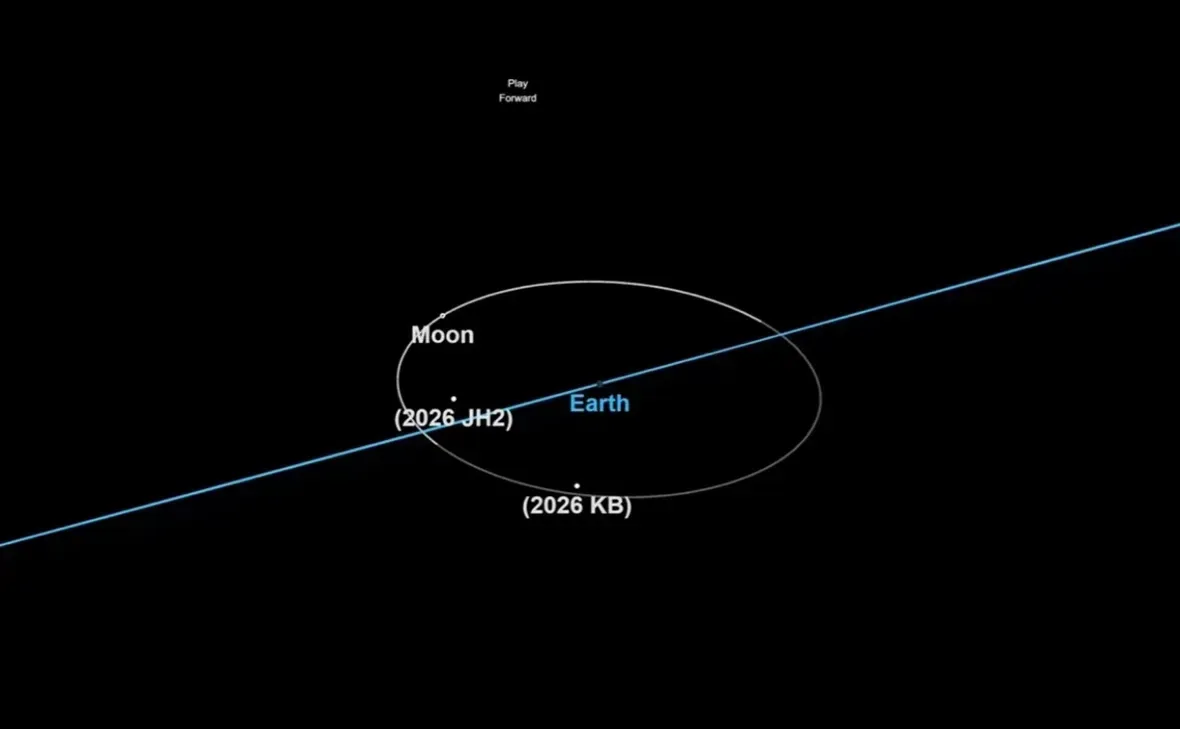
In mid May, observers at the Mount Lemmon Survey near Tucson spotted something moving fast against the star field. Astronomers at the Mount Lemmon Survey in Tucson, Arizona, discovered the asteroid on May 10 and named it 2026 JH2. Within days, the object was already approaching its closest point to Earth, leaving little time for a leisurely study.
The rock belongs to a well known family of wanderers. The object belongs to a class of asteroids called Apollo, which orbit the sun on trajectories that intersect with Earth’s own. Its size, somewhere between fifty and one hundred feet across according to brightness based estimates, kept it firmly in the harmless category, though the short discovery window highlighted just how many similarly sized objects likely go unseen until the last moment.
2026 OE1: A Jet Sized Rock On A Predictable Path

Unlike its May counterpart, this one came with plenty of advance notice. NASA is monitoring a large near-Earth asteroid roughly the size of a passenger jet that is set to make a close approach to Earth on Friday, August 7. The object, designated 2026 OE1, is estimated to measure about 180 feet (55 meters) across and will pass Earth at a distance of approximately 1.82 million miles (2.93 million kilometers), according to NASA’s Jet Propulsion Laboratory. That distance sounds close in headlines but is anything but dangerous in practice.
Context matters here. At 1.82 million miles away, the asteroid will pass more than seven times further away than the Moon, which orbits Earth at an average distance of about 239,000 miles. NASA’s public dashboard flagged it as part of a routine batch of five approaches being tracked at the time, a reminder that most flybys are logged, measured, and then quietly filed away without incident.
2024 YR4: The Asteroid That Kept Astronomers Guessing
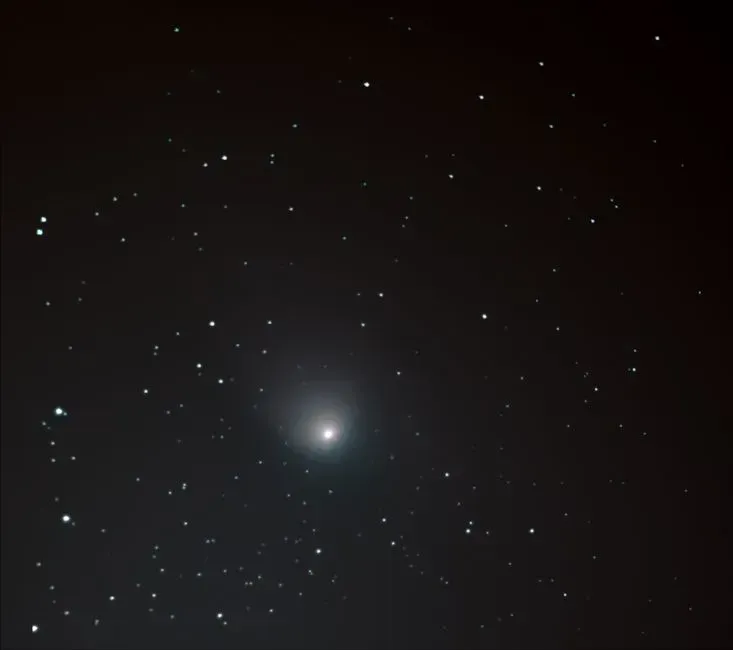
Few objects in recent memory have caused as much back and forth as this one. Discovered at the end of December 2024, asteroid 2024 YR4 at first seemed a serious threat to Earth, with scientists estimating as much as a 3.1% chance of it impacting our planet on December 22, 2032. That risk to Earth was eventually ruled out entirely, but the story did not end there.
Attention then shifted skyward toward the Moon instead. A series of observations from ground- and space-based telescopes quickly helped rule that out, but by June 2025, a new concern emerged: a 4.3% chance YR4 would slam into the moon instead. Fresh James Webb Space Telescope observations gathered in February 2026 finally settled the question. With this new data, 2024 YR4 is expected to pass by the Moon at a distance of 13,200 miles (21,200 km) and lunar impact is no longer a possibility.
Apophis: A 2029 Flyby Already Shaping 2026 Plans
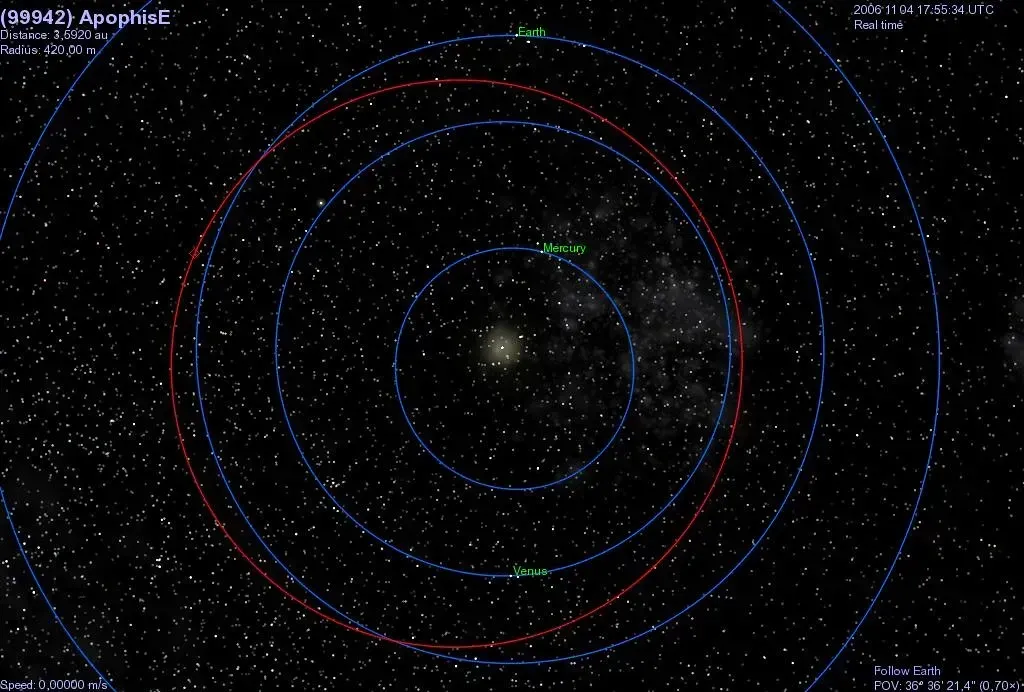
Some objects earn attention years before their actual close approach, and Apophis is the clearest example. On 13 April 2029, the asteroid (99942) Apophis will pass less than 32 000 km from Earth’s surface, roughly 375 meters across, and for a short time will be closer to Earth than satellites in geostationary orbit and visible in the night sky to the naked eye from parts of Europe, Africa and Asia. Throughout 2026, teams have been busy preparing spacecraft and observation campaigns for that eventual moment.
The scientific stakes go beyond simple sightseeing. Ramses will rendezvous with the asteroid (99942) Apophis and accompany it through its safe but exceptionally close flyby of Earth in 2029, and researchers will study the asteroid as Earth’s gravity alters its physical characteristics, with findings expected to improve our ability to defend our planet from any similar object found to be on a collision course in the future. Meanwhile, a separate NASA spacecraft is already on its way. NASA’s OSIRIS-APEX spacecraft is en route to rendezvous with Apophis, arriving in June 2029 to start an 18 month mission.
3I/ATLAS: An Unexpected Visitor From Beyond Our Solar System
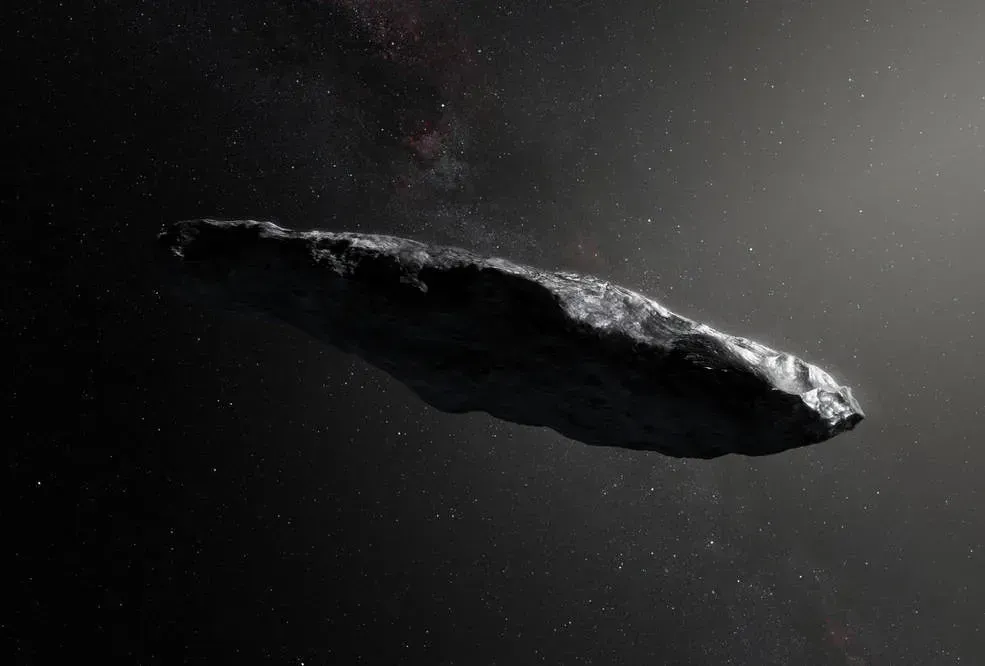
Not every object astronomers track this year originated within the solar system at all. Comet 3I/ATLAS, discovered by the ATLAS survey network, was quickly recognized as only the third confirmed interstellar object ever recorded passing through our neighborhood, following the famous ‘Oumuamua and Comet Borisov before it. Its hyperbolic trajectory, too fast and too oddly angled to be bound by the Sun’s gravity, marked it immediately as a visitor rather than a permanent resident.
Tracking an interstellar body presents different challenges than watching a familiar asteroid on a known loop. Observatories worldwide raced to gather spectral data before the object faded from view, hoping to learn more about the chemical makeup of material formed around a distant, unrelated star. Its passage through the inner solar system in 2026 offered a rare, narrow window that will not repeat, since objects like this one leave and never return.
Final Thoughts