

- Sudden Wind Pushes on Sunny Days – Why Thermal Air Columns Collapse - November 16, 2026
- 6 Hidden Challenges of Living in Space That Rarely Make the Headlines - November 16, 2026
- Puddle Ripples Vanishing When Cold Hits – How Water Viscosity Shifts Near Freezing - November 16, 2026
Most of us have walked outside just before or after a thunderstorm and noticed that the air smells different. It’s sharp and clean, a little like a swimming pool or a freshly run printer. Some people say they can taste it, with a faint metallic edge at the back of the tongue.
The usual explanation is ozone, and lightning does play a part in making it. The full story is less tidy than “pure ozone” suggests, though, and it involves electricity, nitrogen, sunlight and wind.
What Ozone Actually Is

Ozone is a molecule made of three oxygen atoms, written O3. The oxygen we breathe has two atoms, O2. That extra atom makes ozone unstable and reactive, which is why it smells so sharp.
The name comes from a Greek word meaning “to smell.” The chemist Christian Schönbein, working in the nineteenth century, noticed the odor around electrical equipment and gave the gas its name. It’s a fitting history, since electricity is still its most familiar trigger.
The Heat of a Lightning Channel
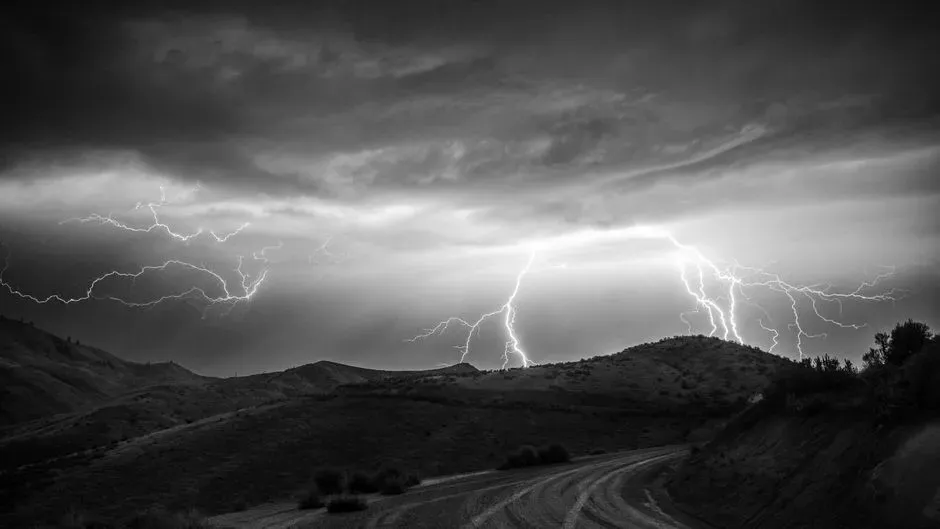
A lightning bolt heats the narrow channel of air around it to roughly thirty thousand degrees Celsius, several times hotter than the surface of the sun. The air expands explosively, and that shockwave is what we hear as thunder. For a fraction of a second, the channel is a plasma of charged particles.
That energy is more than enough to break apart oxygen and nitrogen molecules. Once split, the fragments are free to recombine in new ways. Ozone is one of the products, though not the only one.
How Oxygen Atoms Become Ozone
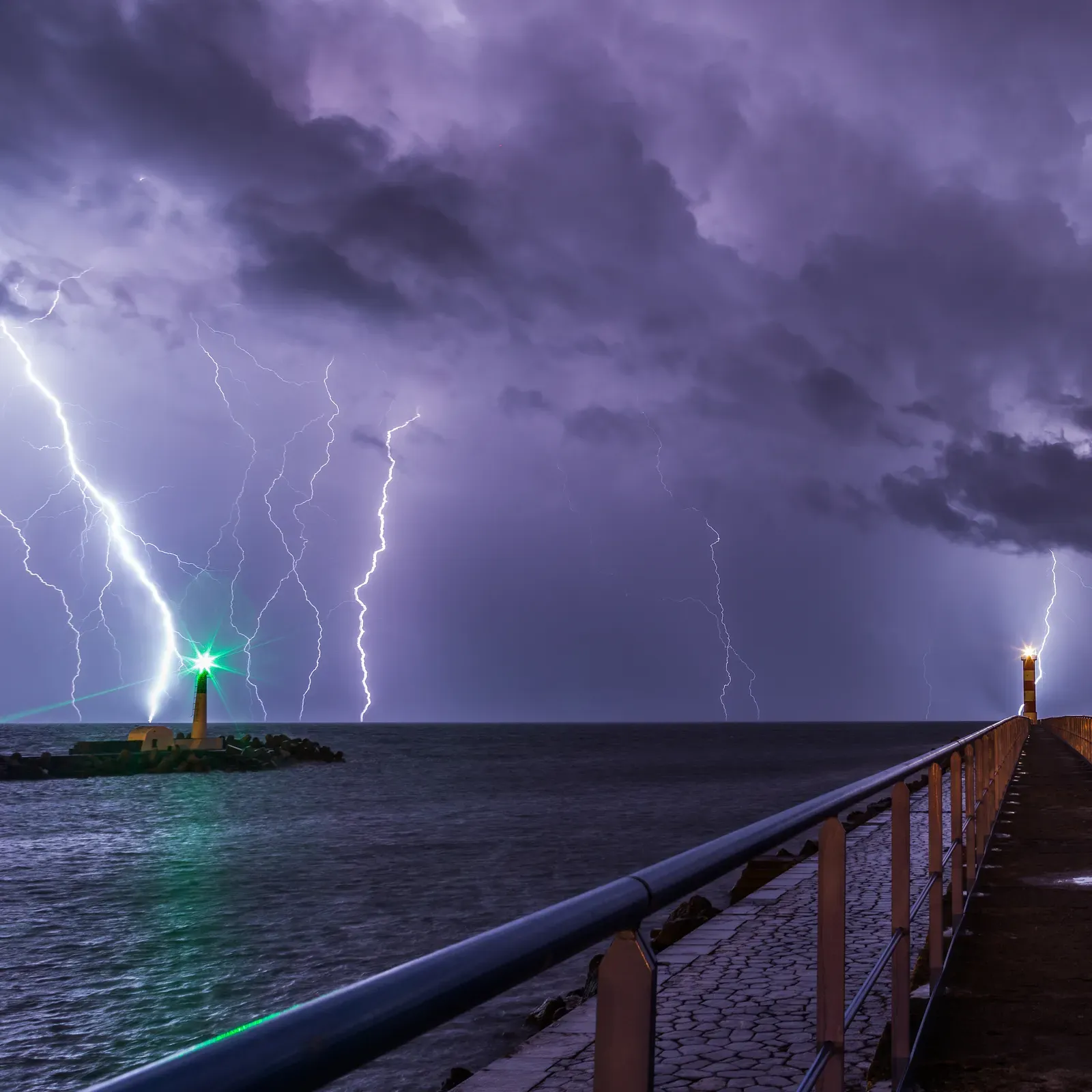
The simplest route is direct. Electrical discharge splits an O2 molecule into two single oxygen atoms. Each free atom can then latch onto another O2 molecule, forming O3.
This is the same principle used in commercial ozone generators, which pass a corona discharge through air or oxygen. Lightning does it on a far larger and messier scale. Much of the ozone made inside the hot channel is quickly destroyed again by the heat around it.
The Nitrogen Oxide Detour
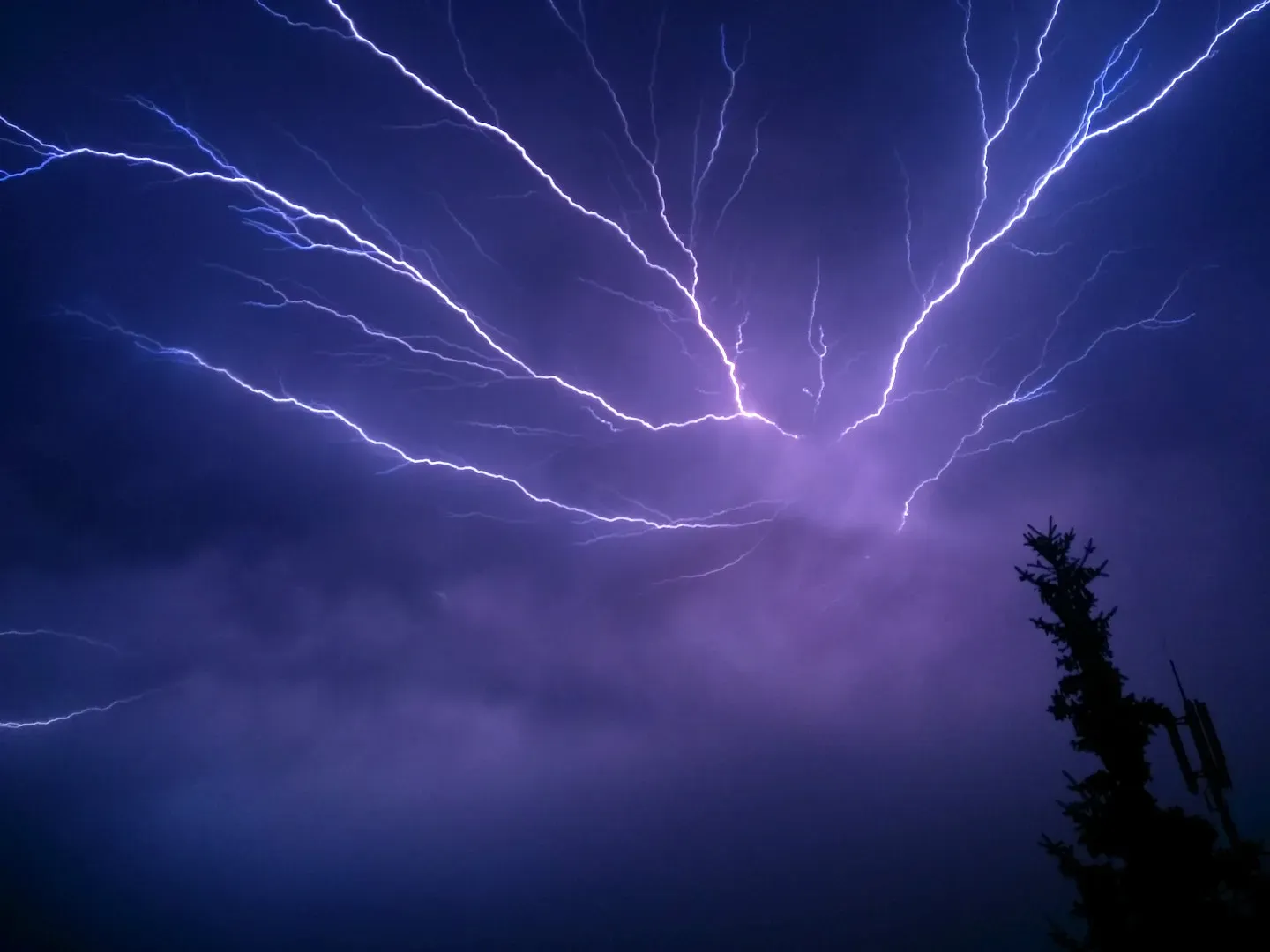
Air is mostly nitrogen, and lightning splits those molecules too. The released nitrogen atoms react with oxygen to form nitric oxide, which soon converts to nitrogen dioxide. Together these are called NOx.
NOx matters because it drives ozone chemistry in sunlight. Sunlight breaks nitrogen dioxide apart, freeing an oxygen atom that can form ozone. So a lot of storm related ozone is produced indirectly, hours or days after the flash, rather than in the bolt itself.
Why It Isn’t Really Pure
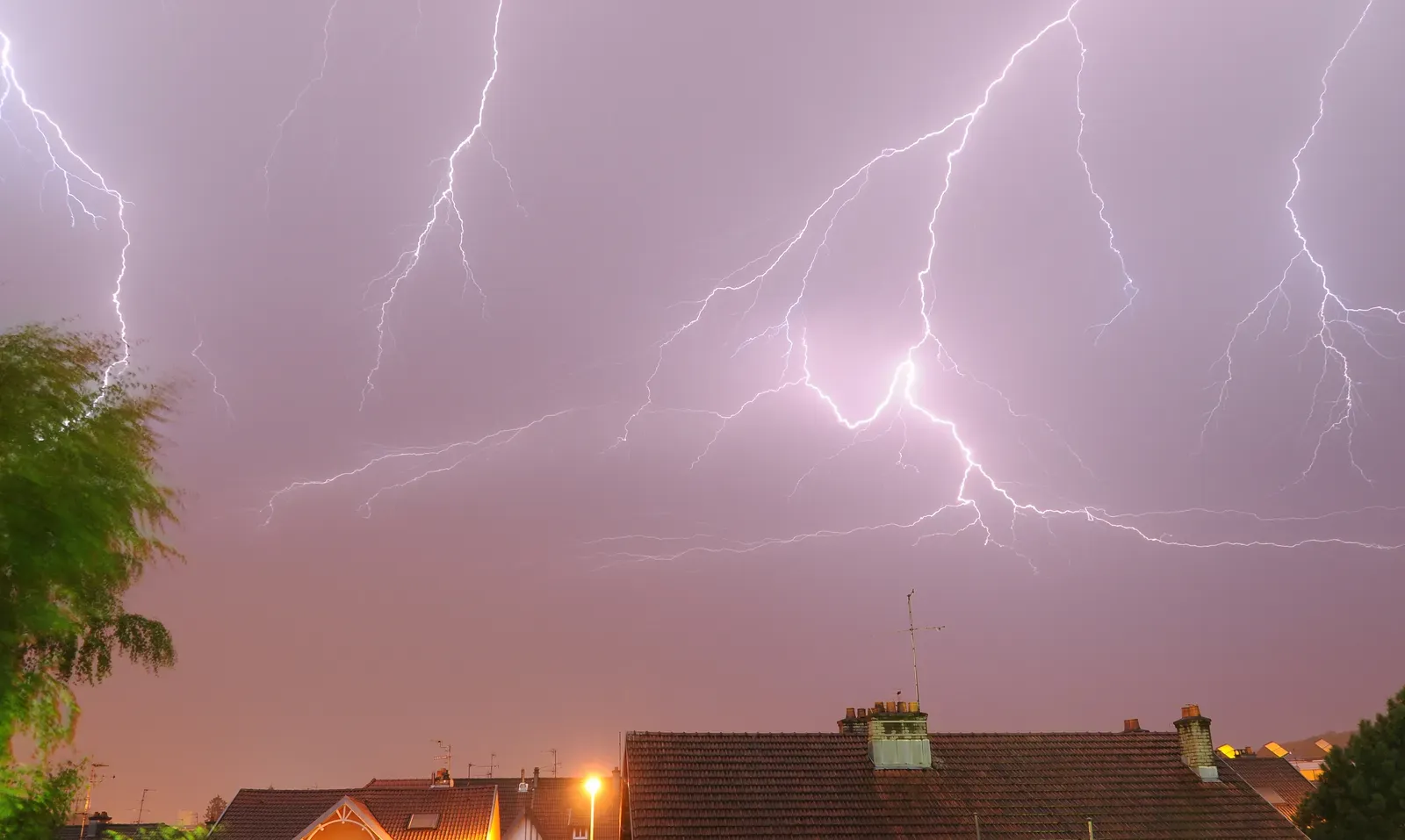
Calling the result pure ozone is a simplification. What lightning leaves behind is a mixture that includes ozone, nitrogen oxides and, after reactions with water, small amounts of nitric acid. Rain carries some of that nitrogen to the ground, where plants can use it.
Lightning is also a meaningful natural source of NOx for the atmosphere. Estimates of the global total vary, but they generally fall in the range of a few million tonnes of nitrogen each year. The uncertainty is large because flashes differ so much in strength and are hard to measure directly.
Downdrafts and the Smell Before the Rain

The scent often arrives before the first drops, sometimes before any lightning is nearby. A common explanation is that a storm’s downdraft pulls ozone rich air from higher altitudes down to the surface. Winds at the leading edge of the storm then spread it across the ground.
That’s one reason the smell can seem to roll in with the cool gust. Another is that rain on dry soil releases a separate earthy scent called petrichor, which comes from plant oils and compounds made by soil bacteria. The two smells overlap, and most people can’t separate them.
Why It Smells and Tastes Metallic

The human nose is very sensitive to ozone. People can detect it at concentrations of roughly ten parts per billion, which is a tiny trace. Many describe the odor as clean, chlorine like or slightly metallic.
Taste and smell are closely linked, so a sharp odor can easily feel like a taste. The metallic impression is a perception, not a sign that metal is floating in the air. Researchers haven’t pinned down exactly why ozone reads as metallic to so many people, so it’s best treated as a common description rather than a settled fact.
Good Ozone, Bad Ozone

High in the stratosphere, ozone absorbs harmful ultraviolet radiation and protects life on the surface. Near the ground, it’s a pollutant. It irritates the airways and can worsen asthma, which is why health agencies set limits on outdoor concentrations.
The United States Environmental Protection Agency’s standard for ground level ozone is seventy parts per billion, averaged over eight hours. Ozone from a passing thunderstorm is brief and usually far less of a concern than smog on a hot, still day. Most ground level ozone in cities comes from vehicle and industrial emissions reacting in sunlight, not from lightning.
What the Smell Tells You
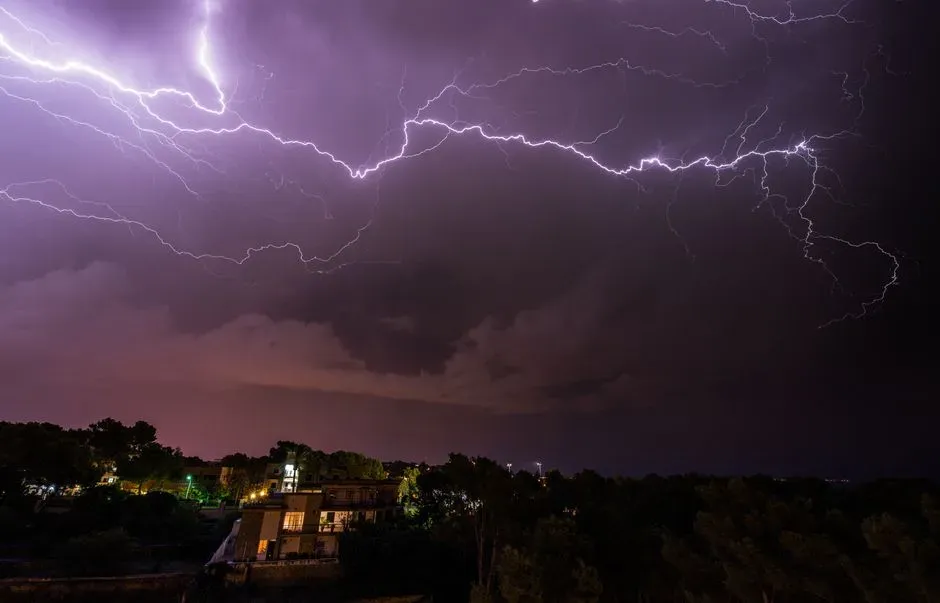
The sharp scent in storm air is real, and ozone is a genuine part of it. Lightning contributes through direct discharge and through the nitrogen chemistry it sets off, while downdrafts bring more from above. The air that results is a blend of gases, not a single clean substance.
So the metallic note you notice is ozone at trace levels, mixed with other storm chemistry and the smell of wet ground. It fades within hours as the gases disperse and react.
