


- 10 Traditional Building Techniques From Hot Climates Architects Are Revisiting - November 10, 2026
- 2026 Atlantic hurricane season winding down? El Niño eases late-season storm threat - November 10, 2026
- Could the Great Pacific Garbage Patch be altering the ocean’s color? - November 10, 2026
Jupiter’s Great Red Spot has been watched through telescopes for well over a century. It’s still the most recognizable storm in the solar system. Yet the storm people picture from old textbooks isn’t quite the one astronomers see now.
Newer observations from 2024 and 2025 have added surprises to a story that already looked settled. The spot is smaller, and it’s also more restless than anyone expected.
A Storm Bigger Than Our Planet
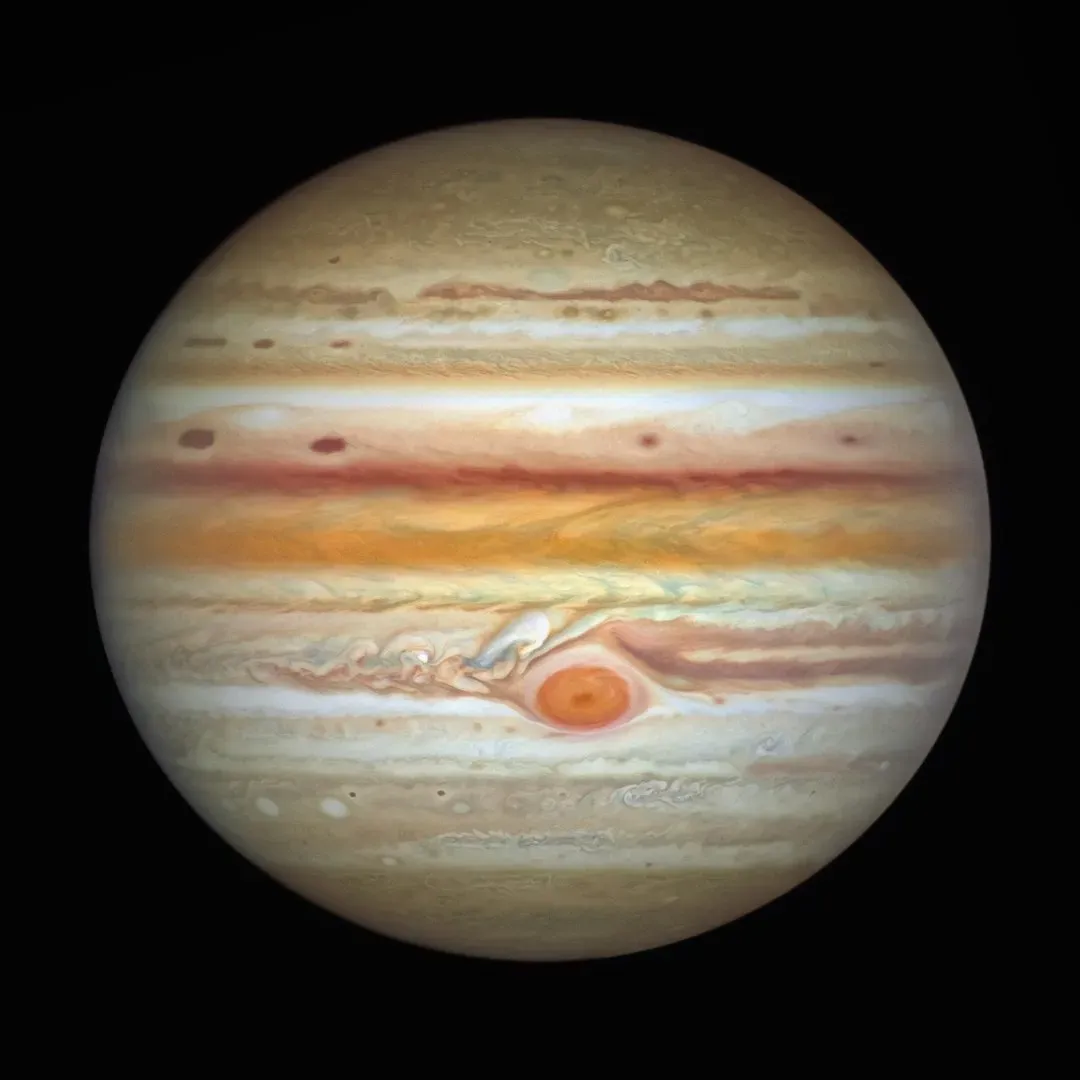
The Great Red Spot is an anticyclone, a swirling high pressure storm in Jupiter’s southern hemisphere. NASA describes it as a swirling anticyclonic storm feature larger than Earth. It’s still a giant, even after all the shrinking.
Its scale was once even more staggering. It was once big enough to swallow three Earths with room to spare, and it has been shrinking for a century and a half.
How Big It Used to Be
Old records give us the starting point. Historic observations as far back as the late 1800s put the storm at as much as 25,500 miles along its long axis. That’s a remarkable figure for a feature measured with early telescopes.
The record has stayed fairly continuous since then. There’s at least one observation of this kind per year going back to 1878. That archive is what lets scientists trace the long decline with some confidence.
The Spacecraft Measurements
Spacecraft added sharper numbers. The Voyager 1 and Voyager 2 flybys in 1979 measured the storm at 14,500 miles across. That was already far below the Victorian-era estimates.
Hubble then took over the monitoring. A 1995 Hubble photo put the long axis at about 13,020 miles, and a 2009 image measured 11,130 miles. The trend was clear and steady.
The Smallest Size Ever Measured
A milestone came with Hubble data from the mid 2010s. The storm was then roughly 10,250 miles across, the smallest diameter ever measured. NASA noted that the loss was speeding up.
The change wasn’t only about size. Amateur observations starting in 2012 showed faster shrinkage, with the storm’s waistline narrowing by about 580 miles per year. Its shape also shifted from an oval toward a circle.
Why Is It Shrinking?
Nobody has a firm answer yet. NASA has said the cause of the shrinking hasn’t been explained. Researchers have offered ideas, though.
One idea involves small eddies. Amy Simon said very small eddies appear to be feeding into the storm. The team suspected these might change the storm’s internal dynamics and energy, and they planned to study that further. Another popular explanation holds that the storm stayed strong by absorbing smaller storms, but that supply may be running out. That one is a hypothesis, not a proven cause.
A Storm That Wobbles
The spot isn’t a static blob. Hubble watched it over 90 days from December 2023 to March 2024, and found it isn’t as stable as it looks. The data show it jiggling like a bowl of gelatin.
The surprise was in the size. Hubble showed the storm squeezing in and out while it moves faster and slower. Researchers said at the time that there were no hydrodynamic explanations for this.
Held in Place by Jet Streams

Two jet streams box the storm in. The Great Red Spot has been held at a southern latitude, trapped between jet streams, for as long as Earth-bound telescopes have watched it. That’s why it doesn’t wander like some other planetary storms.
The oscillation seems tied to this squeeze. Simon explained that it currently overfills its latitude band relative to the wind field, and once it shrinks inside that band the winds will hold it in place. That suggests a more settled future.
Getting Taller as It Shrinks
A newer study complicates the simple shrinking story. The storm seems to have grown in area at least once along the way, and it’s getting taller as it gets smaller. The work was led by Amy Simon and published in the Astronomical Journal.
The team combined old archives with modern data. They used Voyager data from 1979 and yearly Hubble observations from the OPAL project. They also found the storm recently began drifting westward faster than before.
Will It Disappear?
The honest answer is that scientists don’t know. Nobody is sure how long the storm will keep contracting or whether it will vanish altogether. The long record shows decline, but also surprising reversals.
Still, one forecast exists. The Hubble team expects it to keep shrinking before settling into a stable, less elongated shape, and it will probably stabilize in size. They caution that Hubble has only seen one oscillation cycle so far.
