
The Myth of a Silent, Frozen World
The dead planet idea was never entirely wrong. Mars today has a thin, cold atmosphere, no global magnetic field, and no surface liquid water to speak of. That much is still true in 2026, and nobody studying the rover data is claiming otherwise.
What has changed is the depth of the record underneath that quiet surface. New panoramas captured by both rovers in late 2025 and early 2026 reveal that, over billions of years, the Red Planet has undergone several dramatic changes involving water, chemical reactions, and conditions under which simple life could have emerged. That is a very different Mars than the one described in textbooks from twenty years ago.
A Coastline Where Waves Once Broke
One of the more striking findings of early 2026 came from an international team led by Imperial College London. According to a confirmation made in January 2026, the discovery of stratified sandstones with rounded grains indicates that waves from a vast lake eroded and reworked local bedrock around 3.5 billion years ago, depositing sandy layers along the shoreline. In plain terms, Perseverance found what looks like a fossilized beach.
Researchers uncovered that the so called Margin unit in Jezero crater preserves evidence of extensive underground interactions between rock and water, as well as the first definitive traces of an ancient shoreline. The unit mattered scientifically because it is rich in carbonate minerals, which precipitate from liquid water and often trap organic molecules on Earth, making them excellent at preserving potential biosignatures. A crater rim that once looked like ordinary dusty rock turned out to be a shoreline archive.
Rivers Hidden Even Deeper Underground
Jezero’s visible delta was already well known before this discovery cycle. What surprised scientists was what Perseverance’s ground penetrating radar found buried far beneath it. A study relying on 78 traverses of the area from September 2023 to February 2024 used the rover’s radar capabilities to study layers of sediment buried more than 35 meters below ground, nearly twice as deep as it had previously probed, where it registered echoes of even older river carved slopes and sinuous, meandering channels.
These subsurface features formed as early as 4.2 billion years ago, hundreds of millions of years before the water washed terrain that Perseverance has been studying on the surface. That timeline matters because it means Jezero did not have one brief wet episode. It had multiple separate periods of flowing water, stacked on top of each other like sedimentary pages in a very old book.
Boxwork Ridges: A Fossil Record of Flowing Groundwater
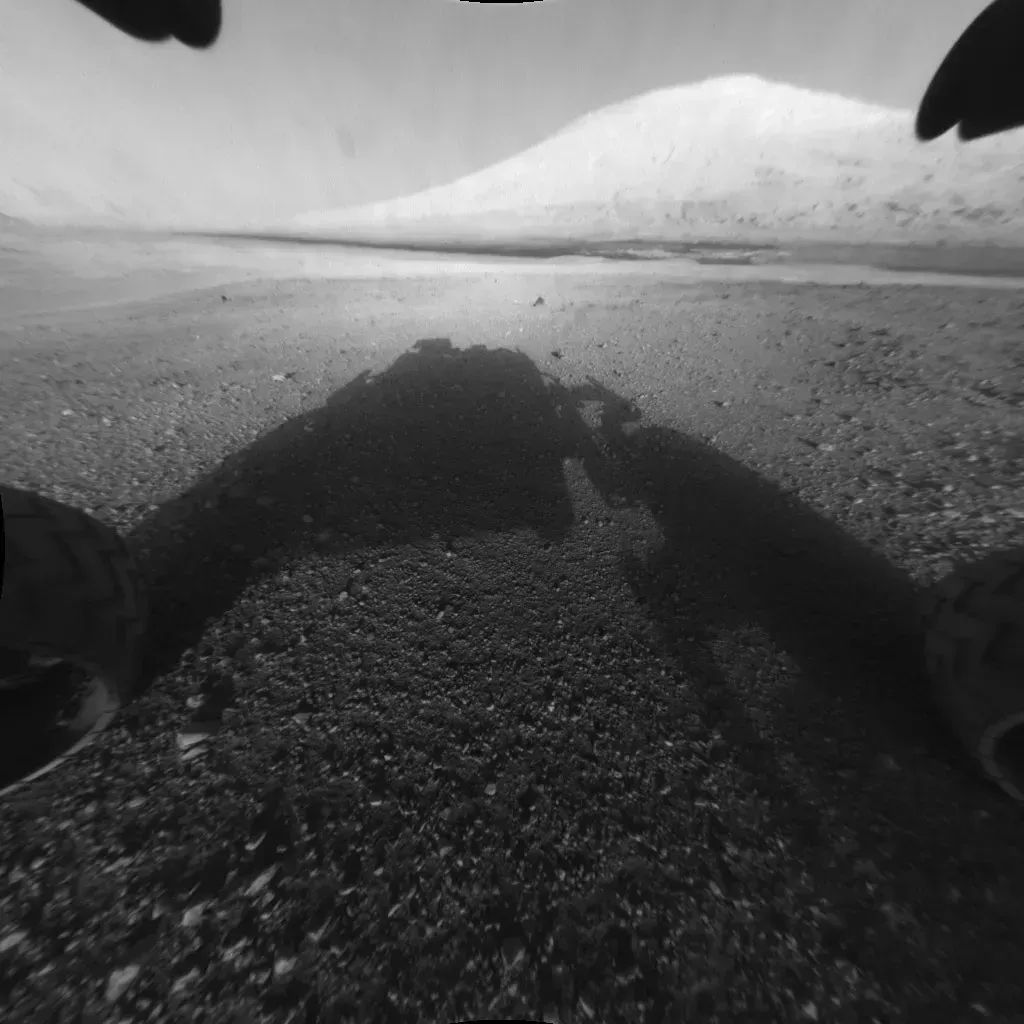
Curiosity, meanwhile, has spent recent months documenting a completely different kind of water signature higher up Mount Sharp. Curiosity’s 360 degree panorama from late 2025 offers a detailed look into a region filled with a vast network of boxwork formations, low ridges created by groundwater that once flowed through large fractures in the bedrock, with minerals left behind hardening the rock along those fractures into erosion resistant ridges. From orbit these formations resemble giant spiderwebs etched into the landscape.
The panorama itself is not a small achievement either. At 1.5 billion pixels, it is one of the largest panoramas Curiosity has ever taken. Alongside the boxwork work, last year Curiosity’s team documented how the mineral siderite might be storing carbon dioxide that once was part of a thicker, early atmosphere, a clue that helps explain how Mars lost the warmer climate it apparently once had.
Cheyava Falls and the Leopard Spot Puzzle
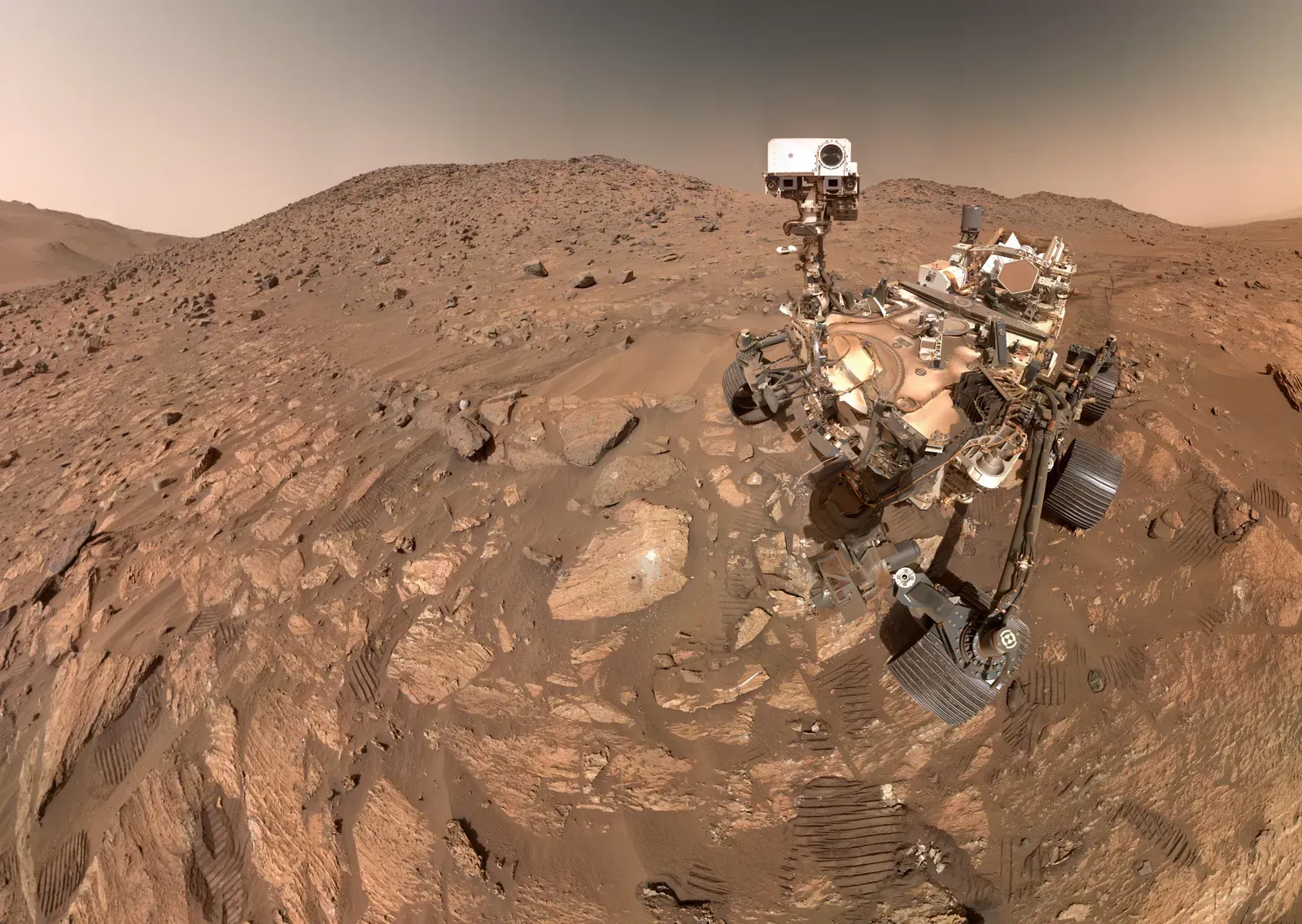
No single rock has generated more debate in the past two years than Cheyava Falls. In July 2024, Perseverance discovered leopard spots on a reddish rock nicknamed Cheyava Falls in Jezero Crater, which has some indications it may have hosted microbial life billions of years ago, though further research is needed. The rock sits in an ancient river channel that once fed the crater’s lake.
Instrument analysis found something specific inside those spots. A fine grained mudstone showed circular reaction fronts informally called leopard spots, with organic carbon mapped alongside phosphate, iron, and sulfur arranged in distinct, repeating patterns. The rock shows rims rich in vivianite surrounding small cores enriched in greigite, a bullseye pattern that matches a sequence of electron transfer reactions seen in some Earth sediments. Scientists have been careful to note that none of this proves metabolism happened in that mud, but it shows the chemistry is right for it, a subtle point that keeps the language deliberately cautious. A follow up paper released in June 2026 compared the spots to nearby rock but still could not settle whether the origin is biological.
Organic Chemistry Growing More Complex by the Year
While Perseverance was chasing leopard spots, Curiosity kept finding increasingly complicated carbon chemistry across the crater floor. NASA’s Curiosity rover has detected the heaviest organic molecules ever found on another planet, complex carbon chains containing up to 12 atoms, in ancient Martian rock. Those molecules, decane, undecane, and dodecane, are the kind of long hydrocarbons more often associated with petroleum here on Earth.
The chemistry story deepened further in 2026. Curiosity has uncovered the most diverse set of organic molecules ever detected on Mars, including several compounds never before identified on the planet, from a rock sample collected in 2020 in an area shaped by lakes and streams billions of years ago, with an advanced chemical technique identifying 21 carbon based molecules preserved in clay rich sedimentary rocks, including seven never previously seen on Mars. An astrobiologist not involved in the study cautioned that the compounds themselves are not strong proof of life, since similar molecules can form through non biological processes in meteorites, but stressed that the way they were preserved for billions of years despite radiation is the genuinely notable part.
Methane That Rises and Falls With the Seasons
Mars’ atmosphere has its own long running mystery, and it has nothing to do with rock chemistry. Curiosity has found new evidence in the Martian atmosphere related to the search for current life, with seasonal variations in the levels of methane appearing alongside tough organic molecules found in three billion year old sedimentary rocks. Methane can be produced by geology alone, but it can also be produced by microbes, which is exactly why the pattern keeps drawing attention.
The seasonal rhythm itself is well documented at this point. Curiosity has found evidence that methane in Mars’ thin atmosphere varies during the year, with higher concentrations appearing in late summer and early autumn in the northern hemisphere and lower concentrations in winter and spring. Nobody has definitively explained why the gas behaves this way, which keeps it one of the more nagging open questions in current Mars science.
A Green Glow Above Jezero Crater
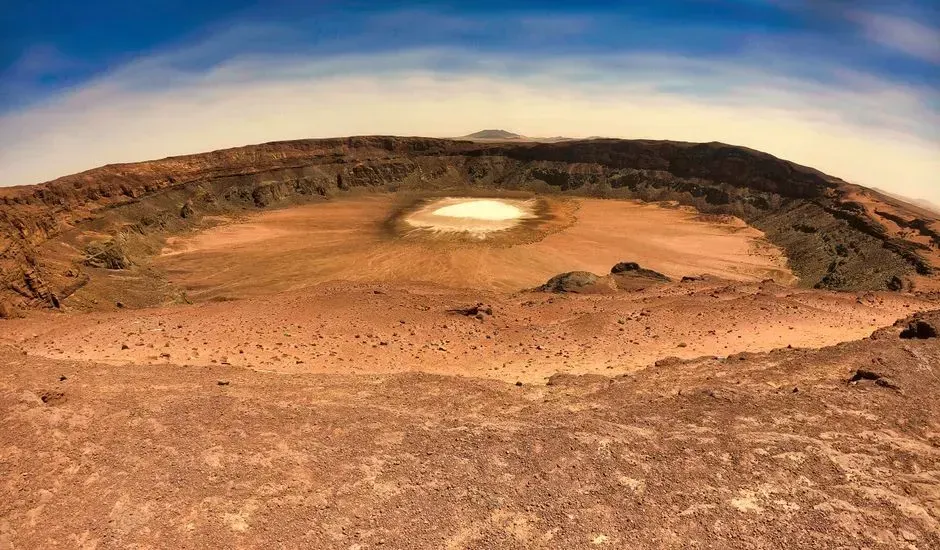
In March 2024, Mars offered up a sight nobody had documented before from ground level. On March 15, 2024, near the peak of the current solar cycle, the Sun produced a solar flare and an accompanying coronal mass ejection that carried large amounts of solar energetic particles toward Mars. Perseverance witnessed the resulting light show on March 18, 2024, the first aurora seen from the surface of a planet other than Earth.
The image itself is not dramatic by Earthly standards, but the science behind it is. The moonlit Martian night sky, lit up mostly by Mars’ larger moon Phobos, has a reddish brown hue due to dust in the atmosphere, so when green auroral light is added, the sky takes on a green yellow tone. These observations show that forecasting of northern and southern lights is now possible at Mars, allowing scientists to study space weather in a way that was previously limited to orbital instruments alone.
Sulfur Crystals, Dust Devils, and Other Atmospheric Surprises
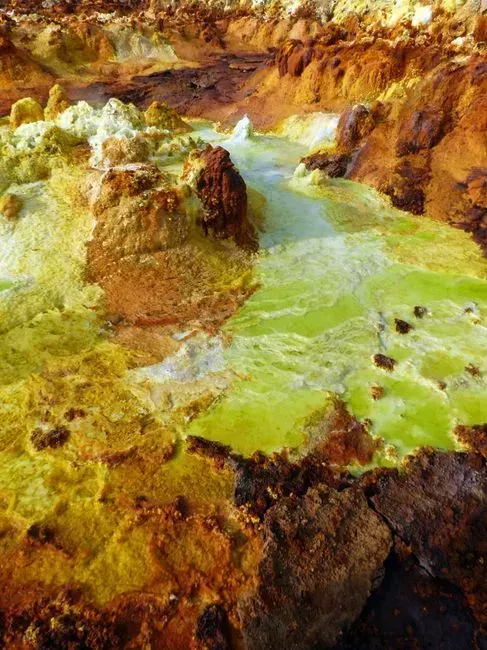
Mars keeps producing small oddities that do not fit neatly into any tidy narrative. Curiosity rolled over a field of rocks in Gediz Vallis that cracked open to reveal pure yellow sulfur crystals, a mineral that on Earth is closely tied to the energy cycles of certain microorganisms and was not expected to appear in that form on the Martian surface at all. Moments like this, when Mars surprises researchers, are described by mission scientists as exactly what makes planetary exploration compelling.
Perseverance has added its own set of firsts through its onboard microphones and cameras. This past fall, mission scientists shared the first recordings of electrical sparks in passing dust devils, a phenomenon that had only been theorized before Perseverance’s microphones caught them, while a separate study detailed how one of Perseverance’s sensitive cameras was able to capture the first visible light auroras from the surface of another planet. Taken together, these small atmospheric discoveries paint Mars as a place with active, sometimes electric weather rather than a static backdrop.
Samples Packed and Waiting for a Ride Home
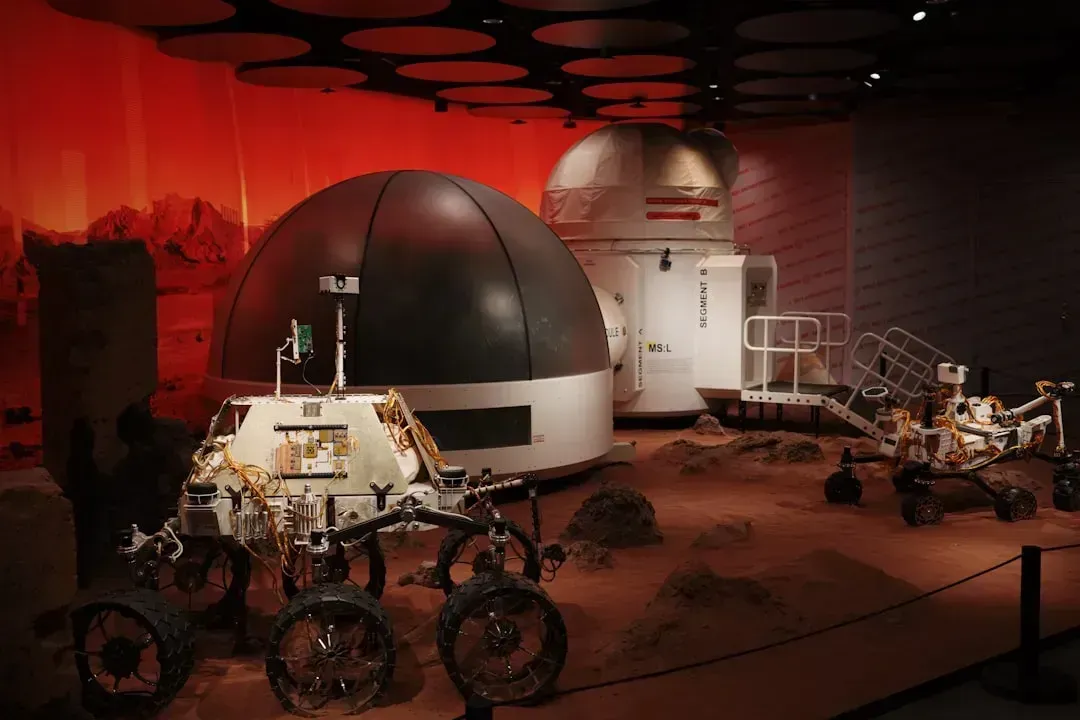
All of this fieldwork is building toward a goal neither rover can finish alone. There are currently 27 filled titanium tubes aboard Perseverance, with 13 slots still available, each one sealed with rock, regolith, or atmosphere collected from a specific, carefully chosen spot in Jezero Crater. As of July 2025, 33 of 43 sample tubes had been filled, including igneous rock samples, sedimentary rock samples, a serpentinite sample, and an atmosphere sample.
Getting those tubes to Earth has turned out to be its own saga. After a project review critical of its cost and complexity, NASA announced that the Mars Sample Return project was paused as of November 2025. The rocks themselves are not going anywhere, sealed inside a rover that keeps driving and drilling regardless of what happens with the return mission’s budget on Earth.

