
There’s a certain kind of weather memory that only people of a certain age carry. It’s not just a recollection of cold winters or summer storms. It’s the visceral, pre-smartphone kind of memory where warning meant a neighbor knocking on the door, not a push notification on your wrist. Before Doppler radar became a household word and before the Weather Channel launched in 1982, the relationship between Americans and extreme weather was deeply personal and often terrifyingly immediate.
The decades between the 1940s and the late 1970s produced some of the most consequential weather events in recorded U.S. history. Some of the most memorable weather is almost always disastrous – the freakish cold, the violent wind, and the devastating dry. If any of the following events live in your memory, either as something you witnessed or something your parents talked about at the dinner table with that quiet, faraway look, there’s a good chance you were born well before the Reagan years.
1. Hurricane Camille (1969): The Storm That Destroyed Its Own Records
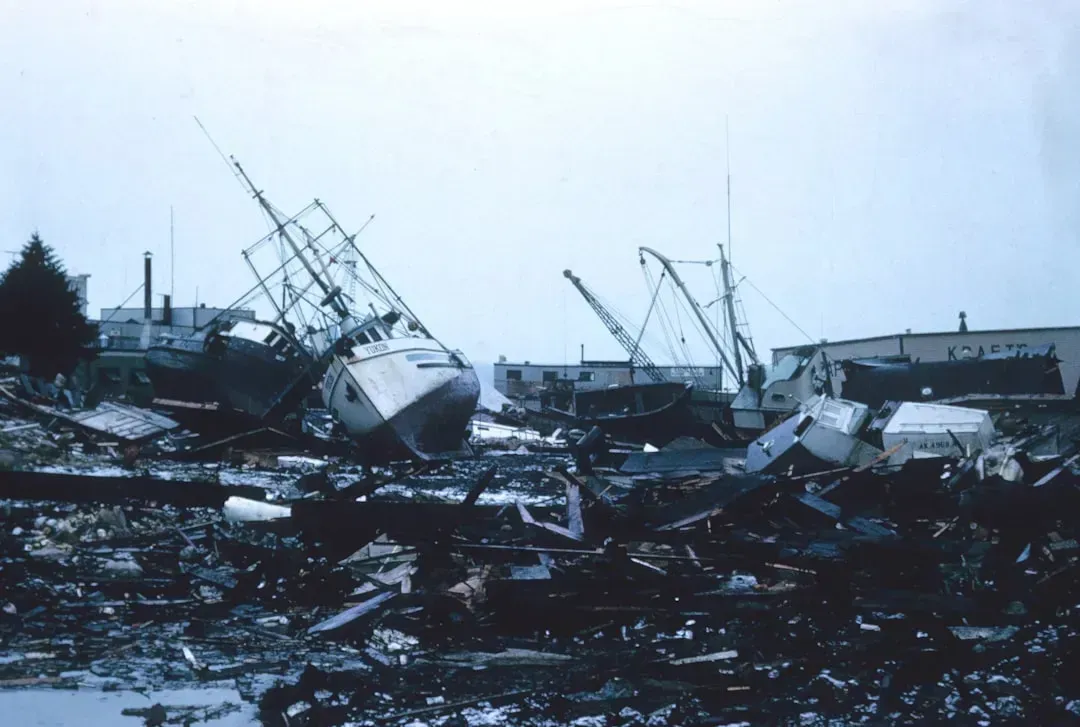
Hurricane Camille was one of the most powerful hurricanes to make landfall in the United States when it hit southern Mississippi in August 1969. It was one of only four Atlantic hurricanes to strike the United States as a Category 5 on the Saffir-Simpson scale, the highest category corresponding to maximum sustained winds of at least 157 mph. The fury was so extreme that the maximum sustained winds of Camille remain unknown, as the powerful winds destroyed all wind-recording instruments in the landfall area.
Ranked as the second most intense hurricane to strike the U.S., Camille averaged landfall and coastal wind intensity of 150 knots, or 175 miles per hour, with a devastating storm surge of about 25 feet. The destruction didn’t stop at the coast. While the heaviest rainfall in Mississippi and Alabama measured about 10 inches, Camille produced rainfall amounts of 1 to 2 feet over Virginia, with local amounts exceeding 30 inches. Most of this rain occurred during just 3 to 5 hours, causing catastrophic flash flooding throughout the Appalachians. The rainfall, winds, and storm surge from Camille caused 256 deaths across several states, with 143 on the Gulf Coast and another 113 as a direct result of the Virginia floods.
2. Hurricane Agnes (1972): A Quiet Storm with a Devastating Punch
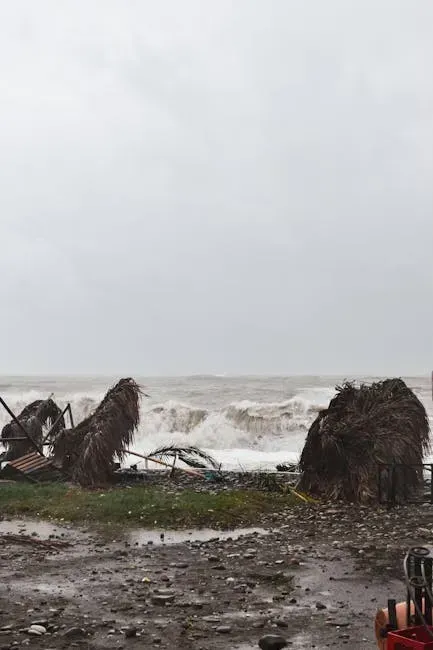
When Agnes made landfall on June 19, it was a Category 1 storm with maximum sustained wind speeds of 85 miles per hour, making it a relatively weak hurricane. However, winds are hardly the only hazard that tropical cyclones like Agnes bring to the table. The storm’s real destruction came from flooding far inland. Agnes combined with a non-tropical low to produce widespread rains of 6 to 12 inches, with local amounts of 14 to 19 inches. These rains produced widespread severe flooding from Virginia northward to New York, with other flooding occurring over the western portions of the Carolinas.
Agnes caused 122 deaths in the United States, with nine of those in Florida mainly from severe thunderstorms, while the remainder were associated with flooding. The storm was responsible for $2.1 billion in damage in the United States, the vast majority of which came from the flooding. The impact from Agnes lingers uniquely in the memories of many in the Northeast and mid-Atlantic, especially those who live around the Susquehanna River Valley, for whom Agnes remains the most devastating storm they have ever seen.
3. The 1974 Super Outbreak: 148 Tornadoes in a Single Day
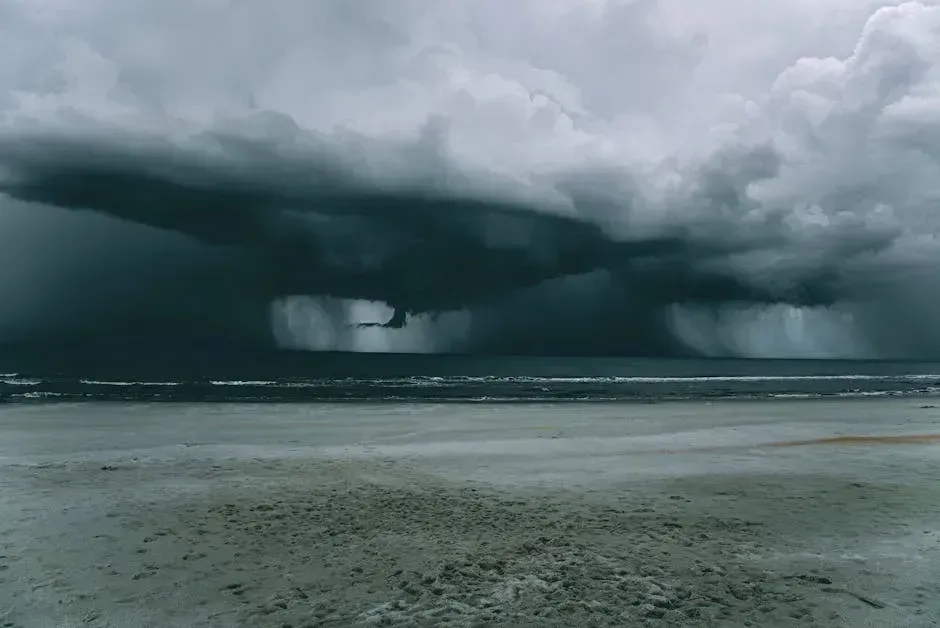
Infamously known as the 1974 Super Outbreak, which lasted from April 3 to 4, 1974, the outbreak was the first on record to produce more than 100 tornadoes in a 24-hour period. The onslaught resulted in the loss of 335 lives and $600 million in damages. It was also the most violent tornado outbreak ever recorded, with 30 violent F4 or F5 rated tornadoes confirmed. At one particularly terrifying moment, as many as 15 separate tornadoes were occurring simultaneously.
From Illinois to North Carolina and from Michigan to Mississippi, tornadoes and severe thunderstorms killed 335 people and injured over 6,000. Over 15,000 homes, businesses, and farm buildings were destroyed and another 17,000 buildings were damaged. The super outbreak changed the way both the National Weather Service and TV broadcasters delivered warnings, according to NOAA. For a generation of Americans living across the Midwest and South, the memory of that April night never entirely faded.
4. The Brutal Winters of the Late 1970s
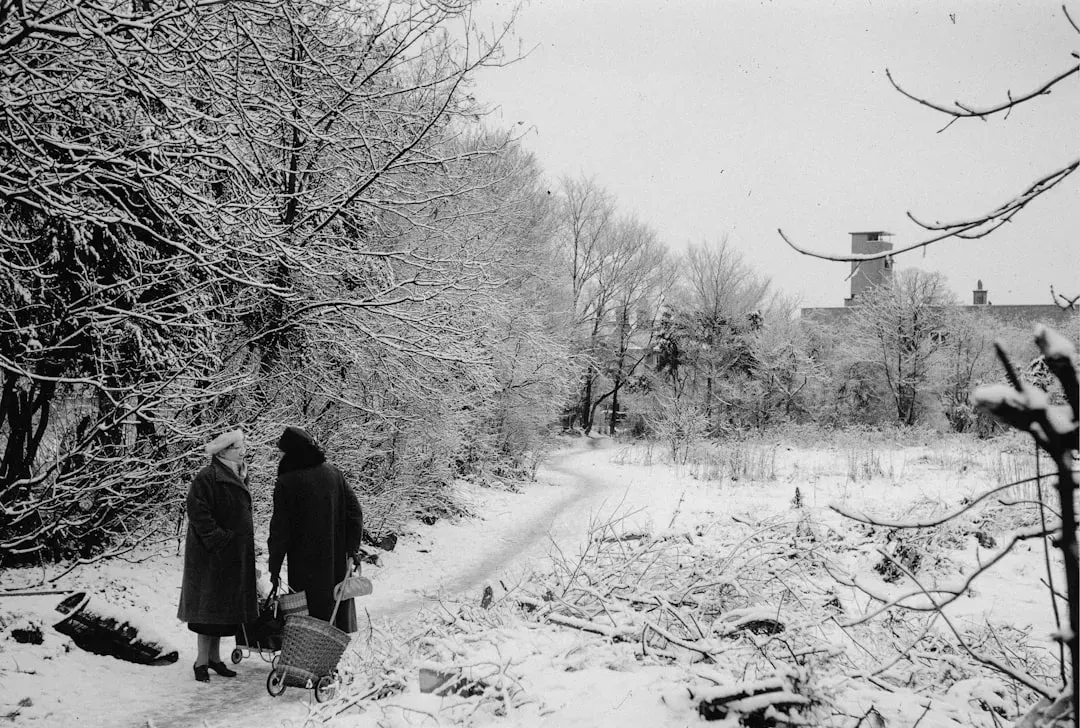
The nation was buffeted with major weather events in the 1970s. On April 3, 1974, a super outbreak of tornadoes swept the eastern United States. The winters of 1976 to 1977, 1977 to 1978, and 1978 to 1979 were brutal for most of the eastern United States. These back-to-back winters weren’t just cold snaps. They were sustained, grinding sieges of snow and ice that disrupted entire regions for months at a time, straining infrastructure that simply wasn’t built to cope with three successive record-setting seasons.
The later 1970s also saw a public shift toward wishing for real meteorologists. Weather forecasting on television was still primitive by modern standards. The advent of radar and satellite gave meteorology a visual component, although the primitive versions were not television-friendly at first. Graphics used for weather forecasts were as sophisticated as a physical board where one could draw highs, lows, fronts, and whatever else they wanted to add onto it. Children growing up in those winters learned to read the sky the old-fashioned way, by watching their parents look out the window and listen to AM radio.
5. Hurricane Betsy (1965): The Storm That Reshaped New Orleans
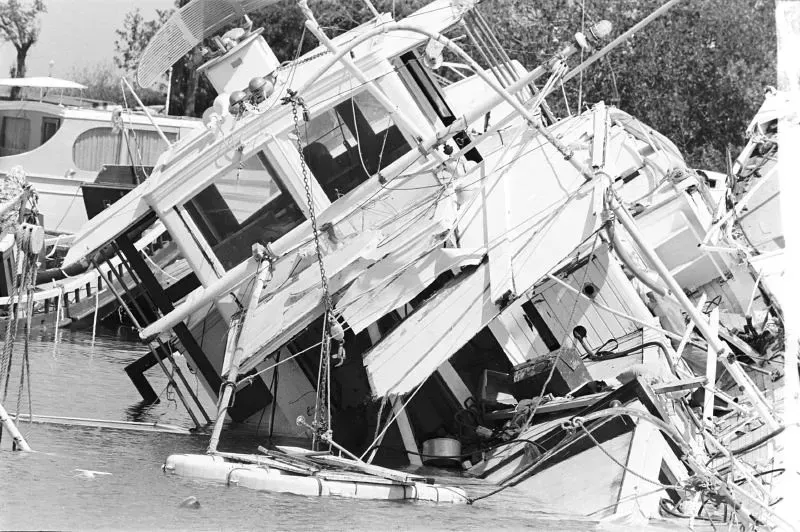
Betsy made a complete loop some 350 miles east of St. Augustine, Florida, and was now heading south toward the Grand Bahamas. On September 7th, Betsy began to move due west and crossed extreme south Florida and the Florida Keys as a Category 3 hurricane. It then accelerated to the northwest and moved into Barataria Bay on the evening of the 9th, placing New Orleans on the worst side of the storm and sending the storm surge up the Mississippi River and into Lake Pontchartrain.
The flooding of New Orleans in 1965 was a grim preview of what the city’s levee vulnerabilities could mean. Hurricane Camille, along with other massive disasters of the 1960s and 1970s, including Hurricanes Carla, Betsy, and Agnes, led to President Jimmy Carter’s 1979 Executive Order 12127 that merged many separate disaster-related organizations into the Federal Emergency Management Agency. For many Gulf Coast families, Betsy was the storm they measured all others against, at least until Camille arrived four years later.
6. Hurricane Diane (1955): When a Weakened Storm Still Killed Hundreds
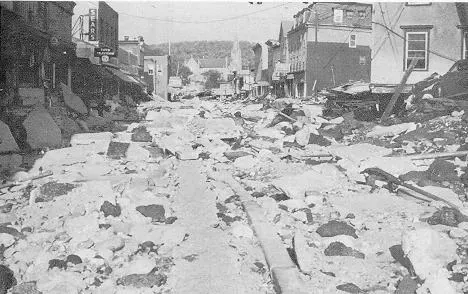
In 1955, Hurricane Diane flooded the Northeast, resulting in 187 deaths. Diane had already weakened significantly after landfall in the Carolinas, which led many residents to let their guard down. Then the remnants moved north, combining with existing moisture and producing catastrophic flooding across Pennsylvania, New Jersey, and New York that no one had adequately prepared for. Rivers that had never flooded in living memory rose well above their banks within hours.
Diane’s death toll ultimately made it one of the deadliest weather events in Northeastern U.S. history at the time. The storm reinforced a hard lesson: a weakened tropical system can still carry enormous amounts of water, and the most dangerous part of a hurricane is often not the wind. The inland destruction caused by these mid-century storms resulted in a rethinking of the planning for natural disasters. Until that time, coastal communities were presumed to be at the greatest risk from hurricanes, but these events proved otherwise.
7. The Great Blizzards and Ice Storms of the 1950s and 1960s
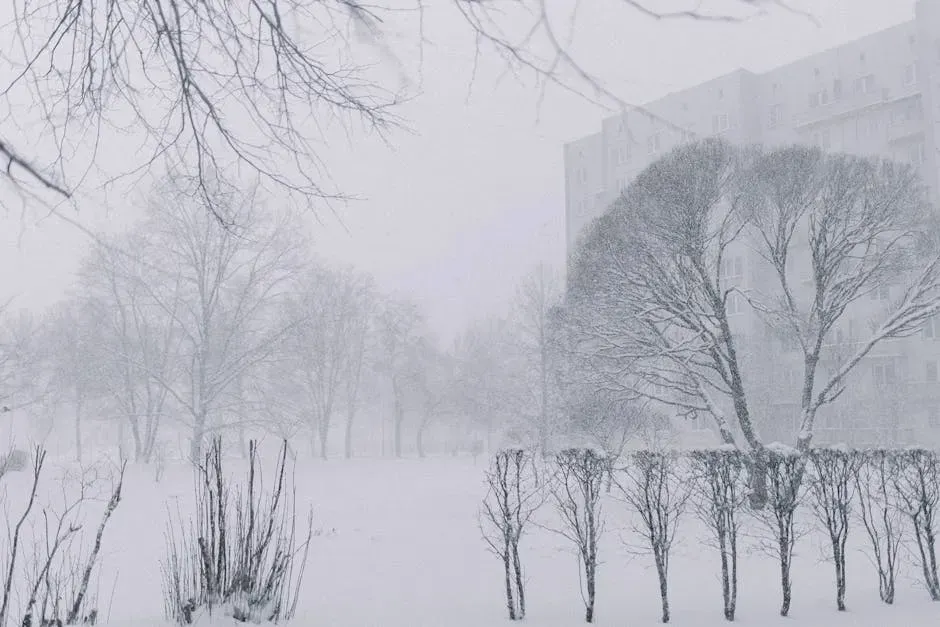
Before the era of widespread road salting fleets, interstate highway systems, and centralized emergency management, a serious ice storm or blizzard could functionally cut off entire towns for days at a time. Communities across the Midwest, Northeast, and Appalachia routinely dealt with conditions in the 1950s and 1960s that today would trigger multi-state emergency declarations within hours. The difference wasn’t that the weather was worse. It’s that the support systems were thinner.
With the development of computer technology during the 1950s, the way was paved for the formulation of complex mathematical weather models to aid meteorologists in forecasting. The first operational use of these computer models during the 1950s resulted in a significant increase in forecast accuracy. Still, that technology was nowhere near reaching ordinary households. If you grew up in this era, you remember listening to static-filled AM radio for school cancellations and neighbors checking on each other because that’s simply what people did when a serious storm rolled in.

- Crows Remembering Human Faces for Decades – 6 Bird Behaviors Far Smarter Than We Knew - November 15, 2026
- 8 Things Astronauts Do on Their First Day in Orbit That Rookies Find Strange - November 15, 2026
- 11 Everyday Routines That Are Completely Normal on the Space Station but Baffle Everyone on Earth - November 15, 2026
