

- The Planet Where It Rains Liquid Glass – 7 Alien Worlds Defying Known Physics - November 14, 2026
- Stars Consuming Entire Worlds – 6 Planetary Systems Swallowing Their Own Worlds - November 14, 2026
- The Ground Liquefies Like Water – 6 Silent Fault Lines Geologists Watch Closely - November 14, 2026
On a clear night, the sky above you looks quiet. Familiar constellations, a scattering of stars, maybe the faint smear of the Milky Way if you’re far enough from city lights. It’s easy to feel like you’re looking at something stable, well-understood, almost domesticated by science. The reality is considerably stranger.
In just the past two years, astronomers have overturned decades-old assumptions about dark energy, galaxy formation, the contents of our solar system, and the very structure of space. These aren’t incremental tweaks to existing models. Some of them genuinely challenge how we think the universe works. Here are ten discoveries that deserve a permanent place in how you picture everything above your head.
1. The Most Distant Galaxy Ever Seen, and It Shouldn’t Exist
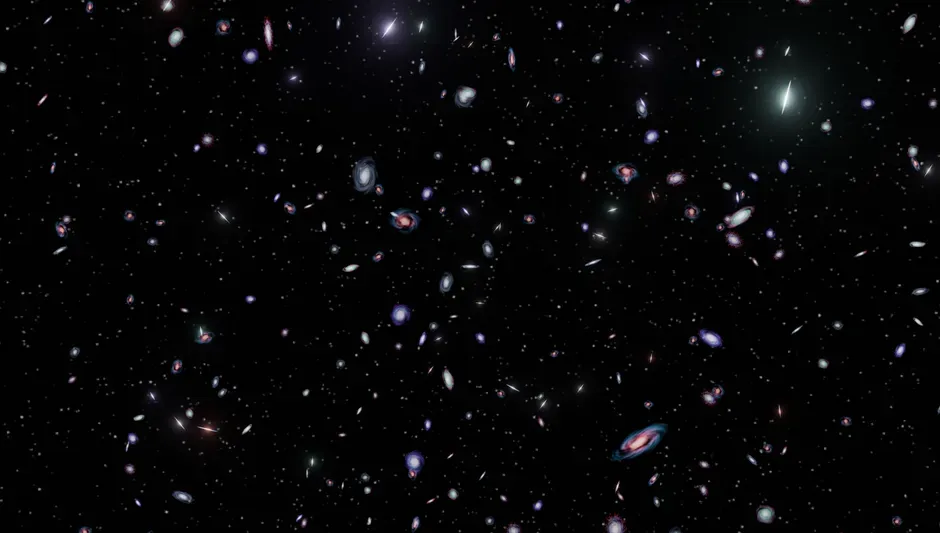
The James Webb Space Telescope spotted the most distant galaxy ever detected, named MoM-z14, offering a rare glimpse into the universe just 280 million years after the Big Bang. Its light has traveled about 13.5 billion years to reach Earth, making it the farthest and one of the earliest known galaxies ever observed. The problem isn’t just its distance. It’s its size and brightness.
Webb uncovered some extremely massive galaxies, as massive as our Milky Way today and beyond, that formed in the first 700 million years of cosmic history. Current galaxy formation models can’t explain these objects; they are too big and formed too early. Cosmologists are still debating whether the models can be bent to fit, or whether we have to reconsider the nature of dark matter and how it gives rise to early collapsing objects.
2. Dark Energy May Be Weakening – and the Universe’s Fate Could Be Different Than We Thought
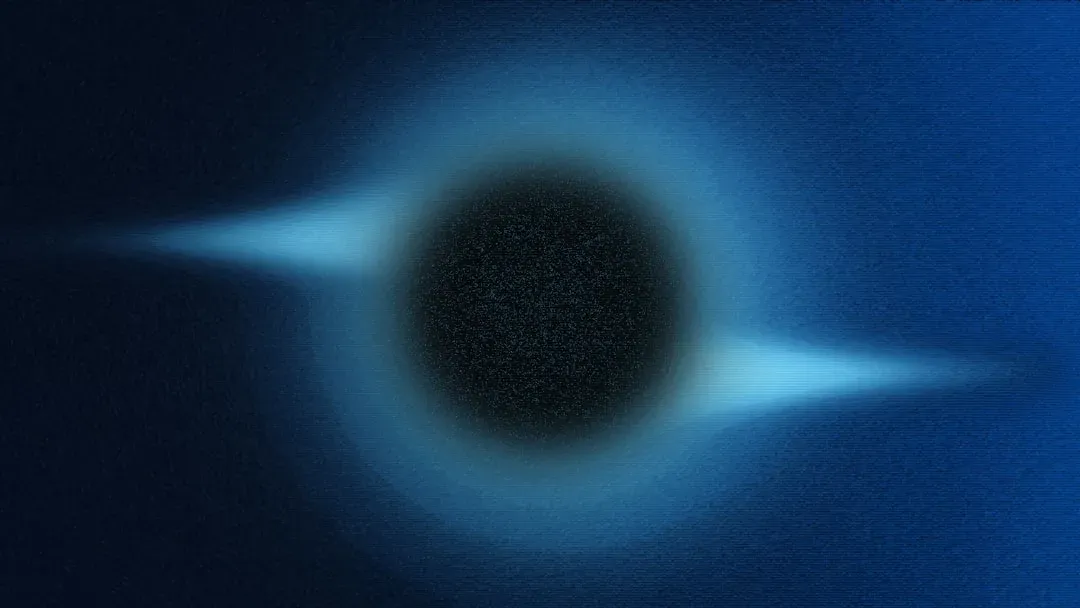
The Dark Energy Spectroscopic Instrument (DESI) used the largest 3D map of the universe ever made to track dark energy’s influence over the past 11 billion years. Researchers see hints that dark energy, widely thought to be a “cosmological constant,” might be evolving over time in unexpected ways. This is the kind of finding that rewrites textbooks, if it holds up.
Researchers found that when combining DESI observations with other measurements of light across the universe, such as exploding stars, the gravity-warped light of distant galaxies, and the light leftover from the dawn of the universe, the data shows that dark energy’s impact could be weakening over time. If this continues, dark energy will eventually not be the dominant force in the universe, meaning expansion could stop accelerating and in some models could even reverse, though these outcomes are billions and billions of years away.
3. An Interstellar Comet Visited Our Solar System From Another Star
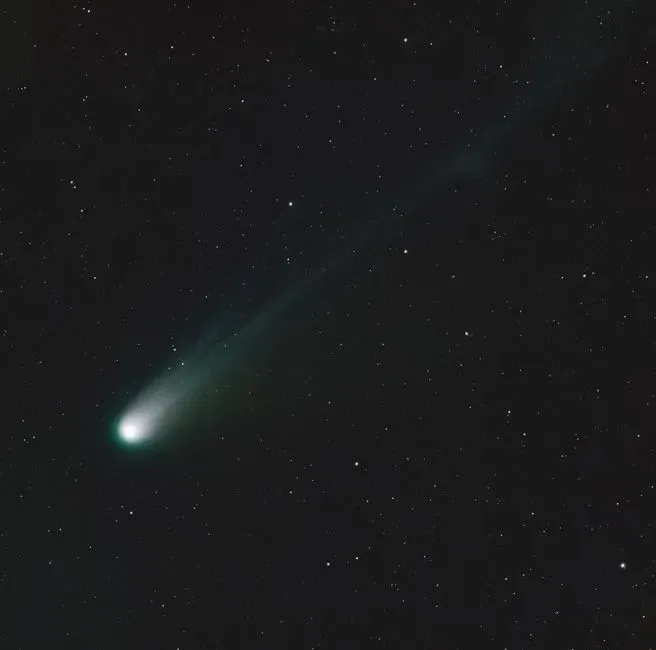
Comet 3I/ATLAS was discovered by the NASA-funded ATLAS survey telescope in Rio Hurtado, Chile, and reported to the Minor Planet Center on July 1, 2025. It is only the third known object to pass through our solar system from outside it. What makes this one especially compelling is where it came from and what it might be carrying.
3I/ATLAS formed in another star system and was somehow ejected into interstellar space. For millions or even billions of years, it drifted until it arrived at our solar system. 3I/ATLAS is scientifically important because its differences from the comets in our solar system may provide insight into the composition of other solar systems. In a very real sense, we had a sample from another star pass right through our cosmic backyard.
4. The Closest Black Hole to Earth Was Hiding in Plain Sight
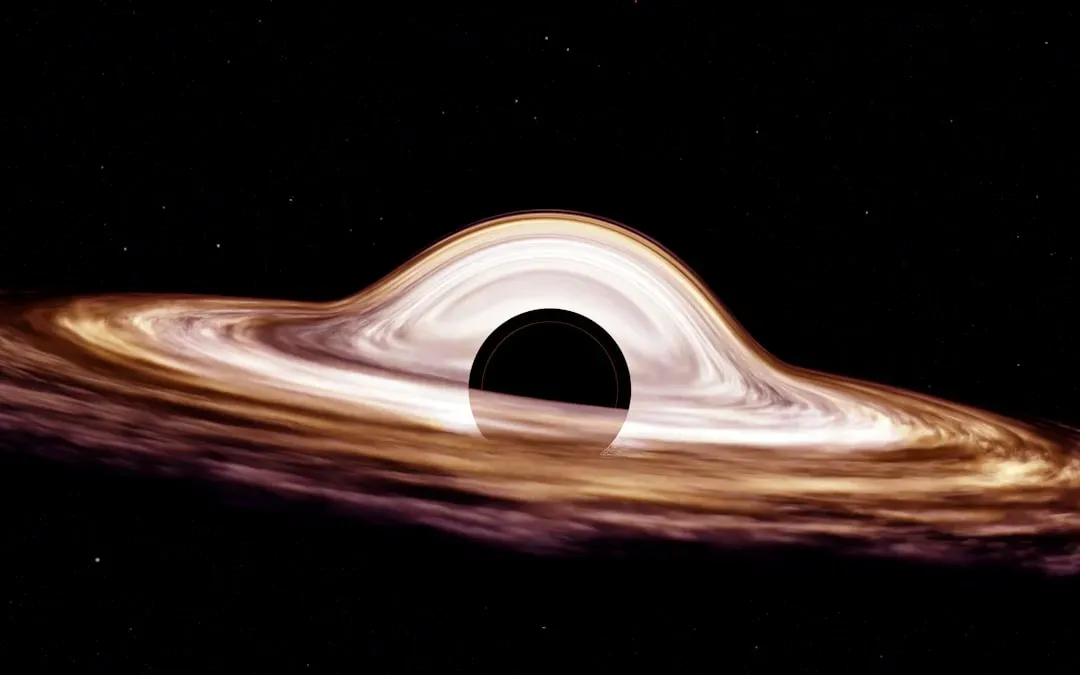
Among the discoveries enabled by the Gaia satellite is Gaia BH3, the heaviest-known stellar-mass black hole in our galaxy. Stellar-mass black holes are left when a massive star ends its life as a supernova. They range from a few to about 100 times the mass of our Sun. What surprised astronomers wasn’t just its mass, but its location.
Since Cygnus X-1’s discovery as the first stellar-mass black hole, it had reigned supreme as the Milky Way’s heaviest, at 21 solar masses. Now it’s been outdone by a dark, dormant black hole nearly four times closer to Earth. Gaia BH3 is in a binary system with a star just 1,926 light-years away. Astronomers spotted it in preliminary Gaia data originally meant to be released in 2026, but the find was so exciting they published it early.
5. A Galaxy in the Early Universe That Doesn’t Spin
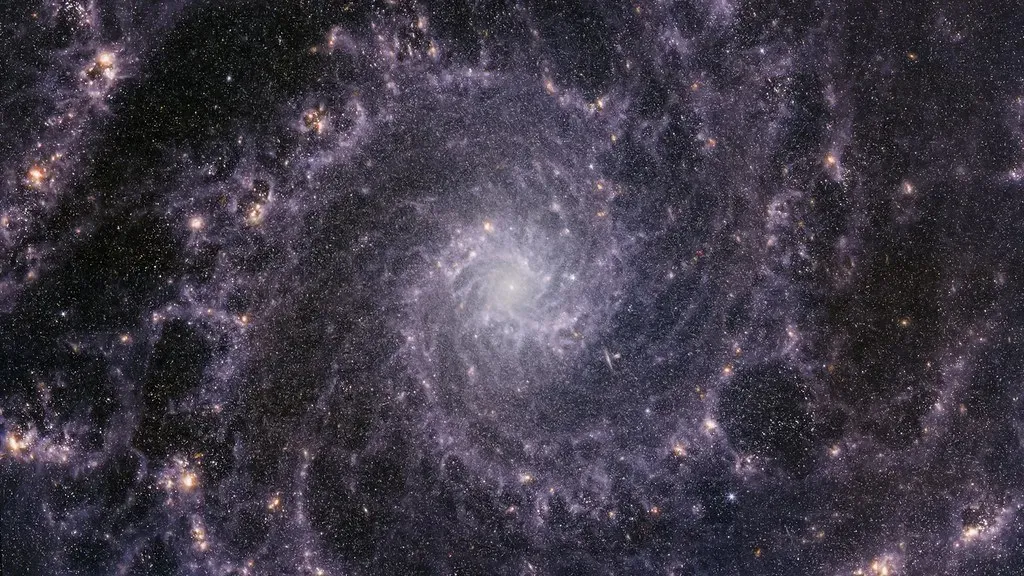
Astronomers using the James Webb Space Telescope spotted something that shouldn’t exist, at least not so early in the universe: a massive galaxy formed less than 2 billion years after the Big Bang. The surprise wasn’t its age alone. Galaxies are expected to rotate. This one doesn’t, at least not in any meaningful way that fits current models.
Webb confirmed an actively growing supermassive black hole within a galaxy just 570 million years after the Big Bang. This represents a vital piece of a puzzle that challenges existing theories about the formation of galaxies and black holes in the early universe. Every new glimpse of these ancient structures reveals that the early cosmos was building things far faster and in far stranger ways than our models predicted.
6. Webb Found a Planet Orbiting the Star Closest to Our Sun
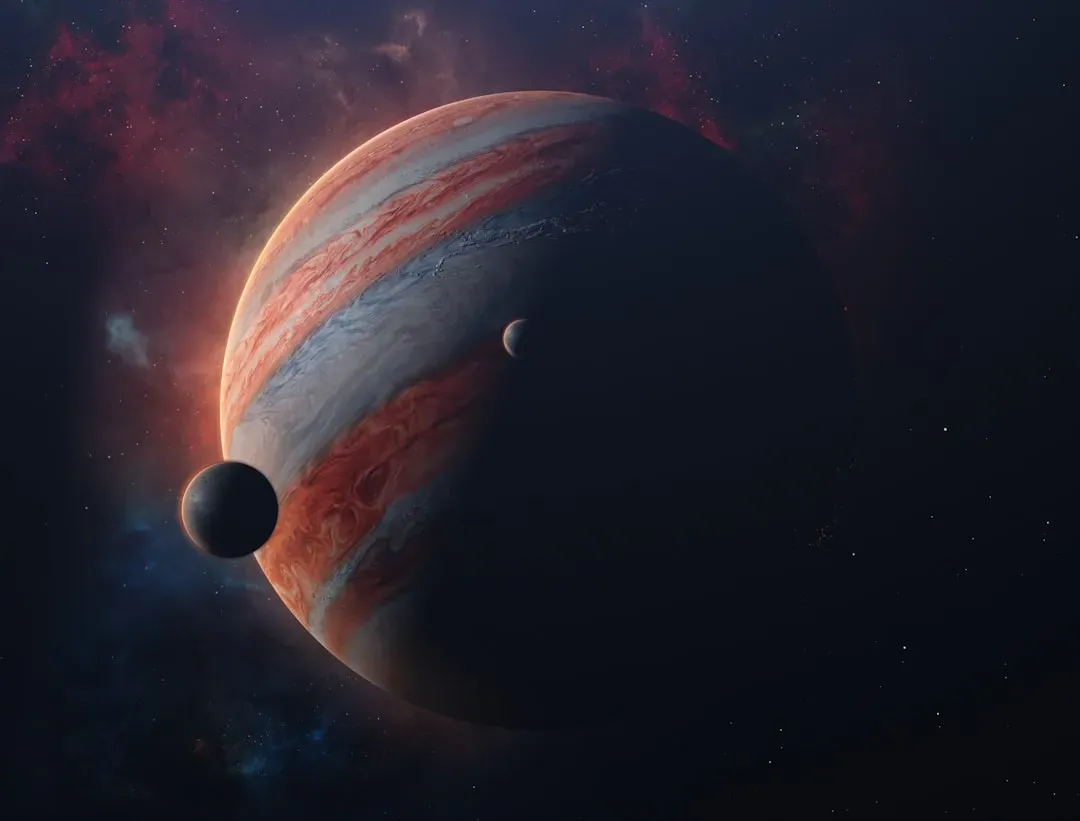
Astronomers using the James Webb Space Telescope found strong evidence of a giant planet orbiting a star in the stellar system closest to our own Sun. Specifically, this refers to the Alpha Centauri system, our nearest stellar neighbor. The idea that a planet may exist there, just over four light-years away, shifts the conversation about nearby worlds dramatically.
New observations that astronomers helped make with the James Webb Space Telescope solidify previous hints of a giant planet orbiting the Sun’s closest neighbor. If confirmed, this would mean that potentially planet-bearing star systems surround us more closely than we ever imagined. The nearest stars are no longer just points of light. They’re candidate planetary systems.
7. “Little Red Dots” Are Rewriting the Story of Early Galaxies
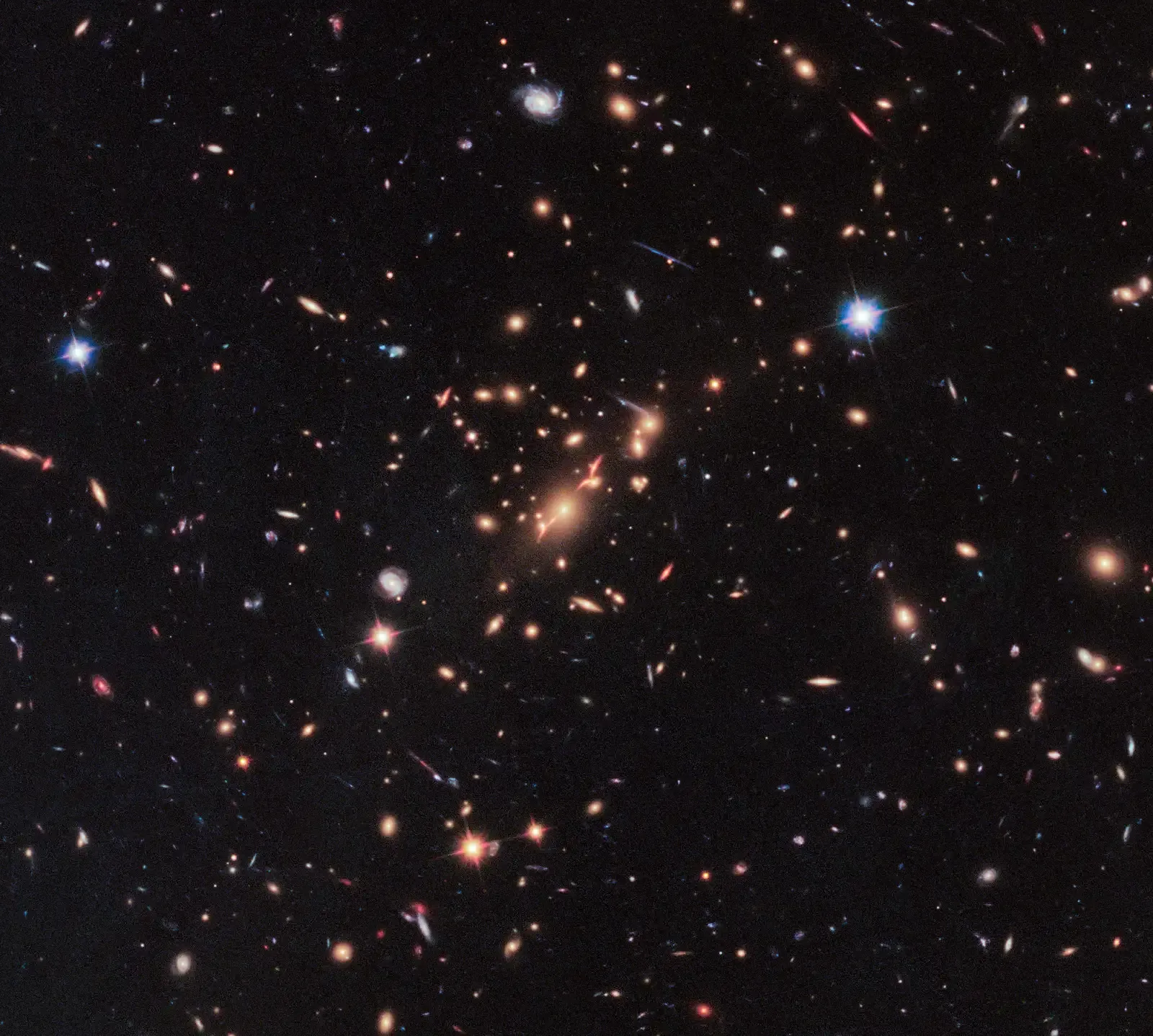
When the James Webb Space Telescope began taking deep images of the cosmos in 2022, it quickly started finding “little red dots” in the background. Astronomers didn’t know what they were. At first they thought the dots could be dwarf galaxies or dense star clusters in the very early universe, but they were so luminous that the standard model of cosmology couldn’t explain how they could have formed.
Webb confirmed that at least some of these dots contain actively growing supermassive black holes, packed into galaxies that existed just hundreds of millions of years after the Big Bang, representing a vital piece of a puzzle that challenges existing theories. Webb has also uncovered far more faint galaxies than anticipated, and these galaxies are emitting over four times the energetic photons that scientists expected. The early universe was not the quiet, slowly evolving place we assumed.
8. The Largest Known Structure in the Universe Was Just Mapped
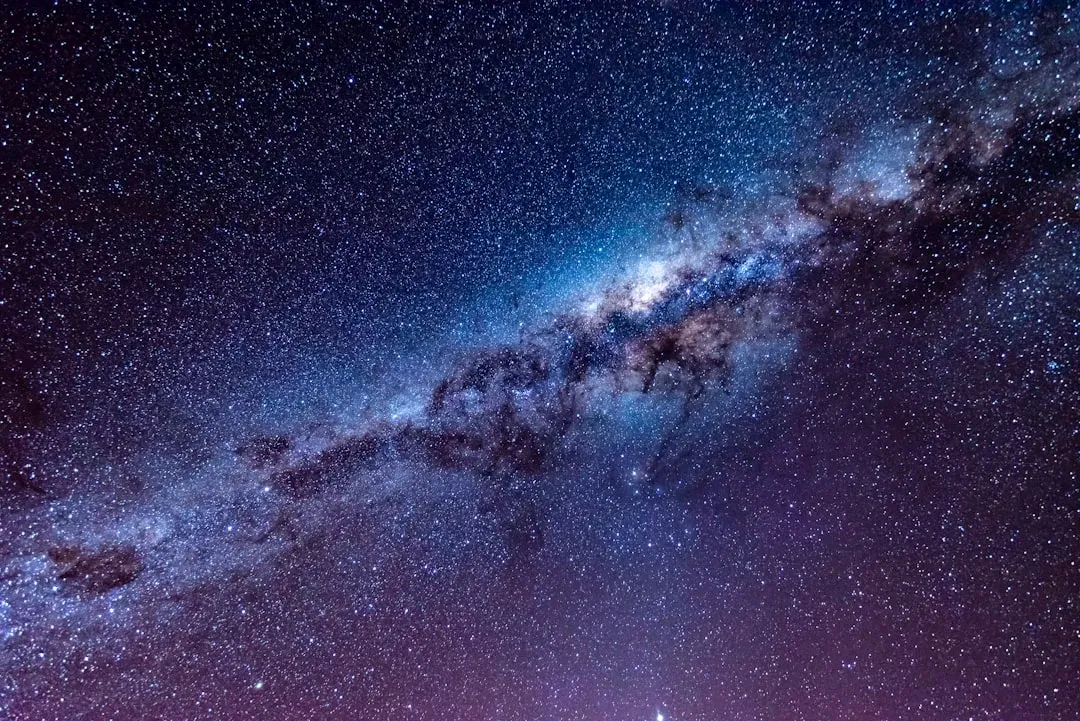
Early in 2025, astronomers revealed the largest cosmic superstructure ever detected. It’s a vast chain of galaxy clusters linked together in three-dimensional space. The team named it “Quipu” after Incan knotted cords, both because of its resemblance and as a nod to key observations made at the European Southern Observatory in Chile.
Quipu consists of 68 galaxy clusters. Its length is at least 1.4 billion light-years. Its mass is approximately 240 million billion times the mass of the Sun. Superstructures such as Quipu help us understand how matter is distributed across the universe. The night sky’s stars represent only one tiny layer of a cosmic architecture operating at scales that are genuinely difficult to comprehend.
9. A Superluminous Supernova’s Power Source Was Finally Detected
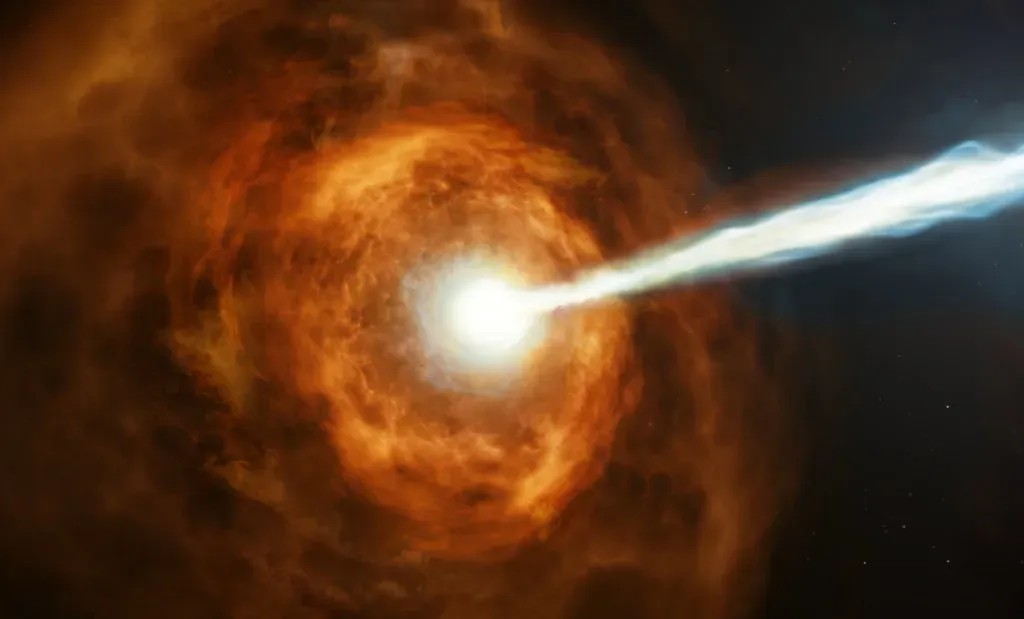
NASA’s Fermi telescope detected what may be the first confirmed gamma-ray signal from a superluminous supernova, one of the most extreme explosions in the universe. Superluminous supernovae are some of the brightest explosions ever recorded, shining hundreds of times more brightly than ordinary supernovae, yet their power source has remained debated for years.
Webb confirmed the source of a super-bright flash of light known as a gamma-ray burst, generated by an exploding massive star when the universe was only 730 million years old. For the first time for such a remote event, the telescope provided a detection of the supernova’s host galaxy. Webb’s quick-turnaround observations verified data taken by telescopes around the world. These explosions, when they occur, briefly outshine entire galaxies. Every star you see above you is, on a long enough timeline, a potential candidate.
10. A Record-Breaking Neutrino Arrived From Deep Space With Unknown Origins
In early February 2025, the KM3NeT neutrino detector located in the Mediterranean Sea detected a particle with an energy of 220 petaelectronvolts. This is tens of thousands of times more than the most powerful accelerator on Earth can provide. It is considered the most energetic neutrino ever seen by scientists.
There is no doubt that the particle came from space. At the same time, its origin remains a mystery, as scientists are still unable to confidently identify the process that could have caused it to appear. Something out there, in a direction we can’t yet pinpoint, generated an almost unfathomable burst of energy and sent a single particle racing across the cosmos to arrive in the Mediterranean Sea. The universe is not finished surprising us.
Each of these discoveries arrived within roughly two years of each other, which is a remarkable pace even by modern standards. The James Webb Space Telescope alone has reshuffled assumptions across multiple fields simultaneously, while ground-based instruments like DESI and KM3NeT are probing the universe through entirely different windows. What the collective picture suggests is that the night sky is not a backdrop. It is an active, evolving, and still partially legible record of processes that began nearly 14 billion years ago, and it still holds more surprises than we’ve uncovered.
