


- The Planet Where It Rains Liquid Glass – 7 Alien Worlds Defying Known Physics - November 14, 2026
- Stars Consuming Entire Worlds – 6 Planetary Systems Swallowing Their Own Worlds - November 14, 2026
- The Ground Liquefies Like Water – 6 Silent Fault Lines Geologists Watch Closely - November 14, 2026
Planets seem permanent when you picture them in orbit. Yet around other stars, astronomers keep finding cases where a world’s orbit is shrinking, or where a star carries chemical traces of a planet it appears to have eaten.
The six systems below span a doomed hot Jupiter, a sunlike star with a suspicious lithium excess, a water world on a short countdown, and a few cases where the evidence is still being argued over. Some are caught in the act, while others are reconstructed after the fact.
ZTF SLRN-2020 and the First Planet Caught Being Engulfed
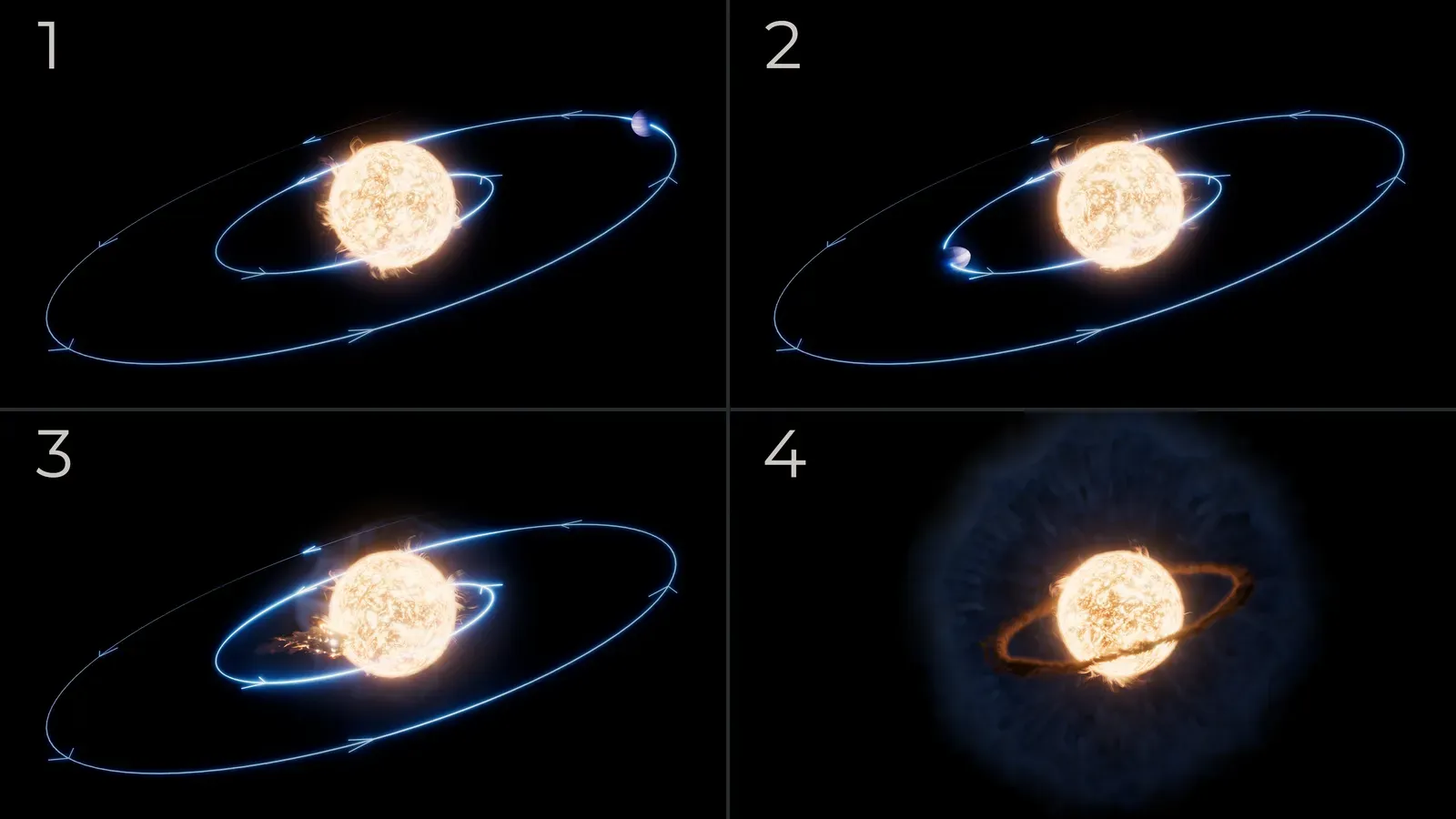
In 2023, astronomers caught a star in the act of engulfing its planet for the first time, an event that MIT noted will play out in our own solar system in about five billion years. The observation relied on a combination of telescopes. The planet plunged into the star’s core, which made the star expand and brighten.
That brightening was the giveaway. It was a short, dramatic flare, not a slow chemical clue. Because it was seen as it happened, it remains the main reference point for what engulfment looks like in real time.
TOI-5882 and a Sunlike Star With a Lithium Problem
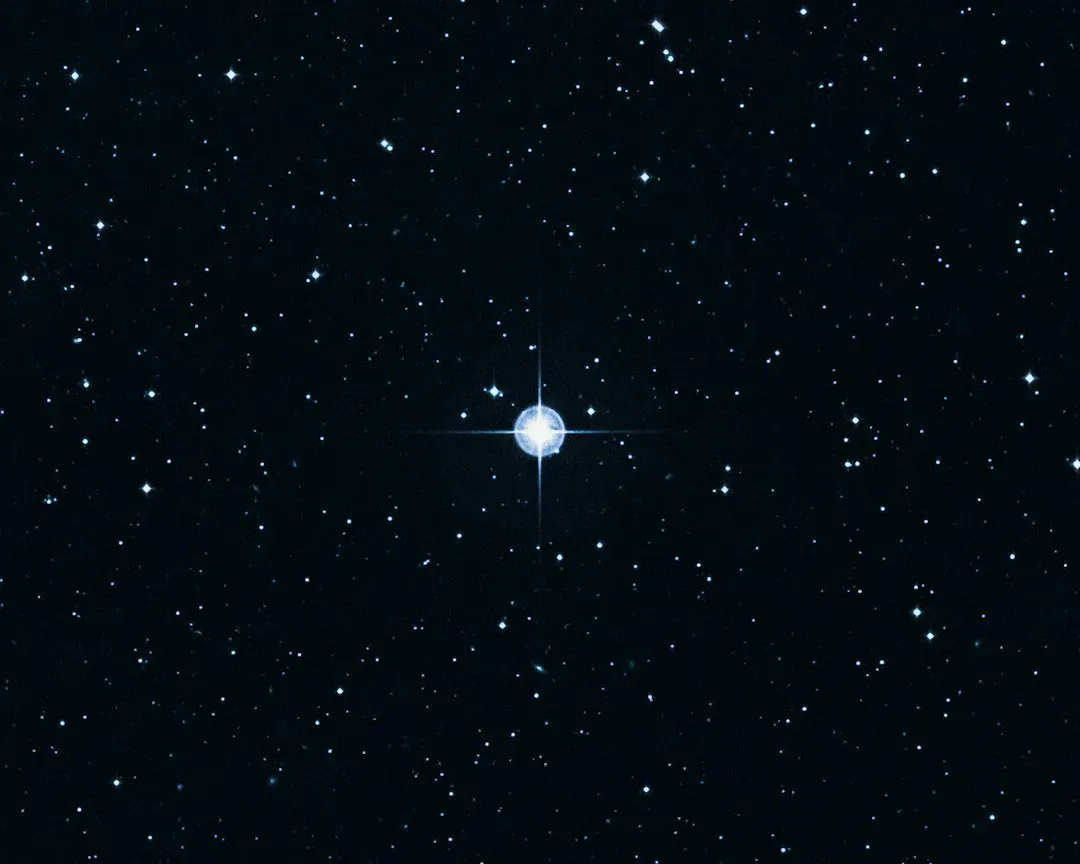
Brooke Kotten of the University of Michigan led a team showing that TOI-5882, a sunlike star about 1,300 light-years away, has likely eaten one of its planets. The clue is lithium. Astronomers call the consumption of a planet by a star engulfment.
Judging by the lithium level, the engulfed planet likely had a mass somewhere between a couple of Earths and Neptune. There’s a wrinkle, though. TOI-5882 hasn’t ballooned enough for its own expansion to explain the meal, so the team suspects a brown dwarf companion may have pushed the planet inward. The study appeared in The Astrophysical Journal in 2026, and its authors also note that engulfment may not be the only way to enrich a star with lithium.
HD 176071 b, an Ocean World on a Short Countdown

This one hasn’t been swallowed yet, but the outcome looks settled. The planet orbits HD 176071, about 335 light-years away, and is roughly two and a half times Earth’s size with about eight and a half times its mass. Those numbers point to a world that is about half water.
Space.com reported the discovery in August 2026. The planet orbits so close that extreme tidal forces are pulling it toward a fatal encounter, where its host star will eventually devour it. The team detected it through faint brightness changes in light reflected from the planet itself, not through a classic transit.
WASP-12b, the Textbook Death Spiral
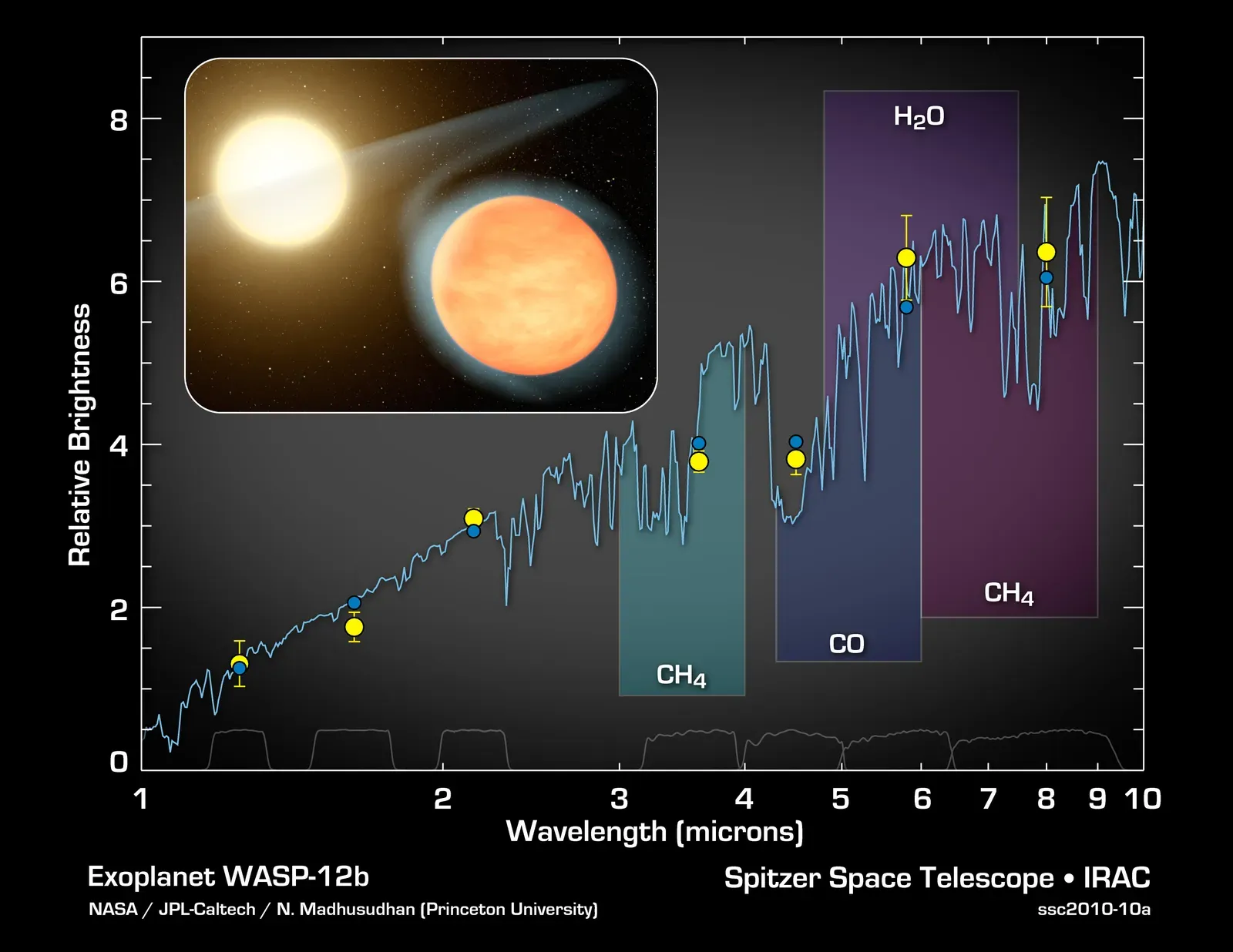
WASP-12b is the best studied case of a planet sliding toward its star. It was the first planet concluded to be undergoing orbital decay, and the decay timescale works out to about 3.25 million years. In roughly three million years it should merge with its yellow dwarf host.
The measurement took patience. It took more than a decade of combined photometric and spectroscopic observations to separate orbital decay from other processes that look similar. A 2025 reanalysis still treats it as a solid case, noting that its transit period is shrinking by about 30 milliseconds each year.
TOI-2109b and the Fastest Predicted Plunge
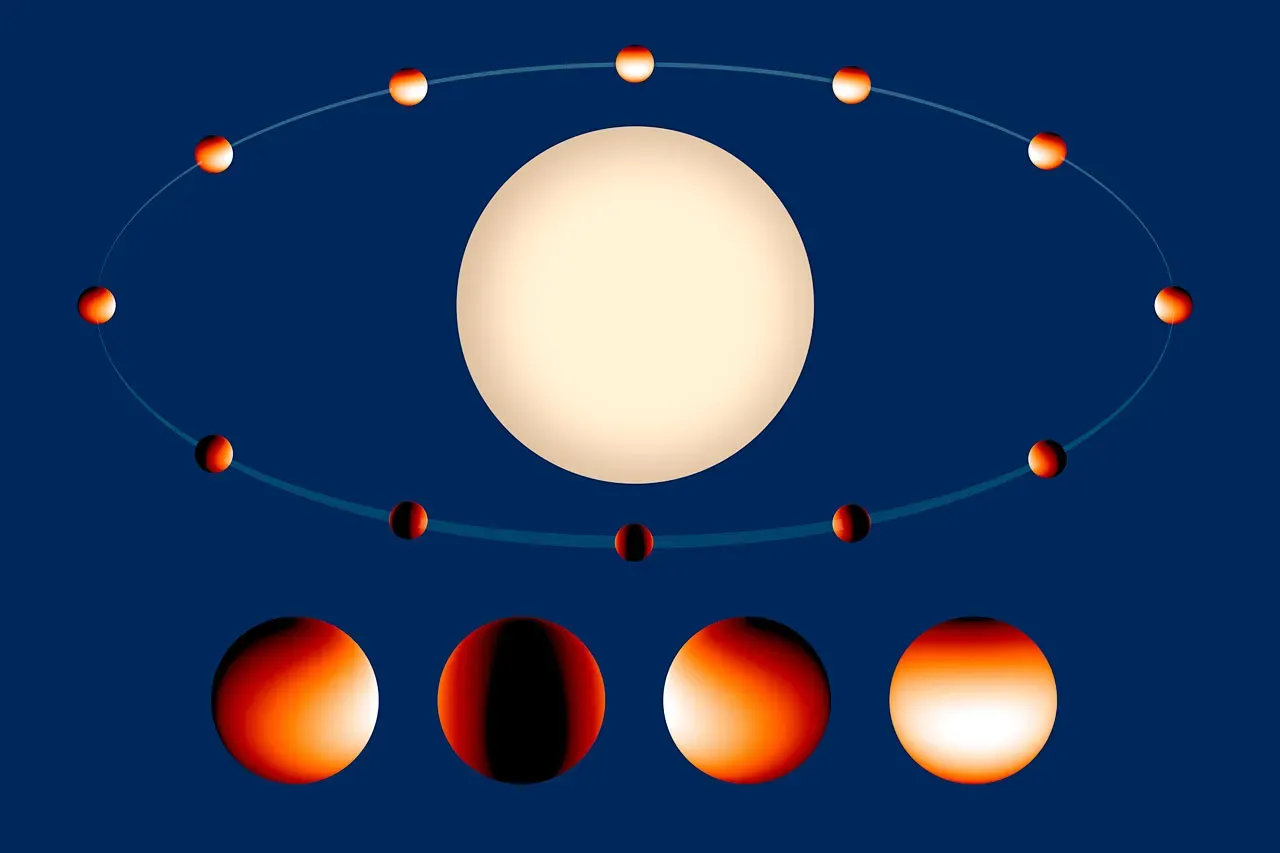
TOI-2109b is an ultrahot gas giant that circles its star in just sixteen hours. Its discoverers predicted that, for any given stellar tidal quality factor, it should have by far the fastest orbital decay rate of any planetary mass companion. That makes it a prime target for timing studies.
The outcome depends on the star’s age. A 2025 analysis found that an old host star would produce extremely fast decay, while a younger star would leave the planet much more stable. So the doom is plausible but not yet confirmed, and further transit timing should tighten it up.
A Brown Dwarf Being Eaten 300 Light-Years Away
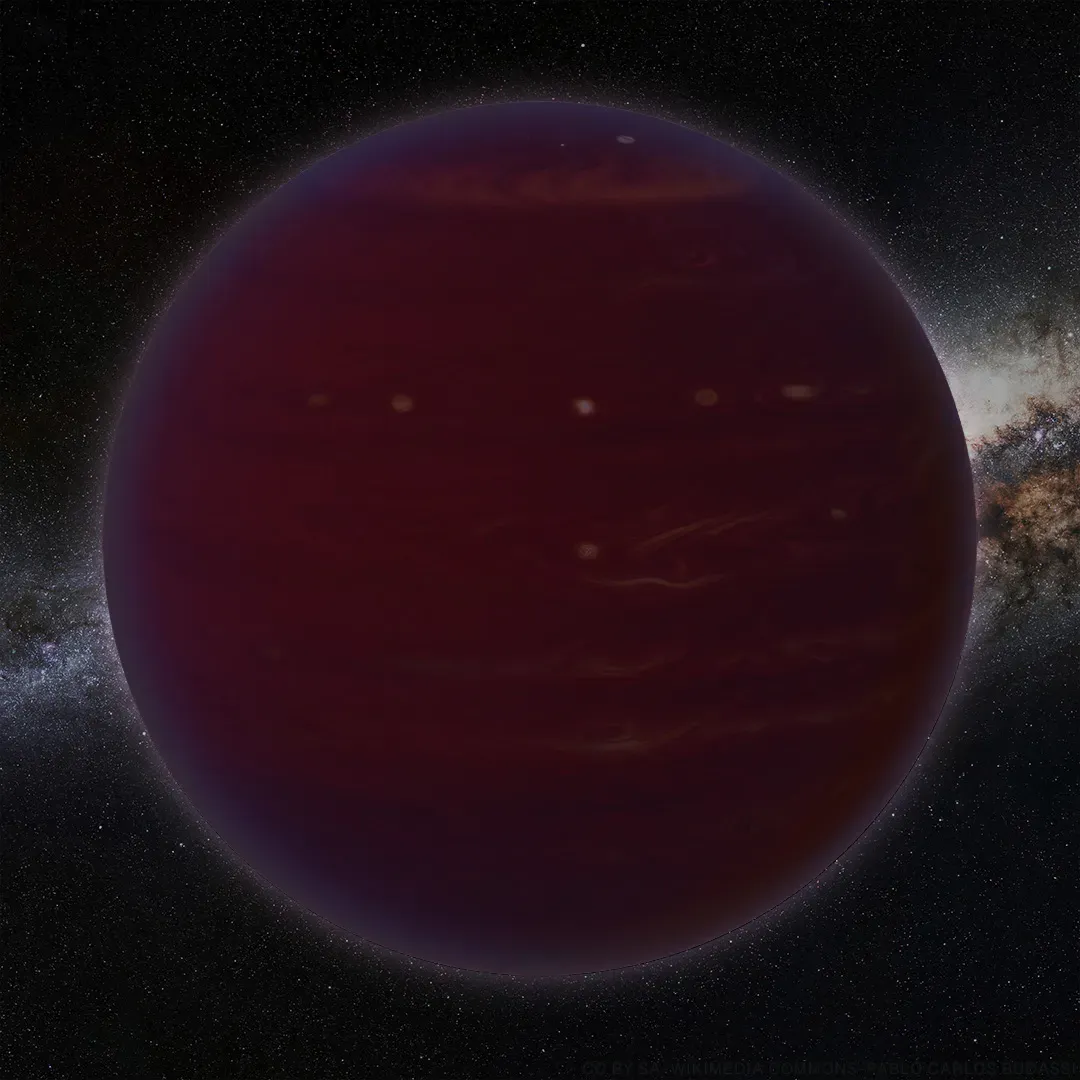
This sixth system isn’t a planet being consumed, but it shows the same process one step up the mass ladder. In a paper published October 5, 2026 in Nature Astronomy, an international team led by MIT described a star slowly feeding on a brown dwarf, an object heavier than a planet but unable to sustain hydrogen fusion.
The system sits about 300 light-years away. By the team’s calculations, the star consumes roughly one hundred thousandth of an Earth mass each year. At that pace, the meal could last billions of years.
What the Wider Survey Data Show
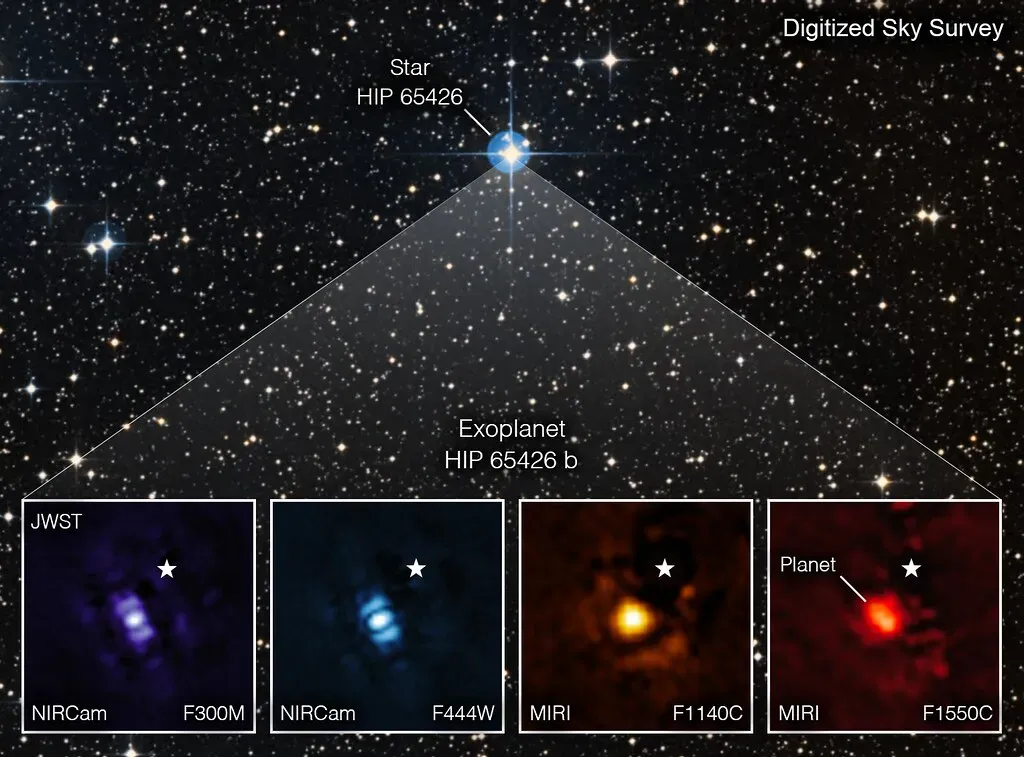
Beyond single systems, population studies point the same way. In April 2026, researchers reported that close-in planets become increasingly rare around more evolved stars, suggesting many have already been swallowed. Their work relied on TESS data and narrowed the list to 130 planets and planet candidates.
A separate May 2026 study in Monthly Notices of the Royal Astronomical Society found six red dwarf stars with unusually high lithium, which suggests recent accretion of Earth-like planetary material. Not every claim has held up, either. A 2025 reanalysis concluded that Kepler-1658b’s transits are probably caused by a low-mass eclipsing binary, not a hot Jupiter.
