

- Phantom Energy Sucking Power 24/7 – 7 Home Electronics Quietly Inflating Utility Bills - November 14, 2026
- A Million-Mile Storm Raging for Centuries – 6 Violent Weather Wonders in Our System - November 14, 2026
- Animals Flee Hours Before the Tremor – 7 Natural Warnings Before Disasters Strike - November 14, 2026
What the AMOC actually does
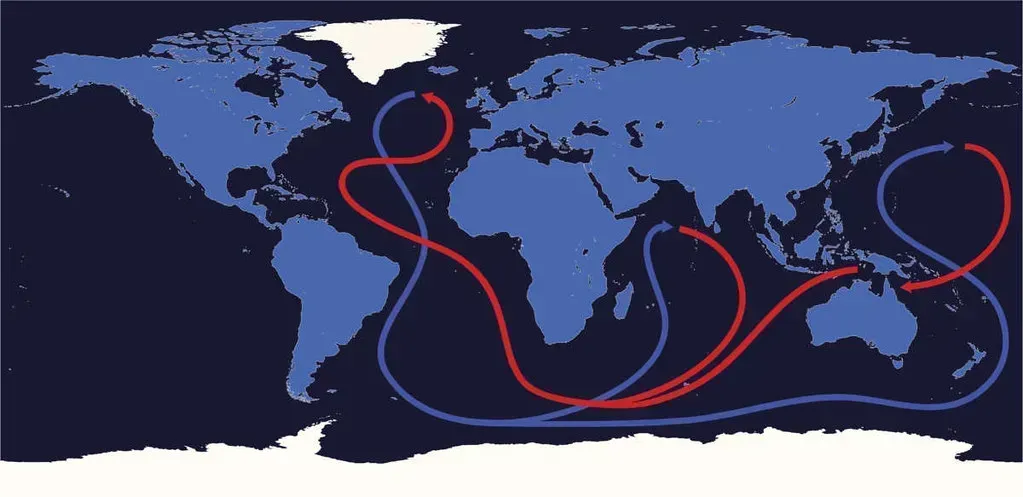
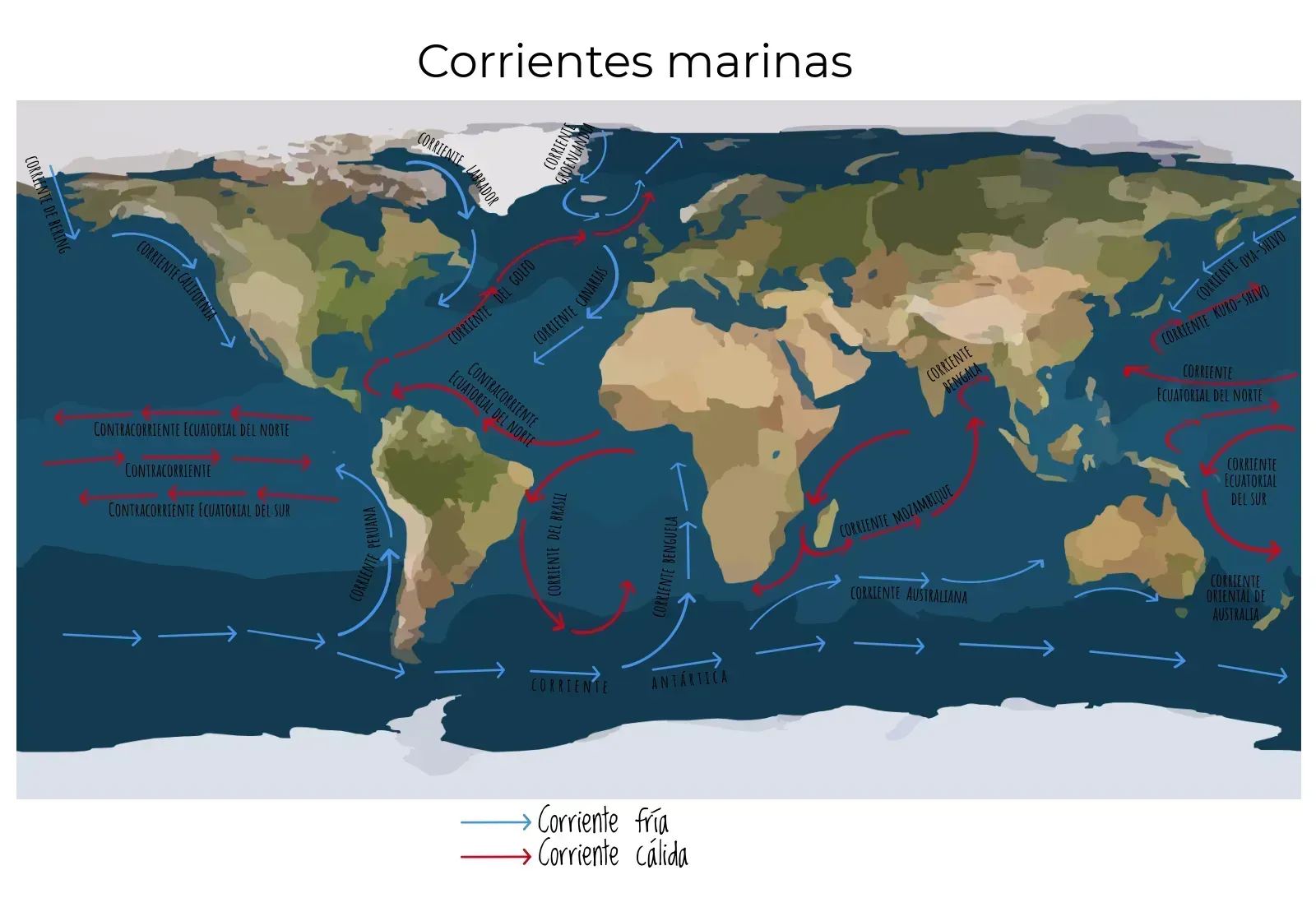
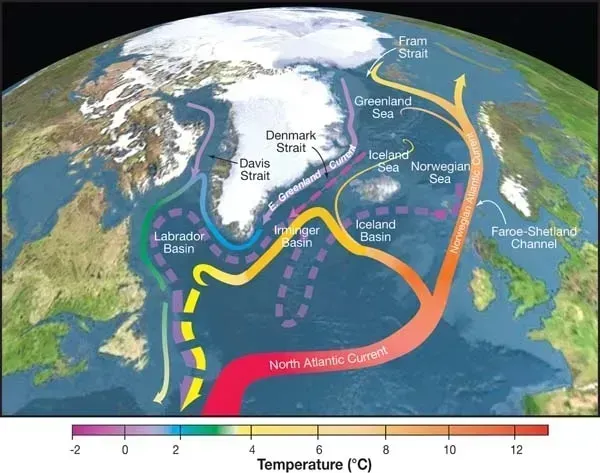
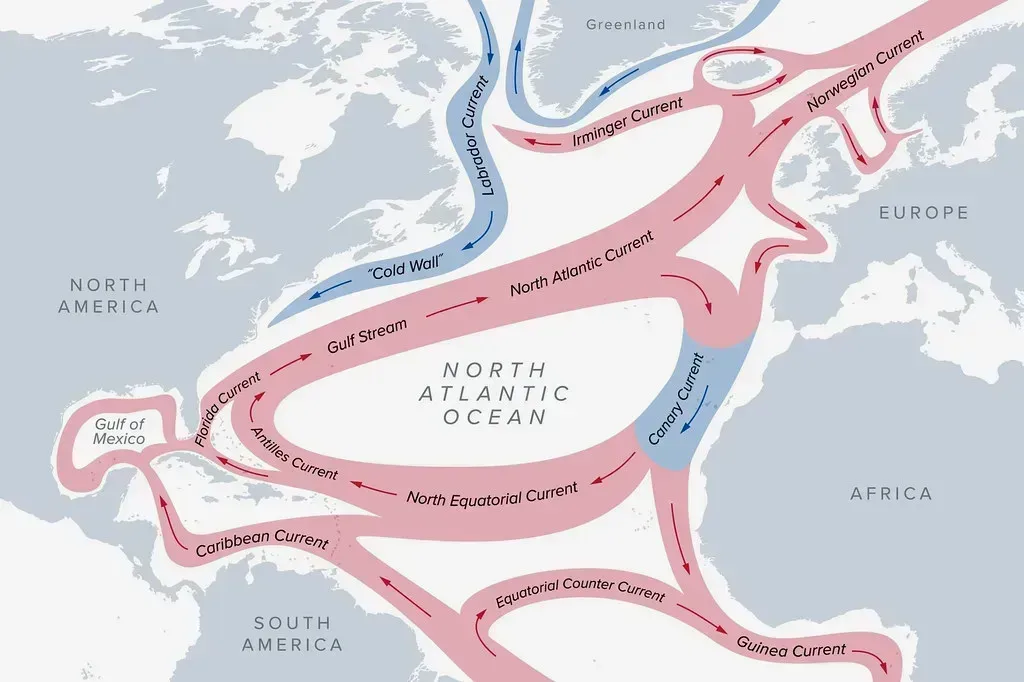
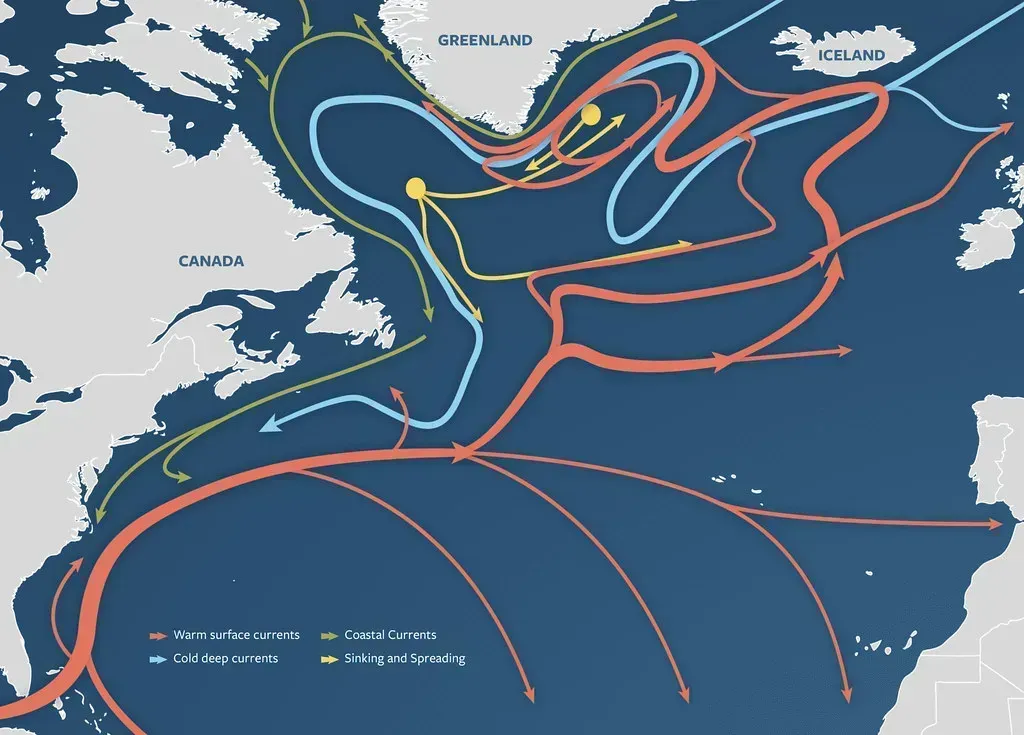
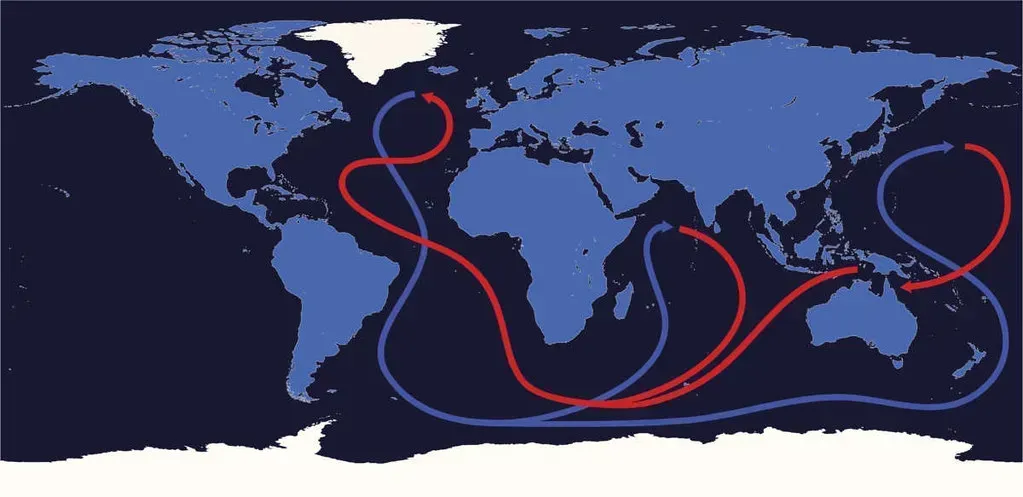
The Atlantic Meridional Overturning Circulation, known to researchers simply as the AMOC, is a vast system of currents that carries warm, salty water northward while pushing colder water back toward the equator. It moves warm, salty water north towards the Arctic, and pushes cold, relatively fresh water south to the equator. The Gulf Stream is the part most people have heard of, but it is only one piece of a much larger conveyor belt.
This circulation does not just move water. It moves enormous quantities of heat, which is why it transports a quadrillion Watts of heat to the northern Atlantic, partly via the Gulf Stream. That heat transport has shaped climate patterns on both sides of the Atlantic for thousands of years, which is exactly why scientists get nervous when the system starts to wobble.
Evidence that the current is slowing down
The idea that the AMOC is weakening is not new, but the evidence supporting it has grown considerably stronger. Evidence that it is slowing has been piling up over the years, it now is likely at its weakest in at least a millennium, and it may even be approaching a tipping point. That is a striking claim, since it implies the current is behaving in ways it has not for a very long time.
Researchers have also traced the slowdown back further than many expected. A 2025 study concluded that “this work shows the AMOC has been weakening for more than a century, and that trend is likely to continue if greenhouse gases keep rising.” That long view matters, because it suggests the current is not just responding to recent warming but to a trend that has been building for generations.
The mysterious cold blob south of Greenland
One of the more unusual pieces of evidence has come from a patch of ocean that refuses to warm up the way the rest of the planet has. Scientists call it the North Atlantic Warming Hole, or more informally, the cold blob, and it sits just south of Greenland. Research published in 2025 found that the sea surface temperature cooling trend to the south of Greenland has raised debate over whether it is driven by the slowing of the Atlantic Meridional Overturning Circulation, and models simulating a weakened historical Atlantic overturning can broadly reproduce the observed cooling and freshening in that region.
Not everyone agrees on what the blob means for the future. As one Met Office scientist put it, “Even without a collapse, a weakening of the AMOC could have serious climate impacts.” The cold blob has effectively become a diagnostic tool, a visible symptom that researchers can study even when the deep ocean itself is hard to measure directly.
A new 2026 study raises the stakes
The most attention grabbing update this year came from a paper published in April 2026. A team of researchers led by Valentin Portmann of the Inria Centre de recherche Bordeaux Sud Ouest in France concluded that the more pessimistic predictions for the AMOC are likely the most accurate, in research published April 15, 2026 in the journal Science Advances. The team’s modeling suggested the current could weaken far more dramatically than older projections assumed.
According to coverage of the findings, a major ocean current system that helps regulate climate across the Northern Hemisphere is likely to weaken far more severely by the end of this century than scientists previously estimated. That is a meaningful shift in tone from a field that has often erred on the side of caution when describing worst case outcomes.
Why the IPCC remains more cautious
Not every major scientific body shares the newer, more alarming outlook. The Intergovernmental Panel on Climate Change has taken a measured position, noting that it was confident the AMOC will decline over the rest of this century, but had medium confidence that it will not collapse before 2100. That distinction between decline and collapse matters a great deal for how policymakers and the public should interpret the risk.
Other modeling groups have reached similarly cautious conclusions. A 2025 Nature study found that the AMOC was resilient to extreme greenhouse gas and North Atlantic freshwater forcings across 34 climate models, with upwelling in the Southern Ocean sustaining a weakened AMOC in all cases and preventing its complete collapse. The disagreement between research teams is not a sign of sloppy science. It reflects how genuinely difficult it is to model a system this large and this slow moving.
What history says about past AMOC collapses
This is not the first time the AMOC has faced a breakdown. Sediment and ice core records show a pattern that stretches back tens of thousands of years, since careful study of cores drilled from ice sheets and seabed sediments has shown that, over the past 60,000 years, the AMOC collapsed at least seven times, and in each case warming seems to have been a trigger. The parallel to today’s warming world is not lost on researchers.
One of the most dramatic past examples came roughly twelve thousand years ago, when the melting of a massive glacial lake plunged Europe into an extreme cold spell for almost a millennium. That event is often cited as a natural experiment showing just how disruptive a shutdown can be, even without any human influence at all.
The specific risk to U.S. winters
For American readers, the more direct question is what a weakened AMOC would actually mean at home, beyond Europe’s well documented risks. Part of the answer involves the jet stream and the polar vortex, the two atmospheric features that most directly control how far south Arctic air can travel in a given winter. As one MIT Climate explainer notes, many climate scientists believe that global warming is changing these rings in ways that allow freezing air from the Arctic to intrude on the warmer mid latitude regions, meaning some places may see more extreme cold spells during winter even as the Earth warms on average.
The mechanism behind this involves shrinking temperature contrasts near the Arctic. Because the Arctic is warming fastest, the temperature difference between the Arctic and mid latitudes is getting smaller, which makes the polar jet stream slower and weaker. A slower, wavier jet stream is more prone to dipping deep into the central and eastern United States, dragging cold Arctic air with it, which is part of why some recent winters have brought unusually sharp cold snaps even in a warming climate overall.
Sea level rise adds another layer of concern
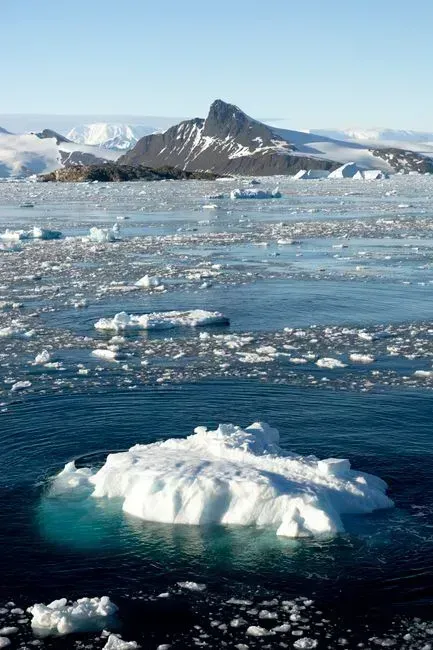
Winters are not the only worry tied to a weakening AMOC. A slower circulation also has consequences for coastal water levels, since the current’s strength influences how ocean water piles up or draws down along different coastlines. Reporting on the topic has noted that a full AMOC breakdown would be a global catastrophe, causing accelerated sea level rise on the US East Coast, plunging Europe into a winter deep freeze and shifting the monsoon in Africa, driving prolonged droughts.
Earlier research had already flagged the sea level connection for the U.S. East Coast specifically, tying a weaker AMOC to disrupted precipitation patterns as well. Studies have suggested that if the slowdown continues, it could cause sea level rise on the U.S. East Coast, cool Europe and disrupt precipitation patterns in parts of South America, Africa and India, among other alterations. That combination of coastal flooding risk and shifting storm patterns is why the AMOC keeps coming up in conversations about U.S. climate resilience planning, not just European winters.
Scientists urge caution against overstating the risk
Despite the dramatic headlines that circulate periodically, many researchers are careful to push back against the idea that a sudden shutdown is imminent. According to oceanographers who study the system closely, claims of an abrupt collapse are exaggerated, and while the AMOC is showing signs of weakening, research does not support the idea of an abrupt shutdown in the near future. That distinction between gradual weakening and a dramatic tipping point collapse is one that tends to get lost in more sensational coverage.
Even studies that raise alarms about timing tend to include wide ranges. One widely cited paper estimated a collapse window spanning decades, noting that while the collapse could begin as early as 2026, it could also take another 69 years, with a team led by Peter Ditlevsen of the University of Copenhagen placing the range between 2026 and 2095 if emissions are not cut. That kind of uncertainty is frustrating for anyone hoping for a firm date, but it is an honest reflection of how much remains unknown about a system this large.
The takeaway for now
The AMOC is not shutting down tomorrow, and most of the scientific community agrees on that much. What they agree on less is how fast the weakening will proceed and how severe the downstream effects on American winters and coastlines will ultimately be. The 2026 research from Portmann’s team has shifted some of that conversation toward the more concerning end of the range, while other well respected modeling groups still see a system that bends without breaking this century.
What seems clear is that this current deserves ongoing attention rather than either panic or dismissal. The Atlantic has reorganized itself before, and the geological record shows those changes came with real consequences for people living through them. Watching how this story develops over the next few winters may tell us more than any single model ever could.
