

In October 2025, the remnants of Typhoon Halong tore through the Yukon-Kuskokwim Delta on the western coast of Alaska with a force that left almost nothing standing. Homes were lifted off their foundations and carried downriver. Gravesites collapsed into the mud. A toxic soup of sewage and heating fuel contaminated the floodwaters that stayed behind. When it was over, two small Indigenous villages – Kipnuk and Kwigillingok – had been essentially erased.
Months later, the survivors are not just fighting to rebuild their lives. They’re fighting a federal agency that wants them to rebuild in the same dangerous place they were nearly killed. It’s a bureaucratic standoff with real human consequences, and it’s drawn national attention to deep structural problems in how the United States responds to climate-driven disasters in remote and Native communities.
A Storm Unlike Anything Seen Before
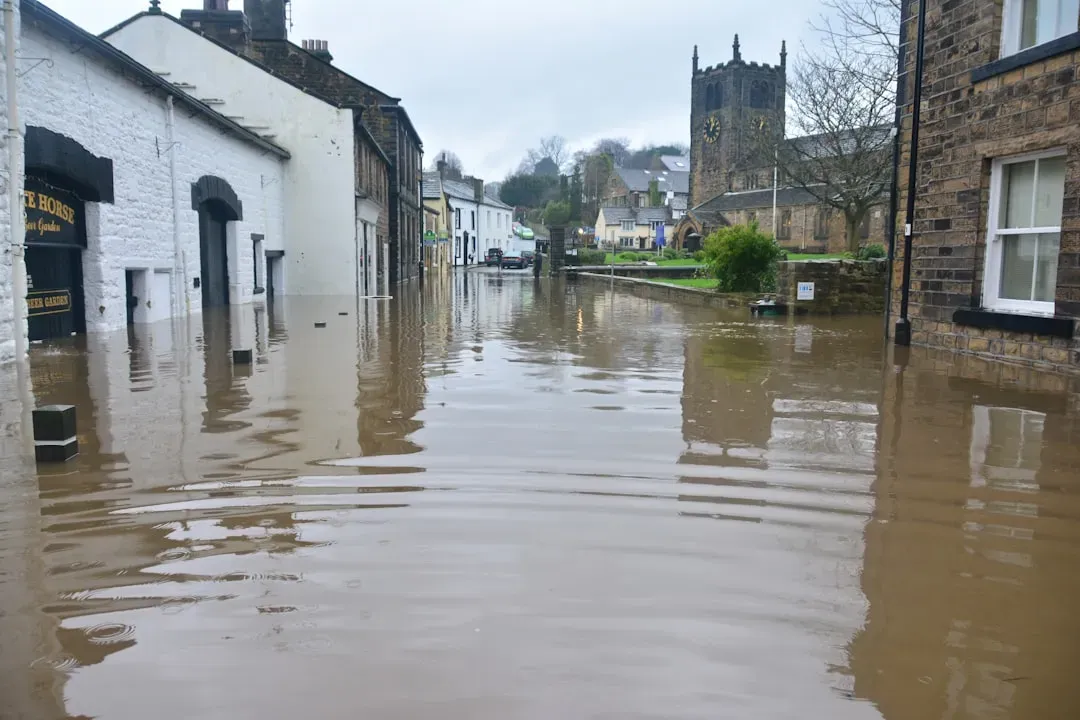
Remnants of a powerful typhoon swept into Western Alaska’s Yukon-Kuskokwim Delta on October 12, 2025, producing a storm surge that flooded villages as far as 60 miles up the river. Typhoon Halong was an unusual storm, likely fueled by the Pacific’s near-record warm surface temperatures. Before making landfall in Alaska, it had already been a formidable Pacific typhoon east of Japan, and the jet stream carried it northeast into the Bering Sea on an unexpected track.
More than 50 people had to be rescued in Kipnuk and Kwigillingok, hundreds were displaced in the region, and at least one person died. The state’s top emergency manager called ex-Typhoon Halong the worst event he had experienced in 32 years of responding to disasters in the state, saying it was “the most severe disaster that I’ve responded to in my entire career.” Damages were worse than those inflicted in 2022 by another ex-typhoon, Merbok, which reached a wider region.
Villages Turned Into Ghost Towns
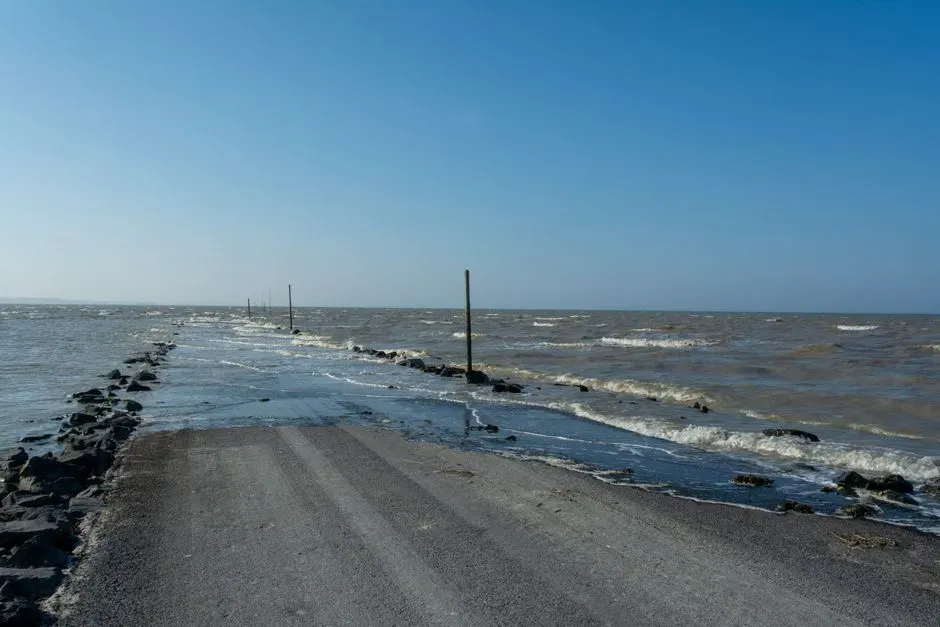
In Kipnuk, state officials estimate that over 90% of structures have been destroyed. In the remote Native villages of Kipnuk and Kwigillingok, on the coast of the Bering Sea, Halong’s fierce flooding lifted homes off their foundations and carried them down a river with people still inside. It unearthed long-buried caskets from the ground at gravesites. When it was all over, one person was dead and two more missing. The remaining floodwater quickly turned toxic with an acrid mix of sewage and fuel oil used for heating, cooking and fueling snowmobiles and ATVs.
The displaced villages, home to more than 1,000 people, were built in a flood zone, on top of permafrost that has been thawing for decades as the planet warms. Contaminated with oil and debris, Kipnuk and Kwigillingok are now ghost towns. The evacuation that followed was historic in scale. The Halong response required “the largest domestic evacuation of Alaskans in state history, even more, we believe, than evacuations that were accomplished during World War II.”
The FEMA Standoff Over Relocation
Both villages recently voted to relocate and build on higher ground, but they are locked in an ongoing battle with FEMA, which tribal leaders say is adamant they should rebuild their villages in the same spot they were destroyed. Federal officials reportedly told tribal leaders that FEMA public assistance funding cannot legally be used to rebuild the villages in another location. Officials also argued that because the communities rely on hunting and fishing, they need to remain close to the coast.
One proposal discussed internally involved building elevated homes equipped with skis so they could potentially be moved during winter once the ground froze. The idea shocked many local advocates and residents who said it showed how disconnected federal officials were from the realities facing the villages. Tribal leaders were blunt in their assessment. People “don’t want to go back to the current village that the state and FEMA are pushing us to rebuild, rebuild, rebuild in place,” said Kipnuk tribal administrator Rayna Paul. “Our people know that’s no longer safe.”
A Pattern of Repeated Disaster
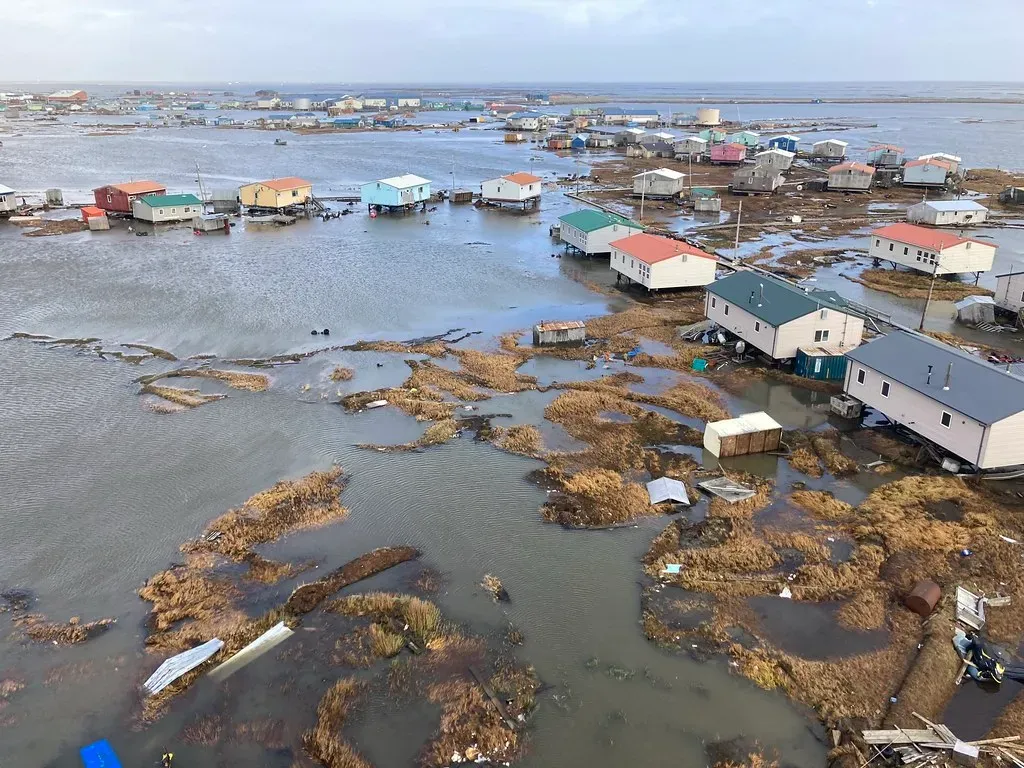
Kipnuk has endured three federally declared disasters in just 37 months, each more destructive than the last. Western Alaska has experienced three federally declared disasters within the last three years. Tribal leaders and climate advocates say villages along the coast have spent years trying to prepare for increasingly dangerous weather conditions, but progress has been slow and funding has often been inconsistent.
It’s emblematic of a larger issue. A disaster-prone United States has long been caught in a vicious cycle, rebuilding in locations that have been hit by multiple devastating storms or wildfires. Climate experts have repeatedly warned that rebuilding without major changes creates a costly cycle that repeats after every disaster. The villages of the western Alaska coast are among the most stark examples of this problem anywhere in the country.
Canceled Grants and Broken Promises
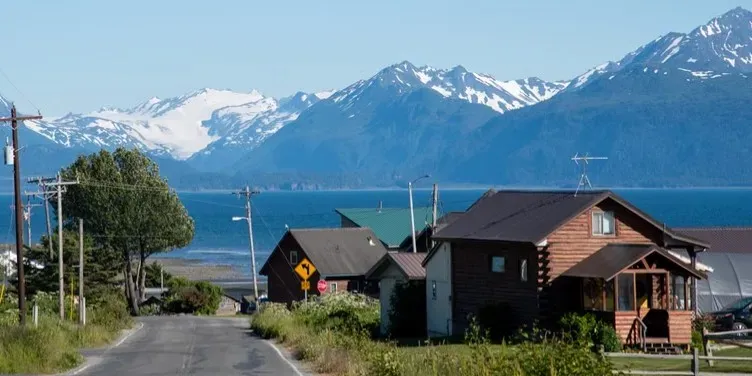
Before Typhoon Halong devastated the villages, both communities had already secured federal funding intended to help protect them from future disasters. Kwigillingok had received a FEMA Building Resilient Infrastructure and Communities grant to study the possibility of relocation, while Kipnuk had been awarded $20 million from the Environmental Protection Agency to stabilize its eroding riverbank. Those programs were later frozen or canceled after President Donald Trump’s administration halted several climate resilience and hazard mitigation initiatives.
The Trump administration froze key funding programs that would help communities prepare for such disasters and recover after they hit, and rescinded two Biden-era federal grants intended to go to the two villages. Kipnuk views the cancellation as another in a long line of broken promises by the federal government. Kwigillingok residents had been working for years to protect themselves from flooding and erosion and voted to relocate several years ago. Village leaders also applied for another grant to do a feasibility study for the site, but the program was canceled. “We were all devastated,” said Dustin Evon, the tribal resilience coordinator. “This is like, a year and a half of work all down the drain.”
The Impossible Logistics of Rebuilding Remotely
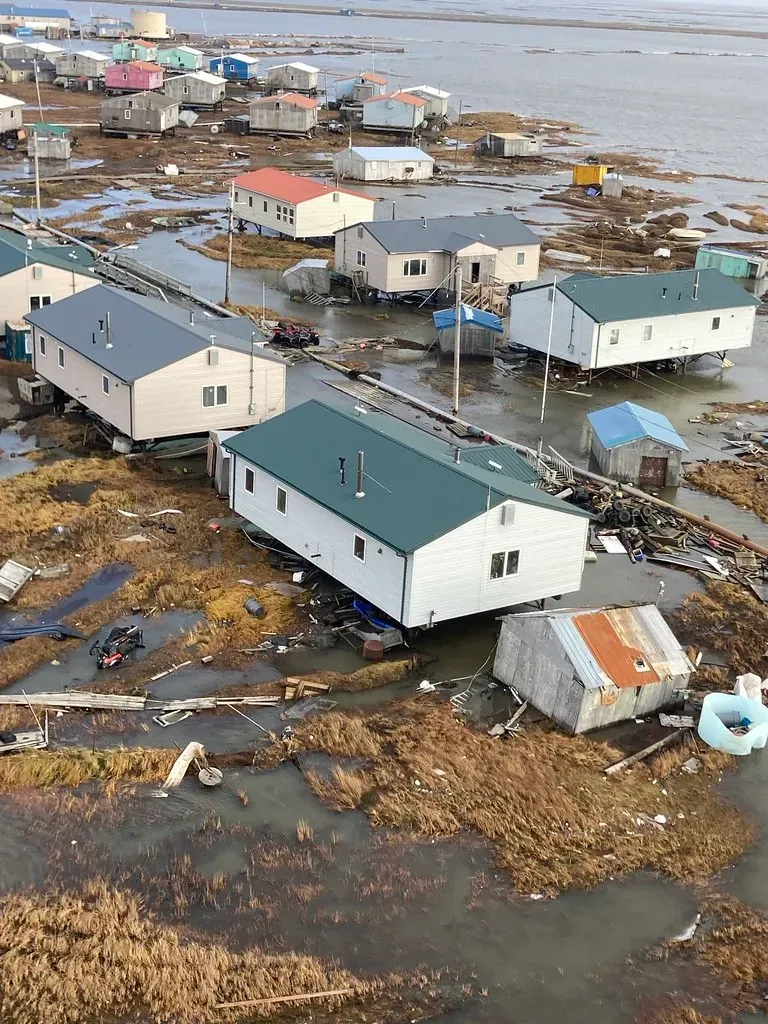
It’s logistically complicated to rebuild in places like Kipnuk. You can’t just get on the phone and call up your local building contractor. Almost all of the supplies have to come in by barge, plywood to nails to windows, and that isn’t going to happen in winter. The region’s remoteness means that even basic recovery timelines are stretched far beyond what disaster relief systems are typically designed to handle.
The villages don’t have extra housing or the resources to rapidly recover. The region was already recovering from major flooding in summer 2024. Kipnuk’s tribe was able to get federal disaster aid, but that aid was approved only in early January 2025. The general U.S. disaster-assistance system, designed for the nation as a whole, is not always suited to rural Alaska needs. That is particularly the case for traditional subsistence needs. FEMA can provide money to replace gear lost from subsistence camps, “but they can’t provide funding to rebuild the cabin.”
Displacement and Cultural Harm

Tribal administrator Rayna Paul said she and others have received inconsistent housing assistance from FEMA that ran out before they thought it would, and the tribe is trying desperately to protect its people from drugs, alcohol and the threat of being trafficked. For communities whose entire way of life is tied to a specific landscape, being scattered across unfamiliar urban environments creates harm that goes well beyond the loss of a building.
More than $44.6 million has been awarded to 2,479 Alaskans to help with rent, basic home repairs, personal property damages, and other disaster-related needs. FEMA awarded $4.36 million in rental assistance to support 690 families displaced from their homes due to the disaster. FEMA awarded Continued Temporary Housing Assistance to 138 households to help survivors pay for longer-term interim housing until their homes are repaired. Still, tribal leaders say these figures don’t address the deeper need: a permanent, safe home on higher ground.
Senate Hearings and Legislative Pressure
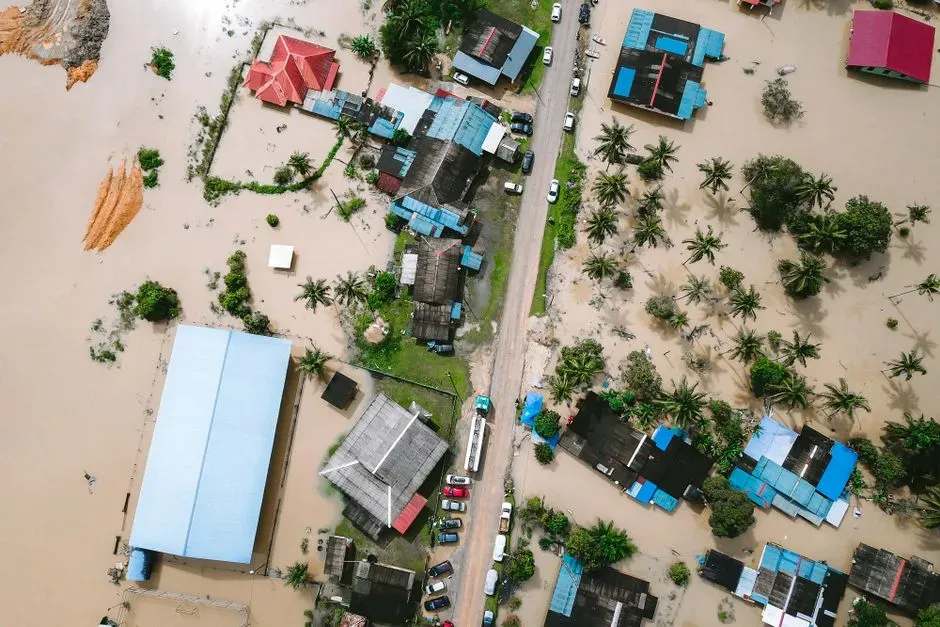
Viewing Typhoon Halong as a warning of what lies ahead, both Kipnuk and Kwigillingok, with a combined population of about 1,000 people, have voted overwhelmingly to relocate to higher ground. A Senate hearing in Bethel exposed what tribal leaders have warned about for decades: the deep flaws in the federal government’s disaster recovery system, from delayed housing aid and fragmented funding programs to the absence of any formal framework for responding to climate-threatened villages.
Sen. Lisa Murkowski, R-Alaska, said she is already working with other senators on legislation aimed at reforming FEMA and improving disaster response systems. She also suggested Alaska could become a national model for climate-driven community relocation. Bryan Fisher, director of Alaska’s Division of Homeland Security and Emergency Management, described Typhoon Halong as the most catastrophic disaster he has seen in 32 years, and warned that federal funding disruptions and staffing shortages have created new obstacles in the recovery process, saying bluntly: “FEMA is hard to work with.”

- Crows Remembering Human Faces for Decades – 6 Bird Behaviors Far Smarter Than We Knew - November 15, 2026
- 8 Things Astronauts Do on Their First Day in Orbit That Rookies Find Strange - November 15, 2026
- 11 Everyday Routines That Are Completely Normal on the Space Station but Baffle Everyone on Earth - November 15, 2026
