

- How Astronauts Eat, Sleep, and Live in Zero Gravity - May 19, 2026
- The Mysterious Origins of the Moon - May 19, 2026
- Astronomers Find Impossible Atmosphere Around Mysterious Solar System Object - May 19, 2026
Something strange is clinging to a tiny, frozen world at the edge of our solar system – something it should have no business having. In early May 2026, a team of Japanese astronomers announced the detection of a thin atmosphere surrounding a small, icy body far beyond the orbit of Neptune, a discovery that has left the scientific community both thrilled and deeply puzzled. The object in question had been catalogued for over two decades without any particular fanfare. Now it has shattered one of the foundational assumptions of planetary science.
The unexpected discovery, made by Dr. Ko Arimatsu, associate professor and senior lecturer at the National Astronomical Observatory of Japan, and his colleagues, could offer an unprecedented glimpse into how an atmosphere forms and remains around a small object, and change how astronomers think about objects in the Kuiper Belt. The findings were published in the journal Nature Astronomy and quickly rippled through the global astronomy community, prompting excitement, cautious skepticism, and a flood of new questions about what we thought we knew about the outer solar system.
Meet the Object: A Plutino Called 2002 XV93
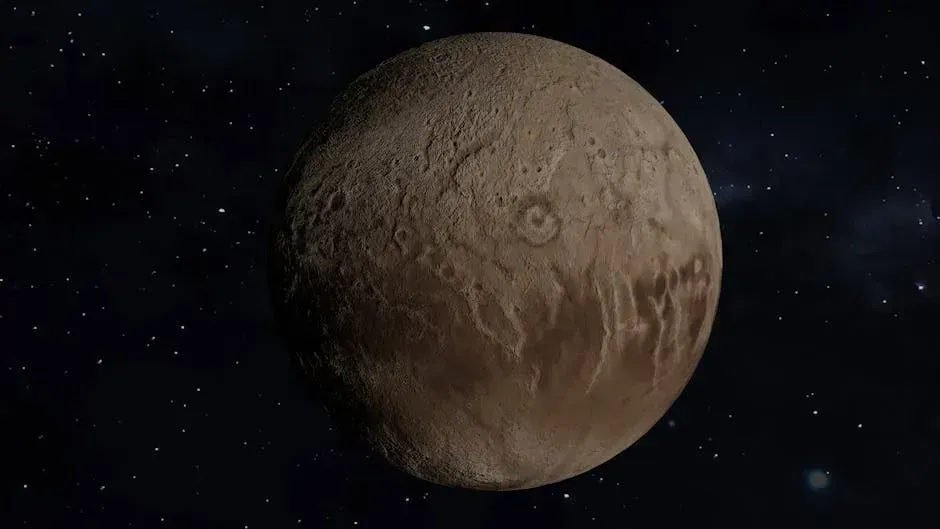
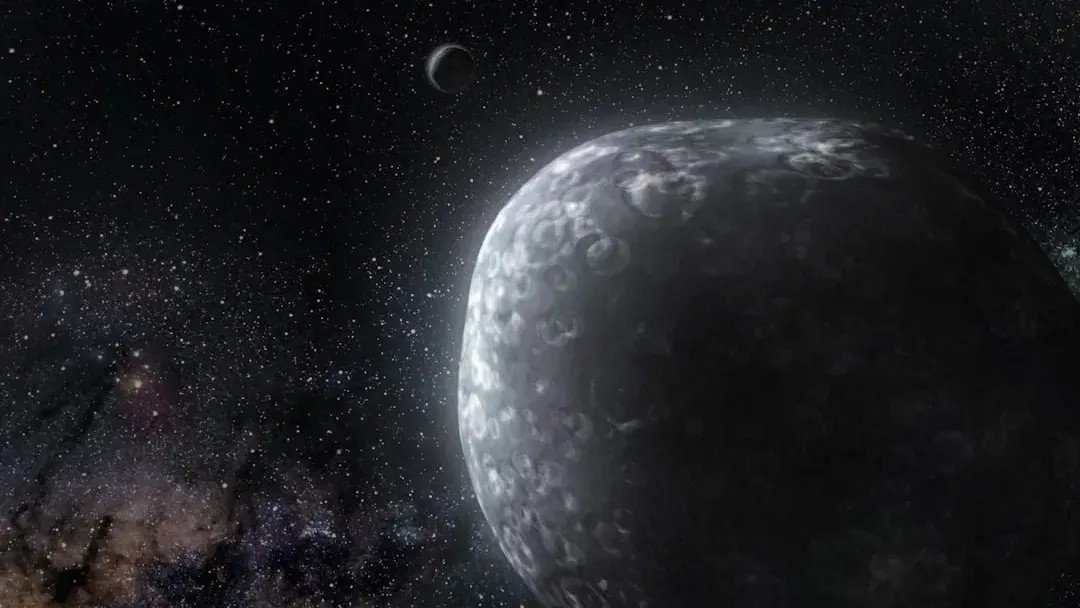
2002 XV93, as it is known for short, is a type of object known as a plutino – a small body that shares an orbit similar to Pluto’s orbital rhythm, at around 40 times Earth’s distance from the Sun, in resonance with Neptune’s orbit. Its formal designation is (612533) 2002 XV93, a label as unglamorous as you’d expect for a lump of ice and rock drifting billions of miles from any inhabited world. Until now, there was little reason to single it out from the thousands of other frozen bodies quietly circling in the Kuiper Belt.
This object measures about 500 km across, much smaller than Pluto, which spans 2,377 km. The mini-object sits at the edge of the solar system, approximately 3.5 billion miles from the Sun, and in this region temperatures are so cold that most of the molecules that exist as gases in Earth’s atmosphere freeze solid. On paper, 2002 XV93 was entirely unremarkable. In reality, it turns out to be one of the most startling objects in our planetary neighborhood.
Why an Atmosphere Here Should Be Impossible

The frigid temperatures and weak surface gravity of the small bodies has long caused astronomers to believe they aren’t capable of retaining atmospheres, with the exception of Pluto, which has a thin one. Atmospheres, especially dense ones, typically form around large planets or moons, including Saturn’s biggest satellite, Titan. Meanwhile, dwarf planets Eris, Haumea, Makemake and dwarf planet candidate Quaoar, the largest TNOs after Pluto, don’t appear to have atmospheres.
The discovery of the thin atmosphere is surprising because the “gravitational pull of such a small celestial body is weak, and any air surrounding it should have long ago floated away into space.” In this region, temperatures are so cold that most of the molecules that exist as gases in Earth’s atmosphere freeze solid, and any air that “did not float away would be expected to turn into ice and fall to the surface,” not become an atmosphere. Every line of conventional reasoning argued this atmosphere simply could not exist. Yet there it was.
A Rare Cosmic Coincidence: The Stellar Occultation
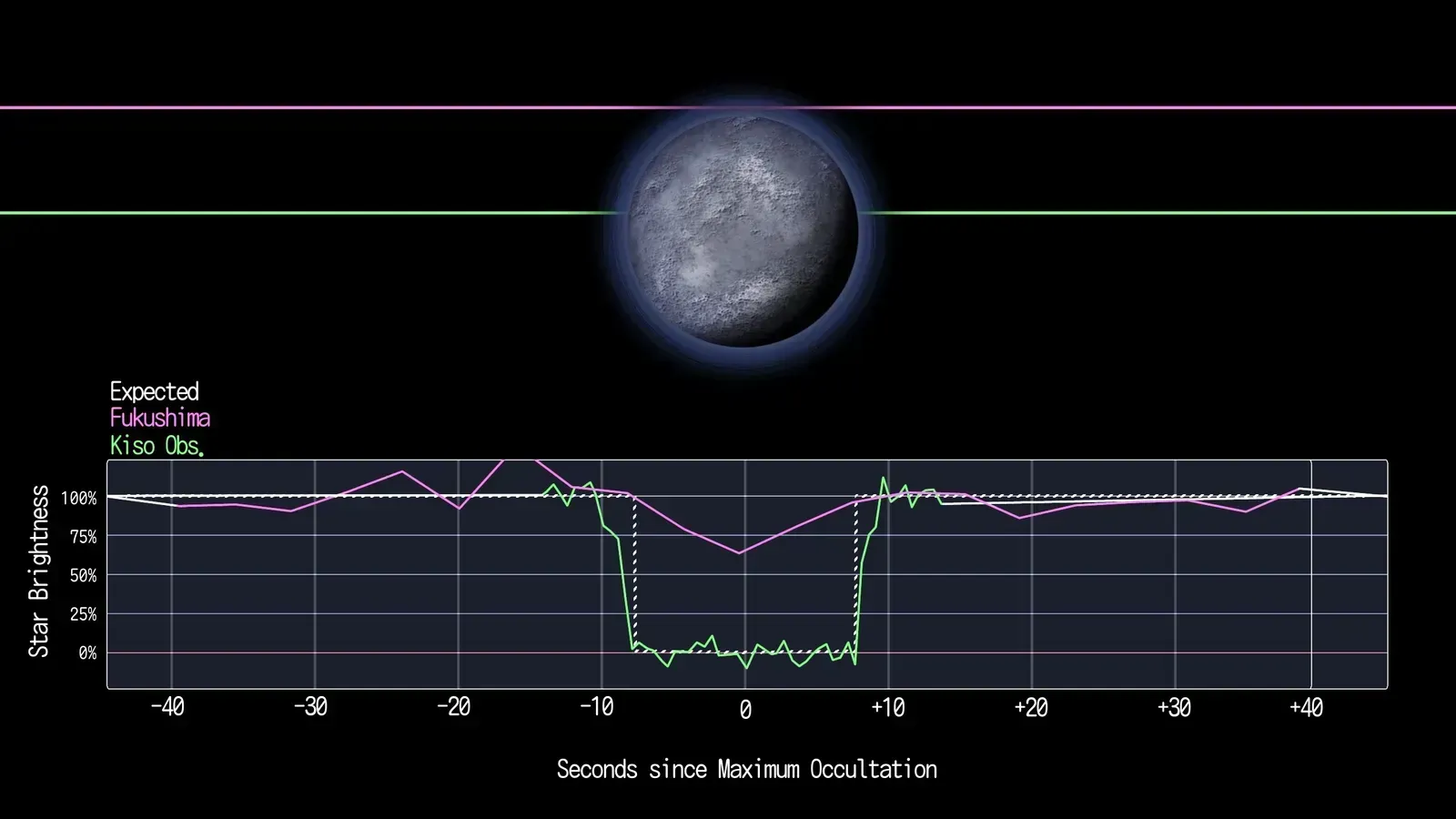
On January 10, 2024, 2002 XV93 passed directly in front of a background star as viewed from Japan. Events like this, known as stellar occultations, allow scientists to study distant objects in detail. If the object has no atmosphere, the star’s light should disappear abruptly as it is blocked. If an atmosphere is present, the starlight fades more gradually as it passes through surrounding gas. It was a fleeting window of opportunity, and the team was ready.
On that day, 2002 XV93 passed directly in front of a far-off star from Earth’s perspective, and instruments at three sites in Japan recorded data on the eclipse. Much to their surprise, the researchers saw a slow fade. “The observation data showed a smooth change of the star’s brightness near the edge of the shadow, lasting about 1.5 seconds,” Arimatsu told CNN. “This kind of smooth brightness change is naturally explained if the starlight was bent by a very thin atmosphere around the object.”
Just How Thin Is This Atmosphere?

The researchers calculated that 2002 XV93 has an atmosphere about 5 million to 10 million times thinner than Earth’s, and suspect two possibilities as to what created it. But the atmosphere remains highly fragile: it is believed to be possibly 100 times thinner than even Pluto’s atmosphere. Calling it gossamer would almost be an overstatement. It barely qualifies as air in any meaningful human sense.
This atmosphere is probably unlike the one protecting our home planet. The researchers calculated that 2002 XV93’s potential atmosphere is about 5 million to 10 million times thinner than Earth’s. “You could not breathe it, feel wind from it, or see anything like Earth’s sky,” Arimatsu told New Scientist. “But it is not negligible scientifically, because even such a thin atmosphere can measurably bend starlight, and it tells us that volatile gases are present or being supplied around a very small icy body.” In science, even a whisper of evidence counts.
Two Theories for the Unexplained
One scenario the researchers propose is that a comet smashed into 2002 XV93, releasing gas that has formed a temporary atmosphere that will soon dissipate. The other possibility is that, like Pluto, 2002 XV93 has active cryovolcanoes, which release icy sludge and volatiles from within the plutino, replenishing a constantly leaking atmosphere. Both ideas are extraordinary in their own right, because both imply that something dramatic and geologically active happened, or is still happening, on this tiny world.
If the atmosphere was created due to impact, it may only last for several hundred years, Arimatsu said. But if regular cryovolcanic activity routinely replenishes the atmosphere with the release of gas, it could last much longer. Notably, the observations by the James Webb Space Telescope showed no evidence of icy frozen gases on the world’s surface. Such ices, common in the outer solar system, could sublimate – turn directly from ice to gas – and form a thin atmosphere. The absence of surface ices only deepens the mystery of where this gas is actually coming from.
A Fleeting Atmosphere on a Geological Clock

Calculations suggest this atmosphere should vanish within about 1,000 years unless it’s constantly being replenished. On cosmic timescales, a thousand years is less than the blink of an eye. The fact that humanity happened to be looking at exactly the right moment, with exactly the right technique available, borders on extraordinary good fortune – or raises the unsettling possibility that such atmospheres may be more common than we ever suspected.
If the atmosphere was created by impact, then we would be exceptionally fortunate to have observed 2002 XV93 at around the same time that this presumably rare impact happened. As Arimatsu explained, “if the atmosphere was impact-generated, it may decline over the next several years or decades. If it persists or varies seasonally, that would favor ongoing internal supply.” Future monitoring of this object will be, in a very literal sense, a race against time.
What the Kuiper Belt Is Telling Us
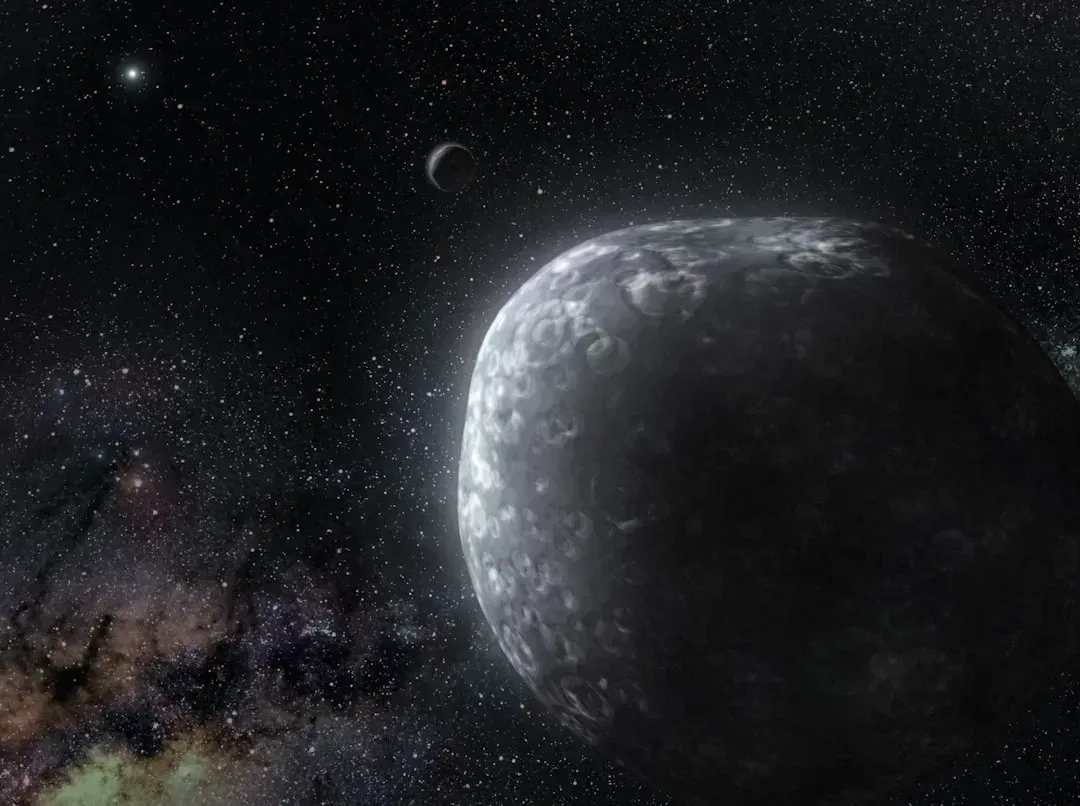
These small icy worlds are thought to represent a fossil record of the early Solar System, recording information about what it was made of and how things moved around in it. The resonance with Neptune, for example, shows that Neptune moved outwards, sweeping things up as it went. For decades, these objects were treated as inert, passive relics – frozen in time alongside frozen space. This discovery insists we reconsider that picture entirely.
As Carnegie Institution staff scientist Dr. Scott S. Sheppard put it, “This shows the Kuiper Belt is not a cold dead place, but is teeming with activity and has many of the building blocks for life.” The discovery proves that even small objects in the Kuiper Belt can maintain atmospheres, suggesting the outer solar system is more geologically active than previously thought. That realization alone could prompt a wholesale rethinking of how planetary scientists study these distant bodies.
The Scientific Response: Excitement and Caution
Researchers need to gather additional observations, especially to confirm the study’s findings. “This is an amazing development, but it sorely needs independent verification,” said Alan Stern, a planetary scientist at the Southwest Research Institute. “The implications are profound if verified.” Stern, who led NASA’s New Horizons mission to Pluto, is no stranger to dramatic outer solar system revelations – and his measured enthusiasm speaks volumes about just how significant this result could be.
Some skeptics exist: one researcher told AFP “I still doubt that it is an atmosphere – we need more data,” suggesting an alternative explanation could be that the object has a ring close to its body. Arimatsu acknowledged he could not rule out “exotic alternatives” to an atmosphere. However, “a nearly edge-on ring does not seem consistent with the main features of our observations,” he added. Science, at its best, works exactly this way – with open debate and a commitment to follow the evidence wherever it leads.
What Comes Next: Webb Telescope and Beyond
Future observations of 2002 XV93, either through more stellar occultation opportunities or by using the powerful James Webb Space Telescope, will help astronomers to better characterize the nature of the atmosphere and determine its origin, as well as how the atmosphere evolves over time. The James Webb Space Telescope is particularly well positioned to look for chemical signatures that could confirm or rule out each of the competing theories about the atmosphere’s source.
The Webb telescope could detect methane or carbon monoxide emissions coming from the object and identify the atmosphere’s composition. Arimatsu’s team is continuing the search for atmospheres around other TNOs by relying on stellar occultation observations, and their findings could help determine if 2002 XV93 is a rare exception to the rule, or if other similar small objects also possess atmospheres. The implication is both thrilling and daunting: there may be dozens of tiny, atmospheric worlds hidden in the outer solar system, waiting for us to happen to look.
Rewriting the Rules for Small Worlds
The researchers write in their paper that “this discovery suggests that the traditional idea that global dense atmospheres form only around larger planets must be revised. Even a few-hundred-kilometer TNO can host, at least transiently, an atmosphere, challenging standard volatile-retention scenarios. Our findings suggest that a fraction of distant icy minor planets can exhibit atmospheres, potentially sustained by ongoing cryovolcanic activity or produced by a recent impact of a small icy object.”
As Arimatsu himself stated, “It changes our view of small worlds in the solar system, not only beyond Neptune,” adding that finding an atmosphere around such a small object was “genuinely surprising,” and challenges “the conventional view that atmospheres are limited to large planets, dwarf planets and some large moons.” The universe has a long history of not caring about our assumptions. 2002 XV93 is simply the latest reminder that at the frozen edge of our solar system, extraordinary surprises are still waiting to be found.
