
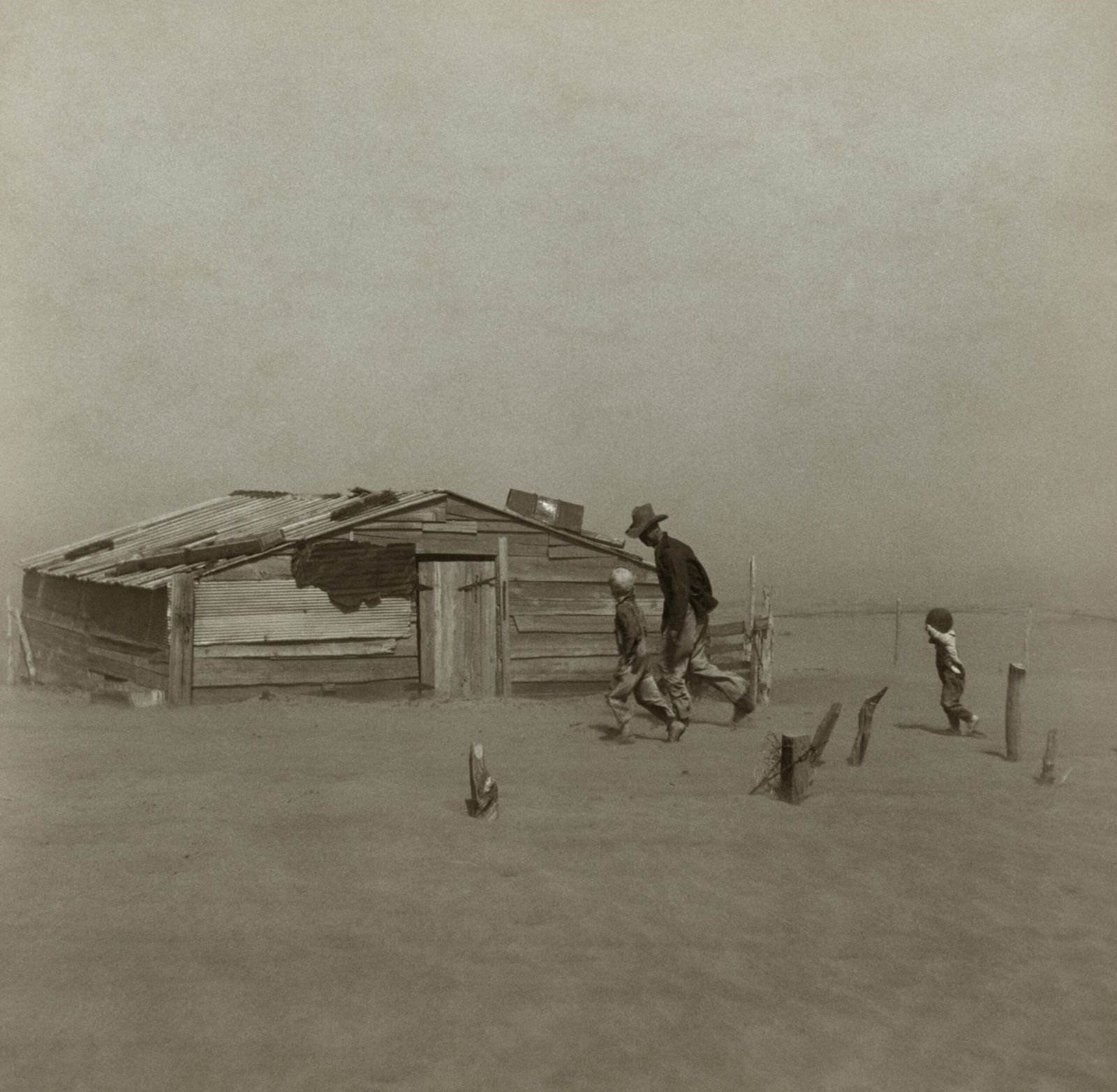
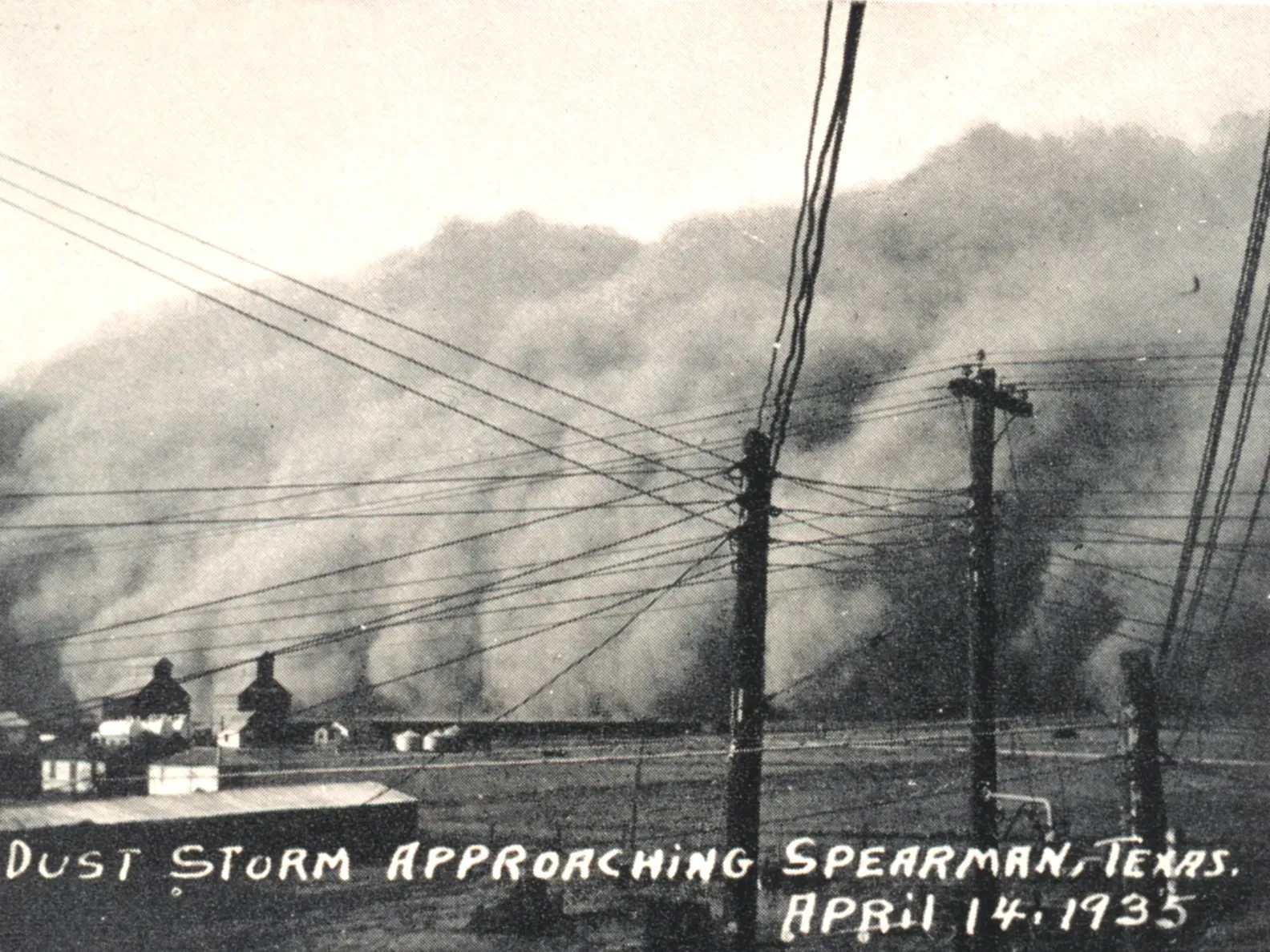
April 14, 1935, began as a calm, bright morning on the southern Great Plains. After weeks of choking dust, people finally opened their windows and hung laundry outside. Many families drove to church, since it was Palm Sunday.
By late afternoon, the sky had turned black. The photographs from that spring, and from the Dust Bowl years around it, are still the clearest record of what the day felt like. Here are nine images and scenes that explain it.
The Wall of Dust on the Horizon
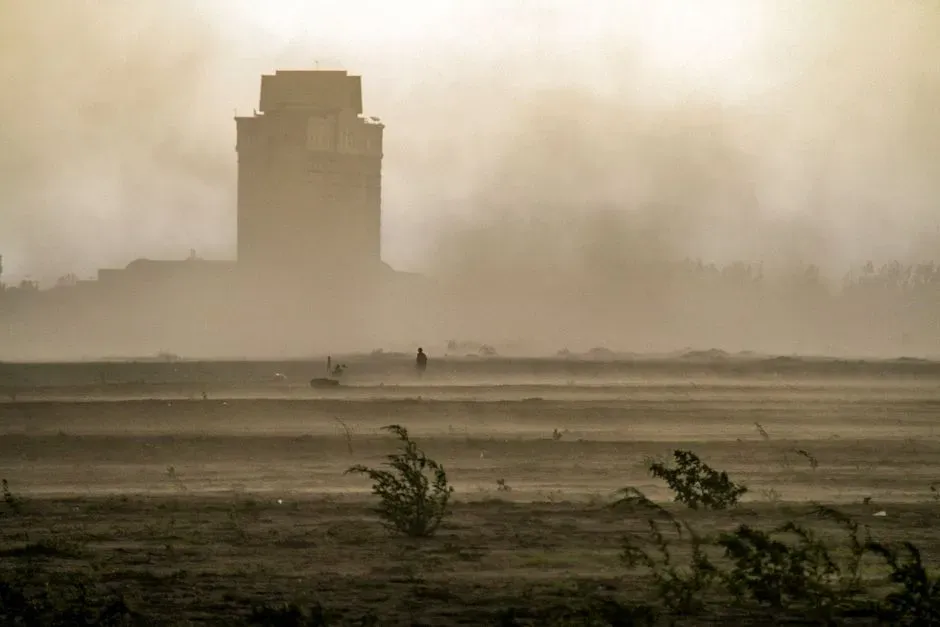
The best known pictures from this period show a rolling dark cloud rising from the flat horizon like a mountain range. Several of these images, including ones held in the NOAA Photo Library, were taken in Texas Panhandle towns in the spring of 1935. They show the dust as a solid front, not a haze.
The storm moved south out of the Dakotas on strong winds. It hit the Oklahoma and Texas panhandles in the late afternoon. Witnesses described daylight vanishing within minutes as the front passed.
A Calm Morning That Fooled Everyone
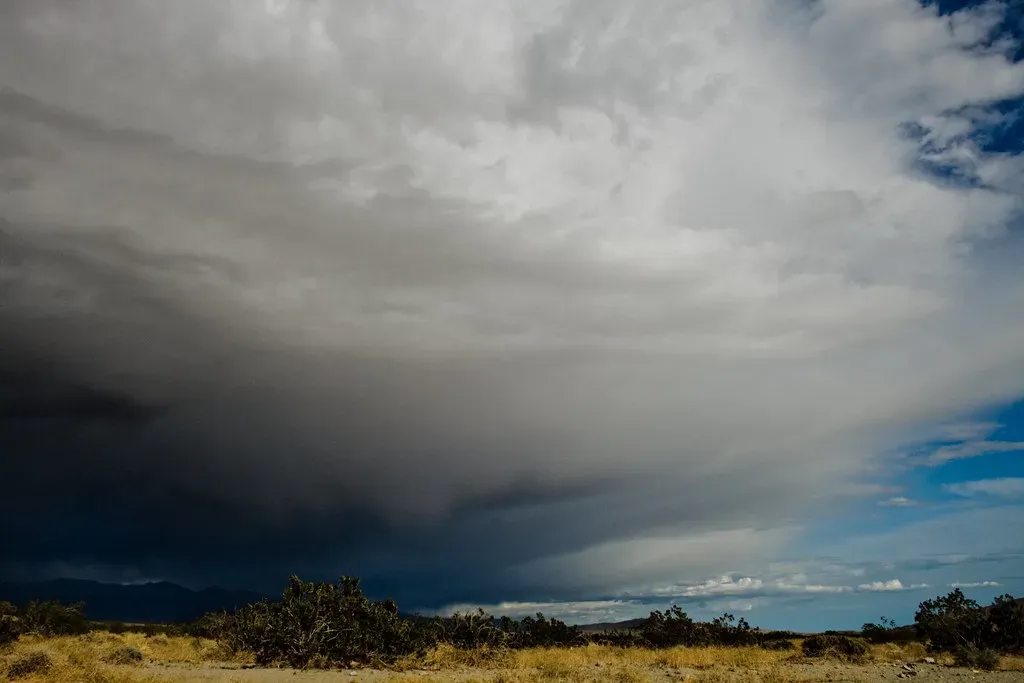
A photo of a quiet farmhouse under a clear sky tells half the story. The weather that morning was mild and sunny, which is why so many people were outdoors. Earlier storms that spring had kept families shut inside, so the clear day felt like relief.
That contrast is part of why the day is remembered so sharply. People had little warning before the wind shifted and the temperature dropped. Accounts from the region describe a fall of tens of degrees in a few hours.
Cars Stalled in the Dark
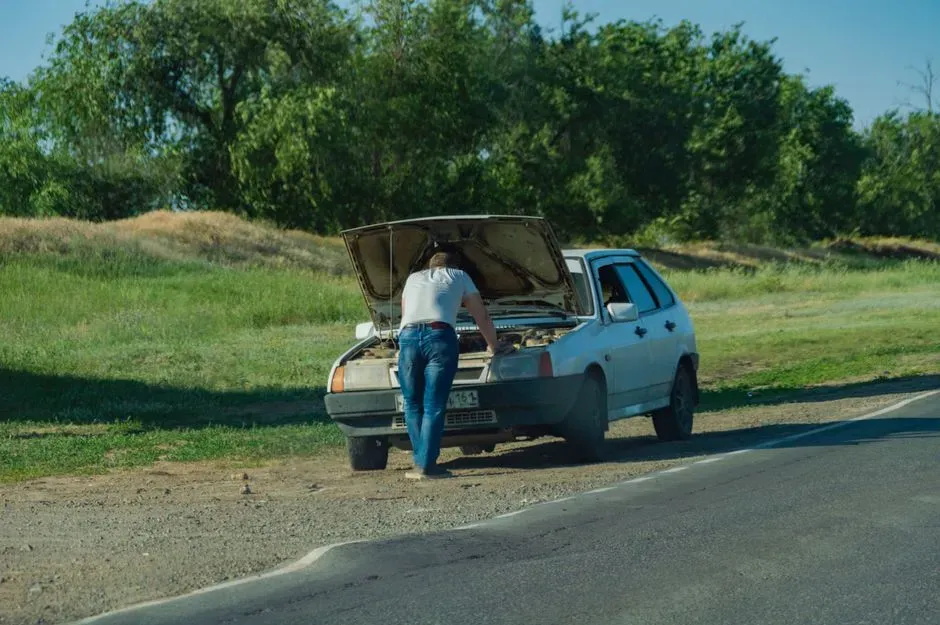
Pictures of cars parked crooked along dirt roads belong in any account of Black Sunday. Drivers who were caught on the road often had to stop because they couldn’t see past the hood. Visibility dropped to nearly nothing in the thickest part of the storm.
Static electricity added to the trouble. The charge built up by blowing dust could interfere with ignition systems and give people a sharp shock when they touched metal. Stories of stalled engines and stranded travelers come up often in recollections of the day.
Families Sheltering Indoors
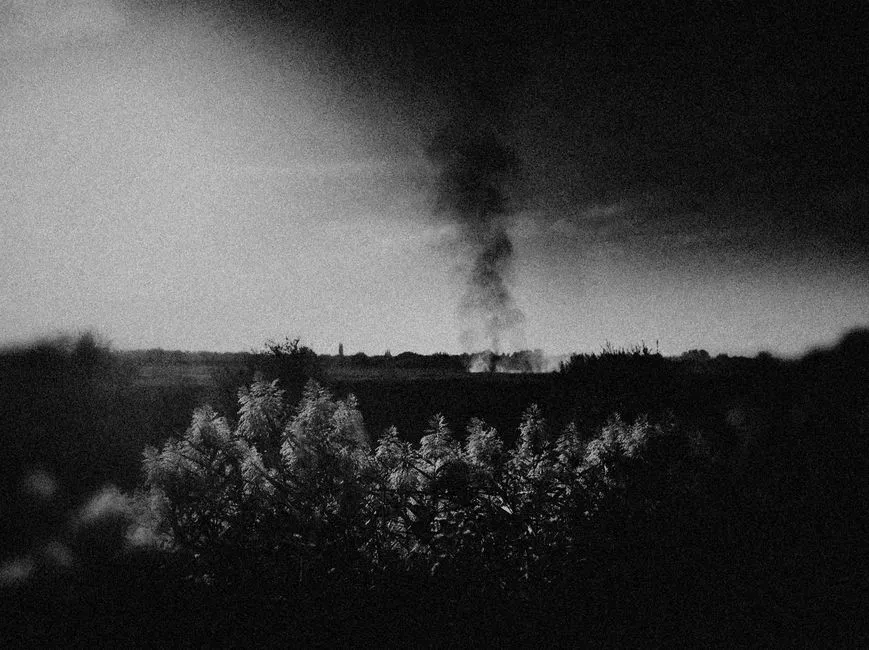
Interior photographs from the Dust Bowl years show how little a closed door could do. Dust sifted through window frames and under doors, coating floors, beds, and tables. People hung wet sheets over windows and stuffed rags into cracks to slow it down.
Black Sunday is often remembered for the people who got through it in their own homes. Many lit lamps at what should have been late afternoon. Others sat in the dark and waited for the wind to ease.
Dust Piled Against Fences and Farm Machinery
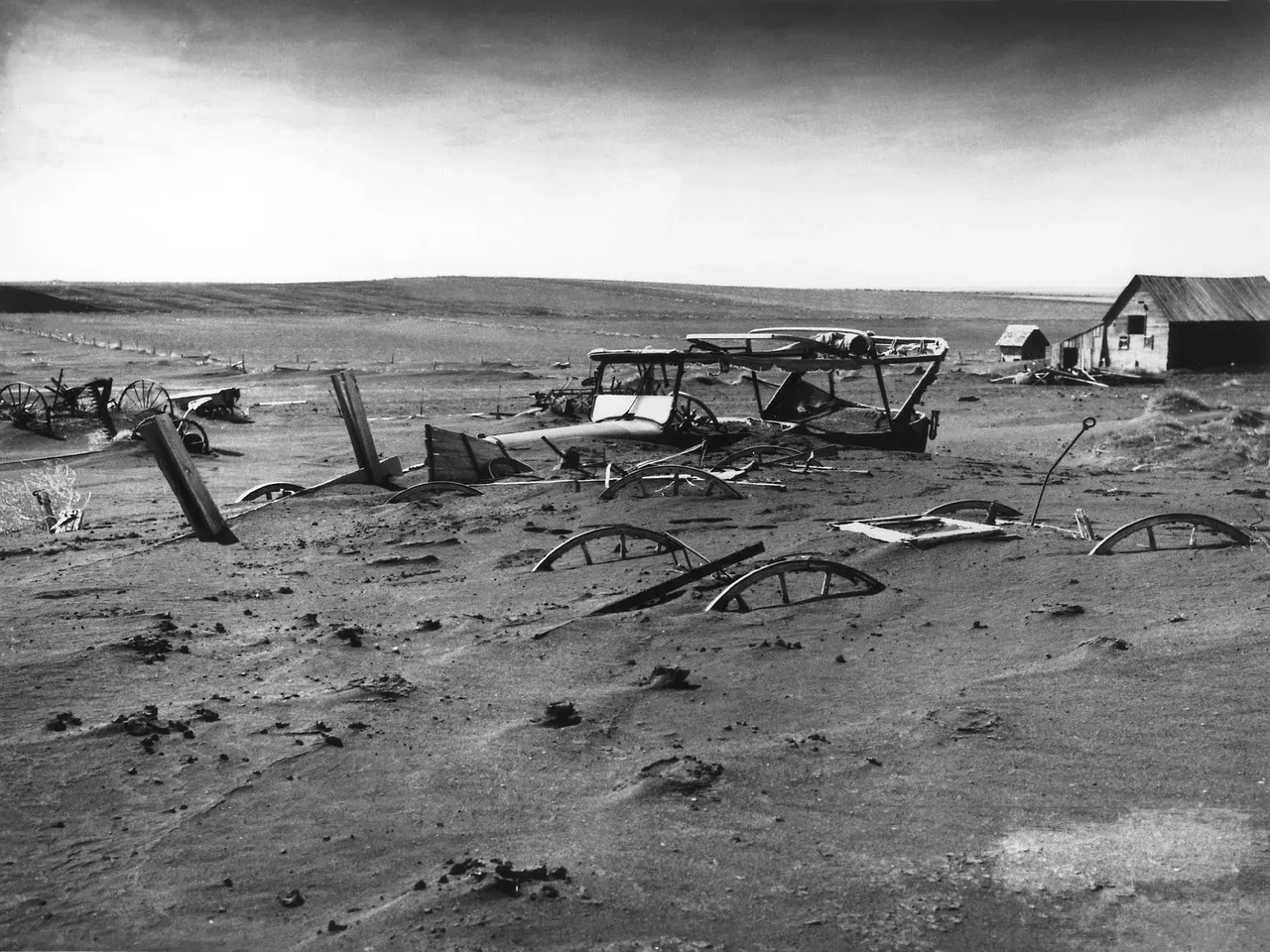
Some of the most striking Dust Bowl photographs show drifts of soil buried up to the crossbars of fences and half covering plows. Photographers from the federal Farm Security Administration documented scenes like these in the mid 1930s. They give a physical sense of how much earth was moving.
Historians often cite an estimate of around three hundred thousand tons of topsoil lifted by the Black Sunday storm. That figure is an estimate, not a precise measurement. Even so, it shows how bare plowed fields could turn into airborne soil once drought took hold.
The Dry Fields Behind the Disaster
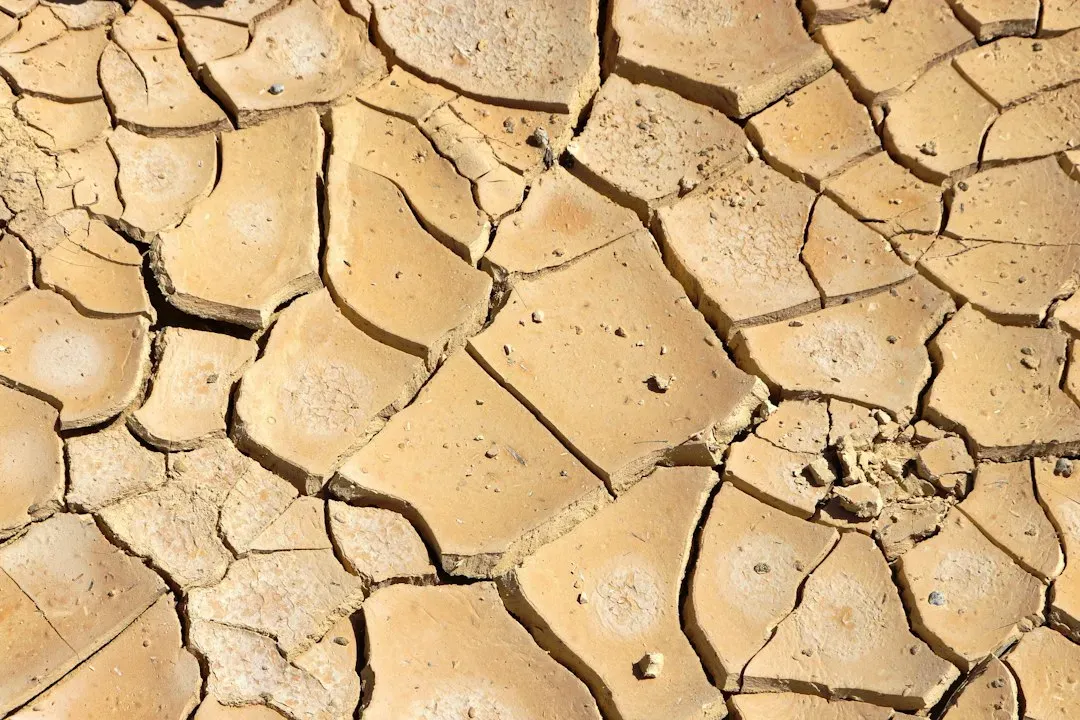
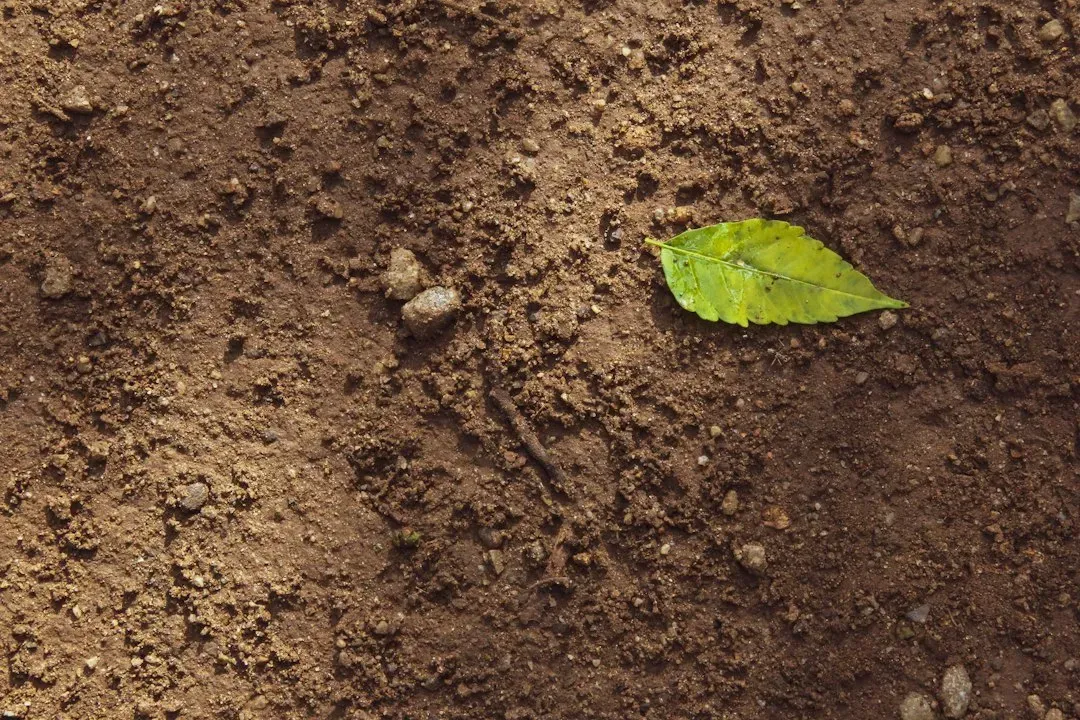
Photos of cracked, bare farmland explain why the storm was so large. Years of drought in the 1930s had left the ground dry. Decades of plowing up native prairie grass had also stripped away the roots that once held soil in place.
The region hit hardest covered parts of Oklahoma, Texas, Kansas, Colorado, and New Mexico. When high winds crossed fields with no cover, the soil had nothing to hold it down. Black Sunday was the sharpest single day in a much longer ecological failure.
The Dust Mask Portraits

Images of people wearing cloth masks, goggles, or wet handkerchiefs over their faces show the health toll. Breathing that much fine dust caused serious lung problems, and local doctors reported what became known as dust pneumonia. Children and older residents were especially at risk.
The exact number of illnesses and deaths tied to dust is hard to pin down. Records from small rural communities were incomplete, and many cases were not clearly classified. What the photographs make plain is how routine protective cloth had become for daily life.
The Reporter Who Named the Region
No single photograph captures this moment, but the dispatch that followed the storm is just as famous. Associated Press reporter Robert Geiger, writing from Boise City, Oklahoma, used the phrase Dust Bowl in his reporting the day after Black Sunday. The name stuck and came to describe the whole stricken region.
Before then, people had described the area in more scattered terms. The new label gave newspaper readers across the country a short, memorable way to talk about the crisis. Photographers and writers who came later used it as their shorthand.
The Photographs That Reached Washington
Images of the dust helped move the story from the Plains to the capital. Soil Conservation Service chief Hugh Hammond Bennett was already pressing Congress for action on erosion. Congress passed the Soil Conservation Act, and President Franklin D. Roosevelt signed it on April 27, 1935, less than two weeks after Black Sunday.
The law created the Soil Conservation Service as a permanent federal agency. It promoted practices such as contour plowing, terracing, and planting cover crops. Those methods, along with a return of rain in later years, gradually reduced the dust storms across the region.
What Came After Black Sunday
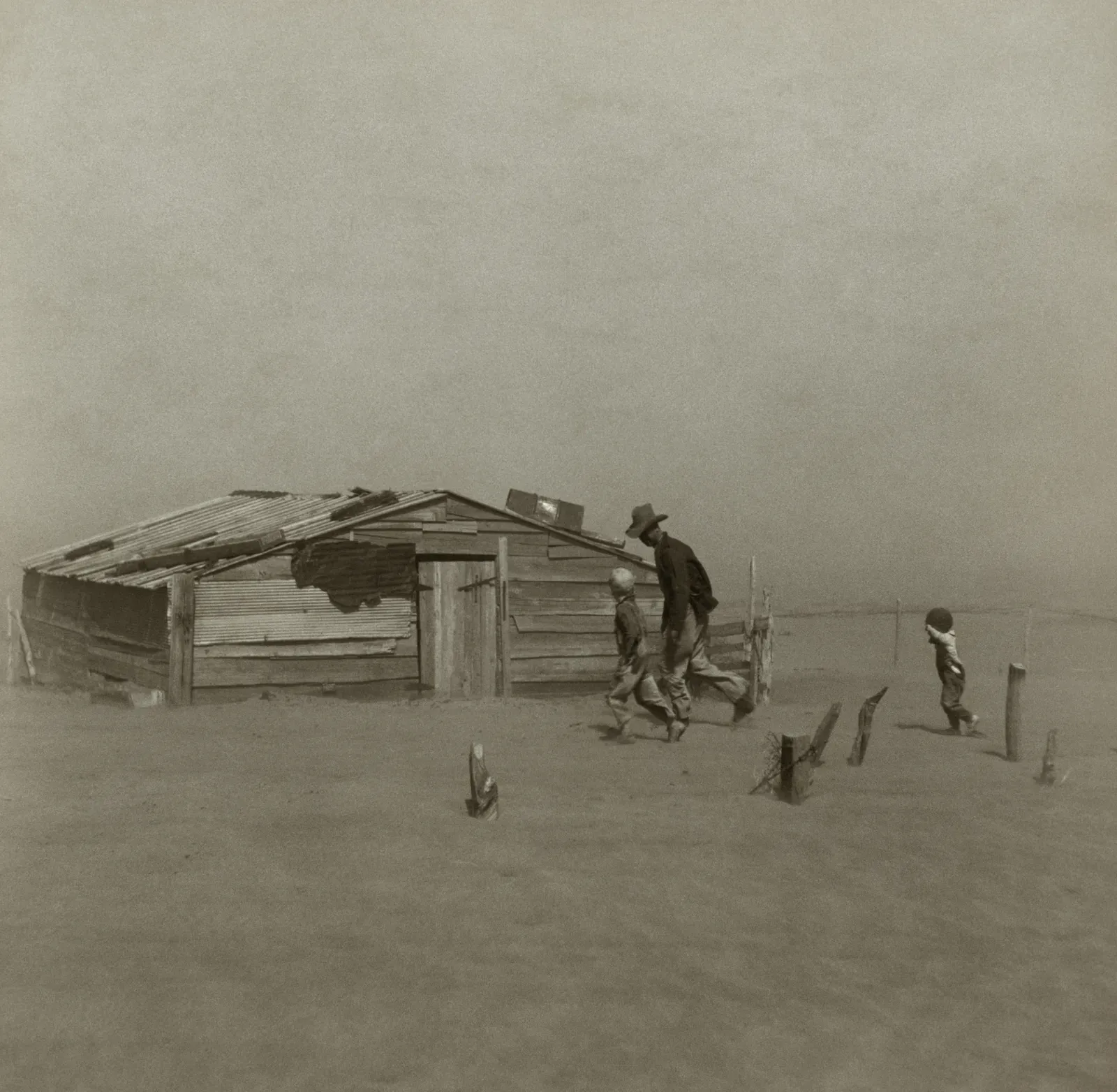
The storms did not stop right away. The Dust Bowl continued through the late 1930s, and some of the best known images of it, including Dorothea Lange’s portraits and Arthur Rothstein’s 1936 photograph of a farmer and his sons walking through a storm in Cimarron County, Oklahoma, were taken after Black Sunday.
Federal programs like the Prairie States Forestry Project, which planted rows of trees as windbreaks, also took shape in this period. Conservation practices introduced then remain part of American farming today. Black Sunday stands as the date when the crisis became impossible for the rest of the country to ignore.

- The Shoreline Sucked Dry in Seconds – 5 Tsunami Signals Beachgoers Mistake for Low Tide - November 14, 2026
- 9 Dark-Sky Destinations Around the World Where the Stars Look Unreal - November 14, 2026
- The Fault Line That Never Slips – 7 Locked Seismic Zones Overdue for a Massive Release - November 14, 2026
