


- The Planet Where It Rains Liquid Glass – 7 Alien Worlds Defying Known Physics - November 14, 2026
- Stars Consuming Entire Worlds – 6 Planetary Systems Swallowing Their Own Worlds - November 14, 2026
- The Ground Liquefies Like Water – 6 Silent Fault Lines Geologists Watch Closely - November 14, 2026
A region that built its reputation on being boring, weather-wise
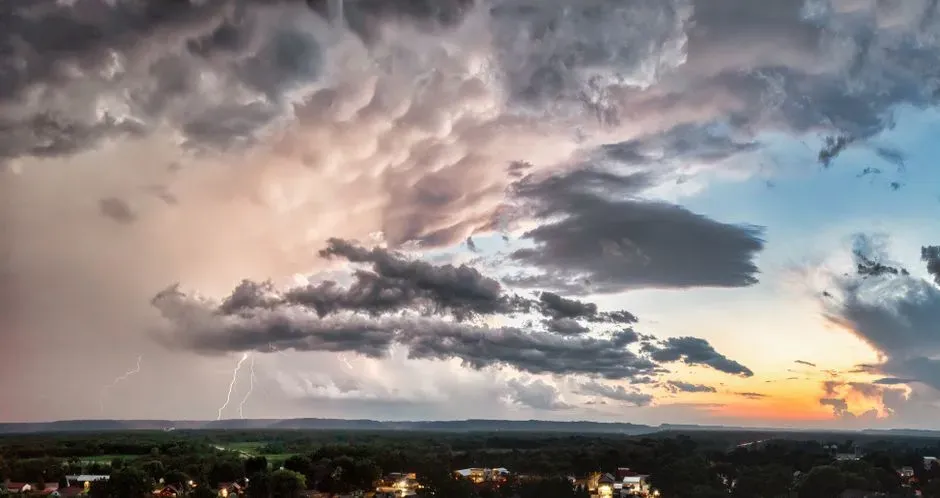
For a long time, the Midwest’s biggest weather story was winter cold, and maybe the occasional summer thunderstorm. Real estate listings and relocation guides have leaned on this reputation for years, framing states like Ohio, Indiana, and Wisconsin as havens from the coastal chaos of hurricanes and wildfires. It made sense during a period when the most violent tornadoes tended to cluster further south and west, in the traditional stretch of Texas, Oklahoma, and Kansas known as Tornado Alley.
That framing is now outdated. Climate researchers have spent nearly a decade documenting a real shift in where severe weather concentrates, and the Midwest keeps showing up at the center of it. The assumption that the region is somehow shielded from disaster has not aged well against what’s actually been happening on the ground since 2024.
Tornado Alley has been quietly sliding east
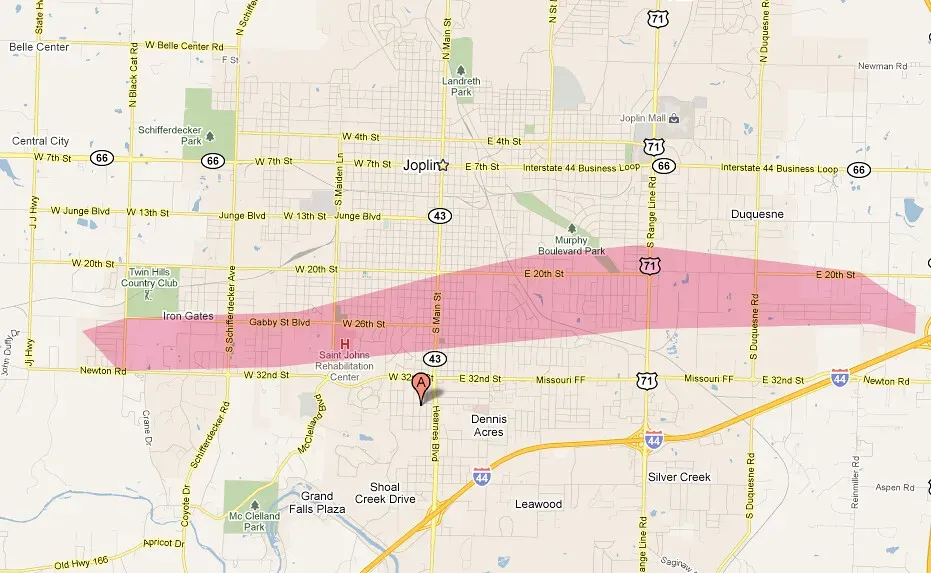
Severe weather researchers have tracked tornado activity moving away from the traditional Great Plains corridor and into states like Missouri, Illinois, and Kentucky. The growing number of tornadoes in the Midwest is a trend that has been studied for nearly a decade, going back to research first published in 2018 showing that tornadoes are shifting east. That’s not a one-time blip either.
Missouri’s own state climatologist has pointed to the pace of recent years as evidence the shift is holding. Missouri has far outnumbered its recent-year average of 52 tornadoes, with 93 in 2024, 104 in 2025, and 81 so far this year. A researcher tracking the trend expects Missouri to cross 200 tornadoes by the time this year closes out, which would have sounded absurd a generation ago for a state that isn’t even in classic Tornado Alley.
2024 and 2025 quietly rewrote the record books
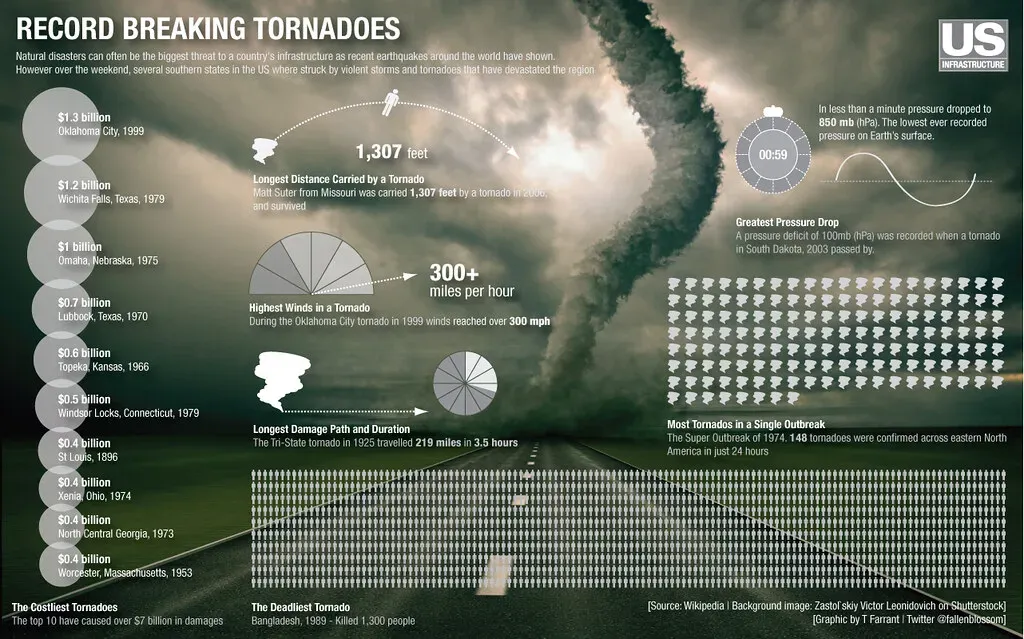
Illinois offers maybe the clearest single-state example of how fast things have changed. By mid-June 2026, Illinois had already logged 149 tornadoes for the year, breaking the state’s previous record high of 142 set in 2024, on top of what had already been a record-active year for the state. That’s two record years within the span of a couple of seasons, not a fluke decades apart.
The broader national picture backs this up. There were six billion-dollar tornado outbreaks in 2024 alone, primarily concentrated in the Midwest, with Illinois, Iowa, and Missouri each experiencing over 100 tornadoes, out of more than 1,700 recorded nationwide, the most in any year except 2011. Spring 2025 pushed things further still, with an outbreak in mid-March becoming the largest tornado outbreak on record for the month of March, causing eleven billion dollars in damages and making it the costliest tornado outbreak in United States history when unadjusted for inflation.
Derechos bring hurricane-force winds without a hurricane
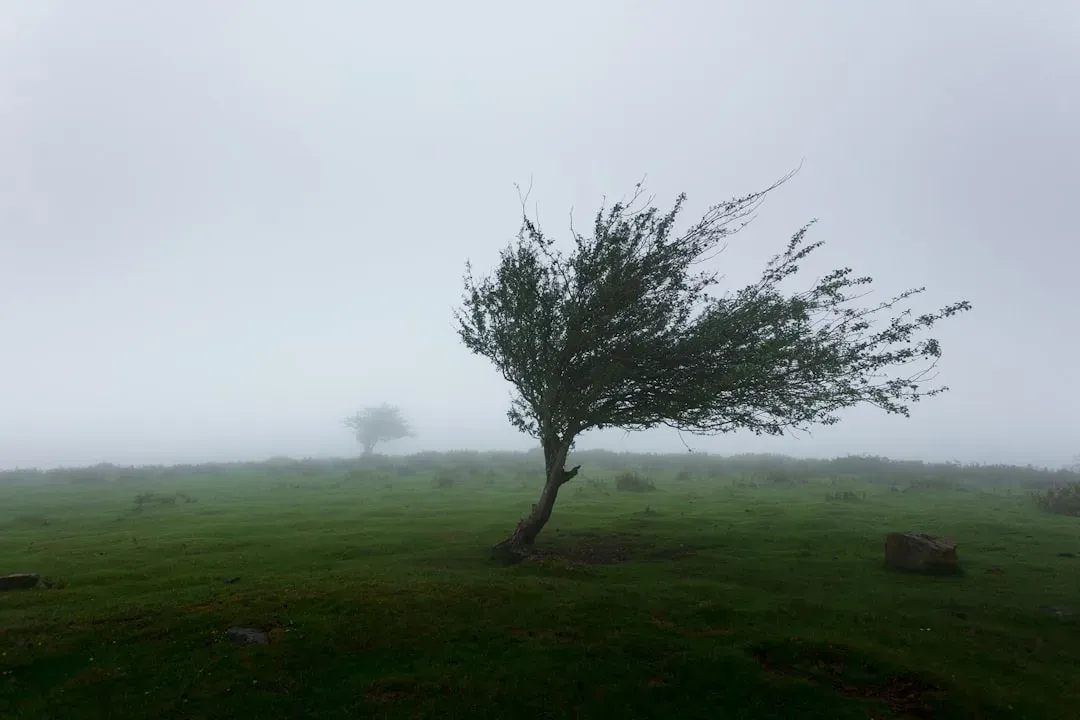
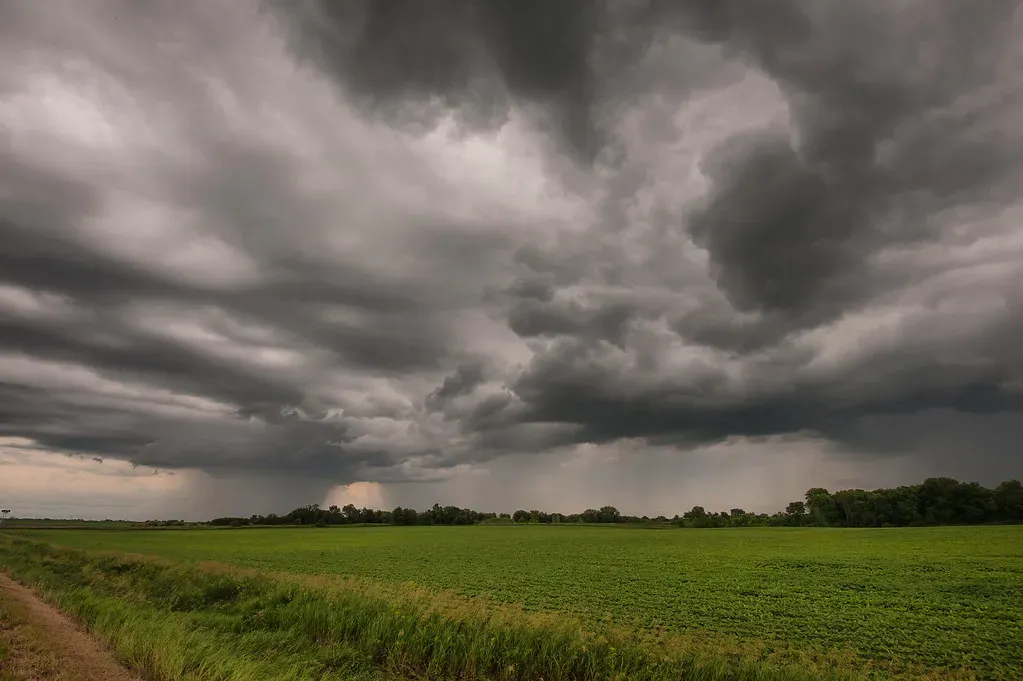
Few weather terms have entered everyday Midwestern vocabulary as quickly as derecho, a long-lived, fast-moving line of thunderstorms capable of producing sustained damage over hundreds of miles. In July 2024, one such storm carved an 800-kilometer path of destruction from Iowa to Indiana, with wind gusts reaching up to 169 kilometers per hour, causing extensive damage, power outages, and at least one fatality. The winds were strong enough that officials described them as comparable to a Category 2 hurricane, which is not the kind of comparison people usually expect for a Tuesday night in Illinois.
This wasn’t an isolated event either. The August 2020 derecho, still remembered across Iowa, produced peak wind gusts estimated at 140 mph in Cedar Rapids, Iowa and caused $11.2 billion in damage, the costliest thunderstorm event on record. Two major, costly derechos in a four-year window is a pattern, not a coincidence, and it suggests the Midwest’s flat, open terrain and warm, moist summer air are becoming an increasingly reliable recipe for this kind of storm.
The floods of 2024 turned quiet rivers into record breakers
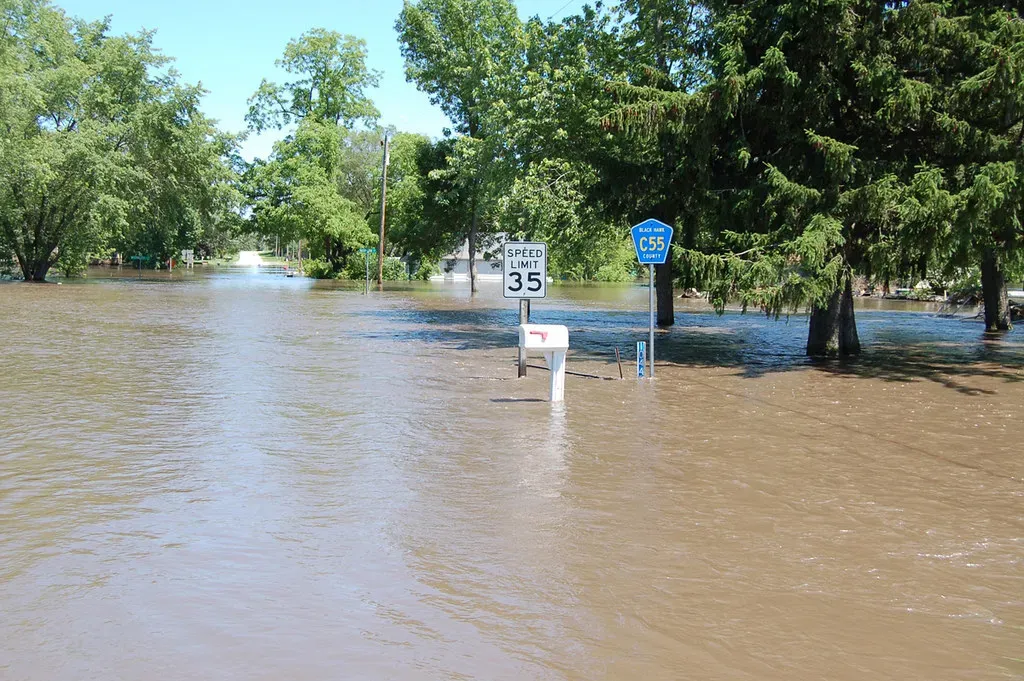
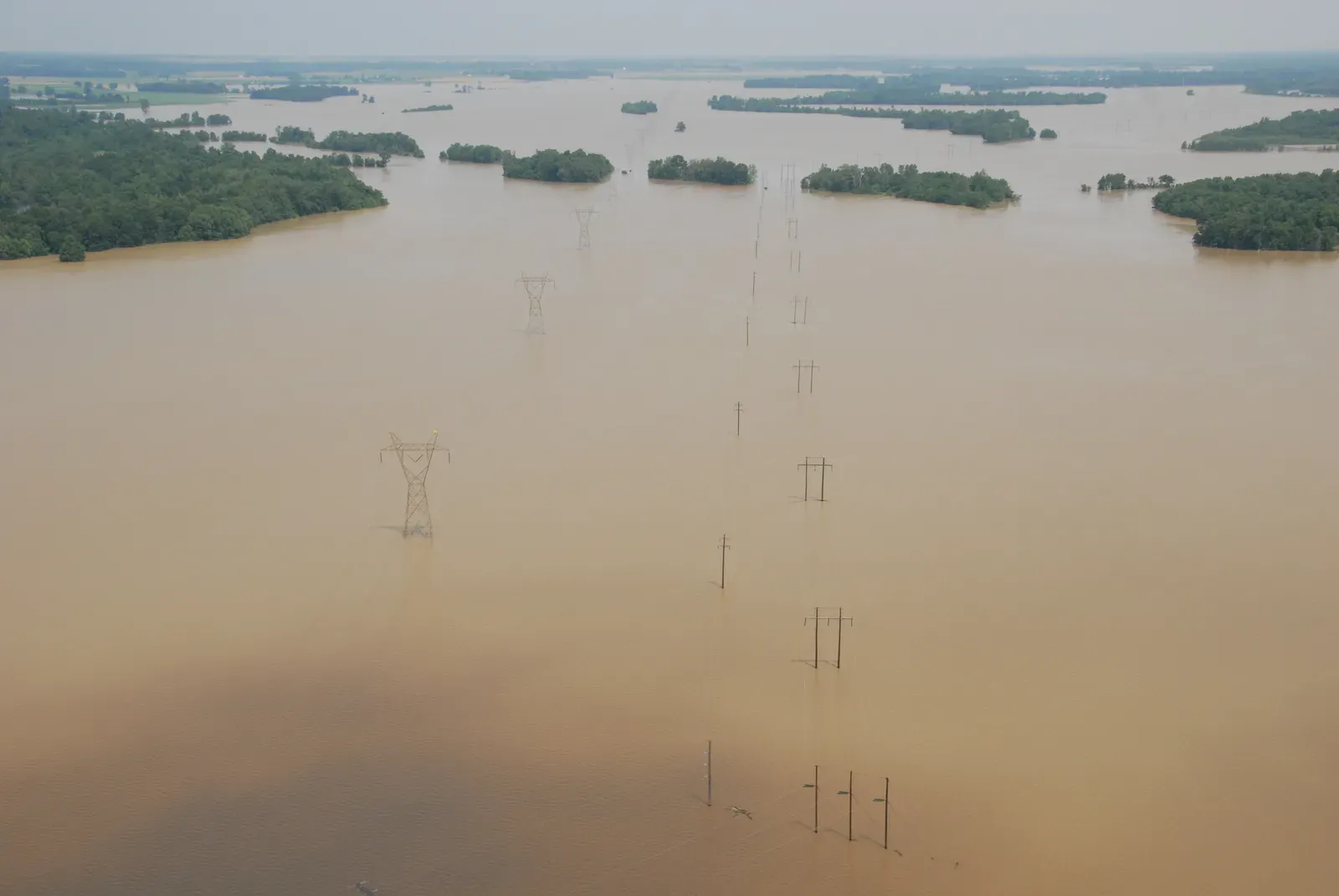
Water, not wind, delivered one of the Midwest’s most disruptive disasters in recent memory. In June 2024, a slow-moving band of storms dumped extraordinary rainfall totals across the Iowa, Minnesota, and South Dakota border region. Mitchell and Sioux Falls, South Dakota, recorded 6.5 and 7.7 inches of cumulative rain respectively, the wettest two-day period in the National Weather Service’s climate record dating back to 1893, while Canton, South Dakota saw about 15 inches over those same days.
The damage that followed was staggering for a region rarely associated with catastrophic flooding. The Rock River rose to an all-time high of 27 feet, well past the 19-foot major flooding stage, and broke a levee in Rock Valley, Iowa, forcing 4,000 residents to evacuate. Iowa’s governor noted that water in some areas rose above the records set in 1993, a flood many in the Midwest remember as the worst of their lives. Ten separate USGS streamgages, some with records stretching back over 90 years, saw brand-new peak flows, and three of them more than doubled their previous record.
A fault line hiding beneath the Mississippi Valley
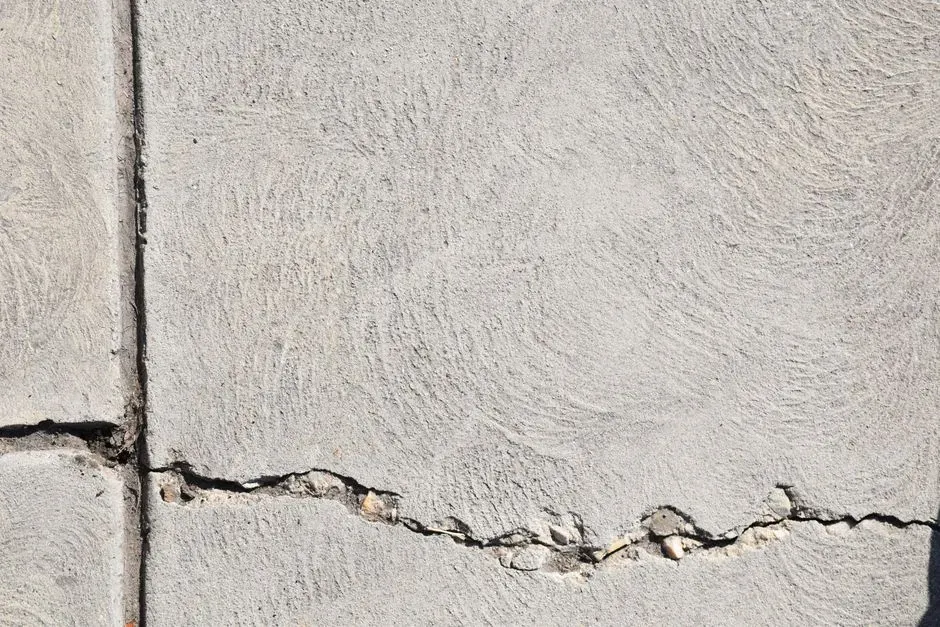
It’s easy to forget that some of the largest earthquakes in recorded U.S. history didn’t happen in California. They happened in the Midwest, along a stretch of the Mississippi River Valley known as the New Madrid Seismic Zone. This 150-mile fault zone spans four states in the Midwest, extending from northeast Arkansas through southeast Missouri, western Tennessee, and western Kentucky to southern Illinois, and produced earthquakes in 1811 and 1812 with magnitudes believed to be approximately 8.0 or greater, felt throughout the eastern United States and Canada.
Scientists don’t consider this dormant history. Scientists estimate that the probability of a magnitude 6.0 or larger earthquake occurring in this seismic zone within any 50-year period is 25 percent to 40 percent. Researchers modeling the potential fallout have found that a magnitude 7.6 earthquake in the New Madrid Seismic Zone could cause losses exceeding $43 billion in 2024 dollars. What makes this risk especially unsettling is the mismatch between hazard and preparedness, since most structures in the region were not built to withstand earthquake shaking the way buildings have been in more seismically active areas like California, and earthquake preparations have also lagged far behind.
Wildfire smoke has become an unwelcome summer regular
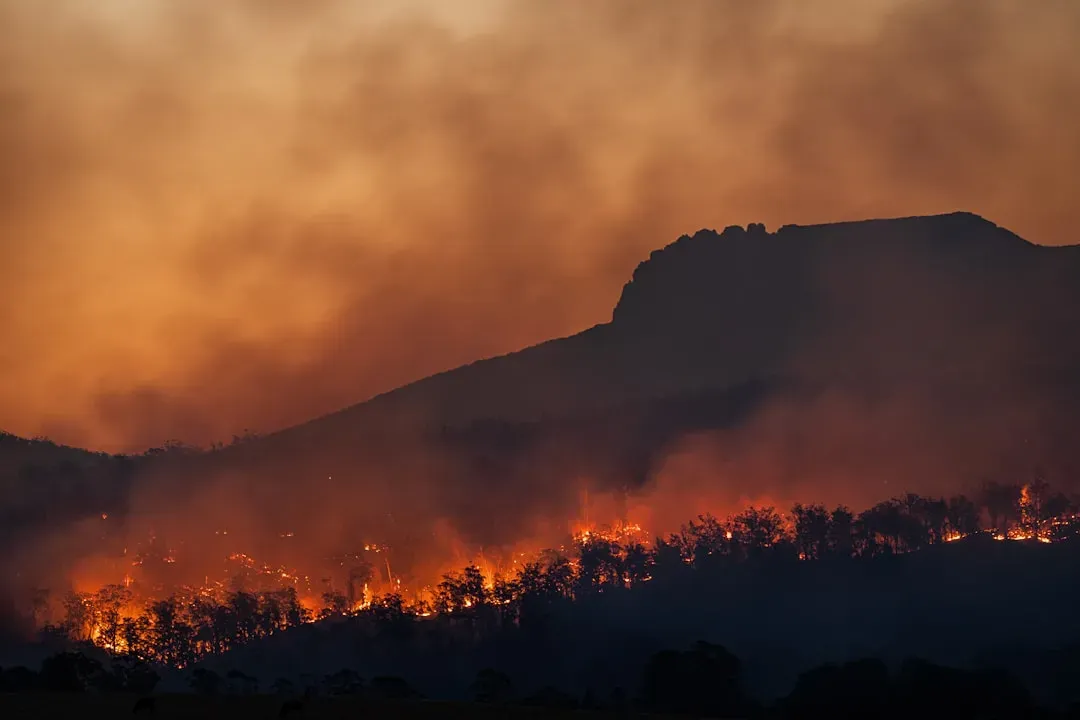
The Midwest doesn’t grow the kind of dense forests that fuel massive wildfires the way the West does, but it has stopped being immune to fire’s effects. Smoke drifting south from Canadian wildfires has repeatedly blanketed Midwestern cities in recent summers, pushing air quality indexes into hazardous territory in places like Chicago, Minneapolis, and Detroit. These smoke events don’t destroy homes directly, but they’ve triggered health advisories, school closures, and canceled outdoor events across the region during peak wildfire seasons.
It’s a reminder that a region doesn’t need its own fires to feel the consequences of a warming, drier North American landscape. NOAA’s national disaster tracking noted a billion-dollar wildfire event in 2024 tied to activity further west, and Midwestern air quality problems tend to spike in tandem with these outbreaks regardless of state lines. The smoke issue underscores how interconnected disaster exposure has become, even for places that never see flames themselves.
Heat and cold extremes are swinging harder than they used to
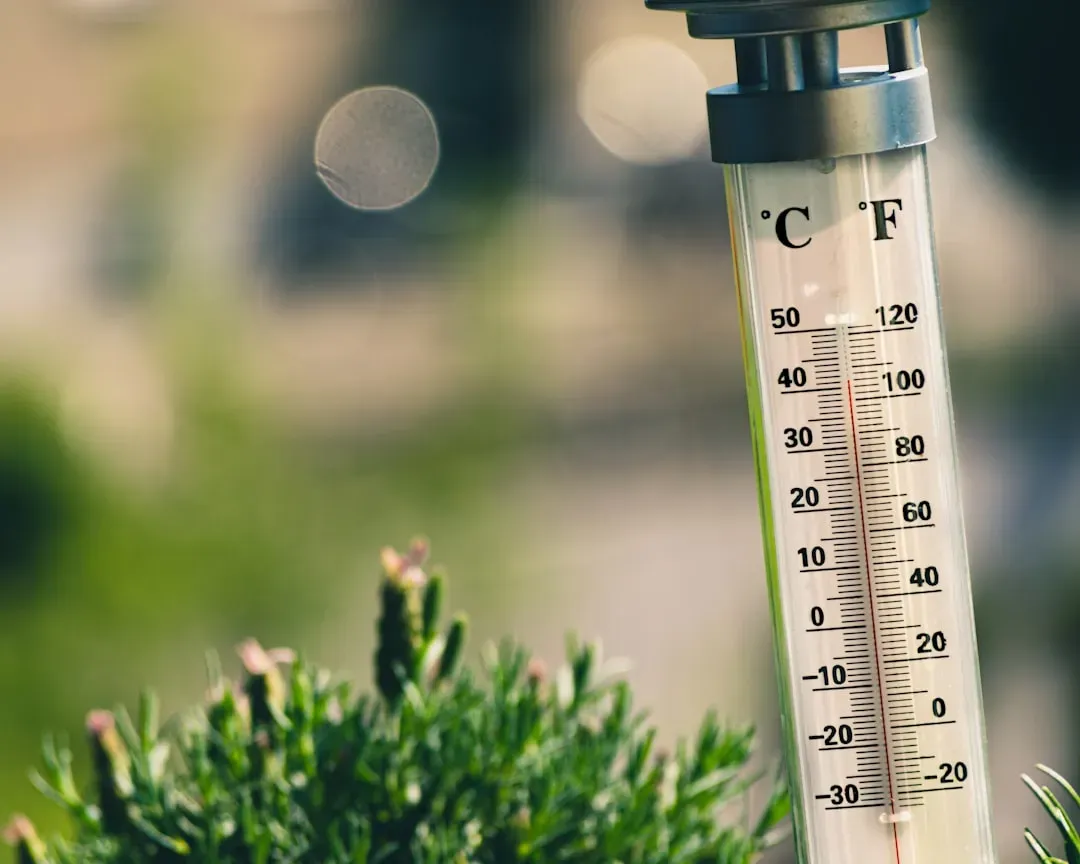
Temperature data from recent years shows the Midwest isn’t just getting more storms, it’s getting more volatile temperature swings too. For 2024, temperatures were much-above average across nearly the entire contiguous U.S., with record warm temperatures stretching from the Upper Midwest to the central Appalachians and into the Northeast. That warmth doesn’t cancel out the cold snaps either, since the same NOAA disaster tally for that year included winter storm and cold wave events that caused widespread power outages and freezing across the eastern half of the country.
This whiplash pattern, unusually warm stretches followed by punishing cold blasts, puts additional strain on infrastructure never designed for such variability. Power grids, water systems, and agricultural planning all depend on a degree of temperature predictability that the region increasingly can’t offer. It’s a quieter disaster category than tornadoes or floods, but arguably one that touches more people, more often.
The price tag keeps climbing, year after year
Numbers tend to cut through arguments about perception versus reality, and the Midwest’s disaster numbers have grown hard to ignore. In 2024, the United States experienced 27 separate weather or climate disasters that each resulted in at least $1 billion in damages, trailing only the record-setting 28 events of 2023, at a total cost of approximately $182.7 billion. Midwestern severe storms and flooding made up a meaningful share of that tally, not just a footnote buried under hurricane headlines.
Part of the rising cost comes down to simple exposure. Increased building and population growth in high-risk areas means more people and property are at risk, contributing to larger losses over time. Midwestern towns built along rivers or in tornado-prone corridors decades ago now hold far more homes, businesses, and infrastructure than they once did, meaning the same storm that might have caused modest damage in 1975 now runs up a bill in the hundreds of millions.
Why the old assumption still refuses to die
Despite everything above, the belief that the Midwest is somehow disaster-light persists in real estate marketing, casual conversation, and even some insurance discussions. Part of this comes down to comparison bias: a derecho or a river flood simply doesn’t generate the same visual drama as a hurricane making landfall on live television, even when the financial and human toll is comparable. Slow-building river floods and wind storms that flatten grain silos don’t photograph the same way as a collapsing coastal boardwalk, even though both leave families without homes.
There’s also a data lag problem. Many of the trends described here, the eastward tornado shift, the repeated billion-dollar derechos, the record flood years, are recent enough that public perception simply hasn’t caught up with the underlying science yet. Given how quickly the last few tornado and flood seasons have broken records, that gap in awareness is likely to close faster than most people expect.
Final thoughts
The Midwest was never truly disaster-proof, but for a long stretch it was reasonable to treat it as comparatively calm. The last two to three years have made that comparison much harder to defend, between record tornado counts in Illinois and Missouri, a pair of costly derechos bookending the decade, a flood season that broke century-old river records, and a seismic hazard sitting quietly beneath the Mississippi Valley the whole time. None of this means the region has become as disaster-prone as Gulf Coast hurricane zones or California wildfire country. It does mean the phrase “the Midwest doesn’t get natural disasters” belongs less to fact and more to an outdated assumption that current numbers no longer support.
