


- The Most Underrated Scientific Discoveries of the Last Decade - September 19, 2026
- 6 Scientific Terms That Sound Made Up – But Aren’t - September 19, 2026
- Top 12 Destinations for Stargazers Who Hate Light Pollution - September 19, 2026
Quark

Quarks are the fundamental particles that make up protons and neutrons, and the name has nothing to do with physics jargon traditions. Physicist Murray Gell-Mann borrowed the word from a line in James Joyce’s novel Finnegans Wake, where it appears in a nonsensical bit of wordplay. He liked the sound of it and needed a short, catchy label for a brand new class of particle he was proposing in 1964.
Despite the whimsical origin, quarks are anything but a joke in physics. They come in six types, called up, down, charm, strange, top, and bottom, and they combine in specific ways to form the protons and neutrons inside every atom. The Standard Model of particle physics, which has been tested extensively at facilities like CERN, relies on quarks as one of its foundational building blocks.
Panspermia
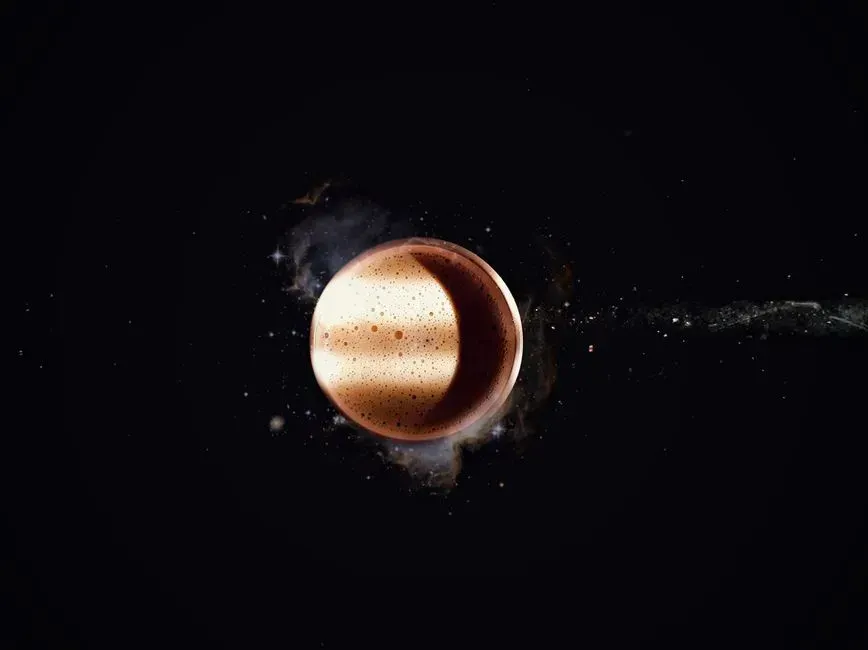
Panspermia sounds like it could be lifted from a pulp science fiction cover, but it is a serious, long-debated hypothesis in astrobiology. The term describes the idea that life, or the chemical precursors to life, could travel between planets or even star systems on asteroids, comets, or space dust. It is not a fringe theory dreamed up recently; versions of the concept date back to ancient Greek philosophy and were revived scientifically in the 19th and 20th centuries.
Modern researchers have found that certain hardy microorganisms and organic molecules can survive the extreme conditions of space for extended periods, which keeps the hypothesis alive in scientific discussion. Studies analyzing meteorites have detected amino acids and other organic compounds of extraterrestrial origin, lending some indirect support to the idea. It remains unproven as a mechanism for how life started on Earth, but it is taken seriously enough to shape ongoing research into astrobiology and planetary protection protocols for spacecraft.
Zugzwang

Borrowed from German and used mostly in chess and game theory, zugzwang describes a situation where a player is forced to move even though every available move worsens their position. The term translates roughly to “compulsion to move,” and it captures a very specific, almost paradoxical kind of disadvantage. It sounds invented because of its unusual phonetics in English, but it has been part of chess vocabulary for over a century.
Beyond the chessboard, the concept has found its way into broader game theory and even economics, where it describes scenarios in negotiation or strategy where inaction is impossible and every choice carries a cost. Researchers studying decision-making under constraint sometimes use zugzwang as a shorthand for these no-win positioning problems. Its persistence as a technical term shows how a foreign word can become genuinely useful once English lacks a precise equivalent.
Boojum

The boojum sounds like it should stay firmly in Lewis Carroll territory, and in fact that is exactly where the name comes from. Physicist David Mermin borrowed the term from Carroll’s nonsense poem The Hunting of the Snark to describe a particular type of surface disturbance observed in superfluid helium-3. It refers to a singular point defect that forms on the surface of the superfluid under certain conditions, and Mermin thought the whimsical name fit the strange, almost magical behavior of the phenomenon.
Superfluid helium-3 itself is already an exotic state of matter, flowing without viscosity at temperatures close to absolute zero. The boojum defect has been studied experimentally since the late 1970s and remains a genuine subject in low temperature physics research. It stands as one of the clearest examples of physicists borrowing literary nonsense to label something they could not otherwise describe neatly.
Nudibranch
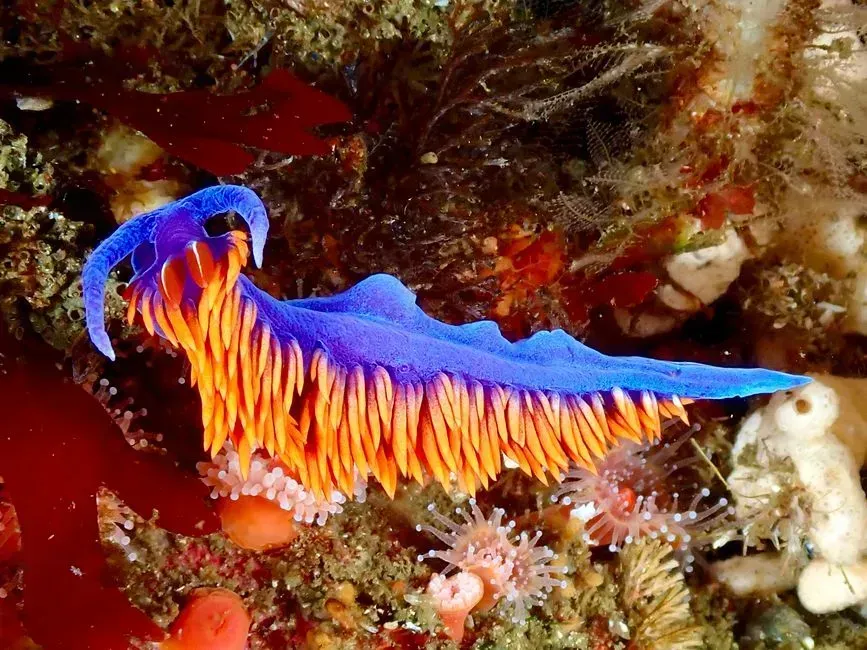
Nudibranchs are a group of soft-bodied marine mollusks known for their vivid colors and often bizarre shapes, and the name itself sounds like a mash-up of unrelated syllables. It actually comes from Latin and Greek roots meaning “naked gill,” a direct reference to the exposed gill structures many species display on their backs. There are thousands of documented nudibranch species, and new ones continue to be identified by marine biologists exploring reef and deep sea environments.
What makes nudibranchs scientifically interesting goes beyond their odd name and striking appearance. Many species can incorporate toxins or stinging cells from the prey they eat into their own bodies as a defense mechanism, a process biologists have documented across various nudibranch families. Their diversity and unusual biology make them a frequent subject of study in marine chemistry and evolutionary biology research.
Syzygy
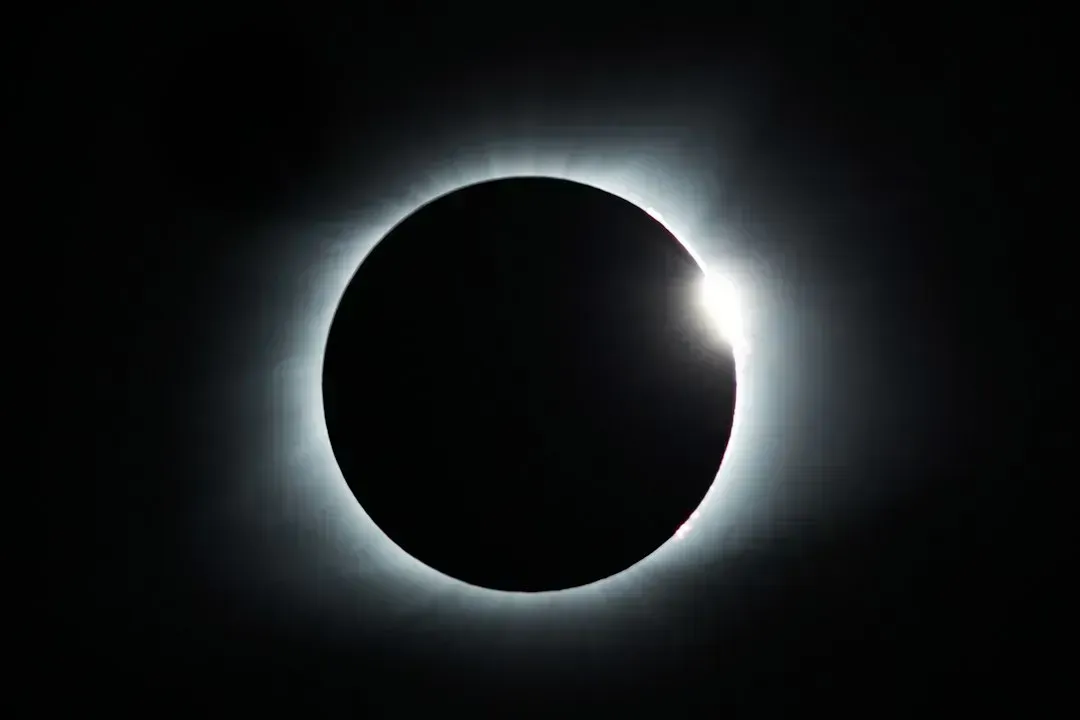
Syzygy looks like a typo or a word invented for a crossword puzzle, but it is an established term in astronomy. It refers to a straight-line alignment of three celestial bodies, most commonly used to describe the Sun, Earth, and Moon lining up during eclipses or specific lunar phases. The word comes from a Greek term meaning “yoked together,” reflecting the idea of bodies being linked in a single alignment.
Astronomers use syzygy regularly when discussing solar and lunar eclipses, as well as certain tidal patterns influenced by the combined gravitational pull of aligned bodies. It is a precise, functional term rather than a decorative one, even though it reads like nonsense at first glance. The concept remains a basic part of astronomical vocabulary used in both academic literature and public outreach about eclipses.
Each of these terms shows that scientific language does not always follow tidy, predictable patterns. Sometimes a researcher borrows from literature, sometimes from another language entirely, and sometimes the natural world simply produces something so strange that only an odd sounding word will do. What unites them is that behind every unusual name sits a concept grounded in observation, testing, and real evidence.