


- The Planet Where It Rains Liquid Glass – 7 Alien Worlds Defying Known Physics - November 14, 2026
- Stars Consuming Entire Worlds – 6 Planetary Systems Swallowing Their Own Worlds - November 14, 2026
- The Ground Liquefies Like Water – 6 Silent Fault Lines Geologists Watch Closely - November 14, 2026
1. We Only Use 10 Percent of Our Brains

Few myths have been as stubbornly durable as this one. Humans use 100 percent of their brains, not 10 percent. This persistent myth ranks among the most widespread misconceptions in popular psychology, believed by roughly 65 percent of Americans and nearly half of schoolteachers worldwide. The appeal is obvious. The implication that vast, untapped mental potential is just waiting to be unlocked is a compelling idea, and Hollywood has repeatedly exploited it.
Modern neuroscience provides robust evidence that we use virtually every part of our brain across various cognitive and physiological tasks. Evolutionarily, it would make no sense for the human brain, which consumes about 20 percent of the body’s energy despite accounting for only about 2 percent of its mass, to be largely unused. Brain imaging scans, including fMRI and PET technology, show activity distributed across essentially the entire brain. The entire brain is constantly active, even in periods of sleep: regulating, monitoring, sensing, interpreting, reasoning, planning, and acting. Even people with degenerative neural disorders such as Alzheimer’s and Parkinson’s disease still use more than 10 percent of their brains.
2. You Are Either Left-Brained or Right-Brained
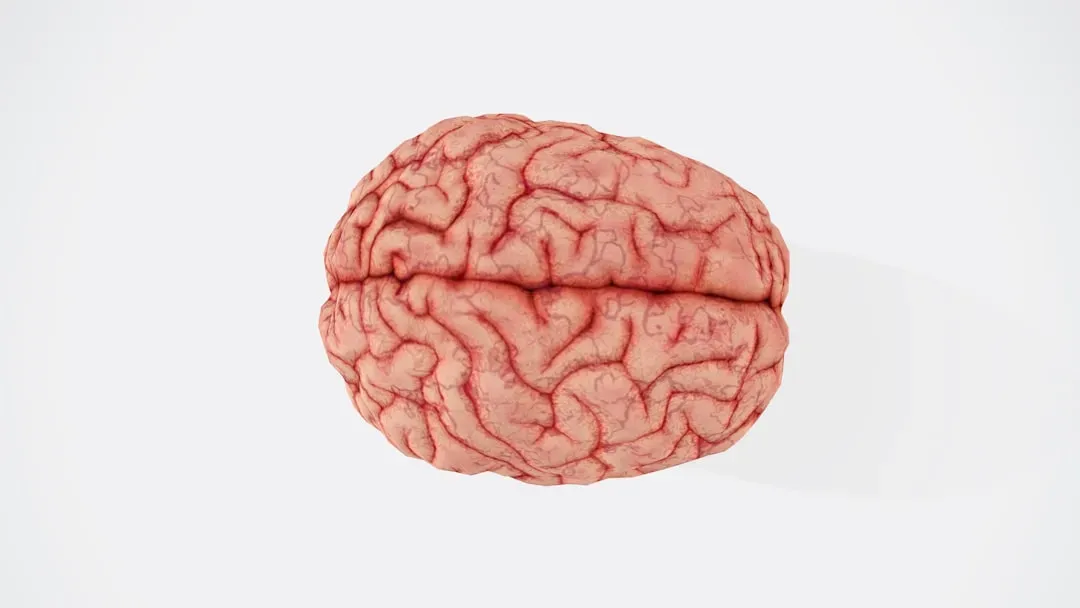
For decades, the idea that creativity comes from the right side of the brain dominated popular culture. People were told they are either “right-brained” (creative, intuitive) or “left-brained” (logical, analytical). Modern fMRI-based neuroscience continues to debunk this false equation. The original science had some substance to it. Neuroscientist Roger Sperry conducted split-brain studies on cats, monkeys, and epilepsy patients, showing that different brain hemispheres specialize in different tasks. His work was groundbreaking, but it was later oversimplified into the myth that people are either left-brained or right-brained.
In 2013, a team of neuroscientists reviewed Sperry and Gazzaniga’s research, along with new evidence, and debunked several previous findings: the human brain does not favor one side over the other. Brain scans show that both sides of the brain are active, even when performing tasks commonly attributed to just one hemisphere. Neuroscience research reveals that there is an “innovation circuit” in the brain that supports exploration, divergent thinking, and creativity – but it lives in both sides of the brain. The clean division between logical and creative people is a narrative convenience, not a neurological reality.
3. Sugar Makes Children Hyperactive

Ask most parents and they will tell you confidently that sugar sends kids bouncing off the walls. It’s one of those beliefs so embedded in parenting culture that it feels almost reckless to question it. The idea that sugar causes hyperactivity in children has not been supported by science. Over a dozen large studies have not shown that sugar causes hyperactivity. The body of research on this is not thin. It is actually one of the more thoroughly investigated nutrition myths in pediatric science.
The mechanism behind the belief is understandable in a folk-wisdom kind of way. Children tend to eat sugar at parties and celebrations, environments that are already stimulating and exciting. The sugar becomes a convenient explanation for the energy researchers believe was already there. What studies have consistently found instead is that parental expectation plays a significant role. When parents are told their child has consumed sugar, they rate the child’s behavior as more hyperactive, even when the child has consumed none. The perception, in other words, precedes the evidence.
4. The Great Wall of China Is Visible From Space

This one has been taught in classrooms for decades. It has appeared in textbooks, trivia games, and casual conversation with total confidence. The Great Wall of China, the claim goes, is the only man-made structure visible from the Moon, or at minimum from low Earth orbit. It is a striking idea. It is also simply not true. The wall is long, yes, but it is narrow, rarely exceeding about nine meters in width. At that width, it is far too thin to be resolved by the human eye at orbital distances, no matter how good one’s vision is.
Chinese astronaut Yang Liwei, who traveled to space in 2003, confirmed he could not see the wall. NASA has stated explicitly that the Great Wall is not visible from the Moon, and even from low Earth orbit it requires ideal atmospheric conditions and specialized cameras to detect at all. Sometimes even after a theory is disproved, it will linger in popular culture. That is precisely what has happened here. The claim persists not because of any surviving evidence but because it has been repeated so many times that it feels like established fact.
5. Cracking Your Knuckles Causes Arthritis

Generations of parents delivered this warning with complete conviction. It is the kind of warning that feels intuitive, partly because the sound is so unpleasant and partly because something that noisy surely cannot be harmless. While cracking your knuckles may be annoying for those around you, it has no correlation to arthritis in those joints. Several studies that aimed to find a link between the two found no substantial evidence of any correlation. What is actually happening is entirely mechanical. Knuckle cracking is a bubble being formed and popped by the liquid that surrounds your knuckle joints. It causes no trauma to these areas that would accelerate the onset of inflammation to these joints, which is what arthritis is.
Those who excessively cracked their knuckles did have slightly weaker grip strength later in life. That is the one real finding associated with the habit, and even that effect is modest. The arthritis link, however, has been looked for repeatedly and simply is not there. The myth likely persists because arthritis is common in aging hands generally, making it easy to retroactively connect the habit to the condition. Correlation, as researchers are fond of pointing out, is not causation.
6. Humans Lose Most Body Heat Through Their Heads

Parents everywhere have deployed this one every winter. Put your hat on, you lose most of your heat through your head. It became embedded enough to appear in official military guidance. The U.S. Army Field Manual used to state that “40 to 45 percent of body heat is lost through the head,” leading to parents everywhere insisting upon hats as protection in the colder months. Scientists have reevaluated this claim in recent years, finding that only 7 to 10 percent of heat is lost from your head. That figure makes anatomical sense. The head accounts for roughly that same proportion of the body’s surface area, so heat loss scales accordingly.
Nearly half of survey respondents believe that most human heat escapes through your head, but experts claim only around 10 percent of body heat is lost this way, due to its relatively small surface. The origin of the exaggerated figure is often traced to a series of military cold-weather studies from the 1950s in which subjects wore insulated Arctic suits but left their heads uncovered. The head was the only exposed part, so of course most of the heat escaped from it. That context was lost in translation, and the statistic took on a life of its own. Wearing a hat is still a good idea, especially if your hair is wet, but it’s not as crucial as most people think.
What is striking about all six of these examples is not that people believed them. Most had some grounding in real observation or genuine early research. What is striking is how long they stay in circulation once the evidence moves on. Science updates its understanding continuously. The challenge is getting that update to travel all the way from the journal to the dinner table.