

- Phantom Energy Sucking Power 24/7 – 7 Home Electronics Quietly Inflating Utility Bills - November 14, 2026
- A Million-Mile Storm Raging for Centuries – 6 Violent Weather Wonders in Our System - November 14, 2026
- Animals Flee Hours Before the Tremor – 7 Natural Warnings Before Disasters Strike - November 14, 2026
Walk into a damp forest on a moonless night and let your eyes adjust. Sometimes the rotting logs and leaf litter give off a faint, cool light, as if something underneath were switched on. The light comes from fungi, and the colour is usually a pale green that can look bluish to eyes adapted to the dark.
Scientists have catalogued more than a hundred species of fungi that make their own light. Researchers still debate exactly why they do it, and a few of these species have become well studied. Here are six of the best known.
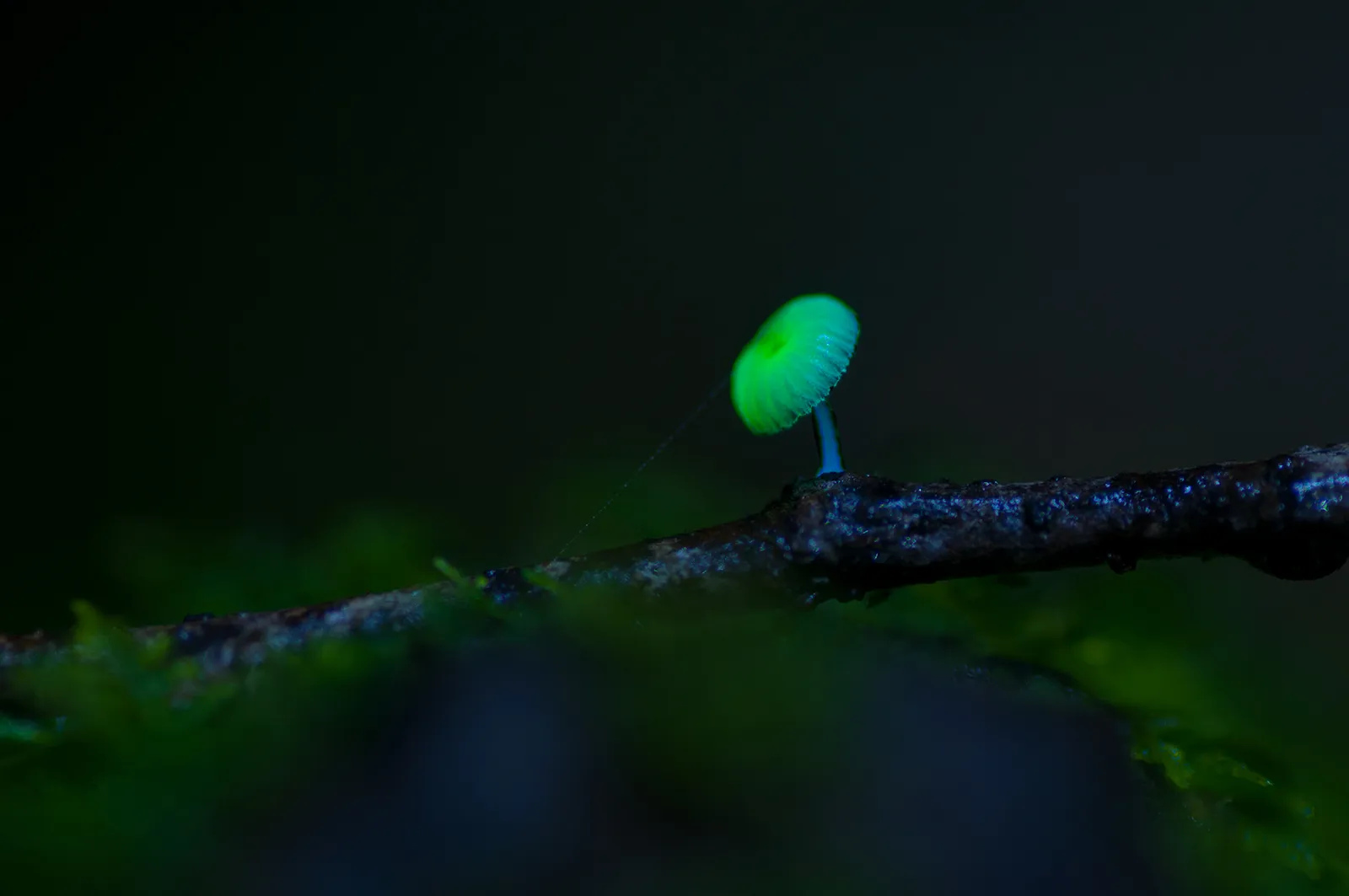
Mycena chlorophos, the Lamp Mushroom of Asian Forests
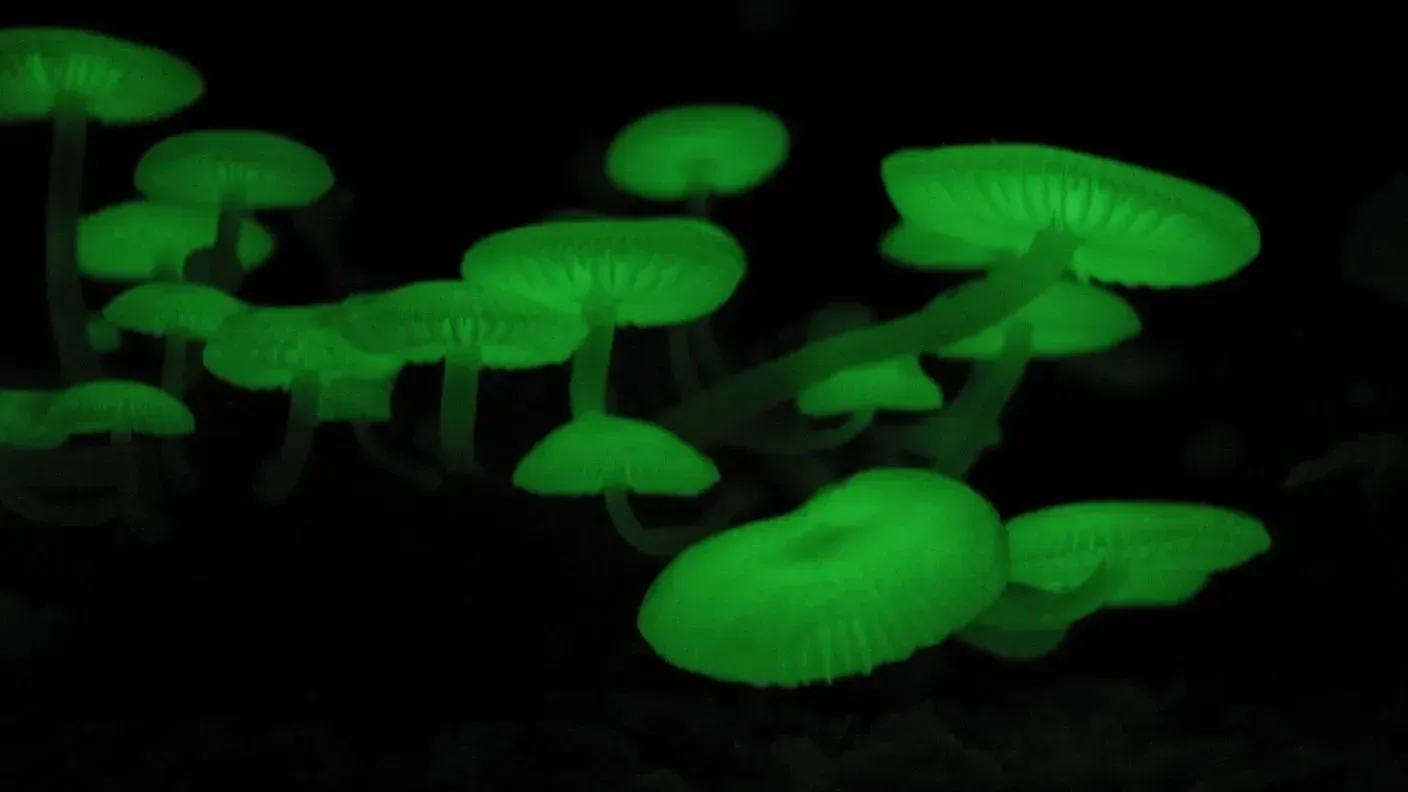
Mycena chlorophos is a small, pale mushroom found in warm, humid regions of Asia and the Pacific, including Japan and Taiwan. Its cap and stem both glow, and the light is bright enough to be seen in a fully dark forest. It often grows on decaying plant matter, such as fallen palm debris.
The glow is a steady green. It becomes noticeable only after the eyes have had several minutes in darkness. The mushroom is a popular subject for night photographers, who use long exposures to capture a light too faint for a quick snapshot.
Mycena luxaeterna, the Eternal Light Mushroom of Brazil
Mycena luxaeterna grows in the Atlantic Forest of Brazil. Its species name comes from Latin and means eternal light. The caps are tiny, and the stems are thin and translucent.
The species was found in a region known for its biodiversity and has been described in the scientific literature. Like other Mycena species, it glows green in the dark. Its small size means that a single mushroom is easy to miss, though a cluster on a damp log makes a visible patch of light.
Neonothopanus gardneri, the Coconut Flower Mushroom
Neonothopanus gardneri grows on the base of palm trees in the Brazilian cerrado. It is one of the better studied glowing fungi, and it is often called the flor de coco, or coconut flower mushroom. Its fruiting body is wide and funnel shaped, and it shines green.
A 2015 study in Current Biology found that its glow follows a daily rhythm. The light is brighter at night and dimmer by day, and a temperature cycle controls it, not light itself. The researchers also showed that the glow attracted insects, which suggests that the fungus may use light to help spread its spores.
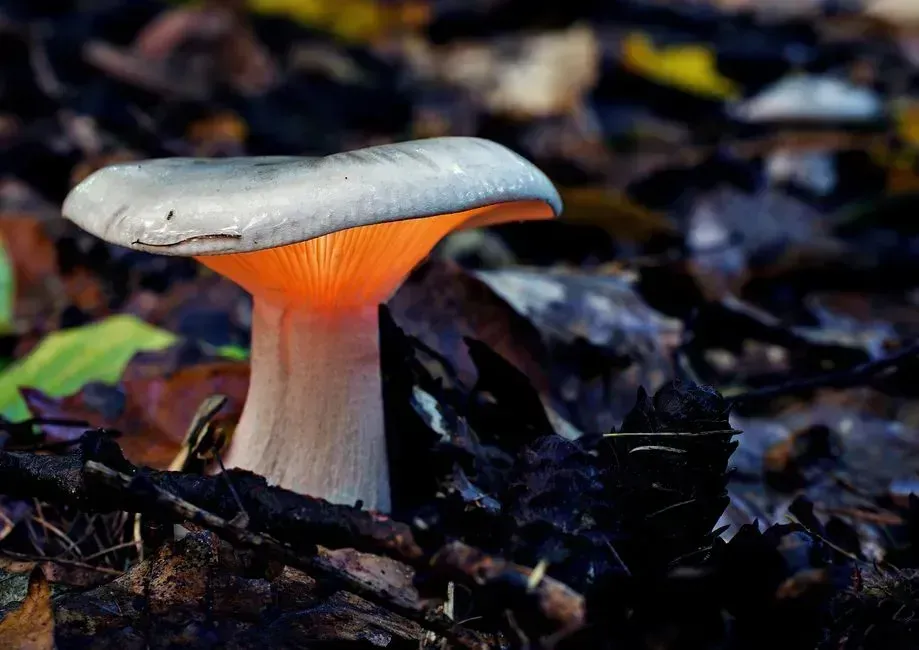
Omphalotus olearius, the Jack-o’-lantern Mushroom
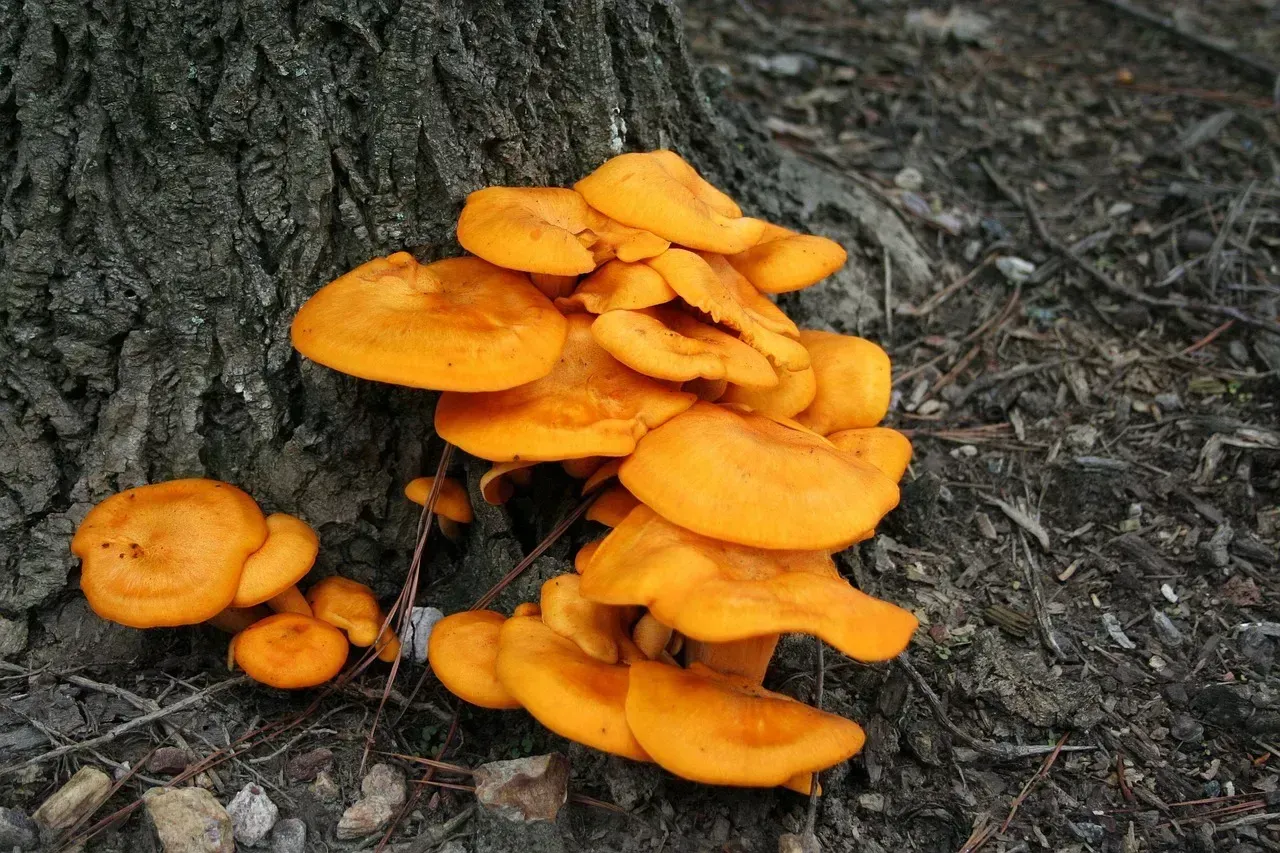
Omphalotus olearius is a bright orange mushroom that grows in clusters on stumps and tree roots, mostly in Europe. Its gills give off a faint green light in darkness. The name refers to the glow, which people have long compared to a carved pumpkin lantern.
The mushroom is poisonous. It can look like edible chanterelles, and eating it causes severe stomach upset. The glow is a good reason to admire it from a distance, and field guides advise against collecting it for the table.
Armillaria mellea, the Honey Fungus and Its Foxfire
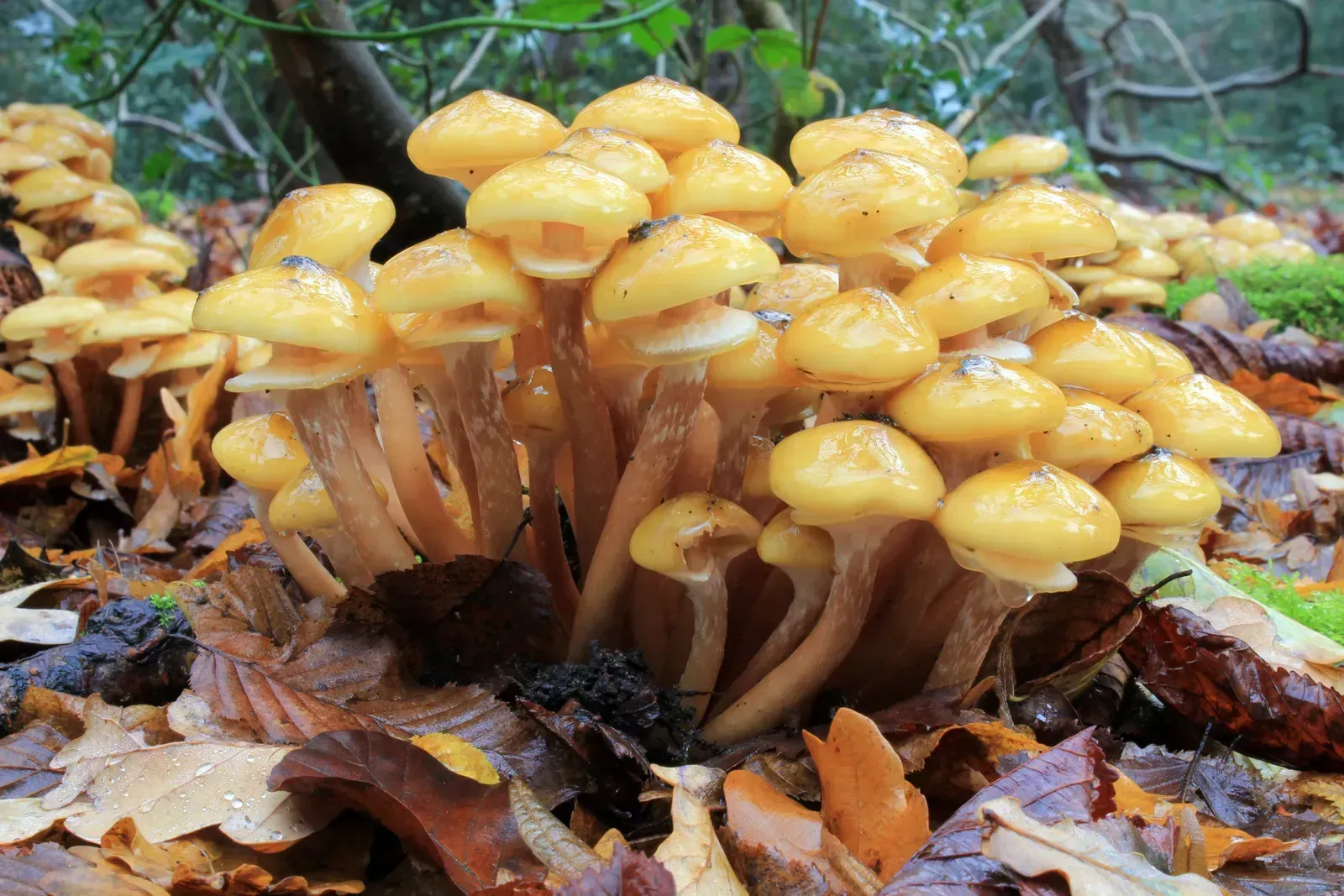
Armillaria mellea, the honey fungus, is a widespread parasite of trees. Its mushrooms are honey coloured, but the glow comes from the mycelium, the network of threads living inside rotting wood. This faint light has been known for centuries as foxfire.
People have recorded foxfire in old timber for a very long time. Because the light comes from fungus growing inside wood, a log can seem to shine though no mushrooms are visible. Armillaria is also known for forming very large underground colonies, which makes it ecologically important in many forests.
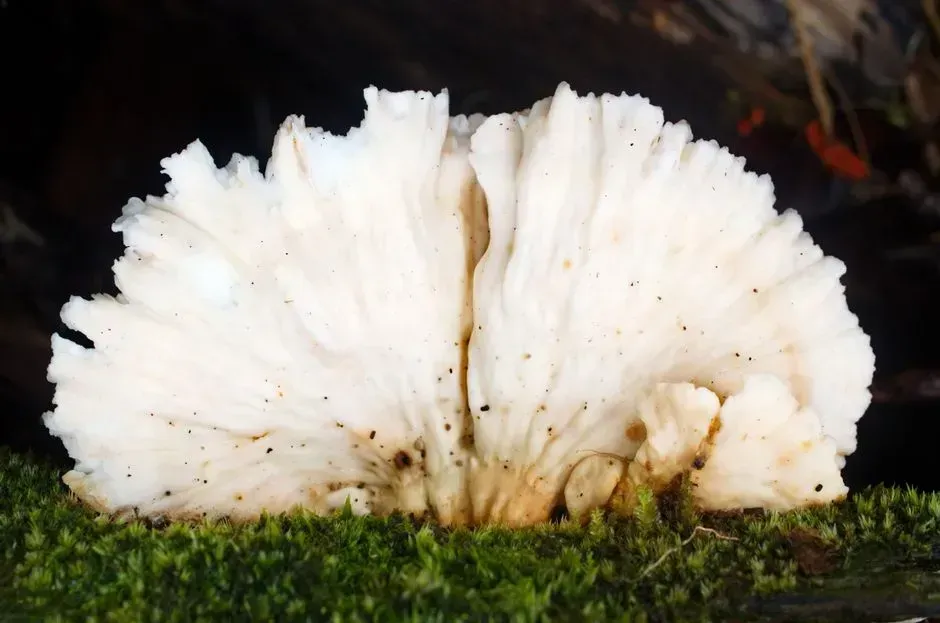
Panellus stipticus, the Bitter Oyster
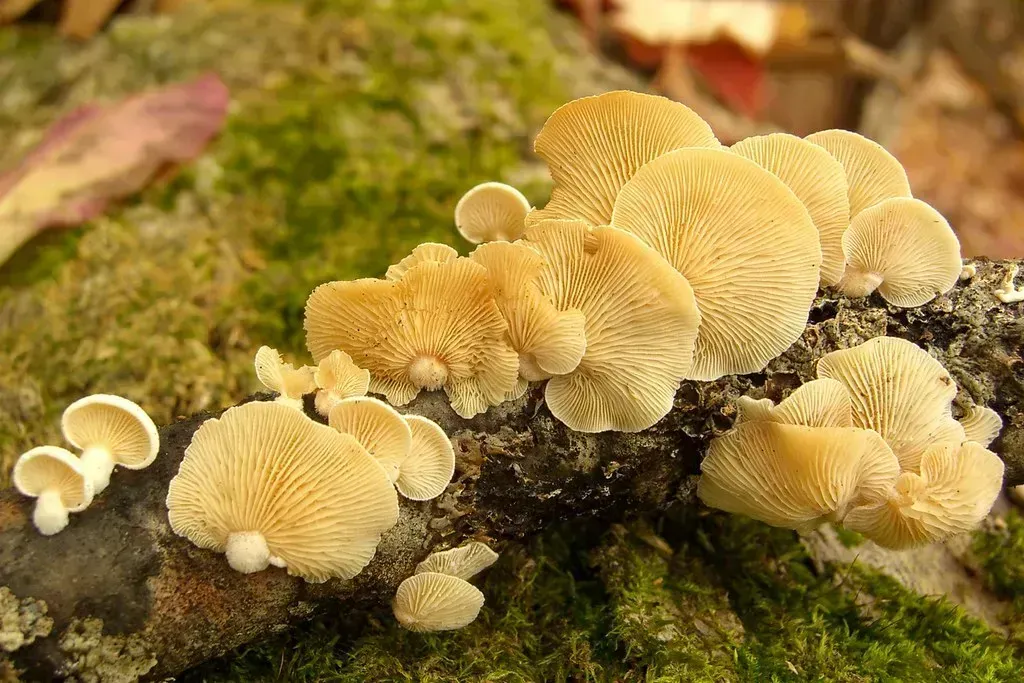
Panellus stipticus is a small, fan shaped fungus that grows in overlapping shelves on dead hardwood. It is common in eastern North America. Fresh specimens glow green from the gills and from the mycelium in the wood.
Not every population glows. Studies of the species have found that some, notably those from parts of Asia, do not make light, while many North American ones do. That variation makes it a useful subject for researchers who are tracing how the ability to glow evolved in fungi.
