


- NASA invites students to design a moon base in $1 million challenge - November 11, 2026
- Why Some People Can Feel a Storm in Their Joints, According to Experts - November 11, 2026
- 7 Foods That Taste Better on a Rainy Day, According to Chefs - November 11, 2026
Point a decent backyard telescope at Jupiter on a steady night, and you can pick out a pale orange oval sitting in the planet’s southern hemisphere. It has been drawing astronomers’ attention for generations. Astronomers have observed this anticyclone, large enough to swallow Earth, for at least 150 years.
Recent years have added a lot to that long record. Hubble and the Juno spacecraft have looked at the storm in more detail than ever before, and some of what they found wasn’t expected.
A Storm You Could Fit Earth Inside
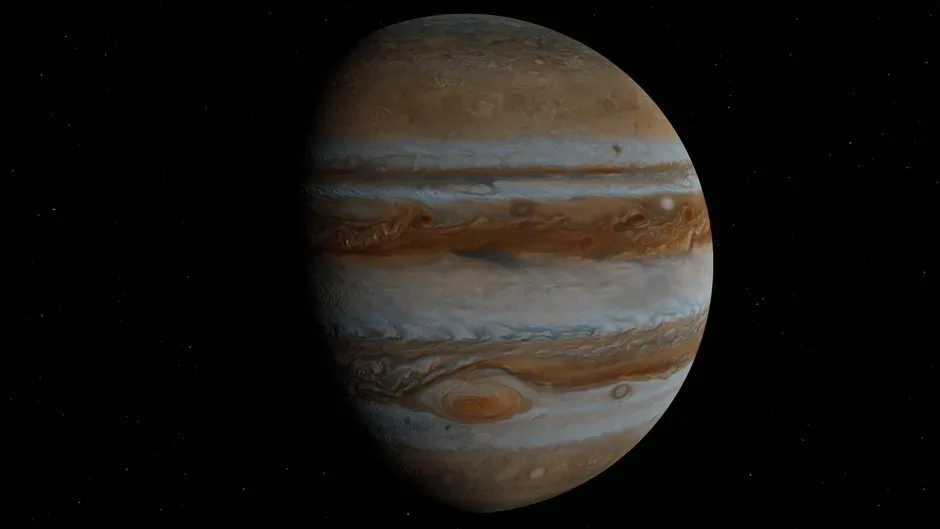
Size is the first thing people learn about the Great Red Spot. It’s a giant oval of crimson clouds in Jupiter’s southern hemisphere, and in April 2017 it measured about 10,000 miles (16,000 kilometers) across, which is 1.3 times the width of Earth.
That figure is a snapshot, not a permanent number. As the next sections show, the storm’s dimensions have changed a lot over time.
How Long Has It Been Spinning?
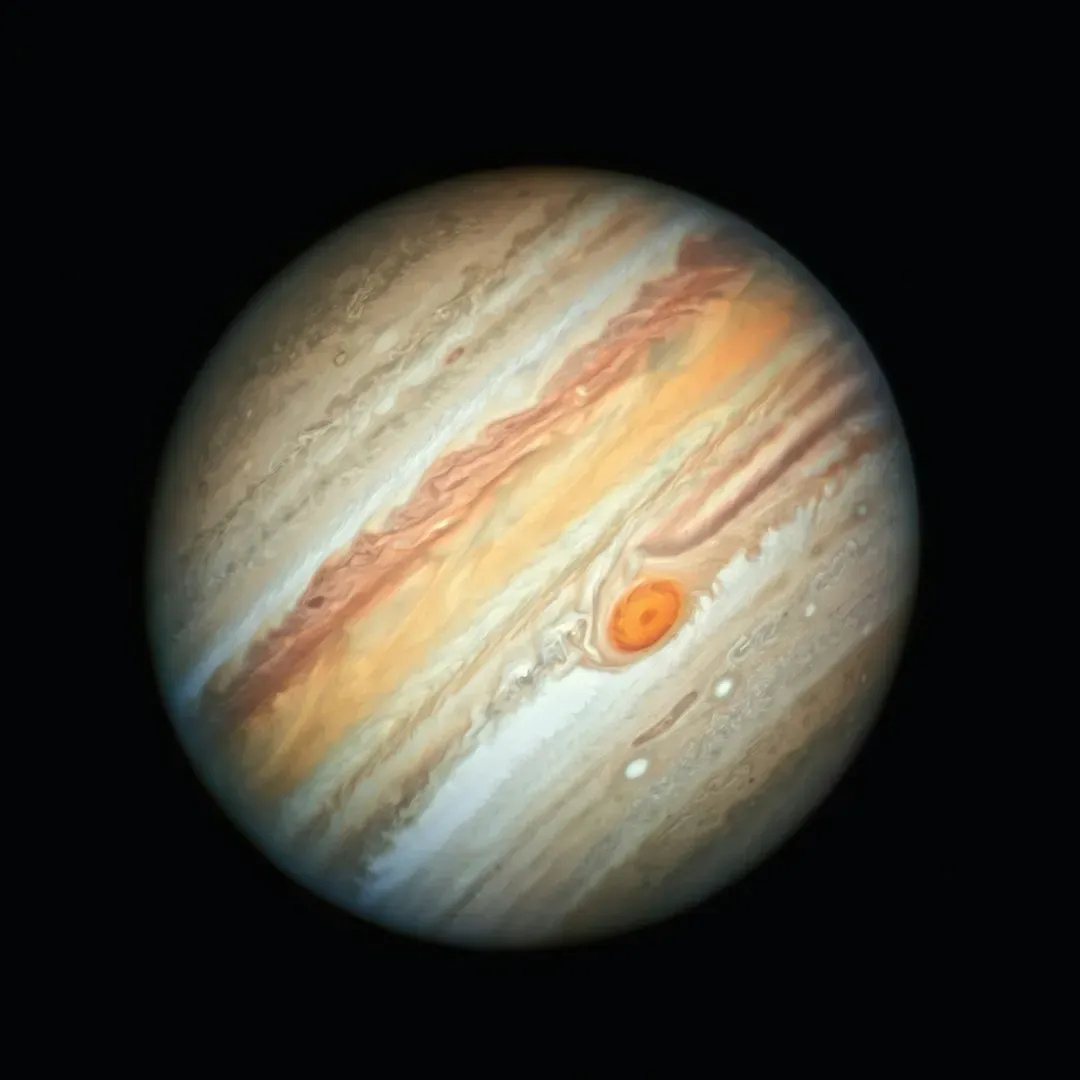
The honest answer is that nobody knows exactly. It has been monitored since 1830 and may have been raging for over 350 years. NASA’s own wording is a little more cautious, noting that the spot has been observed on the giant planet for more than 300 years.
The gap exists because early telescope records are sparse and hard to interpret. Whether the spot seen centuries ago is the same one we see now can’t be settled with certainty.
Why Jupiter’s Storms Last So Long
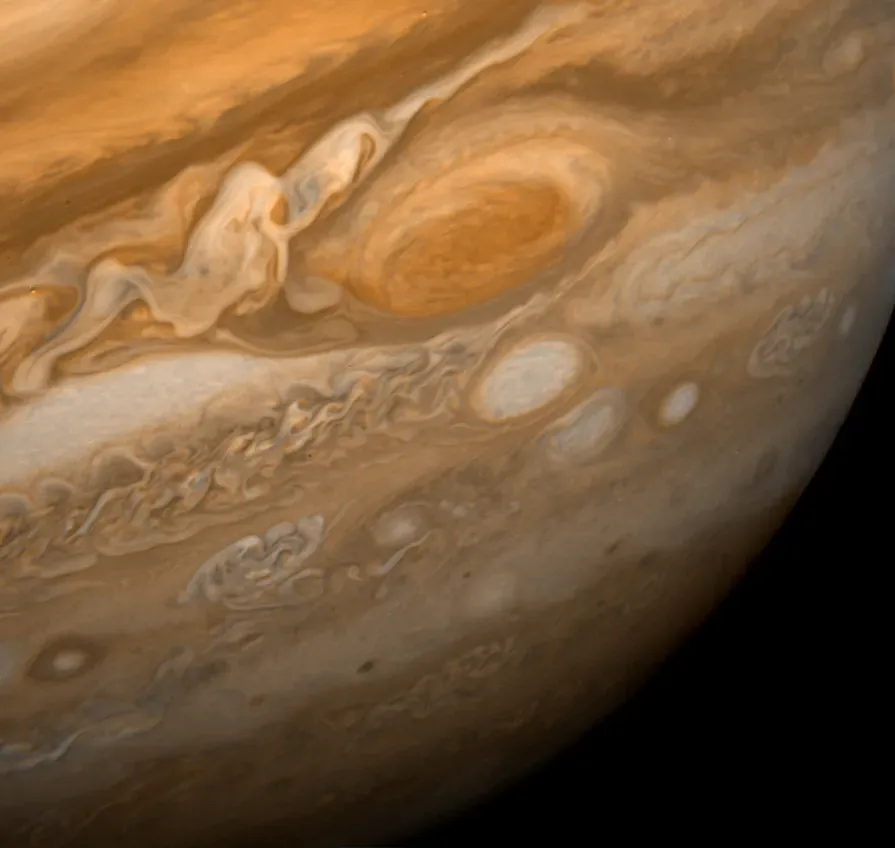
Earth’s hurricanes die out within days or weeks, mostly because they run into land or cooler water. Jupiter offers no such obstacles. With no solid surface to slow them down, Jupiter’s spots can persist for many years.
Jupiter also has a smaller relative. Three smaller ovals merged to form the Little Red Spot, about half the size of the larger storm.
A Spot That Has Been Shrinking
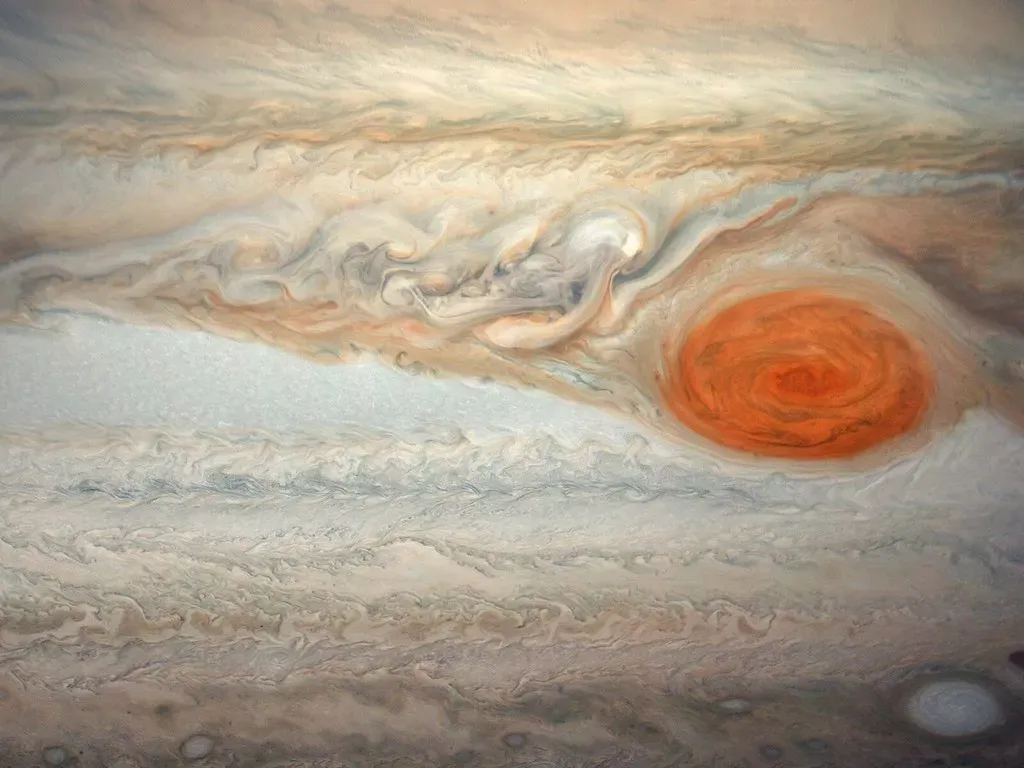
Older measurements tell a clear story of decline. Observations from the late 1800s put its long axis at up to 25,500 miles, and Voyager 1 and 2 measured it at 14,500 miles in 1979. Hubble found about 13,020 miles in 1995 and 11,130 miles in 2009.
The most recent of these measurements was made by Hubble. Astronomers confirmed a diameter of roughly 10,250 miles, the smallest ever recorded. Amateur observations from 2012 showed the shrinkage speeding up, with the spot’s waistline narrowing by about 580 miles per year.
From Oval Toward Circle
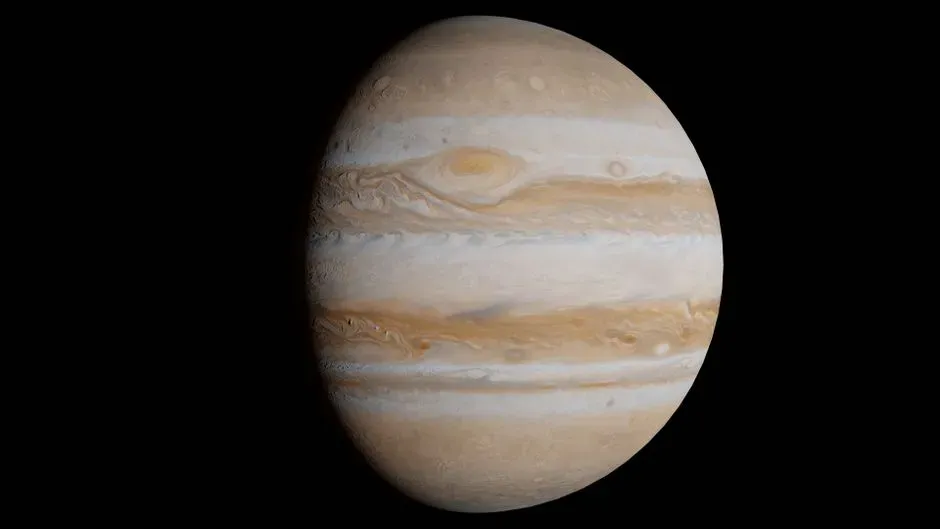
The shape has changed along with the size. The Great Red Spot has gone from an oval to a circle. Yale researchers described the same trend in terms of longitude, noting that its east to west extent contracted from 40 degrees in the late 19th century to 14 degrees in 2016.
Its north to south extent has stayed fairly steady. That is why the spot looks rounder now than it did to early observers.
Why Is It Getting Smaller?
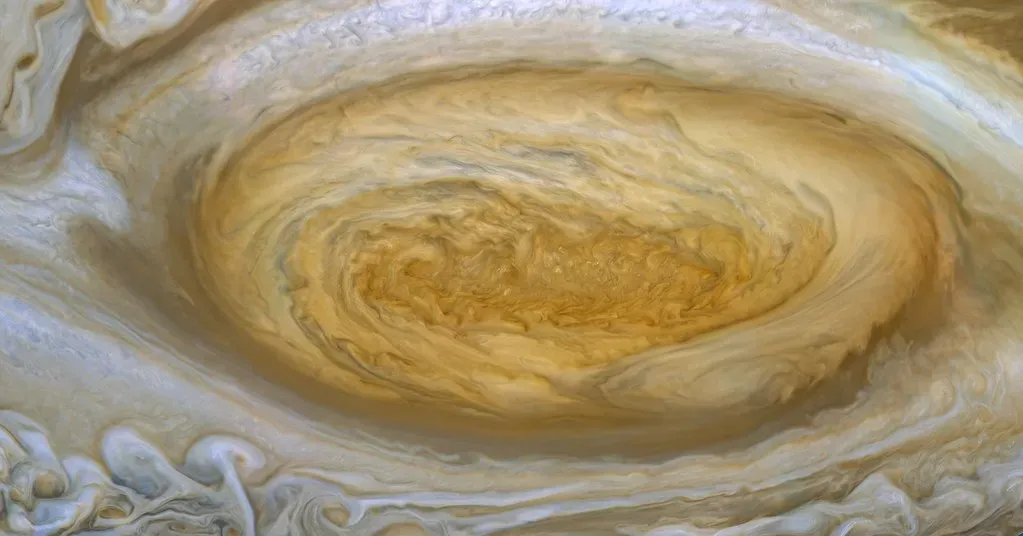
Scientists haven’t pinned down the cause. NASA says the cause behind the shrinking has yet to be explained. One idea from Hubble observers points to very small eddies feeding into the storm.
A 2024 modeling study from Yale approached it differently. Its simulations suggested that other storms strengthened the Great Red Spot and made it grow larger. The idea is that the spot’s size responds to the smaller storms it absorbs.
The Stress Ball Discovery
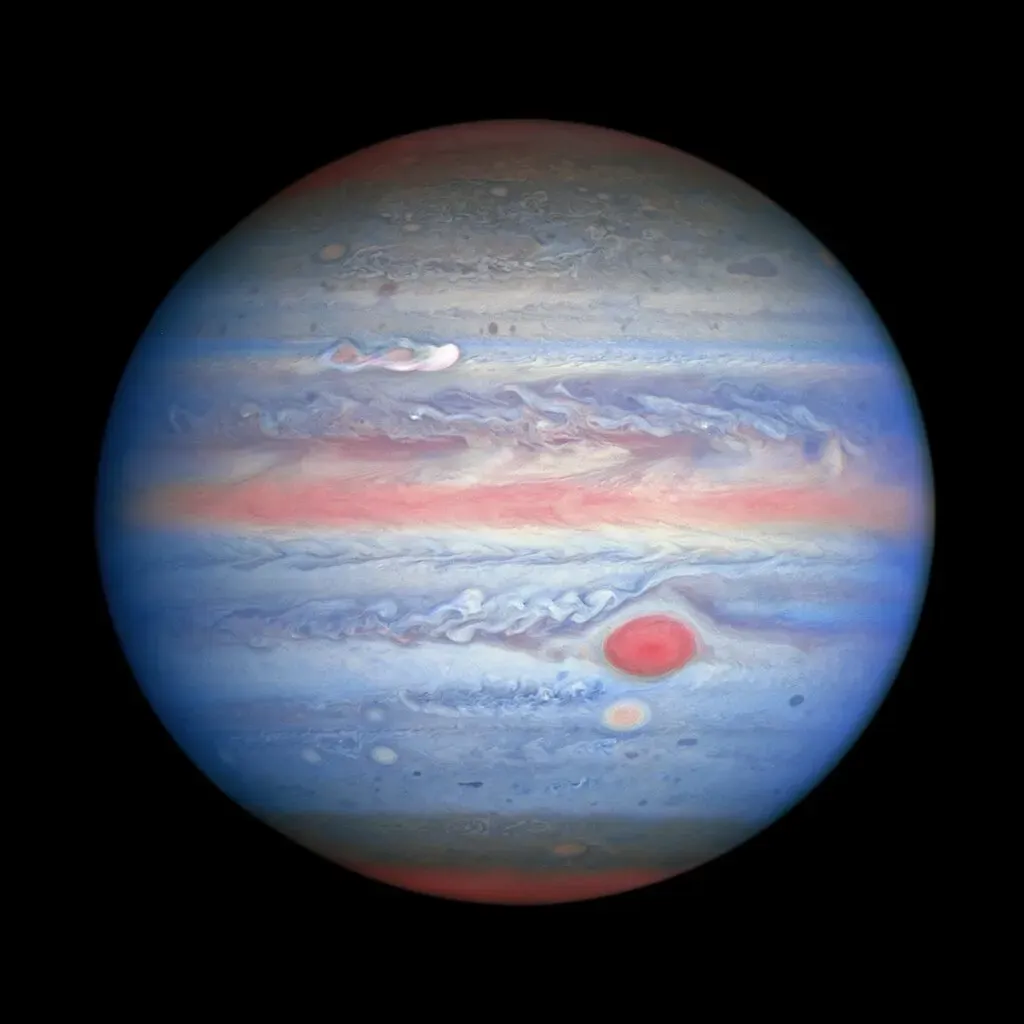
Hubble’s 2024 results added a surprise. Observations from December 2023 to March 2024 showed that the storm is less stable than it looks, jiggling like a bowl of gelatin. The cause of the 90 day oscillation is unknown.
The lead author, Amy Simon of NASA Goddard, said the team hadn’t expected the size itself to oscillate. The paper was published in The Planetary Science Journal. Her team had the right observing schedule to catch it for the first time.
How Deep Does the Storm Go?
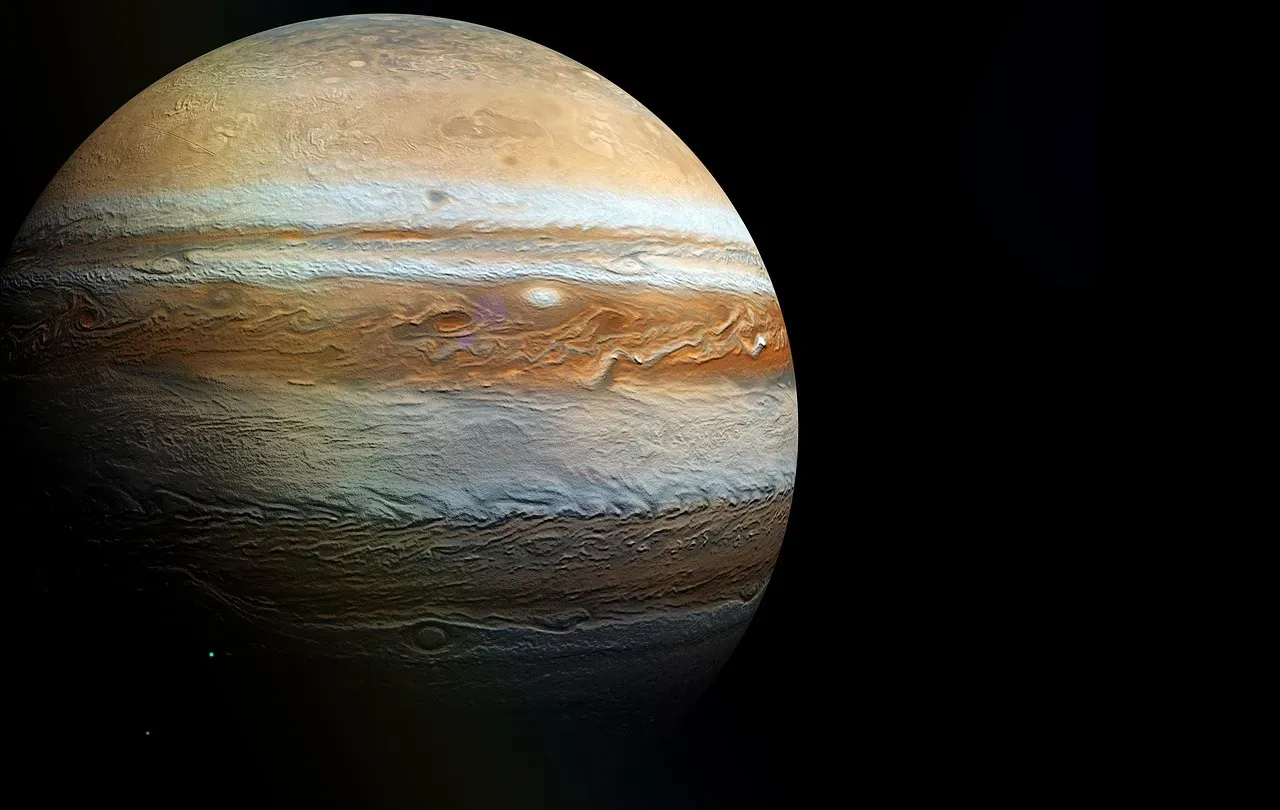
The Great Red Spot isn’t just a surface feature. Juno’s findings indicate that it extends over 200 miles (350 kilometers) below the cloud tops. That depth reaches beyond the region where water condenses and clouds form, below the depth where sunlight warms the atmosphere.
Juno’s Microwave Radiometer made these measurements. Caltech’s Andy Ingersoll said the roots go 50 to 100 times deeper than Earth’s oceans and are warmer at the base than at the top.
What Juno Has Seen Up Close
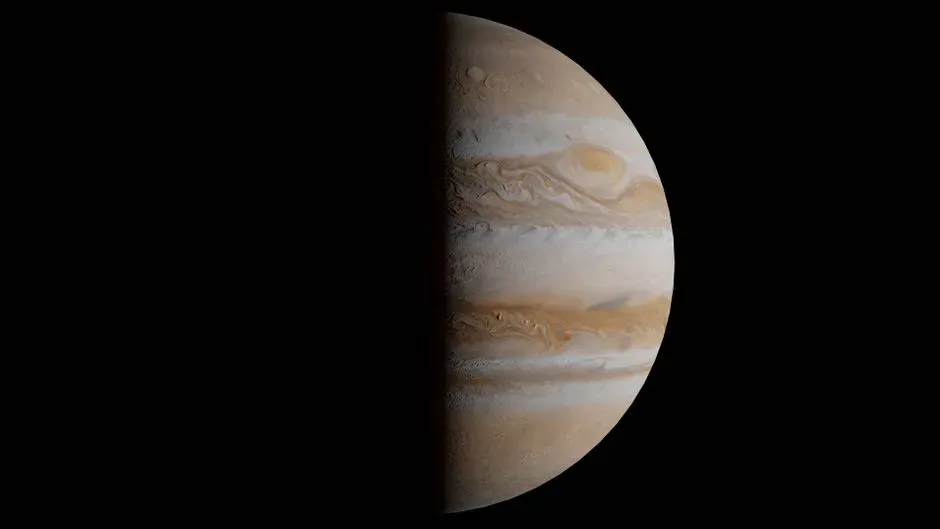
Juno has been in orbit since 2016. It passes from pole to pole and gives planetary scientists views of Jupiter they’ve never had before. Its flybys over the storm produced images of twisting, swirling clouds winding through the Great Red Spot.
Gravity measurements add another line of evidence. Because of the storm’s height and size, the mass concentrated within it could potentially be detected by instruments studying Jupiter’s gravity field. Two close flybys gave Juno a chance to look for that signature.
