

What the Goldilocks Zone Actually Means

The habitable zone, or Goldilocks zone, describes the orbital band around a star where temperatures could allow liquid water to persist on a rocky surface. The definition of “habitable zone” is the distance from a star at which liquid water could exist on orbiting planets’ surfaces, and habitable zones are also known as “Goldilocks zones,” where conditions might be just right, not too hot, not too cold, for life. It sounds tidy, almost like a real estate listing based purely on location.
The trouble is that the boundaries shift depending on the star in question. Every star has a habitable zone, but where that zone lies is different for stars of different sizes and brightness. A planet that looks perfectly placed around one star might be baked or frozen if you moved it to orbit a different type of sun entirely.
Why Location Alone Doesn’t Guarantee Liquid Water

Venus is the classic cautionary tale here. Venus is technically in the sun’s habitable zone; its orbit keeps the planet within the area where liquid water could possibly exist, but in reality, the planet’s carbon dioxide-rich atmosphere gives it the hottest surface temperatures of any planet in the solar system. Nobody seriously expects surface life there anymore, despite its official membership in the zone.
The atmosphere, not the orbit, decided Venus’s fate. Venus’ runaway greenhouse atmosphere makes the planet even hotter than Mercury, which is much closer to the sun, and that atmosphere eliminates the possibility of life as we would recognize it on the planet’s surface. That single example undercuts the idea that orbital distance is the deciding factor, and it’s exactly the kind of nuance that newer exoplanet studies are now forced to reckon with at scale.
The Problem With Red Dwarf Stars
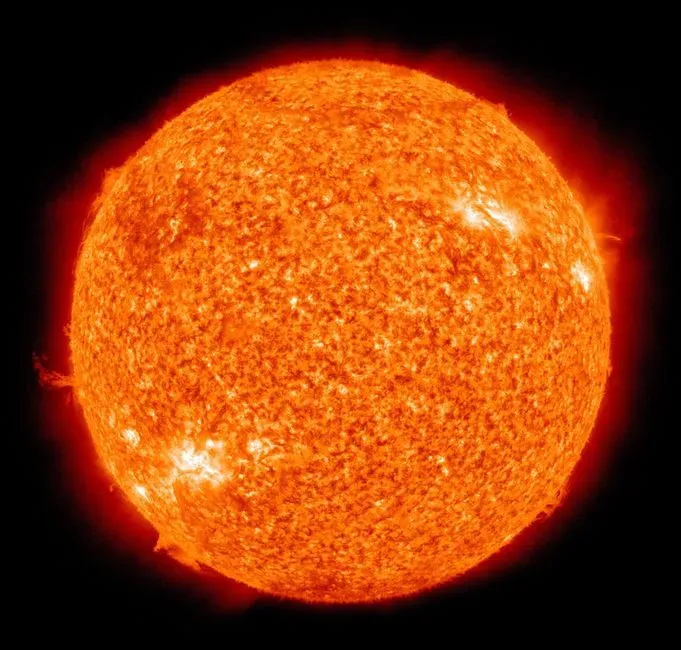
Most of the rocky, potentially habitable planets found so far orbit small, dim red dwarfs, simply because those worlds are easier to detect. But this comes with a catch: the habitable zone is located significantly closer to the host star in M-dwarf systems compared to other stars. That proximity brings planets uncomfortably close to a temperamental neighbor.
Red dwarfs are known for violent outbursts. M dwarfs generate strong magnetic fields on the order of kilogauss, and as a consequence of this magnetic activity, they have a high rate of strong flares. A planet sitting in the cozy part of the zone around such a star is also sitting in the blast radius of frequent radiation storms.
TRAPPIST-1’s Sobering Atmospheric Verdict
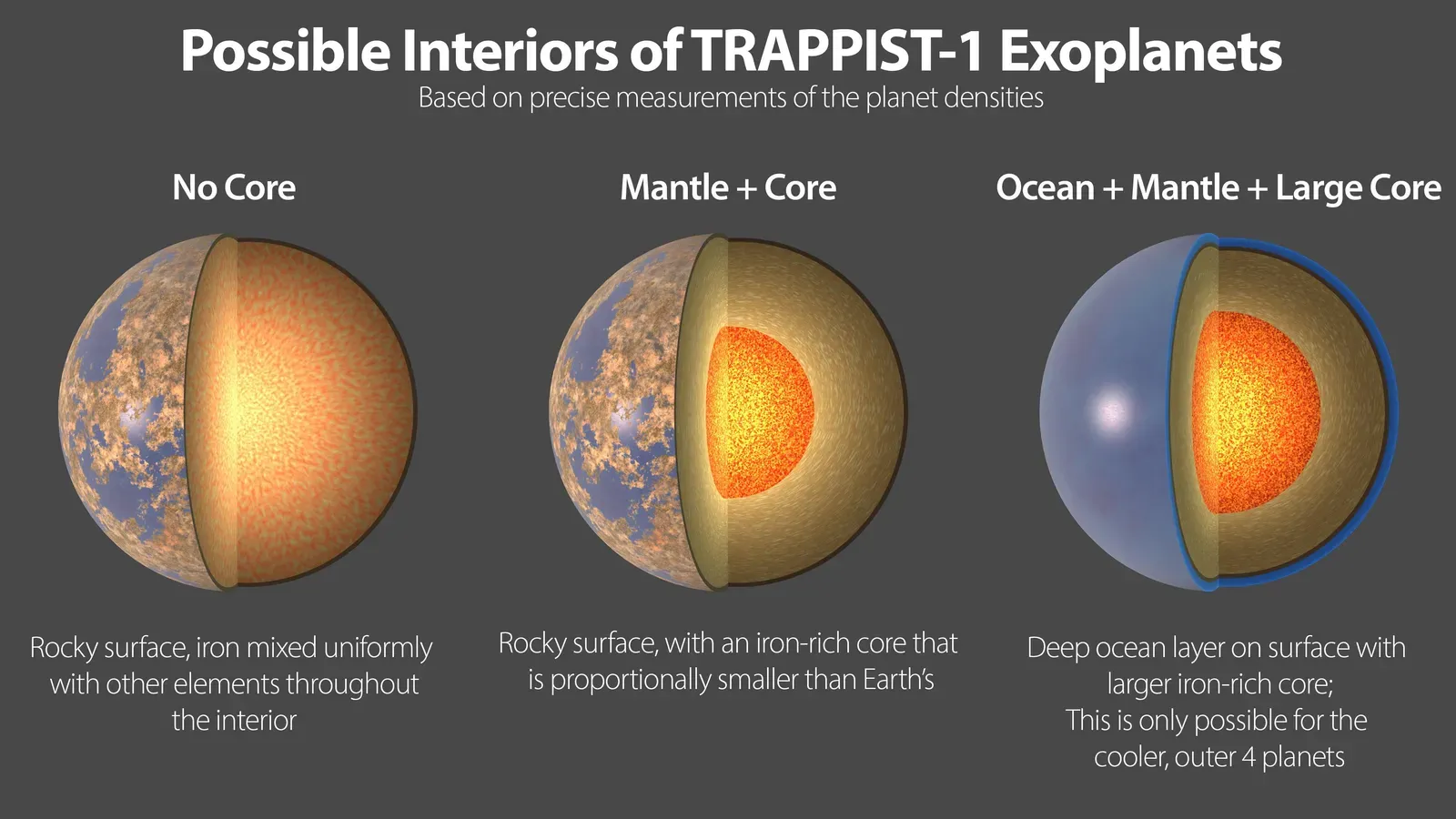
The TRAPPIST-1 system, with its seven roughly Earth-sized planets, became the poster child for red dwarf habitability. Yet the actual JWST data has been humbling. To date, no terrestrial atmospheres have been detected among the rocky worlds observed in the system.
TRAPPIST-1 b and c have both come up empty in different ways. TRAPPIST-1 b was observed for two visits with JWST/NIRISS SOSS, finding significant stellar contamination due to unocculted active regions and no evidence for a secondary atmosphere. Meanwhile, TRAPPIST-1 d, often cited as a strong water candidate, fared no better. Three or perhaps four of the system’s planets sit in the red dwarf’s compact habitable zone, and one of them, TRAPPIST-1 d, could host water on its surface according to some research, but without a suitable atmosphere a planet can’t retain surface water, and new JWST observations show that TRAPPIST-1 d does not have an Earth-like atmosphere.
Tidal Locking and the Day-Night Extremes
Being close to a dim star creates another complication: tidal locking, where a planet’s rotation syncs with its orbit so one side always faces the star. Stars like these, characterized by their lower temperature and brightness relative to the Sun, require that planets orbit closer to them to be in the habitable zone, subjecting the planet to more potent tidal forces that can lead to synchronization of its rotation rate with its orbital period. That leaves one hemisphere in permanent daylight and the other in permanent night.
This isn’t automatically fatal to habitability, but it raises the bar considerably. Such a state has been considered to potentially make the question of habitability more severe, as it creates extreme thermal gradients between a constantly irradiated dayside and a frozen nightside, though climate models have shown that atmospheric convection and efficient energy transport can strongly alleviate these extreme temperatures. Whether real atmospheres actually manage that balancing act is still an open question for every candidate planet on the list.
Stellar Winds and the Missing Magnetic Shield
A planet’s magnetic field is supposed to act like a shield against the onslaught of particles streaming off its star. Around red dwarfs, that shield may be weaker than expected. Due to the slow rotations of tidally locked planets, they will have about one third the magnetic field strength of non-tidally locked planets.
Combine a weaker field with a more aggressive stellar wind, and the odds shift further. Deviations from the typical solar wind pattern can affect the results significantly, reducing the magnetosphere by more than half in extreme cases. Not every red dwarf planet fares equally badly, though: a handful of stars such as GJ 205, GJ 846, and V1005 Ori provide the best scenarios, where a planet in the habitable zone of GJ 205 can have a magnetosphere the size of modern Earth’s.
Why Plate Tectonics, Or Its Absence, Changes the Equation

On Earth, plate tectonics quietly regulates the climate over geological timescales by cycling carbon between the atmosphere, oceans, and rocks. On Earth, plate tectonics play an integral role in regulating temperature and are often posited to be essential in supporting conditions for a long-lived habitable climate and thus long-term surface liquid water. Many rocky exoplanets, though, may lack this mechanism entirely, especially the tidally locked ones.
That doesn’t necessarily rule them out, since tidal heating can substitute for plate tectonics on some worlds. Applying tidal models to a sample of tidally locked rocky exoplanets reveals that roughly one tenth pass the tidal stress subduction threshold for mobile lid tectonic activity, aiding in maintaining surface liquid water, while roughly four in ten located in the habitable zone would be unable to maintain the tectonic activity needed to stabilize the climate and are unlikely to retain surface liquid water. That’s a striking split, and it means a planet’s interior geology matters just as much as its orbit.
The Continuous Habitable Zone: Time Matters As Much As Distance
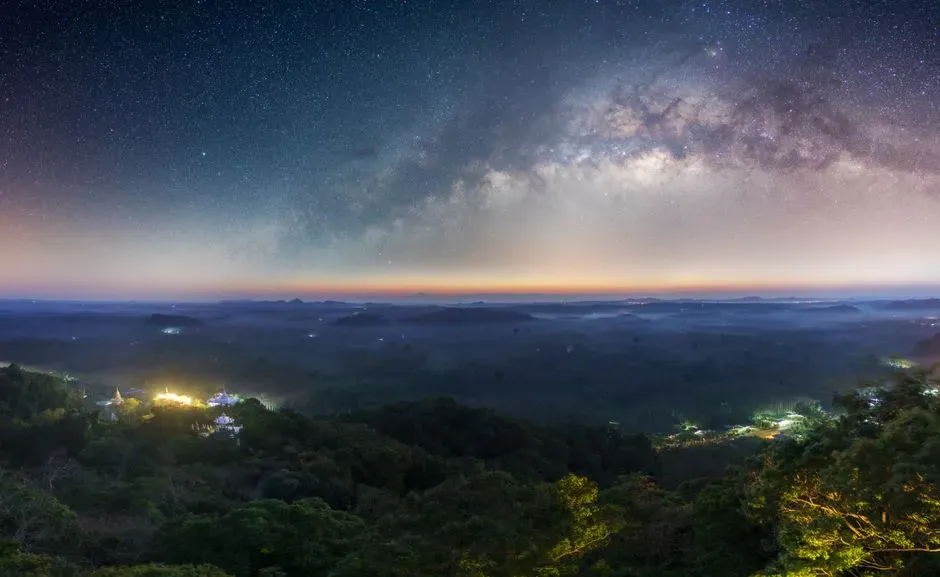
Stars aren’t static, and neither is the habitable zone around them. The habitable zone is not fixed; like shadows cast by the sun across the ground throughout the day, its location shifts as the star evolves, ages, brightens, and expands, and all of this changes the delicate orbital zone in which temperatures might support life. A planet sitting comfortably in the zone today may not have been there a billion years ago, or may drift out of it in the future.
Researchers have started prioritizing planets that stay habitable long enough for life to actually develop. The shift from asking whether a planet is there to asking whether it has been habitable for billions of years reflects growing maturity in exoplanet research, and the introduction of the Continuous Habitable Zone as a targeting strategy represents not just a technical adjustment but a philosophical one. This single change in framing quietly disqualifies a lot of planets that once looked promising on paper.
Rethinking Which Stars Make the Best Hosts
Sun-like stars have long been the default assumption for habitability searches, but that assumption is being revisited. G-type stars like the sun are shorter-lived on a galaxy timescale than some other types of stars, while one abundant kind of star, K-type stars, can burn for tens of billions of years and, because of their stability, might have the most promising habitable zones. Longevity and calm stellar behavior, it turns out, may matter more than simply resembling our own sun.
Interestingly, age itself introduces new wrinkles even within the Continuous Habitable Zone framework. Older stars tend to have lower Continuous Habitable Zone scores, meaning that even long-lived, quiet stars aren’t guaranteed to host stable habitable conditions indefinitely. The ideal host star, in other words, has to thread a needle between longevity, stability, and the right kind of light output.
What Comes Next: The Habitable Worlds Observatory and ELT
None of this stricter framework is a reason for pessimism. If anything, it’s a sign the field is maturing to match the tools now coming online. The European Southern Observatory is constructing the Extremely Large Telescope in Chile, a ground-based observatory with a 39-meter mirror allowing it to image nearby exoplanets directly, while the PLATO mission by the European Space Agency intends to find Earth-like planets around Sun-like stars, followed by the proposed Habitable Worlds Observatory by NASA, which aims to directly image Earth-sized planets and analyze their spectra for signs of oxygen and water.
These missions promise to move the conversation from counting candidates to actually characterizing them. These instruments will move the field from detection to characterization, allowing scientists to determine not just where planets are, but what they are truly like. Given how many previously promising worlds have already been demoted by atmospheric data alone, that shift toward direct characterization may be the only way to separate genuinely habitable planets from ones that merely occupy the right address.
The Goldilocks zone was never meant to be the final word on habitability, just a starting filter. What the past two years of research have shown is how coarse that filter really was, and how much finer the sieve needs to be before any planet earns the label of a true second Earth.
- The Shoreline Sucked Dry in Seconds – 5 Tsunami Signals Beachgoers Mistake for Low Tide - November 14, 2026
- 9 Dark-Sky Destinations Around the World Where the Stars Look Unreal - November 14, 2026
- The Fault Line That Never Slips – 7 Locked Seismic Zones Overdue for a Massive Release - November 14, 2026
