
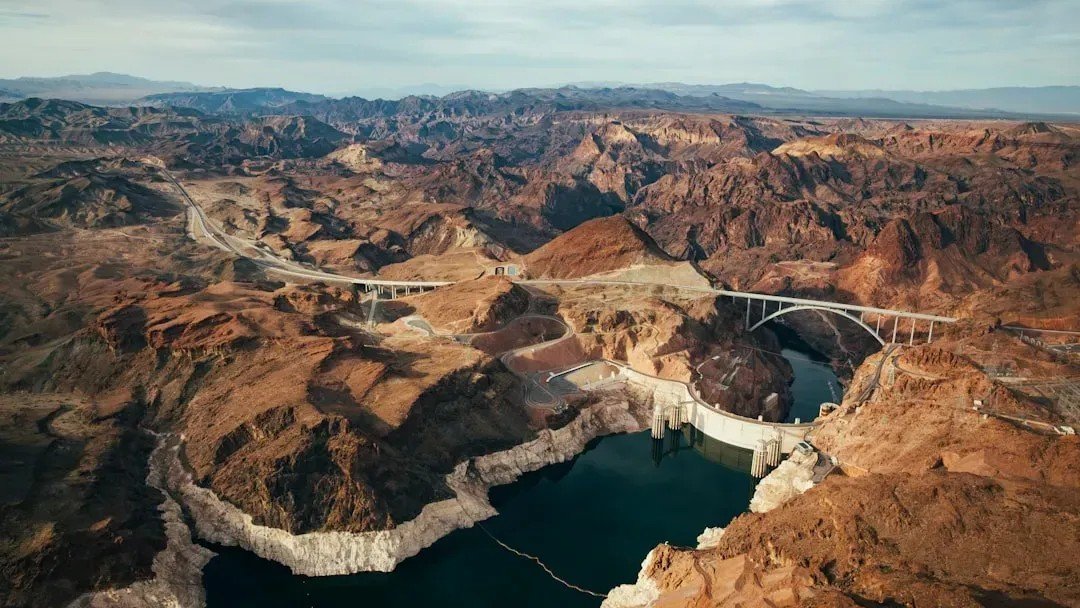
Most people picture a dying lake as something distant and abstract, a problem for a different region or a future generation to sort out. The reality, according to researchers monitoring freshwater ecosystems across the country, is closer and more urgent than that. From the desert West to the Florida flatlands to the Great Lakes basin, some of America’s most iconic bodies of water are deteriorating at a pace that has genuinely surprised the scientists who know them best.
While climate change is often blamed, research suggests a more complex story: climate interacts with human activities like agriculture and urban runoff, which funnel excess nutrients into the water. The combination of those pressures has pushed several lakes toward tipping points that earlier models failed to anticipate. Here are eight of the most alarming cases.
1. Great Salt Lake, Utah
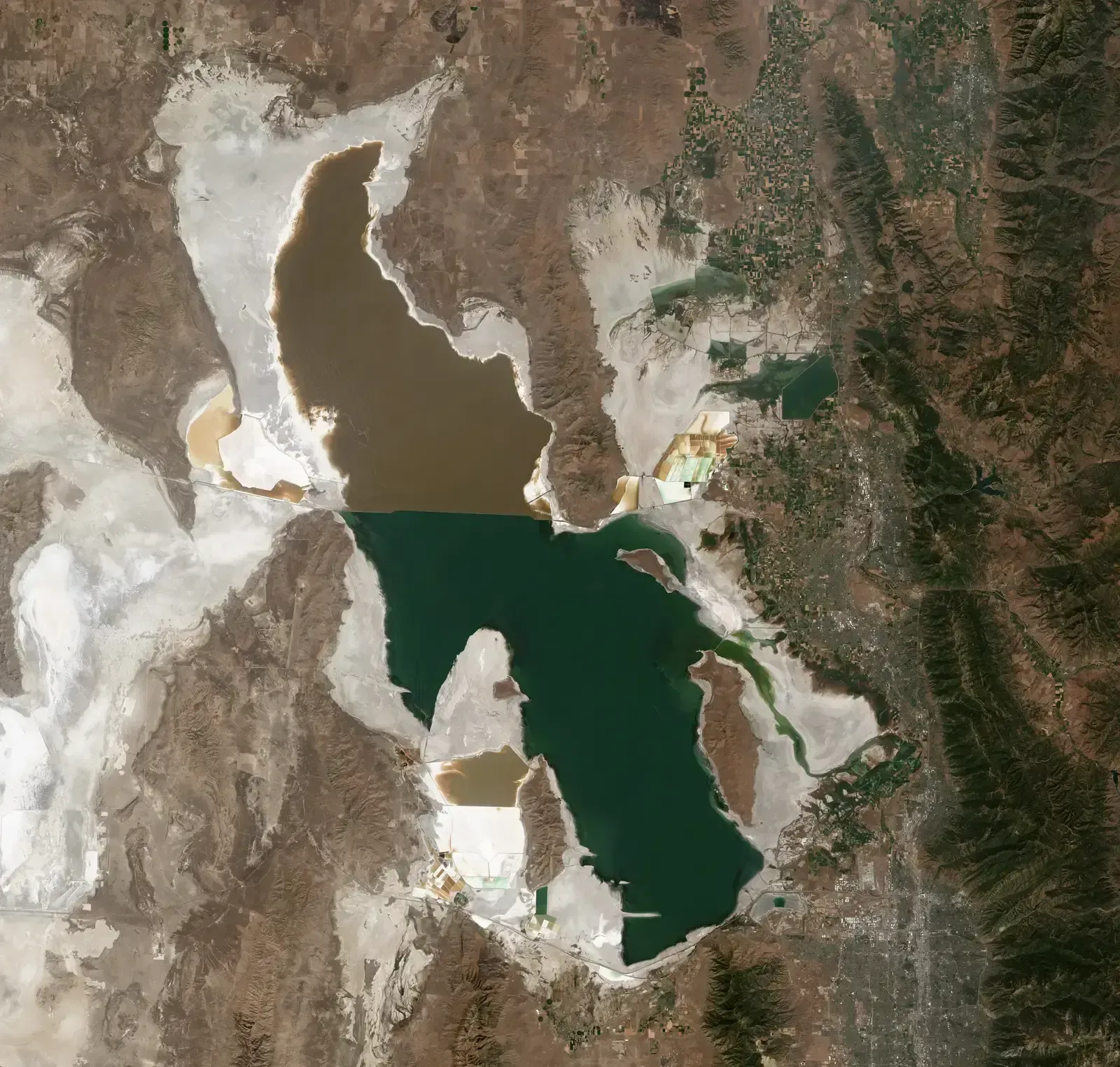
The Great Salt Lake is widely considered one of the most endangered lakes in North America. It has lost roughly 73 percent of its water and 60 percent of its surface area since 1850, largely due to water diversion and climate-driven drought. Because it is a terminal lake with no outflow, water loss leads to rising salinity levels, threatening the brine shrimp and microorganisms that sustain millions of migratory birds.
As the lake shrinks, the exposed lakebed has created an additional public health risk: toxic dust containing heavy metals that can be blown into nearby population centers. The lake’s proximity to nearly 2.8 million Utahns has raised unique concerns for how ecological collapse can generate far-reaching financial liabilities across economic sectors. The lake’s 20-year decline has stabilized of late after a recent year of record snow replenished mountain streams and reservoirs, but it currently sits 5 feet higher than its all-time low and will need to rise another 5 feet to reach a minimum healthy elevation.
2. Lake Erie, Ohio/Pennsylvania/New York
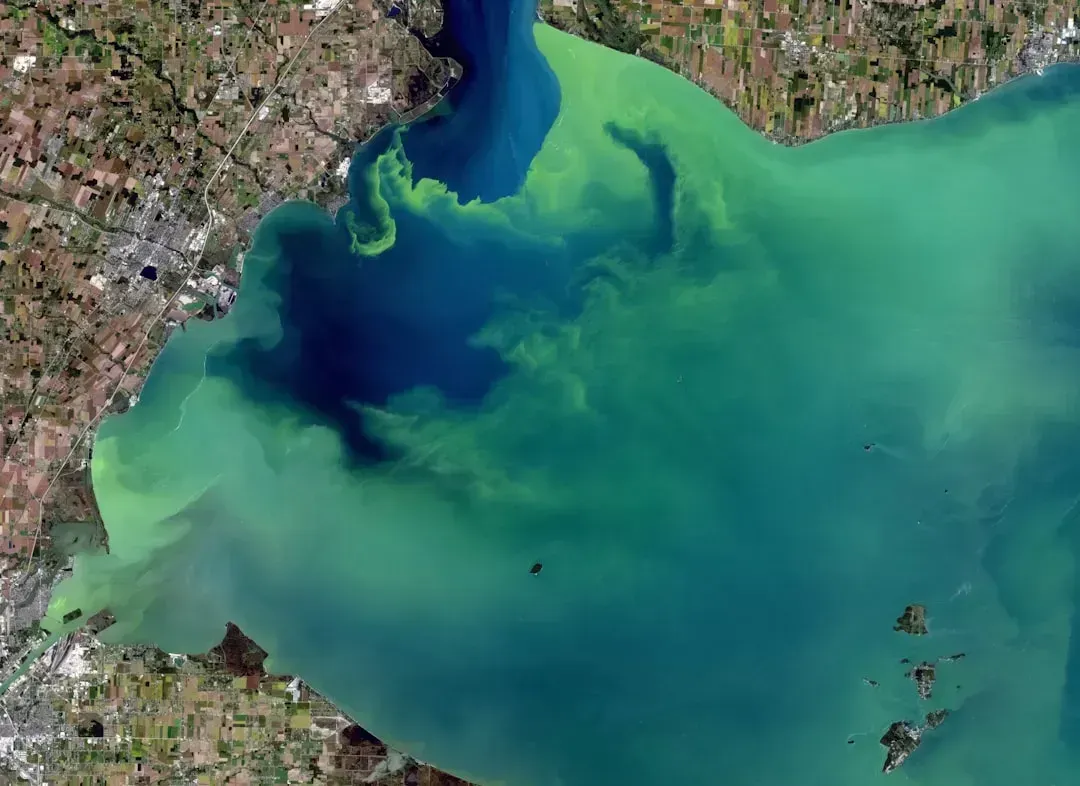
For over a decade, Lake Erie has been experiencing annual toxic algal blooms. These blooms happen when algae grow out of control, clogging water intake pipes, covering shorelines in slime, and sometimes producing health-harming toxins that threaten the lake’s ecosystem, surrounding communities, and wildlife. In 2025, NOAA detected these toxins in Lake Erie on April 28, earlier than ever before.
Scientific studies of western Lake Erie show that the potential cyanobacterial growth rate has increased by nearly a third and the length of the bloom season has expanded by up to a month from 1995 to 2022, especially in warmer, shallow waters. High phosphorus and chlorophyll concentrations confirm that the western basin of Lake Erie is highly eutrophic. Algal blooms clog water intake pipes and cover shorelines in slime, and the 2014 outbreak contaminated the water supply for Toledo, Ohio, in what was considered only a moderate bloom year.
3. Lake Okeechobee, Florida
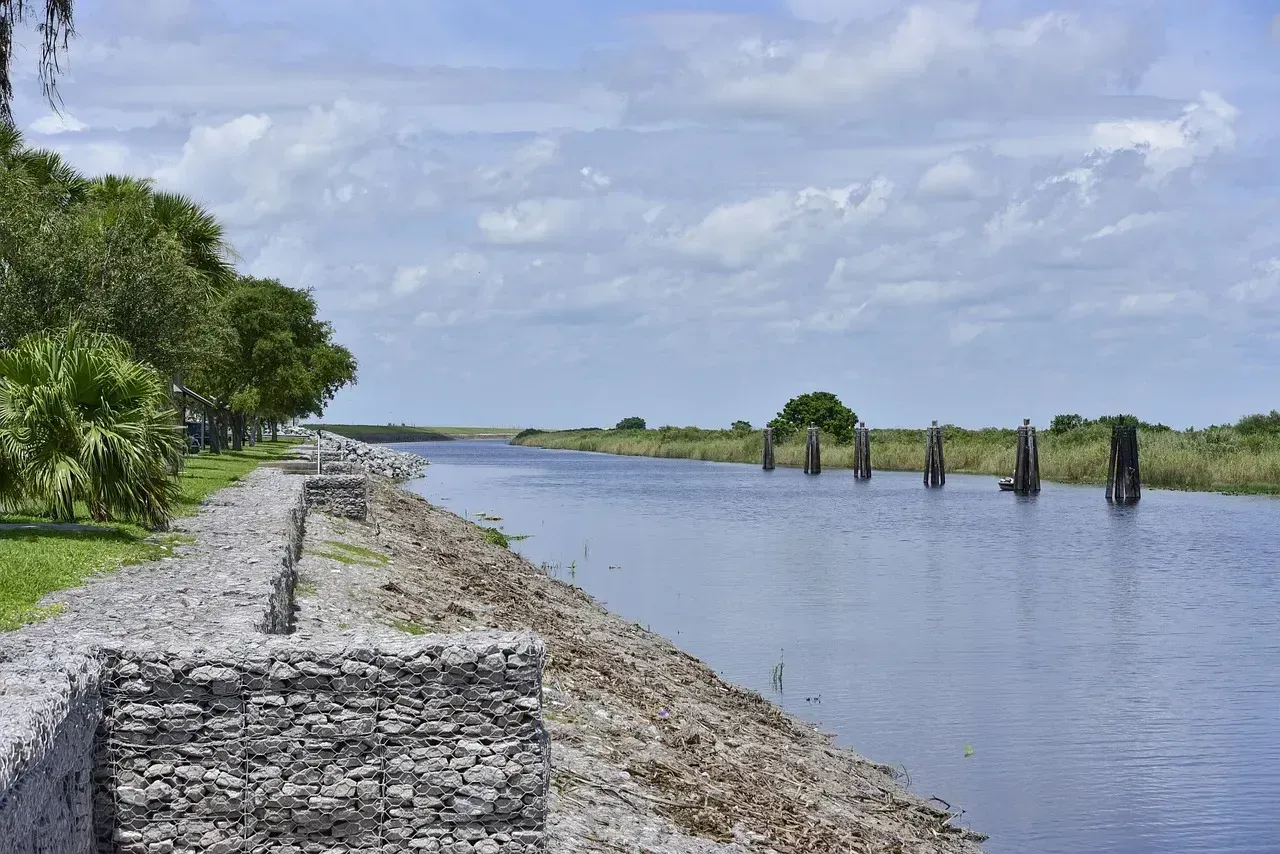
Lake Okeechobee, the largest freshwater lake in Florida, is heavily impacted by nutrient pollution and urban runoff. The lake has been out of its ecological envelope for extended periods, and it needs seasonal lows for sunlight to reach the lake bottom and allow submerged aquatic vegetation to grow. Once that vegetation sprouts, it is also important that the lake does not rise faster than the plants can keep pace, because that vegetation serves as the lake’s natural filter system.
Tape grass, pondweed, and bulrush are among the species dying off, which threatens not just the world-class bass fishing at Lake Okeechobee but its entire ecological balance. Recovery operations launched in late 2024 have caused the northern estuaries to experience negative impacts, including high turbidity, stressful salinity fluctuations, and dissolved oxygen dips. Release of this heavily polluted water can intensify red tide on the west coast and lead to seagrass loss, harmful algae blooms, and fish kills.
4. Lake Mead, Nevada/Arizona
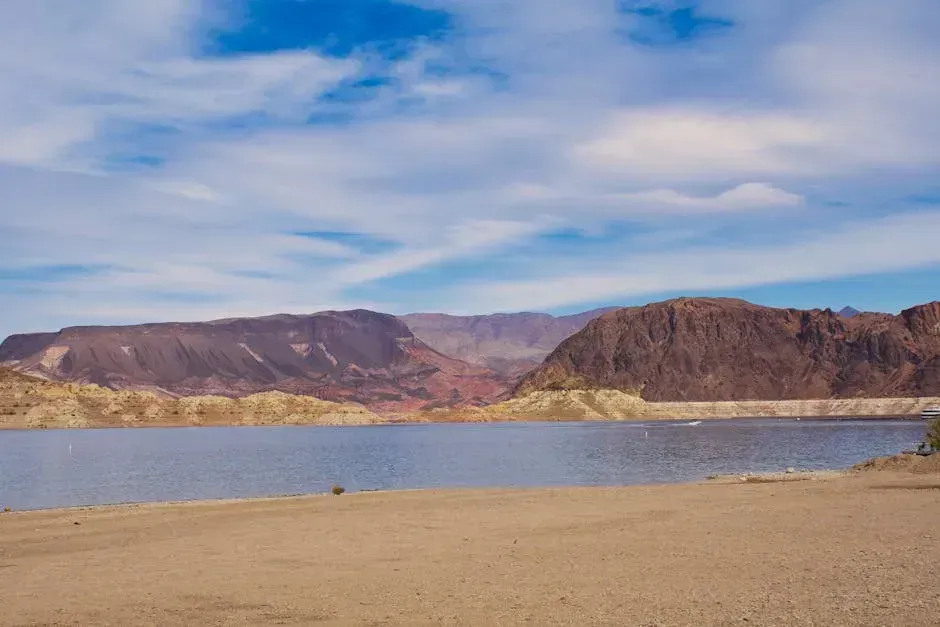
Lake Mead, the largest man-made reservoir in the U.S., lies on the border between Nevada and Arizona and is formed by the Hoover Dam on the Colorado River. It is a popular recreational spot but is now most famous for its rapidly declining water levels. The declining water level also jeopardizes hydroelectric power generation at the Hoover Dam, raising concerns about long-term energy and water security in the West.
Scientists have confirmed that low dissolved oxygen events have occurred on Lake Mead, requiring regular monitoring for algal toxins. Las Vegas, for example, would lose the vast majority of its water supply if water runs out at the lake. Although the lake rebounded in 2024, recent projections suggest water levels could again approach record lows, threatening water supplies for more than 40 million people who depend on the river system.
5. Lake Powell, Utah/Arizona

Lake Powell, another key Colorado River reservoir, faces similar challenges. Water inflow has dropped sharply because of drought, with the Colorado River Basin Forecast Center projecting just a small fraction of the 30-year average inflow during key spring and summer months. The lake is approaching levels where it may no longer be able to generate hydropower for millions of people across the Western United States or effectively deliver water downstream.
Scientists observing Lake Powell have noted big changes, including an increasing frequency of low dissolved oxygen events where sediment from deltas is mobilized each spring. Researchers are watching oxygen levels closely to determine whether they will increase the risk of algae blooms, particularly toxic ones. In 2025, National Park Service officials issued a water advisory for Lake Powell after toxins produced by certain algae were detected, urging boaters and visitors to use caution and avoid unnecessary exposure to the water.
6. The Salton Sea, California
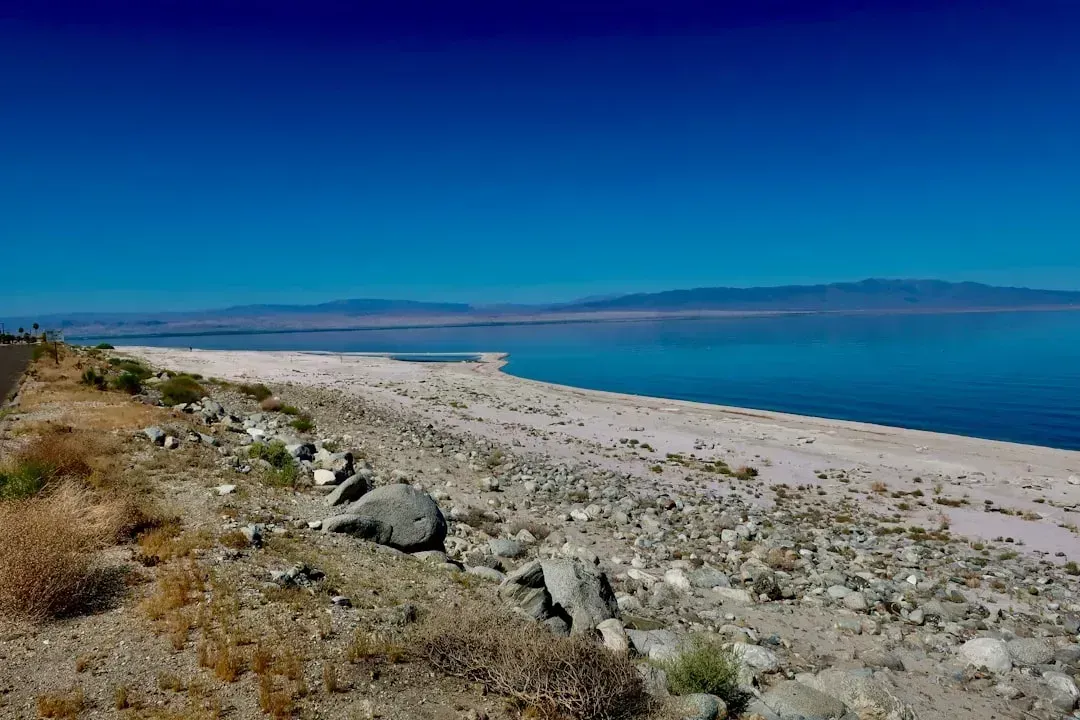
Formed in the early 1900s as a result of a breached canal carrying Colorado River water, the Salton Sea has over the last hundred years become critical habitat on the Pacific Flyway for millions of birds of nearly 300 species. In 2003, Colorado River water that filled the sea began to be diverted elsewhere, and water that partially compensated for that loss was cut off in 2017, accelerating the rapidly falling water level, habitat loss, and toxic dust blowing off miles of exposed lakebed.
The decline of the Salton Sea has led to a collapse of more than 95 percent of fish species. The sea is losing a large share of its inflows and lake levels are projected to drop significantly over the next 15 years, exposing almost 100 square miles of lakebed as water is diverted to help meet the needs of southern California. Wildlife biologists note that migratory birds that previously relied on the Salton Sea have lost that refuge, now that much of it has gone dry.
7. Lake Tahoe, California/Nevada

As the climate warms and nutrient inputs shift, algal communities in cool, clear mountain lakes like Lake Tahoe will likely experience significant seasonal changes, according to research from UC Davis. The 2024 State of the Lake Report from UC Davis Tahoe Environmental Research Center offered long-term insights into the lake’s environmental health, covering clarity, algae, temperature, and precipitation trends framed in the context of past and ongoing environmental challenges.
Across the broader Great Lakes region, 2024 recorded the lowest average winter ice cover on record, and less ice disrupts ecosystems, worsens shoreline erosion, and hurts tourism and fishing economies. For Lake Tahoe specifically, warming water temperatures are shortening the window during which deep cold layers can prevent algae from spreading through the water column. Shorter ice duration and warmer temperatures affect biogeochemistry and microbial metabolism in lakes and put them at greater risk for water quality impairments.
8. Lake Superior, Michigan/Wisconsin/Minnesota
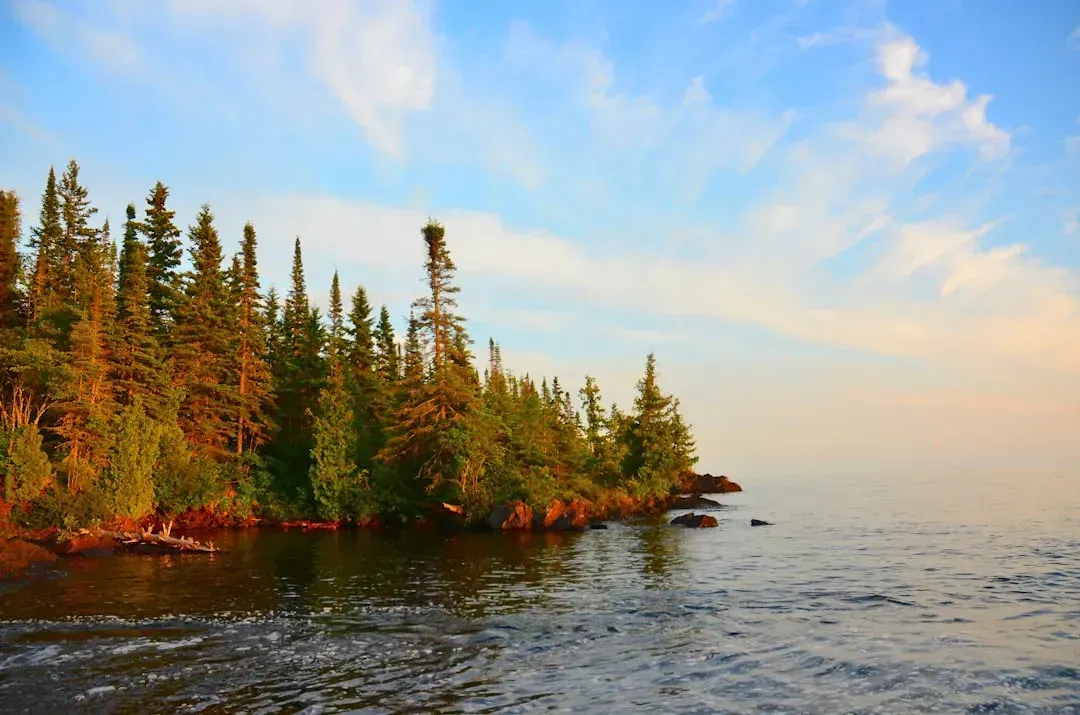
Significant rises in industrial agricultural runoff combined with warming lake temperatures are driving toxic algal blooms, even in typically pristine Lake Superior, threatening human and pet health, drinking water, and aquatic life. Since 1951, annual average air temperatures have increased by nearly 3 degrees Fahrenheit in the U.S. Great Lakes region, and warming has been accelerating in more recent decades.
More than 40 million people rely on the Great Lakes for drinking water, fisheries, recreation, commerce, and industry. The lakes sustain more than 170 species of fish and habitats for over 3,500 species of plants and animals, many of which are rare or found nowhere else. A rigorous scientific review published in the journal Science indicates a massive shift in lake ice duration over the past 25 years, with melting starting at least a month earlier than in previous centuries, and thousands of lakes that historically froze every winter now experiencing ice-free years.
What runs through all eight of these cases is a pattern that biologists find more troubling than any single data point: the pace of decline keeps outrunning the forecasts. Models built even a decade ago underestimated how quickly warming temperatures, prolonged drought, and nutrient overload would combine. Even decades after reforms such as the Clean Water Act, many lakes remain trapped in a dangerous cycle where lower water levels make pollution more concentrated, accelerating ecological decline. The surprise, it turns out, is not that these lakes are struggling. It’s how fast the clock is running.

- The Shoreline Sucked Dry in Seconds – 5 Tsunami Signals Beachgoers Mistake for Low Tide - November 14, 2026
- 9 Dark-Sky Destinations Around the World Where the Stars Look Unreal - November 14, 2026
- The Fault Line That Never Slips – 7 Locked Seismic Zones Overdue for a Massive Release - November 14, 2026
