


- Phantom Energy Sucking Power 24/7 – 7 Home Electronics Quietly Inflating Utility Bills - November 14, 2026
- A Million-Mile Storm Raging for Centuries – 6 Violent Weather Wonders in Our System - November 14, 2026
- Animals Flee Hours Before the Tremor – 7 Natural Warnings Before Disasters Strike - November 14, 2026
Most of us learned the planets in school, usually with a memory trick and a poster on the classroom wall. The list felt settled. Then Pluto got reclassified in 2006, and the neat picture got a little more interesting.
Today the Sun’s family is usually described as eight planets plus five officially recognized dwarf planets. Here they are in order, starting closest to the Sun, with a few facts worth remembering for each.
Mercury
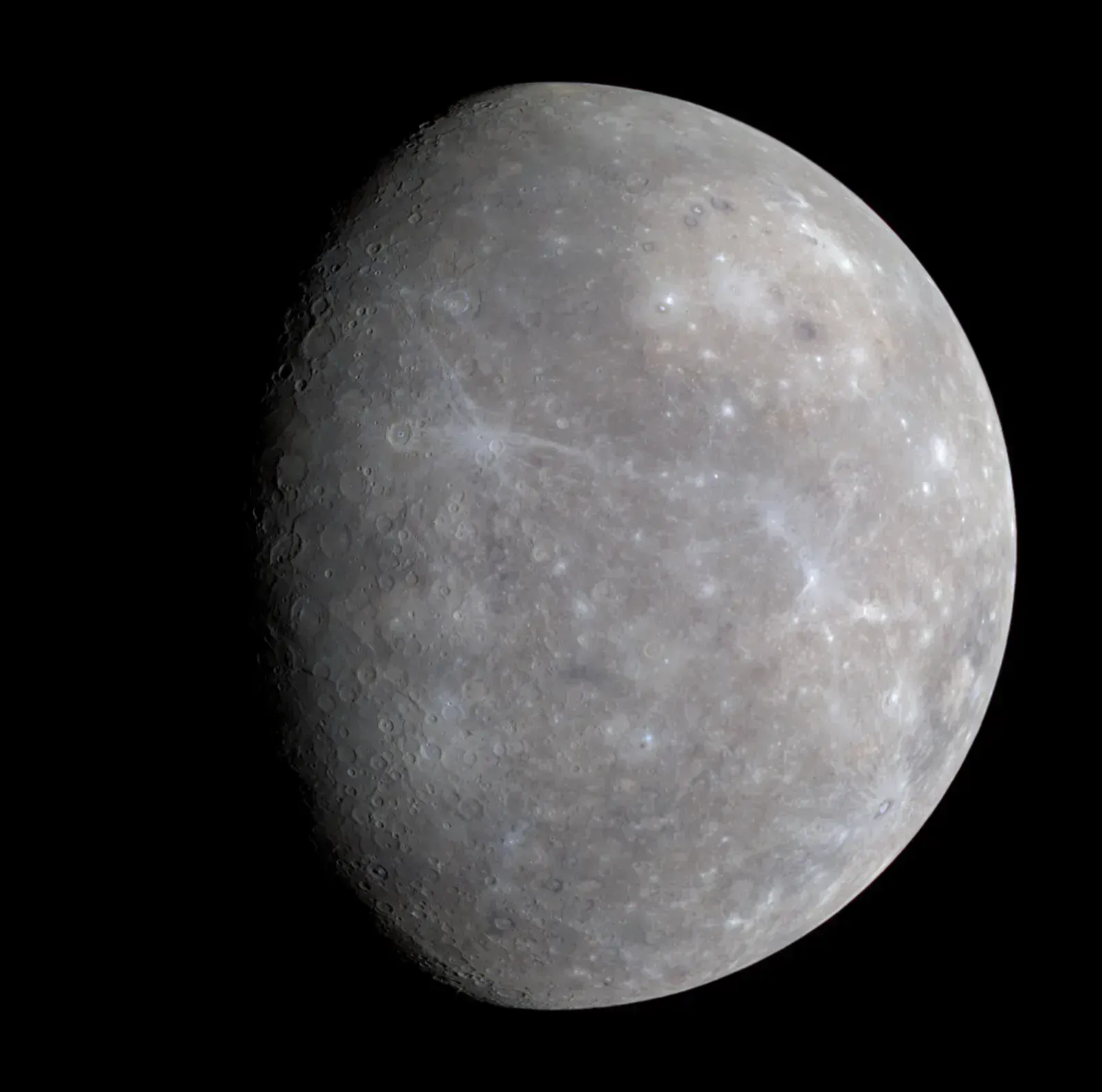
Mercury is the smallest planet and the one closest to the Sun. It circles the Sun in about eighty eight Earth days, which makes its year shorter than a season on many worlds. Because it has almost no atmosphere to hold heat, its surface swings between scorching days and extremely cold nights.
Despite the heat, NASA’s MESSENGER mission found evidence of water ice in permanently shadowed craters near the poles. Europe and Japan’s BepiColombo spacecraft, launched in 2018, is scheduled to enter orbit around Mercury in November 2026. It should give scientists their most detailed look at the planet in years.
Venus
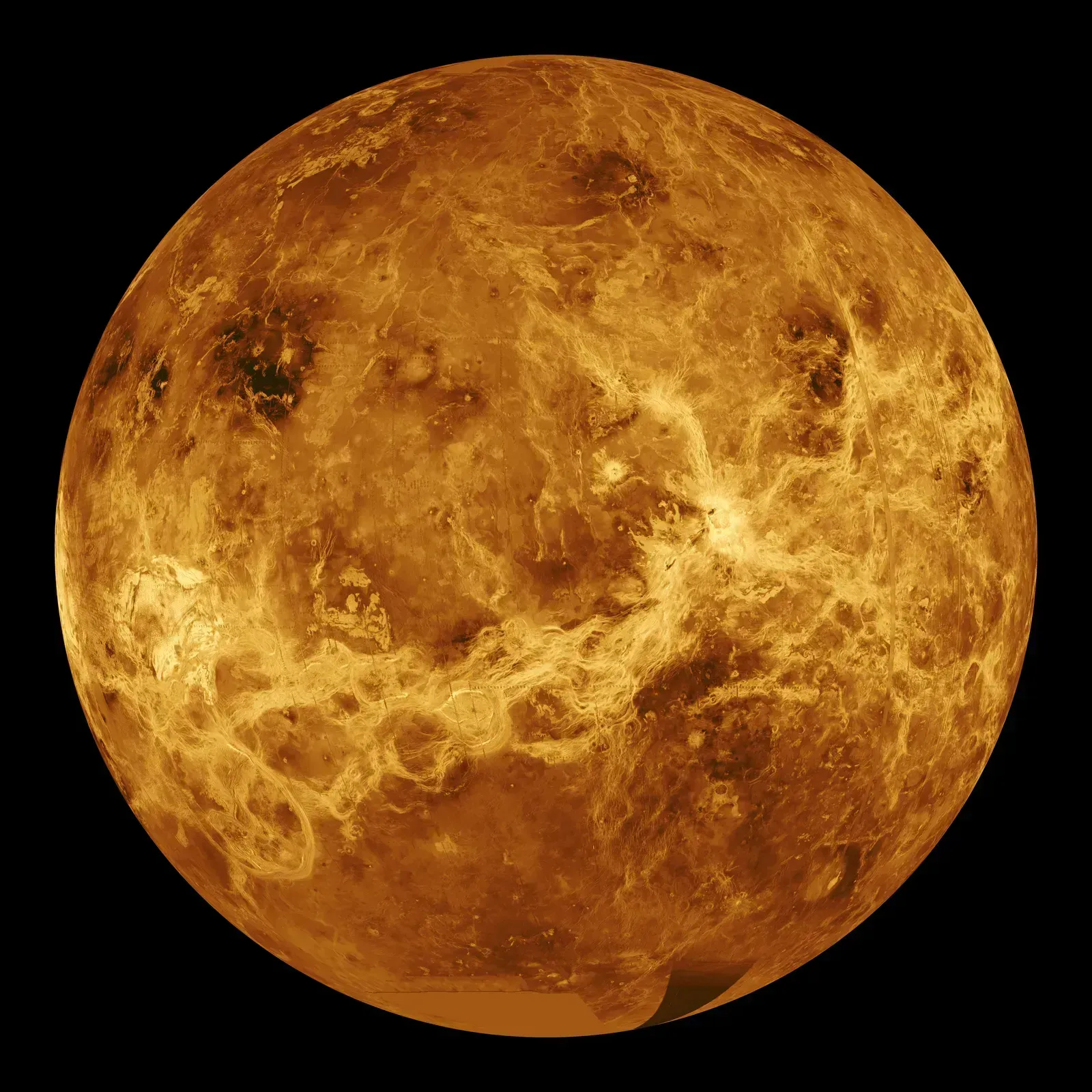
Venus is the hottest planet, even though Mercury sits closer to the Sun. Its thick carbon dioxide atmosphere traps heat, pushing surface temperatures to around four hundred sixty five degrees Celsius. The pressure at the surface is roughly ninety times what we feel on Earth.
It’s also a strange place for timekeeping. Venus spins so slowly, and backwards compared with most planets, that one day lasts longer than its year. Clouds of sulfuric acid wrap the planet, which is one reason it stayed so mysterious until spacecraft arrived.
Earth
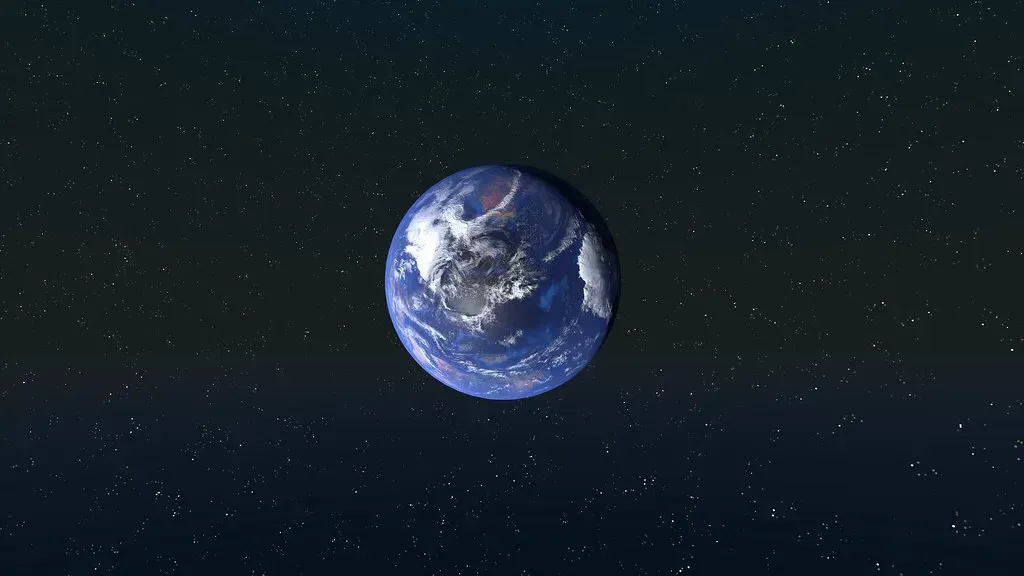
Earth is the third planet and the only place we know of that hosts life. Roughly seventy percent of its surface is covered by liquid water, and a moderate atmosphere keeps temperatures in a range where that water can stay liquid. It has one large natural satellite, the Moon.
Earth’s active geology helps too. Moving tectonic plates recycle the crust and shape continents, and its magnetic field helps deflect charged particles from the Sun. Together these features make it a useful baseline when astronomers judge whether other worlds could be habitable.
Mars
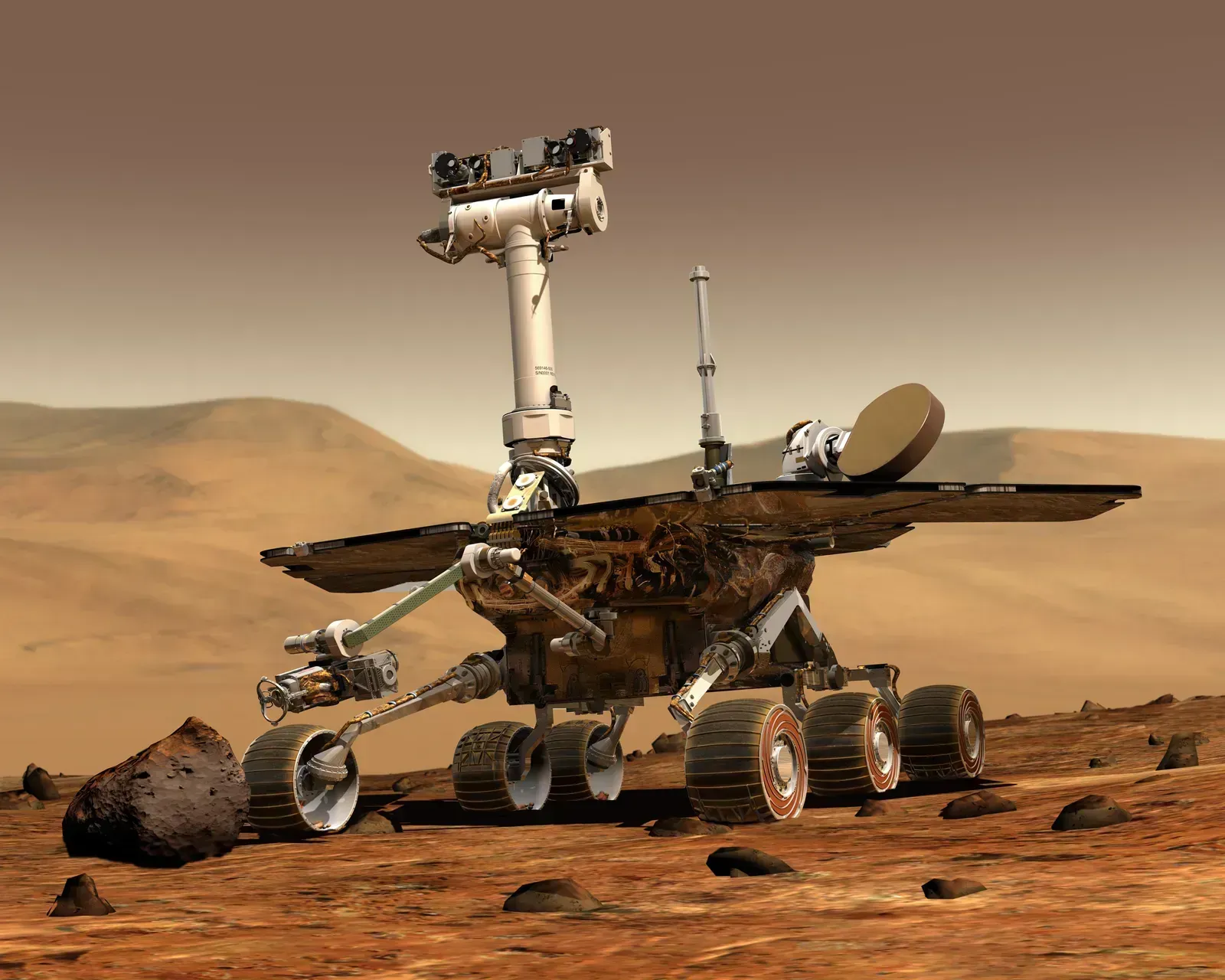
Mars gets its reddish color from iron oxide in its dust and rocks. It’s a cold, dry desert now, though channels, ancient lake beds, and mineral evidence show water once flowed across its surface. It has two small moons, Phobos and Deimos.
The planet holds Olympus Mons, the tallest known volcano in the solar system, at about twenty two kilometers high. That’s roughly two and a half times the height of Mount Everest above sea level. NASA’s Perseverance rover has been exploring Jezero Crater since 2021, collecting rock samples that might one day be returned to Earth.
Jupiter
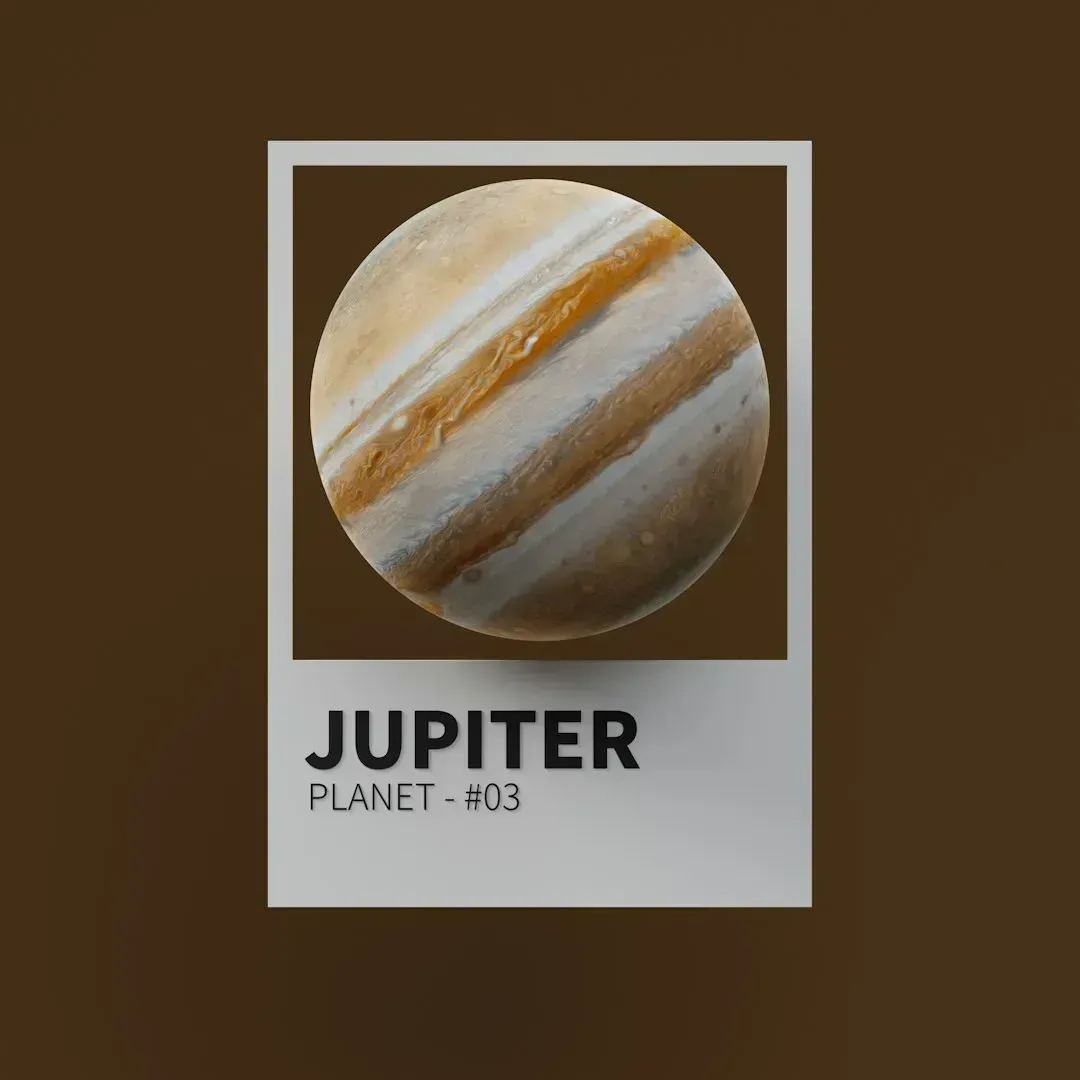
Jupiter is the largest planet by a wide margin. It holds more than twice the mass of all the other planets combined. It’s a gas giant made mostly of hydrogen and helium, with no solid surface to stand on.
Its Great Red Spot is a storm that has been observed for well over a century and has been shrinking in recent decades. NASA’s Juno spacecraft has studied the planet from orbit since 2016. Meanwhile, the Europa Clipper mission launched in October 2024 to investigate the icy moon Europa, and it’s expected to reach Jupiter in 2030.
Saturn
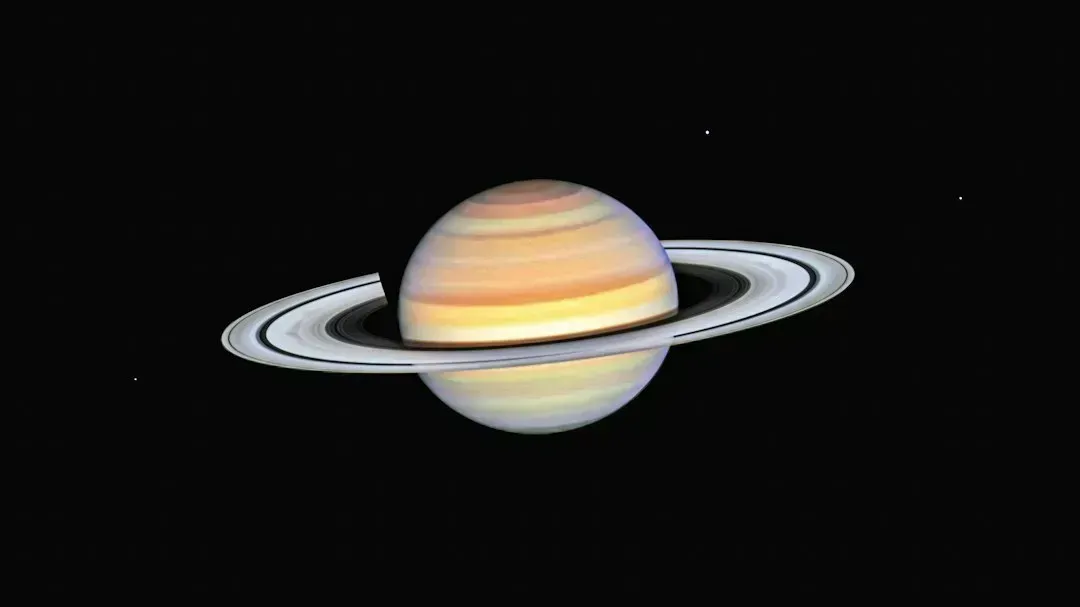
Saturn is famous for its rings, made mostly of water ice chunks ranging from tiny grains to boulders. It’s the second largest planet, and it’s so light for its size that its average density is lower than water. Its rings are wide but very thin.
Saturn also has a huge family of moons, with the confirmed count now well over two hundred. Titan has a thick atmosphere and liquid methane lakes, while Enceladus sprays water from beneath its icy shell. In 2025, Earth passed through the plane of Saturn’s rings, so they looked nearly edge on and almost vanished from view in telescopes.
Uranus
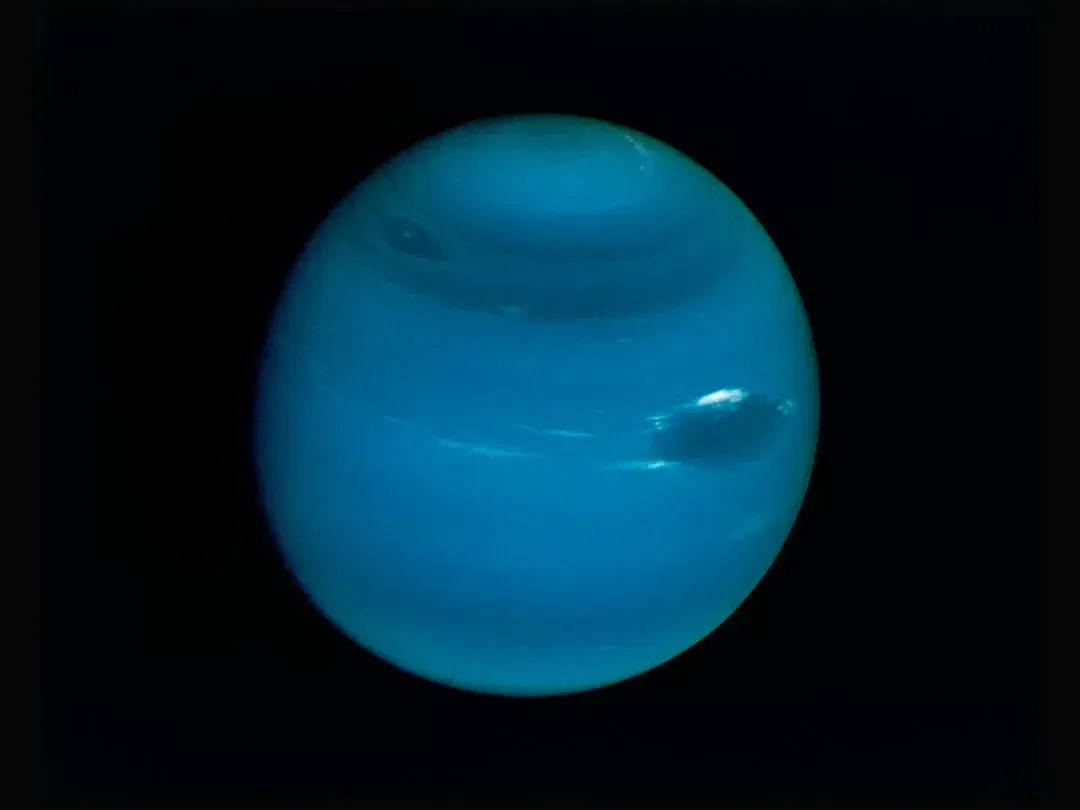
Uranus is an ice giant that spins almost on its side, tilted about ninety eight degrees. That odd tilt gives it extreme seasons, with each pole spending decades in sunlight followed by decades of darkness. One trip around the Sun takes about eighty four Earth years.
Only one spacecraft has ever visited it. Voyager 2 flew past in 1986 and provided most of what we know up close. A US planetary science review in 2022 named a Uranus orbiter and probe as a top priority for a future flagship mission, though no mission has launched.
Neptune
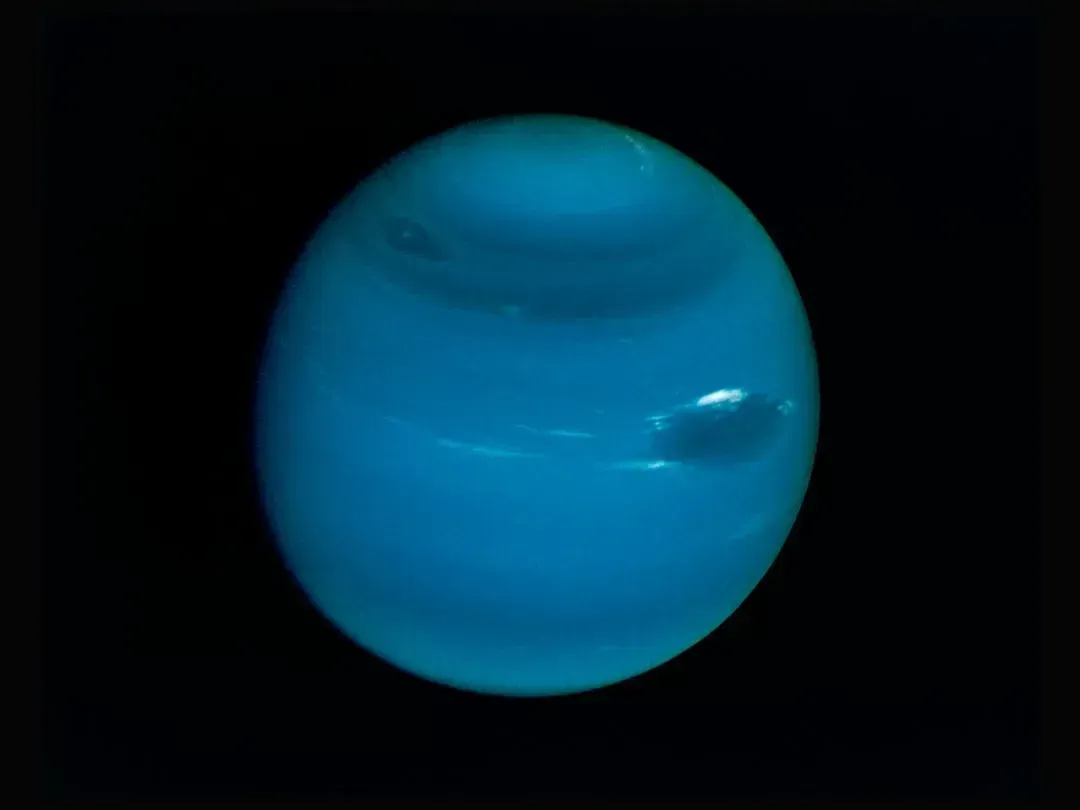
Neptune is the farthest known planet from the Sun, and it takes about one hundred sixty five Earth years to complete an orbit. It was found in 1846 after astronomers used mathematics to predict its position from irregularities in Uranus’s orbit. Voyager 2 remains the only spacecraft to have visited, in 1989.
Its winds are among the fastest measured in the solar system, exceeding two thousand kilometers per hour. In 2025, astronomers using the James Webb Space Telescope reported the first clear infrared images of auroras on Neptune. That was a notable step for a planet that’s so distant and faint.
Ceres
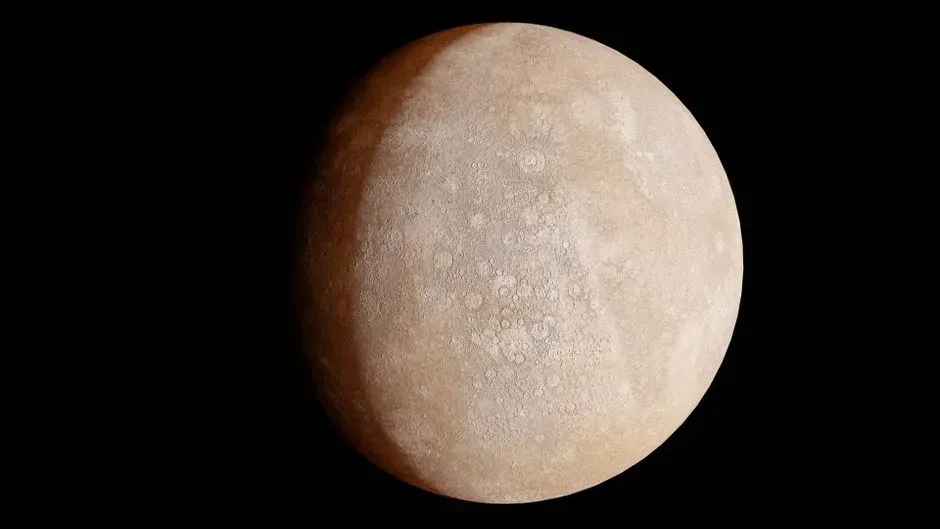
Ceres is the only dwarf planet in the inner solar system, orbiting in the asteroid belt between Mars and Jupiter. Giuseppe Piazzi discovered it in 1801, and for a while it was counted as a planet. It’s about nine hundred forty kilometers across, which makes it the largest object in the belt.
NASA’s Dawn spacecraft orbited Ceres from 2015 to 2018. It revealed bright deposits in Occator Crater that turned out to be mostly salts left behind by briny liquid that reached the surface. Scientists still study whether Ceres has, or once had, a subsurface reservoir of salty water.
Pluto
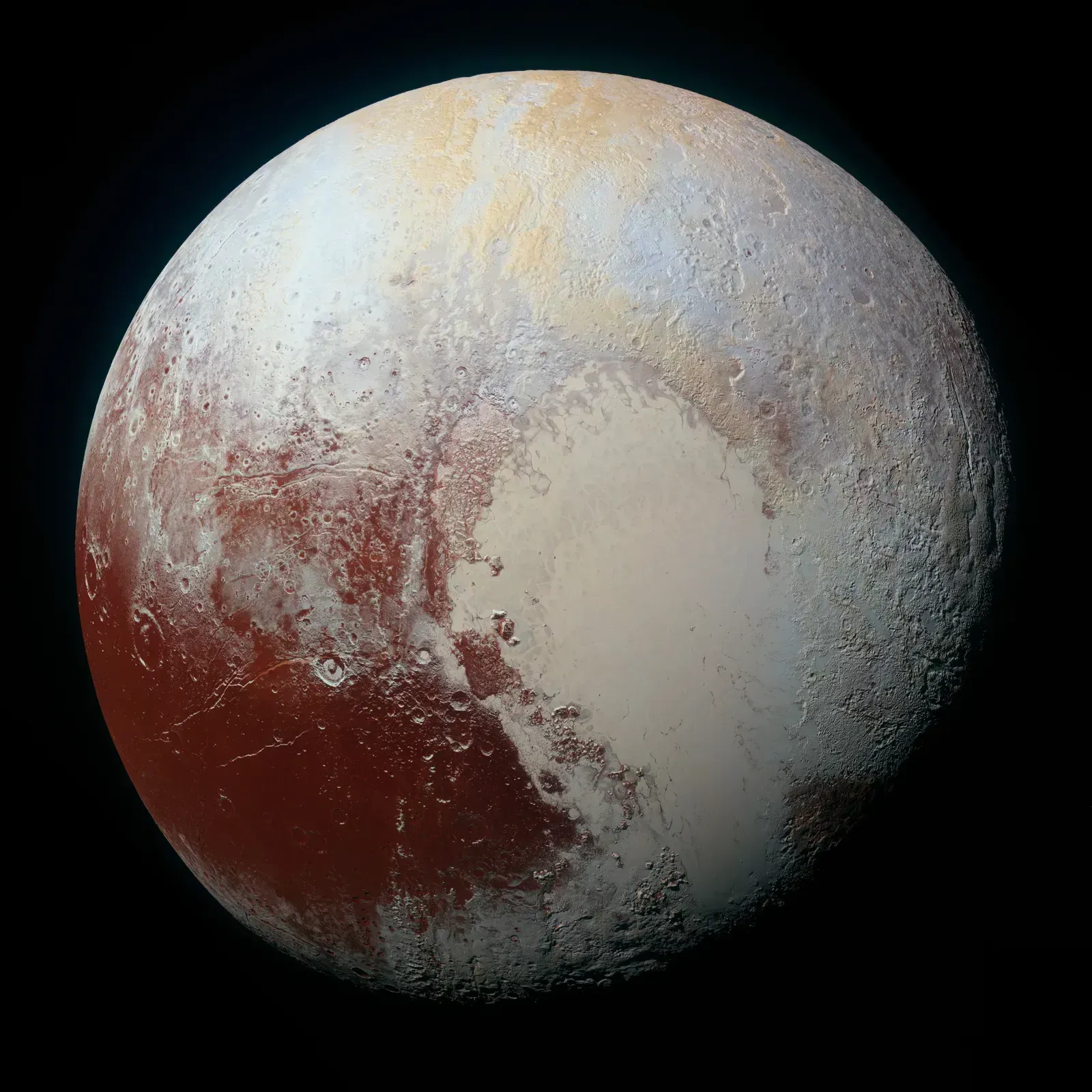
Pluto was discovered in 1930 and counted as the ninth planet until 2006. That year the International Astronomical Union defined a planet as a body that orbits the Sun, is round, and has cleared its orbital neighborhood. Pluto shares its region with many other icy objects, so it was placed in the new dwarf planet category.
NASA’s New Horizons spacecraft flew past in July 2015 and showed a surprisingly active world. It has a large heart shaped plain of nitrogen ice, mountains of water ice, and a haze layered atmosphere. Its largest moon, Charon, is so big relative to Pluto that the two orbit a point in space between them.
Eris
Eris was announced in 2005 by a team led by astronomer Mike Brown. It’s a little smaller than Pluto in diameter, at roughly twenty three hundred kilometers, but it’s more massive. Its discovery helped push astronomers to define what counts as a planet.
Eris follows a stretched orbit that takes about five and a half centuries to complete. It travels far beyond Neptune, and its surface is very bright, likely coated with frozen gases. It has one known moon, named Dysnomia.
Haumea
Haumea is one of the oddest known dwarf planets. It spins once in about four hours, so fast that it has stretched into an elongated shape, somewhat like a squashed football. The IAU officially recognized it as a dwarf planet in 2008.
It has two known moons, Hiʻiaka and Namaka, and a family of icy fragments likely created by an ancient collision. In 2017, astronomers watching it pass in front of a star discovered that it has a ring. That was the first ring found around a dwarf planet.
Makemake
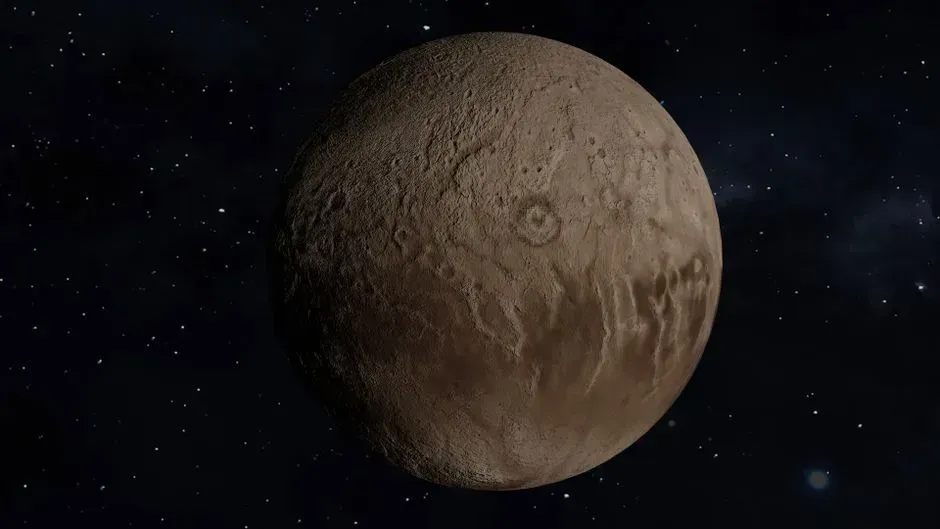
Makemake orbits in the Kuiper Belt, the icy region beyond Neptune. It was discovered in 2005 and is named after a creator deity of the Rapa Nui people of Easter Island. At about fourteen hundred kilometers across, it’s one of the largest known Kuiper Belt objects.
Its surface is covered with methane ice, which gives it a reddish tint. A small moon, nicknamed MK2, was discovered in 2016 using the Hubble Space Telescope. Makemake takes roughly three centuries to circle the Sun once.
