

A rose-colored rock found in the Sahara is now one of the oldest pieces of Mars ever studied on Earth. The meteorite, Teghaza 001, turned up in Mali’s Sahara Desert four years ago. A new paper in the journal Science says it is a fragment of Mars’ primordial crust, formed at least 4.1 billion years ago.
That date matters because Martian rocks this old almost never reach us. The sections below cover what the rock is, how it was dated, and what it suggests about the early planet. Some questions are still open, and I’ve flagged them where they come up.
A Strange Rock From the Malian Desert
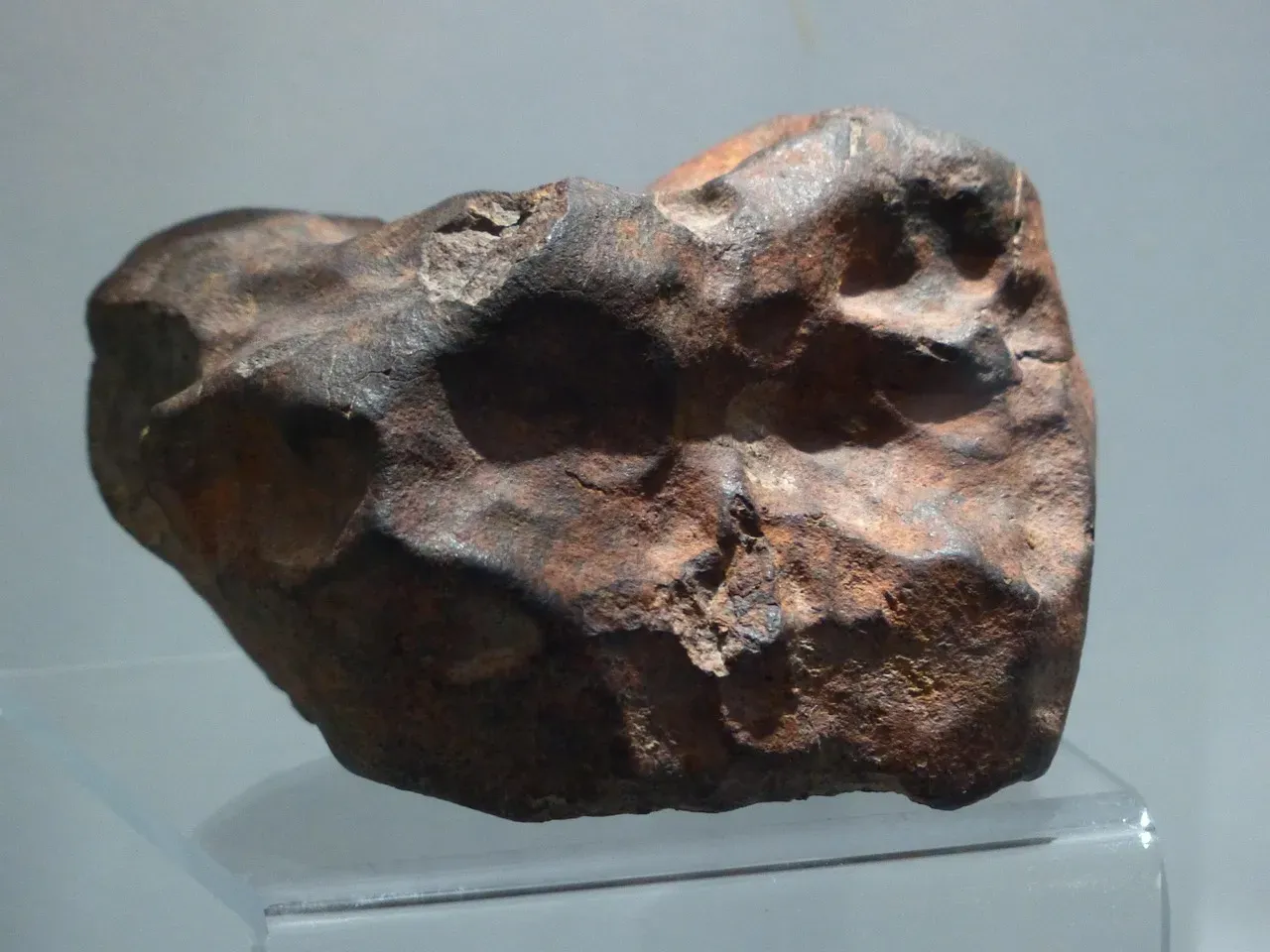
Teghaza 001 was discovered in Mali’s Sahara Desert in 2022. One public summary describes it as an 800 gram meteorite. Its color is part of why it drew attention. The rose-colored meteorite has a chemical composition that sets it apart from previously studied Martian samples, scientists say.
Its first classification turned out to be a poor fit. Researchers initially classified it as a shergottite, the most common type of Martian meteorite found on Earth. Those rocks are generally younger than 600 million years. The later analysis showed it belonged to a very different and much older category.
How Scientists Know It Came From Mars

Identifying a Martian meteorite means checking its chemistry against what spacecraft have measured. The mineral and chemical composition can be compared with data from NASA missions, including the Viking landers and the Curiosity and Perseverance rovers. A match with that data supports a Martian origin.
Once the rock was confirmed as Martian, it joined a small family. NASA scientists say it is one of roughly 435 meteorites known from Mars. Only a tiny fraction of those come close to its age.
Dating the Crystals
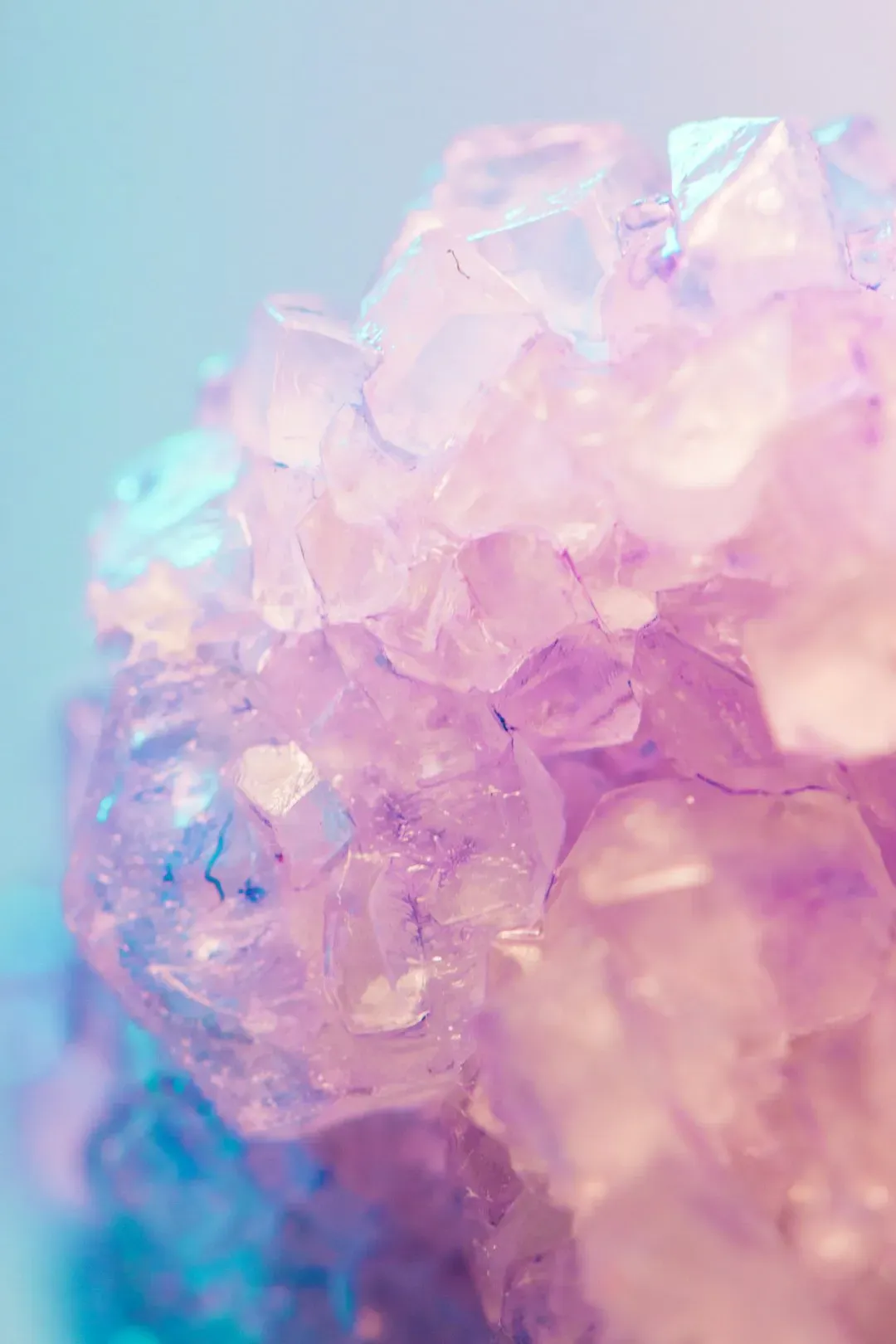
The key evidence came from tiny zircon crystals inside the rock. The team dated them with uranium-lead methods and got about 4.11 billion years. A separate rubidium-strontium analysis gave a consistent but less precise date of about 4.24 billion years. The two methods agree closely enough to support the main conclusion.
The researchers frame the result as a minimum age. Either way, the rock formed no later than about 4.1 billion years ago, during the earliest geological period of Mars. That puts its formation within roughly the first 400 million years of the planet’s existence.
One of Only a Few Truly Ancient Martian Meteorites
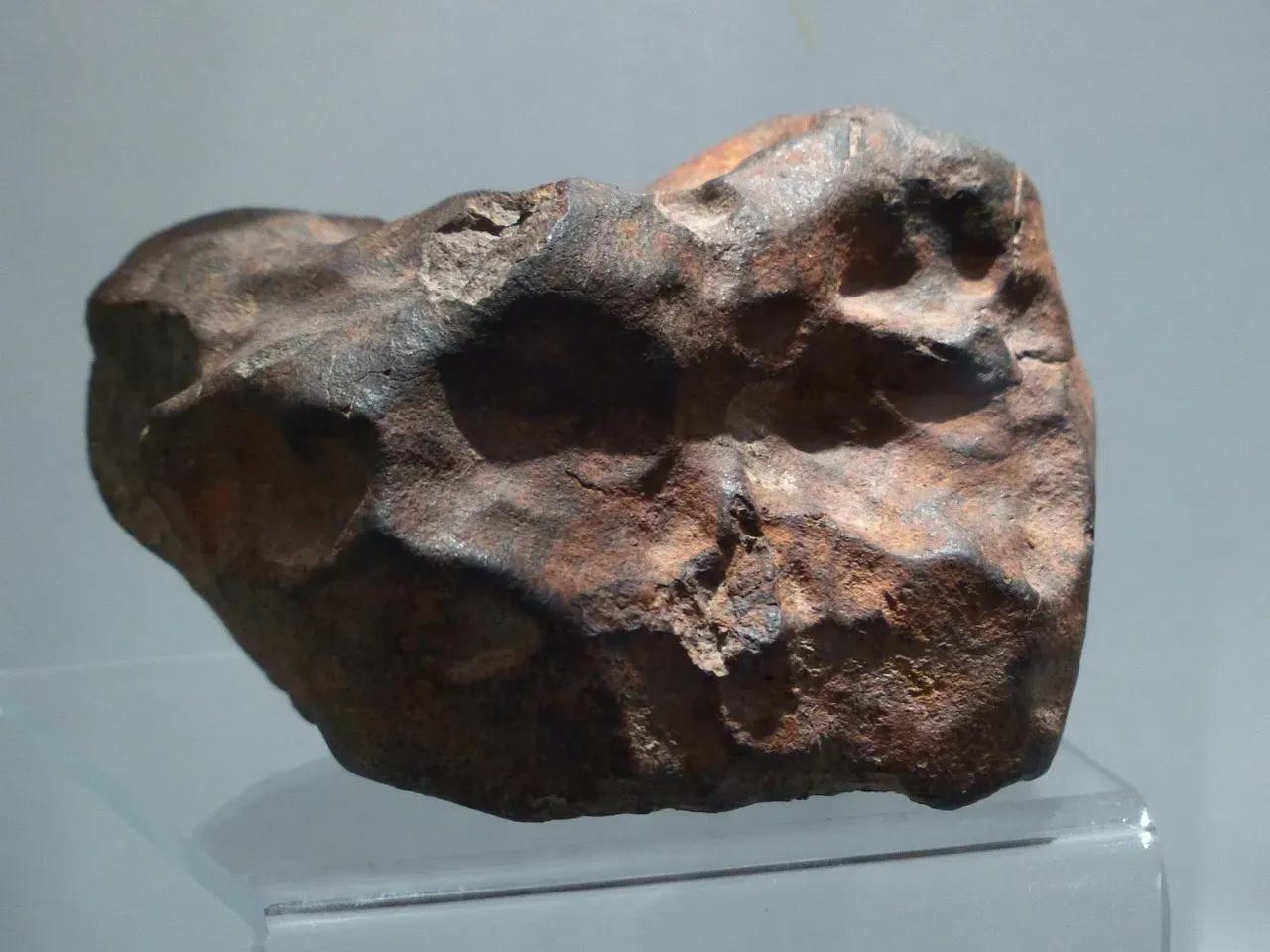
Most Martian meteorites are young. The three main classes, shergottites, nakhlites and chassignites, formed 2.4 billion years ago or later. Teghaza 001 stands apart from all of them.
Before this find, only two specimens came close. One was Allan Hills 84001, which crystallized about 4.1 billion years ago. The other was a group of fragment-filled rocks including Northwest Africa 7034, some of whose pieces are older than 4.3 billion years. Teghaza 001 is different in one respect. One researcher said it is a single, unadulterated rock type that is 4.1 billion years or older, which came as a big surprise.
Black Beauty and the Earlier Sahara Finds
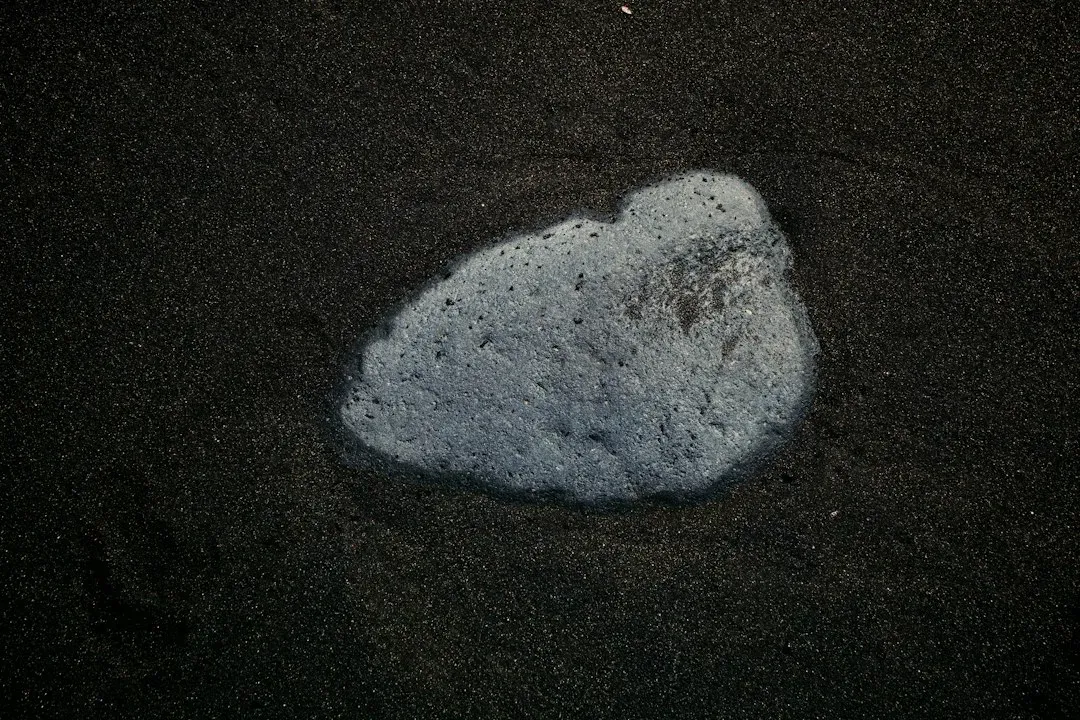
The Sahara has produced Martian rock before. NWA 7034, nicknamed Black Beauty, was found in the Sahara in 2011. It contains the oldest Martian igneous material ever dated, about 4.45 billion years old.
Black Beauty is a different kind of rock. It is made of cemented fragments of basalt. Teghaza 001 is a single rock type, which makes it easier to read as one coherent piece of early crust. The two meteorites complement each other.
Evidence That Water Altered the Early Crust
The meteorite’s minerals carry a chemical record of water. The measurements showed that Teghaza 001 interacted with Martian water about 4.1 billion years ago, which suggests the rock itself could be even older. That fits a picture of a wetter early Mars.
Yang Liu, a NASA Jet Propulsion Laboratory scientist and study author, described it this way to Ars Technica. She said that when the rock was forming there was a hydrosphere on Mars, and it was reacting with the crust intensely. Another author offered a broader view. Lee Saper said the rock records water-rock interactions and maybe even an imprint of the Martian atmosphere as it was losing water.
Pinning Down Where on Mars It Came From
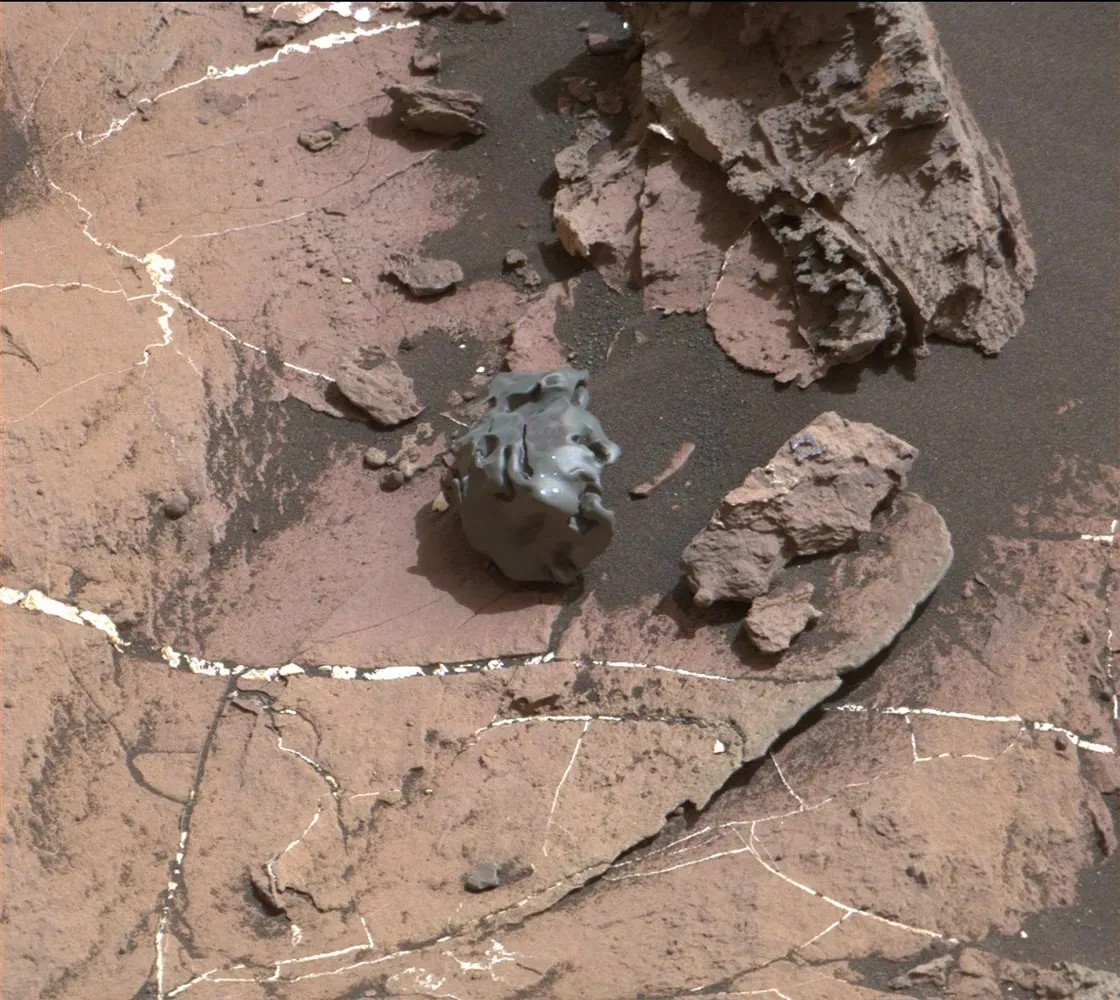
The meteorite’s exact origin is uncertain, but researchers narrowed it down. Teghaza 001 is made of volcanic minerals and matches the landscape of Mars’ southern highlands, NASA said. The team identified 13 locations in those highlands from which it could have come.
Orbital data is what makes that matching possible. NASA says the mix of volcanic minerals, including zircon, matches samples observed by the Mars Reconnaissance Orbiter in the southern highlands. Thirteen candidate sites is a useful shortlist, not a confirmed address.
Why Ancient Martian Rocks Are So Rare on Earth
The scarcity of old Martian meteorites is itself a puzzle. Liu said that scientists don’t fully understand why old Martian rocks are so rare on Earth. One idea involves how rocks survive being launched.
She explained it to Ars Technica like this. If an impact hits loose powder, it may not cement into rock and escape Mars’ gravity, so the impact acts as a filter, and weak rocks don’t make it off the planet. That helps explain why strong, well-preserved samples like this one are valuable.
What It Tells Us About Early Mars
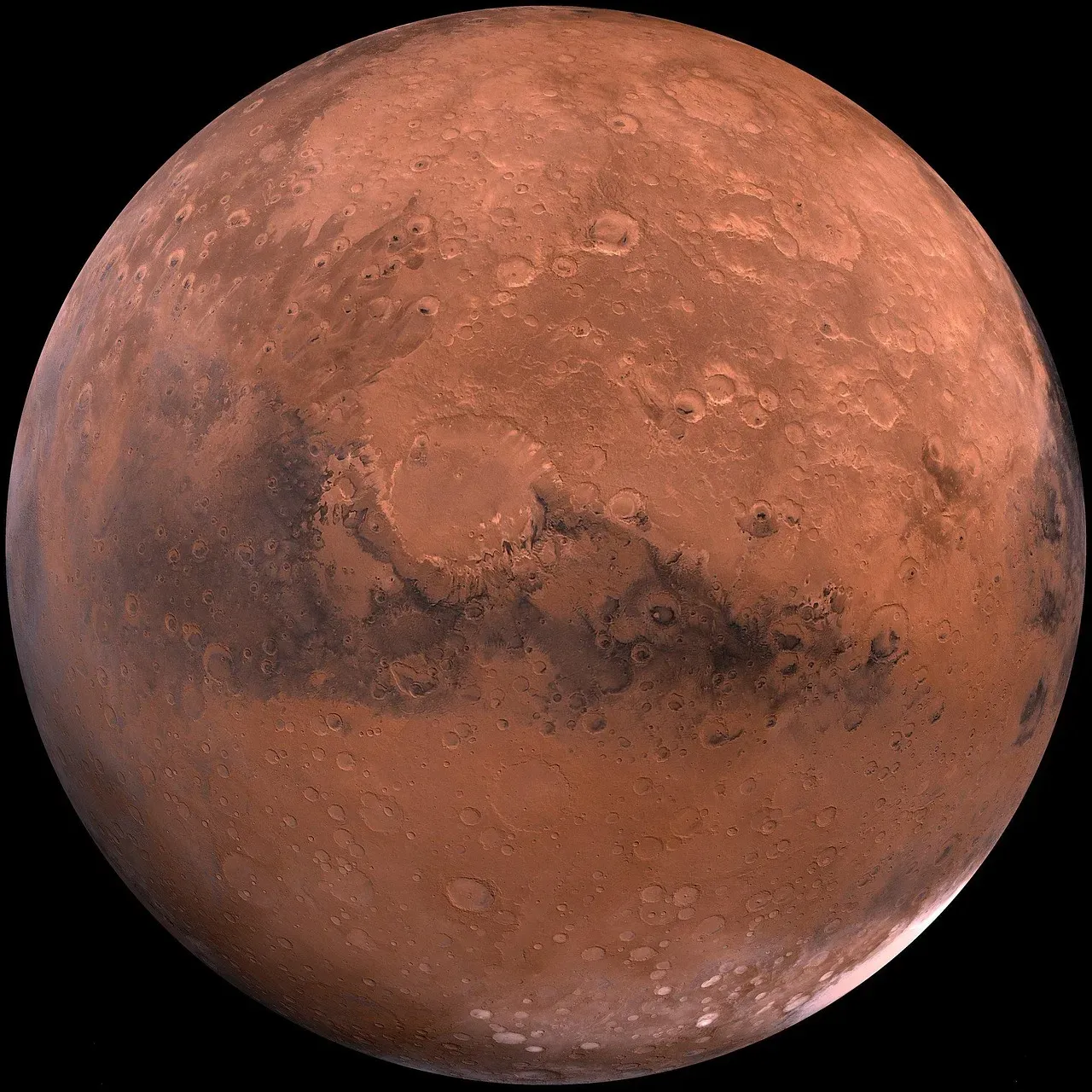
The meteorite offers a view into the Pre-Noachian era. The study looks at that period, which lasted from approximately 4.5 to 4.1 billion years ago. Imperial College London’s Genge, commenting on the work, said it allows researchers to peer deep under the surface to see what the planet was like only 500 million years after it formed.
The sample also comes from a region never sampled before. One scientist called it the first piece of Martian crust from a part of Mars we’ve never had a sample of before. Still, one meteorite can’t settle everything. It adds a precise data point to a picture that rovers, orbiters and other meteorites are building together.
Conclusion
Teghaza 001 shows that a rock from a desert in Mali can carry a record of Mars from more than four billion years ago, including signs that water was reshaping its crust. Its age rests on two independent dating methods that agree. Its source is narrowed to 13 candidate sites in the southern highlands, and the exact location remains unknown.
For now, it is a small, rose-colored reminder that some of the best Mars samples may already be on Earth, waiting in the sand for someone to notice them.

- The Shoreline Sucked Dry in Seconds – 5 Tsunami Signals Beachgoers Mistake for Low Tide - November 14, 2026
- 9 Dark-Sky Destinations Around the World Where the Stars Look Unreal - November 14, 2026
- The Fault Line That Never Slips – 7 Locked Seismic Zones Overdue for a Massive Release - November 14, 2026
