

- NASA invites students to design a moon base in $1 million challenge - November 11, 2026
- Why Some People Can Feel a Storm in Their Joints, According to Experts - November 11, 2026
- 7 Foods That Taste Better on a Rainy Day, According to Chefs - November 11, 2026
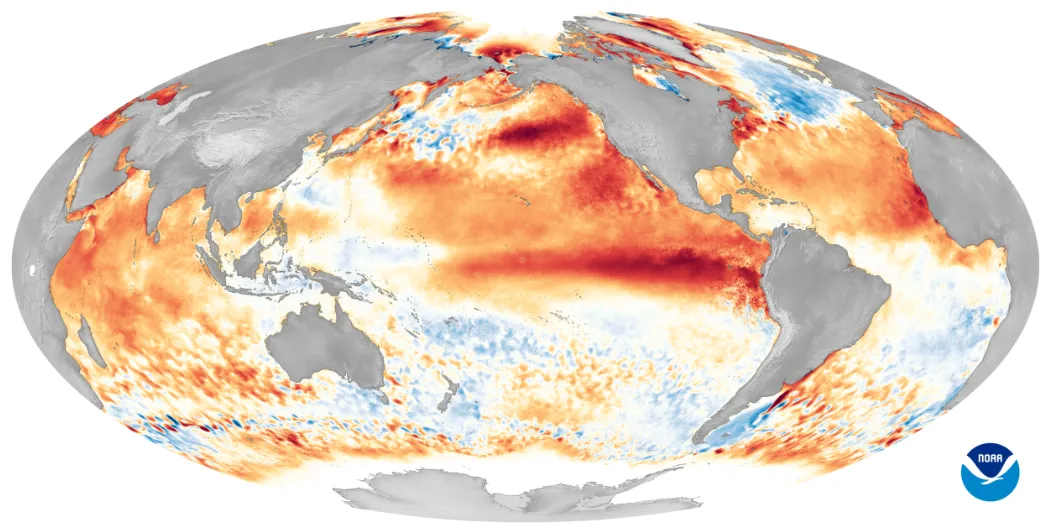
El Niño is best known for its effects on weather, such as floods, droughts and warm ocean water. It also has a smaller effect that few people expect. As El Niño intensifies, changes in global wind patterns slow Earth’s rotation slightly, adding about 1 millisecond to the length of a day at the peak of a strong event.
That’s far too small to notice. Still, scientists can measure it, and it shows how closely the atmosphere, the oceans and the solid planet are linked. Here’s what’s behind the effect and how large it is.
How Big Is the Change?
NOAA’s Pacific Marine Environmental Laboratory puts it plainly. The change is only about 1 millisecond at the peak of a strong El Niño. A millisecond is one-thousandth of a second.
Spread over a day, that’s tiny. With 86,400 seconds in a day, the difference amounts to roughly one part in 100 million. You won’t notice it on a clock or in daylight hours, and it doesn’t change how you plan your day.
Why Winds Can Slow a Planet

The explanation is angular momentum. El Niño is associated with weaker tropical Pacific trade winds and stronger mid-latitude westerlies, both at the surface and aloft.
Angular momentum is conserved across the whole Earth and atmosphere system. To balance these wind changes, Earth’s rotation rate decreases, which conserves total angular momentum. When the atmosphere spins faster relative to the ground, the solid Earth gives up a little rotation. Some accounts compare this to a spinning ballerina changing her arm position.
What Happened in Past Strong Events
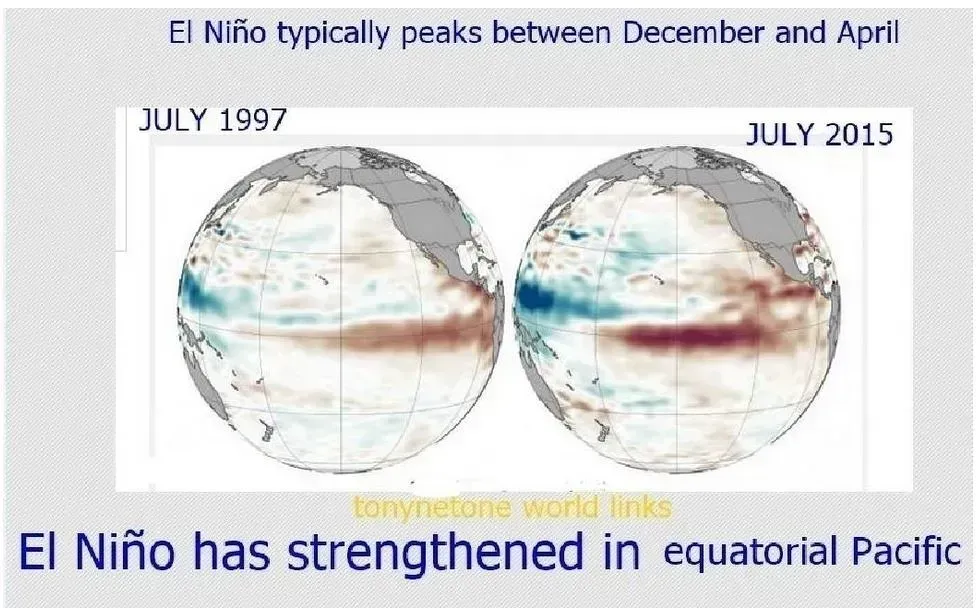
Researchers have measured this in earlier El Niños. A peer-reviewed study in Earth System Dynamics notes that the large 1982–1983 event lengthened the day by about 0.9 ms, while the 2015–2016 winter event produced an excursion reaching 0.81 ms in January 2016.
These figures fit the roughly one millisecond quoted for strong events. The study also found the 2015–2016 event differed in type from earlier extreme events, so the coupling to the solid Earth was expected to work differently.
Not All El Niños Are Equal
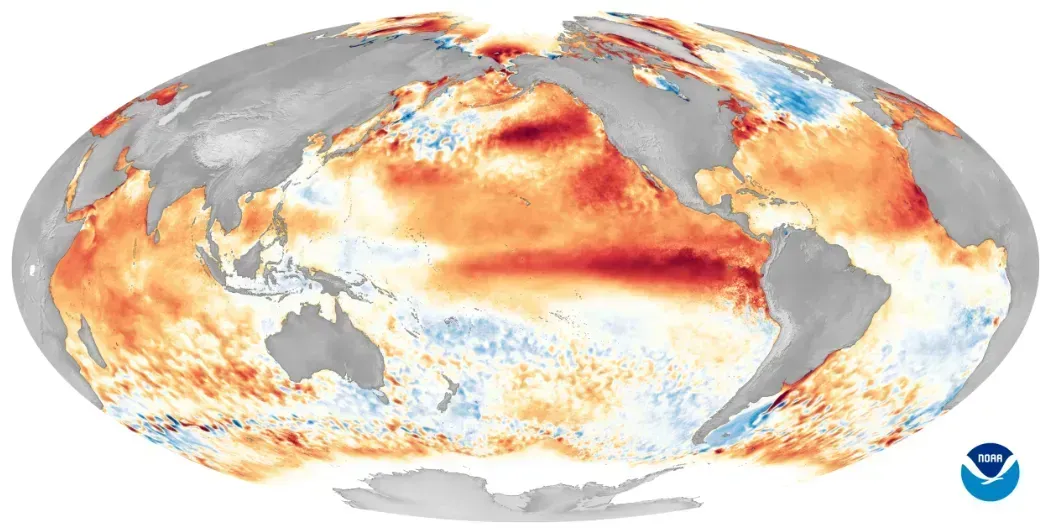
The size of the effect depends on where the warming sits in the Pacific. Work by NASA JPL scientist Jean Dickey and colleagues found that the two El Niño types set up different pressure patterns. Eastern Pacific events lengthen the day by around 0.1 milliseconds, while Central Pacific events lengthen it by 0.05 milliseconds.
Those numbers are smaller than the roughly 1 millisecond for the strongest events, so the effect scales with an event’s strength and character. A weak or moderate El Niño would likely produce a smaller change.
La Niña Does the Opposite
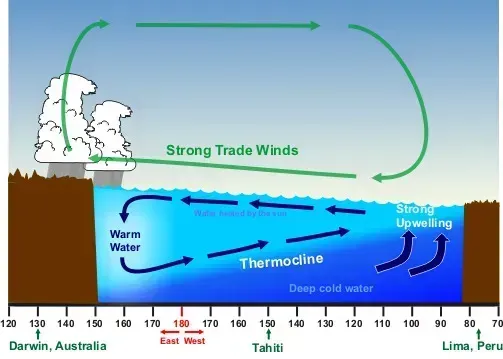
The Pacific swings between phases, and the rotation effect swings with it. NOAA says La Niña tends to have the opposite effect, so Earth’s rotation can speed up slightly and days become marginally shorter.
This is a continual see-saw. El Niño events occur irregularly at intervals of 2 to 7 years, though the average is about once every 3 to 4 years. The day-length signal therefore rises and falls over multi-year cycles.
Other Forces Also Change Day Length
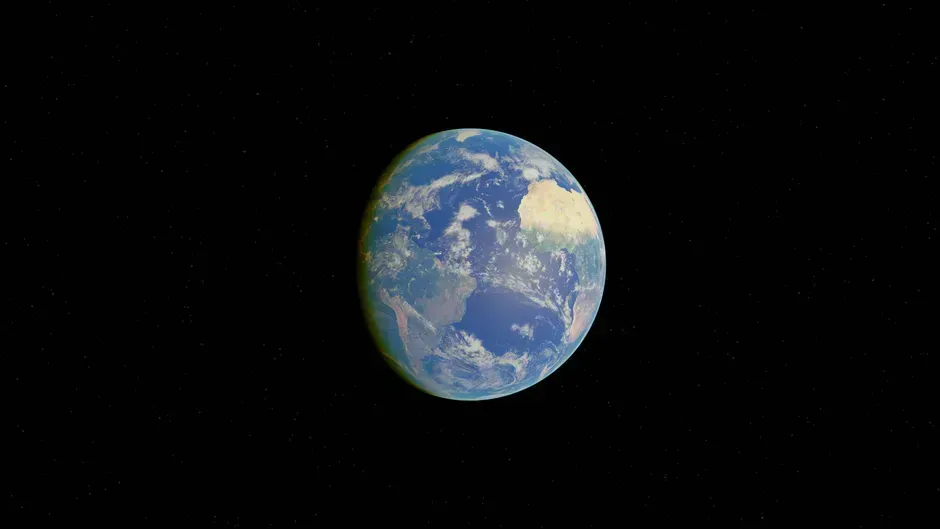
El Niño is only one influence. NASA says changes in the atmosphere, oceans, groundwater and ice can all affect Earth’s rotation over different timescales. Seasonal weather matters too: NASA says seasonal and daily weather variations can change the length of day by a few milliseconds over a year.
Over very long periods, the Moon plays a larger role. Tidal friction from the Moon gradually slows Earth’s rotation, adding about 2.3 milliseconds to the day every century. That slow drift sits underneath the shorter climate-driven ups and downs.
Where the Current El Niño Fits In
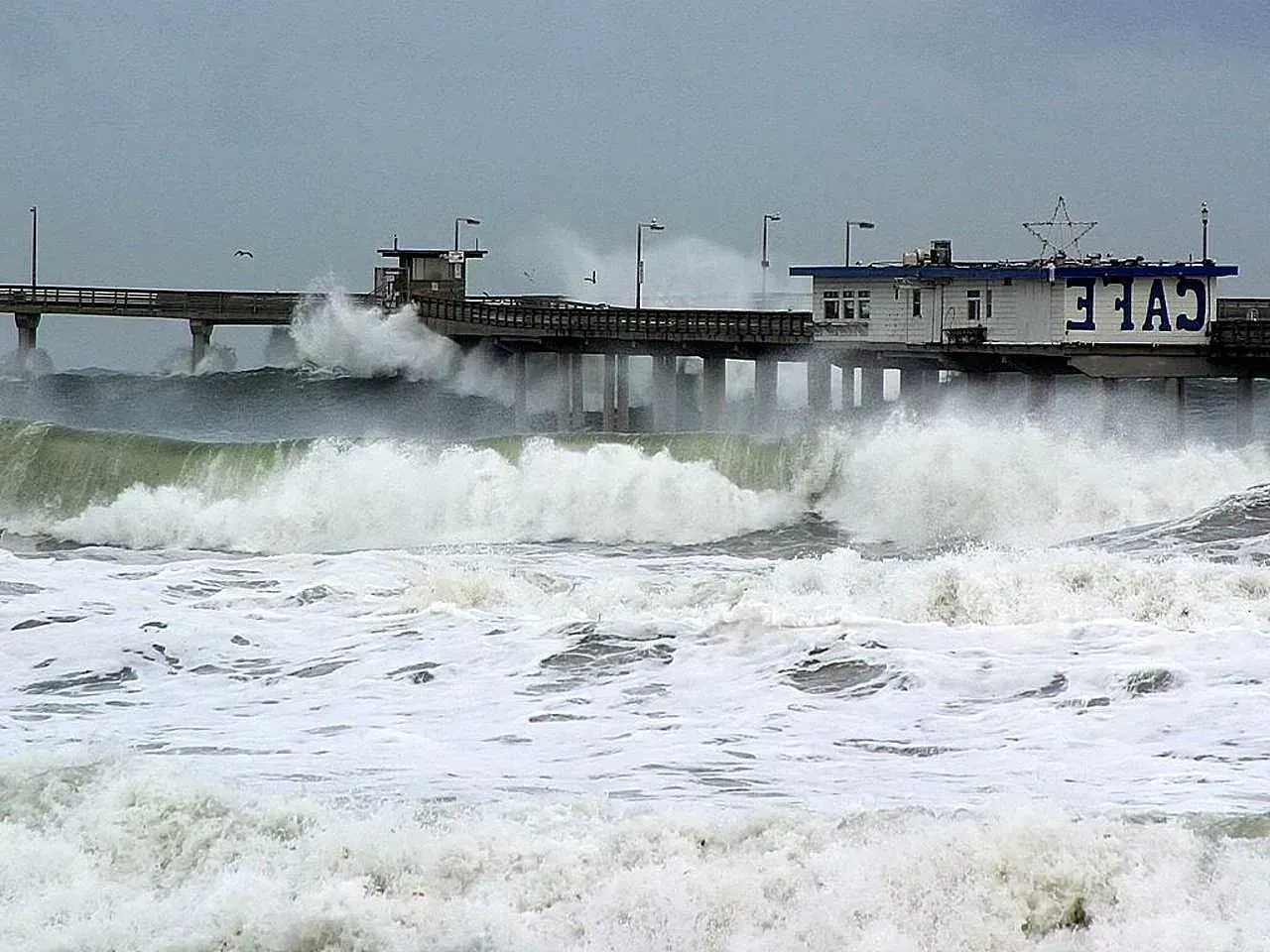
Recent reports say El Niño is intensifying across the Pacific this autumn. One report says the effect is expected to peak around November. Those reports are repeating NOAA’s general figure of about 1 millisecond for a strong event, not a measurement for this particular event.
The final size will depend on how strong this event becomes and how the winds behave. Until the monitoring data are in, the safest statement is that any lengthening will be on the order of a millisecond or less.
Why Scientists Care About a Millisecond
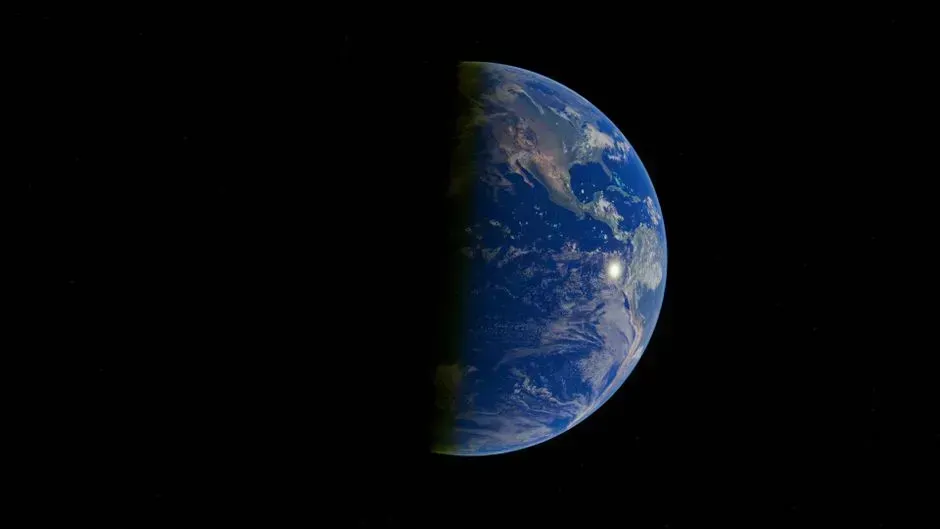
Tiny changes in day length are useful data. The International Earth Rotation Service uses these tools to record changes in the exact position of Earth’s pole of rotation and the length of each day. Those records help in precise timekeeping and navigation.
They also help with climate research. One university reference notes that longer day lengths have been used to confirm independent El Niño observations and forecasts. The planet’s rotation works as a rough check on what the atmosphere is doing.
Conclusion
El Niño does lengthen days, but only by about a millisecond at most in strong events, and by less in weaker ones. The cause is a shift in winds that moves angular momentum between the atmosphere and the solid Earth. It’s a small effect, yet it shows how the Pacific Ocean’s moods can register in the spin of the whole planet.
