


- Phantom Energy Sucking Power 24/7 – 7 Home Electronics Quietly Inflating Utility Bills - November 14, 2026
- A Million-Mile Storm Raging for Centuries – 6 Violent Weather Wonders in Our System - November 14, 2026
- Animals Flee Hours Before the Tremor – 7 Natural Warnings Before Disasters Strike - November 14, 2026
Pull up a map and check the latitudes. London sits at roughly 51.5 degrees north, and Calgary is at about 51 degrees north. London is slightly farther from the equator, yet the two cities feel like different climates in January.
In London, a winter morning usually means a damp jacket and a few degrees above freezing. In Calgary, it can mean deep cold, dry air and snow that stays on the ground for weeks. Ocean currents are part of the explanation, though they aren’t the whole story.
Same Latitude, Very Different Winters

Climate averages show the gap clearly. London’s January daily average sits a few degrees above freezing, while Calgary’s is well below zero Celsius, typically somewhere around minus seven or minus eight. That is a difference of more than ten degrees between cities at nearly the same latitude.
The gap shows up in the extremes too. London sees freezing nights fairly often, but prolonged deep cold is unusual. Calgary can drop far below minus twenty during Arctic outbreaks, which is a threshold London rarely approaches.
What the Gulf Stream Actually Is
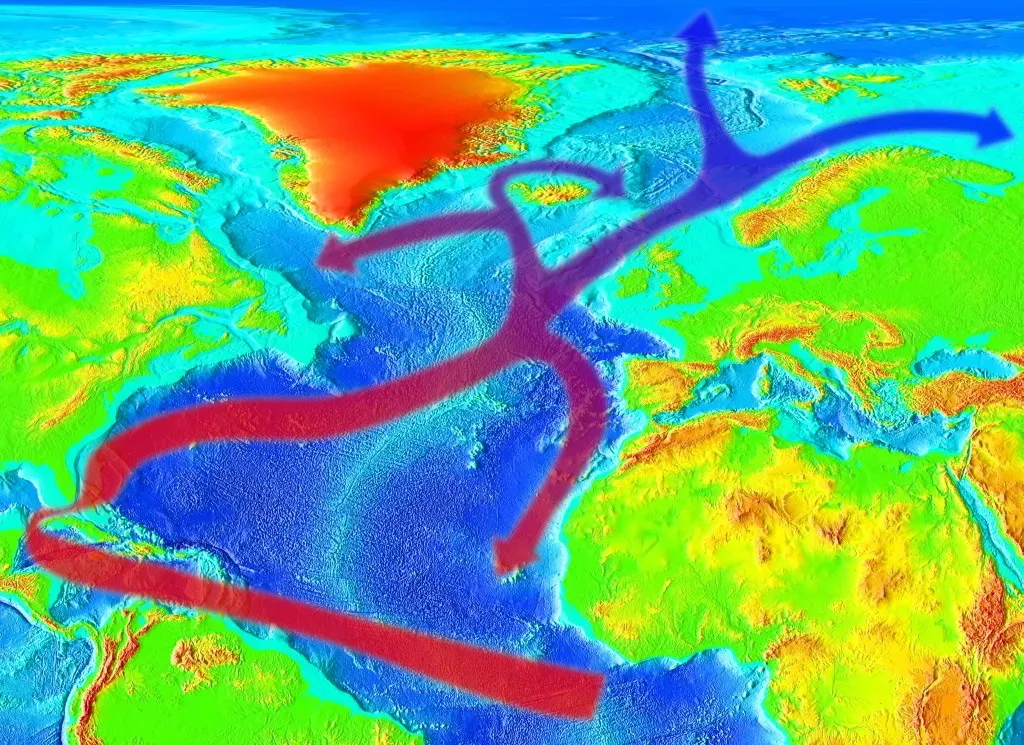
The Gulf Stream is a fast, warm current that starts in the Gulf of Mexico and the Caribbean region. It flows through the Florida Straits and then north along the United States east coast. Off Newfoundland, it turns northeast and becomes the broader flow called the North Atlantic Current, sometimes known as the North Atlantic Drift.
Strictly speaking, the water that reaches the seas near Britain is a descendant of the Gulf Stream, not the stream itself. The distinction matters because the current system is wider and more variable than the single ribbon on school maps. It still carries a huge amount of tropical heat toward higher latitudes.
Warm Water Meets Prevailing Westerlies
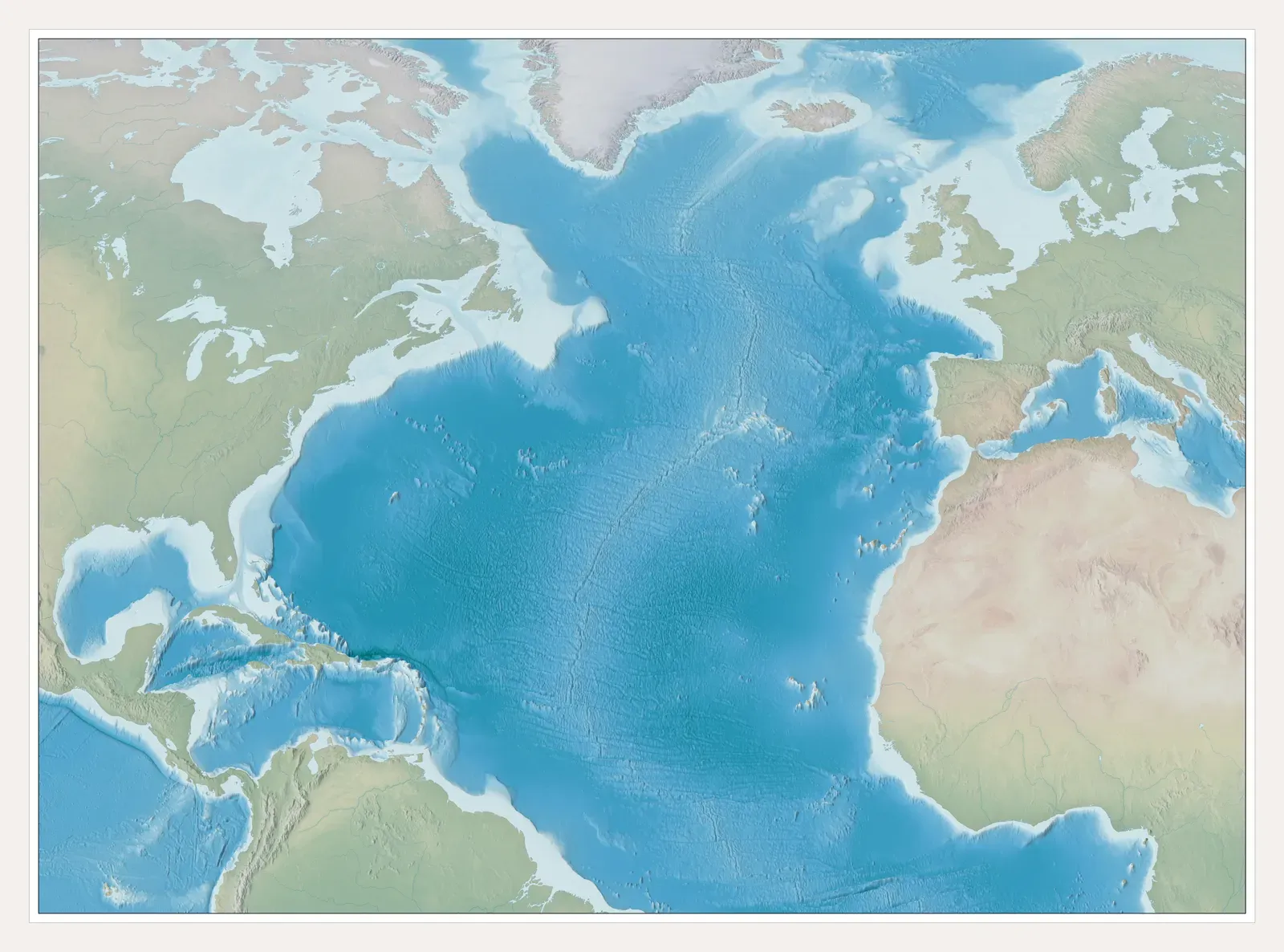
Ocean heat only matters for land if the air picks it up. At London’s latitude, the prevailing winds blow from west to east. That means air reaching Britain has usually spent days passing over the relatively warm North Atlantic.
That air carries the ocean’s mildness inland. Water also changes temperature slowly, so the sea acts like a thermal buffer in winter. Britain gets cool but rarely brutal air as a result.
Calgary Sits in the Middle of a Continent

Calgary has no such buffer. It lies deep inside North America, east of the Rocky Mountains and hundreds of kilometres from the Pacific. Land loses heat quickly in winter, especially under clear skies, so continental interiors swing between hot summers and very cold winters.
Calgary’s elevation adds to this. The city sits at about one thousand metres above sea level, and air cools with height. London is only a few tens of metres above sea level, so it gets no such altitude penalty.
The Rockies and the Chinook Factor
Mountains shape the story on the Canadian side. Pacific air moving inland has to cross several ranges, and it loses much of its moisture and some of its mildness along the way. That is one reason Pacific influence does not fully carry across to Alberta.
Calgary does get a unique winter reprieve in the form of chinook winds. These are warm, dry winds that descend the eastern slopes of the Rockies and can lift temperatures sharply within hours. They are real and well documented, but they come and go, so they don’t change the overall winter picture.
Is the Gulf Stream Overrated?
Here the science gets more nuanced. A well known 2002 study by Richard Seager and colleagues argued that the Gulf Stream’s role in warming Europe is often overstated. They pointed instead to the way the Rocky Mountains steer the atmosphere’s large scale wave patterns, sending cold air south over eastern North America and warm air north over Europe.
Not every researcher agrees on the exact split between ocean and atmosphere. Still, most accept that the ocean helps, and that its effect works through the winds and the heat stored in the sea. The popular claim that the Gulf Stream alone explains everything is too simple, but dismissing it entirely would be wrong as well.
The Bigger System Behind the Current
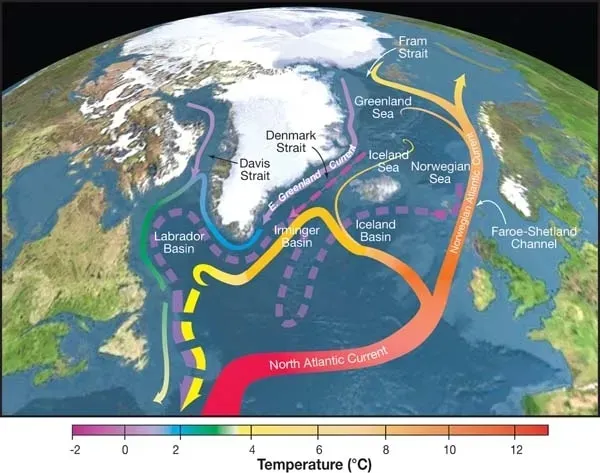
Scientists often talk about the Atlantic Meridional Overturning Circulation, or AMOC, rather than the Gulf Stream alone. It is a large system of currents in which warm surface water flows north, cools, sinks in the North Atlantic and returns south at depth. The Gulf Stream is one visible part of that loop.
The AMOC has drawn attention because climate models suggest it may weaken as the planet warms. The Intergovernmental Panel on Climate Change has said it is very likely to weaken during the twenty first century. It has also said, with medium confidence, that an abrupt collapse before 2100 is not expected, so the evidence remains debated.
What This Means for Everyday Weather

London’s mild winters do not mean it never gets snow or cold snaps. When winds shift and bring air from the east or north, Britain can turn very cold very fast. Those episodes tend to be short because the Atlantic soon takes over again.
Calgary’s cold, by contrast, is built into its geography. Distance from the ocean, higher elevation and exposure to Arctic air all point the same way. Latitude alone just doesn’t tell you what a place feels like in winter.
Why the Map Misleads

The comparison of London and Calgary works because it exposes a common assumption. People often expect temperature to follow latitude in a neat line, and in the real world it doesn’t. Oceans, mountains, wind direction and altitude all rewrite the pattern.
For Britain, the warm North Atlantic and westerly winds do much of the work. For Calgary, a continental location and a high plains setting do the opposite. Two cities at almost the same latitude end up with winters that differ by well over ten degrees Celsius.
