

Two cities built on the edge of big water

Chicago and Detroit both grew up fast around the Great Lakes, laying down sewer lines, roads, and power grids in an era when today’s rainfall totals would have seemed absurd. Planners in the region now openly acknowledge that the systems built decades ago were not designed for what is arriving. Climate change is already causing more frequent road flooding, snowstorms, and heat- and cold-related pavement and communication failures. That applies just as much to Detroit’s streets as it does to Chicago’s.
Detroit’s exposure looks similar on paper. With climate change, Detroit is experiencing a substantial increase in inland flooding risk, and the city will need to reinforce aging infrastructure to combat the potential for increasingly consequential storms. Neither city was built with 2026 weather in mind, and that shared starting point is worth remembering before picking a winner.
Flooding and sewers: two very different scales of fix
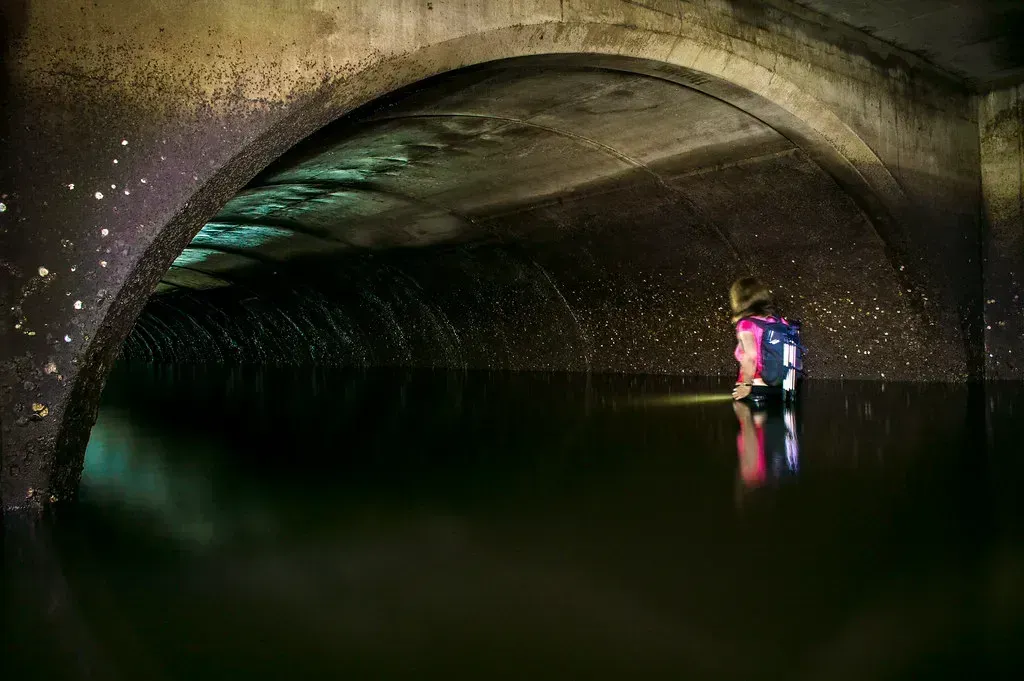
Chicago’s answer to flooding is the Deep Tunnel, formally called the Tunnel and Reservoir Plan, one of the largest civil engineering projects in the country. When complete, TARP will provide about 20 billion gallons of storage capacity, including more than 17.5 billion gallons of combined sewage capacity, promoting flood control and preventing waterway pollution. The results have been real: since the tunnels were completed in 2006, combined sewer overflows have been reduced from an average of 100 days per year to 50. Even so, the system is being pushed harder than it used to be. In July 2026, the Thornton reservoir in south suburban South Holland was at 94% capacity while the McCook reservoir fluctuated between 96% and 100% full, together holding around 11 billion gallons of water.
Detroit does not have anything on that scale. Its stormwater problems are tied to what locals call ghost streams, buried waterways that resurface during heavy rain. Extreme weather events put pressure on cities like Detroit that have aging and undersized stormwater infrastructure, and when heavy rain pours, buried ghost streams flood the city’s most vulnerable neighborhoods. The city has been directing targeted money at specific trouble spots rather than one mega-project, including plans to invest $30 million in infrastructure in Rouge Park and $42 million in infrastructure in Brightmoor. Chicago has the bigger hammer, but even that hammer is starting to look undersized against the newest storms.
Keeping the lights on when the weather turns
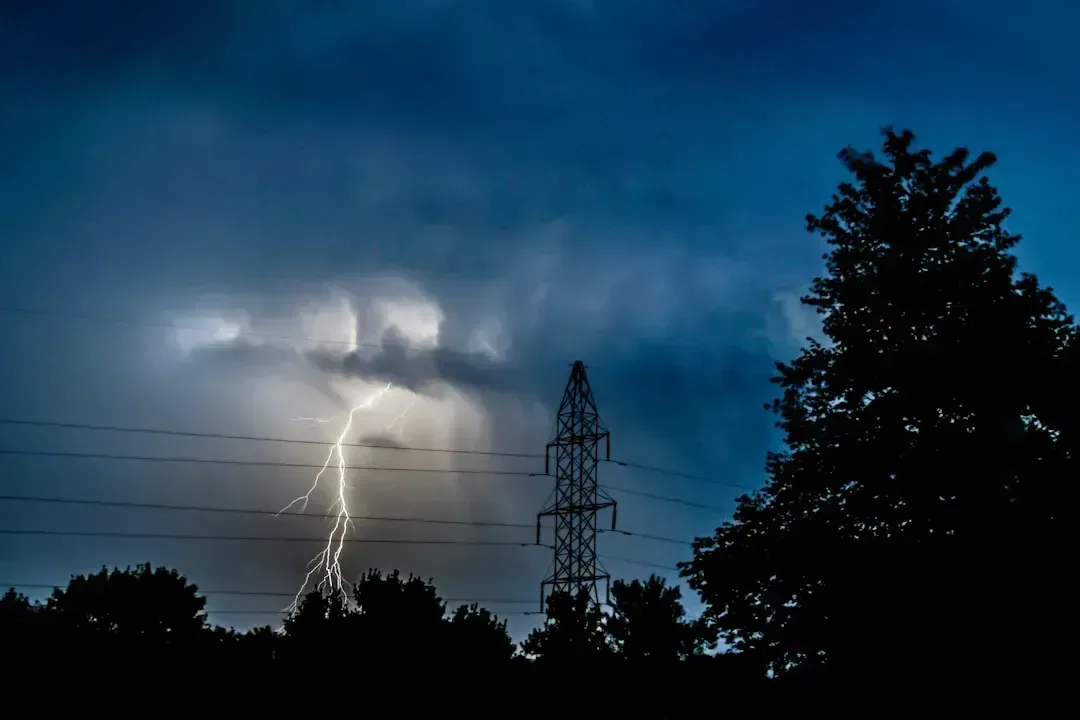
Power reliability during storms and heat waves is its own test of resilience, and both cities’ utilities have been leaning hard into infrastructure spending. ComEd points to a long run of grid hardening in northern Illinois, noting that since grid improvements began in 2011, overall reliability has improved more than 80 percent. That investment gets stress tested every summer; during a July 2026 heat wave, extreme heat put a local ComEd grid in the western suburbs and some parts of Chicago at a “critical level,” with the utility urging customers to reduce their electricity use to help prevent outages.
DTE Energy in Detroit tells a similar improvement story, though from a rougher starting point. The utility calls 2025 its most reliable year in nearly two decades, citing a 60% reduction in time customers spent without power, on top of a nearly 70% improvement in 2024. Regulators back part of that up, since between 2019 and 2024, Michigan cut more outage minutes per customer than any other state, according to federal data. Yet a June 2026 heat wave still knocked out power to hundreds of Detroit homes overnight, a reminder that the big question for many customers is what happens when severe weather hits, something DTE acknowledges is becoming more common, happening more often and more extreme than historically.
Extreme heat and the urban heat island problem

Chicago carries the heavy memory of its 1995 heat wave, one of the deadliest weather disasters in American urban history, and that history still shapes city policy. In late 2025, the city joined the C40 “Cool Cities Accelerator” to tackle deadly extreme heat, and officials honored 1995 heat wave victims with military funeral honors for a forgotten hero. That kind of institutional memory tends to translate into cooling centers, tree planting, and heat warning systems that get taken seriously.
Detroit’s heat exposure has become more layered, stacking on top of other stresses rather than arriving alone. Detroit has faced extreme heat, unhealthy air quality from wildfire smoke layered onto local pollution, and over the winter an entire neighborhood suffered the effects of a cold snap coupled with severe water infrastructure failure. Looking further out, Lower Michigan is expected to have more than 20 additional days with temperatures above 90 degrees Fahrenheit by 2060, compared to 1980-1999. Detroit’s older housing stock, with less central air conditioning than newer suburbs, makes that heat harder to escape indoors.
Winter weather has not gone anywhere
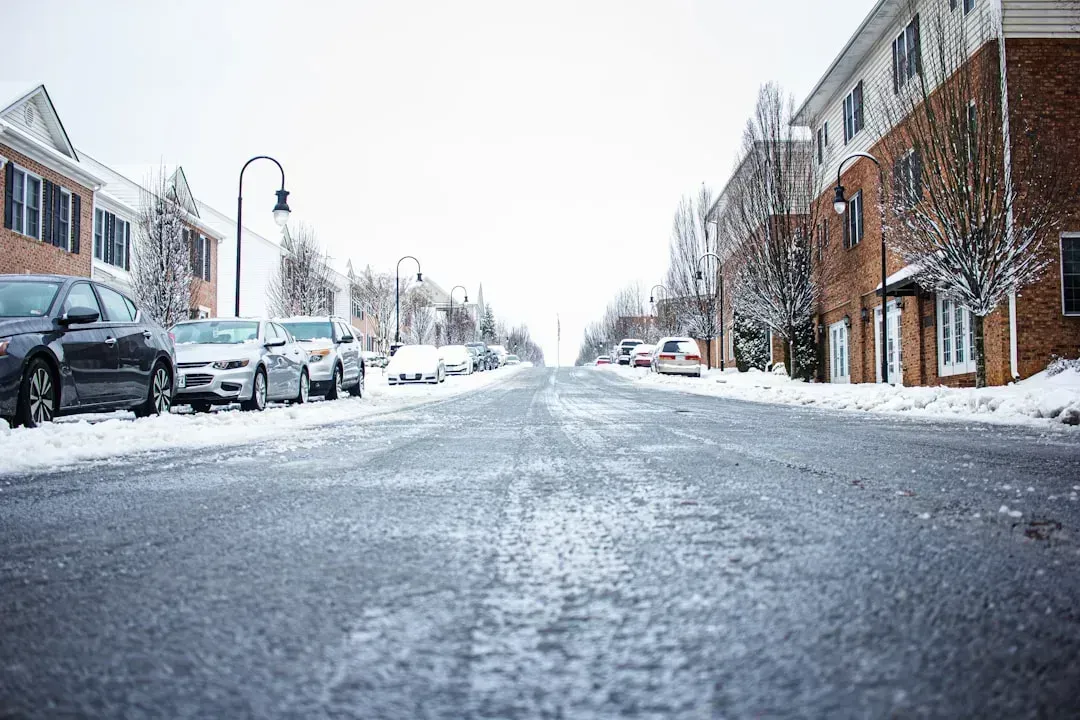
It’s easy to focus on heat and rain and forget that both cities still get hammered by snow and ice, sometimes in the same season as record warmth. Chicago’s 2025-2026 winter delivered its greatest amount of snow at the start of the winter season since 1978, followed by what the National Weather Service reported as the city’s third rainiest January day on record. The regional weather service log for 2025 also lists an intense early season lake effect snow event with up to a foot of snow accumulation in November, followed by a post-Thanksgiving winter storm delivering up to a foot of snow.
Michigan had its own rough stretch in early 2026 that blended winter and flood risk into one event. For much of Michigan and Wisconsin, as well as northern Illinois, 2026 has been the wettest March and April on record, with much of that precipitation falling as snow in March, including an enormous blizzard that brought 3 feet of snow to parts of Michigan. When mid-April rains fell on top of that snowpack, the runoff overwhelmed rivers and streets across the state. Winter resilience is not a separate category from flood resilience in the Great Lakes region; the two are increasingly the same problem.
Aging dams and the shoreline factor

Michigan’s flood risk carries an extra wrinkle that Chicago does not deal with in the same way: a large inventory of old dams. In February 2025, Michigan State Police captured scenes of stressed dams and flooding across Cheboygan County, including a century-old dam nearly overwhelmed by flood water. A state task force studied the problem afterward, but as of April 2026, a member of that task force told The Detroit News that little had been done to address those recommendations.
The broader takeaway from Michigan climate scientists is blunt about expectations going forward. Because warming will continue for the coming decades, the 2026 flooding should be considered at the lower end of capacity for stormwater infrastructure and dams, meaning planners will have to anticipate the floods of the future rather than relying on statistics from the past. Chicago’s flood defenses are concentrated in one very large, very deliberate system. Detroit and the rest of Michigan face a more scattered risk spread across hundreds of smaller, older structures.
The neighborhoods that absorb the worst of it
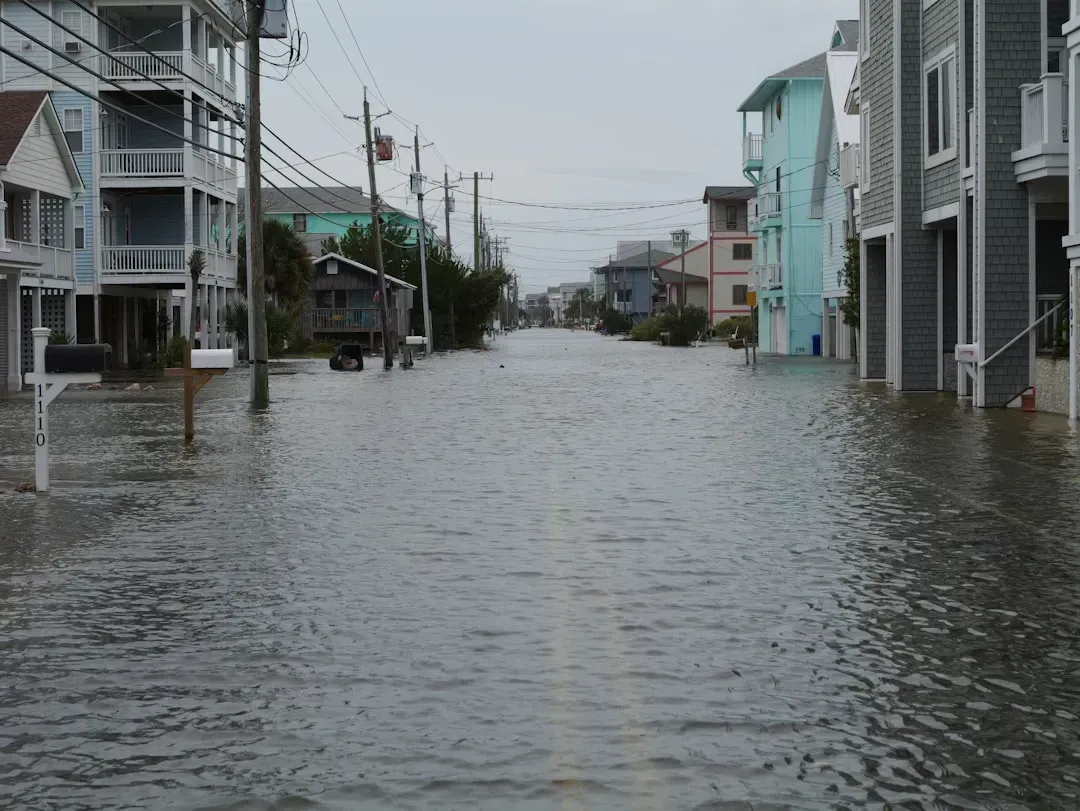
Resilience at the city level often hides sharp differences at the neighborhood level, and both cities show that pattern clearly. In Chicago, flooding has caused billions in damage to homes and businesses, with predominantly Black and Latino communities bearing the brunt of the crisis. On the West Side, advocates describe the human cost directly, with residents pulling soaked mattresses and valuables from dozens of basement apartments across Austin, many of them occupied by seniors.
Detroit’s response has leaned on neighborhood-level organizing to fill gaps that city and federal resources have not fully covered. Neighborhood organizations and resident leaders have launched a network of resilience hubs that serve Detroiters in times of climate emergency, leveraging social networks and a dispersed infrastructure of existing, trusted community spaces. Much of that work is carried out by groups like the Eastside Community Network, which has also pushed into solar panels, battery storage, and stormwater management to ensure energy and climate resilience, plus a Resilient Eastside Initiative connecting community partners on energy resilience hubs citywide.
City hall’s competing climate playbooks
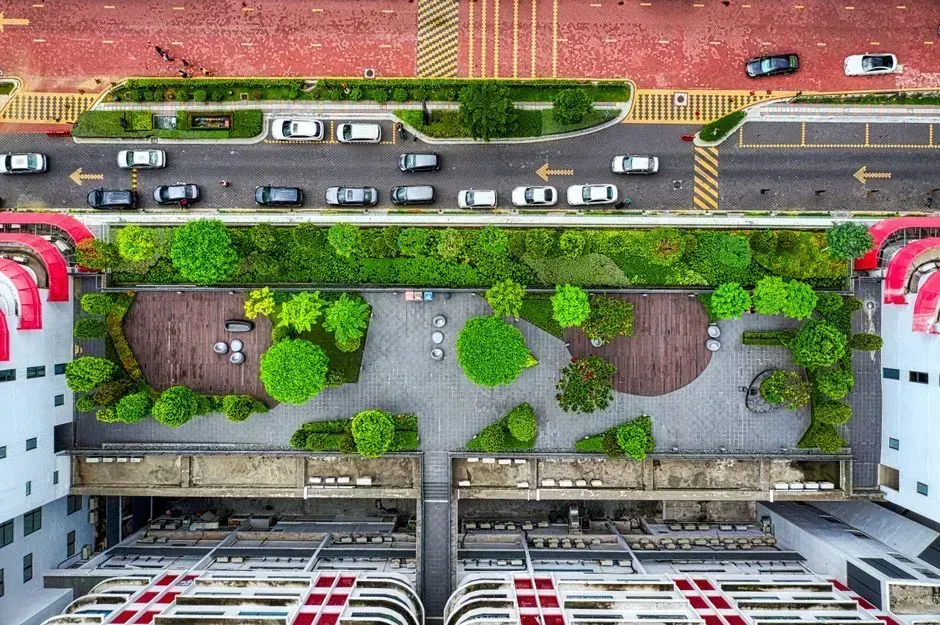
Chicago’s government has been formalizing its flood and heat strategy through a document meant to guide spending for years to come. The 2026 Chicago Green Infrastructure Strategy will serve as the city’s updated roadmap for using nature-based solutions to manage stormwater, reduce flooding, and create healthier, more resilient neighborhoods, prioritizing equity and community co-benefits like cooler temperatures and cleaner air. That is a fairly ambitious ask for a city government that also has to keep up with the century-old sewer system underneath it.
Detroit’s strategy has been shaped in part by staffing gaps at the top. In 2019, the city created a roadmap to address climate change and increase resiliency under its sustainability director, but since that director’s departure, the city has been without one, though it expected to hire a replacement. Still, the framework that remains is fairly concrete, organizing sustainability work into five main categories: electric vehicles, energy efficiency, renewable energy, and resiliency and protecting vulnerable citizens. Detroit’s plan also spells out specific line items, from resilience hub expansion to sewer protection programs in flood-prone areas, giving it a granular, project-by-project feel compared with Chicago’s broader strategy document.
Money, population, and the capacity to rebuild
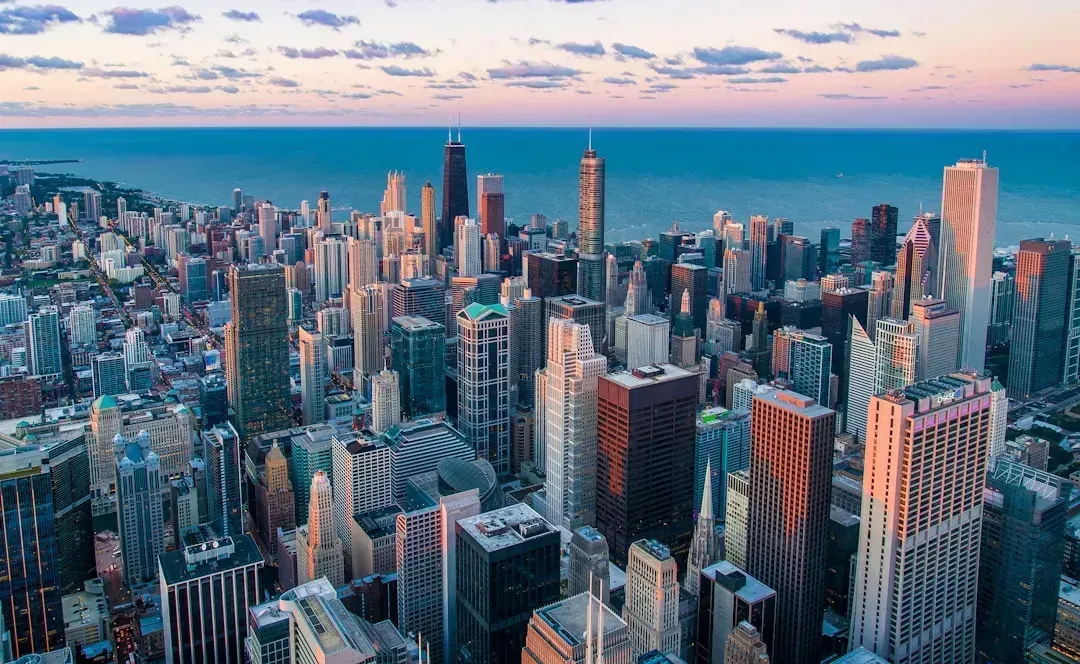
Resilience is not just about pipes and power lines. It is also about whether a city has the financial depth to absorb a bad year without falling behind permanently. Chicago’s larger metro economy and tax base give it more room to fund megaprojects like the Deep Tunnel and to keep expanding green infrastructure even as costs climb.
Detroit’s fiscal position has improved markedly since its 2013 municipal bankruptcy, but the city still carries less financial cushion than Chicago for large-scale capital projects. That gap shows up in the difference between one 20-billion-gallon regional tunnel system and a patchwork of smaller, grant-dependent stormwater investments in specific neighborhoods. It also shows up in staffing, where a sustainability director vacancy can stretch on for a year in a way that would be harder to sustain in a bigger city government with more redundancy.

- Crows Remembering Human Faces for Decades – 6 Bird Behaviors Far Smarter Than We Knew - November 15, 2026
- 8 Things Astronauts Do on Their First Day in Orbit That Rookies Find Strange - November 15, 2026
- 11 Everyday Routines That Are Completely Normal on the Space Station but Baffle Everyone on Earth - November 15, 2026
