


- Real Estate Analysts Just Changed Their Mind About the Safest Places to Buy – Here’s Why - November 12, 2026
- Black Holes Firing Beams at Near-Light Speed – 5 Cosmic Engines Warping Spacetime - November 12, 2026
- Silent Rogue Worlds Drifting in Total Dark – 6 Planets Ejected From Their Star Systems - November 12, 2026
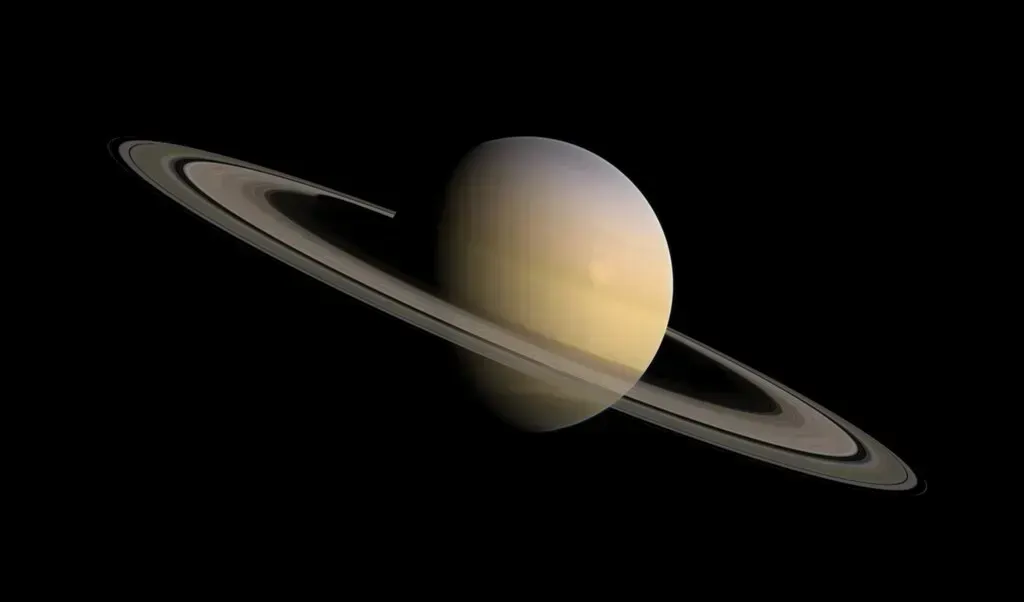
Saturn’s rings look permanent in any telescope. They aren’t. Ice from the rings is steadily falling into the planet, and the most cited estimates give the whole system a lifespan of only a few hundred million years.
That sounds like a long time, but it is short next to the planet’s own age. The details of how the rings are being lost, and how scientists worked it out, are more interesting than the headline figure.
What Scientists Mean by Ring Rain
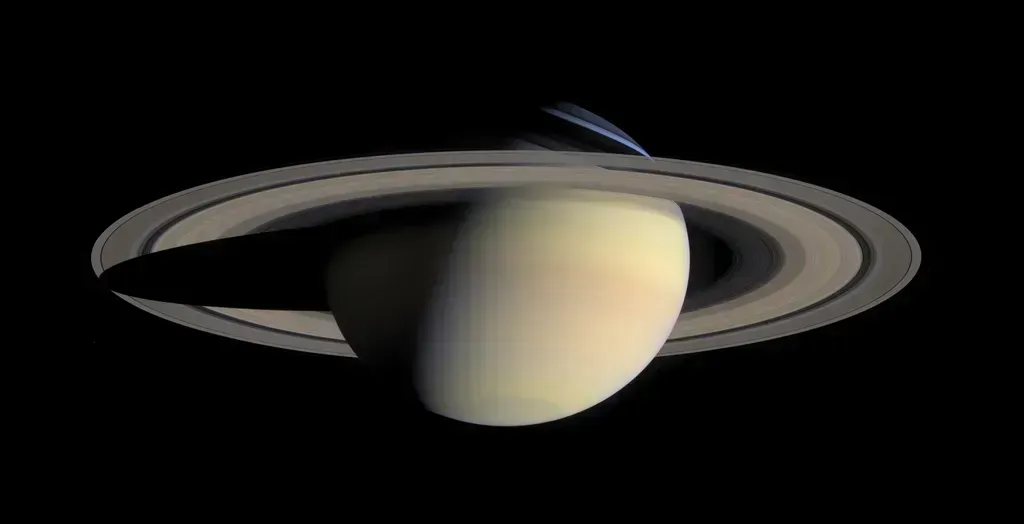
NASA describes the process as the rings being pulled into Saturn by gravity as a dusty rain of ice particles, under the influence of Saturn’s magnetic field. It isn’t rain in the Earth sense. Nothing falls as droplets from a cloud.
Instead, tiny bits of ring material drift out of their orbits and spiral down toward the planet. The rings are thousands of miles across and almost entirely ice, and the researchers behind the 2018 study called the fall of that ice “ring rain.”
How Sunlight and Magnetism Drag Ice Downward
The ring rain is caused by sunlight. Light gives the ice particles an electric charge, which changes how they behave.
Once charged, they feel the planet’s magnetic field, which bends inward and funnels them down into the upper atmosphere, where they vaporise. The field lines act like invisible chutes, delivering water to specific bands of latitude rather than spreading it evenly.
Voyager Spotted the First Clues
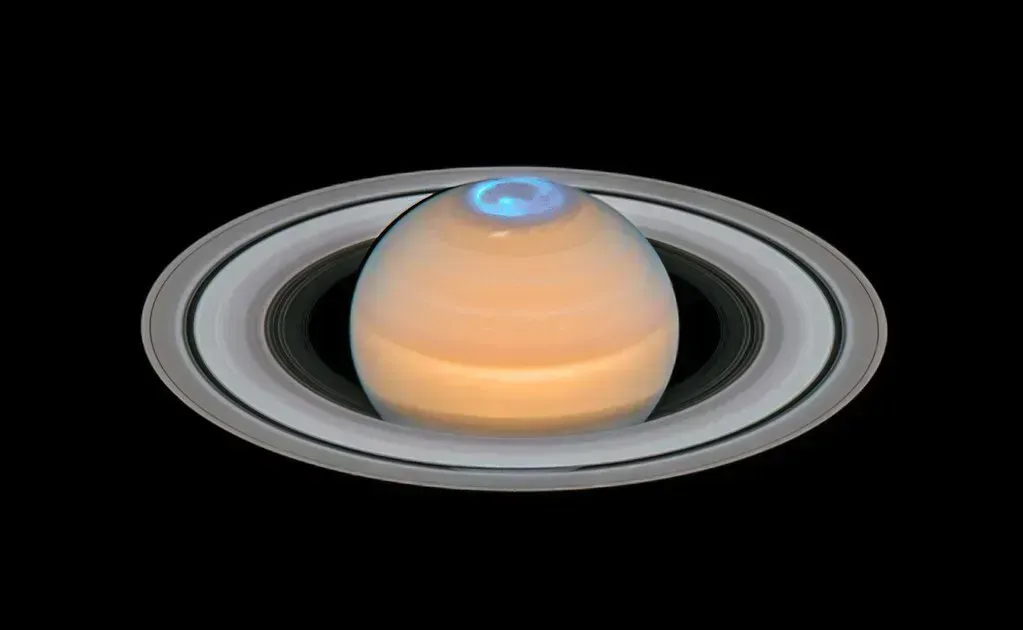
The first hints came from Voyager observations of seemingly unrelated things: odd variations in Saturn’s ionosphere, density variations in the rings, and three narrow dark bands circling the planet at northern mid latitudes. At the time, nobody had a single explanation tying them together.
In 1986, Jack Connerney of NASA Goddard linked the dark bands to the shape of Saturn’s magnetic field and proposed that charged ice particles were flowing down field lines into the upper atmosphere. It took decades of better instruments to test that idea.
The 2018 Study That Measured the Loss
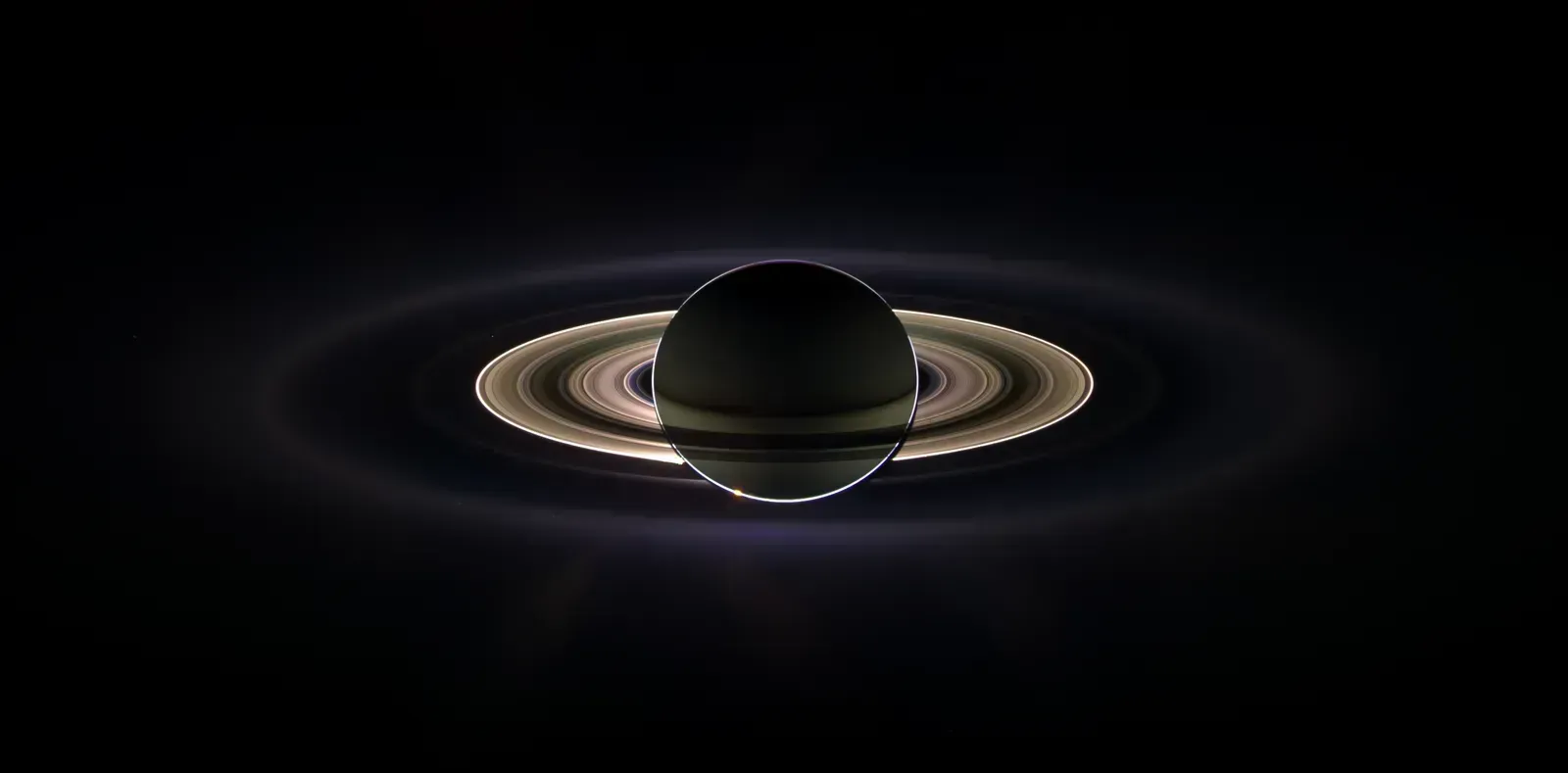
O’Donoghue and his colleagues observed the ring system from the Keck Observatory in Hawaii and studied data from NASA’s Cassini spacecraft, which orbited Saturn for 13 years before deliberately plunging into it. They looked at infrared light coming from Saturn’s upper atmosphere.
By analyzing that light, they worked out how much rain was coming from the rings and how it affected Saturn’s ionosphere. The paper appeared in Icarus on 17 December 2018.
A Swimming Pool Every Half Hour
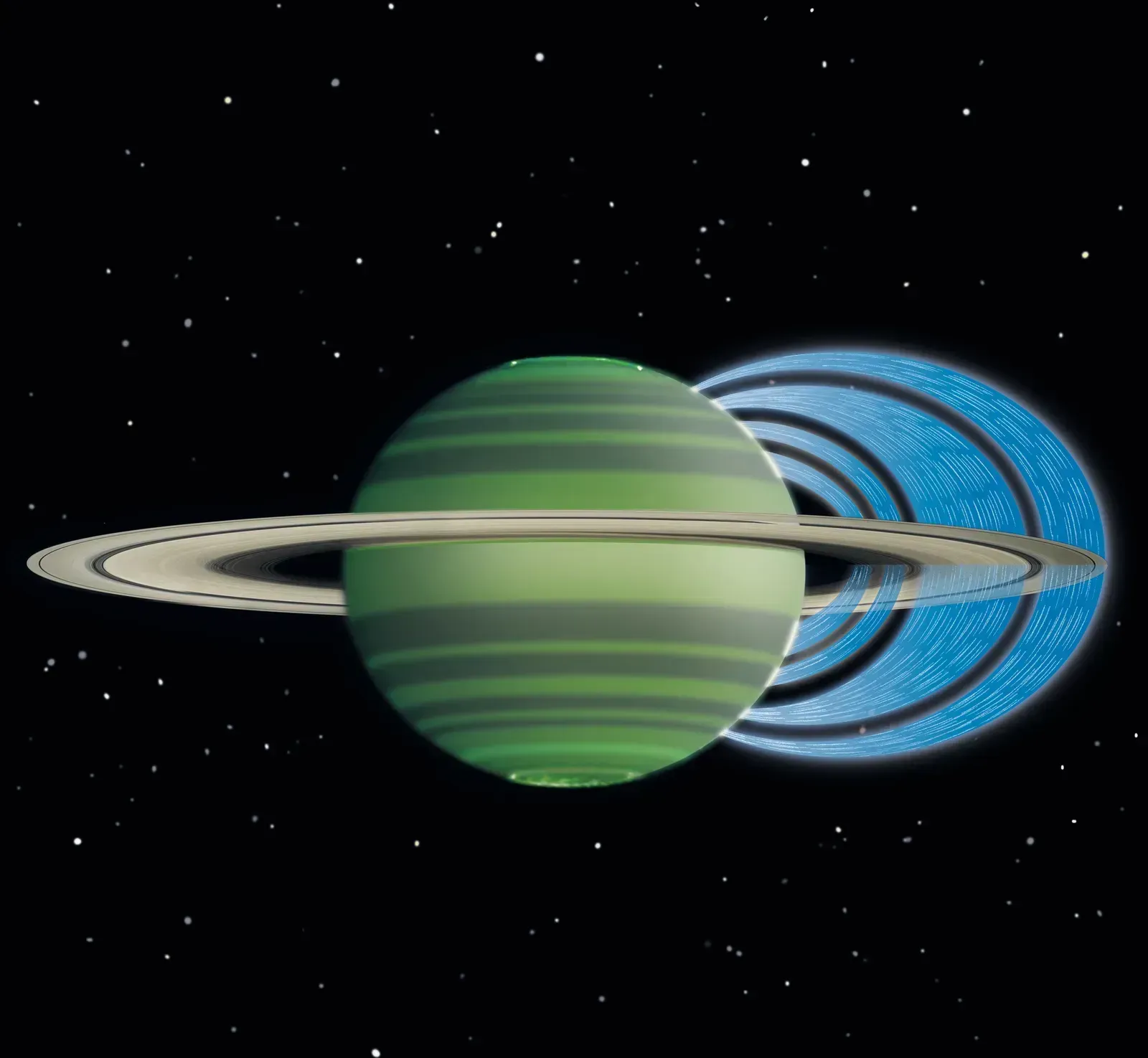
The rate is easier to grasp with a comparison. Ring rain produces enough water to fill an Olympic swimming pool every half hour.
Another summary, based on Cassini data, put the loss at roughly one hundred thousand kilograms of material every second. At that pace, the rings could vanish within 100 to 300 million years. Estimates like this depend on assumptions, so the range matters more than any single number.
Why the Estimates Range From 100 to 300 Million Years
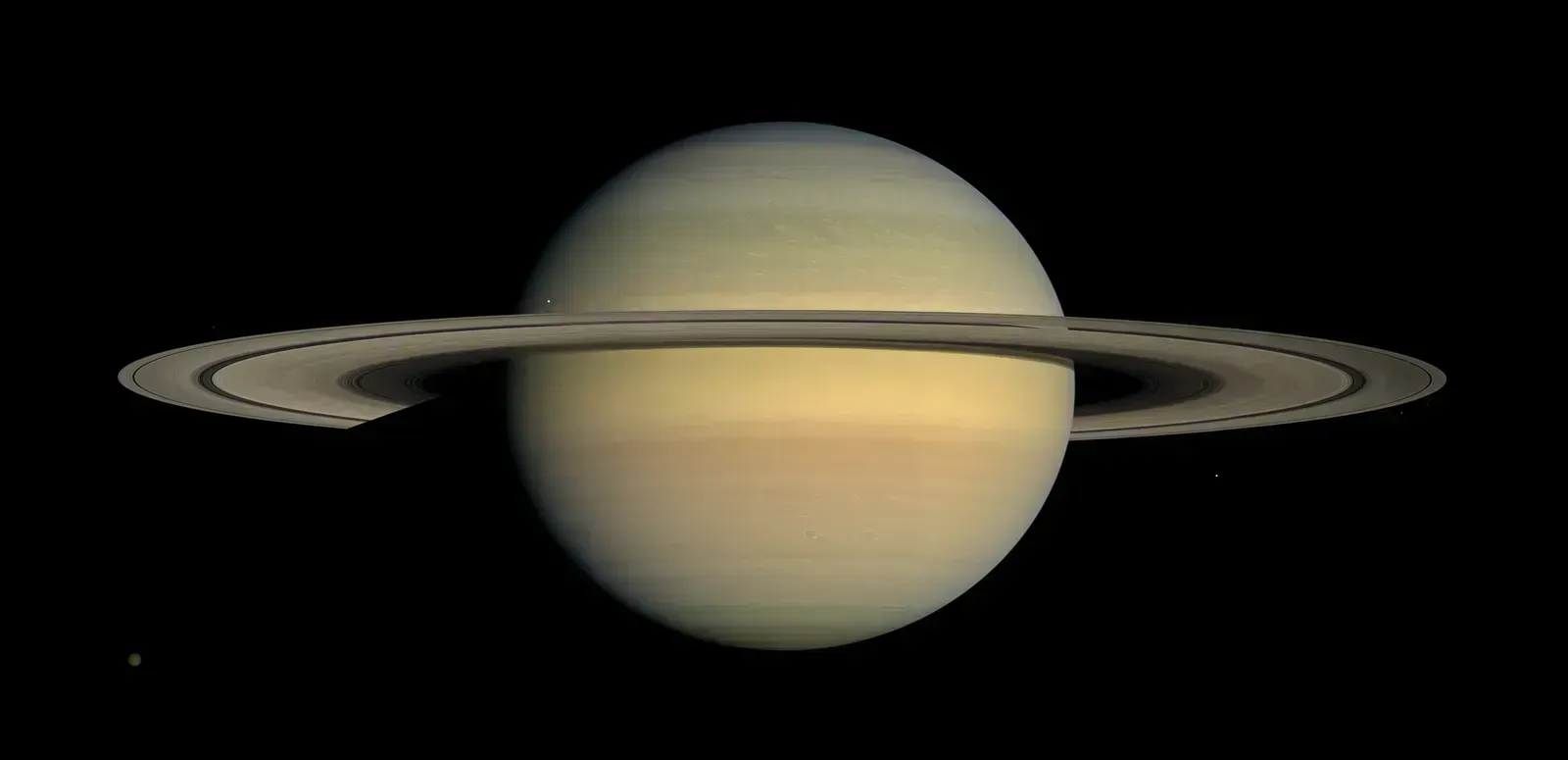
The two figures come from different pieces of evidence. Ring rain alone would remove the entire system in about 300 million years, but adding the ring material Cassini detected falling into Saturn’s equator leaves the rings with less than 100 million years.
The shorter number is treated as the harsher case. One recent summary calls the 100 million year figure a worst case projection, noting that ring rain alone gives roughly 300 million years. Seasons may also matter. As Saturn moves closer to the sun in its elliptical orbit, ring rain may ramp up.
Rings That May Be Younger Than Saturn
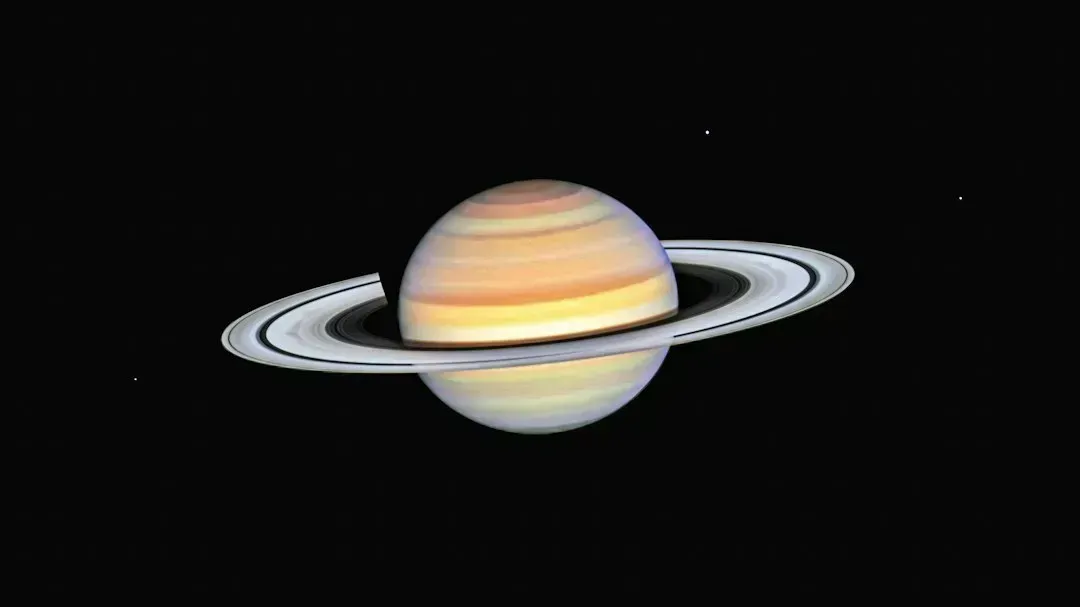
The rings are not original equipment. The new findings suggest the rings are younger than Saturn itself, which is about 4.5 billion years old, like the rest of the solar system.
One line of evidence is dust. A Science Advances study measured how fast dust is accumulating on the rings and concluded they are no more than about 400 million years old, and probably younger. Working backward from the contamination levels, scientists estimate the rings formed between 100 million and 400 million years ago.
Which Rings Disappear First
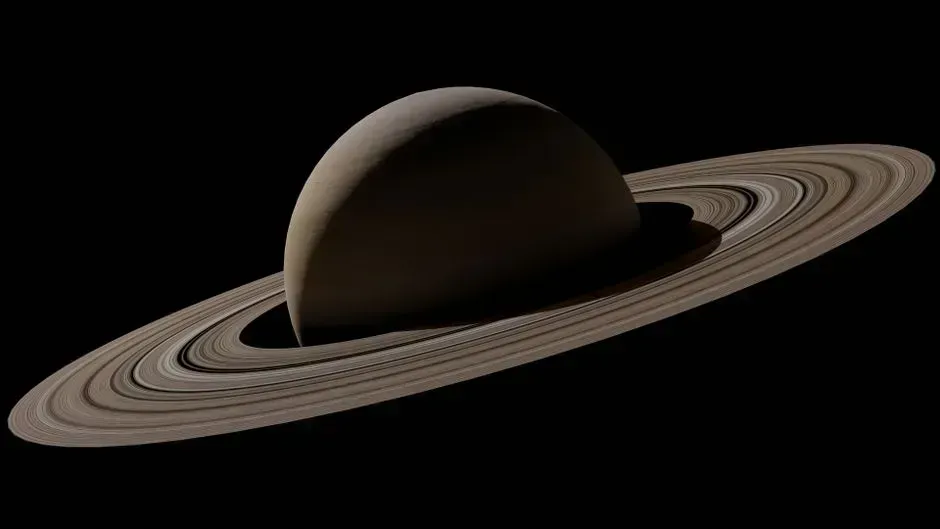
The loss won’t be uniform. In NASA’s artist’s impression of Saturn a hundred million years from now, the innermost rings rain onto the planet first, followed very slowly by the outer rings.
What remains could look modest. Jupiter, Uranus and Neptune all have thin, diffuse rings. That may be what Saturn is left with in 100 million years.
What Researchers Are Still Watching
The ring rain measurement itself is on firm ground, though the timescale is still an estimate. The James Webb Space Telescope and ground based observatories can track the glow that ring rain leaves in Saturn’s atmosphere, which over time should tighten the estimate of how long the rings have left.
Seasonal change is one open question. The team behind the 2018 study wanted to see how ring rain changes with Saturn’s seasons. Until those observations accumulate, the best summary is a range of roughly 100 to 300 million years.
