

- Phantom Energy Sucking Power 24/7 – 7 Home Electronics Quietly Inflating Utility Bills - November 14, 2026
- A Million-Mile Storm Raging for Centuries – 6 Violent Weather Wonders in Our System - November 14, 2026
- Animals Flee Hours Before the Tremor – 7 Natural Warnings Before Disasters Strike - November 14, 2026
Black holes have a reputation for swallowing everything near them. A fair number of them also throw matter back out, in narrow beams that can stretch across thousands of light-years. Astronomers call these beams jets, and the past couple of years have given us some unusually clear looks at how they work.
The five cases below span a range of sizes and distances. Some sit in our own galaxy, and some are billions of light-years away. Each one shows a different part of how black holes shape their surroundings.
M87: The First Imaged Black Hole and Its Thousand-Year Jet
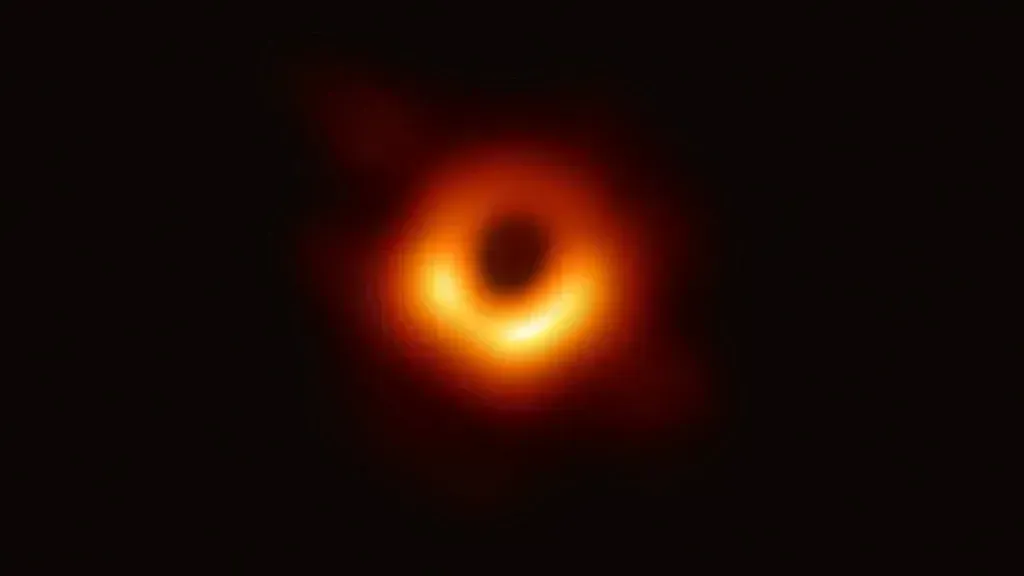
M87 is the supermassive black hole that was first imaged in 2019. A study published in Astronomy & Astrophysics traced its 3,000-light-year jet back toward a likely source point, using enhanced coverage from the Event Horizon Telescope. The aim is to pin down where and how such jets get launched.
NASA’s Chandra X-ray Observatory has also followed this jet. Some structures in it appeared to move at five times the speed of light. That sounds impossible, and it is. The effect is an optical illusion, created when matter moves at near-light speed almost directly toward Earth.
1ES 1927+654: A Jet Caught at the Moment of Birth
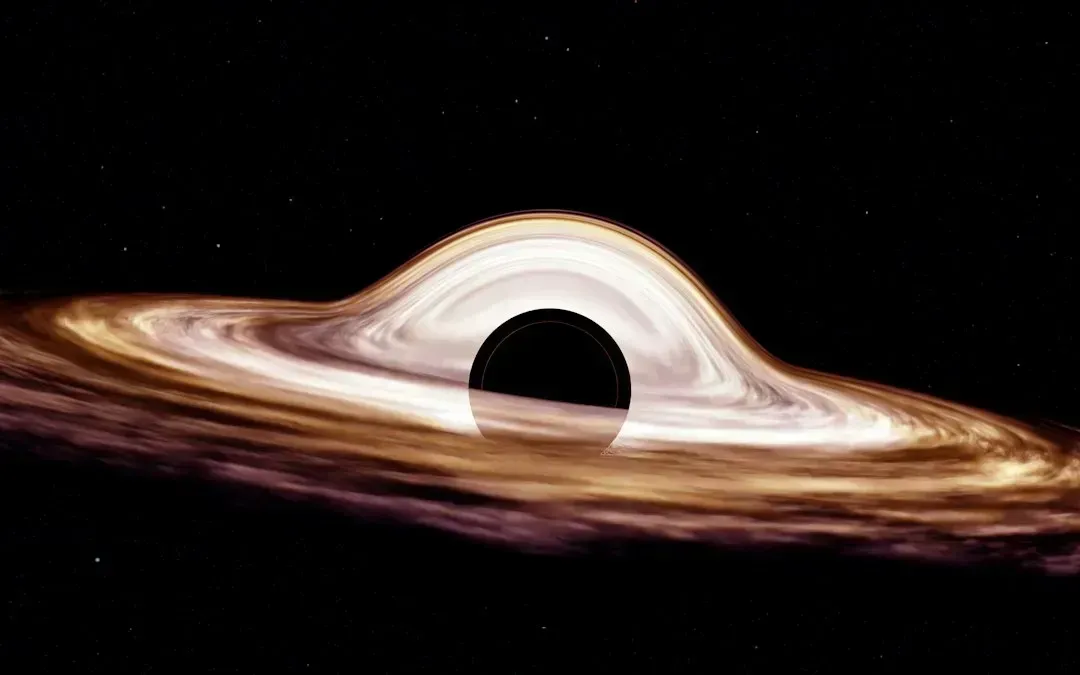
This galaxy lies about 270 million light-years away in the constellation Draco. Its central black hole has a mass of about 1.4 million Suns. That’s modest for a supermassive black hole, which makes the discovery more interesting.
In early 2025, astronomers reported that they had, for the first time, watched a feeding supermassive black hole spit out a jet at one-third the speed of light. NASA also noted that X-ray fluctuations sped up over two years, dropping from an 18 minute period to just 7. That was the first such measurement around a supermassive black hole.
Cygnus X-1: A Stellar Black Hole Measured in Real Time
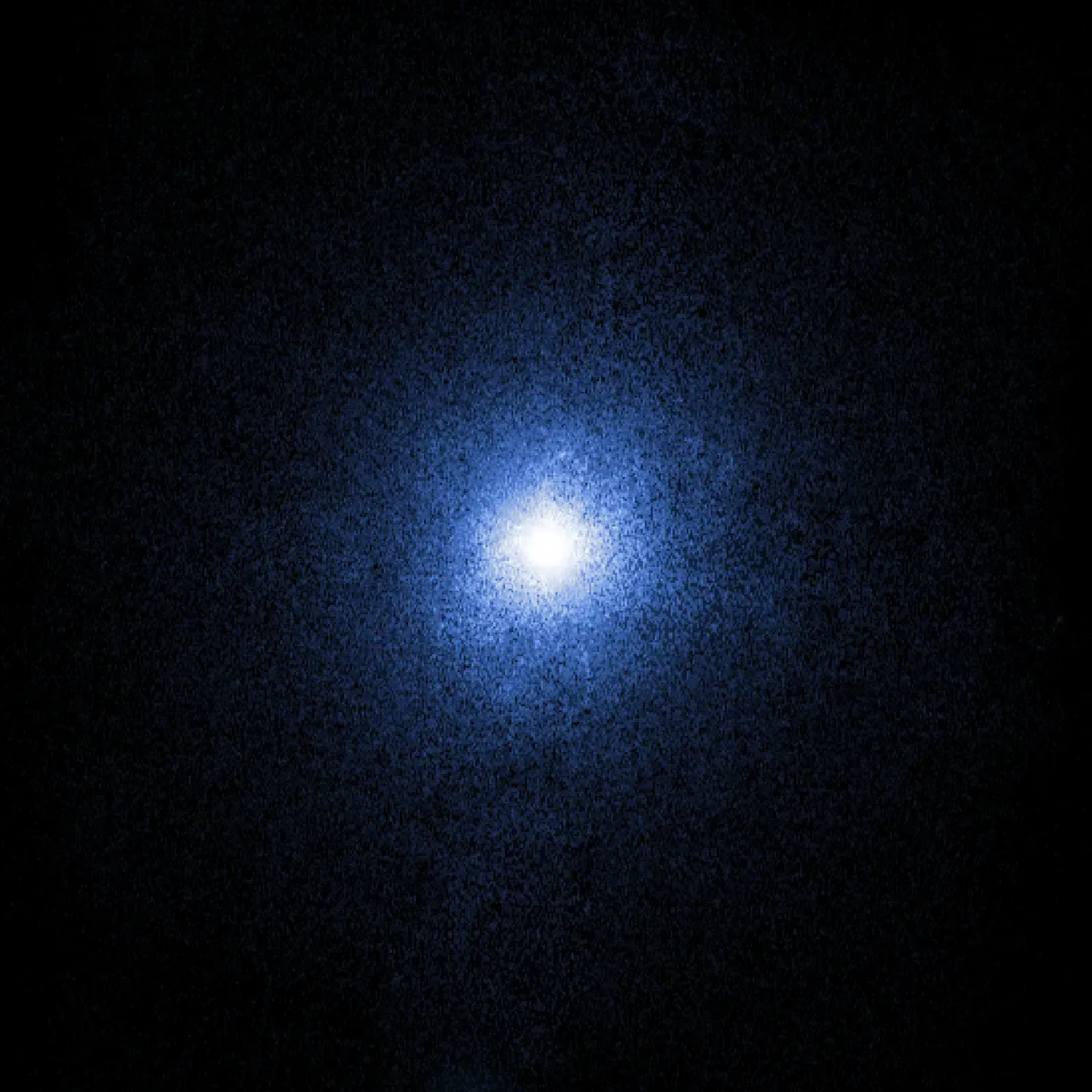
Not every jet comes from a monster. Cygnus X-1 is about 7,200 light-years from Earth. It pairs a black hole with a massive blue supergiant star, and the two orbit each other.
A recent international study used the star’s wind to bend the jets, a technique that let researchers measure the jet’s power directly. The jets carry energy equal to around 10,000 suns and move at nearly half the speed of light. That makes the system one of the clearest views yet of how black holes return energy to their surroundings.
Distant Quasars: Jets Lit by the Big Bang’s Afterglow
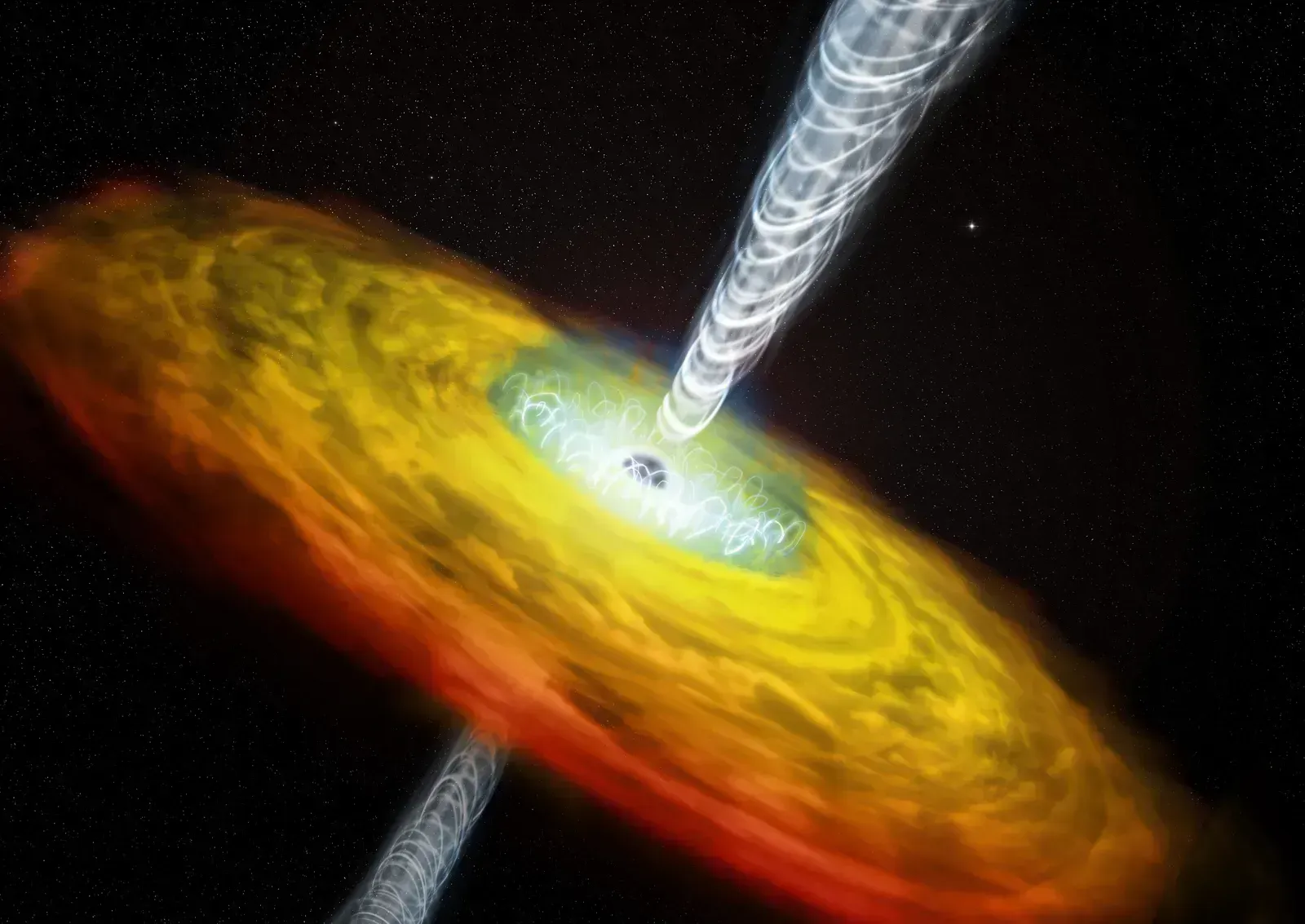
Some of the most powerful jets are also among the oldest we can see. In 2025, Chandra data covered two quasars, and each is located about 11.6 billion to 11.7 billion light-years away. Their electrons slam into photons from the cosmic microwave background, boosting them into X-rays that Chandra can detect.
The numbers are large. The jet from J1610+1811 is estimated to travel at 92 to 98 percent of light speed, with an output equal to 10 trillion suns. In the second quasar, J1405+0415, particles travel at 95 to 99 percent of light speed.
PKS 2233-148: A Blazar Jet Nudged Off Course
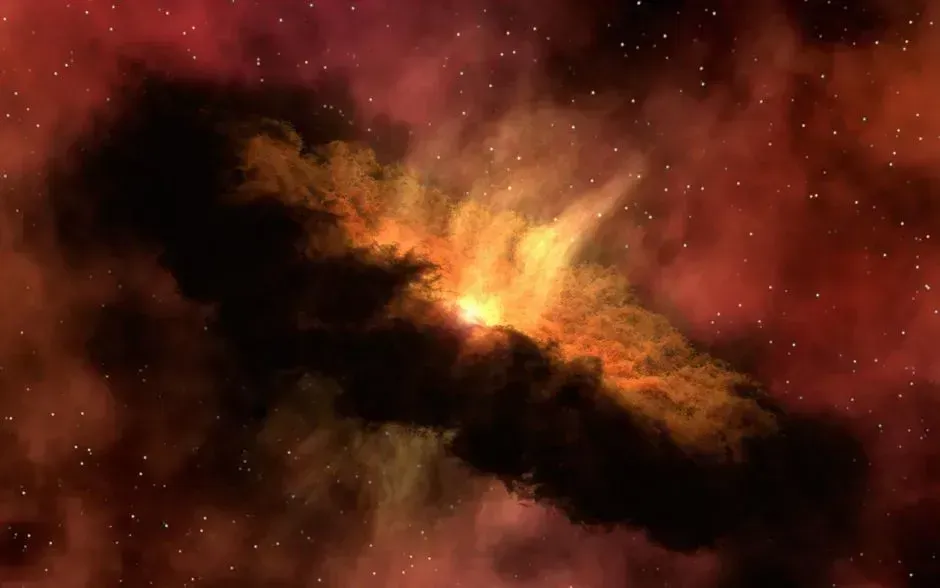
A blazar is a bright galactic nucleus whose jet points toward us. In August 2026, researchers reported that a near-light-speed plasma jet from a distant supermassive black hole is being gravitationally lensed by an unseen clump of dark matter. The source is PKS 2233-148.
The team reanalyzed data from the Very Long Baseline Array, the Fermi space telescope in gamma rays, and the Swift observatory in X-rays. That revealed how the jet’s motion changed over time, including a sudden shift from its expected path. The finding may also bear on where cosmic neutrinos come from.
What These Five Engines Show
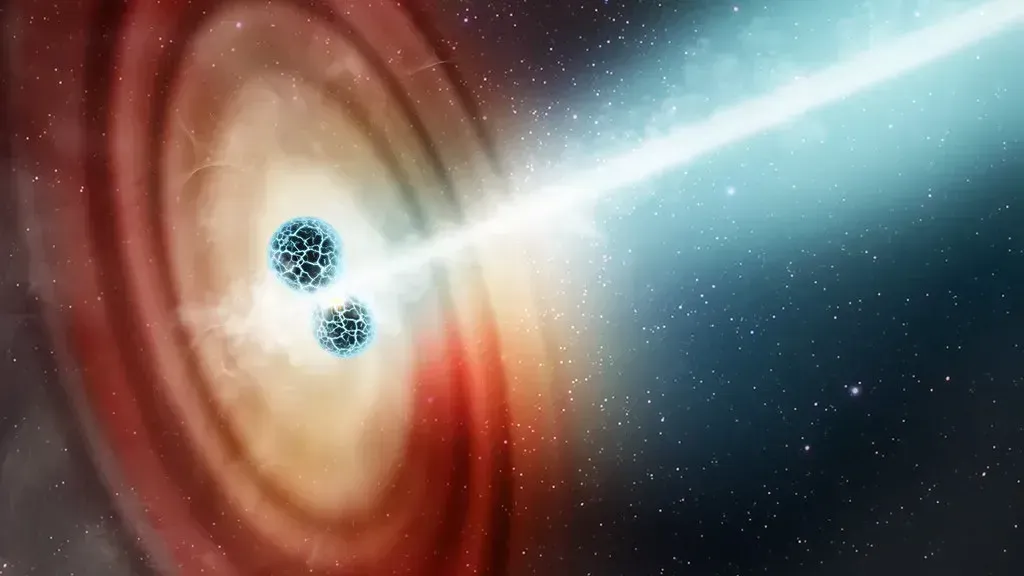
Taken together, these jets run from about a third of light speed to more than ninety percent of it. They come from black holes with the mass of a few stars and from ones that weigh millions of Suns or more. In each case, the light we detect is the main evidence for how fast and how powerful they are.
Several measurements also depend on relativity itself. Apparent faster than light motion and brightness boosts from beaming both come from matter heading nearly straight at us.
