


- 9 Items Experienced Skywatchers Bring Along That Beginners Always Wish They’d Packed - November 12, 2026
- I Moved to Tornado Alley in Oklahoma – 7 Things I Did Not Anticipate About Storm Season - November 12, 2026
- VR tool shows how rising seas could flood Fort Lauderdale - November 12, 2026
90 percent: the rise in the average annual premium since 2014

The clearest single measure of how much home insurance has changed is the price itself. Average total annual insurance premiums for single-family homeowners rose about 90 percent, from $1,270 in 2014 to $2,405 in 2025, an increase driven by home value growth, inflation, and climate-related risks, among other factors. That’s not a gradual drift. It’s a near-doubling in a little over a decade, in a product that most homeowners are contractually required to carry if they have a mortgage.
Other data sets land in a similar range, even when the methodology differs. The average annual cost to insure a home in the United States is $2,802, and that number has been consistently rising over the past decade. Whichever source you use, the direction and the general scale of the increase agree with each other, which is unusual in an industry where regional variation normally muddies national averages.
46.8 percent: the cumulative jump in just the last five years

What’s striking is how much of that decade’s increase has been packed into a short window. Between 2020 and 2025, rates climbed a cumulative 46.8 percent nationally, and not a single state was spared from an increase. Nearly half of a ten-year trend happened in half the time, which tells you the pace of change has been accelerating rather than staying steady.
The year-by-year pattern makes the acceleration even clearer. Annual increases began accelerating more sharply in 2022, peaking at 12.7 percent in 2024 before easing to a still significant 6.0 percent jump in 2025. Some states have felt this far more than others. Colorado has seen the largest cumulative increase in home insurance rates, with costs rising 100.8 percent from 2020 to 2025, while Iowa at 96.0 percent and Minnesota at 88.2 percent follow closely behind. Meanwhile, states like West Virginia and Vermont have barely moved by comparison.
24 percent: how fast costs jumped in just three years

Zoom in even tighter and the numbers get sharper still. Insurance premiums jumped by $648, or 24 percent, to $3,303 per year between 2021 and 2024, on average, according to a report published by the Consumer Federation of America. That’s roughly a quarter of a household’s insurance cost added in just three annual renewal cycles, a pace that outstrips wage growth and general inflation by a wide margin.
The breadth of that increase is arguably more telling than the average itself. Between 2021 and 2024, home insurance carriers increased premiums in 95 percent of the U.S., affecting almost all homeowners nationwide, and for over a third of homeowners, premiums rose 30 percent or more. This wasn’t a story confined to Florida or California anymore. It had become a near-universal experience for anyone who owns a home and carries a policy.
280 percent: the surge in non-renewals in the hardest-hit states

Rising prices tell only part of the story. In some places, insurers stopped offering renewals altogether, which is arguably the more disruptive shift for the households affected. Home insurance non-renewal rates in one state rose 280 percent between 2018 and 2023, a figure that reflects how insurers began retreating from risk rather than simply repricing it.
Louisiana tells a similarly stark story. Louisiana insurers paid out more than $23 billion after the 2020 and 2021 hurricane seasons, driving some to insolvency, and the state ended its “three-year law,” which had protected long-term policyholders, meaning insurers can now non-renew up to 5 percent of their policies for any reason. A decade ago, dropping a longtime customer for no specific reason simply wasn’t part of the industry’s playbook in most states. Now it’s written into law.
4.2 times: the growth of California’s insurer of last resort

When private insurers pull back, someone has to absorb the risk, and that’s usually a state-backed “insurer of last resort.” California’s version, the FAIR Plan, illustrates just how much that safety net has expanded. The number of active policies with California’s FAIR Plan has more than quadrupled since September 2019.
The scale of that shift becomes clearer with specific counts. As of late January 2026, the FAIR Plan had just over 668,000 policies, which is 4.3 times more than in September 2019. A program originally designed as a narrow, temporary backstop for a small slice of hard-to-insure properties has quietly become one of the state’s largest home insurers, a role it was never built to play.
23 versus 15: the annual count of billion-dollar disasters

Underneath all these pricing and availability shifts sits a simpler, more physical explanation: there are just more expensive disasters to pay for. According to LendingTree’s home insurance expert, “Between 2020 and 2024, the U.S. experienced around 23 disasters per year that caused at least $1 billion in damage each,” compared to just an average of 15 billion-dollar disasters per year in the previous five-year period.
Severe storms specifically have followed the same trajectory. The average number of severe storms went from nearly nine per year between 2015 and 2019 to more than 14 per year between 2020 and 2024. That single shift in weather frequency helps explain nearly every other number in this list, from rising premiums to shrinking insurer appetite to the swelling ranks of state-backed last-resort plans.
The bigger picture
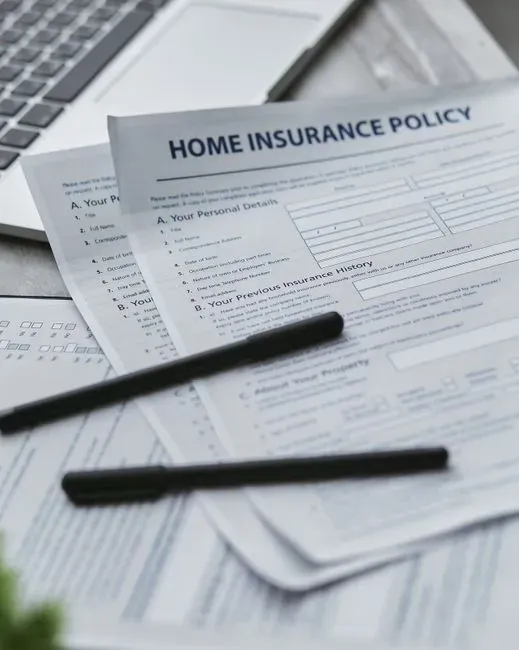
Put together, these six figures describe an industry that looks structurally different than it did in 2016. Premiums have nearly doubled nationally, but the increases have clustered unevenly, hitting some states many times harder than others. Non-renewals, once rare, have become a documented statistical trend in disaster-prone regions, and state-run insurers of last resort have absorbed hundreds of thousands of policies that private carriers no longer want.
None of this means home insurance is disappearing or that coverage is unreachable everywhere. It does mean the product has quietly become more expensive, more selective, and more regionally uneven than it was a decade ago, changes that are likely to keep showing up in renewal notices for the foreseeable future.
