


- Phantom Energy Sucking Power 24/7 – 7 Home Electronics Quietly Inflating Utility Bills - November 14, 2026
- A Million-Mile Storm Raging for Centuries – 6 Violent Weather Wonders in Our System - November 14, 2026
- Animals Flee Hours Before the Tremor – 7 Natural Warnings Before Disasters Strike - November 14, 2026
A tree doesn’t need an intact heart to stay alive. Some of the oldest trees on record have been struck, burned and hollowed out, and they still push out leaves or needles each year.
The five trees below are documented cases, from California redwoods and sequoias to oaks in Missouri and Europe. Each one shows a different version of the same trade: the dead core rots away while a thin living layer carries on.
The Washington Tree, a Hollow Giant in Sequoia National Park
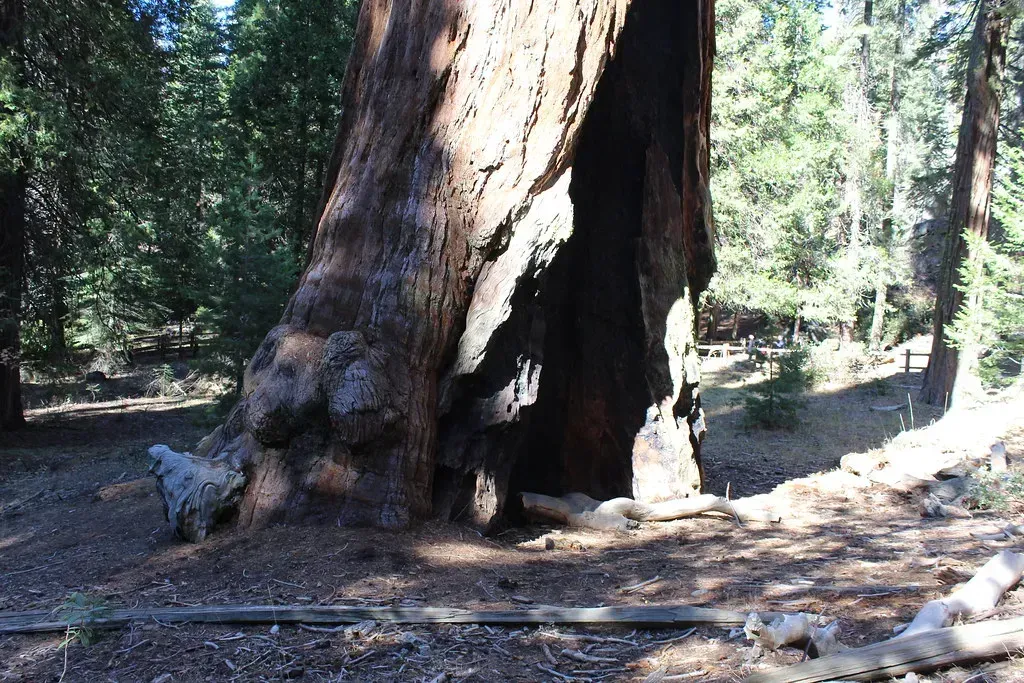
The Washington Tree is a giant sequoia in the Giant Forest Grove, within Sequoia National Park. Researchers studying sequoia canopies in 1999 found that it was largely hollow. The scientists measured a cavity in the trunk about 115 feet tall and 10 feet across.
In September 2003, the tree lost part of its crown in a fire caused by a lightning strike. It partially collapsed in January 2005 and lost more than half its height, along with the entire hollow upper trunk. It now stands about 115 feet high, with only a few living branches near the top. Though badly damaged, the tree is still living.
The Immortal Tree of Humboldt County
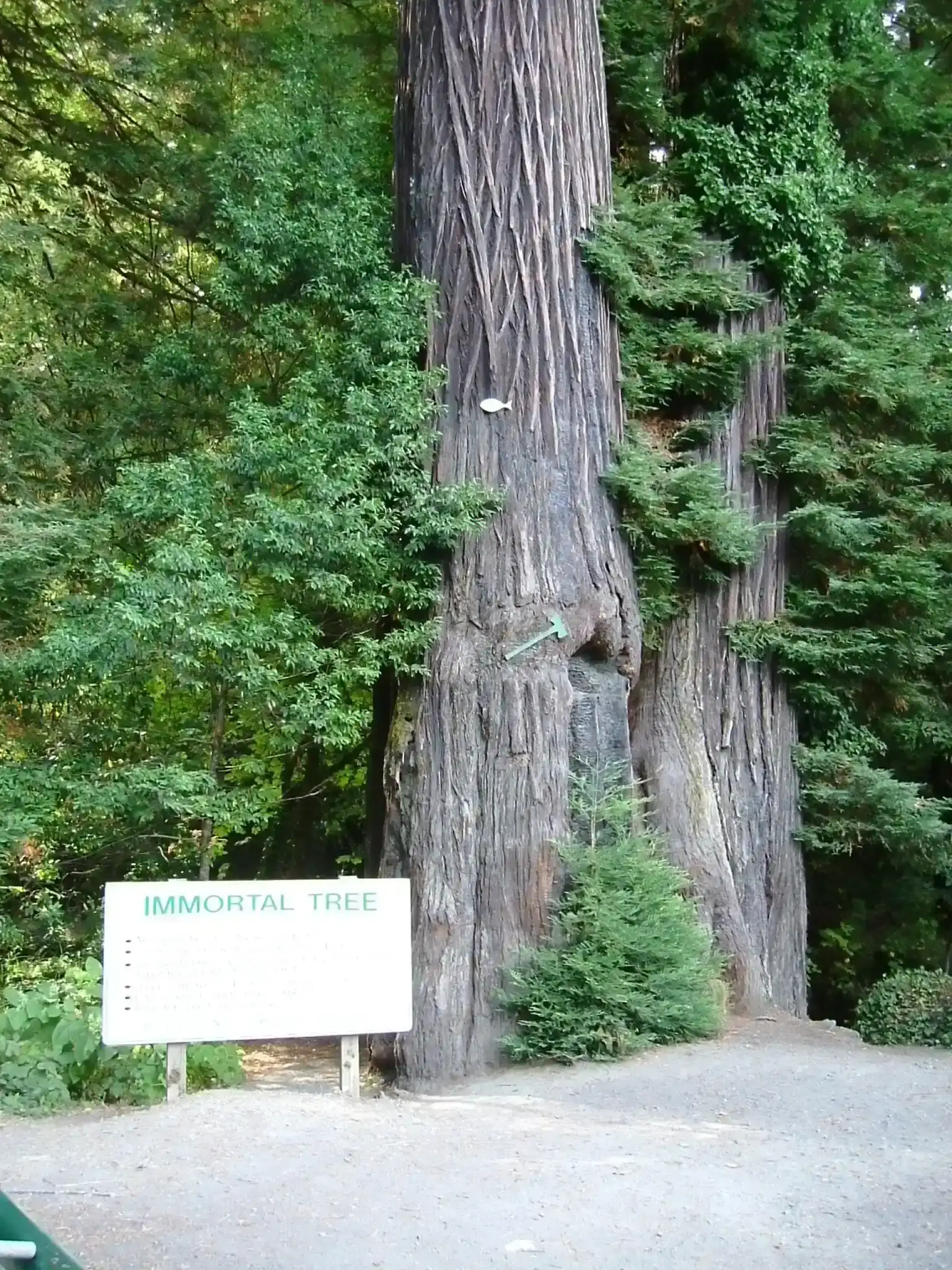
Along the Avenue of the Giants in southern Humboldt County, the Immortal Tree has stood for nearly a thousand years. A roadside marker lists its original height as 298 feet. A direct lightning strike removed the top 45 feet of the trunk.
Lightning wasn’t the only trial. The tree also came through a 1908 logging attempt and the 1964 flood. Interpretive signs at the site also note a documented 1908 wildfire and further lightning strikes over the years. Younger redwoods are now growing from the same root system at the base of the original trunk.
The Big Tree, a Bur Oak Burned From the Inside
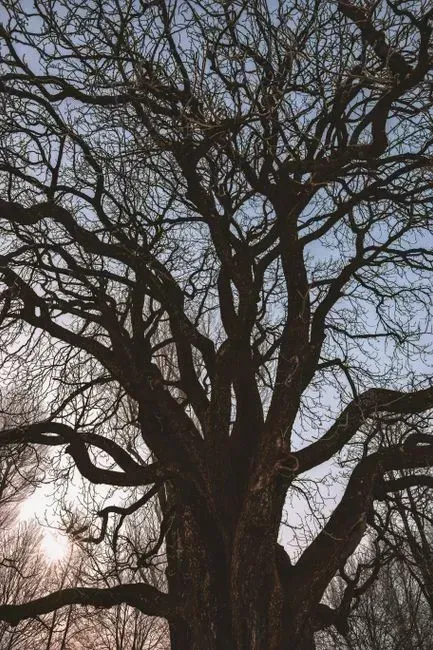
The Big Tree in Missouri is a bur oak of nearly 400 years, and lightning has struck it often. The most dramatic strike came on a Friday morning in late October. On October 23, 2020, the tree was hit directly.
That strike lit a fire in the core and burned out a large space inside the tree. Local reporting at the time carried a hopeful headline. One outlet reported that the tree was expected to survive.
The Grave Oak, Struck in 1815 and Hollow Ever Since
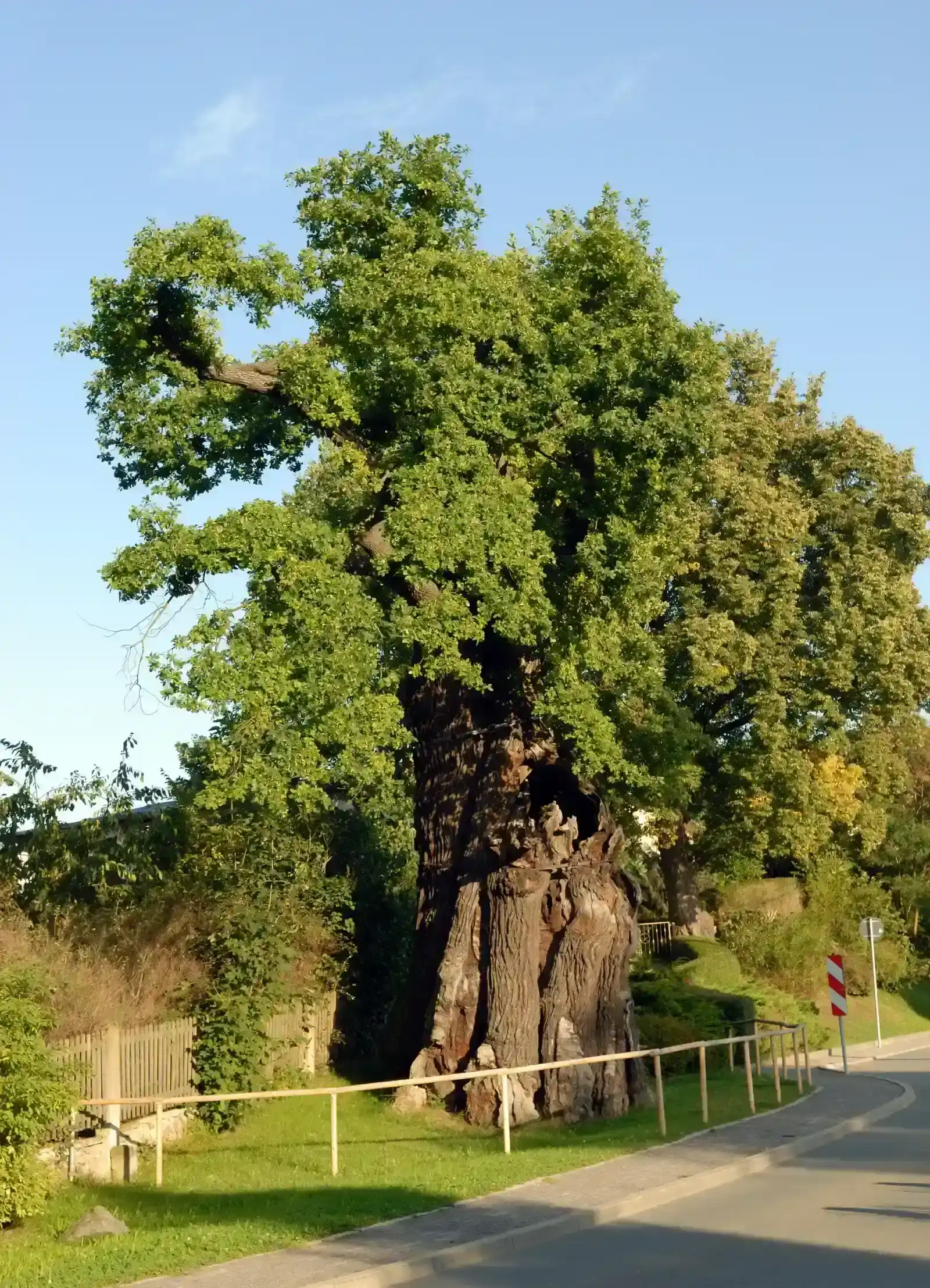
The Grave Oak is an old oak with a story attached to it. It was struck by lightning in 1815. Popular belief made it a druid tree of the pagan Germanic tribes, and botanists once estimated it at 2000 years old.
The decay is easy to read in its structure. The trunk is completely hollow from insect damage and the work of the sulphur polypore fungus. An adventitious trunk that formed several decades ago inside the hollow area is vital for the oak. Because the trunk has barely thickened in a hundred years, its age can’t be worked out from growth.
The Pioneer Cabin Tree, Hollow for More Than a Century
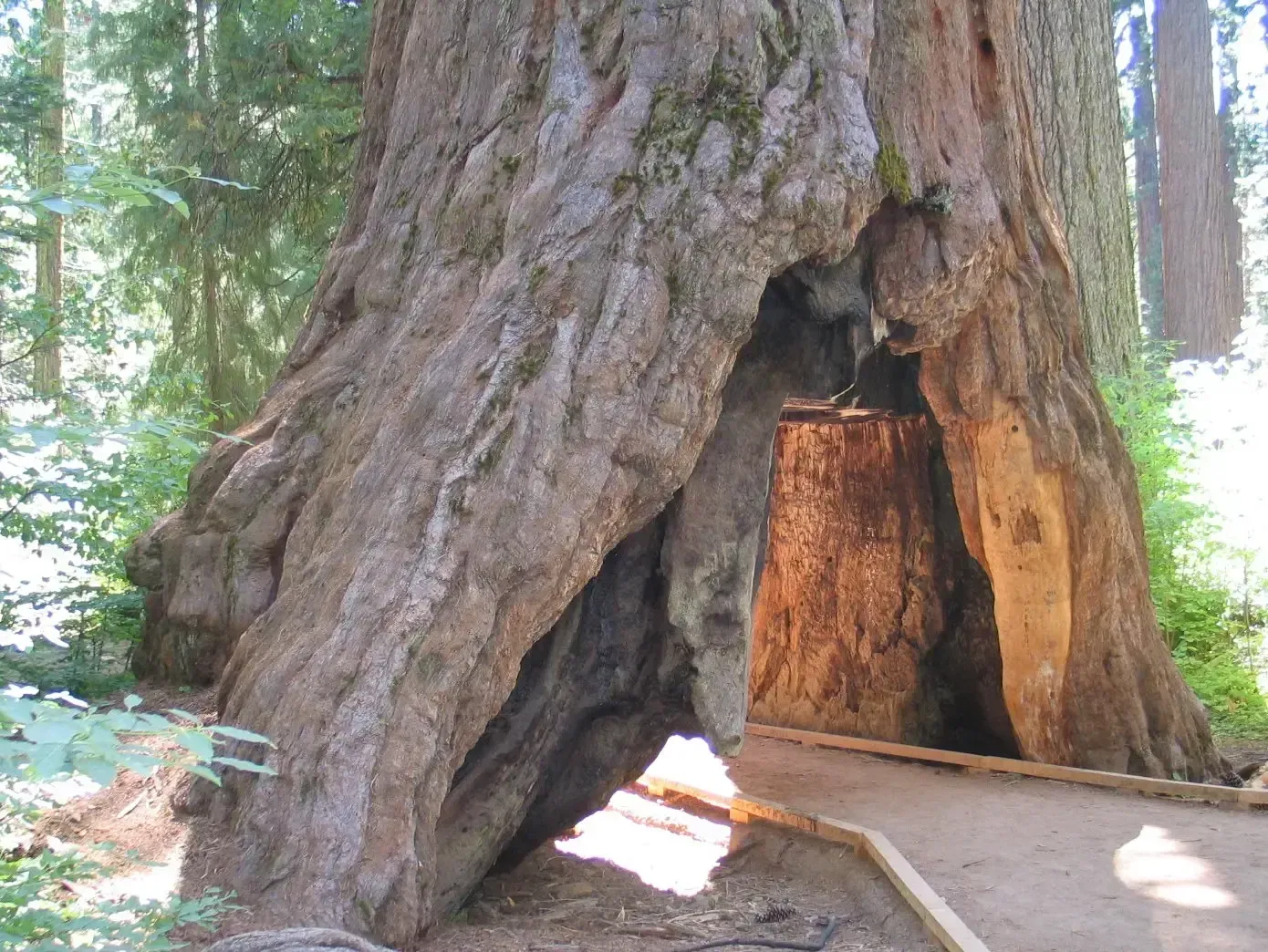
This giant sequoia in Calaveras Big Trees State Park is the one entry that eventually fell. It got its name from a distinctively hollow trunk, partially burnt by lightning strikes and forest fire. Already in 1857, observers noted that the top half had broken off at about 150 feet and that the tree was hollow.
Even so, it kept growing for well over a century after that account. It was estimated at more than 1,000 years old and measured 33 feet across. It fell in 2017. A tunnel carved through its trunk had weakened it badly.
How a Hollow Tree Stays Alive
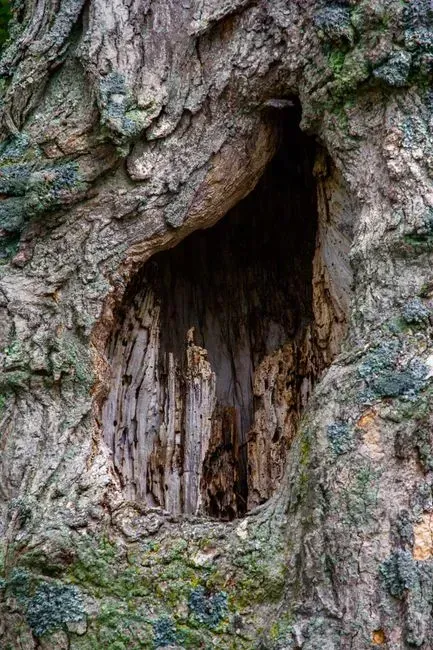
The explanation is in the wood. Sapwood is the younger, living outer layer just beneath the bark, while heartwood is the dead inner wood. Because the sapwood and its transport system stay intact, a tree lives on despite losing its inner heartwood.
For giant sequoias, the park service history is just as direct. As long as a thin band of live bark connects roots and foliage, the tree continues to live and grow. Lightning sometimes knocks out large portions of crowns, but mature sequoias are seldom killed by it.
