

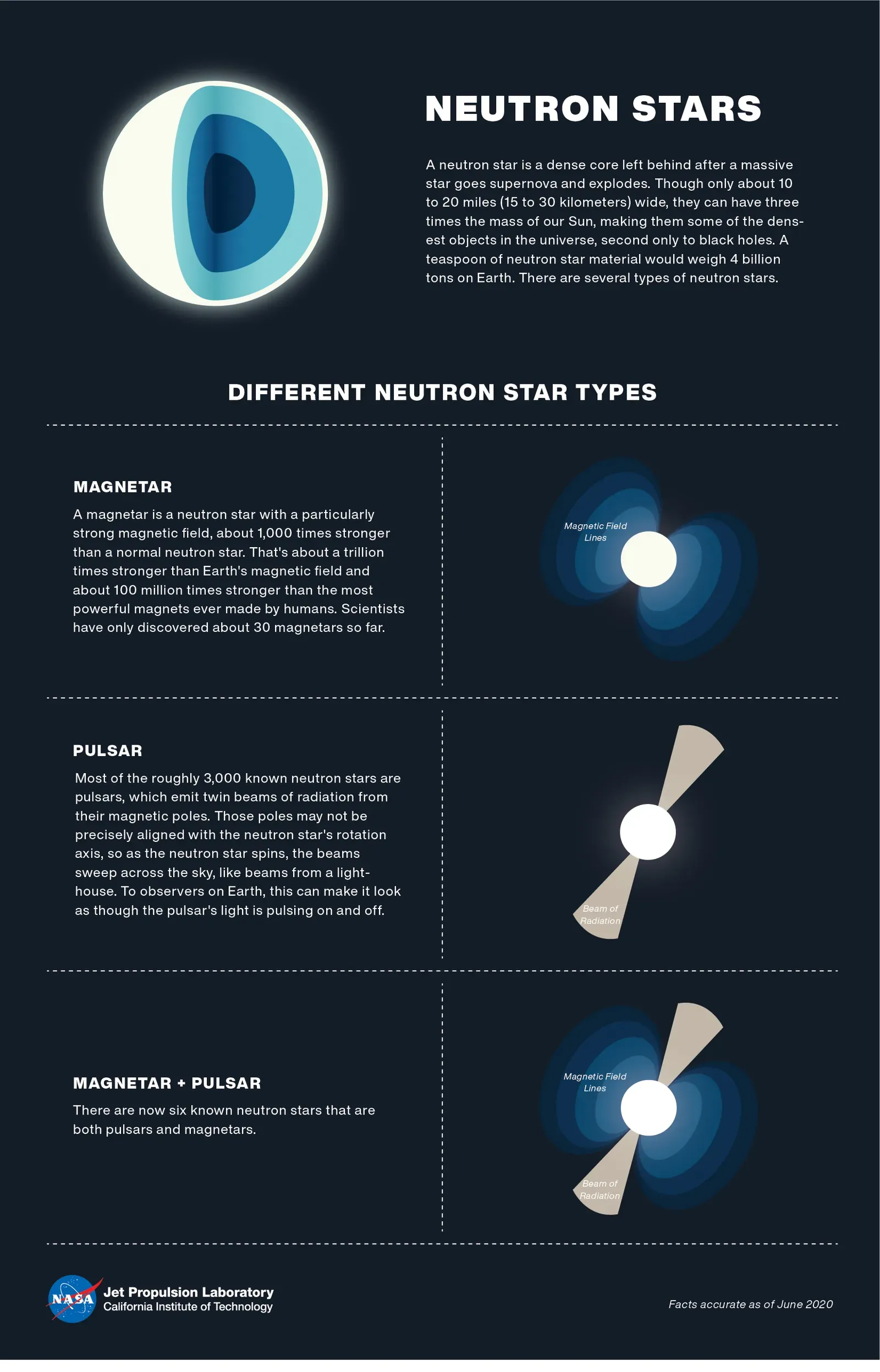
Picture a star more massive than our Sun, squeezed into a ball about as wide as a city. That’s roughly what a neutron star is. The numbers that come out of that squeeze are hard to hold in your head, even for the people who study them.
The teaspoon comparison is a popular way to make the density feel real. Whether the figure is a billion tons or something far larger depends on how you define the teaspoon and which part of the star you sample. The details are worth walking through.
How A Star Ends Up This Dense
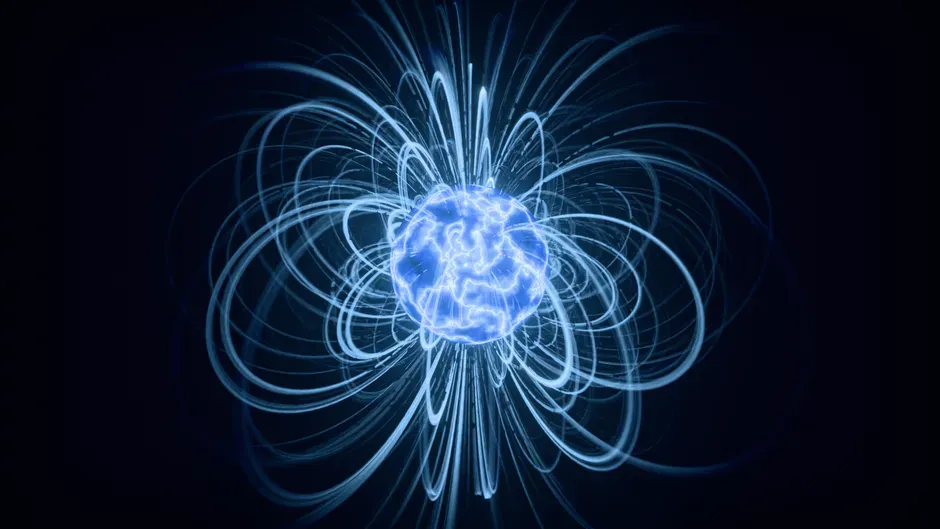
Neutron stars form when a massive star runs out of fuel and its core collapses. The outer layers are blown off in a supernova, and the core is left behind. Gravity crushes it so hard that protons and electrons are forced together into neutrons.
The result is a compact object that typically holds between about one and two times the mass of the Sun. Its radius is only around ten to twelve kilometers. That is a mass the size of a star packed into something you could drive across in under an hour.
Where The Billion Tons Figure Comes From
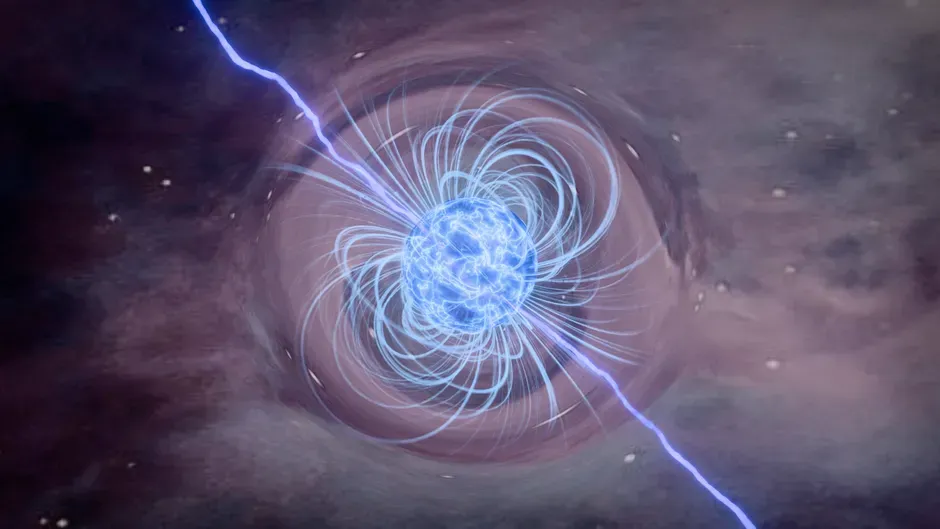
The density of a neutron star is often given as hundreds of millions of tons per cubic centimeter, which is roughly the density of an atomic nucleus. A teaspoon holds about five cubic centimeters. Multiply those together and you land at several billion tons for a teaspoon, so a billion tons is a conservative way to put it.
Some popular sources quote a figure of about a billion tons per teaspoon, and others say several billion. The gap comes down to rounding and to which density value is used. Either way, the order of magnitude is the point.
Comparing It To Things You Know

A billion tons is hard to grasp, so it helps to line it up against something familiar. Mount Everest is estimated to weigh on the order of a trillion tons. A teaspoon of neutron star material would therefore carry a noticeable fraction of that, in a space smaller than your thumb.
Water, by contrast, weighs one gram per cubic centimeter. Neutron star matter is something like a hundred trillion times denser. Ordinary solids, even lead or gold, barely register on that scale.
Why Atoms Don’t Look Like Atoms Here
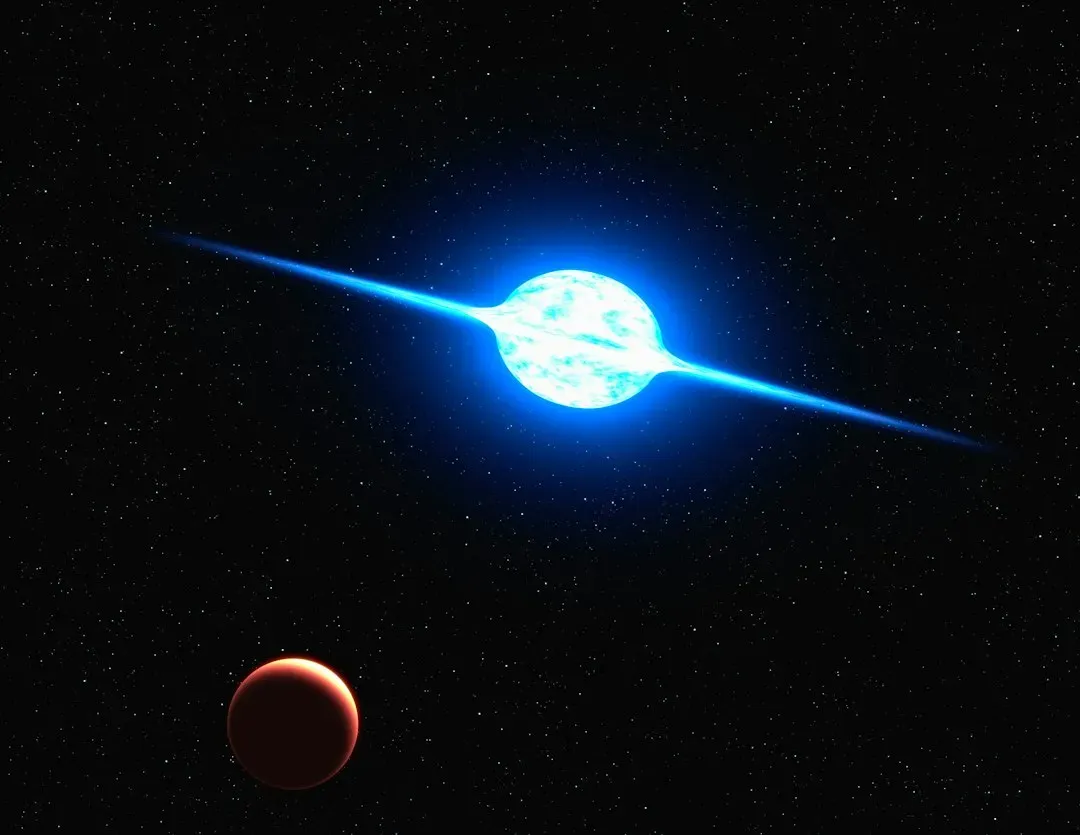
On Earth, matter is mostly empty space. Atoms have tiny nuclei surrounded by electrons that sit relatively far away. Neutron star matter removes that emptiness, packing nuclei and neutrons nearly edge to edge.
What holds it up isn’t ordinary pressure. It’s largely a quantum effect called neutron degeneracy pressure, along with the strong nuclear force. Those forces push back against gravity and stop the star from collapsing further, at least until it passes a certain mass limit.
Surface Gravity That Reshapes Everything
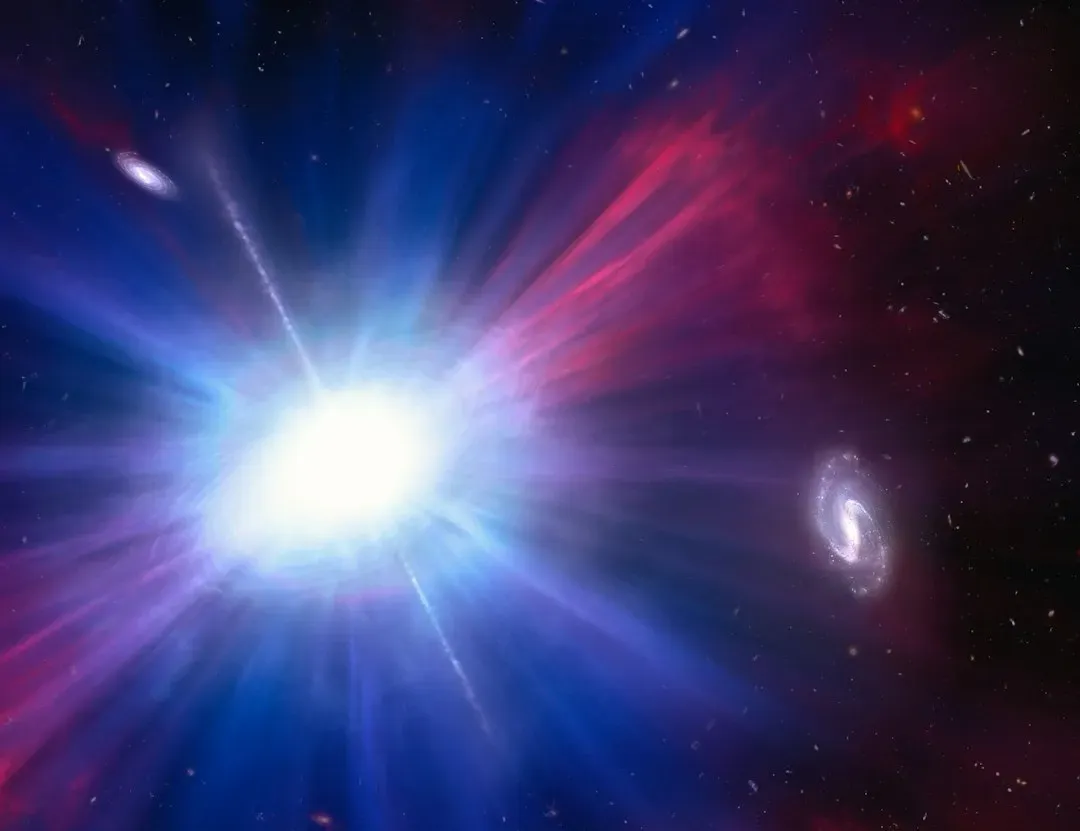
The gravity at a neutron star’s surface is staggering, billions of times stronger than on Earth. Anything that fell onto it would hit at a sizable fraction of the speed of light. The star’s own surface is also very smooth, since gravity flattens any bump to a tiny height, often described as millimeters.
Light itself bends noticeably near these objects. Astronomers can sometimes see more than half of the surface at once because of this effect. That helps them measure the star’s size from X-ray observations.
What NICER Has Measured
NASA’s NICER instrument on the International Space Station has been central to measuring neutron stars. It tracks X-ray pulses from rotating stars called pulsars and uses the light bending to estimate radius and mass. Results for pulsars such as PSR J0030+0451 and PSR J0740+6620 point to radii in the range of roughly twelve to thirteen kilometers.
These measurements help narrow down the equation of state, which describes how matter behaves at such densities. Newer analyses, including work published in 2024 and 2025, have continued to refine those constraints. The picture is improving, though uncertainties remain.
Gravitational Waves Add Another Clue
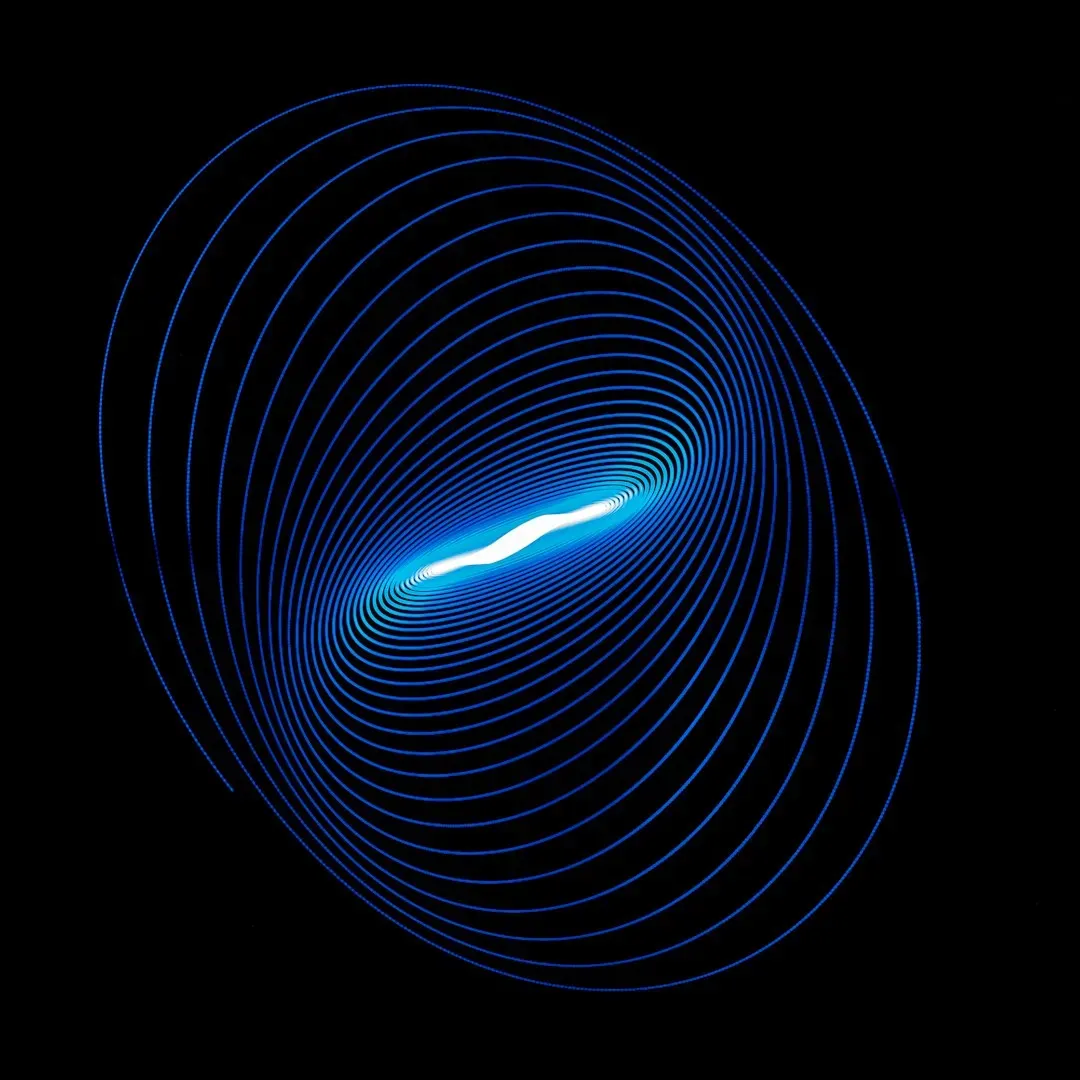
In 2017, LIGO and Virgo detected gravitational waves from two neutron stars merging, an event known as GW170817. The signal showed how much the stars were stretched by each other’s tides. That deformation depends directly on how stiff the dense matter is.
Later detections have added to the catalog of compact mergers. Combined with NICER’s X-ray data, they give scientists two independent ways to test models of dense matter. Neither method alone settles the question, but together they narrow the options.
What Might Lie Deeper Inside
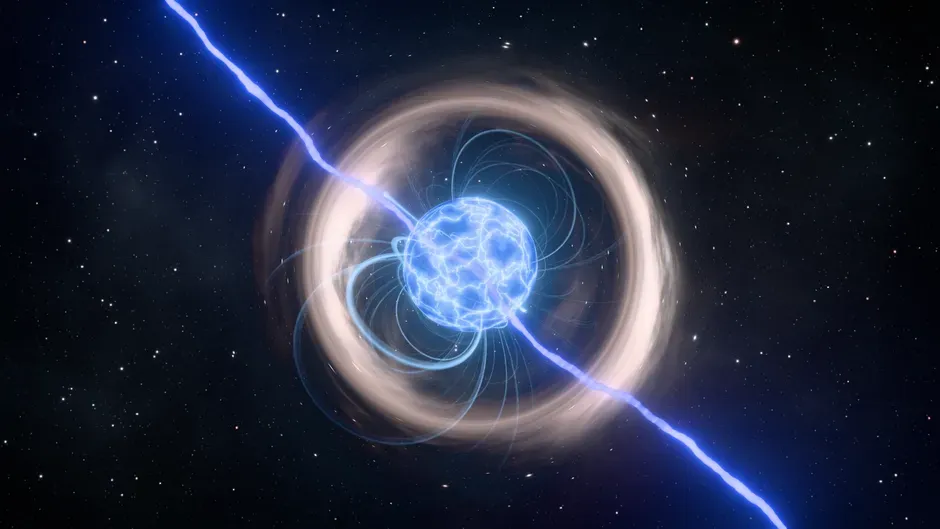
The outer crust of a neutron star is thought to be a lattice of nuclei bathed in free electrons. Deeper down, neutrons may flow as a superfluid, with no friction. Pulsar glitches, sudden speedups in spin, are often explained by this behavior.
At the very center, densities may exceed that of an atomic nucleus several times over. Some models suggest exotic particles or even free quarks could appear there. No one has confirmed that, and the core remains one of the open questions in nuclear physics.
The Heaviest And Fastest Examples
Some neutron stars come close to the upper mass limit. PSR J0740+6620 has a mass of roughly two solar masses, among the heaviest well measured. Such stars rule out many softer models of dense matter, because those models couldn’t support so much weight.
Others are remarkable for speed. The fastest known pulsar, PSR J1748-2446ad, spins about 716 times each second. At that pace its surface moves at a significant fraction of the speed of light, yet the star holds together.
Why A Teaspoon Could Never Exist On Earth
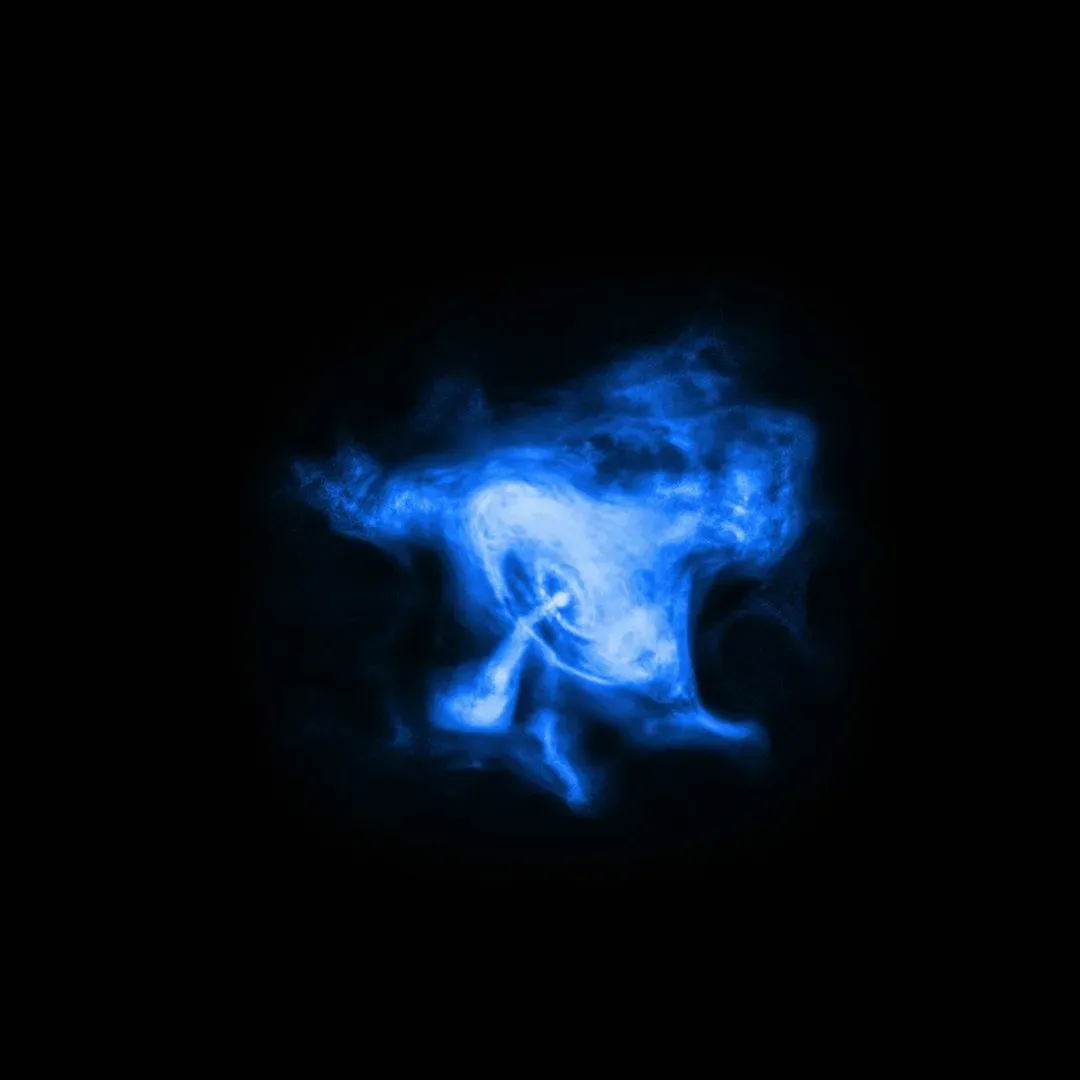
A real teaspoon of this material couldn’t be removed from the star. Outside the intense gravity and pressure, neutron matter would no longer be stable and would expand explosively. The energy released would be enormous.
So the teaspoon is a thought experiment, a way to translate density into something familiar. It rests on well-supported physics, even though no one will ever hold a sample. The star’s gravity is what keeps it all together.

- Blue whales vanish from the Galápagos, and scientists suspect El Niño - November 11, 2026
- 8 Famous Battles That Were Decided by the Weather - November 11, 2026
- Black Sunday 1935: 9 Photos From the Worst Dust Storm of the Dust Bowl Era - November 11, 2026
