

Florida is better known for hurricanes and humidity than for polar light shows. Yet on a few nights in 2024 and 2025, people there pointed their phones north and caught a faint glow that normally belongs to Alaska, Iceland, or northern Norway.
Mexico saw something similar. The explanation lies about 93 million miles away, in the Sun’s own rhythm, and it helps to take the nights one at a time.
The Night Florida Looked North

An X5.1 solar flare erupted on the morning of November 11, 2025, and the cloud it launched reached Earth at 7:10 pm Eastern, with severe G4 conditions following at 8:20 pm. That timing put the strongest effects right after dark on the US East Coast.
Florida photographers posted red horizons that night, and NASA ran one frame as its Astronomy Picture of the Day. Northern lights were also visible as far south as parts of Florida and Alabama, a relatively rare occurrence that highlighted how severe the week’s storms were.
Mexico Joins the List

The same November storm sequence reached well into the southern tier. The combined solar outbursts triggered a severe G4 geomagnetic storm, with auroras appearing as far south as Arizona, Mexico, Texas, and Florida.
It wasn’t the first time Mexico had been included. During the May 2024 event, gradients of pink and purple lit the night sky in Mexicali, thousands of miles from the Arctic regions where the northern lights are common.
What a Solar Maximum Actually Is

The Sun runs on a cycle of roughly eleven years, swinging between quiet and busy periods. Solar flares, CMEs, and geomagnetic storms all become more common and more intense during solar maximum, the peak of that cycle.
During the maximum phase, sunspot numbers rise, and those regions can produce flares and coronal mass ejections that send charged particles toward Earth. More eruptions means more chances that one points straight at us.
A Cycle That Beat Its Forecast
Solar Cycle 25 officially began in December 2019. A NOAA and NASA panel forecast a peak in July 2025 with a smoothed sunspot number of 115, and expected the cycle to be average, similar to Cycle 24.
The Sun had other plans. One analysis of SILSO data puts the smoothed sunspot number at roughly 161 in October 2024, well above the panel’s figure. Exact peak values differ between sources, but they agree on the main point: the cycle came in stronger than predicted.
May 2024: The Storm That Set the Stage

Three days of solar eruptions in May 2024 ended with the largest geomagnetic storm in over 20 years. G5 conditions arrived at 6:54 pm Eastern on May 10, and G5 is the top step of the five step storm scale.
Sightings that night were reported across North America from Maine through New Mexico and as far south as Florida. Skies over Miami, Fort Lauderdale, and Key West surprised even the best forecasters.
Why Strong Storms Push the Aurora South

The aurora doesn’t really travel. The whole magnetic field gets stretched so far that Florida ends up under the edge of the light show.
Scale matters here, and it’s measured in geomagnetic latitude rather than the lines on an ordinary map. When the Kp index reaches the high levels of a strong storm, the area where aurora can be seen expands significantly southward. The May 2024 storms temporarily extended auroral visibility to latitudes as low as 30 degrees.
What Floridians Actually Saw

Don’t picture curtains of green overhead. The aurora never reached Florida; people there watched the top of it clear the curve of the Earth from far to the north.
The sky can glow faintly red or green, sometimes resembling distant city light or thin clouds until your eyes adjust. That’s why cameras with long exposures often picked up more color than the naked eye did.
January 2026 Brought Another Severe Storm

The pattern didn’t stop with the new year. NOAA’s Space Weather Prediction Center confirmed severe G4 geomagnetic storm conditions on January 19, 2026, after a coronal mass ejection struck Earth.
Auroras were reported across much of Europe, including Scotland, Ireland, and the Netherlands. A G4 event corresponds to a Kp near 7 or 8 and can extend aurora visibility much further south than usual, while also disrupting satellites and GPS.
Not the First Time, Just the First in a While

Earlier cycles produced similar scenes. After a coronal mass ejection hit Earth’s magnetosphere on April 1, 2001, auroras were observed as far south as Mexico and southern Europe.
An X17.2 flare on October 28, 2003 produced auroras visible as far south as Florida and Texas. The 2024 and 2025 sightings fit that history, and they were the strongest displays in this region in roughly two decades.
Where the Cycle Stands Now
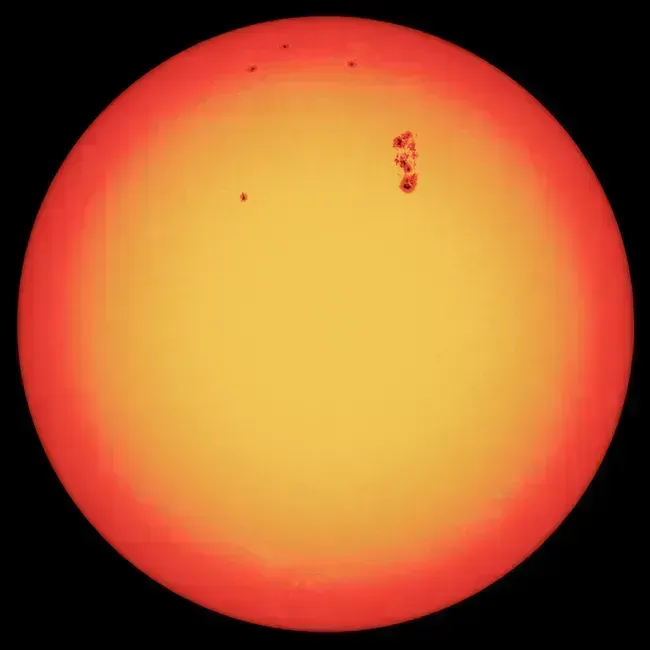
In October 2024, NASA and NOAA announced that Solar Cycle 25 had entered its solar maximum phase. Solar activity began entering the declining phase in 2025, which means the cycle is technically past its peak.
Strong storms can still happen on the way down, as November 2025 and January 2026 showed. The next solar maximum isn’t expected until roughly 2035 to 2036.

- I Asked AI and a Waste Auditor How to Cut My Household Trash – Where They Disagreed - November 12, 2026
- Einstein’s equations suggest gravity can reconnect like the sun’s magnetic field - November 12, 2026
- This Map Shows Which States Get the Most Severe Storms Each Year – And It’s Not What You’d Expect - November 12, 2026
